
FOURTECK TANZANIA · BRANCH SECURITY
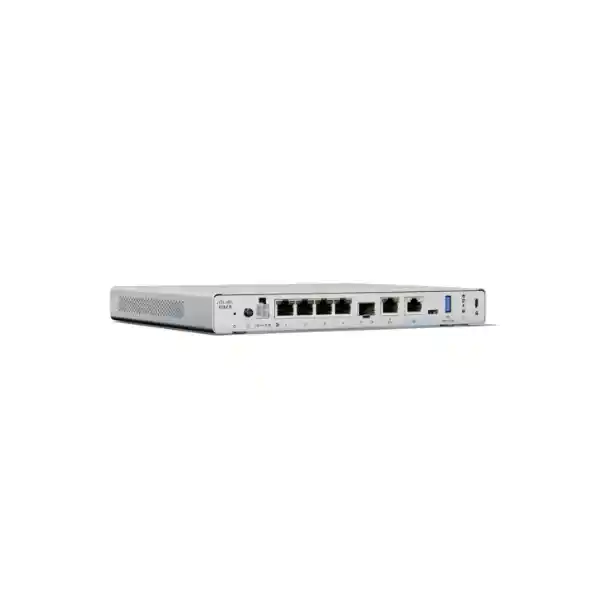
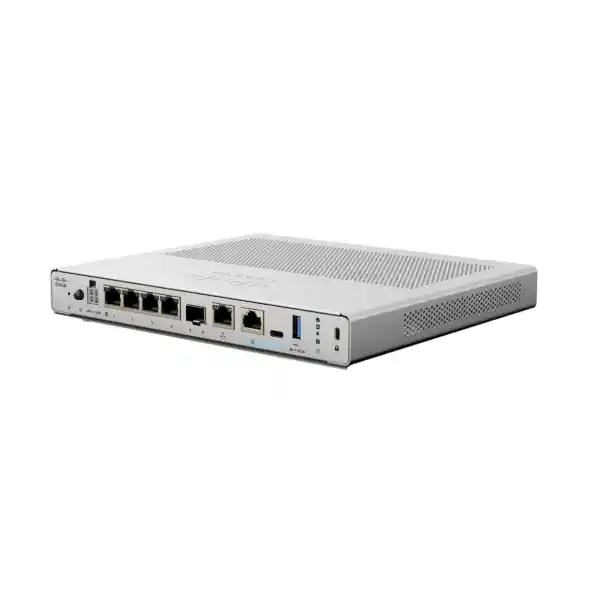
Cisco Secure Firewall 220
Evaluate the compact branch firewall with a clear software, sizing and ownership plan.
| Item | 220 specification |
|---|---|
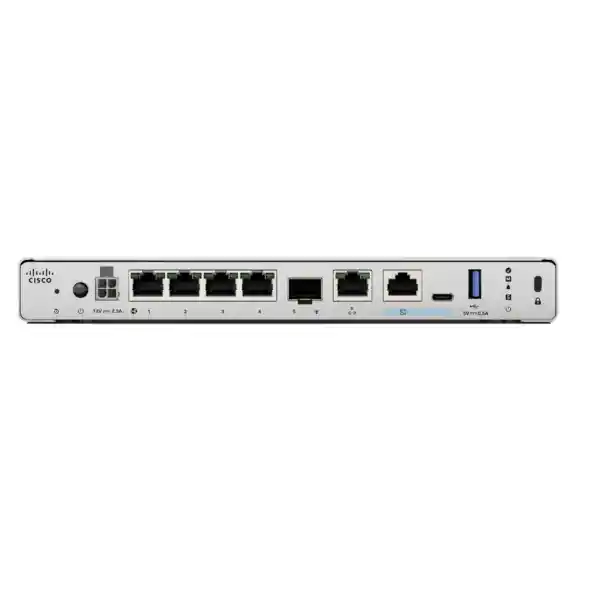
| Network ports | 4 × 1G copper; 1 × 1G SFP |
| Management | Separate 1G Ethernet port |
| Cooling / PoE | Fanless / no PoE |
| FTD NGFW reference | 1.5 Gbps; manufacturer 1024-byte test |
| Availability | Active/standby supported; no clustering |
Choose the firewall around your branch requirements
Cisco Secure Firewall 220 is a compact appliance for organisations that need to evaluate branch perimeter security, application control and protected connectivity without moving immediately to a larger platform. For a Tanzania business, the buying decision should begin with traffic, security policy and operating responsibility. Ask FourTeck Tanzania for a quotation that identifies the appliance software, subscriptions, management arrangement and implementation scope together.
The 220 supports Cisco Firewall Threat Defense and ASA software, which serve different deployment requirements. Threat Defense is the relevant evaluation path when next-generation inspection is part of the requirement; ASA should be assessed against a design that specifically calls for its supported firewall and VPN functions. Do not compare the two using one headline throughput number or assume that their features and management procedures are interchangeable.
This product guide separates verified hardware facts from recommended project checks. It does not establish local stock, a fixed price, subscription inclusion or installation availability. Those commercial details should be confirmed in the exact offer. The practical objective is a branch security design whose capacity, permissions, monitoring and recovery procedures match how the organisation actually works.
Verified 220 specifications at a glance
Cisco’s current 200 Series datasheet lists the 220 with four Gigabit copper network ports, one Gigabit SFP network port and a separate Gigabit management connection. The appliance uses passive cooling and does not provide PoE. Desktop placement is supported, with mounting accessories available for other arrangements. Confirm the accessory requirements in the quotation rather than assuming they are included.
For Threat Defense, Cisco lists 1.5 Gbps NGFW throughput under its stated 1024-byte test profile, 1.2 Gbps IPsec throughput under the specified TCP Fastpath test and 0.7 Gbps TLS decryption throughput. The 220 supports active/standby high availability; clustering and multi-instance operation are not supported. These are model-specific figures and capabilities, not a promise that every production traffic mix will achieve the laboratory results.
Cisco lists a single external 30 W AC power supply, a 100–240 V AC input range and an operating temperature range of 0–40°C. Confirm the delivered power accessories and installation conditions for the proposed site. Select a compatible SFP where required and include it explicitly in the bill of materials. The management port should not be counted as another general-purpose network connection when planning the branch topology.
Keep the 220 distinct from other 200 Series models
A series overview can contain features that belong to another model. Read the column for the 220 when checking port counts, power options, performance and capacity. A purchase order should name Cisco Secure Firewall 220 and identify the proposed software and commercial bundle clearly enough to prevent an unintended substitution.
The current family documentation includes other models, so a family-level phrase such as enhanced throughput or powered interfaces should not be carried into a 220 specification without verification. Ask the supplier to explain any proposed alternative in terms of the actual project requirement: more interfaces, additional inspection capacity, a different power arrangement or room for growth.
For existing proposals, compare the manufacturer’s current documentation with the quoted configuration before approval. Documentation can change as a family expands or software develops. Retain a dated copy of the approved specification and the agreed bill of materials. This is particularly useful when procurement, deployment and acceptance occur at different times. The buyer should be able to identify exactly what was selected and why, without relying on a generic series brochure.
Threat Defense and ASA require different decisions
Choose the software path before finalising migration work. A branch that requires application-aware policy and intrusion prevention needs an assessment of the relevant Threat Defense capabilities, licensing and management. A branch replacing an existing ASA environment may have a different priority, such as preserving supported policy behaviour and VPN design. Identify the required functions explicitly rather than allowing the existing product name to decide the entire architecture.
The software choice affects how administrators configure policy, obtain visibility, perform changes and recover from faults. Ask for a demonstration of the proposed management workflow using realistic tasks: allowing a business application, investigating a blocked connection and restoring access after an incorrect rule. Evaluate who will perform those tasks after handover.
A software migration is also an opportunity to remove obsolete assumptions. Existing objects, routes and exceptions should be reviewed for purpose and ownership. Do not assume that every old setting should be reproduced simply because it exists. Where a configuration cannot be carried across directly, document the supported replacement behaviour and test it. The final quotation should state the selected software and any migration dependencies in plain language.
Understand what the performance figures describe
Firewall capacity is affected by what the device is asked to inspect, how connections are established and how traffic behaves. A branch carrying large file transfers differs from one with many short sessions, encrypted business applications and several VPN paths. Treat the published throughput figures as reference points for sizing discussions, then validate the proposed design against representative demand.
A production requirement should list the expected security functions together. If intrusion prevention, application policy, VPN processing and selective decryption are all required, ask how the combined workload will be assessed. It is misleading to take the best number from one test and apply it to every enabled service.
Record ordinary demand and busy periods. Include backup transfers, software distribution, cloud applications and remote users where applicable. Explain what growth is expected during the intended ownership period. A well-sized proposal includes room for operational changes without promising unlimited expansion. Where uncertainty is material, request a pilot or a more detailed technical sizing review. The decision should be traceable to the business workload rather than only to the speed printed on the internet service contract.
Measure the branch before selecting capacity
Collect traffic information from the existing network when available. Useful inputs include peak bandwidth, connection patterns, the number of active users and the applications that matter most to the business. Where measurements are incomplete, identify the uncertainty and agree how it will be resolved. An estimate can support an initial discussion, but it should not be presented as a measured baseline.
Distinguish internet traffic from traffic that must cross internal security boundaries. A firewall protecting several internal zones may process additional flows even when internet utilisation is modest. Map those flows and decide which need inspection. The branch topology should make that requirement visible before capacity is assessed.
Ask application owners about predictable changes, such as a move to a hosted business system or additional remote sites. Those changes can alter traffic direction and security needs. Document which assumptions the proposed 220 design depends on. If the organisation later exceeds them, the record provides a practical trigger for another capacity review. This is more useful than an arbitrary claim that an appliance supports a particular number of employees regardless of their workload.
Map physical connections and network zones
Create a port and zone schedule before installation. Identify the WAN connection, internal switching, guest access, any server or service segment and the management path. The number of physical interfaces is only one part of the design; routing, VLAN support and policy requirements must be confirmed for the selected software and release.
Use clear names for network objects and zones. A future administrator should be able to understand which business area a rule protects without guessing from an unexplained subnet label. Keep the design simple enough to operate while providing the separation the business actually needs.
Where a fibre connection is proposed, confirm the supported transceiver and the upstream equipment details. SFP compatibility is a specific technical check, not a consequence of a module fitting into the socket. Include the module and any required cabling in the scope.
The 220 does not provide PoE, so access points, phones and cameras requiring powered Ethernet need a suitable separate power arrangement. Include that dependency when comparing an all-in-one branch idea with the actual appliance design. A perimeter firewall should be selected for the security and connectivity functions it supports, with switching and endpoint power planned explicitly.
Write policy around business access
Begin policy design by listing the business services people need and the systems they must reach. Assign an owner to each significant access requirement. This produces more useful rules than copying a broad allow policy and trying to tighten it later without knowing which applications depend on it.
Separate employee, guest and infrastructure needs where the design calls for it. Guests may need internet access without access to internal services. Administrators may require a controlled management path. A branch server may need a limited set of connections that differ from normal user browsing. Translate these requirements into supported policy constructs under the chosen software.
Keep exceptions understandable. Each exception should describe its purpose, owner and review condition so temporary access does not become permanent by accident. Test permitted business functions and expected blocks before rollout. Include a way to recognise an unintended denial and a process for reviewing it. The firewall is easier to operate when policy reflects real responsibilities and when someone can explain why a rule exists. Useful security depends on that operating discipline as well as on product features.
Plan intrusion prevention and inspection policy
If Threat Defense is selected, decide which traffic should receive the required inspection and how alerts will be handled. A feature being available does not mean its default behaviour is the right choice for every branch. Start with the business risk, supported platform capabilities and the organisation’s ability to investigate events.
Identify the services that are most sensitive to interruption. Establish a change window and a validation process before applying a new policy to production traffic. A staged introduction can help administrators understand the expected events and distinguish normal application behaviour from conditions that need attention.
An alert needs an operational destination. Define who reviews it, how they obtain context and when they involve application or network owners. Agree what evidence should be retained for investigation and what action is appropriate for common cases. Avoid a deployment that collects large volumes of events without anyone responsible for using them.
Subscription selection should follow the actual inspection requirement. Ask the quotation to name the included security services, their terms and any dependencies. Do not assume that the appliance purchase includes every protection capability or every future update associated with the wider product family.
Evaluate encrypted traffic with clear boundaries
Encrypted applications can require a different inspection strategy from unencrypted traffic. Define what visibility is needed and which traffic, if any, should be decrypted under the organisation’s approved policy. Consider application compatibility, certificate handling and administrative responsibilities before enabling a broad decryption rule.
The published TLS decryption figure describes a particular test condition. It should not be treated as interchangeable with the NGFW throughput figure or as a guaranteed production rate. If decryption is a major part of the requirement, include representative encrypted applications in sizing and acceptance work.
Ask how exceptions will be governed. Some applications may behave differently when inspected, and the team needs a controlled way to assess that behaviour without creating unexplained permanent bypasses. Record why an exception exists and who approved it.
Certificate distribution and lifecycle management also require ownership. A technical design can fail operationally if endpoints do not trust the required certificate or if renewal is overlooked. Include those tasks in the implementation plan where decryption is selected. The useful outcome is an intentional, supportable visibility policy whose limitations are understood by the people responsible for the network.
Specify VPN requirements precisely
Distinguish site-to-site connectivity from remote-user access. The number of locations, intended traffic and authentication design matter more than a general request for VPN support. List the remote devices or platforms that must interoperate and verify the supported combinations for the chosen software and release.
For a site-to-site design, document the networks at both ends, routing responsibility and application dependencies. Overlapping addresses or undocumented routes can complicate deployment even when both products support the required VPN standards. Include the remote administrator in the test plan.
For remote users, establish the supported client, identity requirements, access scope and any separate licensing. A successful tunnel is only the beginning of acceptance. Test that the user reaches authorised business services, cannot reach excluded resources and receives understandable support when authentication fails.
Do not size every VPN requirement from one throughput number. Consider the traffic profile, expected simultaneous activity and how the connection will be used during busy periods. Confirm the applicable capacity and entitlement in the proposal. Include recovery procedures and a record of the configuration needed at the remote side so future changes can be coordinated.
Choose a management arrangement the team can operate
Decide who owns day-to-day administration before selecting the management approach. One branch with a small internal team may have different needs from an organisation coordinating many locations. Verify that the chosen management platform supports the exact appliance, software and release and that any required management licences are included.
Ask to see routine workflows rather than relying only on a dashboard demonstration. Administrators should understand how to review policy changes, investigate a blocked connection, identify device health issues and obtain a usable configuration backup. They also need a controlled way to recover from a mistaken change.
Define account permissions according to responsibility. A person reviewing events may not need authority to change network access. Keep emergency access documented and protected through the organisation’s established credential process.
Management connectivity has its own dependencies. Clarify what remains possible if the usual management path is unavailable and how support will reach the device securely. Record the escalation process and the boundaries between customer administration and any contracted service. A manageable system is one whose owners understand both its normal workflow and its recovery procedure.
Make logging useful for operations
Identify the questions logs must help answer. Common examples include why an application stopped working, whether a particular connection was permitted and when a significant policy change occurred. Select event collection and retention around those questions rather than enabling everything without an operational plan.
Agree the destinations for relevant logs and verify any external system integration required by the design. Check time synchronisation so events can be compared with application, identity and network records. A timestamp that cannot be related to other systems can make an investigation unnecessarily difficult.
Storage and retention depend on the chosen architecture and event volume. Ask for an explanation of where data resides, who can access it and how it is searched. Do not assume that a compact appliance provides unlimited local history or that a management subscription includes every retention option.
Include at least one operational exercise in acceptance. For example, generate an agreed test connection and have the responsible administrator find the associated event. This verifies that collection, visibility and staff understanding work together. Monitoring becomes more valuable when it leads to a clear next action and has an identified owner.
Assess high availability as a complete design
The 220 supports active/standby high availability, but an availability objective requires more than ordering a second unit. Confirm the supported pairing, software alignment, licensing and network arrangement for the proposed deployment. Identify how the upstream and downstream connections are protected and which components remain single points of failure.
Plan power as carefully as appliance pairing. Two firewalls connected to one unprotected supply may share the same outage risk. Similarly, a single switch or WAN device can interrupt service even when the firewall pair behaves as intended. Document those dependencies so the buyer understands what the proposed resilience actually covers.
Define the desired failover result for business applications and VPNs, then test the supported behaviour in a controlled change window. Some sessions or workflows may react differently to an interruption. Record the observed result rather than promising an invisible transition for every application.
Include maintenance in the availability discussion. The team needs a supported upgrade and recovery plan and a way to recognise when the pair is unhealthy. A second appliance adds operational responsibility as well as resilience. Choose it where the business value justifies the complete implementation and support scope.
Prepare the installation environment
Select a secure, ventilated location with access for authorised maintenance. Fanless cooling reduces reliance on a moving cooling component, but the appliance still needs suitable clearance and ambient conditions. Follow the manufacturer’s installation guidance for placement and avoid treating a compact desktop form factor as permission to hide the device in an unsuitable enclosure.
Confirm the power source, delivered supply and local connector requirements before installation. If backup power is needed, include the other equipment required for the branch service, such as the internet termination and internal switch. UPS runtime should be assessed against actual load and battery condition rather than promised from the firewall model alone.
Consider cable management and physical identification. Label network connections and record their purpose so a replacement or emergency visit does not depend on someone remembering which cable is the WAN. Where a rack or wall arrangement is required, specify the appropriate mounting accessories.
Tanzania projects should be assessed at the actual site. Heat, dust exposure, power continuity and physical access vary by building. Confirm any environmental protection or installation work in the project scope without assuming unverified local conditions or service coverage.
Build a migration plan from the existing firewall
Inventory the current configuration before setting a change date. Include network interfaces, routes, address translation, security policy, VPN dependencies, certificates and any integrations needed for daily operation. Identify configuration items whose purpose is unknown and resolve them with the relevant owner.
Compare required behaviour with the supported capabilities of the selected 220 software and management design. A migration tool, where applicable and supported, can assist with conversion, but the result still requires review and testing. Do not equate a successful import with a correct production policy.
Prepare a cutover plan that lists prerequisites, responsible people, expected interruption and acceptance checks. Include application owners where their systems are critical to business operations. Verify that access to management and support remains available during the transition.
A rollback decision should be practical and time-bounded. Preserve the information and equipment needed to restore the previous service if acceptance fails. Define who can make that decision and what evidence triggers it. This preparation reduces uncertainty during the change window and gives the business a clear view of the transition risk before work begins.
Test the business outcome before acceptance
Create a test schedule using the services people actually need. Verify internet access, important cloud applications, internal routes, guest separation and any approved remote connectivity. Add inspection and policy checks appropriate to the selected software and subscriptions. The objective is to demonstrate both permitted use and intended restrictions.
Measure performance under representative conditions where practical. Record which security functions are enabled so the results are interpretable. A speed test performed before inspection policy is applied is not a complete assessment of the final design.
Test the operational side as well. Have the designated administrator locate an event, review device status and explain how a policy change is made. Confirm that backups and recovery information are available through the agreed process. If high availability is included, exercise the supported failover scenarios under controlled conditions.
Keep an acceptance record showing the configuration versions, tests, results and unresolved limitations. A sign-off should describe the delivered scope rather than imply that every feature in the product family has been demonstrated. Resolve essential failures before handover and assign an owner to any agreed follow-up item.
Plan updates, subscriptions and ownership
A firewall requires ongoing maintenance after installation. Establish responsibility for reviewing software guidance, selecting supported releases, applying updates and checking the appliance after a change. Include the management platform and connected integrations in that responsibility map where relevant.
Record subscription and support terms from the exact offer. Identify renewal dates, account ownership and the person who receives important notices. A procurement contact may differ from the administrator, so make sure both know how renewal and entitlement information is maintained.
Use a controlled update process. Review compatibility, preserve recovery information and schedule appropriate validation after changes. Critical applications, VPNs and inspection policies deserve attention because a routine platform change can affect the path they depend on.
Also review the policy over time. Business services move, staff responsibilities change and temporary access may no longer be justified. A periodic rule review helps the configuration remain understandable and reduces the number of unexplained exceptions. The ownership plan should be proportionate to the organisation, but it must be explicit. The appliance’s value depends on people continuing to maintain the security and connectivity decisions configured on it.
Compare the total proposal rather than the chassis alone
Ask each quotation to identify the hardware, software path, security subscriptions, management, support term, accessories and implementation services. Separate essential requirements from optional additions. This makes it possible to compare proposals that initially appear to offer the same appliance but include very different operating capabilities.
Confirm any transceiver, mounting kit, backup-power work and high-availability component. Ask whether configuration migration, documentation, testing and administrator handover are included. If a service is excluded, identify who will provide it and whether it is a prerequisite for deployment.
Do not assume that a model designation is the Tanzania listing SKU. A manufacturer ordering identifier and a seller’s inventory SKU serve different purposes. The exact quotation should state the identifiers and describe what each line includes. Pricing, stock, delivery and warranty commitments must be confirmed for that offer.
A useful procurement decision connects cost to the required outcome. The lowest appliance-only amount may omit subscriptions or work that the project needs. Conversely, a larger bundle is not automatically appropriate if it includes capabilities nobody has asked for or can operate. Request a scope that can be explained line by line.
When the 220 deserves evaluation, and when to compare further
The 220 deserves evaluation where a compact branch appliance with Gigabit interfaces fits the physical design and the verified software capabilities meet the security requirement. The decision should still be supported by workload sizing, management planning and a complete quotation.
Compare other options if the branch requires different interface speeds, powered endpoint connections, substantially different capacity or capabilities the 220 does not support. A larger model should solve a documented limitation rather than serve as an unexplained upgrade. Equally, do not force the 220 into a requirement simply because the initial budget was based on it.
An existing Cisco environment may influence operational fit, but shared branding alone does not remove compatibility and migration checks. The important question is whether the proposed hardware, release, management and entitlement work together for the intended service.
Before approval, ask the technical team to state the main sizing assumptions, the important limitations and the next capacity review trigger. Those three items make the selection easier to defend and maintain. They also help the buyer recognise when a later business change requires another design review rather than an improvised configuration change.
Buyer questions and next steps
Is the Cisco Secure Firewall 220 the same as every model in the 200 Series? No. Use the exact 220 specifications and the proposed software configuration. Family-level statements may describe another model.
Does the appliance provide PoE for phones or access points? No. Plan a suitable separate switch, injector or other supported endpoint power arrangement.
Can the published NGFW figure be used as a guaranteed internet speed? No. It is a manufacturer test result under stated conditions. Production performance depends on the enabled functions and real workload. Request sizing against your traffic and security policy.
Are all subscriptions and management capabilities included with hardware? Inclusion depends on the commercial configuration. Ask the quote to name the services, terms and management arrangement.
What is needed for a useful quotation? Provide the WAN design, traffic measurements or estimates, important applications, internal zones, VPN requirements, current firewall details, preferred management model and availability objective.
Request a Cisco Secure Firewall 220 proposal from FourTeck Tanzania that confirms the software path, subscriptions, accessories and implementation scope. Ask for documented sizing assumptions and acceptance tests before approving the purchase. Commercial availability and service arrangements should be confirmed in the project quotation.



Reviews
There are no reviews yet.