
FOURTECK TANZANIA · ENTERPRISE NETWORK SECURITY
Cisco Secure Firewall 6170 in Tanzania
Protecting a high-capacity data center requires a firewall sized for the traffic you inspect, the connections you sustain and the failures you must tolerate. The Cisco Secure Firewall 6170 is a modular enterprise security appliance to evaluate for demanding perimeter, server-zone and service-provider designs. Select the software personality, interfaces and subscriptions against your actual requirement before requesting a configuration.
Next step: Request a FourTeck Tanzania quotation with your traffic profile, required inspection services, port plan and resilience objectives. Ask for hardware, subscriptions, management and support to be itemized.
Is the 6170 the right fit?
Consider this model when the firewall is a major aggregation point and a capacity shortfall would affect many applications or networks. The buying decision should follow a measurable requirement: large inspected traffic volumes, significant encrypted connectivity, demanding connection churn or a need to consolidate enforcement at carefully chosen boundaries. A model name alone cannot establish the right capacity or deployment design.
For a Tanzania organization with a modest internet connection and limited internal inspection, begin by comparing a smaller platform against the same security objectives. Oversizing can consume budget that would deliver more value in resilient switching, management, monitoring or recovery. For a large central environment, however, evaluating only the internet circuit can miss the server-to-server traffic that crosses the proposed firewall.
Evaluate for concentrated demand
High-capacity data-center boundaries, shared-service platforms and aggregated protected connectivity with documented performance and availability targets.
Confirm before committing
Software mode, inspected traffic mix, supported release, optical connections, rack readiness, management capacity and complete commercial scope.
Use this page as a model-specific purchasing guide. Broader architecture options are covered in our verified Cisco data-center firewall solutions guide. The final appliance selection should come after the traffic paths and security boundaries have been agreed.
Published performance: compare the correct workload
Cisco publishes the following 6170 test figures. They are workload-specific reference points rather than a guaranteed result for a production network.
| Software / test | 6170 reference figure |
|---|---|
| Threat Defense: firewall + AVC, 1024-byte traffic | 700 Gbps |
| Threat Defense: NGFW, firewall + AVC + IPS, 1024-byte traffic | 600 Gbps |
| Threat Defense: IPsec, 1024-byte TCP with Fastpath | 550 Gbps |
| Threat Defense: TLS decryption | 150 Gbps |
| ASA: stateful inspection, 1500-byte UDP | 750 Gbps |
| ASA: IPsec, 450-byte UDP site-to-site test | 370 Gbps |
The TLS result uses Cisco’s stated test with 50% TLS 1.2 traffic using AES256-SHA. Enabled functions, protocol mix, packet sizes and software release affect performance. Do not treat an ASA stateful-inspection figure as an inspected Threat Defense result.
Build a traffic profile that reflects your busiest useful operating period. Separate short-lived web requests, long-lived application sessions, bulk transfers and encrypted tunnels. Specify which flows require intrusion prevention, which require decryption and which should be excluded under an approved policy. This makes a sizing discussion more precise than asking whether a firewall supports a particular circuit speed.
Ask the proposal to identify the test assumptions used for sizing and the allowance for future growth. Where application continuity is critical, include a representative validation exercise before accepting the design. A documented workload and a clear acceptance target give procurement, engineering and application owners a common definition of adequate capacity.
Choose Threat Defense or ASA before ordering
The platform supports Cisco Secure Firewall Threat Defense and ASA software. These are distinct deployment choices. Agree which operational model your team intends to run before the hardware and software lines are finalized.
| Cisco appliance product ID | Software personality |
|---|---|
| CSF6170-A-TD-K9 | Threat Defense appliance |
| CSF6170-A-ASA-K9 | ASA appliance |
These are Cisco product IDs, not a verified FourTeck Tanzania store SKU. Have the quotation identify the exact appliance variant and associated entitlements so that similarly named items cannot be confused.
For an inspection-led security design
If the objective includes application-aware controls and intrusion prevention, evaluate the Threat Defense configuration with the intended services enabled. Describe the policy your security team needs to enforce, rather than simply requesting every feature. A requirement tied to approved applications, protected zones and investigation needs is easier to validate and maintain.
For an established ASA operating model
If the project is extending an existing ASA environment, document why retaining that operating model matters. Existing procedures, administrator experience, configuration behavior and integration dependencies may influence the decision. Ask for a supported migration plan and confirm the exact release and feature set. Do not assume that an existing configuration transfers unchanged to a new appliance.
Avoid leaving this choice to delivery day. It affects configuration preparation, management tooling, license selection, testing and training. Record the selected personality in the bill of materials and in the acceptance document, with a named owner responsible for confirming that it matches the intended design.
Connections, optics and expansion planning
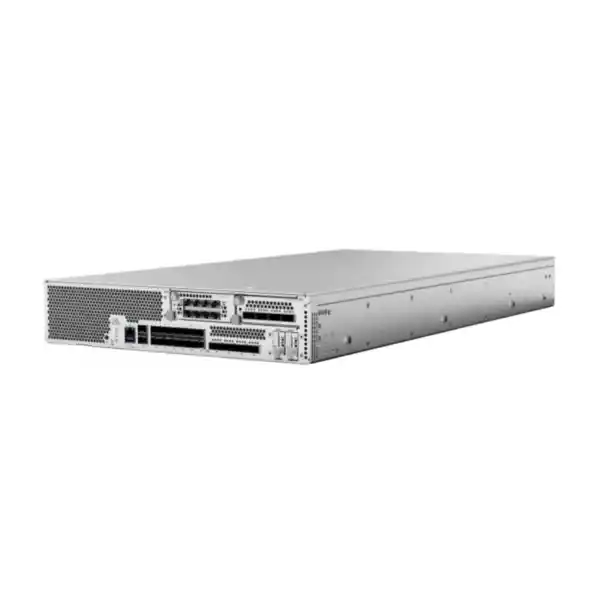
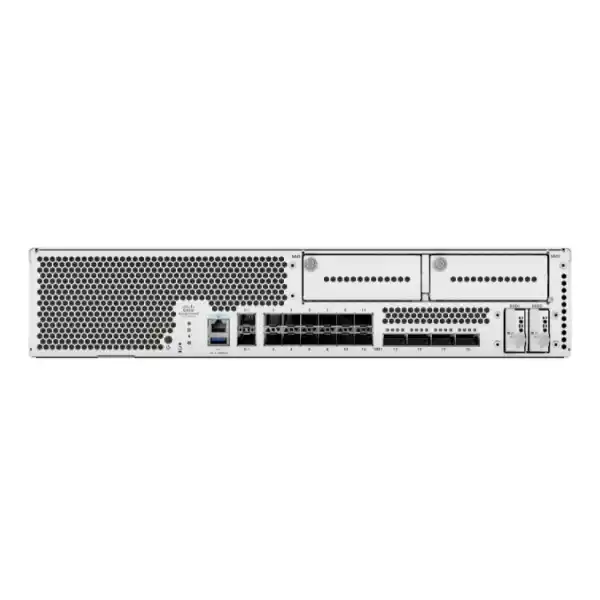
The chassis provides twelve fixed 1/10/25/50GbE SFP56 data ports, four fixed 40/100/200GbE QSFP56 data ports and two 1/10/25GbE SFP28 management ports. Two expansion slots support additional module choices; optional 400GbE connectivity requires a suitable module. Confirm transceiver and release support for every proposed link.
Start with a port map that names the device at the far end of every connection. Include speed, media type, fiber distance, connector, required optic or cable, and the purpose of the interface. Mark which ports belong to production traffic and which serve management or resilience. A detailed map catches omissions that a simple count of interfaces can miss.
Check both sides of a link together. The switch and firewall must agree on the supported optical standard, speed and applicable link settings. Existing fiber may be usable, but its type, condition, patching and measured path length should be checked before reusing it. Do not buy optics solely because the physical connector fits the cage.
Plan expansion around the intended design rather than filling both module slots immediately. A spare slot may be more valuable than unused ports if the network’s future interconnect speed is uncertain. Conversely, a project with known interface growth should include the required modules, matching optics and peer-switch capacity in the original scope.
Provide a cable schedule with consistent labels and allow sufficient service access around the rack. When a pair of firewalls is proposed, keep the port allocations understandable across both appliances. Clear physical documentation reduces troubleshooting time when a failed optic, incorrect patch or misidentified interface interrupts an important application.
Size for sessions, bursts and future change
Bandwidth describes only one aspect of firewall demand. A platform can face a heavy connection workload even when the traffic volume looks moderate. Examples include a public application with many brief requests, distributed clients reconnecting after an outage, or a collection of services that refresh connections at the same time. Capture these patterns instead of relying on a daily traffic average.
Ask your existing monitoring tools for the available evidence: busy-period throughput, connection counts, connection creation rate, packet-size distribution and the proportion of encrypted traffic. Note the collection interval and whether the measurement represents both directions. If the data comes from different tools, reconcile the definitions before combining it into a sizing worksheet.
Separate current demand from forecast demand. A forecast should identify the change behind the estimate, such as new customer applications, consolidation of several gateways, added server segments or a planned increase in WAN capacity. Avoid applying an arbitrary growth percentage without describing what will create the additional load.
Account for the proposed failure state. A design that performs adequately when all intended resources are available may behave differently during maintenance or a component failure. Require the proposal to explain how traffic is handled in the degraded state and what performance target still applies. This is especially useful when comparing different resilience approaches.
Use a short written sizing record that can be revisited after deployment. Record assumptions, exclusions, observed baselines and the date of the assessment. When a major application or inspection policy changes, compare the new demand with that record. Capacity planning then becomes an ongoing engineering activity supported by evidence.
Plan TLS inspection around real applications
Encrypted traffic inspection should begin with an agreed security policy and a representative application inventory. Decide which traffic needs content inspection, which traffic should remain excluded and who approves exceptions. The objective is to gain useful security visibility while preserving the behavior of legitimate business applications.
For each application group, document ownership, client types, destination behavior and any certificate dependencies. Test a small, representative set before extending inspection more broadly. Include applications that business users depend on throughout the day and systems that are used only during scheduled reporting or maintenance windows.
Treat certificates as an operational dependency. Define how trust is distributed to managed endpoints, how changes are communicated and who investigates certificate-related failures. Include service accounts, unattended applications and partner access in the discussion where they are relevant. A policy that works for a managed browser may need a different evaluation for another client type.
Keep bypass decisions explicit and reviewable. An exception should have a reason, an owner and a review point. Broad exclusions introduced during troubleshooting can otherwise remain long after the original issue is resolved. When testing finds a problem, preserve enough information to distinguish an inspection-policy issue from routing, name resolution or server behavior.
Use an acceptance plan that checks application success, useful logging and user experience under representative load. Do not adopt a single published decryption number as the sole measure of readiness. Your chosen application mix, inspection policy and operational procedures should determine what the deployment must demonstrate.
Make segmentation follow business services
A large firewall becomes easier to operate when the rule base reflects clear trust boundaries. Begin with a small set of meaningful zones, such as public application entry points, application services, data services, backup systems and infrastructure management. Adapt those zones to the actual environment rather than copying a generic diagram.
Document the required flows between zones in language that application owners can confirm. A useful record names the initiating system, destination service, business purpose, protocol requirement and responsible owner. This helps engineering translate a business dependency into a rule without turning an entire network range into permanent unrestricted access.
Review shared dependencies early. Name services, time synchronization, identity systems, monitoring and software repositories can cross several boundaries. If these flows are missed, teams may create broad temporary rules during cutover. Identifying them beforehand supports more specific policies and a smoother transition.
Place the firewall where the traffic you intend to control actually passes. A segmentation plan drawn on a diagram provides limited value if an alternate route bypasses the enforcement point. Review routing with the network team and check both normal and failure paths. Include any planned cloud or remote-site connections in that review.
Define a process for policy requests after installation. Each request should state the application purpose and intended duration, with approval from the appropriate owner. Review obsolete rules when an application retires or a server moves. A maintainable policy is an operational outcome that needs ownership throughout the appliance’s life.
Design availability across the complete path
Cisco lists Active/Standby for Threat Defense and Active/Active through clustering; the published cluster scale is up to sixteen appliances. Confirm the supported topology, releases and feature constraints for your intended configuration. Treat these capabilities as architecture choices that need a design, rather than as automatic protection against every outage.
Start by naming the failures the project must survive. An appliance fault, loss of one power feed, failed switch, broken uplink and maintenance event are different scenarios. Some require redundancy beyond the firewall itself. The proposal should state how each agreed scenario is handled and which events remain outside the design.
Review upstream and downstream connectivity together. Two appliances connected through one critical switch can still share a single point of failure. Likewise, two power cables do not provide independent feeds if both terminate on the same unprotected circuit. Trace the dependencies far enough to establish what the resilience claim actually covers.
Plan a controlled failure demonstration during acceptance. Agree the test steps, application checks, observation points and criteria for restoring the normal state. Record any session interruption or recovery behavior observed under the chosen workload. The goal is to replace assumptions with a result your operations team understands.
Maintenance needs the same attention as unplanned faults. Define the change sequence, access requirements, backup checks, escalation contacts and rollback decision. Keep a usable management path available during the exercise. A documented procedure helps the team preserve service deliberately when a platform or network component needs attention.
Check rack, power and cooling before delivery
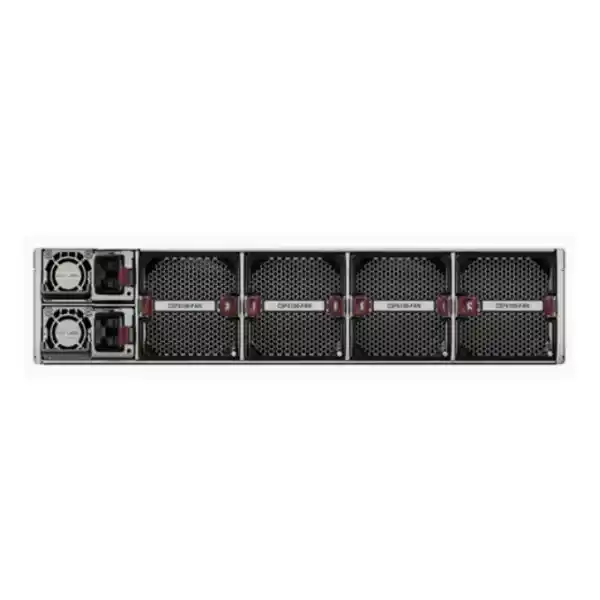
Cisco’s hardware guide specifies a 2RU chassis with front-to-rear airflow, dimensions of 8.89 × 42.93 × 82.55 cm and fully loaded weight of 29.94 kg. For the 6170 it lists typical input consumption of 2010 W and maximum of 2760 W. Dual power supplies provide redundancy only under the documented supported input conditions; low-line AC operation is not redundant.
Have the facilities team review the intended rack position before the purchase order. Confirm usable depth, rail compatibility, cable clearance, weight handling and access to the front and rear. Rack-unit availability alone does not establish that a deep, heavily cabled appliance will fit and remain serviceable.
Size protected power against the complete configuration and the required runtime. Include the associated switches, management system and monitoring dependencies where they must remain available together. Ask the responsible electrical specialist to verify feed capacity, connectors, distribution and the correct input arrangement for the selected power supplies.
Check cooling at the appliance inlet rather than relying only on a room thermostat. Dense racks can develop local hot spots or airflow recirculation even when the wider room appears comfortable. Keep the planned intake and exhaust paths clear and confirm that routine cabling work will not block them.
Agree who responds to hardware and environmental alarms. A redundant component can fail while service continues, leaving the system exposed to the next fault. Operational readiness includes recognizing that degraded state, identifying the replacement procedure and knowing the agreed support route. Follow Cisco’s hardware instructions for handling and service activities.
Confirm management and software compatibility
Cisco’s compatibility guide lists the 6160 and 6170 with Threat Defense 10.x and Management Center 10 or later. It does not list these models in its Firewall Device Manager compatibility table. Confirm the exact supported combination for the release you intend to deploy; do not assume an existing older management environment can accept the appliance.
Include the management platform in the project scope. Decide who owns it, where it runs, how administrators reach it and how its configuration is protected. If the organization already has a management deployment, assess the proposed addition against its current version, resources and operational responsibilities before assuming it can be reused.
Define administrative roles according to the work people perform. Routine monitoring, policy editing, approval and platform administration may involve different responsibilities. Establish how privileged access is granted and removed, and how emergency access is controlled. Keep a record of the ownership model so access does not become dependent on one individual.
Connect change management to the security policy lifecycle. A request should be reviewable before deployment, and the team should know how to check the result afterward. Use consistent names and descriptions for objects, rules and devices. Small documentation choices become valuable when several administrators share responsibility.
Plan upgrades as a supported sequence, including the management component and any associated integrations. Confirm backups, available maintenance windows and rollback conditions before changing software. A current compatibility check is more useful than assuming every component can move directly to the same version at the same time.
Subscriptions, support and quotation scope
Cisco’s ordering guide separates hardware, Threat Defense service subscriptions and other entitlements. It lists model-specific threat, URL-filtering and malware-related options, with defined subscription terms. Ask for a configuration that maps each required capability to the appropriate current entitlement; a chassis price alone does not establish the full solution cost.
Request an itemized quotation showing appliance personality, quantity, modules, transceivers, management, security services and the relevant subscription terms. Include support as an explicit line with its contractual scope. This allows competing quotations to be assessed against the same requirement and makes missing components easier to identify.
Clarify ownership of licensing accounts and renewal responsibilities. Identify who receives expiry information and who approves future renewals. If the equipment is for a managed environment, agree which organization controls the administrative accounts and what happens when the service arrangement changes. Resolve these questions before onboarding the appliance.
Discuss support expectations in practical terms. Ask what is covered, how a case is opened, which information is required and which response or replacement commitments are actually included. Any local installation, ongoing management or additional professional service should be defined in the written proposal. Avoid treating a general capability as a guaranteed project entitlement.
For a Tanzania quotation, request the current commercial terms, applicable currency and delivery conditions directly. This page does not establish a local price, stock position, lead time or warranty entitlement. Procurement should rely on the confirmed configuration and written offer when making those decisions.
Plan logging for investigation and daily operations
Define what the operations team needs to learn from firewall events before deciding what to collect. A troubleshooting question, a security investigation and a capacity review may need different evidence. Identify the important event types, the people who use them and the period for which they must remain available. This gives logging a clear purpose and an accountable owner.
Estimate the volume from the proposed policies and traffic profile, then validate it during the deployment exercise. Avoid assuming that every allowed connection must be logged in the same way. Excess collection can make important signals harder to find and can increase storage and processing requirements. Conversely, insufficient detail may leave the team unable to reconstruct an incident or explain an application failure.
Agree the destination for retained events and the access controls around them. Include connectivity, time synchronization and the handling of unavailable destinations in the design review. If the organization has an existing monitoring or investigation platform, request explicit confirmation of the intended integration and test a representative event through the complete path. A configured destination is less useful than a demonstrated, searchable record.
Create a small set of operational views around the questions administrators ask most often: whether important services are reachable, whether expected policy actions appear and whether traffic patterns have changed. Assign ownership for reviewing alerts and escalating faults. Record which events need prompt action and which belong in a scheduled review, so the team can respond consistently.
Include logging in the handover test. Ask the receiving administrator to investigate a known allowed flow and an intentionally blocked test flow, using the documented procedure. Confirm that timestamps, device identity and relevant policy information are understandable. This practical exercise shows whether the deployed evidence supports the responsibilities your team will actually carry.
Migration: build the rollback before the cutover
Begin a replacement project with an inventory of the current firewall’s role. Record interface assignments, address translation, routes, application rules, tunnels, certificates, administrative dependencies and external systems that rely on the existing device. The most important flows may be infrequent, so include scheduled jobs and partner connections in discovery.
Classify existing rules before carrying them forward. Some represent active business needs; others may be obsolete or poorly understood. Ask the responsible owners to confirm the requirement. A migration is a useful opportunity to improve clarity, but combine cleanup and platform change carefully so that troubleshooting remains manageable.
Prepare a staged test plan. Validate management access, link behavior and basic forwarding before adding the full policy. Then check the business services in an agreed order, preserving evidence of success or failure. Prioritize applications according to business impact and the time available in the maintenance window.
Define rollback triggers that can be recognized objectively. Examples might include an agreed critical application failing its acceptance check or the remaining maintenance window becoming too short for safe completion. Identify who makes the decision and how the old path is restored. Keep the required configuration and physical connection information available.
After cutover, hold a focused observation period with named owners for network and application checks. Compare logs and user reports with the pre-change baseline. Document the final configuration and any temporary exceptions, then assign follow-up work explicitly. A project is easier to hand over when outstanding items are visible and owned.
Operating scenarios to discuss with your design team
High-capacity internet perimeter
Map inbound public services separately from outbound user and server traffic. Identify which flows need inspection, how public addresses are used and where upstream routing decisions are made. Include an agreed view of what happens if one external path fails. A clear perimeter scope helps avoid confusing circuit resilience with firewall resilience.
Internal data-center boundary
Measure traffic between the server groups you intend to separate. Storage, replication and backup movements may dominate particular periods even when ordinary application use is modest. Confirm whether those flows should cross the proposed boundary and what policy applies. Keep performance requirements tied to the applications that depend on completing those transfers.
Shared infrastructure or service-provider environment
Document administrative separation, customer responsibilities and the proposed routing arrangement before choosing a design. Ask the technical review to distinguish network separation from any requirement for separate firewall instances. Do not infer support for a tenancy model from the number of interfaces alone; require explicit confirmation for the intended software and release.
Central connectivity for several sites
List each site’s normal and recovery paths, relevant tunnel requirements and access to central applications. Consider how a central event affects remote users and how operations staff can investigate it. Test the most important flows from the remote side as well as from the data center, using the actual agreed access policy.
A practical acceptance checklist
| Area | Evidence to request |
|---|---|
| Physical installation | Approved rack placement, labeled connections and verified feed arrangement. |
| Configuration | Documented software, interfaces, routing, policy and agreed licenses. |
| Application access | Named critical services tested from the relevant source networks. |
| Inspection | Expected policy actions and useful events from representative allowed and blocked traffic. |
| Resilience | Recorded results for agreed failure and maintenance scenarios. |
| Handover | Backups, diagrams, account ownership, support route and open-item list. |
Agree the acceptance record before implementation begins. Each test should identify its owner, expected outcome and the evidence that will be retained. Keep the scope proportionate to the project, but ensure that business-critical applications and agreed failure scenarios are covered. A device showing healthy interfaces is only one part of a successful deployment.
Include a check that operations staff can perform the routine actions they are expected to own. They should be able to locate relevant events, understand the policy organization, identify current software and find the backup and escalation procedures. Training is most useful when it uses the deployed environment and its actual operational responsibilities.
Frequently asked purchasing questions
Is this model intended for a small office?
Start with measured demand. The 6170 is worth evaluating where concentrated traffic and demanding security requirements justify this class of platform. A smaller organization should compare alternatives using the same inspection, resilience and operational criteria. The best choice leaves sufficient capacity while keeping the full deployment affordable and maintainable.
Does a high port speed guarantee that much inspected traffic?
No. Interface capability and inspected application throughput describe different limits. Your design must satisfy both. Check the required link speeds, then validate the security workload under the intended policy and software. Include any required degraded-state performance in the assessment.
Can an existing optical cable or transceiver be reused?
Only after compatibility is checked. Provide the exact optic or cable identifier, fiber details, length and peer-device information. Ask for confirmation against the supported configuration. Reusing an unsuitable component can introduce problems that are difficult to distinguish from a firewall or switch fault.
Are subscriptions and professional services included?
Inclusion depends on the written configuration and commercial offer. Ask for each required entitlement and service to be itemized, including duration and ownership. Hardware, management, security subscriptions and implementation should each have a clear scope so the purchase order reflects the intended operational outcome.
What information produces a useful Tanzania quotation?
Send a topology diagram, current traffic measurements, required interfaces, inspection objectives, software preference and resilience target. Include the intended management arrangement and any migration dependencies. State the project timeline as a requirement so feasibility and delivery conditions can be confirmed in the proposal.
Can FourTeck help scope deployment work?
Use the published Cisco firewall installation and configuration service page to frame that discussion. Ask the proposal to define discovery, configuration, testing, documentation and handover for your environment. Confirm the exact 6170 project scope and commercial terms before relying on any service commitment.
MOVE FROM MODEL SELECTION TO A COMPLETE CONFIGURATION
Request your Cisco 6170 quotation
Share your traffic profile, interface schedule, preferred software personality and availability requirements with FourTeck Tanzania. Request a configuration review that covers the appliance, optical connections, management, subscriptions and support. If this is a replacement, include the existing platform and critical dependencies so migration work can be scoped.
Ask for a written, itemized proposal: confirm exact product IDs, included entitlements, service responsibilities and current commercial conditions before ordering.



Reviews
There are no reviews yet.