
High-Density Large Venues
Cisco CW9179F
Tanzania Project Planning
Cisco Wireless CW9179F Wi-Fi 7 Access Point for High-Density Venue Networks
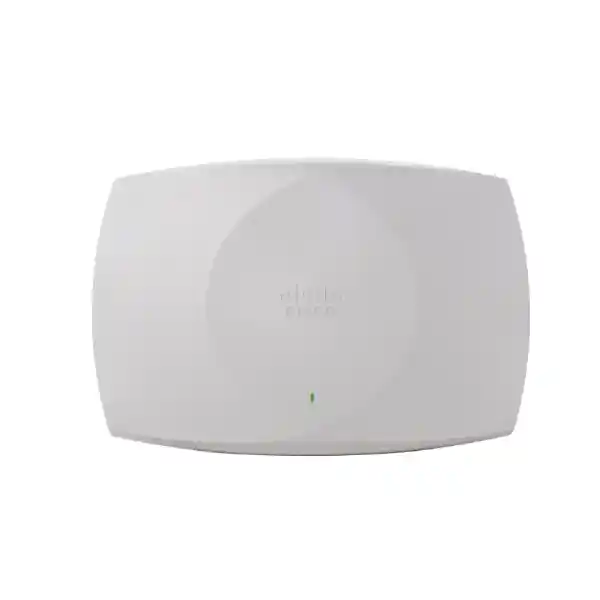
The Cisco Wireless CW9179F is a specialist enterprise Wi-Fi 7 access point for environments where thousands of devices, difficult seating geometry, large open areas, changing event loads and demanding applications make ordinary office-style wireless design inadequate. Cisco positions the platform for stadiums, arenas, airports, festivals, auditoriums and other large public venues. Its value is not simply that it supports 802.11be. The important difference is the combination of quad client-serving radios, directional coverage, software-selectable beam patterns, dual multigigabit uplinks, flexible indoor or supported outdoor deployment and a management path that can fit Catalyst or Meraki operating models.
For a Tanzanian buyer, the correct purchase decision starts with venue design rather than a headline throughput figure. The radio plan, seating or crowd layout, mounting height, switch uplinks, PoE budget, cabling, controller or cloud-management architecture, subscription level, software release and locally permitted frequencies all affect the final result. The CW9179F should therefore be treated as a design-led access point for serious high-density projects, not as a drop-in replacement for a standard ceiling AP.
Why the CW9179F is different from a conventional enterprise access point
Most enterprise access points are designed around offices, classrooms, clinics, hotel corridors or similar environments where users are distributed relatively evenly and where omnidirectional coverage is usually convenient. A stadium bowl, arena, airport gate area or event venue creates a different engineering problem. Client devices may be tightly concentrated in seating blocks, the same radio can “see” far more users than it should serve, mounting positions may be constrained, and reflections from structural steel, roofs, screens and concrete can complicate propagation. High-density wireless therefore depends on intentionally controlling cell size and interference as much as it depends on adding capacity.
The CW9179F addresses that problem with integrated directional antennas and software-configurable beam choices. Cisco documents wide, narrow or boresight, and front-and-back patterns for different design scenarios. This gives the wireless architect a way to match coverage more closely to a seating section, concourse, open venue area or other target zone without replacing the entire access point. External antenna connectivity is also available for scenarios that need additional design flexibility. These capabilities matter because a large venue normally succeeds through many carefully controlled cells rather than one access point attempting to cover the largest possible area.
The platform also combines that coverage control with Wi-Fi 7 features, high radio capacity and two 10 Gbps-capable Ethernet interfaces. The result is an access point that can participate in a broader high-capacity architecture where wireless, switching, power, cabling and management are planned together. Buyers should compare it against other models based on density, geometry, antenna strategy and operations requirements rather than comparing only theoretical wireless speed.
Key technical specifications
| Model / product ID | CW9179F |
|---|---|
| Wireless generation | Wi-Fi 7 / IEEE 802.11be, with support for earlier Wi-Fi generations according to Cisco specifications. |
| Client-serving radios | Quad-radio architecture supporting 2.4 GHz, dual 5 GHz and 6 GHz operating possibilities, subject to software, country rules and configuration. |
| MIMO / spatial streams | 4×4 operation on client-serving radios; Cisco ordering information describes up to 16 spatial streams across the architecture. |
| 6 GHz channel width | Up to 320 MHz where permitted and supported. |
| Wi-Fi 7 features | Includes 4096-QAM, Multi-Link Operation, preamble puncturing, uplink/downlink OFDMA and other 802.11be capabilities documented by Cisco. |
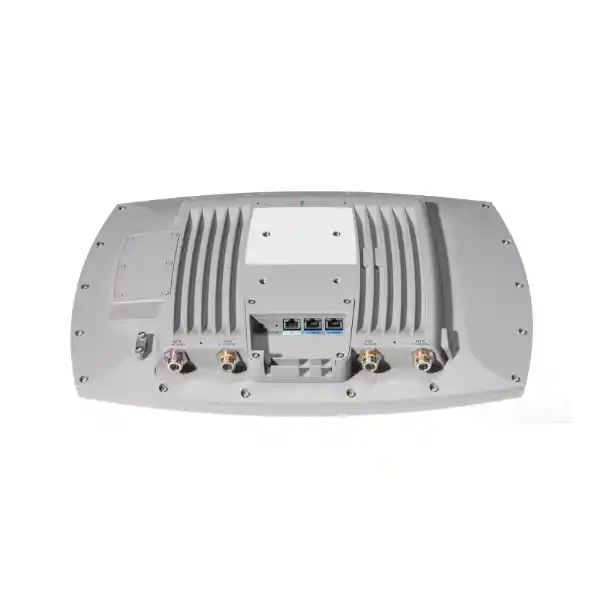
| Ethernet | 2 × RJ-45 multigigabit ports supporting 100M/1G/2.5G/5G/10G. |
| Power | 802.3bt Cisco UPOE for full-performance operation; 802.3at PoE+ supports reduced radio/link configurations; 802.3af is intended for staging with radios off. |
| Management | Designed for Cisco global-use onboarding with on-premises Catalyst and Meraki cloud-management options, depending on architecture and licensing. |
| Location / IoT | Integrated GNSS/GPS, Bluetooth Low Energy / IoT capabilities and a dedicated scan-radio architecture as documented by Cisco. |
| Dimensions | Approximately 475 × 330 × 73 mm without mounting brackets. |
| AP weight | Approximately 4.54 kg, excluding bracket weight. |
| Outdoor protection | IP65/IP67 protection is specified when the optional CW-ACC-9179-B-00 outdoor environment pack is installed. |
| Required subscription | Cisco Networking Subscription for wireless, with Essentials or Advantage licensing options according to Cisco. |
Technical performance depends on software, power source, channel availability, management mode and radio configuration. The correct bill of materials should therefore be checked against the current Cisco ordering and regulatory documentation before purchase.
Wi-Fi 7 capacity: what the headline numbers mean in practice
Cisco documents PHY data rates of up to 24 Gbps in one quad-radio configuration, with other tri-radio configurations providing different theoretical aggregate rates. These figures are useful for understanding platform capability, but they are not the same as application throughput experienced by a single phone, laptop or scanner. Real user performance is affected by channel plan, interference, client capability, distance, airtime contention, protocol overhead, application behavior and the distribution of users among radios and access points.
The more meaningful purchasing question is whether the radio architecture gives the designer enough capacity and flexibility for the venue. The CW9179F supports 4×4 client-serving radios, dual-5-GHz arrangements and 6 GHz operation where permitted. Wi-Fi 7 functions such as Multi-Link Operation, 4096-QAM and preamble puncturing can improve efficiency or performance with compatible clients and appropriate spectrum, but a mixed-client venue will continue to include older 802.11ax, 802.11ac and other devices. The network must therefore be designed for the actual client population rather than assuming every visitor will arrive with a Wi-Fi 7 device.
In a stadium or event environment, capacity is usually managed by distributing users across a sufficient number of appropriately sized cells. Narrower coverage can reduce the number of clients contending for the same radio and can limit unnecessary overlap into adjacent sections. Channel reuse, transmit power and antenna pattern choices then become part of one coordinated design. That is why the CW9179F’s antenna behavior is as important as its modulation and channel-width capabilities.
Software-configurable directional coverage
The CW9179F integrates directional antennas and provides selectable beam patterns that Cisco identifies as wide, narrow or boresight, and front-and-back. This approach is particularly useful when an installation team needs to adapt coverage without physically replacing an entire antenna assembly. A venue can have dramatically different geometry from one area to another: a steep seating bowl may need a focused cell, a concourse may need broader coverage, and a mounting position between two service areas may benefit from a different directional arrangement.
Beam selection is not an automatic substitute for RF design. Cisco’s deployment guidance shows that the available patterns differ by radio band and that some configurations redirect specific radios to external antenna connectors. The design team must therefore understand which slot, frequency band and antenna path is active for the intended pattern. Mount orientation also matters because a directional antenna can create strong coverage in the wrong place if the physical aim is inaccurate.
For procurement, this means the quotation should include more than the AP itself. Confirm mounting hardware, any external antenna requirement, the outdoor environment pack if applicable, cable routes, switch ports, PoE class and the expected management architecture. When a project has floor plans or seating drawings, sharing them before purchase helps turn the model selection into a coverage plan instead of leaving antenna decisions until installation day.
Dual 10 Gb multigigabit Ethernet and upstream switching
The CW9179F has two RJ-45 multigigabit Ethernet ports supporting rates from 100 Mbps through 10 Gbps. Cisco describes the two ports as providing link and power redundancy capabilities, with appropriate design. This is valuable for an access point capable of serving several high-capacity radios because the wired network must be able to carry traffic without becoming the avoidable bottleneck. A high-end wireless access point connected to a limited 1 Gbps switch port may still operate, but the overall architecture can constrain the benefit of the radio platform.
Cable quality matters at these speeds. Cisco notes that Cat 6 or Cat 6A cabling is required for 10 Gbps port speeds, while Cat 5e can support up to 5 Gbps in the documented guidance. For a new venue deployment, cabling should therefore be specified with the intended uplink speed, PoE class, length and environmental conditions in mind. Existing venues should test and document installed copper before assuming it can support full multigigabit service.
The switch must also be chosen for more than port speed. Check 802.3bt power capability, total PoE budget, multigigabit port density, uplink capacity, redundancy requirements, VLAN design, QoS and the operational platform used by the IT team. Large installations with many CW9179F units can create substantial aggregate power and switching requirements, so access-layer sizing belongs in the wireless bill of materials rather than being treated as a separate afterthought.
PoE requirements and performance modes
Power is a critical design item for the CW9179F because the operating mode changes according to the available PoE level. Cisco specifies 802.3bt Class 6 / Cisco UPOE for the full 4×4 radio configuration and dual 10 Gbps links, with a maximum PoE power figure of 47 W in the documented table. With 802.3at PoE+, the access point operates with reduced radio capabilities and lower link speeds depending on tri-radio or quad-radio mode. Cisco lists 802.3af only for configuration staging with the radios off.
This distinction is easy to miss during procurement. A switch can be “PoE capable” yet still not provide the power class required for the intended CW9179F performance. The project team should confirm per-port power as well as the switch’s total chassis or power-supply budget. A venue with many access points can exceed the available total power even if every port supports the necessary standard individually. Redundant power-supply planning may also be important for event continuity.
Cisco recommends proper power negotiation using LLDP or Cisco Discovery Protocol. The design team should document the target AP mode, switch model, power source and expected failover behavior before deployment. Where the existing switching plant cannot deliver 802.3bt, an upgrade or approved injector approach may be needed. That decision should be made before equipment arrives so that the access point is not commissioned in a reduced mode unintentionally.
Indoor and outdoor deployment planning
One of the unusual strengths of the CW9179F is its convertible indoor-outdoor design. Cisco offers the CW-ACC-9179-B-00 environment pack for outdoor deployment. With that pack installed, Cisco specifies IP65/IP67 ingress protection and documents environmental tolerances including wind resistance, solar radiation, salt-corrosion testing and temperature limits. The environment pack is therefore not a cosmetic accessory; it is part of the supported outdoor protection strategy.
Outdoor installation still requires site-specific engineering. Mounting structures must be suitable for the access point and bracket weight, cable entry must be protected, grounding and local electrical requirements must be considered, and the selected mounting location must account for service access. Cisco documents an operating temperature range that changes depending on solar load, and it also notes a radio behavior change above 40°C ambient where the AP can shift from 4×4 to 2×2 on client-serving radios. For exposed Tanzanian sites, thermal and solar conditions should therefore be included in the design discussion rather than assumed to be irrelevant.
Outdoor 6 GHz operation also requires extra attention to regulatory and software support. The AP hardware is global use, but the usable spectrum is still controlled by country-specific rules and software support. The quotation and deployment plan should therefore identify the intended country, software release and indoor or outdoor operating scenario, then verify the current Cisco compliance information before activation.
Tanzania regulatory and 6 GHz planning note
Planning point: Cisco’s current CW917x country-code documentation places Tanzania (TZ) in Phase 3. Cisco also states that 6 GHz availability is country-specific and that release information should be checked against current regulatory and software documentation before deployment.
This matters because “Wi-Fi 7 capable” does not mean every band, channel width or transmit-power option may be used identically in every country. The CW9179F is designed as global-use hardware, so the physical product does not need the older style of country-specific regulatory-domain SKU. The operating configuration, however, must still resolve and apply the correct country rules. Cisco documents mechanisms such as GNSS/GPS-assisted country identification and software-based regulatory handling for the global-use platform.
For a Tanzanian deployment, the project team should verify the current Cisco compliance status, supported software release and the exact permitted 2.4 GHz, 5 GHz and 6 GHz behavior at the time of installation. This is particularly important when the project depends on 6 GHz capacity or outdoor operation. The commercial quotation should avoid guaranteeing a specific 6 GHz channel plan until that regulatory check is complete.
A practical procurement request should therefore state the intended country, venue type, indoor or outdoor use, preferred management platform and planned software train. That information allows the solution design to be checked against the correct regulatory path rather than relying on a generic global datasheet alone.
Catalyst or Meraki management: one hardware platform, different operating models
Cisco’s Wi-Fi 7 global-use strategy allows the same hardware family to fit either Catalyst-oriented on-premises management or Meraki cloud-management approaches. For organizations with an established Cisco Catalyst wireless architecture, the CW9179F can align with controller-based operations and Cisco enterprise management workflows. For organizations standardizing on Meraki, the same global-use generation is designed to support cloud-native onboarding and operations under the appropriate licensing and software model.
This flexibility is useful for long-lived venue infrastructure because the hardware decision does not have to be based solely on an old management-mode-specific SKU. It does not mean that management systems are interchangeable without planning. Existing controller versions, licensing, feature requirements, configuration migration, monitoring workflows, administrator skills and other Cisco infrastructure all influence the correct mode.
Before ordering, identify how the venue is managed today and how it is expected to operate in the next few years. A stadium with a mature Catalyst environment may prioritize controller integration and established operational processes. A distributed venue operator may prioritize cloud visibility and centralized administration. The access point supports strategic flexibility, but the subscription and architecture must still be selected deliberately.
Licensing and subscription considerations
Cisco specifies that Wi-Fi 7 access points including the CW9179 series require a Cisco Networking Subscription for wireless, with Essentials or Advantage licensing options. Hardware cost is therefore only one part of the procurement requirement. The quote should identify the subscription level, term and management architecture so that the supplied entitlement matches the intended features and operational model.
Buyers should not assume that every feature mentioned across Cisco wireless documentation is available in the same way under every license, software release or management mode. Requirements such as advanced assurance, analytics, policy integration, automation or specific operational workflows should be mapped to the appropriate Cisco licensing documentation during solution design. If the project is an expansion of an existing estate, current subscription dates and the organization’s licensing approach may influence how new APs are added.
For a quotation request, include the number of access points, preferred management platform, existing Cisco controller or dashboard environment, current subscription information where known, desired license duration and any specific enterprise features that are mandatory. This avoids a situation where the correct hardware is purchased but the required operating entitlement is missing from the bill of materials.
Where the CW9179F fits best
Stadium seating bowls
Directional cells can be planned toward defined seating sections where many users arrive simultaneously and capacity must be reused across the venue.
Arenas and auditoriums
Dense seating and limited mounting positions can benefit from careful beam control, multigigabit uplinks and high-capacity radio design.
Airports and transport spaces
High device counts, mobile users and large open areas can justify a platform designed for controlled high-density service rather than ordinary office coverage.
Festivals and event venues
Convertible indoor-outdoor capability and purpose-built directional behavior can support temporary or permanent high-density event designs where the site conditions are suitable.
Large industrial spaces
Challenging geometry and specialized coverage requirements may justify directional planning, but the final choice should follow an RF survey and client/application review.
Complex public venues
Sites that combine stands, concourses, halls and outdoor zones can use different beam and mounting strategies while retaining one enterprise AP family.
When a different Cisco access point may be a better fit
The CW9179F is a high-end large-venue model. Its directional antenna design, physical size, power needs and deployment options are valuable when the environment demands them, but they can be unnecessary for a conventional office, small branch, hotel room, ordinary classroom or low-density retail space. A simpler indoor Wi-Fi 7 model may be easier and more economical to deploy when omnidirectional coverage is appropriate and user density is moderate.
Likewise, an outdoor project should not automatically select the CW9179F only because outdoor conversion is available. The correct outdoor model depends on required antenna type, coverage geometry, mounting constraints, fiber or copper uplink needs, PoE availability, environmental exposure and expected client density. Cisco has other Wi-Fi 7 access point families designed for different indoor and outdoor roles.
A useful comparison therefore starts with the network problem: How many concurrent devices are expected? Where can APs be mounted? Is the coverage area concentrated or broad? Are external antennas required? What switching and PoE infrastructure already exists? Is 6 GHz essential? Which management platform is in use? Answering those questions is more reliable than selecting the model with the highest specification.
Network design checklist before ordering
Security and enterprise access control
Cisco lists WPA2, WPA3, 802.1X, Enhanced Open / OWE and multiple enterprise EAP methods among the security capabilities associated with the CW9179F platform. These technologies allow the AP to participate in enterprise identity, encrypted guest access and policy-driven WLAN designs. The access point, however, is only one component of a secure wireless architecture. Authentication servers, certificates, identity stores, segmentation, firewall policy, guest onboarding and monitoring must be designed with the organization’s security requirements.
Large public venues often need separate service classes. Visitor Wi-Fi may require isolated internet access and controlled onboarding, while ticketing, POS, media, staff devices, building systems and operational scanners may require different authentication and VLAN or policy treatment. A high-density venue should therefore plan SSIDs and policies carefully rather than creating many broadcast networks that consume additional airtime.
Procurement teams should ask the technical team whether the project must integrate with Cisco Identity Services Engine, existing RADIUS infrastructure, guest portals, device profiling, network access control or other security systems. Those requirements can influence licensing and overall architecture even when the access point hardware itself remains the same.
GNSS/GPS, BLE and operational intelligence
The CW9179F includes integrated GNSS/GPS capability. In Cisco’s global-use architecture, location information can contribute to country-code and regulatory handling when deployment conditions allow appropriate satellite visibility. The platform also includes Bluetooth Low Energy / IoT capabilities and scanning functions that can support broader wireless operations and location-related use cases depending on management mode and software support.
Cisco also documents an accelerometer that can help verify how the access point is installed after deployment. That detail can be valuable in large venues where APs may be mounted at unusual angles or in locations that are difficult to inspect routinely. A radio design depends on physical orientation, so the ability to identify unexpected installation changes can support operational consistency.
These capabilities should be evaluated as part of the intended solution rather than assumed to deliver a specific location or IoT outcome automatically. If a project depends on asset tracking, wayfinding, analytics or application hosting, define the desired function, supported software stack, required licenses and any complementary infrastructure before treating the AP feature list as a complete solution.
Deployment workflow for a large-venue project
A high-density wireless deployment should be validated after physical installation. Construction details, audience behavior and neighboring RF activity can differ from design assumptions. Post-installation testing should confirm coverage, roaming behavior, client distribution, channel utilization, switch uplink performance and application experience in representative operating conditions.
For an event venue, testing during an empty building is useful but may not fully represent a sold-out event. Operational monitoring and staged tuning are therefore part of the lifecycle. The CW9179F provides substantial flexibility, but that flexibility is most valuable when an engineering process is in place to use it.
Procurement guidance for Tanzania projects
When requesting the Cisco CW9179F for a project in Tanzania, provide enough detail for the quotation to reflect the complete system. State the number of venues or buildings, approximate user and device counts, indoor or outdoor areas, mounting conditions, existing switch models, available PoE, current controller or cloud-management platform, cable type and whether 6 GHz is a design requirement. If the project is replacing an older Cisco stadium solution, include the existing AP and antenna models, controller version and any known problem areas.
A complete quote may need access points, mounting hardware, outdoor environment packs, external antennas where the chosen beam mode requires them, compatible switching, power components, licenses and implementation services. Exact availability, lead time and price should be confirmed for the final part numbers and quantity; a product page should not be treated as proof of local stock.
For public-sector, hospitality, transport, sports or education projects, procurement may also require formal compliance documentation, support terms and lifecycle information. Identify those requirements early so the technical and commercial package can be reviewed together. If a tender specifies a particular throughput, band, antenna gain, ingress rating or support entitlement, the requirement should be mapped to the exact Cisco documentation rather than inferred from the product family name.
FourTeck Tanzania can use the project information to prepare a product and configuration review before quotation. The goal is to match the AP to the venue and avoid purchasing a high-density platform without the switching, power, licenses and accessories needed to operate it as intended.
Frequently asked questions
Is the Cisco CW9179F a Wi-Fi 7 access point?
Yes. Cisco specifies the CW9179F as an enterprise Wi-Fi 7 / 802.11be access point for high-density large public venues. It also supports earlier Wi-Fi generations for mixed client environments.
Is the CW9179F intended for normal office use?
It can technically operate in many enterprise environments, but its design is optimized for difficult high-density venues such as stadiums, arenas, airports and similar spaces. A smaller omnidirectional Cisco access point may be more appropriate for a conventional office.
Can the CW9179F be installed outdoors?
Cisco provides an optional CW-ACC-9179-B-00 environment pack for supported outdoor deployment. With the pack installed, Cisco specifies IP65/IP67 ingress protection. Site mounting, temperature, solar load, wind, cabling and regulatory requirements still need to be reviewed.
Does it support 6 GHz in Tanzania?
Cisco’s current CW917x country documentation places Tanzania in Phase 3, but Cisco also states that 6 GHz availability and required software can be country-specific. The exact software release, indoor/outdoor scenario and current regulatory status should therefore be verified at deployment time rather than assumed from the hardware specification alone.
What PoE is required for full performance?
Cisco documents 802.3bt Class 6 / UPOE for the full 4×4 radio configuration and dual 10 Gbps links. PoE+ can operate the AP with reduced radio and link configurations. 802.3af is intended only for staging with radios disabled.
Does the CW9179F require a license?
Yes. Cisco states that its Wi-Fi 7 access points require a Cisco Networking Subscription for wireless, with Essentials or Advantage licensing options. The correct level and term should be chosen for the intended management and feature requirements.
Can it be managed with Meraki?
The Wi-Fi 7 global-use platform is designed to support Meraki cloud-native and Catalyst-oriented management paths. The project should confirm onboarding mode, licensing, existing infrastructure and software compatibility before deployment.
Why are there two 10 Gbps Ethernet ports?
The dual multigigabit ports provide high-capacity wired connectivity and can support link and power redundancy designs. The actual architecture depends on switch capability, cabling, PoE design and configuration.
Do I need Cat 6A cabling?
Cisco notes that Cat 6 or Cat 6A is required for 10 Gbps port speeds in its CW9179F guidance, while Cat 5e can support speeds up to 5 Gbps. Existing cable runs should be tested and the required distance and installation conditions considered.
What information should I provide for a quotation?
Provide venue plans, expected concurrent client counts, indoor and outdoor areas, mounting positions, existing switch and controller details, cabling, PoE capability, preferred management model, quantity, licensing term and any requirement for 6 GHz, external antennas or outdoor protection.
Request a Cisco CW9179F project quotation
For a useful quote, share the venue type, site drawings, expected peak users, required coverage zones, existing Cisco environment, switch and PoE details, indoor or outdoor mounting plan, preferred Catalyst or Meraki management approach, license term and required quantity. If 6 GHz is important to the design, include that requirement so the current Tanzania regulatory and software position can be checked as part of the solution review.
Ask for a configuration review before finalizing the bill of materials.




Reviews
There are no reviews yet.