
Thermal security | Hanwha Vision T series
Hanwha TNO-4051T Thermal Camera for Perimeter Surveillance in Tanzania
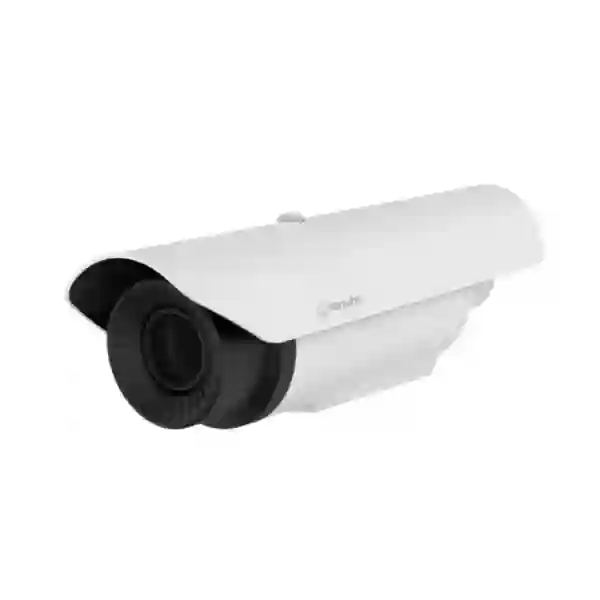
Need to monitor a dark boundary or a difficult outdoor approach? The Hanwha Vision TNO-4051T brings 640 × 480 thermal imaging, a fixed 35 mm lens, event analytics and network-video integration to planned security deployments. It is especially worth evaluating where detecting movement matters more than obtaining daylight colour detail. Request an application review and a current quotation before specifying it for your site.
Best-fit buying guidance
Consider this camera for a specific outdoor thermal detection zone, not as an all-purpose replacement for colour CCTV or a calibrated temperature sensor. The fixed 35 mm view, 36 m minimum object distance and any need for an external positioning head should be reviewed against the site plan. A demonstration and integration check are recommended before final selection.
Verified technical specifications
The following information reflects the exact TNO-4051T model and should be checked against the final supplied revision during procurement. It does not represent a claim about local stock, price or installed performance.
| Camera type | Uncooled microbolometer thermal network camera |
|---|---|
| Maximum resolution | 640 × 480 pixels |
| Thermal band | 8–14 μm |
| NETD | ≤ 50 mK |
| Lens | 35 mm fixed, F1.0 |
| Field of view | 17.2° horizontal; 13° vertical; 22° diagonal |
| Minimum object distance | 36 m |
| Video | H.265, H.264 and MJPEG; up to 30 fps depending on settings |
| Network | RJ-45 10/100BASE-T; ONVIF S, G, T; SUNAPI |
| Recording | One microSD/SDHC/SDXC slot, maximum 256 GB |
| Power | PoE IEEE 802.3af Class 3; 12 V DC; 24 V AC |
| Operating temperature | −40 °C to +60 °C |
| Outdoor protection | IP66; NEMA 4X |
| Positioning | Fixed camera; external pan/tilt integration is a separate design |
What the TNO-4051T is designed to do
The Hanwha Vision TNO-4051T is a network thermal surveillance camera for security teams that need to notice activity where conventional visible-light images may be unreliable. It forms an image from differences in detected infrared radiation rather than depending on illumination from the sun or nearby lamps. That makes it a useful complementary view for facilities with dark perimeters, poorly illuminated yards or wide exterior spaces. It is not a replacement for every other camera: a visible-light camera is often better for identifying clothing colour, vehicle markings or facial details after an incident.
The camera belongs in a planned security system, not simply at the end of a network cable. Before purchasing, define the event you wish to detect, the part of the site that matters, the monitoring position, and the action staff should take when an alert arrives. For example, noticing someone entering a restricted corridor is a different requirement from reliably identifying that person. The thermal view can support the first task, while an appropriately positioned visible-light camera can support the second.
For buyers in Tanzania, a sound starting point is a site drawing and an explanation of working conditions, including darkness, seasonal rain, heat, dust, power interruptions, viewing obstructions and available network infrastructure. Those details affect equipment selection more than the phrase “thermal CCTV” alone.
Key capabilities at a glance
At its core, this model combines a 640 × 480 uncooled microbolometer with a fixed 35 mm F1.0 lens. The nominal angular view is approximately 17.2 degrees horizontally and 13 degrees vertically. It supports H.265, H.264 and MJPEG video compression and up to 30 frames per second where the applicable frequency and stream settings permit. These are camera characteristics, not promises about the detection distance at a particular site.
Useful system features include analytics for motion, virtual areas and lines, tampering, loitering, directional crossing and temperature change. A microSD slot accepts supported cards up to 256 GB. The camera can be powered by IEEE 802.3af Class 3 PoE, 12 V DC or 24 V AC, subject to the specified wiring and installation requirements. Its published outdoor protection includes IP66 and NEMA 4X.
A particularly important purchasing distinction is that the TNO-4051T is not a self-contained motorised PTZ camera. Hanwha Vision describes it as suitable for external pan-and-tilt-head integration. If remotely repositioning the view is essential, the compatible head, mounting, cabling and controller must be designed as a system. Do not assume that selecting this camera alone provides pan, tilt or optical zoom.
Understanding thermal images rather than ordinary CCTV
A thermal image represents apparent thermal contrast within the scene. In practical terms, a person, vehicle, warm machine or other object may be distinguishable from its surroundings even when a visible-light camera would show a very dark scene. The camera uses an 8–14 micrometre spectral range. This has a different purpose from a standard infrared-assisted night-vision camera, which generally still produces an image from reflected near-infrared illumination.
Thermal monitoring is valuable when the immediate objective is situational awareness and detecting an unusual presence. It does not automatically provide the same visual detail that guards or investigators expect from daylight colour footage. Objects close to ambient temperature can be harder to distinguish. Sun-heated surfaces, changing weather, backgrounds and reflections of thermal energy can also affect the scene. Detection quality must be assessed against the real target and surrounding conditions.
The output can be displayed in different palettes, such as white-hot or black-hot, to assist interpretation. Changing a palette does not add resolution or reveal identity that the sensor did not capture. Operators should choose a display scheme that supports consistent decisions, and then train people to interpret alarms using recorded examples from their own environment.
Is the 35 mm lens right for the site?
A fixed 35 mm lens provides a relatively narrow view when compared with shorter focal-length thermal designs. The published horizontal angle is about 17.2 degrees, with approximately 13 degrees vertically. A narrower view can direct more of the available sensor pixels toward a selected corridor, fence line or distant sector. The trade-off is coverage: one camera does not view the same broad area as a shorter-lens alternative from the same mounting point.
Start by measuring the width and depth of the intended zone, then consider where the camera will face. Position also determines whether a person appears against a clear background or blends into a complicated thermal scene. Avoid buying solely on the quoted lens length; ask for a design that shows target pixel coverage and the intended detection objective. The manufacturer lists a minimum object distance of 36 m, which is another reason to assess near-camera blind zones and not treat this model as a general-purpose close-range indoor unit.
If a site needs continuous observation both near the gate and along a long perimeter, a multi-camera design may be more practical than expecting one lens to handle both tasks. Confirm required recognition, detection and evidential detail separately, because these outcomes are not interchangeable.
What 640 × 480 thermal resolution means
The 640 × 480 sensor produces a thermal VGA image with a total of 307,200 image samples. Compared with lower-resolution thermal sensors, having more image detail can help a designer place useful pixels on objects in the field of view. Yet the number printed on the datasheet is only one part of performance. Focal length, scene distance, object size, weather, display scale, mounting stability and analytic configuration all influence what operators can actually see.
The specification also identifies 17 micrometre pixels, NETD of 50 mK or less and a fixed-focus arrangement. NETD describes sensor sensitivity to small thermal differences under specified conditions; it is not a guarantee of successful intrusion detection for every environment. A viewing demonstration under realistic conditions is more useful than interpreting that number in isolation.
When discussing resolution with a supplier, ask whether the proposed image will be used for alarm verification, overall awareness or a more demanding task. A live demonstration should show the expected viewing distance, the intended software and screen, and how image quality changes at different times. If the procurement document requires face identification or licence-plate reading, explain that those requirements call for an appropriately designed visible-light imaging component.
Security monitoring after dark
Nighttime coverage is a common reason to choose thermal surveillance. Where a conventional camera relies on lighting or a separate illuminator, a thermal camera can render contrast between objects and their surroundings without visible illumination. That can reduce reliance on floodlights for the detection function, although lighting may still be needed for safe movement and visible-light verification footage.
A typical deployment might monitor a restricted route outside a warehouse, a boundary overlooking a storage yard or a remote passage between buildings. The objective should be specific: detect someone entering a protected zone, alert a control room and provide enough visual context for staff to decide whether dispatch is appropriate. The camera’s analytics may help, but no alerting method should be treated as infallible.
Environmental effects still matter. Heavy rain, intense surface heating, an obstructed lens, animals, moving vegetation or changes in the thermal background can influence images and alarms. Plan how staff will handle nuisance alerts and how they will verify a genuine event. Thermal monitoring works best as one layer in a wider security design that includes access control, physical barriers, routine patrols, incident procedures and, where needed, standard CCTV.
Practical limitations that buyers should understand
Thermal vision is not equivalent to seeing through every obstacle. Solid walls, most building materials and ordinary window glass are not transparent to the thermal band used by this camera. A camera mounted behind a normal window is therefore not a substitute for an appropriate outdoor mounting arrangement. Fence mesh, posts, vegetation and vehicles can also obscure a target or complicate the scene.
Another common misunderstanding concerns temperature. The product includes temperature-change detection, but it should not automatically be specified as a calibrated instrument for measuring the exact temperature of equipment, products or people. A change alert and a validated temperature measurement are different functions. Where the operational requirement involves an absolute temperature threshold, high-accuracy measurement, safety certification or regulatory reporting, select and validate equipment explicitly intended for that job.
Thermal images also may not tell an operator who a person is. Their strongest contribution in many designs is prompt awareness that something is happening. For evidential colour footage or identification, pair the thermal view with a correctly chosen optical camera and align recording, time settings and incident workflows across both systems. These limitations should be addressed in the proposal before installation, not discovered during an incident.
Analytics for perimeter events
The TNO-4051T offers event functions including motion detection, virtual-line crossing, directional activity, loitering, virtual-area intrusion, enter-and-exit conditions, object appearance or disappearance, tampering, audio detection, sound classification and shock detection. Such features create a foundation for targeted alerts, but their usefulness depends on how zones and thresholds are configured.
Consider a fence corridor. A security team may care more about a target crossing inward through a defined line than activity on a nearby public path. A properly placed virtual line can help prioritise that event. A loitering rule might serve a restricted access point, while motion monitoring could provide broad awareness in another zone. Avoid enabling every analytic indiscriminately; that can create excessive alarm traffic and undermine operator confidence.
Use a short commissioning trial to observe people, vehicles, animals and known environmental movement in the scene. Review captured events and tune the rule set accordingly. If a guard is expected to respond to an alarm, the event should deliver enough context to act safely. Keep a documented configuration record and revisit it if the site layout, traffic pattern or landscaping changes.
Temperature-change detection: appropriate expectations
Hanwha Vision lists temperature-change detection among this model’s analytics. The feature may be useful where a significant change in the thermal scene is an event worth reviewing. It should be evaluated as an analytic alert with its own operating conditions rather than described as a certified fire detector, industrial thermometer or guaranteed early-warning system.
Suppose a plant operator is concerned about unusual heat near a monitored outdoor asset. First define the asset, distance, expected temperature range, surrounding heat sources and required alert response. Then confirm that this particular camera and firmware can deliver a useful alert under those conditions. A busy production environment, reflections, warm sunlight or a large change in ambient temperature may complicate interpretation. It may be necessary to use specialised monitoring equipment for process safety, precise temperature readings or critical fire detection.
An alarm is only the first step in an operational process. Assign responsibility for reviewing it, identify when to escalate and make sure a second verification method exists when consequences are serious. Do not depend on a single video analytic as the sole control for personnel safety, industrial protection or emergency response.
Fixed thermal camera versus motorised positioning
The TNO-4051T has a fixed lens and housing, but Hanwha Vision describes an application for integration with an external pan-and-tilt head. This can be helpful where a system integrator has a defined requirement to move the thermal view. The resulting functionality depends on the separate head, physical adapter, control interface, cable management and supported system configuration.
This distinction matters when a buyer sees the word “pan/tilt” near the product description. It does not mean that the camera by itself supplies endless panning, preset tours or a motorised tilt mechanism. Those capabilities belong to the appropriate positioning assembly if specified. Similarly, digital processing should not be confused with an optical zoom lens; the built-in lens is a fixed 35 mm design.
For a perimeter that must be observed continuously, a static thermal view can be desirable because it remains directed at one critical sector. A moving head may be appropriate for planned inspections or operator-directed searches, but a camera looking elsewhere can temporarily leave another area unobserved. The specification should make clear whether the requirement is continuous fixed surveillance, active positioning or both, and how any gaps will be covered.
Recording choices and edge storage
The camera has one microSD/SDHC/SDXC slot with a stated maximum card capacity of 256 GB. Local recording can be helpful for an event buffer or resilience when a central connection is unavailable, provided the recording and retention settings are designed correctly. A card-capacity figure alone does not establish how many days of video will be retained.
Retention depends on selected resolution, codec, frame rate, bitrate, scene activity, audio settings, event versus continuous recording and the recorder’s storage policy. H.265 and the camera’s WiseStream II functionality may help manage bandwidth in suitable configurations, but actual savings must be measured against the selected stream and activity profile. A recorded event is only useful if operators can retrieve it consistently and the time stamp is correct.
Determine whether the security team needs continuous video, event-led clips, remote central recording or a combination. Consider network video recorder compatibility, storage redundancy, access rights, clock synchronisation and evidence export. Test what happens when a card reaches capacity or a network connection is interrupted. For sites with incident investigations, document who may retrieve recordings and how access is logged.
Streaming, compression and network planning
The TNO-4051T supports H.265, H.264 and MJPEG, alongside configurable stream profiles. The manufacturer also specifies an RJ-45 10/100BASE-T network connection, multiple streaming capabilities and support for common network video protocols. These features offer flexibility, but a deployment still needs a bandwidth and recording design tailored to the number of cameras and users.
Plan at least one stream for the recorder and any additional views needed by control-room software or authorised remote operators. Decide which display quality is necessary for verification and whether lower-bitrate secondary views are acceptable on constrained links. The combined load must be checked at busy periods, not estimated from a single still image. Wireless backhaul or shared connections may need particular attention to latency and interruption.
Compression settings also affect evidence. Excessively aggressive bitrate reduction can degrade the recorded detail needed to understand an event. Establish recording quality, retention and network availability as measurable design requirements. Include NTP time synchronisation, traffic separation where appropriate and routine monitoring of link faults. A well-chosen thermal camera cannot compensate for an unreliable network or a recorder that has not been configured to capture the relevant alarm.
Integrating with a VMS or recorder
Hanwha Vision lists ONVIF Profile S, G and T and its SUNAPI interface among the camera’s integration capabilities. These standards and interfaces can support interoperability with compatible video management or recording systems. They are not a blanket guarantee that every analytic, audio feature or alarm event will be available in every third-party software package.
Ask the integrator to confirm the exact recording platform, its software version, the camera firmware and the functions that must work. A basic video stream might be supported even when specialised alarm rules, events or settings require additional integration. Verify live view, recording, playback, user permissions and event handling in a representative setup. If the site relies on cross-camera verification, confirm that the operator can move between the thermal view and associated optical cameras easily.
Alarm I/O can also contribute to a larger system, but it should be designed with clear electrical and operational responsibilities. An alarm input is not the same as a complete access-control or emergency system. Document the expected result of each trigger, what evidence is recorded and how a fault is reported when any connected device goes offline.
PoE, DC and AC power options
The product specification lists IEEE 802.3af Class 3 PoE, 12 V DC and 24 V AC as supported power inputs. That offers different installation choices depending on cabinet locations and existing infrastructure. The manufacturer lists a maximum PoE demand of around 10 W for the camera; use the current official data and the full installed assembly when calculating power budgets.
A PoE design must account for switch capacity, cable length, conductor quality, surge protection and any intermediate equipment. If the system includes an external pan/tilt head, do not assume that the same PoE budget powers the entire assembly. The head and accessories may have different requirements. For DC or AC installations, confirm the allowable supply, polarity where applicable, cable sizing and protective devices against the manufacturer’s guidance.
Power continuity is a practical concern for monitoring sites with sensitive assets. Decide whether the network switch, recorder, communications equipment and camera should remain active during a power failure, and size backup capacity for the intended operating period. Test restart behaviour and recording recovery after power is restored. An otherwise capable camera has little security value if its supporting network or recording system shuts down at the same time.
Outdoor construction and environmental assessment
The published environmental ratings include IP66 and NEMA 4X. IP66 describes protection against dust ingress and powerful water jets under defined test conditions; it does not mean that every mounting arrangement or cable connection is automatically weatherproof. Outdoor suitability depends on the whole installation, including brackets, cable glands, connectors, housing interfaces and any accessory equipment.
The manufacturer specifies an operating range from approximately minus 40 degrees Celsius to plus 60 degrees Celsius and non-condensing humidity within the stated limits. Those specifications provide a useful basis for assessing a proposed location, but high solar loading, enclosed cabinets, water accumulation and poor cable routing can create conditions more severe than ambient weather reports suggest. In coastal or industrial environments, select fittings and maintenance routines appropriate to local corrosion exposure.
For a Tanzania project, ask the installer to assess the actual site conditions rather than assume that every location has identical environmental challenges. Inspect whether there is safe access for cleaning and service. Check the mechanical load and suitable fixings for the camera and mounting surface. Water-resistant equipment still benefits from correct installation, periodic inspection and prompt attention to damaged seals or wiring.
Mounting position, sightlines and geometry
Camera height is a design choice, not merely a convenient place to attach a bracket. A high mounting point can reduce casual interference and help see over certain obstacles, while a poorly chosen angle can make targets small, hide them behind structures or create an avoidable blind area. A lower position may improve the target angle but expose the unit to damage or visual obstruction.
For each proposed position, mark the main monitored region, the expected direction of travel and objects that could interrupt the line of sight. Inspect the area from the planned camera height before finalising a mount. Account for moving gates, stored materials, trees, vegetation, seasonal use of the yard and changes in vehicle parking. Remember that the published minimum object distance is 36 m; close areas may require additional devices.
A practical design document should state the purpose of the view and identify zones that another camera must cover. On sites where a pan-and-tilt head is contemplated, mechanical stability, vibration, cable movement and protective routing require special attention. The TNO-4051T includes digital image stabilisation, but this does not remove the need for a rigid, appropriately engineered mount.
Designing a realistic site test
Before approving a full deployment, plan a demonstration that matches the intended security objective. Agree on the target: for example a person entering an internal restricted zone, a vehicle approaching a defined service track, or an object moving through a selected corridor. Record the test distance, ambient conditions, camera position, display equipment, and whether the task is detection, event verification or identification.
Carry out trials in the conditions that matter. A daytime demonstration by itself is not enough if the principal requirement is night surveillance. Where practical, observe different backgrounds, wet conditions and routine movement near the boundary. Include authorised staff or a controlled target rather than creating an unsafe test. Check whether the analytic event is generated, whether it reaches the recorder and whether an operator can interpret it.
Use the results to refine the field of view, alarm rules, recording settings and response process. Record shortcomings openly, such as missed targets, nuisance alerts or poor context. A credible acceptance test should define a pass condition in advance and identify what happens when it is not met. The specification sheet sets expectations; the site test determines whether the proposed installation actually supports the job.
Turning alerts into a workable security response
A notification becomes valuable when someone knows what to do with it. Define the control-room workflow before the camera goes live: who receives the alert, what supporting picture appears, when an event should be escalated and how it is logged. Clarify whether a guard patrol, remote operator or onsite supervisor owns the response.
For example, a line-crossing alert might open a thermal live view, show a related optical camera and place the event in an incident queue. The operator should be able to distinguish routine authorised movement from suspicious activity using other information available at the site. Important events may need a secondary communication channel if the primary monitoring system is unavailable. Alarm output hardware should be integrated only after the triggering conditions are clearly understood.
Schedule a period for tuning and reviewing alerts after commissioning. New parking patterns, landscaping or work schedules can make a previously useful rule less precise. Measure both missed events and unnecessary dispatches where possible, and decide who has permission to change analytic rules. A mature response plan improves the value of the surveillance investment more than enabling every available function on day one.
Cybersecurity and operator permissions
A thermal IP camera is a network endpoint and should be managed accordingly. The manufacturer’s published features include HTTPS, IEEE 802.1X network authentication options, secure communication functions, IP-based access controls and audit logs. Which controls can be enabled depends on the network design and compatible management systems.
Start with a unique strong administrator credential, limited user permissions and a documented inventory of cameras, firmware versions and assigned network addresses. Prefer separating camera traffic from general office devices, and restrict remote access to approved paths. Avoid exposing management interfaces directly to the public internet simply for convenience. Secure remote viewing usually requires a properly managed access method and an organisational decision about who may connect.
Firmware planning needs care. Hanwha Vision notes that some older firmware branches may require a bridge update before later releases. Verify the exact camera model and installed version and follow the manufacturer’s current instructions; do not apply unrelated downloads. Maintain a backup of important configuration, test a reasonable recovery procedure and review account access when staff or service providers change. Cybersecurity is an ongoing operational responsibility, not a one-time checkbox on the installation day.
Maintenance after installation
Establish a maintenance schedule that suits the environment. Outdoor cameras can accumulate dust, moisture residue, insects and other material around the front window or housing. Check the image regularly for loss of clarity, unexpected obstructions, changed viewpoints and failure of scheduled recording. Follow the approved cleaning method and avoid chemicals or abrasion that could damage optical surfaces or seals.
Routine inspections should include the mounting bracket, weatherproof cable entries, connectors, power supply, surge protection and any external pan/tilt accessory. Confirm that recording storage is available and that important alarms still produce the intended event. A camera showing live video is not proof that the recorder is saving usable clips or that notifications are reaching the right person.
Keep records of firmware, configuration, replacement parts and service work. Make backup copies of necessary settings before authorised changes. When a fault occurs, troubleshoot the camera, network path, recorder, storage and monitoring workstation in a systematic sequence rather than replacing components at random. The goal is sustained visibility and trustworthy incident evidence across the useful life of the system.
Industrial premises and manufacturing facilities
Industrial security areas often contain a mixture of wide open spaces, protected assets and restricted operational zones. Thermal surveillance may assist teams monitoring the movement of people or vehicles around these areas, particularly when the scene is dark. Typical candidate views include a boundary behind production buildings, access paths outside a fenced compound or an approach to critical utility infrastructure.
Designers should separate security events from process-safety monitoring. The TNO-4051T’s temperature-change analytic should not be described as an independently certified fire-detection system or a calibrated industrial thermometer. If the organisation is protecting high-value equipment against overheating, obtain specialist advice about the type of temperature sensing, alarm threshold, validation and emergency control required.
Where forklifts, machines or shift workers move normally, the alert policy must distinguish routine operations from unusual access. Staff training and authorised movement patterns can be just as important as technical settings. Pair thermal monitoring with access control and optical CCTV where identity confirmation is necessary. Before purchase, seek a proposal that shows how the system works during normal production and outside operating hours rather than promising general “24-hour protection” without an operating plan.
Warehousing, logistics and yard security
Warehouses and distribution yards may have long exterior edges, loading areas and sections where lighting is inconsistent. A fixed thermal camera can be considered for a defined approach or restricted boundary when the aim is to notice activity after dark. The 35 mm lens may suit a selected sector, but the actual coverage depends on distance and geometry. Do not assume one unit will cover an entire large yard.
Vehicle movement can create thermal clutter, and legitimate loading operations may continue into the evening. Configure alarm rules around the security team’s real priorities. For example, a protected corridor that should be empty after a certain time may be more straightforward than a busy gate that remains active throughout a shift. Avoid relying on a single analytic to decide whether a person is authorised.
A sound design should specify where operators see the thermal image, which nearby optical view supports verification, and how recordings are retained for incident review. Confirm network pathways between camera positions and the monitoring room. Include maintenance access for equipment mounted above vehicle routes. Good logistics security design coordinates the camera view with actual business movements rather than treating the thermal picture as an isolated purchase.
Remote infrastructure and boundary projects
Remote facilities may benefit from thermal monitoring where illumination is limited, but distance and environmental conditions must be examined carefully. A site might have a service road, restricted equipment compound or perimeter segment that needs periodic supervision. The camera can contribute visual awareness if the target occupies enough of the image and the recording or alerting infrastructure is dependable.
Reliable operation still depends on power, networking, physical security and a practical maintenance plan. If the site uses long cable routes, outdoor network equipment or wireless backhaul, specify those elements separately. The camera’s onboard storage can offer a recording option, but it is not a substitute for confirming how incidents will be reviewed and how faults will be reported. A remote installation that silently loses connectivity may leave the team unaware of the monitoring gap.
When evaluating remote deployment in Tanzania, focus on the conditions of the actual project: heat exposure, dust, heavy weather, service access, local power stability and communications reliability. No general claim about coverage, delivery or installation support should be assumed. Ask for an engineering review that shows the camera position, protection hardware, network connection and incident-response pathway together.
What to compare with other thermal models
The most useful comparison is not simply which specification has the highest number. Start with the monitored zone and choose the lens and resolution that put sufficient detail on a target at the required distance. Compare field of view, thermal sensitivity, mounting choices, analytic events, image quality, codec support, power requirements, environmental protection and the integration options actually needed by the customer.
A shorter focal-length camera may cover a wider scene but devote fewer pixels to a distant target. A different resolution may change the amount of thermal detail available. A model designed for radiometric measurement may offer functions that are not appropriate to assume on the TNO-4051T. A self-contained positioning camera may be preferable when motorised pan and tilt are mandatory. Each alternative should be validated against its own manufacturer documentation and practical test.
Total project cost also includes mounting, network equipment, recording storage, installation labour, backup power, maintenance and operator training. A cheaper device can become expensive if its field of view forces extra installations or if its analytics do not work with the chosen video management software. Ask decision-makers to compare complete designed solutions instead of camera body prices alone.
Planning a Tanzania procurement request
To obtain a useful technical proposal for the Hanwha TNO-4051T, share more than a model number. Explain the application, the type of object to be detected, the monitored distance, target route, operating conditions and number of camera viewpoints expected. A sketch or site plan with dimensions can reveal important blind spots before equipment is ordered. State whether the project needs only live monitoring or also recording, analytic alerts and centralised incident review.
Identify existing security infrastructure, including the recorder or VMS, network switches, available power methods and the monitoring location. If there is a requirement for a compatible external pan-and-tilt head, make that explicit. Clarify whether visible-light cameras are needed for incident identification. State any organisational constraints for network security, evidence retention, access control and site acceptance testing.
Commercial items should be verified separately. Request a current quotation covering the exact equipment and any proposed accessories. Confirm stock, lead time, installation scope, warranty terms, support arrangements and taxes directly through the quotation process. This page does not assert a Tanzanian selling price, local inventory or specific service coverage. The recommended next step is to request a suitability review before committing to a full perimeter design.
A simple project acceptance checklist
Before handover, make sure the installed camera is the exact model ordered and is mounted to the approved drawing. Confirm the thermal view includes the agreed monitoring zone and that the expected target can be detected in a controlled trial. Verify the network connection, time settings, chosen stream quality and recording destinations. Check image access for authorised users and confirm that unauthorised users cannot change system settings.
Test the alarm rules that the security team actually intends to use. For each event, confirm what the operator receives, what appears on the monitoring display and how a clip can be recovered. Record false-alarm observations and any approved adjustments. Test the consequences of a network fault, recording interruption and power restart where safe and appropriate. If an external pan-and-tilt assembly is installed, verify positioning control and safe cable movement as separate acceptance items.
Finally, request the as-installed equipment list, network information, configuration record, user guidance and maintenance instructions. Agree on who owns future firmware reviews, backup checks and alert-rule changes. A documented acceptance process turns an individual product into a supportable security system, with clear evidence that the agreed monitoring task has been achieved.
Selecting a complete solution, not just a camera
The TNO-4051T is best understood as a specialist thermal observation component. It brings useful image and analytic capabilities to a project, but the finished result is shaped by lens selection, sightline, installation, recording, networking and human response. A narrow, well-observed protected corridor can be a better application than an attempt to observe a complex site from one distant position.
If the main requirement is detecting movement in a dark sector, the camera may be a suitable candidate to test. If the requirement is colour detail, accurate temperature measurement, continuous panoramic coverage or built-in motorised movement, refine the specification and consider complementary or alternative devices. A professional evaluation should explain those trade-offs clearly.
For a Tanzania buying decision, ask FourTeck to review the intended environment and compatibility requirements and provide a current quotation where appropriate. Include the target distance, monitored width, existing recorder or VMS, preferred power method and any need for an external positioning head. This lets the proposal focus on whether the system will solve the operational problem, not simply whether the model can be ordered.
Frequently asked questions
Is the Hanwha TNO-4051T a normal night-vision camera?
No. It uses a thermal sensor that responds to infrared radiation and produces a picture from thermal contrast. It differs from a conventional visible-light CCTV camera with infrared illumination. Thermal viewing can support detection in darkness, while visible-light cameras remain useful for colour detail and identification.
Does the TNO-4051T have built-in PTZ?
No. It is a fixed-lens thermal camera designed for optional integration with an appropriate external pan-and-tilt head. A motorised head, relevant accessories and compatible control are separate system considerations. Do not confuse external-head integration with the camera having its own built-in positioning mechanism.
What is the camera’s resolution?
The thermal sensor supports a maximum image resolution of 640 × 480 pixels. The manufacturer also lists lower output resolutions for selected streams. Whether this provides sufficient detail depends on the target size, distance, lens view, weather and intended use.
Can it identify a person’s face?
Thermal imagery is primarily useful for showing heat contrast and identifying that activity is present. It should not be specified as the sole source of facial or colour identification. Add an appropriately positioned visible-light camera when incident evidence requires those details.
Does the 35 mm lens cover a whole compound?
Not automatically. Its published horizontal field of view is about 17.2 degrees, so the observed width depends heavily on viewing distance. A design may need more than one camera to eliminate blind spots and cover different routes. Confirm coverage using measured site dimensions.
Is the TNO-4051T weather resistant?
Hanwha Vision publishes IP66 and NEMA 4X environmental protection for the camera. The installed system still needs suitable brackets, protective cable routing and weatherproof connections. The site’s heat, moisture, corrosion exposure and maintenance access should all be assessed.
Which power supplies are supported?
The official specification lists IEEE 802.3af Class 3 PoE, 12 V DC and 24 V AC. Select the correct power arrangement for the installation. An external positioning head or other accessories may have independent power requirements that must be included in the design.
Can video be stored without an NVR?
The camera provides one microSD/SDHC/SDXC slot rated up to 256 GB, subject to compatible media and configuration. Edge storage may be appropriate for selected recordings, but a central NVR or VMS may still be needed for retention, monitoring, backup or evidence workflows.
Does it work with third-party video management systems?
The manufacturer specifies ONVIF Profiles S, G and T, as well as SUNAPI. These provide integration possibilities, but compatibility of individual functions, events and firmware versions must be confirmed with the exact third-party recorder or VMS before procurement.
Is this a calibrated temperature-measurement camera?
It includes temperature-change detection analytics, but a change-detection alert should not be treated as proof of precise radiometric measurement. If accurate temperature readings, certified fire detection or process-safety decisions are required, assess equipment specifically validated for those tasks.
What does NETD of 50 mK or less mean?
NETD describes the thermal sensor’s sensitivity under stated conditions. It can help compare sensor characteristics, but it does not directly tell you the distance at which an intruder will be detected. Distance performance must be verified against real targets and the proposed scene.
Does the camera need internet access?
A thermal IP camera can operate as part of a properly designed local network and recording system; public internet access is not inherently required for local surveillance. Any remote access, notifications or external services should be planned with the organisation’s network and security requirements in mind.
How do I estimate storage retention?
Use the configured stream bitrate, hours recorded each day, codec, camera count and retention objective. A 256 GB card does not correspond to one fixed number of days. Test the chosen settings and confirm what occurs when storage fills or connectivity is lost.
What information should I provide for a quote in Tanzania?
Share the exact model, quantity, viewing distances, site conditions, installation location, existing recorder or VMS, network and power arrangements, and whether an external pan-and-tilt head is required. Ask the supplier to confirm current pricing, availability, accessories and commercial terms.
Request a Hanwha TNO-4051T suitability review
For a Tanzania project, share the site plan or target viewing distances, the intended security event, existing video recorder or VMS, required camera quantity and power/network arrangements. FourTeck can review your request and provide a project-specific quotation through its usual enquiry process. Availability, installation scope, warranty and commercial terms must be confirmed separately.
Next step: Request a project-specific quotation and compatibility assessment.




Reviews
There are no reviews yet.