
Industrial video surveillance · legacy model
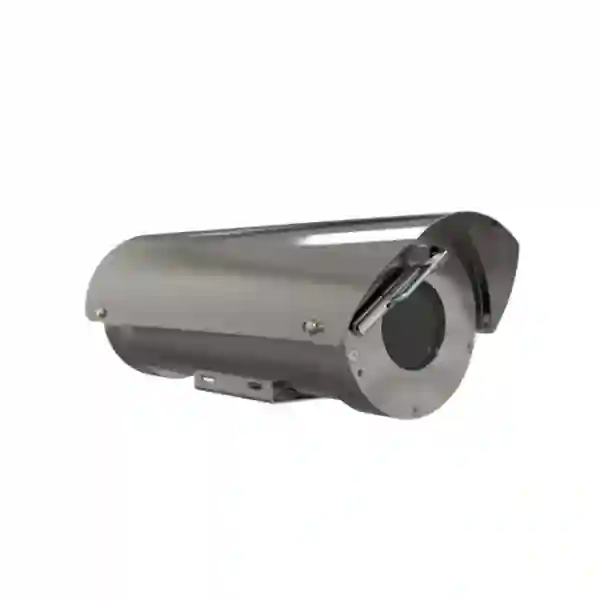
Hanwha TNO-6070E2F-Z Explosion-Proof Fixed Camera
Planning industrial CCTV for a classified location or maintaining an established fibre-connected camera station? This product guide explains the original camera’s verified capabilities, its discontinued status and the checks needed before specifying a current replacement for a project in Tanzania.
Important selection and safety note
This is a product-information page, not a hazardous-area engineering approval. The model is discontinued; regional inventory and price are not verified. A certificate applicable to one country or product suffix does not automatically meet another project’s requirements. Obtain approval from the responsible engineering and compliance team for the exact camera, electrical design, installation accessories and site classification before ordering or installing equipment.
Original model specifications at a glance
The table summarises the original camera station; it is not a substitute for the exact unit’s nameplate, approval documents or installation instructions.
| Product category | Explosion-proof fixed network camera |
|---|---|
| Manufacturer / exact model | Hanwha Vision / TNO-6070E2F-Z |
| Video | 1920 × 1080 Full HD, up to 60 fps |
| Lens | 2.8–9.0 mm vari-focal |
| Wide dynamic range | 120 dB (30 fps at 2 MP in WDR mode) |
| Video compression | H.264 and MJPEG |
| Network medium | Built-in simplex single-mode 9/125 µm fibre |
| Electrical input | 110 V AC; up to 37 W in family data |
| Enclosure | Electro-polished 316L stainless steel |
| Ingress protection | IP66 / IP67 / IP68, subject to stated test conditions |
| Published operating temperature | Approximately -40°C to +60°C |
| Hazardous-location variant | -Z: cLCus Class I, Division 1 designation; verify exact markings |
| Window wiper | Not included in this non-wiper configuration |
| Lifecycle | Discontinued; manufacturer-listed replacement TNO-X6072EPT1-Z |
Who should consider this legacy explosion-proof camera?
The TNO-6070E2F-Z was designed for fixed-position video surveillance in demanding industrial settings where a conventional outdoor IP camera may not be an acceptable choice. Its defining combination is a purpose-built explosion-proof enclosure, 2 MP network imaging, an adjustable 2.8–9 mm lens, single-mode fibre connectivity and a 110 V AC electrical supply. For an established installation with those services already in place, the original configuration may remain important for maintenance records, repair planning or a like-for-like engineering assessment.
Buyers should first establish whether they need documentation for an installed unit, an available legacy spare or a new system design. These are different purchasing decisions. Hanwha Vision identifies this exact model as discontinued and lists the TNO-X6072EPT1-Z as a replacement model. FourTeck Tanzania should therefore be asked for a project-specific review rather than assuming that new stock is available or that the suggested successor can be connected without changes to mounting, wiring and hazardous-area approvals.
Discontinued status and why it matters
Manufacturer lifecycle information is an essential part of the specification, not an administrative footnote. This exact camera is marked discontinued by Hanwha Vision. The manufacturer names TNO-X6072EPT1-Z as its replacement, but a replacement reference does not by itself establish mechanical, electrical, certification or software equivalence. A customer replacing a failed field camera should preserve the original nameplate, site drawings, power arrangements and area-classification records before specifying anything new.
For a tender or bill of materials, identify whether the requirement is for TNO-6070E2F-Z specifically or for an approved functional alternative. If the original model is mandatory, ask whether lawful, genuine legacy supply can be sourced and what documentation would accompany it; do not assume availability. If alternatives are accepted, request a compliance matrix covering hazardous-area classification, temperature range, enclosure material, mounting, cable termination, network medium and integration. A camera can be visually similar and still fail a critical site requirement.
What the fixed-camera format can and cannot do
The term fixed camera describes the surveillance function rather than a low-quality image or an immovable lens. Once commissioned, the housing watches a chosen scene instead of mechanically panning or tilting on demand. Its vari-focal lens allows a technician to adjust framing and magnification during setup. That is suitable for a defined gate, process boundary, loading position or equipment zone where the scene is known and a consistent recorded view is useful.
This model should not be presented as a motorised PTZ, thermal imaging unit, integrated infrared floodlight or a camera with an onboard window wiper. The non-wiper TNO-6070E2F-Z must be distinguished from variants whose model codes include a wiper. If changing weather conditions or process deposits frequently obscure the viewing window, include a realistic cleaning regime or evaluate a separately specified wiper-equipped design. Do not substitute a similar-looking variant without checking the full suffix and its own documentation.
Understanding the explosion-proof rating
The -Z suffix identifies the North American cLCus Class I, Division 1 version in the original product family. That is a specific hazardous-location certification context, not a universal permit to install the unit in any explosive atmosphere. The applicable gas or dust group, equipment temperature class, permitted ambient range, cable entry accessories and installation instructions must agree with the site classification. The assembled system must be evaluated, not merely the camera body or a catalogue headline.
In Tanzania, a responsible project team should obtain the hazardous-area drawings and applicable local requirements from the owner and competent specialists. Confirm which standards and third-party approvals the project actually accepts, including whether IECEx or ATEX evidence is needed for the tender. Do not assume that the -Z variant carries every approval available to other suffixes in the same family. Explosion-proof construction is a control for defined ignition risks; it is not a substitute for safe work procedures, maintenance of flame paths or correct certified cable glands.
How to review certification documents before ordering
Ask for the exact model and suffix on the nameplate, the matching declaration or certificate, any conditions of use, the enclosure drawing and the applicable installation manual. Verify that ambient-temperature limits and protection markings on the actual unit align with the hazardous-area schedule. Where multiple equipment categories or country-specific approvals are offered in a family, avoid combining their markings into one fictional universal specification. A quotation should identify the actual proposed camera, accessories and certification documentation.
Also verify whether the site treats the installation as a new hazardous-area asset or replacement of an existing approved asset. A change from stainless steel to another enclosure material, from fibre to copper data wiring, or from local mains power to PoE can affect the installation design. Engineering acceptance may involve an authority responsible for hazardous areas, electrical safety and operations. Product selection cannot independently establish legal or project compliance; the correct evidence is a matched package of documented approvals and an installation method suitable for the classified location.
Practical industrial surveillance applications
Typical candidate scenes include process-unit boundaries, pumping skids, chemical handling areas, industrial loading positions and equipment corridors where the site assessment calls for a hazardous-location camera. In each case, decide what question the video must answer. Is an operator trying to see whether a gate is open, a person has entered a restricted space, a vessel interface is clear or a maintenance team is present? The scene objective drives the view angle and installation point more effectively than choosing hardware by its resolution alone.
Some projects may combine cameras with access control, plant alarms and a security control room. The camera is a visual monitoring component, not a gas detector, intrinsically safe field instrument or certified process-protection controller. Video events should not be assumed to perform a safety instrumented function. Identify which images are operationally necessary, who is authorised to view them and how the footage will be retained. These decisions influence mounting, cabling, storage, privacy and the acceptance test.
2 MP imaging and the 60 fps rating
The published image specification is 1920 × 1080, commonly described as Full HD or 2 megapixels, at up to 60 frames per second. A high frame-rate option can be valuable for smoother observation of motion, but it also increases the potential recording and transport load. Whether an operator can identify a small marking or distant object depends on field of view, target distance, illumination, compression and actual pixels on the target. The numerical resolution alone cannot guarantee recognition or identification.
Specify camera performance against representative daytime, nighttime and high-contrast scenes. During a site survey, photograph or sketch the desired view and note the smallest feature that operators must observe. Ask the integrator to validate image detail at the proposed mounting distance, preferably with a practical test or optical planning calculation. Where evidence-quality video is important, define image export, synchronised timestamps and retention requirements. An expensive explosion-proof enclosure does not remove the need to prove that the chosen field of view will resolve the required event.
What the 2.8–9 mm vari-focal lens means
The 2.8–9 mm lens allows the installer to choose a wider scene at the short end or a narrower, more detailed view at the long end. This flexibility is helpful when a mounting pole or fixed structure cannot be moved easily after commissioning. It is still a setup adjustment rather than a promise of remote zoom control during normal operation. Exact horizontal and vertical scene coverage should be determined from the approved camera and lens documentation and confirmed on site.
Framing is a balance. A wide view may make sense for situational awareness at a loading area, whereas a narrower view can place more pixels on a valve station or access point. Avoid trying to cover an entire plant with a single fixed camera if the required subject will appear too small. Consider blind spots created by tanks, pipework, vehicles and temporary equipment. Reserve access for initial focus adjustment and later checks; industrial mounting points may require permits, lifting equipment and isolation before a technician can safely approach them.
Wide dynamic range, defog and day/night operation
Hanwha lists wide dynamic range of 120 dB for this series, with 30 fps at 2 MP in the cited WDR operating mode. The camera also supports true day/night switching using an IR-cut filter, digital image stabilisation and defog processing. These capabilities can improve visibility in difficult scenes, but none should be described as a guaranteed cure for total darkness, dense obstruction, lens contamination or intense direct glare. Lighting design remains a separate requirement.
For example, a doorway looking out toward the bright sky may need WDR to preserve information in both light and shadow. A processing yard may require attention to changing floodlights, reflective surfaces and moving steam. An IR-cut filter does not mean that this model has a built-in IR illuminator; any external lighting must be assessed for the classified environment. Ask the commissioning team to test both standard and WDR modes, review moving subjects and capture representative clips before the camera is handed over.
H.264, MJPEG and network video planning
The legacy unit supports H.264 and MJPEG video compression with multiple streams. H.264 generally offers an efficient way to transport and record video compared with uncompressed imaging, while MJPEG can be useful in particular legacy workflows. The right stream configuration depends on the chosen video management system, frame rate, image detail, expected motion and available bandwidth. Do not assume H.265 is present on this exact old model simply because more recent Hanwha cameras support it.
Plan a main recording stream and any lower-load viewing streams deliberately. Specify the frame rate and bit rate needed for evidence, then test the NVR or VMS with the configured unit. Calculate storage using expected bit rate, camera count, recording hours, retention days and a margin for scene variation or future change. A 60 fps headline should not automatically become a 60 fps recording requirement across every plant camera. Use measured throughput and confirm that switches, fibre equipment, recorder licenses and storage can sustain the selected design.
Built-in single-mode fibre: a defining connection
The TNO-6070E2F-Z family documentation identifies a built-in simplex single-mode fibre module using 9/125 µm optical fibre. This is one of the most important details for any replacement or retrofit. It means the original field network arrangement may terminate optically rather than through a conventional copper Ethernet lead at the camera. Connector form, optical transmission requirements and the far-end equipment must be confirmed from the applicable installation documents and existing site design.
A long industrial cable route can make fibre attractive because it avoids some of the electromagnetic interference concerns associated with copper and supports a separation between plant zones. That does not mean every optical component will interoperate automatically. Before specifying a spare or alternative, check the strand type, patch-panel arrangement, connectors, optical transceiver interface, fibre loss budget and the switch or media converter at the control-room end. A modern replacement with an RJ-45 network port may require a different network design even if its imaging specifications look better.
110 V AC supply and electrical design
The original camera station is specified for 110 V AC input, with manufacturer family documentation listing a maximum power consumption of 37 W. It is not a standard plug-in PoE camera. Electrical designers should therefore verify the actual supply at the field position, the approved means of isolation, suitable overcurrent protection, protective earth and installation accessories. If a Tanzanian site normally distributes a different mains voltage, a safe, engineered power arrangement is required; a simple assumption of direct compatibility would be inappropriate.
The power supply and associated equipment must also be suitable for the relevant installation zone and local electrical design. Confirm that any conversion equipment is properly placed and approved and that termination details follow the manufacturer’s instructions. Document the route between distribution board and field station, including cable sizing, voltage drop, earthing, surge protection and maintenance isolation. If considering the PoE-based successor, do not reuse the old power arrangement without redesigning it. The unit’s hazardous-area certification cannot validate an improvised power connection.
316L stainless-steel enclosure and durability
The legacy housing uses electro-polished 316L stainless steel on welded assemblies, a toughened-glass viewing window and stainless fixings. This is relevant to coastal or industrial sites where corrosion resistance and long-term enclosure integrity matter. However, stainless steel is not immune to every chemical exposure, mechanical impact or maintenance problem. Site materials engineers should review nearby chemicals, salt spray, cleaning products, thermal cycling and any unusual environmental contamination.
Do not select the camera on enclosure material alone. A technically sound installation also depends on the bracket, fixings, seals, glands, cable protection and condition of the viewing window. The camera station can weigh up to approximately 21 kg in the family documentation, so the mounting structure and its fasteners should be evaluated for static loading and site-specific vibration or wind effects. Proper alignment and a practical cleaning position matter as much as the nominal corrosion resistance stated in the product literature.
Weather protection, ingress ratings and climate
Original published enclosure ratings include IP66 and IP67, plus an IP68 condition reported as immersion to 1.5 m for 24 hours. These are defined test conditions, not permission to deploy the camera permanently underwater or ignore cable-entry workmanship. The published operating temperature for this original station is approximately -40°C to +60°C. Before specifying a product against a particular site environment, verify the actual nameplate data and installation manual for the exact configuration.
For outdoor projects in Tanzania, the design should address rain, driven dust, daytime heat, humidity, possible corrosion and access for routine inspection. Sun exposure can raise temperatures inside a poorly positioned enclosure, while condensation and contaminated window surfaces can degrade images even when ingress seals are sound. Any shade, protective guard or mounting accessory must be compatible with the manufacturer-approved assembly. Include cleaning and inspection in the operating plan rather than treating an IP rating as a no-maintenance guarantee.
Mounting height, structure and service access
Before procurement, determine the installation geometry: mounting height, distance to the watched scene, obstruction map, available structure and expected movement of equipment. The body should be oriented so that the camera can observe the required event without creating unnecessary privacy exposure or blind spots. Review whether reflections from metal, glass or water will impair the image. Where the mounting point is high or remote, plan a safe commissioning method before bringing equipment to site.
Mounts, pole adaptors and brackets should be selected for the model and environment rather than assumed from visual resemblance to a modern camera. The manufacturer family literature identifies optional stainless mounting accessories, but actual compatibility and supply must be confirmed. Consider structural load, vibration, wind, corrosion, cable support and the need to access the camera for service. A suitable bracket is part of the safety case in a classified industrial area, not an incidental accessory.
Cable entries and enclosure integrity
Manufacturer family documentation shows three M20 cable entries at the housing rear flange. The quantity and geometry of openings should inform the cable schedule, but entry fittings are not interchangeable commodity parts in an explosion-proof installation. Check the certified gland type, any required stopping plugs, thread engagement, sealing practices and segregation of power, fibre and other services. The actual assembly must comply with the applicable certification and local installation method.
Never enlarge, rethread or casually substitute an entry component to solve a fit problem in the field. An incorrect gland or unused opening can compromise the protection concept even if the stainless body looks undamaged. Procurement documentation should identify exactly which accessories are included in the quotation and which must be supplied by the project electrical contractor. After installation, inspection records should document terminations, seals, label legibility and any conditions that need periodic rechecking.
On-camera memory is not a complete retention strategy
Hanwha’s product page lists an SD/SDHC/SDXC memory slot. Local recording can support selected continuity or event workflows, but the existence of a card slot does not establish the supported card capacities, recording endurance, card condition or current software behaviour for a specific field unit. Verify the memory compatibility guidance for the installed firmware before relying on it in the design. Removable storage inside a hazardous-area assembly may also have controlled access requirements.
Plant operators normally need a broader recording architecture: a verified network path, adequate central storage, time synchronisation, permissions and a documented retention period. Estimate storage consumption from actual video settings and apply site policies for evidence handling. Decide who can export footage, who reviews audit logs and what happens when a network link fails. A camera-mounted card is a possible resilience component, not a substitute for an engineered backup and incident-retrieval process.
Motion, video events and operator expectations
The original family literature identifies motion detection and intelligent video analytics, including event types such as face and audio detection. Such features can help operators review a fixed scene, but their practical performance depends heavily on camera angle, lighting, scene activity and software configuration. An explosion-proof housing does not make a motion alarm intrinsically reliable. Distinguish an event intended to draw attention from one that must be supported by a separate industrial safety control.
Test analytics with the actual traffic patterns expected in the scene, including personnel, moving vehicles, rain, shadows, reflections and routine process activity. Tune detection areas to exclude irrelevant movement where possible. For security operations, define who receives alerts, whether snapshots or clips are retained and how false positives are handled. Avoid promising biometric identity recognition, guaranteed intrusion detection or automated hazard detection: those outcomes are not established by the stated features of this camera.
VMS integration, ONVIF and recorder compatibility
Family technical documentation identifies ONVIF Profile S together with common IP video protocols. These specifications are helpful starting points for an integration assessment, not a guarantee that every recorder, analytics platform or NVR firmware will provide the same control functions. Basic live view may work while event metadata, edge recording, authentication or playback behaves differently. Integration should be verified against the exact camera firmware and the target recorder version.
Start with a compatibility checklist covering device discovery, video streams, time synchronisation, user permissions, motion events, recording schedules and export. Include failure testing: restart the camera, interrupt the fibre path under controlled conditions and verify recovery procedures. A legacy system may have outdated recorder software or a network design that predates current segmentation requirements. Confirm supported management methods with the manufacturer and system integrator rather than assuming that a modern feature set is available on a discontinued product.
Cybersecurity and access management for a legacy camera
Because the camera is an IP-connected field asset, its protection depends on more than the enclosure. Review the current firmware state, available manufacturer support, network exposure and approved authentication configuration before connecting a legacy unit to a production environment. Use a controlled management network or appropriately segmented video VLAN where the site architecture supports it. Restrict access to authorised operators and administrators, and change any inherited credentials during a documented handover.
Do not assume that a discontinued model can receive the same security updates or modern encryption features as its successor. Ask what firmware and security documentation are actually available, record the version in the asset register and plan compensating network controls if necessary. Avoid direct public-internet exposure, minimise unnecessary services and verify accurate logs and time settings. The long-term supportability of a camera can be as important as its initial picture quality, particularly for industrial sites that retain equipment for many years.
Manufacturer-listed successor: TNO-X6072EPT1-Z
Hanwha Vision names TNO-X6072EPT1-Z as the replacement model. It is also an explosion-proof fixed vari-focal camera with 1080p imaging at up to 60 fps and a 2.8–9 mm lens. The manufacturer’s current product information lists H.265, H.264 and MJPEG encoding, WiseStream II, 150 dB wide dynamic range, PoE or 12 V DC input and an aluminum enclosure. It also gives different environmental and electrical specifications from the original stainless-steel fibre camera.
These distinctions are critical. The legacy model was designed around 110 V AC, integrated single-mode fibre and a 316L stainless enclosure. The successor’s published information indicates a different power and data arrangement and different enclosure material. Its hazardous-location certifications must be matched against the site’s accepted markings and ambient limits, not inferred from the old -Z code. Treat the replacement recommendation as a candidate for engineering review, not as proof that the same brackets, cabling, power supply or installation approvals can be reused.
Legacy versus successor: decision criteria
The original design is relevant when a project already has a specified fibre path, a 110 V AC field supply, a stainless enclosure requirement and historic approvals tied to TNO-6070E2F-Z. The newer model may offer a more current video and cybersecurity platform, but that benefit only counts after its certified operating conditions, physical design and connectivity are checked. A replacement that saves device cost while forcing unexpected civil, electrical and network works may not be the most appropriate solution.
Use a side-by-side engineering matrix rather than a simple feature checklist. Include hazardous-area classification; material and corrosion requirements; ambient temperature; ingress protection; mounting dimensions and loading; power feed; fibre or copper termination; lens coverage; codec and VMS support; and commissioning access. For each item, record whether it matches, needs alteration or needs further evidence. Do not assign a pass based solely on a similar model name or on the manufacturer using the word replacement.
A safe retrofit and migration sequence
Begin with an inventory of installed cameras and site drawings. Photograph the nameplate, enclosure entries, bracket, local isolator, fibre termination and field of view. Confirm that the proposed work will not compromise hazardous-area controls. Collect the current VMS configuration and the footage requirements before changing any hardware. If the objective is only to restore one failed view, confirm whether a compatible service route or approved alternative exists before redesigning multiple sites.
Next, compare replacement requirements with the available mounting structure, electrical circuits and optical network. Obtain a reviewed installation plan, material list and acceptance criteria. During commissioning, record image quality in agreed lighting conditions, alarm/event behaviour, time synchronisation, storage recovery and access control. Finally, update as-built drawings, asset identifiers, maintenance instructions and any required safety documentation. This sequence reduces the likelihood of discovering a missing fibre converter or incompatible power source after the classified area has been reopened.
Tanzania procurement: what to verify before a quotation
For a Tanzanian industrial project, the most helpful first enquiry is not simply ‘price for the camera’. Supply the exact model code, desired quantity, site environment, hazardous-area documentation, target video scene and whether this is a legacy spare or a new installation. Indicate the intended power and network topology and whether the owner allows a current replacement. These details allow a meaningful technical review without making unsupported assumptions about local inventory, delivery or approval status.
Ask for a written quotation that identifies the exact proposed model and variant, a scope of supplied mounts and cable accessories, documentation, integration assumptions and any required commissioning tasks. Pricing, taxes, import arrangements, regional certifications and availability must be confirmed for the actual offer; none are established by the historical manufacturer specifications. For a discontinued camera, avoid treating a third-party listing as proof of local stock. The key commercial goal is a documented, technically acceptable outcome, not an attractive but unusable box.
Commissioning and acceptance checklist
Acceptance should verify more than a successful ping response. Check the as-installed model label, approved enclosure accessories, seals, gland installation, protective connections, fixing security, and the required angle of view. Record network equipment, power source, available isolation and the resulting video profile. A representative test clip should demonstrate the specified scene at the required operating times. Save a baseline image and complete a sign-off record that the owner can use for future maintenance.
Also test recording retrieval, authorised access, event handling, clock synchronisation and loss-of-link recovery. Review the cleaning method and inspection schedule for the toughened-glass window and the enclosure. If the installation is in a classified location, the owner or responsible professional should sign off the relevant electrical and hazardous-area inspection independently of the video test. A camera is only fully commissioned when physical protection, video performance, network operation and maintenance ownership are all documented.
Maintenance, spares and long-term operating cost
An industrial camera should be evaluated over its operating life, not solely by hardware cost. Consider how technicians will reach the unit, how its window can be cleaned safely, which replacement parts remain supported, and what system downtime would result from a failure. A non-wiper camera in a dusty or salty location can require more frequent intervention than a product with a suitable approved cleaning mechanism. Do not assume a wiper retrofit is permitted just because a related model originally offered one.
For this discontinued model, ask whether genuine parts, service documentation and compatible field accessories can still be obtained. Maintain records of lens settings, image baselines, serial numbers, firmware and installed certification labels. Track recurring faults, corrosion, water ingress evidence, network dropouts and changes in scene lighting. Where long-term continuity is important, consider a phased migration to current equipment with documented installation changes, rather than waiting for a critical camera to fail unexpectedly.
Information to send with a FourTeck Tanzania enquiry
A concise project brief helps turn a product query into a useful, comparable technical response. Identify the installation country as Tanzania, the site category and whether the exact legacy device is already in use. Include the hazardous-area schedule or required equipment marking, target ambient conditions, mounting position, corrosion exposure and a photograph or diagram of the desired field of view. Provide existing power information and whether the data path is built around simplex single-mode fibre.
Add the planned NVR or VMS make and software version, recording duration, camera quantity, expected handover date and any procurement restrictions on substitutions. If the owner insists on the exact discontinued code, state the reason clearly and ask about documentation and supply feasibility. If replacement is acceptable, request a written comparison and list of infrastructure modifications. Do not send credentials, access keys or security-sensitive plant network configurations through a public enquiry form; use an approved secure channel where required.
Five checks before approving a substitute
- Match the hazardous-area markings, ambient limits and certificate conditions with the site’s classification.
- Check the original 110 V AC feed against the successor’s supported power method.
- Resolve the original single-mode fibre connection against any new RJ-45 copper interface.
- Assess housing material, structure, mounting, cable entries and environmental exposure.
- Demonstrate the required image, streaming, recording, VMS and cybersecurity behaviour.
Frequently asked questions
Is the Hanwha TNO-6070E2F-Z still a current model?
No. Hanwha Vision marks this exact model discontinued and identifies TNO-X6072EPT1-Z as its replacement. That lifecycle status does not prove that every third-party stock unit is unavailable, but it does mean a fresh project should not assume normal ongoing manufacture. Ask for confirmation of actual supply, condition, documentation and support, or request a review of the successor.
What does explosion-proof mean for this model?
It refers to a purpose-built enclosure with documented hazardous-location protection for specified conditions. For the -Z version, the original classification context includes cLCus Class I, Division 1. Suitability still depends on the site’s hazardous-area schedule, gas or dust groups, temperature requirements, certified accessories and local acceptance. It must not be treated as permission to use the camera anywhere a flammable material is present.
Does this camera support 110 V AC or PoE?
The original TNO-6070E2F-Z is specified for 110 V AC power, with legacy manufacturer family information indicating a maximum of 37 W. It should not be described as a PoE-powered camera. A successor or alternative with PoE changes the wiring, switch or injector arrangement and potentially the classified-area design. Have the electrical design reviewed before making a substitution.
Is the network connection copper Ethernet or fibre?
The legacy product family includes an integral simplex single-mode 9/125 µm fibre module. Verify the actual installation’s fibre terminations and companion network equipment from site records and the installation manual. Do not assume an RJ-45-equipped replacement can connect directly to that installed fibre route. A revised network design may require additional switching or conversion equipment.
Does the TNO-6070E2F-Z have a wiper?
This precise non-wiper code is not the wiper-equipped variant. Related model codes containing the appropriate wiper designation should not be treated as identical: there may be differences in accessories, wiring or approvals. Where spray or deposits frequently cover the viewing glass, plan an approved cleaning strategy or specify a separately documented product that provides the necessary window-management feature.
Can it record at 1080p and 60 fps?
Hanwha lists Full HD 1920 × 1080 imaging at up to 60 fps. It also specifies 120 dB WDR at 30 fps in the cited operating mode. Frame rate, WDR selection, codec, scene movement and bandwidth affect the actual recording configuration. Have the integrator verify the chosen stream and playback performance with the intended VMS or NVR.
Does it have a built-in IR illuminator?
The published features include true day/night using an infrared-cut filter, but that does not establish an integrated IR light source. A site that requires images at night should specify the available illumination and evaluate safe, approved lighting options if needed. Do not rely on the words day/night to guarantee an image in complete darkness.
Can the new model replace it without changing cabling?
Not automatically. Hanwha’s recommended successor lists PoE or 12 V DC, an RJ-45 network interface and aluminum construction, whereas the legacy camera was built around 110 V AC, integrated fibre and 316L stainless steel. The replacement may require different mounting, electrical work, network conversion and hazardous-area documentation. Confirm each difference before ordering.
Is IP68 enough for outdoor use?
IP68 indicates a defined ingress test, and the original family literature gives an immersion condition of 1.5 m for 24 hours, alongside IP66 and IP67 information. It does not eliminate the need for correct cable glands, enclosure inspection, maintenance and protection from site-specific chemicals. The installed assembly’s condition and accessories must support the environmental requirements.
Is the model suitable for chemical and petroleum facilities?
It may be a candidate for a specifically classified surveillance point, but no camera should be selected for a whole industry by name alone. Obtain the site’s hazardous-area classification, required certification markings, corrosion constraints and electrical details. A qualified engineer should confirm the exact certified variant and complete installation design before it is used in a potentially explosive atmosphere.
Can the camera integrate with an existing recorder?
The legacy family documentation identifies ONVIF Profile S and IP streaming capabilities, which can help with interoperability. Yet a live image is not proof of full compatibility for recording, analytics, timestamps and playback. Verify the exact firmware with the customer’s VMS or NVR, test event handling and establish how the system will respond to network interruption.
What information is needed to request a quote in Tanzania?
Share the exact model, quantity, whether a legacy spare or approved replacement is acceptable, site classification, power supply, fibre or network details, proposed camera location and VMS requirements. Ask for confirmation of genuine equipment, accessories, technical documentation, regional suitability and actual availability. Prices, delivery dates and local approvals should be confirmed in a written offer rather than inferred from historic listings.
Request a project-specific equipment review
For FourTeck Tanzania, specify whether the requirement is an exact discontinued TNO-6070E2F-Z unit or a currently supported alternative. Include the classified-area requirements, power and fibre layout, site conditions, VMS details and expected camera view. Request written confirmation of the proposed model, associated hardware, certifications and actual commercial availability before proceeding.
Next step: request a technical quotation and compatibility review from FourTeck Tanzania.




Reviews
There are no reviews yet.