
Industrial video surveillance | Tanzania project enquiries
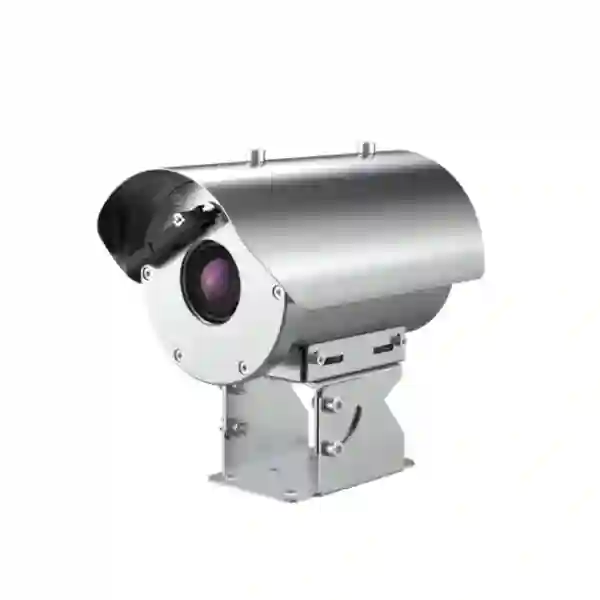
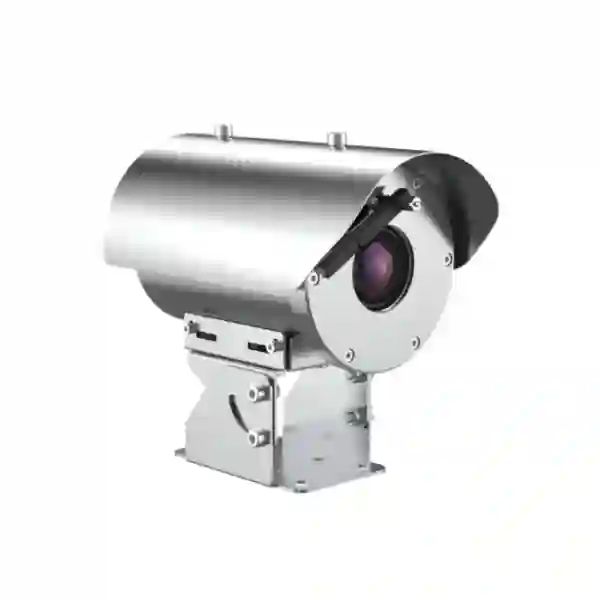
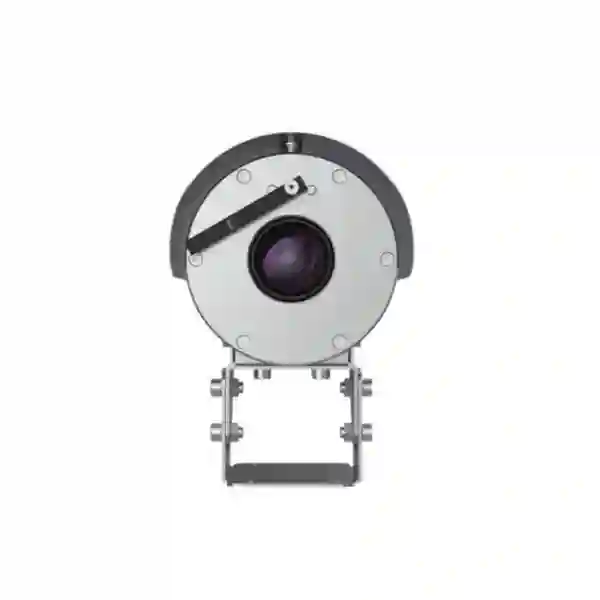
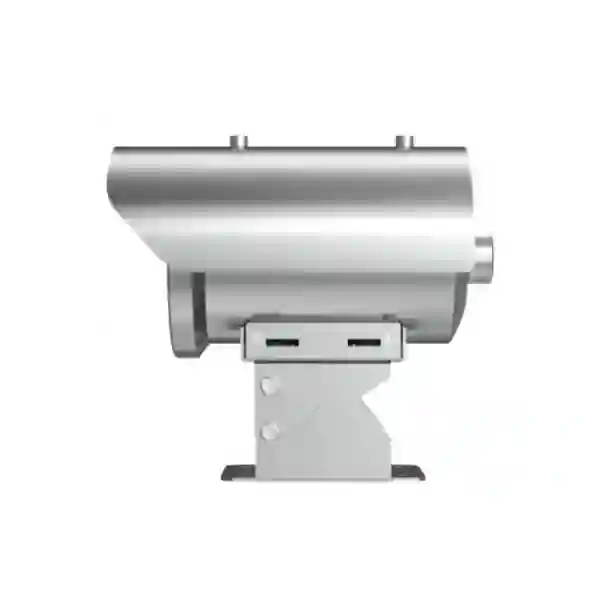
Hanwha Vision TNO-6322ER 2MP Explosion-Proof Camera
Need a network camera for a properly classified industrial hazardous area? The Hanwha TNO-6322ER combines a stainless-steel explosion-protected housing with Full HD imaging, 32x optical zoom, infrared illumination and a built-in wiper. Specify it against your site classification and required observation task.
Technical specifications at a glance
| Resolution | 2MP Full HD / 1920 × 1080 |
|---|---|
| Sensor | 1/2.8-inch CMOS |
| Optical zoom | 32×; 4.44–142.6mm |
| Maximum frame rate | Up to 60fps / 50fps with H.265 or H.264 |
| Night imaging | IR illumination stated up to 70m; automatic day/night |
| Video | H.265, H.264, MJPEG; WiseStream II |
| Outdoor construction | 316L stainless steel, integrated wiper, IP67, IK10 |
| Hazardous-area credentials | Manufacturer lists IECEx and ATEX; verify applicable certificate |
| Power | 24V AC, max. 45W |
| Network & integrations | RJ45 10/100BASE-T; ONVIF S/G/T |
| Approx. body / weight | 175 × 242.5 × 320mm; 11.5kg |
These are manufacturer-listed specifications. Suitability for a classified installation requires review of the exact certificate and current installation manual.
Overview and buying decision
The Hanwha Vision TNO-6322ER is a 2MP explosion-proof network camera intended for industrial video surveillance where the camera itself may need to be installed in a suitably classified hazardous area. Its job is to provide visible-light images of processes, access routes, equipment and personnel while meeting particular enclosure and hazardous-location requirements. It is not a thermal camera, gas detector, flame detector, automatic shutdown device or substitute for a site safety system. Buyers should start by confirming the site classification and the surveillance task rather than choosing the camera solely by resolution or infrared distance.
For a Tanzania industrial project, this model is most relevant when an ordinary outdoor CCTV camera cannot satisfy the site’s hazardous-area equipment requirements. Hanwha specifies a stainless-steel 316L enclosure, built-in wiper, up to 70 metres of infrared illumination, and 32x optical zoom. Those features can be valuable for reviewing operations from a carefully selected mounting position, but a product label cannot establish suitability for every plant, process or area. Ask the site’s responsible engineer to compare the exact camera certificate, installation method, cable entries and environmental conditions with the risk assessment.
FourTeck Tanzania can be approached for a project-specific quotation and technical discussion. To make that conversation productive, share the required observation points, the area classification, available 24V AC power, communications infrastructure and the recording platform you intend to use. Pricing, import arrangements, stock, delivery, commissioning services and warranty terms are not stated here because they have not been verified for this listing. Request written confirmation of any commercial requirement that is important to procurement.
At a glance: verified product capabilities
Hanwha Vision lists a 1/2.8-inch CMOS sensor and maximum 1920 x 1080 image resolution for the TNO-6322ER. H.265 and H.264 can run at up to 60 frames per second on 60Hz systems or 50 frames per second on 50Hz systems, while MJPEG supports a lower maximum frame rate. The lens covers 4.44 to 142.6 millimetres with 32x optical zoom. At its wide end the horizontal field of view is about 61.8 degrees; at telephoto it narrows to about 2.19 degrees. These are selection data, not guarantees of readable images at arbitrary distances.
The model supports day and night switching through an automatic infrared-cut filter, 120dB wide dynamic range, and infrared LEDs with a manufacturer-stated viewable length of 70 metres. Video compression options include H.265, H.264 and MJPEG, with WiseStream II available to help manage streaming demands. The housing is stated as stainless steel 316L, with a built-in wiper, IP67 environmental protection and IK10 impact resistance. It uses 24V AC power and is rated up to 45 watts; do not assume standard Ethernet Power over Ethernet will operate it.
Manufacturers list IECEx and ATEX hazardous-area certifications for this model along with other market-specific certificates. The exact markings, installation conditions and current certificate documents must be checked before ordering and again before installation. Protection ratings such as IP67 and IK10 answer different questions from explosion protection: one concerns ingress, another mechanical impact, and the hazardous-area certification addresses specified ignition-related hazards under its approval conditions. None of these ratings removes the need for correct design, maintenance and inspection.
Who this explosion-proof camera is for
This product is primarily aimed at facility owners, engineering contractors, system integrators, plant security managers, and operations teams evaluating CCTV for potentially hazardous installations. Examples worth assessing include parts of chemical production facilities, fuel handling sites, industrial processing plants, and selected storage or transfer areas where flammable substances or combustible dust may occur. These are possible project types, not blanket statements that the TNO-6322ER is safe at every point within them. The actual zone, gas or dust group, temperature class, and equipment protection level must match the installation’s requirements.
Operations staff may want to view a valve bank from a control room, review vehicle movements near a controlled process entrance, or observe an isolated workstation without routinely approaching the equipment. Security teams may need clear evidence of who entered a restricted boundary, while maintenance staff may prefer a detailed view of a process indicator. A video camera can assist observation, but it does not replace direct process instrumentation or safety interlocks. Define the decision that an operator should make from the video and then test whether the proposed image detail will support that decision.
For projects with multiple areas, avoid assuming that one specialist camera should cover an entire plant. Some locations may require explosion-protected equipment; other locations may be suitable for conventional weatherproof cameras located outside the classified boundary. A useful design may combine different camera types after an appropriate area classification review. The objective is not to deploy the most expensive hardware everywhere, but to achieve required coverage, compliant equipment selection, manageable maintenance and sustainable recording costs.
Hazardous-area classification comes first
Explosion-proof is a description of a particular protection concept, not permission to install the camera in any dangerous location. The TNO-6322ER has manufacturer-listed ATEX and IECEx markings that must be matched to the facility’s hazardous-area documentation. An engineer should verify the classification of the proposed mounting point, the atmosphere expected there, the applicable gas or dust group, equipment temperature limits, and any special conditions of use. Obtain and review the certificate applicable to the exact equipment variant before the purchase order is finalized.
The area near an industrial plant can include several different classifications, sometimes changing across a small distance. Mounting on a nearby structure or just outside a hazardous boundary can change the engineering decision substantially. Do not infer that a nearby tank, pump or loading area makes every adjacent position identical. The site survey should identify the mounting surface, proposed camera orientation, cable route, junction boxes and all accessories that may be installed in the classified location. Each relevant component needs an appropriate equipment-selection and installation review.
The certificate scope matters as much as its headline name. A purchasing team should request the manufacturer certification documents, installation manual, permissible cable-entry details, ambient temperature limits, and any conditions tied to the explosion protection concept. The approval of the camera does not automatically approve a third-party bracket, connection method or electrical installation. Also distinguish international certification from any separate Tanzania project, operator or regulatory acceptance process; no Tanzania-specific authorization is claimed on this page.
Image detail, frame rate and what 2MP can deliver
The TNO-6322ER records a maximum Full HD image of 1920 by 1080 pixels. That may be appropriate for industrial monitoring where operators need recognizable activity, process context or equipment status, provided the scene and lens settings put enough pixels on the target. It does not mean the entire long-distance scene will be identifiable at the same time. A wide scene spreads those pixels over a larger area; a narrower view concentrates them on a smaller subject. Evaluate both overview coverage and evidence requirements with sample images or a properly calculated design.
A high supported frame rate can help when the scene contains movement, but the selected recording profile, network throughput, exposure conditions and video management system determine the actual result. Running every stream at the maximum frame rate is not always necessary. A fixed scene with slow activity may have different recording priorities from a gate where objects move quickly. Decide whether you need live operational awareness, post-event investigation, remote inspections or a combination, and configure recording quality and retention around those use cases.
Low-light performance also depends on target reflectance, distance, contamination on the window, ambient light and camera exposure settings. Hanwha specifies minimum illumination figures of approximately 0.05 lux in colour and 0.005 lux in black and white under stated test conditions. Such laboratory-style figures are useful for comparing camera capabilities but should not be treated as site visibility guarantees. Test representative night conditions, glare and shadow before declaring an observation point adequately covered.
32x optical zoom and field-of-view planning
The lens range of 4.44–142.6mm gives the installer flexibility to select the most useful framing for a particular target. At the wide end, a broader scene helps with general situational awareness. At the telephoto end, a small part of the scene occupies more of the image. This is optical zoom, which differs from simply enlarging recorded pixels digitally. However, zooming in reduces visible area, so it cannot deliver both a full wide overview and a close-up of every distant object from one fixed viewpoint at the same instant.
The published horizontal field of view varies from approximately 61.8 degrees wide to 2.19 degrees telephoto. That range helps the designer estimate what will fit into the image at a chosen distance. The correct position depends on subject dimensions, obstructions, access for maintenance and expected equipment motion. An image may be sharp but useless if a pipe blocks the important gauge or an overhead light creates continuous reflections. Prepare a scene sketch or annotated plant plan showing both the intended full view and the critical detailed view.
The TNO-6322ER should not be confused with the positioning cameras in Hanwha’s TNU family. A zoom lens does not mean a camera includes a continuously rotating pan-and-tilt drive. Hanwha lists a tilt adjustment range for this model, but it is not presented as a full PTZ positioning unit. If an operator must patrol several directions, examine a separate positioning-camera solution and confirm its own exact specifications and hazardous-area credentials rather than assuming the models are interchangeable.
Night surveillance and 70-metre IR
The integrated infrared illumination is a practical feature when visible lighting is limited or switched off. Hanwha states an IR viewable length of 70 metres and an 850nm infrared wavelength. This is a manufacturer feature rating, not a promise of identification, recognition or forensic image quality at 70 metres. The camera’s recorded result depends on its zoom, angle, atmosphere, target reflectivity, available contrast and environmental conditions. Dust, mist and heavy rain can scatter light or reduce useful visual range.
IR illumination is particularly worth reviewing where adding conventional lighting would be difficult or where staff want to minimize disturbance from visible lights. It still creates an optical imaging system: it does not detect heat signatures like a thermal imager. A warm pipe hidden behind another object will not become visible simply because the camera uses infrared LEDs. If the project needs temperature measurement, flame detection or thermal anomaly detection, specify a separate technology appropriate to that requirement.
During commissioning, inspect image exposure at both ends of the zoom range and in the intended night-time viewing direction. Nearby reflective metal, fencing, glass, steam and particulate matter may create flare or bright backscatter. Place the camera so that its own illumination produces useful contrast on the target rather than lighting only the closest obstruction. Agree on an acceptance image for day and night, and document any lighting restrictions that plant operations impose.
Rain, spray, contamination and the wiper
The integrated wiper is a notable practical difference between this camera and many ordinary industrial bullet models. It can help clear water or surface material from the viewing window when used as intended, supporting remote observation where frequent access is undesirable. A wiper is not a substitute for planned cleaning and condition checks, and it cannot guarantee clear imaging through persistent oil films, sticky deposits or abrasive contamination. Ask the project team to define what material is likely to reach the window and how the camera will be safely maintained.
Hanwha lists IP67 ingress protection and a 316L stainless-steel housing. These characteristics may be attractive for challenging outdoor or industrial environments, but neither means the camera is immune to corrosion or suitable for every chemical exposure. Corrosion resistance depends on the full installation, including fasteners, bracket material, crevices, cleaning chemicals and the local atmosphere. Review the compatibility of the complete installed assembly, not simply the material of the main enclosure.
The IK10 designation addresses mechanical impact resistance under a defined testing standard; it does not make the device indestructible. Locations with vehicle movement, suspended loads or routine material handling still require careful mechanical protection and position selection. Designers should keep inspection access in mind, avoid direct exposure to predictable mechanical damage, and ensure any protective structure does not compromise the field of view or the requirements of the hazardous-area installation.
High contrast scenes and image processing
Industrial environments often place bright outdoor light, shiny metal, deep shade and moving subjects in one frame. The TNO-6322ER includes 120dB wide dynamic range, backlight and highlight compensation options, noise reduction, digital image stabilisation and defog functionality. These are useful controls for tuning images to demanding scenes. They should be configured based on the actual surveillance objective: a setting that improves the appearance of one scene can sometimes reduce useful detail in another.
Consider a gate with strong sunlight behind entering vehicles. Without careful exposure and contrast handling, a bright background can leave the foreground dark. Wide dynamic range can assist in balancing the picture, but no single setting eliminates every glare or reflection problem. Similarly, digital stabilisation may help when minor vibrations affect a mounting point, yet a rigid, properly engineered support remains essential. Do not treat software image correction as a fix for an unstable bracket.
For a plant view with haze, steam or fog, the defog feature may improve apparent contrast in some conditions. It cannot physically remove obscuring material or create information that the sensor never captured. Operators should understand the limits before relying on an image for a high-consequence judgment. Include actual environmental examples in commissioning: bright sun, low light, routine steam emissions, vehicle lights and the visual conditions expected during a normal shift.
Analytics, alarms and operator workflows
Hanwha lists analytics such as motion detection, defocus detection, tampering, fog detection, face detection, virtual area events and virtual line events. These can help a video management system draw attention to selected activity rather than relying exclusively on continuous human observation. However, analytics performance depends on camera angle, subject size, movement patterns and the configured rules. Do not describe them as infallible or as a certified safety function. Test alerts against routine plant traffic before operators rely on the notifications.
An effective event workflow starts with a clear question. Perhaps a security team needs to know when someone enters a restricted walkway, or an operator wants to review the appearance of an unexpected object near a boundary. Define where the virtual line should be placed, what movement counts as an event and how the responsible team will respond. False alarms from rain, shadows, steam or routine operations can reduce confidence, so analytics configuration needs a realistic testing period and a documented adjustment process.
The camera also lists one alarm input and one alarm output as well as supported network and event notifications. Whether these functions are appropriate for a particular system depends on wiring, software integration and the site’s control architecture. Avoid connecting surveillance alarms to critical process safety equipment without a properly engineered and separately validated design. The role of camera analytics is generally operational awareness and security support, not replacement of hazardous-process instrumentation.
Network integration and recording
The TNO-6322ER is an IP network camera using a 10/100BASE-T Ethernet interface. It supports common streaming protocols and ONVIF profiles S, G and T as specified by Hanwha. That gives system designers useful integration options, but ONVIF support does not guarantee that every feature works identically on every third-party recorder or video management platform. Verify the exact application version, intended functions and any relevant software licensing before specifying interoperability as a project requirement.
Video codecs include H.265, H.264 and MJPEG, while WiseStream II can help manage video data. Actual network and storage demand varies with frame rate, resolution, picture complexity, bit-rate controls, recording schedule, motion activity and compression selection. A design should model the expected number of streams, viewers and retained recording days instead of assuming that a codec name alone determines storage. Include capacity for busy scenes and lossless retrieval of event footage where that is required.
Network architecture needs special attention in plants with segmented operational networks. Decide whether monitoring will occur only within the facility or through an approved remote-access environment. Document camera addressing, VLANs or network zones where relevant, NTP time synchronisation, recording server locations, switch capacity and backup procedures. Video traffic should not be allowed to affect essential process-control traffic. Any permitted external viewing should be designed by the responsible network-security team rather than enabled by default.
Cybersecurity and lifecycle planning
Hanwha lists encrypted firmware, user authentication, IEEE 802.1X network authentication options, HTTPS secure communication, IP-based access control and audit or event logging. These are security capabilities, not a guarantee of a secure installation. The integrator still needs to configure strong credentials, protect administrator access, use appropriate network segmentation, review logging and apply firmware updates according to the operator’s change-control process.
Industrial video systems may remain installed for years. Before purchase, confirm the model’s current firmware support, update path, vulnerability-handling arrangements and compatibility with the selected recording software. A camera can have excellent imaging hardware but become an operational burden if its network integration or maintenance process is overlooked. Keep a record of serial numbers, installed firmware, certificates, approved configurations and the person responsible for future review. Do not expose camera management interfaces directly to the public internet.
Cybersecurity also affects the value of evidence. Accurate timestamps, account permissions, retention policies and documented access to exports make footage easier to use responsibly. Determine who may view live video, export files, change settings and delete recordings. Confirm that plant rules and applicable privacy obligations are reflected in the operating procedure. Where a recording contains workers or visitors, ensure access and retention are limited to legitimate and documented purposes.
Power, cabling and electrical requirements
Hanwha specifies a 24V AC input and maximum power consumption of 45W for the TNO-6322ER. The listing does not establish Power over Ethernet capability, so do not plan to energise the unit from a standard PoE switch without a separately verified manufacturer-approved solution. The site engineer should size the supply, cabling and protection for the camera and applicable installation requirements. Consider voltage drop, available current, earthing, isolation and any continuity requirements if the facility needs surveillance during mains interruptions.
Cable routing in a hazardous area is an engineering activity, not simply a network installation. The correct cable entry, glands, seals, conduit arrangement and any certified connection components must follow the camera’s approved installation instructions and site standards. Never assume that an ordinary indoor RJ45 termination can be placed directly in a classified area without considering the approved enclosure arrangements. Before work starts, check the available space for connections and confirm that the intended route can be installed and inspected safely.
An electrical design should also document where the 24V AC source is located, whether battery-backed power is needed, what happens when power returns and how faults will be indicated to operators. Consider network surge exposure and the facility’s grounding philosophy in consultation with qualified personnel. A reliable video image depends on the supporting infrastructure; the camera alone cannot compensate for poor power quality, an unsuitable cable route or a frequently unavailable network.
Mechanical mounting and access
The manufacturer specifies a body measuring approximately 175 by 242.5 by 320 millimetres and a product weight of about 11.5 kilograms. That weight deserves a properly engineered mount rather than a light-duty bracket selected for ordinary indoor CCTV. The support should account for the camera, any approved mounting accessories, environmental loads, vibration and the structure receiving the load. Mounting details must also preserve the camera’s hazardous-area suitability and leave access for inspection.
Hanwha identifies mounting accessory families for this equipment, including options associated with wall, pole and pedestal installations. The actual accessory part numbers, suitability for the selected camera configuration and hazardous-area requirements should be verified at quotation stage. Do not assume that every listed bracket is included in the camera package. Ask for a bill of materials that distinguishes camera, mount, power components, cabling, certified entry hardware, network infrastructure and any separately supplied recording licenses.
Where practical, locate the camera so that maintenance personnel can inspect it without entering a restricted operational space unnecessarily. Consider safe access during plant shutdowns, availability of lifting equipment and the need to avoid interfering with production. The best camera view is not always the best maintenance location, so discuss the tradeoff early. A position that is impossible to service safely may result in a degraded camera long before its useful operating life is complete.
Operating temperatures and exposure assessment
Hanwha lists a wide operating temperature range: from minus 40 degrees Celsius to plus 60 degrees Celsius with infrared illumination off, and up to plus 55 degrees Celsius with infrared on, subject to the manufacturer’s stated conditions. These values describe the camera’s equipment specification and do not certify the entire installation at every exposure level. Consider solar loading, nearby hot equipment, radiant heat and restricted airflow. The temperature of the air near a plant component can differ meaningfully from a general weather observation.
For Tanzania projects, the relevant environmental question is the actual industrial installation rather than an assumed nationwide climate. A coastal facility may present different corrosion and contamination issues from a sheltered inland industrial building, while both can have high local temperatures near machinery. Review the site’s measured or specified environmental conditions, washing methods, vibration and airborne contaminants. Only then compare the equipment and accessory materials with the exposure. No unsupported site-specific service area or environmental guarantee is made here.
Temperature and explosion-protection requirements should be reviewed together. The enclosure’s temperature classification and approved ambient conditions are not the same thing as the maximum operating temperature quoted in a basic specification table. Engineers should use the current certificate and manufacturer manual to establish the allowable installation conditions. If the site requirements fall outside the approved range, a different camera or mounting concept may be necessary.
Typical industrial use scenarios
At a fuel handling or transfer facility, a camera may provide an overview of vehicle activity, hose connection areas or an access gate. The design should define whether the camera is there to observe people, equipment, a process position or a combination. If the mounting point is within a classified location, equipment selection must match the site documentation. Video may support security and operations, but it should not be described as a spill detector or a means of confirming safe transfer conditions by itself.
At a chemical or processing plant, operators may want remote views of selected pump areas, pipework, instrument panels or restricted passages. Optical zoom can help make a particular subject larger, although the recorded view will become narrower. The design should include an image-quality test of the actual subject from the planned position and consider whether steam, glare or obstructions will undermine the result. Do not promise that a distant gauge reading will be legible without an assessment of target size and scene conditions.
At storage, manufacturing or material handling facilities, the primary need may be observing a boundary between controlled and general-access spaces. Virtual line and intrusion analytics can support an alert workflow if configured and validated for the environment. A plant with moving machinery, airborne dust and frequent staff traffic may produce nuisance events until the scene and rules are tuned. The intended action on an alert should be documented, and the camera should never be used as a substitute for safeguarding equipment.
Some projects require images only during a maintenance shift; others need persistent night monitoring. The recording schedule, alarm rules and evidence retention should reflect those different operating needs. A useful surveillance design defines the operator, the risk or operational question, the observation point, the required image detail, the response process and the maintenance owner. This approach is more defensible than buying a camera based solely on the largest zoom number or longest published illumination range.
Choosing between standard CCTV and hazardous-area equipment
A standard weatherproof IP camera can be appropriate in an unclassified outdoor area, but IP ratings do not establish explosion protection. Conversely, choosing an explosion-proof camera for every location can add cost, weight and installation complexity without solving a specific requirement. The site classification and risk assessment should determine where specialist equipment is necessary. If the proposed mounting location is outside the classified boundary, ask whether a conventional camera in that position can still deliver the required view safely and effectively.
The TNO-6322ER is especially worth considering when the specified combination of hazardous-area certification, optical zoom, stainless housing, wiper and infrared illumination aligns with the observation task. It may be less suitable if the project demands thermal temperature measurement, unrestricted remote panning, extreme low-power operation or a recording system that has not been verified for integration. A different camera family may be better for those requirements. Document the tradeoffs before deciding on a model.
Installation cost is not limited to the camera price. The complete solution may involve certified cable hardware, mechanical supports, a separate 24V AC supply, network equipment, labour, inspection, access platforms, recording capacity and operator training. Budget for the entire approved installation and future service access. Request an itemised quotation rather than treating the listed camera model as a complete ready-to-run CCTV system.
Commissioning and acceptance checklist
Before installation, confirm the approved camera variant, current certificate, area-classification report and full bill of materials. Check the intended mounting orientation, the weight-bearing capacity of the support, environmental exposure and safe maintenance access. Verify that all electrical and network components in the hazardous location are suitable for their role. Assign a competent person to inspect the final installation and record any deviations. This acceptance process is part of the project, not a minor administrative task.
After a safe installation, configure the camera with appropriate access permissions, time settings, network parameters and supported recording profiles. Verify the video feed through the intended VMS or NVR and test any agreed alarm or analytics rules. Test camera performance in representative daylight, low-light and infrared conditions, including the intended zoom setting. Inspect whether glare, mist, direct illumination or moving obstructions affect the important target. Record example images as part of the commissioning package.
Finally, test power recovery, network-disconnection behaviour, event recording, footage retrieval and the procedure for the built-in wiper. Confirm the maintenance team understands how to clean and inspect the device safely under the site’s operating rules. Document the certificate and installation manual versions used, and give the owner a clear contact route for ongoing technical support. Approval should depend on agreed observation outcomes and safe installation, not merely on the fact that the video stream appears online.
Routine care and long-term operation
Routine maintenance should combine visual inspection, image review, cleaning and verification of recording availability. Check whether the wiper remains effective and whether contamination has accumulated around the viewing window. Review mount condition, fasteners and cable entry arrangements under the site’s approved inspection regime. If the image becomes blurred, distinguish between focus settings, condensation, window deposits and changes in the observed scene before replacing parts.
A hazardous-area camera should not be opened or modified casually. Only suitably authorised and competent personnel should perform maintenance, following the equipment’s current instructions and the operator’s safety procedures. Changes to glands, seals, covers, cables or accessories can affect compliance. If the camera is damaged, isolate the equipment as required by site procedures and determine the correct repair or replacement route. Do not improvise substitutions for certified components.
Long-term ownership also requires firmware review, user-account audits, time synchronisation, storage checks and a planned replacement strategy. The operational team should know how to detect a failed recording channel rather than discovering the failure only after an incident. Periodically confirm that the camera still covers the intended target: plant changes, new structures or relocated equipment may create blind spots even when the camera itself works perfectly.
What to send for a useful quotation
Prepare a short project brief identifying the exact model Hanwha Vision TNO-6322ER and the number of units being considered. Include the hazardous-area classification for each intended mounting position and any operator-imposed equipment standards. Share a basic site plan with marked observation targets and approximate camera-to-target distances, together with photographs if permitted by the facility. State whether your priority is wide-area awareness, detailed equipment observation, incident investigation or an agreed combination.
Include the available 24V AC power arrangement, network distance, VMS or NVR manufacturer and version, required retention period and any network-segmentation rules. Ask whether the proposed mounting accessories, cable entries and installation components are part of the quotation or must be sourced separately. If night viewing is essential, specify the real distance and type of subject to be observed rather than simply requesting a camera with a 70-metre IR claim.
Request written confirmation of the applicable certification documentation, equipment variant, current product support status, compatibility assumptions and commercial terms. A quote may also need to distinguish equipment supply from engineering, installation and commissioning. The aim is to make technical exclusions visible early, so that the final solution matches the site classification and the operator’s use case. No specific stock, price, delivery lead time, local installation service or warranty entitlement is promised by this page.
Buyer FAQs
Is the TNO-6322ER a thermal camera? No. It is a visible-light, Full HD network camera with infrared illumination for low-light operation. Infrared LEDs help illuminate a scene for imaging; they do not provide radiometric temperature measurement or heat-signature imagery. A project that needs thermal anomaly detection should evaluate a dedicated thermal imaging device and its technical suitability separately.
Can the TNO-6322ER be used in any explosive atmosphere? No. Manufacturer-listed IECEx and ATEX certifications do not mean unlimited suitability. A competent engineer must match the exact certification marking, approved temperature and gas or dust conditions, installation instructions and all relevant components to the classified location. The equipment cannot be assumed suitable for every zone or national approval requirement.
Does the camera have 32x zoom? Yes. Hanwha specifies a 4.44 to 142.6mm lens with 32x optical zoom. The narrow telephoto view helps concentrate image pixels on a more distant subject, but it sacrifices wide-area coverage. Confirm the required viewing angle and target detail at the chosen mount. Optical zoom does not turn the model into a continuously panning PTZ camera.
What does the 70-metre infrared rating mean? It is Hanwha’s published IR viewable-length specification. It is not an assurance of facial identification, number-plate recognition or gauge readability at that distance. Actual results depend on illumination, target reflectivity, lens angle, atmospheric conditions and camera settings. Site testing is recommended before using a distance figure as an acceptance criterion.
Does the TNO-6322ER support PoE? The manufacturer specification reviewed for this model identifies 24V AC input and maximum 45W consumption. It does not support a claim that conventional PoE is the standard power source. Design an appropriate power supply using manufacturer requirements and have the electrical arrangement reviewed for the proposed installation.
Is the stainless-steel housing suitable for outdoor use? Hanwha specifies stainless steel 316L and IP67 ingress protection, features commonly considered for demanding outdoor or industrial applications. Actual suitability depends on chemical exposure, corrosion conditions, hardware selection and maintenance practices. Review the complete assembly and site environment rather than treating a material grade as a guarantee of indefinite corrosion resistance.
What recording platforms can be considered? The camera supports H.265, H.264 and MJPEG and lists ONVIF profiles S, G and T. These interfaces may help integrate with third-party systems, but precise feature support and licensing depend on the selected platform and version. Verify live viewing, recording, playback, events and administration functions in the proposed system before purchase.
Does it detect gas leaks or fires? No gas-detection or certified fire-detection capability has been established for this model. Video analytics can help operators notice selected visual activity, but should not be represented as process-safety instrumentation. Gas monitoring, fire detection and emergency shutdown require appropriately designed and approved dedicated systems according to the facility’s risk assessment.
Can one unit watch in every direction? The TNO-6322ER is not described as a full positioning PTZ unit. Its lens provides zoom, and the manufacturer lists an adjustment range, but multiple directions may require multiple fixed views or a different Hanwha positioning model. If remote panning or touring is important, make it an explicit equipment requirement.
What is the camera’s temperature range? Hanwha lists operation from minus 40 degrees Celsius to plus 60 degrees Celsius with IR off, or to plus 55 degrees Celsius with IR on, under its stated conditions. The exact permitted ambient under the hazardous-area certificate and the real exposure at the site must also be checked. Nearby hot equipment or solar loading can be important.
Are mounting accessories included? This page does not establish package contents for a Tanzania listing. The manufacturer identifies optional mounting accessory types, but the buyer should request an itemised bill of materials that confirms the camera, applicable brackets, certified connection components and electrical accessories. Equipment selection and installation compliance must be reviewed together.
Can FourTeck confirm price and stock in Tanzania? Request a current written quotation for the exact TNO-6322ER model and project quantity. This page does not assert verified inventory, a Tanzanian shilling price, import terms, delivery time or warranty arrangement. Ask for these details, and any required installation or commissioning scope, to be documented before ordering.
What information should accompany an enquiry? Provide the hazardous-area classification, site conditions, proposed mounting points, camera-to-target distances, night-vision requirements, power availability and intended recording software. Include any documentation or acceptance constraints imposed by the plant owner. Those details allow a meaningful suitability discussion rather than a generic camera quote.
Request a TNO-6322ER project quotation
Contact FourTeck Tanzania with your application, required quantities, hazardous-area documentation, camera placement and power or recording requirements. Ask for confirmation of the current camera variant, applicable certification documents, approved accessories, commercial terms and integration scope before procurement.
Next step: request product suitability review and an itemised quotation.




Reviews
There are no reviews yet.