
Hanwha Vision • Long-range thermal surveillance
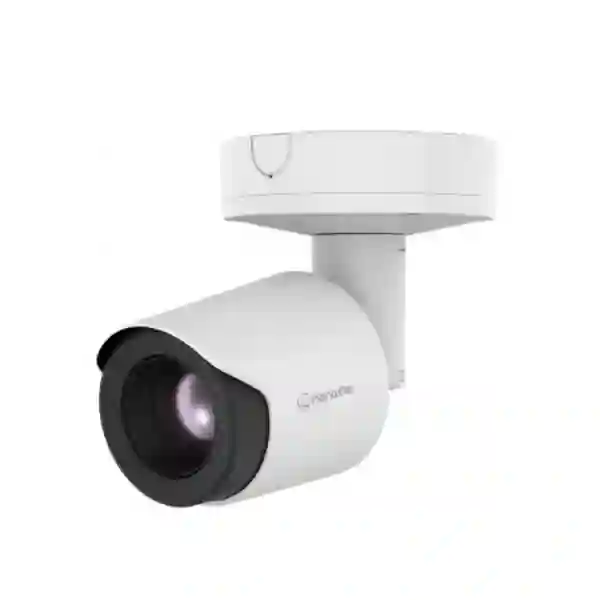
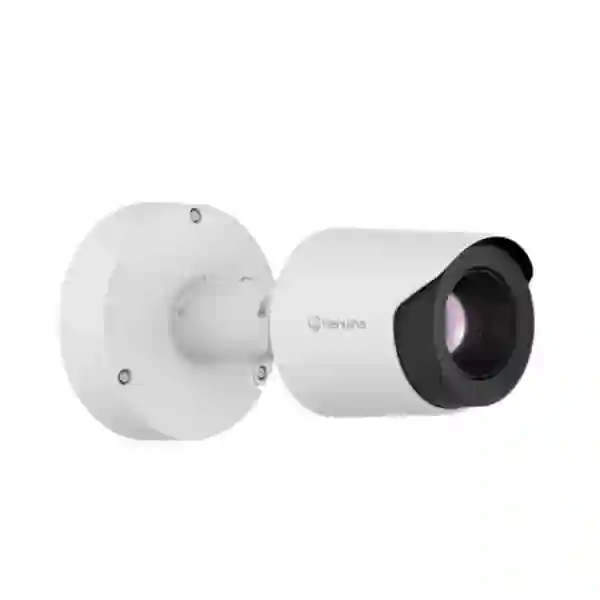
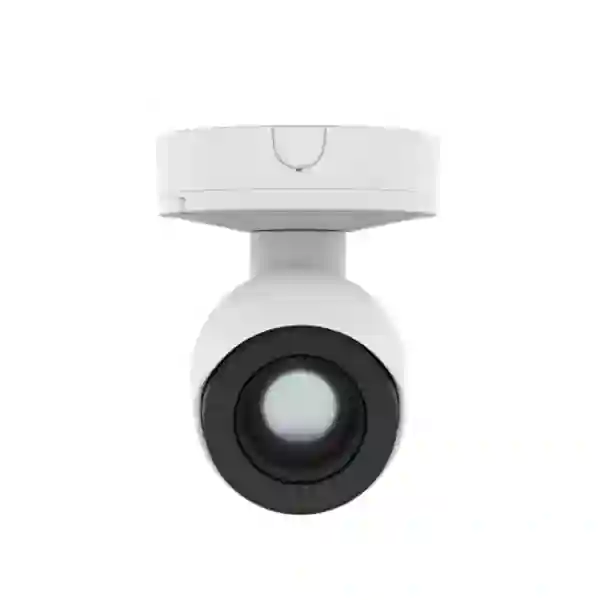
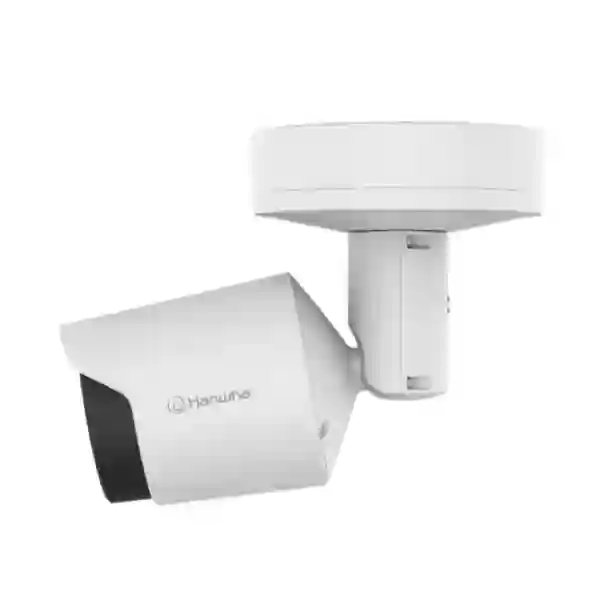
TNO-C3082T AI Thermal Camera — 60 mm Telephoto Lens
Looking for an alert-focused camera to protect a distant perimeter sector in Tanzania? The Hanwha TNO-C3082T combines a 384 × 288 thermal sensor, a narrow 60 mm lens, and AI-based person and vehicle classification. It is designed for distant, defined surveillance areas—not for close-range identification or a wide entrance view.
Check the 88.3 m minimum object distance, 6.2° field of view and 8 fps frame-rate limit before choosing it. Request a site-specific technical assessment and an itemised quote to confirm a suitable design; price, availability and delivery are not stated here.
Key specifications at a glance
| Native detector | 384 × 288 uncooled microbolometer |
|---|---|
| Focal length | Fixed 60 mm |
| Horizontal field of view | 6.2° |
| Minimum object distance | 88.3 m |
| Maximum frame rate | 8 fps |
| Thermal sensitivity | NETD ≤20 mK at 25°C (stated test condition) |
| AI classes | Person, vehicle |
| Video | H.265 / H.264 / MJPEG |
| Power | 802.3af PoE Class 3 or 12 V DC |
| Protection | IP66 / IP67 / IK10 |
| On-device media | 1 × microSD-family slot, up to 1 TB supported |
| Operating ambient | −40°C to +60°C |
These are manufacturer specifications, not a project performance guarantee. Confirm the current variant, firmware, accessories and complete system requirements before purchasing.
Is this the right type of camera?
Consider it when: your main objective is monitoring a distant, defined approach or boundary segment, including after dark, and detecting likely people or vehicles through suitable alarm rules.
Consider another configuration when: your key activity is closer than 88.3 m, you need a broad field of view, you require high-frame-rate video, or the task is facial identification, number-plate capture or calibrated temperature measurement.
What this thermal camera is designed to do
The Hanwha Vision TNO-C3082T is a purpose-built network thermal camera for operators who need to observe a comparatively narrow, distant sector of a site. Rather than relying on visible colours or artificial lighting, its sensor responds to long-wave infrared radiation. This makes it useful for detecting the presence and movement of people or vehicles in appropriate outdoor conditions, including darkness. For a buyer planning perimeter protection, the important question is not simply whether the camera can see far, but whether a particular target will occupy enough pixels and remain clearly separated from its background at the chosen distance.
The 60 mm fixed lens makes this model a focused surveillance tool, not a universal camera for every doorway, car park or entrance. Its 6.2-degree horizontal view favours a distant approach route, restricted corridor or long boundary segment over a wide forecourt. A site that needs broad nearby coverage may require several cameras or a different lens choice. The best procurement decision begins with the actual geometry, target size, alarm objective and available mounting position, then selects the appropriate camera rather than attempting to make one device cover every task.
Why thermal imagery can support night-time perimeter security
Ordinary visible-light CCTV depends on light reflected from the scene. Thermal imaging responds to infrared energy and shows temperature-related contrast, so it can reveal a moving person or vehicle without floodlights. This may make night monitoring less dependent on adding illumination across an extended boundary. It is especially relevant when operators need an early warning that something has entered a watched zone, rather than a colour image of the subject. The TNO-C3082T combines thermal video with on-camera analytics so the surveillance workflow can begin with a potential intrusion event.
Thermal imaging still has practical limitations. Heavy rain, fog, atmospheric effects, reflected or heated surfaces, vegetation and unusually warm backgrounds can change contrast or obscure targets. A thermal silhouette is not a conventional colour photograph and generally cannot establish facial identity, clothing colour or a vehicle registration plate. An effective system therefore defines which outcome is required: detection, classification, evidential identification or operational response. If all four matter, thermal surveillance is often paired in the design with suitable visible-light cameras and an incident-handling procedure.
The 60 mm lens and the site geometry
The manufacturer’s specified fixed 60 mm athermalized lens has a 6.2-degree horizontal and 4.7-degree vertical angular field of view, with a 7.7-degree diagonal field. These figures matter more to practical design than the focal length alone. At a distant boundary, a narrow view concentrates available thermal pixels on a smaller angular area; near the camera, it can leave substantial surrounding space unwatched. Before ordering, the buyer should mark the proposed camera position, the nearest and farthest alert locations, slopes, turns in the fence line and any vegetation that could interrupt the view.
Another decisive constraint is the minimum object distance of 88.3 metres. The TNO-C3082T should not be selected for a small compound or an entrance where the important activity occurs close to the mounting point. Even where the farthest target appears inside a published range, the intervening scene may include blocked sight lines, moving foliage and nearby sources of heat. A surveyed mounting height and test of representative target paths are more useful than assuming a long lens will perform equally well across every terrain and weather condition.
Understand the sensor resolution before comparing cameras
At its core is an uncooled 384 × 288 microbolometer with a 17-micrometre pixel pitch. Hanwha Vision also lists video output resolutions of 384 × 288 and 768 × 576. The larger delivered frame size should not be mistaken for a native 768 × 576 thermal detector; output dimensions and sensor detail are different specifications. For purchasers comparing equipment, the native detector format, lens field of view, distance to target and analytics capability are more meaningful than a displayed frame-size number taken in isolation.
The published thermal sensitivity is a noise-equivalent temperature difference of no more than 20 mK at 25 degrees Celsius under the stated F1.0 test condition. A lower NETD value generally indicates an ability to resolve smaller thermal differences under specified test conditions, but it is not a guarantee of identifying every target in every climate. The camera operates in the 8–14 micrometre spectral range. These values explain why it belongs in a specialist thermal surveillance design, while reinforcing the need for a trial where exact performance is critical.
Frame rate: what 8 fps means in daily use
The TNO-C3082T delivers a maximum specified frame rate of 8 frames per second for H.265, H.264 and MJPEG. This can suit applications in which the principal objective is detecting and following the progression of an object through a monitored zone. It is not equivalent to the smoother motion of a conventional 25 or 30 fps video camera. Fast crossings, rapidly changing directions and forensic review of small movements should therefore be considered carefully when choosing the device and its alarm rules.
The project team should discuss target speed, direction of movement, alarm delay, minimum event duration and how the operator will assess a sequence of frames. Recording configuration should preserve a useful clip before and after an alarm rather than relying only on a single alert image. A prospective buyer who needs continuous detailed analysis of high-speed movement should assess other equipment or a complementary imaging channel. Choosing this camera is a decision to prioritise its thermal long-range capabilities while accepting a lower maximum temporal resolution.
Published distances: detection is not identification
Hanwha Vision publishes several distance figures using different assessment methods. For this model, its Johnson-criteria table lists theoretical person detection at 2,127 metres, recognition at 532 metres and identification at 266 metres; vehicle entries are 5,436 metres, 1,359 metres and 679 metres respectively. These are defined criteria rather than guaranteed alarm distances in a real installation. The published object dimensions, pixels-per-metre thresholds, thermal contrast and environmental assumptions all affect interpretation. A number from one column should never be reused as a promise of reliable AI alerts.
Hanwha Vision also provides AI detection-distance guidance of up to approximately 399 metres for a person and 531 metres for a vehicle in its model information. That AI-oriented guidance differs from the longer theoretical Johnson detection figures and should be treated as an indicative manufacturer’s test figure. Site conditions, weather, target orientation, mounting vibration, obstructions and analytics settings can reduce practical results. A sensible acceptance plan specifies the target class and distance, defines an acceptable alarm outcome, and verifies performance in representative conditions instead of quoting the largest number available.
Person and vehicle classification
The AI engine is designed to classify people and vehicles. That distinction gives the security team a more useful starting point than ordinary motion alarms alone, because many moving objects near a perimeter do not justify the same response. The camera supports AI object detection as well as line-crossing and direction rules, and virtual-area events such as intrusion, entry, exit and loitering. These features can help an operator focus on movement that matters to a site’s operating policy when they are configured with suitable boundaries.
Classification does not eliminate nuisance alerts or make a surveillance system autonomous. It is essential to define which direction is suspicious, whether authorised traffic should be excluded and how the response changes outside working hours. A vehicle entering a loading zone may be expected during one period but unusual during another. The deployment should be validated against the real mix of people, vehicles and environmental motion. The value of analytics comes from a well-designed alarm workflow and measured field performance, not simply enabling every available rule.
Designing virtual lines and restricted areas
A virtual line can be positioned across a plausible crossing route instead of along a busy movement corridor. Where the site layout supports it, direction-based rules help distinguish entry from exit. A virtual area can define an intrusion zone, an access buffer or a location where a person remaining unusually long deserves review. These rules should reflect the actual security purpose: protecting a boundary, supervising a remote access road or alerting to activity in a restricted operational area.
Poorly planned geometry can create blind approaches or make normal movement generate alerts. The installer should walk each likely approach route, observe the target at a range of distances and consider what happens when multiple objects cross together. Alarm schedules can help align monitoring with site use, but any schedule must be authorised by the operator. Documenting the intended boundary, test cases and responsible reviewer makes future adjustment possible. It also prevents a future maintenance team from treating a carefully tuned alert area as an arbitrary rectangle.
Event response, alarm outputs and integration
The listed alarm triggers include analytics events, network disconnection, alarm input, schedules and MQTT subscription. Event actions include e-mail notification, file upload, local or network recording, alarm output, MQTT publication and handover to a PTZ preset. Two configurable alarm input/output ports are specified, with additional I/O possible through an optional accessory. This offers several ways to connect detection to a broader operational response, but the behaviour depends on the equipment and software selected for the whole solution.
For example, a thermal crossing event could notify the control-room software and call attention to a separate visible-light camera covering the same approach. Whether a particular PTZ unit can accept handover commands depends on the supported integration and configuration; it should not be assumed from the camera specification alone. Buyers should identify who receives the first alert, how events are acknowledged and how false positives are resolved. Integration testing should include lost-network, storage-full and power-recovery conditions, not just a successful demonstration during initial setup.
Video formats, streams and bandwidth planning
The camera supports H.265, H.264 and MJPEG, with Hanwha Vision’s WiseStream II and WiseStream III options listed in the video settings. It provides up to ten streaming profiles and specifies up to twenty unicast users. These options allow a project to separate an operator viewing stream from recording or integration streams, subject to actual firmware and system configuration. The right codec balances compatibility, image review requirements, bandwidth and the processing capabilities of the receiving platform.
Bandwidth cannot be derived reliably from resolution alone. Bitrate control, scene activity, codec selection, frame rate, simultaneous viewers, networking overhead and recording mode all influence load. For a remote installation, calculate the traffic needed for normal monitoring and for event retrieval, then test actual bitrates after the chosen image and analytics settings are applied. The design should also account for network outages: a camera with an Ethernet interface is not a promise of constant internet access, and remote viewing is not a substitute for local recording and an incident-response process.
Network compatibility and VMS questions
A metal-shielded RJ-45 10/100/1000BASE-T Ethernet interface is specified, and the camera lists ONVIF Profiles S, G, T and M, alongside SUNAPI and Hanwha Vision Open Platform capabilities. These published interfaces provide a useful basis for assessing connections to network video recorders, video management software and event-driven monitoring systems. Nevertheless, standards support is not the same as confirmed compatibility with every device, firmware version or analytics feature.
Before procurement, ask which recorder or VMS version is in use, whether it can display the required thermal streams and whether it can receive classification metadata or analytic alarm events as intended. Check recording, time synchronisation, user permissions, stream recovery, exports and event searches. A general ability to play an RTSP stream may not expose every device-side analytic function. A practical interoperability test should use the exact systems proposed for installation, rather than assuming that a standards logo guarantees the complete intended workflow.
Recording options and retention
Hanwha Vision specifies one microSD, SDHC or SDXC storage slot supporting a card of up to 1 TB, as well as recording actions to network-attached storage in supported configurations. Local edge storage can be useful when a network segment is temporarily unavailable or where a deployment requires event-based recording close to the camera. It is not automatically a complete backup strategy. Actual recording duration depends on stream bitrate, recording schedule, events, card capacity and any system overhead.
Retention policy should be decided before selecting a card or recorder. Calculate how long footage must remain available, who can export it and what happens when capacity is reached. Where evidential continuity matters, test event timestamps, media health, clock synchronisation and the procedure for preserving clips after an incident. Use storage media suitable for surveillance duty and follow device support guidance. Buyers should distinguish a supported maximum card capacity from an included memory card: the manufacturer specification does not establish that removable storage is supplied in the package.
Security architecture and device hardening
The device specification lists secure boot, signed and encrypted firmware, device certificates, network authentication options, HTTPS communications, access controls, audit logs and a protected secure element. It also lists a secure element with FIPS 140-3 Level 3 and Common Criteria EAL6+ credentials. Those are useful manufacturer-stated security characteristics of components or mechanisms; they should not be interpreted as a blanket certification that an entire installation, customer network or local regulatory environment is compliant.
Good security practice still requires unique administrator credentials, role-based access, correct clock settings, firmware management and deliberate network segmentation. Avoid placing camera management interfaces directly on the public internet. Review which ports and services are actually required, restrict access, document credential custody and periodically inspect logs. If a remote security team needs access, the network design should provide a managed and authenticated route. Procurement teams should also establish who is responsible for patches and how device recovery will be handled following a configuration problem.
Outdoor protection and environmental suitability
For the TNO-C3082T, Hanwha Vision lists IP66 and IP67 ingress ratings, IK10 impact resistance, NEMA 4X and selected MIL-STD-810H and NEMA TS 2 environmental tests. The manufacturer also specifies an operating ambient range of minus 40 to plus 60 degrees Celsius and zero to 95 percent relative humidity under non-condensing conditions. These are valuable details when evaluating a fixed external camera location. They do not mean every mounting choice or exposed cable entry will withstand every possible site condition without additional protection.
For installations in Tanzania, pay particular attention to direct sun exposure, electrical continuity, rainwater paths, corrosion risk at hardware connections and long cable routes. Check the actual site rather than relying on a generic climate assumption. The camera housing’s stated ratings cannot protect a poorly sealed junction, overloaded mounting bracket or unprotected upstream switch. A complete weatherproof installation covers the mounting assembly, terminations, cable glands, surge planning and service access, with any accessory choices checked against the manufacturer’s current compatible parts list.
Power supply, PoE and continuity
The device supports IEEE 802.3af PoE Class 3 and 12 V DC input. Published maximum power consumption is 10.8 watts on PoE or 9.4 watts on 12 V DC, with different typical figures. A designer can therefore include this model in a suitable power budget, but must consider the total budget of the switch, other cameras, cable length and any ancillary equipment. The presence of PoE does not remove the need for a correctly rated switch or an appropriate outdoor cabling plan.
Where ongoing perimeter surveillance is important, plan backup power at the network switch, recorder and relevant uplink—not only at the camera. An otherwise functioning camera becomes inaccessible if the switch or recording server loses power. UPS sizing should be based on measured system consumption and the required outage duration; no specific battery runtime is implied by this listing. If a remote link is involved, verify its backup strategy too. Recovery testing should establish that video, analytics and recording resume correctly after an interruption.
Mounting, alignment and access for service
The camera is a fixed bullet-style unit, specified at approximately 2.34 kg with an aluminium housing and dimensions of about 107.3 mm in diameter by 275 mm in length. Mechanical adjustment ranges are given for pan, tilt and rotation during installation; they do not describe a motorised PTZ camera. The fixed lens and relatively narrow view make solid mounting and precise aim especially important. Wind-induced motion or small alignment errors can materially change which distant area remains in the image.
The mounting design should allow safe access for commissioning and later maintenance. Check the supporting structure, mounting height, sight lines, cable entry, drainage and approved hardware. At an exposed site, do not overlook movement of poles or brackets during wind. The operator should know how to verify that the camera is still looking at the intended target corridor after repairs. Include photographs of the final physical alignment and screenshots of the approved analytic areas in the commissioning record.
Choosing between a 60 mm and a shorter thermal lens
Lens selection involves a trade-off. The TNO-C3082T uses a 60 mm lens with a 6.2-degree horizontal view and an 88.3-metre minimum object distance. Hanwha Vision’s related TNO-C3062T, for example, uses a 35 mm lens with a wider 10.7-degree horizontal view and a shorter 36.1-metre minimum object distance. These manufacturer figures illustrate why the longer-lens model is more selective about a distant corridor, while a shorter lens can accommodate a wider or nearer scene. They are not interchangeable solely because their thermal sensors have similar nominal resolution.
Buyers should draw the required view before deciding between lens options. Ask how wide the area is at the nearest important point, how wide it becomes at the far end and what happens outside the frame. A longer lens may offer more useful target detail at a distance but reduce awareness of neighbouring approaches. A wider lens may cover more ground but allocate fewer pixels to the same distant subject. Where the perimeter bends or splits, more than one viewing direction may be necessary. A drawing and a field check usually settle this choice better than a headline range.
Suitable deployment scenarios
A long industrial boundary is a potential fit when the operator needs an alert that a person or vehicle has entered a defined distant area. A utility compound may use a thermal view to supervise an approach corridor where standard lighting is unavailable or undesirable. A logistics yard might use thermal detection on a distant fence segment while conventional cameras supply evidential colour footage at gates. These are example design scenarios, not claims of existing installations, supported industries, service coverage or proven outcomes for any particular customer.
Each scenario calls for a different alarm policy. Industrial sites may need to account for routine maintenance movements; transport areas may have expected after-hours vehicle traffic; utility sites may place greater emphasis on remote acknowledgement and reliable network recovery. The TNO-C3082T should be placed only where its field of view and minimum working distance match the actual monitoring requirement. If the operator requires close-up face recognition, automatic registration-plate reading or temperature measurement with traceable accuracy, other equipment or a complementary channel is likely necessary.
Tanzania project planning without assumptions about supply
A purchaser evaluating thermal surveillance in Tanzania should begin with a site-level specification rather than assuming that an imported model or a particular configuration is available locally. The relevant questions are the site boundary length, visibility at night, existing poles and power, control-room location, storage requirements, maintenance access and incident response. These factors determine whether the equipment’s technical strengths translate into useful monitoring. They also affect the accessory and integration requirements that should be included when requesting a quotation.
Pricing, lead time, stock, warranty terms, installation coverage and any applicable local approval status must be confirmed for the specific offer. No such commercial terms are established by this product description. If the project includes public networks, wireless backhaul or specialist regulatory requirements, the buyer or appointed integrator should review the applicable current rules and project documents independently. The practical next step is to send a concise site brief for technical fit and an itemised proposal, rather than basing the purchase on an unqualified range figure or a generic equipment price.
From initial survey to commissioning
A disciplined process begins with an objective statement: what must be detected, where, and what action follows. Survey the site during relevant operating conditions, measure distances, map the expected target paths and identify any blocked line of sight. Record the camera mounting location, horizon, backgrounds and nearby heat sources. Use this information to select the lens and confirm whether a single camera can cover the assigned sector. A plan should distinguish thermal alert coverage from the separate requirement for visual evidence or identifying details.
During installation, complete safe mechanical mounting, network configuration, time synchronisation, power checks and initial video verification before tuning AI alarms. Define virtual lines or areas only after the image has been aligned to the agreed zone. Test a person and vehicle at realistic locations and paths, including the nearest and farthest important points. Confirm the alarm reaches the designated reviewer, recording is retained and evidence can be retrieved. Complete a documented acceptance test and retain a baseline configuration so later changes can be reviewed.
A practical acceptance-test checklist
An acceptance test should be scenario-based rather than a declaration that the camera switches on. Agree a small group of representative traversals with the operator: a person entering the restricted zone, a vehicle approaching from the normal direction, an authorised movement that should not trigger an incident, and a target passing through the farthest planned section. Repeat tests under at least some differing environmental or lighting conditions relevant to the site. Record which events were detected, missed or wrongly escalated and adjust the configuration where appropriate.
The checklist should also include the end-to-end incident chain. Verify timestamp accuracy, correct operator notification, video playback, export permission, access control, storage handling and recovery after network or power interruption. A camera can produce technically correct images yet fail the project if alerts are not seen or footage is unavailable after an incident. Document any limitations discovered during testing and obtain approval for the final monitoring area. Future maintenance should periodically revisit those outcomes instead of judging system health from a green network-status indicator alone.
Operational practices that improve alarm usefulness
A camera’s value depends on what happens after detection. Establish an alarm schedule that follows actual site activity, nominate the people authorised to review events and define what qualifies as a security incident. For some sites, thermal alerts may be a first screening layer: an operator verifies the event through another camera or a patrol before escalating. For others, a restricted area is sensitive enough that immediate response is justified. The right threshold must be defined by the customer’s security policy.
Review alarm logs periodically for patterns. Frequent events in one corner of the frame may point to vegetation, normal traffic or an incorrectly placed virtual line rather than a hardware fault. Operators should have a simple route for requesting changes and a record of what has changed. This prevents tuning decisions from being lost during shift handovers or contractor changes. Training should cover the limits of thermal imagery: a convincing silhouette is not proof of identity, and an absent alarm does not establish that the area was free of activity.
Maintenance and lifecycle considerations
Plan ongoing inspection of the physical mounting, external condition, cable seals, recorded image, time settings, network health and storage status. A fixed long-range view can become less useful when a new structure or growing foliage blocks part of the monitored sector. Revisit analytic zones following construction, relocation or major changes in site use. A maintenance record should include the firmware version, approved configuration, date of testing and any alarm settings modified since commissioning.
Firmware updates and security changes should follow a controlled process appropriate for the customer’s recorder and management software. Check release information and integration implications before applying changes to a live security system. Keep a verified backup of the configuration where supported and plan a recovery route in case of failure. Replace damaged mounting hardware and wiring as required by the conditions. These operational disciplines protect the original purpose of the investment without promising a particular service life, replacement cycle or maintenance contract that has not been verified.
Questions to ask when comparing quotations
An equipment-only quote may not include the items necessary for a functioning installation. Confirm the exact manufacturer model, lens option, frame-rate variant, supported firmware, mounting arrangement, network switch, power protection, recording platform and any paid software dependencies. Ask whether storage cards, mounting accessories and protective hardware are included or optional. The quotation should identify responsibility for site surveys, configuration, integration testing, documentation and training where those services are required.
Also request a clear statement of the intended operating outcome. A quote that promises to detect a person at an unspecified distance is too vague for acceptance. Specify the target, distance, background conditions, relevant alarm rule and response process. Where compatibility with an existing VMS or PTZ camera is important, require confirmation against exact versions. Discuss logistics, warranty handling and after-sales support directly with the supplier instead of inferring them from the manufacturer’s technical specification. This approach makes alternative proposals easier to compare on a fair basis.
Assessing total project cost and value
Thermal surveillance is often evaluated because a site has a long or difficult-to-light area where an early alert could improve awareness. The value calculation should include more than camera purchase cost: installation, mounting infrastructure, network, resilience, software, recording capacity, monitoring labour, training and maintenance all influence the result. A camera with a narrow field may be the correct choice for a distant segment but unsuitable if it creates gaps that require unexpected additional devices.
Define expected benefits in operational terms that can actually be tested: coverage of the agreed corridor, timely receipt of meaningful alerts, accessible event footage and reduced dependence on manual observation of an empty scene. Do not assume that AI guarantees fewer false alarms or that thermal imaging eliminates the need for guards and procedures. A realistic business case considers environmental constraints and complementary visible-light coverage. It should also reflect the full system needed to investigate a thermal alert, not just the technical specifications of the sensing camera.
How the camera fits into a layered security system
The TNO-C3082T is best understood as one component in a layered design. Thermal sensing may provide a useful first indication of movement at a distant boundary, while a separately positioned visible-light camera supplies scene details when lighting permits. A recorder or video management system preserves the event, and a nominated team decides whether to verify or respond. Physical barriers, access procedures and site lighting can remain important even where thermal detection is deployed.
This separation of roles avoids asking one sensor to perform contradictory tasks. A long focal length is useful for a small distant angular region but cannot show a whole compound. The thermal image is useful for contrast and shape but cannot offer normal colour detail. AI classification can prioritise likely people and vehicles but should not be used as proof of criminal intent. When the design acknowledges these limits, the camera can contribute a clear, testable capability to a broader security operation rather than becoming an expensive substitute for planning.
Frequently asked questions about the TNO-C3082T
Can the Hanwha TNO-C3082T work in complete darkness?
Yes. As a thermal imaging camera, it forms images from long-wave infrared energy rather than relying on visible lighting. That is why it may be considered for night-time perimeter detection. However, heavy weather, obstructions, temperature contrast and mounting position still affect practical visibility. It cannot promise the same detection performance under every condition, and it does not replace a visible-light camera when facial, clothing or plate details are required.
Does it have a 768 × 576 native thermal sensor?
No. Hanwha Vision specifies an uncooled 384 × 288 detector and lists 384 × 288 and 768 × 576 as supported video resolutions. The larger output does not change the native detector’s pixel count. When comparing thermal models, ask about sensor resolution, field of view and target distance rather than treating the size of a delivered video frame as evidence of additional thermal detail.
What does the 60 mm lens mean for coverage?
The fixed 60 mm lens gives the model a narrow 6.2-degree horizontal view, useful for concentrating pixels on a distant corridor. It is not a wide-angle camera for nearby yards or doors. The minimum object distance is 88.3 metres, an especially important limitation for purchasing decisions. A site plan should identify both the area that the camera will see and areas outside its narrow frame.
How far can it detect a person or vehicle?
The answer depends on which definition of detection is being used. Manufacturer Johnson-criteria distances, AI classification-distance guidance and reliable performance in a real installation are not equivalent. Hanwha Vision lists AI detection guidance up to approximately 399 metres for a person and 531 metres for a vehicle. Verify the intended target and alert outcome at the project site rather than using a theoretical detection number as a guarantee.
Can this thermal camera identify faces or number plates?
It should not be selected as a conventional face-identification or automatic number-plate-reading camera. Its purpose is thermal scene monitoring and object classification, not capturing visible colour details. If an operator needs evidential identification, a suitable visible-light camera, lighting plan and recording workflow may be needed. Position the devices so both channels cover the relevant event path and can be reviewed together.
What AI events does the camera support?
The manufacturer lists person and vehicle classification, object detection, virtual-line crossing and direction, and virtual-area functions including intrusion, enter, exit and loitering. Other event types are also supported. Available functions are useful only when configured for real site rules and confirmed in the intended receiving software. The commissioning team should test both expected incidents and normal authorised movements.
Is it a motorised PTZ thermal camera?
No. The TNO-C3082T is a fixed-lens camera with mechanical pan, tilt and rotation adjustment for mounting and aiming. Hanwha Vision lists event handover to a PTZ preset as a possible action, but that refers to integration with a separate compatible PTZ device. Before quoting such a workflow, verify the proposed camera, PTZ, recorder or VMS combination and its supported commands.
What network and recording choices are listed?
The product supports wired Ethernet, H.265, H.264 and MJPEG, with ONVIF Profiles S, G, T and M listed by the manufacturer. It also specifies one microSD-family slot with a maximum capacity of 1 TB and supported network-recording actions. Compatibility, actual retention time and included storage media must be checked separately. A detailed plan should identify the exact recorder, software versions, codec settings and backup approach.
Can it be powered by a PoE switch?
Yes. IEEE 802.3af PoE Class 3 is listed, as well as 12 V DC input. Manufacturer maximum consumption is 10.8 watts when using PoE. The actual system design must budget the switch and other devices, ensure correct wiring and consider backup power. If continuous monitoring matters, check power continuity for the recorder and uplink in addition to the camera.
Is it suitable for outdoor use in Tanzania?
Hanwha Vision specifies IP66 and IP67 ratings, IK10 impact resistance and an operating temperature range of minus 40 to plus 60 degrees Celsius. Suitability for a particular Tanzanian site still depends on physical installation, exposure, cable terminations, mounting strength, power quality and maintenance access. The manufacturer ratings should not be taken as a statement about local approvals, delivery availability or the quality of an unverified installation.
Does the thermal camera measure equipment temperatures?
This model’s published information focuses on surveillance, and its radiometry section lists limited region-of-interest condition-monitoring options. The product description does not establish calibrated absolute temperature measurement or specialised fire-detection certification. A project needing accurate temperature readings, process monitoring or safety-critical fire alarms should specify those needs explicitly and evaluate a device documented for that exact application.
How do I request a useful quote for this model?
Provide the exact model TNO-C3082T, a sketch or description of the site, approximate target distances, the width of the sector to watch, the required alarm outcome, mounting options and details of any existing VMS or recorder. Ask the supplier to confirm product availability, accessories, pricing, warranty and the acceptance-test scope. This reduces the risk of receiving an equipment-only quote that does not meet the actual surveillance requirement.
Request a technical assessment and quotation
Tell FourTeck Tanzania about the monitored boundary, minimum and maximum target distances, expected alarm behaviour, existing networking and recording equipment, and your desired deployment schedule. Ask for a verified product and accessory quote, including confirmation of current local supply terms. No unverified stock, price, service coverage or warranty promise is made here.
Next step: request a site-specific quote for Hanwha Vision TNO-C3082T.




Reviews
There are no reviews yet.