
HANWHA VISION • SECURITY THERMAL CAMERA
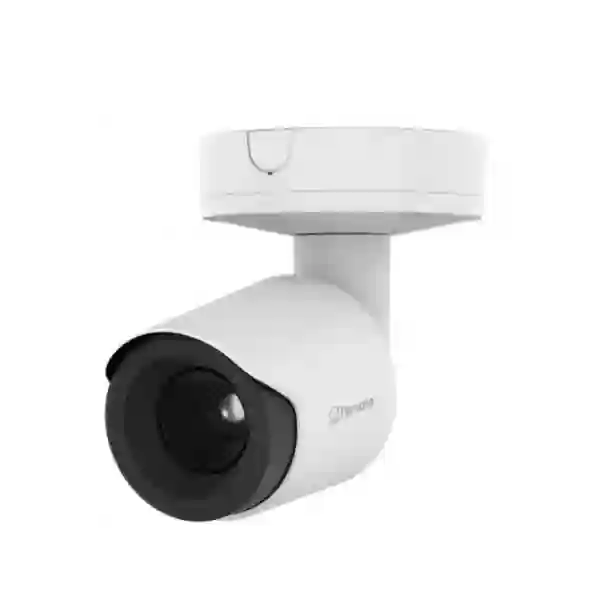
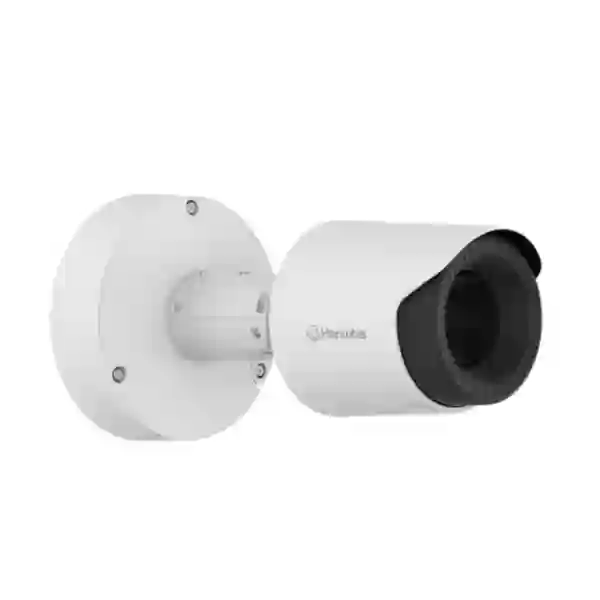
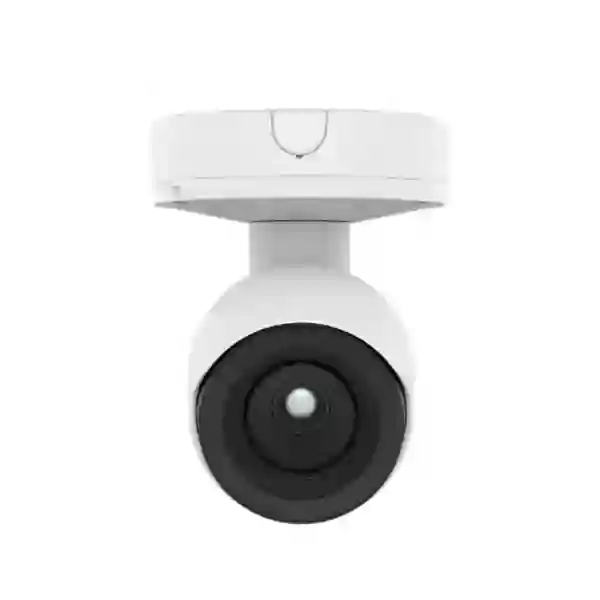
Hanwha TNO-C4052T AI Thermal Camera for Perimeter Security
A fixed 19 mm thermal network camera for carefully designed outdoor monitoring of people, vehicles and vessels. Explore the specifications, detection limits, integration options and Tanzania project-planning requirements before requesting a quote.
Technical specifications at a glance
| Imaging device | Uncooled microbolometer, native 640 × 480 |
|---|---|
| Output | 1280 × 960 upscaled; 640 × 480; 640 × 360; 320 × 240 |
| Lens | 19 mm fixed, F1.0, 32.8° horizontal / 24.6° vertical |
| Sensitivity | NETD ≤16 mK at 25°C and F1.0 |
| Video | H.265 / H.264 / MJPEG, maximum 8 fps |
| AI analytics | Person, vehicle, vessel; virtual line and area events |
| Published AI distances | Person up to 159 m; vehicle up to 227 m; vessel up to 542 m |
| Networking | RJ-45 Ethernet; ONVIF S/G/T/M; RTSP; SUNAPI |
| Storage | One microSD/SDHC/SDXC slot, maximum 1 TB |
| Power | IEEE 802.3af Class 3 PoE or 12 V DC |
| Protection | IP66 / IP67; IK10; NEMA Type 4X |
| Environment / dimensions | -40°C to +60°C; Ø107.3 × 275 mm; approx. 2 kg |
Published ranges are reference values, not guaranteed performance for every installation.
Three points to verify before purchasing
The 1280 × 960 stream is upscaled rather than native sensor resolution. AI detection ranges and Johnson-criteria DRI distances describe different outcomes. Temperature-change event analytics do not establish calibrated radiometric temperature-measurement capability.
The security problem this thermal camera is designed to address
A security team operating an exposed boundary needs more than a familiar CCTV image. It needs a reliable way to notice a person, vehicle or vessel entering a defined area, receive an alert in time and verify what happened. The Hanwha TNO-C4052T thermal camera combines a 640 × 480 uncooled thermal detector with fixed 19 mm optics and classification analytics. It is designed for defined viewing sectors and programmed security events, rather than a promise that one device can secure any size of premises. Buyers evaluating perimeter surveillance in Tanzania should begin with their site’s actual detection objectives and response process.
A useful brief describes which boundaries matter, how people or vehicles move, where observers are located and whether each event needs live intervention or merely a recorded audit trail. Draw the intended detection zones and show the near and far target positions before selecting mounting points. In many situations, thermal and visible-light cameras serve complementary roles: the thermal camera helps draw attention to an event and another view helps an operator understand it. These roles should be decided before equipment quantities are fixed.
Understanding what a thermal image can and cannot show
The TNO-C4052T uses an uncooled microbolometer working in the long-wave infrared region, specified as 8–14 micrometres. It creates an image from thermal radiation and apparent differences between subjects and their surroundings. This is useful when ordinary visible illumination is limited, including dark outdoor observation zones. It does not require a scene to be brightly illuminated like a conventional colour camera. However, thermal imaging still needs a clear line of sight, sufficient target size and useful thermal contrast. A dark scene is not automatically an easy detection scene.
The resulting picture does not reveal clothing colours or facial detail like an ordinary visible-light view. A subject behind a solid barrier cannot be treated as visible simply because the sensor is thermal; common glass is also not a transparent window for long-wave thermal observation. Buildings, parked vehicles, foliage and other obstacles can block sightlines. If a facility needs evidential identity, number-plate capture or exact colour descriptions, specify additional suitable imaging rather than expecting the thermal image to deliver those outcomes.
Native 640 × 480 resolution versus upscaled output
The manufacturer identifies the physical thermal detector as 640 × 480 pixels, with a pixel size of 17 micrometres. Available image output resolutions include 640 × 480, 640 × 360, 320 × 240 and 1280 × 960. The largest output uses upscaling; it is not native 1280 × 960 thermal sensing. This distinction is important in competitive quotations because image dimensions alone can make two products appear comparable when their detectors differ. Use native sensor resolution when assessing how many real thermal picture elements can represent a distant person.
Upscaling may provide a convenient larger image for display or a chosen recording layout, but it does not manufacture additional real detail from the scene. Hanwha specifies a maximum of eight frames per second at the listed resolutions, including H.265, H.264 and MJPEG modes. Eight fps can be suitable for many defined perimeter events, yet buyers should not assume the fluid motion or evidence capture associated with a high-frame-rate camera. Confirm the intended recorder can decode and store the selected stream profile.
What NETD of 16 mK or lower tells a buyer
Hanwha’s specification gives noise-equivalent temperature difference, or NETD, as no more than 16 millikelvin at 25°C and F1.0. NETD is a thermal-sensitivity measure: it describes the ability to resolve small apparent differences under specified test conditions. It should not be interpreted as absolute temperature measurement accuracy, nor does it guarantee a person will always stand out from the background. Actual usable contrast is influenced by subject temperature, background appearance, surface material, atmospheric conditions and the chosen viewpoint.
For a compound with changing surfaces and weather, sensitivity is only one part of reliable detection. An area warmed by the sun during the day may create a different thermal scene after sunset. Wet ground, moving foliage and temperature equalisation can change what the operator sees. Test representative conditions and use the resulting images to tune analytic rules. High sensitivity supports better thermal contrast capture, but the operational result still depends on lens geometry, scene composition, software settings and human response.
The 19 mm fixed lens and its field of view
This exact model has a fixed athermalized 19 mm lens with a stated F1.0 maximum aperture. The angular field of view is approximately 32.8 degrees horizontally, 24.6 degrees vertically and 41.1 degrees diagonally. A field-of-view specification explains how much of the world appears in the image, but it is not equivalent to an AI detection-distance guarantee. As a subject moves farther away, it occupies fewer sensor pixels. A large, visible scene can still contain targets too small for the intended classification requirement.
The stated minimum object distance is 11 metres, so near-field coverage must be checked as carefully as far-field coverage. A device installed above a narrow entry lane may not be the right choice if the required observation zone begins almost beneath the camera. Because the optics are fixed, a mismatch in framing cannot be repaired with motorised zoom after installation. Review a scaled site drawing, expected target paths and mounting heights. Confirm that every required crossing point falls within an appropriate view and distance.
How AI classification supports an alarm workflow
The camera’s supported classified object types are person, vehicle and vessel. This can make a security system more selective than one that only reacts to general scene movement. A person crossing a fence-line rule may be assigned a different response than a permitted delivery vehicle entering an access lane. Hanwha also lists BestShot thumbnail support for selected analytics. These tools can help operators review what generated an alert, but classification remains a decision drawn from image data and must not be represented as perfectly accurate.
Design an alarm workflow with three separate stages: detection, verification and response. The thermal camera can flag a configured event, a monitoring interface can present the relevant images, and an operator can decide whether it requires intervention. Where a separate PTZ or visible-light camera is used for verification, check the selected recorder’s handover capability before promising automatic coordination. Document who receives each event, how it is acknowledged, and what evidence is retained. Good response design prevents a technically capable camera from becoming an ignored alarm source.
Intelligent video analytics and rule configuration
Manufacturer-listed AI rules include object detection, virtual-line crossing and direction, and virtual-area events such as intrusion, loitering, entering, exiting, appearing and disappearing. The specifications also list sound classification and normal events such as tampering, audio detection, shock detection and temperature-change detection. These functions provide options for focusing on meaningful behaviour. They do not automatically know which movement is authorised at a particular warehouse, industrial boundary or gated premises.
An installer needs to mark the zones, define the event schedule and test the effect of different movements. For example, a vehicle passing outside a gate should not necessarily trigger a restricted-area alarm, while a person crossing a protected fence after hours may deserve priority. Set up rules in cooperation with the site’s security team, not only from the camera’s factory defaults. Keep a log of tuning changes and assess both unwanted alerts and missed events. Temperature-change alerts do not establish that this exact camera is a calibrated thermometer or a certified fire detection device.
Published AI detection distances in proper context
Hanwha lists AI detection distances of up to 159 metres for a reference person 1.8 metres high, 227 metres for a reference vehicle 1.45 metres high and 542 metres for a reference vessel 2.4 metres above the waterline. Those are three different target categories with different stated reference sizes. They are useful planning indicators, not blanket promises that every comparable subject will be detected under all weather, background and movement conditions. Nor do they say that the subject can be visually identified at the reported distance.
Camera height, obstructions, target orientation and thermal contrast will affect observed results. A field of view containing a road, for example, may produce very different object appearances from a narrow crossing route along a fence. Evaluate each required sector using the actual camera location and the intended analytic rule. When an alarm must occur by a defined boundary, specify that requirement in an acceptance test and verify it in the field. Avoid applying the longest published distance uniformly to a complicated site map.
Why DRI figures must not be confused with AI ranges
The product specification separately supplies Johnson-criteria DRI modelling figures. For a person, detection is listed as 652 metres, recognition 163 metres and identification 82 metres. For a vehicle, the respective listed figures are 1,667 metres, 417 metres and 208 metres. These are different thresholds and a different method from the camera’s AI person, vehicle and vessel detection figures. Treating a DRI detection distance as a guaranteed software intrusion-alarm distance would create an unsafe comparison.
In procurement language, always define the requested outcome. Do operators need to become aware that an object is present, receive a classified AI event, recognise its general type or establish identity from another evidential view? Each requires a different level of image information and response. The DRI table is a planning reference, not proof that a particular VMS or site configuration will deliver every outcome at those distances. Site testing and appropriately conservative coverage design remain the basis for a meaningful commitment.
Planning long or irregular perimeter boundaries
Start with the site perimeter as a series of actual observation sectors instead of a single total length. Mark buildings, trees, gates, roads, fence corners and any other obstruction that may create blind spots. Identify where a person would first enter a restricted area and where the security team must be alerted. Position the camera so the relevant approach path remains visible for long enough to support classification and rule processing. If one sector is too wide or too long, divide it into multiple views or evaluate different optics.
An effective perimeter design may combine thermal analytics for early warning and other cameras for contextual verification. Coordinate the event mapping with actual staffing patterns: an alert that arrives without a trained operator and a useful verification view may not improve security. Document the covered boundaries, unobserved areas, maintenance access and handover of alarms between devices. Test representative movement at the farthest required locations and at difficult corners. Coverage should be accepted on observed results, not only diagrams or theoretical viewing angles.
Warehouses, transport yards and logistics compounds
Outdoor logistics areas can involve shifting truck patterns, container stacks, variable lighting and staff movements after dark. Thermal imaging can support monitoring where visible lighting is uneven or vehicle headlights complicate ordinary views. Person and vehicle classification may help distinguish a walking intruder from a truck entering a permitted route, provided the analytics are set for the actual rules of the facility. This is a practical use case for the device, not a promise that every yard can be covered by a single camera.
Tall stacks, parked trailers and moving plant can obstruct the scene. A person who disappears behind a container cannot be tracked through it by thermal imaging. Mounting height, overlapping views and designated restricted zones therefore matter. Use different alarm schedules for areas that are active during shifts and protected after closing. Agree how authorised patrols and contractors are handled. When comparing proposals, ask for example viewpoints and far-distance test cases rather than comparing only model names and manufacturer range values.
Utility compounds and industrial perimeter security
Water infrastructure, electrical sites, communications facilities and other restricted compounds may contain valuable equipment and large dark areas. A thermal camera can contribute to a layered detection plan where visible illumination is unreliable or unwanted. It may identify a classified object entering a virtual area and send an event for review. The camera is only one part of that design: protected networking, resilient power, evidence retention and a clear response procedure may be just as important as the selected sensor.
Buyers should be careful not to infer industrial inspection capabilities from the word thermal. This model’s documented application is surveillance analytics; its temperature-change event does not by itself prove calibrated radiometric measurement of a transformer, cable joint or process vessel. If the objective is to read exact temperatures, assess equipment condition or satisfy a fire-safety requirement, specify that need separately and verify a suitable product against the relevant documentation. Security monitoring and temperature measurement are different procurement categories.
Coastal approaches and vessel-class analytics
Vessel classification is a distinctive feature that can matter for a facility with a controlled waterside approach. The product’s published AI vessel figure is up to 542 metres for a specified reference vessel height above the waterline. This may make the camera worth evaluating for a jetty, waterfront boundary or other observation sector where approaching craft are an operational concern. It is not a declaration of performance for every small boat, sea condition, horizon angle or weather event.
Water-facing installation requires special consideration of camera height, partial occlusion from jetties, vessel size, moving water, glare-related viewing geometry and environmental exposure. A vessel may present a different thermal shape depending on its orientation and operating state. Define whether the site needs a general vessel event or a more demanding security response to crossing a particular line. Conduct representative trials before relying on the event. Do not describe this camera as a navigation aid or a certified maritime safety system without separate authoritative evidence.
IP66, IP67, IK10 and weather exposure
The manufacturer’s listed enclosure protections include IP66 and IP67 for ingress resistance, IK10 for impact and NEMA 250 Type 4X. Its stated operating temperature interval is -40°C to +60°C. These ratings are relevant to outdoor planning but apply under the specified conditions and do not certify an entire installed cable route, bracket or junction box. Incorrect sealing at a connector or exposed splice can defeat the benefit of a well-rated camera body. Installation quality is therefore integral to durability.
Tanzania sites may have different combinations of heat, heavy rain, dust, humidity or coastal salt exposure. Select protective hardware and a maintenance schedule for the specific environment rather than asserting all locations are equivalent. The manufacturer lists relative humidity up to 95 percent under non-condensing conditions. Inspect the mounting surface, cable route, wind exposure and access for cleaning. Confirm the actual accessory ratings and sealing arrangement. No unsupported claim about local regulatory certification or weatherproofing of third-party parts should appear in the specification.
Ethernet, ONVIF and video-management integration
The product includes a shielded RJ-45 10/100/1000BASE-T interface and lists H.265, H.264 and MJPEG compression. It supports ONVIF Profiles S, G, T and M, RTSP, SUNAPI and a broad set of network protocols. These interfaces can help connect the camera to a recorder or video management platform. They do not guarantee that every third-party product exposes every AI classification, thumbnail, event rule or security function. Compatibility must be checked for the chosen software version and camera firmware.
Plan which streams and events the control room actually needs. Hanwha specifies up to five streaming profiles and up to 20 unicast users. An organisation may require a high-quality recording stream, lower-bandwidth remote views and a live operator display. Test decoding, time synchronisation, event subscriptions and evidence export. Review licensing or integration costs separately in the actual quotation. Use secure API credentials where an application depends on proprietary commands, and avoid assuming a video connection automatically provides complete event interoperability.
Recording strategies and local microSD support
The camera is specified with a microSD/SDHC/SDXC slot supporting up to 1 TB. Its documented event responses include supported image or video uploads, notifications and recording to local media or NAS under configured workflows. Those capabilities can support evidence collection and certain resilience strategies, but the design must identify which footage is recorded, for how long and under whose control. A storage-capacity specification is not a retention guarantee. Continuous recording and alarm-only clips can require very different storage budgets.
Calculate actual capacity from resolution, compression, bitrate, scene activity, clip length and retention policy. Decide how recordings are retrieved after an alarm and whether they are protected against accidental overwrite. An edge card should not be the only evidence location when the organisation’s risk assessment calls for central storage or backup. Test network interruption and recovery, checking that the recording strategy behaves as planned. Specify authorised export users and audit requirements as part of system acceptance, not as an afterthought.
Cybersecurity responsibilities in deployment
Hanwha documents encrypted and signed firmware features, secure boot, authentication controls, HTTPS, 802.1X network authentication, logs and encrypted SD-card partition capability. Such features can support a controlled security architecture, but they do not maintain the system automatically. Assign responsibility for credentials, security updates, network segmentation, device access and incident response. Use unique administrator accounts where the configuration permits, restrict management access and record who can review or export sensitive footage.
The camera also lists direct cloud connection support, which should be assessed against the organisation’s data-handling and remote-access policy. Feature support is not proof of any particular service’s local availability, hosting region, data residency or subscription terms. Review all dependencies before enabling remote integrations. Keep firmware changes controlled and test required VMS functionality afterward. A security device that is difficult to administer or has unnecessary public internet exposure may create operational risks regardless of its advanced analytics and enclosure specification.
PoE power, DC option and continuity planning
The camera supports IEEE 802.3af Class 3 PoE and 12 V DC input. Manufacturer-listed maximum power consumption is 7.8 W for PoE and 8.1 W at 12 V DC. These figures help engineers estimate network-switch capacity and alternative power arrangements. A complete calculation must include port power limits, cable characteristics, connected network equipment and any backup requirement. The existence of PoE support does not mean that any switch with enough physical ports will have a sufficient total power budget.
For long outdoor boundaries, cable routing, electrical protection and network availability may drive overall project cost. Plan protective earthing and appropriate surge mitigation according to the site design. If operations must continue during outages, size backup supply for switches, storage and monitoring devices as well as the camera. Test what alert is generated when the device disconnects and who receives it. A powered camera that cannot communicate with its recorder or response team provides limited operational value.
Mechanical installation and alignment
Hanwha gives approximate product dimensions of 107.3 mm diameter by 275 mm length and a weight of 2,000 grams. The specified body materials include aluminium and polycarbonate. The camera supports mechanical aiming adjustments, but its pan, tilt and rotation ranges do not turn it into a motorised PTZ camera. Its 19 mm optical viewpoint is fixed after installation. A proposal should identify the correct compatible brackets and adapters, their ratings and their suitability for the mounting surface.
Choose a position that provides a clear line of sight while leaving safe access for service. Confirm that nearby eaves, poles or foliage will not intrude into the intended thermal view. Protect cable entries from weather and avoid unsecured exposed joints. During alignment, confirm the near boundary as well as the far target because the stated minimum object distance is 11 metres. Save final-view reference images and document the camera identifier and mounting point. This makes future maintenance and troubleshooting more dependable.
Commissioning and realistic field acceptance
Commissioning should begin with confirming the exact ordered model, firmware, power method, network identity and recorder connection. The installer should demonstrate the required live image and event types from the final mounting position, not only on a workbench. Check relevant day and night conditions, with particular attention to the farthest required crossing point, the nearest target area and partially obstructed paths. If a person, vehicle or vessel class is critical to a site, test that specific class using representative movement and distance.
Document virtual zones, schedules, event destinations, storage behaviour, access controls and evidence export. Test permitted movement that should not alarm as well as prohibited movement that should. Review any nuisance alerts and missed events separately, and adjust rules without hiding genuine risk. Record the acceptance criteria, results, exclusions and corrective actions. Manufacturer reference distances are useful during planning, but a successful site acceptance test is the more relevant demonstration that the configured system meets the actual security requirement.
Managing false alarms without weakening detection
A thermal image can change with the environment. Sun-warmed surfaces, wet areas, moving vegetation, maintenance activity and different target orientations may affect the apparent scene. AI object classes and virtual rules can help filter alerts, but a system still needs tuning. Begin with the most important prohibited movements and a clear understanding of authorised operations. Review representative event clips with security staff, not merely the number of alarms reported by software. Their operational feedback helps locate rules that are too broad or poorly timed.
Avoid solving every unwanted alarm by making rules so insensitive that realistic intrusion scenarios stop triggering them. Use object class, virtual-line direction, schedules and defined areas where appropriate. Keep changes documented so operators understand revised behaviour. Evaluate the frequency of unnecessary alarms and the success rate of required tests. The objective is a manageable workflow in which important events are recognised and acted upon, rather than a dashboard that produces either endless alerts or none at all.
When a visible-light camera is still necessary
The TNO-C4052T is a thermal security camera, not a conventional colour image sensor. It can support detection of thermal subjects under conditions where visible lighting is poor, but it does not provide the same appearance details as a dedicated colour or identification camera. Projects that require reading number plates, distinguishing clothing or identifying faces need separately suitable optics and scene lighting. The 8 fps maximum should also be considered if the use case calls for high-frame-rate footage of rapidly moving objects.
A layered design can give each camera a specific role. The thermal unit may signal a potential boundary crossing; a conventional overview view helps establish context; a properly positioned identification camera may capture details at a gate. Where supported, a PTZ camera can be directed toward a relevant location for operator review. Confirm that the actual VMS can coordinate the desired workflow. Selecting complementary sensors can be more effective than demanding that a single camera perform mutually different detection, tracking, identification and measurement tasks.
Choosing between 19 mm and other thermal optics
Hanwha’s current thermal family includes different focal lengths, while the exact product in this request is TNO-C4052T with 19 mm fixed optics. A different focal length changes framing and target pixel density, so model variants should not be silently substituted in a quote. Shorter optics generally offer a wider scene and less target detail at long distance; longer optics concentrate a narrower sector. The best choice depends on target distance, camera mounting height, desired crossing width and the available number of mounting positions.
For a broad close boundary, an alternative field of view may be more appropriate. For a distant narrow approach, a different lens variant may improve the number of thermal pixels on the intended target. Check each candidate against its own manufacturer specifications, not assumptions from another model in the range. Ask a designer to compare the same site geometry and acceptance outcome across alternatives. Ensure that the selected exact model is written on the purchase order, equipment schedule and handover record.
A practical comparison with other security technologies
Visible-light cameras, thermal cameras, perimeter beams, radar and physical barriers solve different problems. Ordinary cameras can show recognisable details when lighting, resolution and lens design are adequate. Thermal cameras emphasise thermal contrast and can enable useful detection in low-light locations. Other sensors may report movement without an image that lets an operator verify its cause. The right combination depends on the security objective, environment, tolerance for missed events and available response team.
When evaluating a complex site, avoid comparing products only by maximum distance or the number of marketing features. Map the detection stage, confirmation stage and response stage separately. Identify what each device contributes and where it has a blind spot. Consider how a failure is reported, whether power and networking remain available, and whether the operator receives enough context to act. A robust security scheme often uses several complementary technologies with clear responsibilities rather than choosing one sensor for every situation.
Tanzania procurement information to request
A project-specific quotation should state the exact camera model, quantity, mounting accessories, required network and power components, VMS integration, recording storage and commissioning tasks. Provide the facility layout, security objectives, target distances, access restrictions and environmental exposure. Identify whether the requirement is for person, vehicle or vessel alarms, and whether the installer must demonstrate results under particular operating conditions. The more precise the brief, the easier it becomes to compare offers for equivalent work.
Ask for separate confirmation of current local price, any applicable taxes, stock position, delivery arrangements, warranty terms and installation responsibilities. These are commercial details that cannot be established from the manufacturer’s international technical page alone. Clarify whether storage cards, junction boxes, surge protection, video licences, training and maintenance are included. Do not assume a product feature means a particular regional cloud service or support entitlement. An itemised written offer and acceptance plan provide a clearer basis for procurement than a bare catalogue description.
Maintenance, reassessment and equipment lifecycle
After commissioning, inspect the lens window and weatherproofing according to approved maintenance guidance. Check mounting stability, cable seals, network health and whether growth, stored materials or new structures have affected the view. Review the most important alarm rules whenever site operations change. Confirm that recorded evidence can still be found and exported, that time settings remain correct and that disconnected-device notifications reach the responsible team. These checks help prevent gradual loss of effective coverage.
Cybersecurity and operational practices also require periodic review. Track approved firmware updates and make sure account access remains appropriate as personnel change. Retest representative intrusion scenarios after major building work, vegetation changes or analytics adjustments. Keep a record of device identifiers, firmware versions, rule settings and installed accessories. Budget maintenance access for cameras placed on high masts or difficult structures. A durable enclosure is valuable, but it does not remove the need for lifecycle management.
Final suitability decision before ordering
The Hanwha TNO-C4052T thermal camera is a candidate when a site needs a defined fixed 19 mm thermal observation sector, on-camera analytics for people, vehicles or vessels and network integration with an established security workflow. Evaluate its native 640 × 480 detector, upscaled outputs, eight-fps limit, minimum object distance and stated reference ranges together. Check whether the camera needs a companion visible-light view, a remote monitoring integration or additional sensors to deliver the actual response objective.
Do not commit solely because a specification lists an impressive distance or environmental rating. Ask for a site drawing, a clear explanation of protected areas, a tested event path and an itemised commercial offer. Define what would count as a successful detection at the most difficult point on the site. If measured temperature, life-safety protection or regulatory compliance is the core need, specify those functions separately and seek suitable documented equipment. The strongest purchasing decision is the one tied to a realistic, testable security requirement.
Frequently asked questions
Is 1280 × 960 the native thermal resolution?
No. The physical sensor is an uncooled 640 × 480 microbolometer. The manufacturer lists an upscaled output option of 1280 × 960, but that does not turn the device into a native 1280 × 960 detector. For a specification comparison, use the native 640 × 480 value and evaluate the selected stream mode separately. Upscaled output may affect display layout but does not add the same spatial information as a genuinely higher-resolution sensor.
Can the camera see in total darkness?
The camera senses long-wave thermal radiation rather than relying on ordinary visible illumination. It can therefore produce thermal imagery without lighting a scene like a colour CCTV camera. Still, objects need sufficient apparent thermal contrast and usable image size, and the view must be unobstructed. Darkness does not guarantee perfect object detection. If operators also need faces, number plates or clothing colours, include a separately suitable visible-light imaging solution.
What objects can its analytics classify?
Hanwha specifies person, vehicle and vessel as the AI object classes. Configurable functions include virtual lines, intrusion areas, loitering and related events. Actual alerts depend on the scene, target size, firmware and rule settings. A classification event should assist a human monitoring process rather than be presented as error-free identification. Test all required object classes at the site’s specified distances and movement patterns before signing off the system.
How far away is a person detectable?
Hanwha states an AI person detection distance of up to 159 metres for a reference target 1.8 metres high. Separately, the DRI table includes a person detection value of 652 metres based on Johnson’s criteria. These figures do not mean the same thing. Neither is a blanket promise of an alarm or identification in all real-world scenes. Use the AI figure as one planning input and confirm actual performance through a field demonstration.
What are the vehicle and vessel distances?
The specified AI figures are up to 227 metres for a 1.45-metre reference vehicle and up to 542 metres for a reference vessel 2.4 metres above the waterline. These reference dimensions and the test context matter. Smaller or partially hidden targets may behave differently. The required site viewpoint and alarm rules should be tested with representative objects. Do not use a vessel figure to infer person range or vice versa.
Is this a calibrated temperature measurement camera?
The manufacturer documents a temperature-change event type, but the model is not described here as a calibrated radiometric thermometer with verified absolute temperature accuracy. The NETD number indicates sensitivity under test conditions, not an exact temperature-measurement tolerance. Buyers evaluating electrical inspections, industrial hotspot measurement or certified fire protection should ask for a product specifically documented and validated for those tasks. Surveillance thermal detection and precise temperature measurement are distinct functions.
Can it be installed outdoors?
Hanwha lists IP66 and IP67 ingress protection, IK10 impact resistance, NEMA Type 4X and operation from -40°C to +60°C. These are relevant enclosure specifications, not a guarantee that every mounted system will remain protected. Proper brackets, cable entries, sealing, surge protection and maintenance matter. Design for the actual site’s rain, dust, humidity, sun and possible coastal exposure. Verify any accessories separately because they may have different ratings.
What power supply does it use?
The device accepts IEEE 802.3af Class 3 PoE or 12 V DC. Maximum listed consumption is 7.8 W on PoE or 8.1 W at 12 V DC. Check the selected switch’s total power budget, per-port limits, cable route and backup architecture. A suitable power source for the camera is only part of overall continuity; recorders, network switches and operator stations must also remain available for alarms to reach the right people.
Can it work with my existing recorder?
The manufacturer lists ONVIF Profiles S, G, T and M, RTSP and SUNAPI support. These interfaces support integration options, but do not guarantee complete analytics or metadata compatibility with every NVR or VMS. Confirm the actual recorder model, software version, licence, video codec and supported events. Test live video, recording, time synchronisation and alarms before ordering a large quantity of cameras. Written compatibility confirmation is preferable to a general standards claim.
Does the device support local memory?
The camera specifies one microSD/SDHC/SDXC slot supporting up to 1 TB. Event recording and network storage workflows are also listed. Storage duration is not fixed because it varies with the recording profile, bitrate, event frequency and retention settings. Decide how footage is secured and exported and what happens during a network outage. If evidential retention is important, evaluate a managed recorder or backup strategy instead of relying only on a removable card.
Is the 19 mm lens motorised?
This exact model uses fixed 19 mm optics. Listed mechanical adjustment ranges refer to installation aiming and should not be read as motorised pan, tilt or optical zoom. Coverage must be planned from the chosen mounting location. If the installation requires different framing or long-distance pixel density, evaluate another compatible camera model with its own verified specifications. Do not assume that a similarly named thermal camera has the same field of view.
Is cloud access mandatory?
The camera’s manufacturer specification includes direct cloud connection support, but that does not by itself establish that a cloud service is mandatory for local camera operation or that a particular package is available in Tanzania. Review the chosen recorder and remote access design, as well as data-handling, subscription and cybersecurity requirements. Do not assume any service’s hosting location or commercial eligibility without direct confirmation for the proposed solution.
What should a quotation include?
Send a site plan, target distances, object classes, required event rules, proposed camera positions and existing network or VMS details. State the desired recording retention and the environmental exposure. Request an itemised list of the exact TNO-C4052T model, mounts, network and power equipment, storage, licensing, integration, installation and commissioning. Ask for explicit confirmation of current price, stock, lead time and warranty for the actual Tanzania offer. Request a practical acceptance test as part of the scope.
Can one unit cover an entire large boundary?
Not necessarily. Coverage depends on the boundary’s geometry, sightlines, field of view, target image size, mounting height and expected alarm distance. The device’s 19 mm lens has a published horizontal view of approximately 32.8 degrees, but that angle does not guarantee meaningful detection across every part of a large site. Map the sectors and test difficult paths. Multiple overlapping views or other sensors may be necessary for reliable results.
What security features are documented?
Hanwha lists controls including secure boot, signed and encrypted firmware, authentication features, HTTPS, IEEE 802.1X, audit logs and SD-card encryption support. These capabilities do not replace good deployment practice. Use access controls, protected networks, approved firmware management and documented responsibilities for handling footage. Confirm how the actual VMS and any cloud feature fit the organisation’s security policy. Avoid extending a component-level security certification into a claim about the entire installed system.
Request a project-specific TNO-C4052T quotation
Share your site plan, required object classes and detection distances, existing recorder, target retention period and preferred mounting locations. Ask for confirmation of the exact model, compatible accessories, a practical acceptance test and written local commercial terms. Price, stock, warranty and delivery have not been independently verified for Tanzania.
Contact FourTeck Tanzania to request an assessment and itemised quotation.




Reviews
There are no reviews yet.