
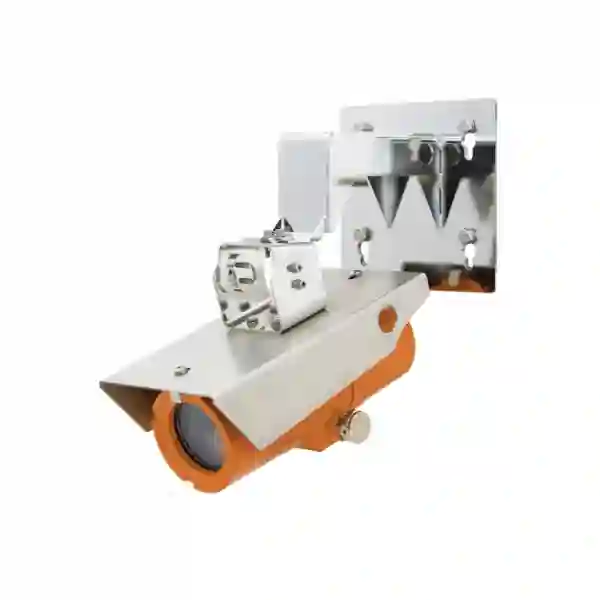
Hanwha Vision TNO-P9072EPT1-Z 4K Explosion-Proof Fixed AI Camera
The Hanwha TNO-P9072EPT1-Z from Hanwha Vision is an 8MP, 4K network explosion-proof fixed AI camera intended for surveillance designs that require both useful scene detail and a hazardous-location-rated housing. It combines a 3.9–10mm varifocal lens, intelligent object analytics, 120dB wide dynamic range and PoE+ connectivity. For buyers assessing a refinery, processing area, fuel-handling location or other potentially hazardous industrial environment in Tanzania, the first decision is not simply image resolution: the location classification, installation method and exact approval markings must match the project.
Use this page to review the verified camera capabilities, technical trade-offs and the questions to answer before requesting a project quote. This is a fixed-view camera with digital PTZ functions, not a motorised pan-and-tilt unit. The existence of a manufacturer datasheet does not establish current stock or ordering status. Ask for confirmation of the exact model, supported accessories and any current replacement before finalising a procurement specification.
Technical snapshot
At a glance: verified capabilities
The model provides 3840 × 2160 effective resolution from a 1/1.8-inch 8MP CMOS sensor, with H.264 and H.265 video streams up to 30 frames per second according to the model datasheet. The optical range is 3.9–10mm at f/1.5. It supports multiple streams, WiseStream II, a mechanical infrared-cut filter for day and night operation, 120dB WDR, gyro-assisted digital stabilisation, dual SD slots with a combined maximum of 512GB, and built-in AI analytics for object-related events, BestShot and metadata.
Its enclosure is described by Hanwha as powder-coated aluminium with IP66 and Type 4X protection. The published environmental operating range is −40°C to +55°C, with PoE+ power and maximum consumption of 25.5W. Its hazardous-location documentation lists specific Class/Division and IECEx/ATEX markings. These are model-level specifications; the project engineer must confirm that they apply to the supplied unit, local requirements and the intended classified zone. Mounts, glands, earthing, cable routes and system integration remain separate design decisions.
Who should shortlist this camera?
Shortlist the TNO-P9072EPT1-Z when the surveillance objective is a defined fixed view inside or adjacent to a suitably classified industrial risk area and a conventional outdoor camera cannot be assumed appropriate. Typical engineering questions include whether an operator needs to see vehicle movements, verify access to a process area, review unusual activity, or monitor an outdoor equipment boundary without placing an unapproved device in a potentially explosive atmosphere.
The camera is not automatically suitable for every refinery unit, gas installation, dusty production line or hazardous room. Facility drawings may contain several zone or division classifications within a single site. A device suitable for one location may be unsuitable just a short distance away. Ask the site's qualified electrical or hazardous-area specialist to confirm gas or dust group, temperature classification, ambient temperature, cable-entry rules and all applicable approval conditions. Where a safe-area mounting position meets the required field of view, that alternative should be considered as part of the design.
Why explosion-proof and weather-resistant mean different things
An IP66 rating addresses dust ingress and powerful water jets under defined tests; it does not alone prove a camera can be installed in an explosive atmosphere. Hazardous-location certification addresses different risks and installation conditions, including the surrounding atmosphere and the equipment's protection concept. A weatherproof camera and an explosion-proof camera can therefore look equally robust while having very different intended deployment boundaries.
Hanwha's published markings for the TNO-P9072EPT1-Z include Class I, II and III Division 1 groups B, C, D, E, F and G, alongside IECEx and ATEX notation stated in the manufacturer literature. That information provides a starting point, not blanket permission for an unspecified hazardous area in Tanzania. Review the supplied nameplate and applicable certificate schedule with a competent engineer. Verify what is included in the approved assembly, how the cable entry must be terminated, which installation conditions apply, and whether the required mounting hardware forms part of the certified system.
Read the hazardous-location markings before purchase
The data sheet describes cFMus approval and markings including II 2 G Ex db IIB+H2 and II 2 D Ex tb IIIC. Those character groups matter: gas and dust environments have different classifications, and the enclosure, entry components and installation practices must preserve the intended protection. A project specification should reproduce the exact approved marking from the supplied model documentation rather than replacing it with the broad words 'ATEX camera' or 'explosion-proof CCTV'.
Before design sign-off, request current certificates and installation documentation for the specific supplied variant. Compare the certificate with the zone or division classification, ambient range, gas or dust group, equipment protection level where relevant, temperature limitations and any special conditions of use. Do not assume that an international certificate alone establishes local regulatory acceptance or site owner approval. Tanzania-specific statutory and project requirements should be reviewed by the project engineer and procurement team, and the equipment should not be installed until the responsible parties have completed those checks.
What the 4K sensor contributes
The 8MP imaging platform provides more pixels across the fixed scene than lower-resolution designs. That can help an operator distinguish activity around a machine, entry gate, storage boundary or vehicle route when the subject occupies sufficient pixels in the image. The effective output is 3840 × 2160, and the published maximum H.264/H.265 frame rate is 30fps. This makes the camera suitable for considering both live observation and recorded investigation, subject to lighting, lens selection and recording configuration.
Resolution alone does not guarantee face identification, reading a plate or resolving a small object at a long distance. Distance, horizontal field of view, lens position, exposure, compression, motion blur, weather and mounting stability all affect usable detail. For demanding identification tasks, have the integrator calculate pixel density at the target plane and test representative recordings under day and night conditions. A wide overview image may be operationally valuable but should not be presented as proof of identification performance without field validation.
Understanding the 3.9–10mm varifocal lens
The built-in 3.9–10mm f/1.5 varifocal i-CS lens lets the installer choose a broader or tighter framing within its optical range. At the wider end, it is easier to cover more of a nearby work area. At the longer end, more image pixels can be allocated to a narrower zone. That flexibility is useful when the final camera stand-off distance, equipment position and permitted mounting point are determined by plant engineering constraints.
The lens is not a substitute for a detailed survey. A fixed housing cannot automatically sweep between separate zones like a motorised pan-tilt head. Set the intended target width and height before ordering, then evaluate the lens with the actual mounting geometry. Check that the protective assembly, brackets and access for safe adjustment are suitable. After commissioning, capture snapshots at the chosen focal length and retain them as evidence of the agreed operational view. If a single field of view cannot meet both overview and identification requirements, a multi-camera design may be better.
120dB WDR for difficult industrial light
The camera offers 120dB wide dynamic range, a useful tool where bright sunlit backgrounds and shaded equipment appear in one scene. Consider an entrance facing an open yard, a loading lane next to reflective metalwork or a process area with strong contrast between interior structures and daylight. WDR can preserve information across a challenging exposure range that might otherwise leave one part of the picture dark or washed out.
WDR does not solve every lighting problem. Strong moving headlights, backlit steam, reflective surfaces and frequent day-to-night transitions can still reduce usable detail. Plan camera angle and supplementary lighting before relying on software processing alone. During acceptance testing, review both bright and shadowed portions of the scene at the same time, then repeat the test during typical operating shifts. The desired result is usable evidence where the operator needs it, not merely an image that looks attractive on a demonstration monitor.
Day/night operation and low-light planning
The model has true day/night switching with an infrared-cut filter, and Hanwha publishes minimum-illumination figures for colour and monochrome imaging under specified conditions. These figures are useful technical references, but they should not be translated into a promise of clear evidence in a particular unlit yard. Lens setting, shutter speed, gain, real movement and available light can change the final picture considerably.
The datasheet does not establish that this unit includes its own integrated infrared illuminator. For dark sites, the design should therefore evaluate existing floodlighting or an appropriate separately approved lighting solution. Hazardous locations create additional constraints for every electrical accessory, not just for the camera. Record the required night-time task—detecting movement, classifying an object or identifying a person—and test against that objective. If the task depends on fine detail while people or vehicles are moving, plan illumination and exposure settings together rather than relying on a low-light specification in isolation.
Gyro-assisted stabilisation and scene clarity
Hanwha specifies digital image stabilisation with a built-in gyro sensor. For an industrial installation, this may help compensate for small image movements caused by vibration transmitted through nearby structures. It can be particularly relevant when the camera is mounted to equipment supports, long brackets or structures exposed to wind. Digital stabilisation may improve viewing comfort and the usefulness of fixed detection zones.
It is not a remedy for a structurally unsuitable mounting point. Large movements, resonance, loose fixings and repeated mechanical shocks can still defeat both video analysis and reliable viewing. The mounting assessment should consider equipment weight, approved bracket combinations, wind load, safe access and the vibration environment. During commissioning, inspect live streams and recordings while nearby machinery operates. Reassess the mount if the scene shifts enough to change the target coverage, trigger repeated false events or make evidence unreliable. Fix the mechanical cause before expecting software to compensate indefinitely.
AI object detection, BestShot and metadata
The TNO-P9072EPT1-Z includes license-free Wisenet AI capabilities described by Hanwha as object detection, BestShot and metadata. These features are intended to help an operator search, filter and respond to relevant scene activity. Depending on configured analytics, the camera can provide richer context than simple changes in pixel motion. A site may use that context to direct attention to an access route, vehicle lane or other well-defined observation area.
AI analytics are not an assurance that every event will be detected correctly. Occlusion, distance, camera angle, adverse weather, lighting transitions, repeated moving machinery and crowded scenes can affect performance. Define which event types matter, set practical detection zones, then run tests with normal and abnormal activity. Document the results and adjust thresholds with the operators who will use the alerts. Treat classification and BestShot as aids to investigation, not as identity proof or substitutes for a trained response procedure. Confirm the actual metadata available to the selected recorder or management platform before making it part of an operational requirement.
Designing alerts that operators can act on
The manufacturer literature lists AI-related functions such as object, directional, enter/exit and loitering events, alongside other event types including motion, tampering, shock and sound-related detection. Those functions are most useful when an alarm represents a clear operational question. For example: has an object crossed a defined virtual line; is an area occupied outside the planned operating window; or has the camera view become obstructed?
Start with a small number of high-value rules. Assign a responsible person, escalation method, review time and recording-retention expectation to each alert. Then test against realistic shift changes, vehicle visits, PPE movement, cleaning tasks and maintenance shutdowns. Alarm flooding can cause an apparently sophisticated system to be ignored. Combine analytics with site procedures and verify which events can be forwarded through the selected VMS, NVR or alarm integration. Do not assume that every listed camera-side event will display or trigger identically in every third-party recorder.
Privacy-conscious surveillance design
High-resolution video and metadata can support safety and security, but they can also capture more information than an operational purpose requires. Define the permitted viewing zones and who is authorised to see the footage. The camera supports configurable privacy masking and access controls; these should be evaluated as part of the overall site policy rather than left to default settings. The location of cameras, access rights and recording schedule should be consistent with the organisation's documented legal and workplace obligations.
Where a public boundary, neighbouring premises or non-operational area enters the field of view, consider adjusting the lens and position before using electronic masking. Keep a record of why a scene is monitored and how long footage is retained. Avoid unsupported claims that AI analysis is legally compliant in every jurisdiction. Local privacy and data-protection responsibilities require a separate review for the specific organisation and deployment. This approach often improves operator trust and reduces unnecessary storage and review work as well as supporting governance.
PoE+ electrical planning
The camera is powered by PoE+ and the manufacturer lists maximum power consumption of 25.5W. This can simplify the overall network architecture by combining data and power delivery over Ethernet, but it does not eliminate electrical engineering in a classified area. The supply equipment must have adequate power budget, the cable path and entry arrangement must be approved for the location, and applicable earthing and bonding requirements must be respected.
Before choosing a switch or injector, check IEEE 802.3at power delivery, cable distance, conductor quality, shielded connectivity and the power required during the actual operating environment. Allow budget for all endpoints rather than designing at the exact aggregate limit. Consider how the installation will behave if the network switch or facility supply loses power and whether backed-up power is part of the brief. A qualified installer should coordinate cable separation, conduit, glands, surge protection and certification requirements. Do not treat a normal office PoE deployment diagram as a substitute for hazardous-area installation instructions.
Network connectivity and stream design
The published interface is a shielded RJ-45 10/100/1000BASE-T Ethernet connection. The camera supports H.265, H.264 and MJPEG codecs, multiple profiles, and WiseStream II. These options allow a designer to separate a high-detail recording stream from lighter live-view or remote-monitoring streams where the recorder and application support them. The final configuration should reflect the intended number of viewers, video retention period and operating network conditions.
A 4K stream can consume meaningful bandwidth even with an efficient codec. Real throughput depends on scene activity, frame rate, quality, bitrate limits, exposure noise and codec settings. Test a representative view rather than copying a generic bitrate figure into the specification. Segregate CCTV traffic appropriately, manage multicast only where the network design supports it, and confirm the capacities of switches, uplinks and monitoring links. If the project uses remote access or a WAN, examine available bandwidth during peak operational hours and make a plan for connectivity loss.
Local recording and evidence continuity
The datasheet specifies two SD/SDHC/SDXC slots with a combined maximum capacity of 512GB, plus NAS and local recording options. Edge storage may help provide a recording path when central connectivity is interrupted, subject to configuration and storage-health monitoring. It can also be useful for a site with long cable paths or where a central recorder cannot be located near the classified area.
Edge cards are not an unlimited or maintenance-free archive. Retention varies with bitrate, recording schedule, activity, overwrite rules and the types of events selected for storage. Memory endurance, operating temperature and regular checks must be addressed in the maintenance plan. If the organisation requires reliable investigation records, design central and edge storage as coordinated parts of the evidence workflow, not as independent assumptions. Test export, time synchronisation, playback after network interruption and restoration of normal recording. Confirm supported card types and manufacturer guidance for the firmware in use before procurement.
VMS integration and recording compatibility
Hanwha lists ONVIF Profiles S and G, SUNAPI and its own video-management options among the supported interfaces. This provides useful integration starting points, especially for projects that already have a recorder, operator workstation or broader CCTV platform. However, recognising a camera stream is different from supporting every analytics event, metadata field, search function or camera-management setting.
For a new or upgraded installation, request a model-and-firmware compatibility check from the VMS supplier. Confirm live video, 4K recording, camera discovery, time synchronisation, event forwarding, edge-recording retrieval and the operator features the project truly needs. Validate the chosen codec and streaming profile in the field. Where a third-party system supports only basic video, explain that limitation in the commissioning documents rather than claiming full AI integration. A short lab test before field installation can prevent expensive rework when hazardous-area access is tightly controlled.
Environmental protection and operating limits
Hanwha publishes IP66 and Type 4X enclosure protection and an operating temperature range of −40°C to +55°C for PoE operation. The powder-coated aluminium housing is intended for demanding environments, but enclosure ratings are not a promise of immunity to every chemical, abrasive, marine or mechanical exposure. A site survey should identify washdown patterns, airborne dust, corrosive agents, radiant heat, sun exposure and potential impact hazards.
In Tanzania, different industrial sites can face intense sunlight, coastal exposure, rainfall or dusty operating conditions. These are design considerations, not assumptions about any particular customer premises. Check the expected ambient and surface temperatures, external contamination and the owner's cleaning methods. The installer should make sure that any added mount, protective film or other accessory is approved for the environment and does not compromise certification or the viewing window. Establish a safe inspection and cleaning schedule for the housing and lens. The camera's environmental limits must be assessed alongside the separate hazardous-area classification.
Physical dimensions, mounting and access
The manufacturer datasheet lists approximate dimensions of 7.2 × 5.97 × 13.85 inches and a mass of about 6.35kg. These values are important for bracket sizing, structural support and safe lifting. The published optional accessory examples include wall, pole and corner mounting components, but the appropriate part number, availability and certified combination must be confirmed for the exact camera and housing revision being supplied.
Before ordering, sketch the proposed mounting arrangement with elevation, target direction, access route and cable entry. Check whether a wall, pole or corner support can deliver the required fixed view without vibration or obstruction. Consider safe access for inspection while the facility operates, and how authorised technicians will isolate power and perform servicing under site permit rules. Do not mix mounts from similar-looking explosion-proof models without checking compatibility. The enclosure and retained mounting hardware form a mechanically critical assembly; engineering approval matters more than visual similarity between brackets.
Cable entry and the certified installation boundary
The datasheet illustrations identify cable-entry features on the housing, but they are not a substitute for a certified installation drawing. In a hazardous area, the gland, seal, conduit arrangement, cable type and termination method can be as important as the camera enclosure itself. The design needs to account for the surrounding atmosphere, wiring system, protection concept and precise equipment instructions.
A competent specialist should review the certificate schedule, manufacturer manual and the plant's electrical standards before selecting any entry fittings. Plan the cable route to avoid unnecessary mechanical strain and prevent water ingress or damage during maintenance. Verify bonding, protective earth arrangements and safe isolation. If an installer proposes a different fitting or accessory because the specified item is not locally available, require documented approval rather than improvisation. A system can lose the intended protection if the entry components or installation method are wrong, regardless of the camera's published model certification.
A practical pre-installation site survey
Begin with a joint walk-through involving security operations, the electrical or hazardous-area authority and the network team. Mark the exact scene to be observed, expected subject distances and the lighting conditions across a normal operating day. Record the classified-area boundary and the proposed support position. Confirm who has authority to approve equipment and installation work within that area.
Next, check structural support, vibration, cable routing, PoE budget, switch location, network resilience and recorder capacity. Identify who will be responsible for routine cleaning, storage monitoring, firmware maintenance and event testing. Ask the supplier to quote the full installation set rather than only the camera body: compatible mounts, approved entry components, network equipment, storage and engineering services may all affect the real project cost. End the survey with a documented acceptance criterion, such as a specified zone covered clearly during day and night, with reliable recording and an agreed alarm response.
Commissioning and acceptance tests
A useful commissioning plan is tied to the operational objective. Before live handover, verify the supplied model and nameplate, inspect the enclosure and mounting, and have authorised personnel check the installation against the approved hazardous-area design. Confirm safe power-up, firmware version, password and account configuration, time synchronisation and the selected recording profiles.
Then test the field of view, target detail, WDR, night performance, motion handling and any AI event zones. Trigger representative alarms and verify they arrive at the correct workstation or VMS with the expected recording. Test network loss and restoration, export of a sample clip, storage overwrite behaviour and access-log review. Record both passing and failing observations, especially issues caused by shadows, weather or moving plant. Keep baseline screenshots and a configuration backup in the project handover. Where a future inspection or replacement is needed, these records make it easier to restore a known and approved operating state.
Tanzania procurement and project documentation
For buyers preparing an industrial CCTV requirement in Tanzania, a request for quotation should clearly separate the camera's verified manufacturer capabilities from project-specific work. State the exact model, 4K imaging requirement, lens range, intended hazardous-area classification, environmental constraints and desired analytics. Attach the site survey and request certificates, approved installation instructions and accessory compatibility information for the item being offered.
Ask suppliers to clarify whether the quoted scope covers product supply only or also mounting, cabling, configuration, storage, commissioning and training. Have them identify any alternative model proposed and explain its technical differences and certification basis. Pricing, delivery, stock, warranty, local service arrangements, import obligations and regulatory suitability should be confirmed in the actual offer; none should be inferred from an international datasheet. This careful separation keeps a product description useful without turning it into an unsupported promise about local inventory or installation capability.
Where this fixed AI camera may be useful
Potential design scenarios include surveillance of an appropriately classified process-area approach, a fuel-transfer boundary, a chemical-handling area or an industrial access corridor. In each case, the operational purpose should be written down first. A gate approach may prioritise movement direction and vehicle context. A process perimeter may emphasise entry into restricted zones and recording of unusual activity. A remote yard may need attention to lighting, connectivity, storage resilience and physical inspection access.
These examples describe evaluation contexts, not certification statements or promises that the camera is suitable for every such location. Some applications may call for thermal detection, optical zoom, a true motorised PTZ, wider panoramic coverage or a non-hazardous-area camera mounted outside the classified boundary. The right choice depends on the target, the installed electrical environment and what the security team needs to do when an event occurs. Use a drawing and an acceptance test to connect the technical product to the actual surveillance outcome.
How to define the required image detail
An effective camera schedule should describe the target area and required task instead of relying on a label such as '4K industrial CCTV'. Decide whether the operator must only detect movement, recognise the type of object, observe a work process or capture identification-grade detail at a specific distance. The distinction affects placement, lens setting, image quality and the number of cameras needed.
Ask the integrator to show the anticipated field of view at 3.9mm and 10mm for the proposed mount. Consider obstructions from pipework, moving vehicles, fencing and structures. Verify the projected person or vehicle size in pixels at the most difficult point of the scene. Plan a daytime and nighttime demonstration wherever practical. When a requirement cannot be met by the fixed field of view, modify the layout or add a complementary camera. It is better to document a clear limitation before purchase than to discover that the recorded video provides only an attractive overview after installation.
Estimate bandwidth and storage responsibly
Plan storage from measured or manufacturer-supported bitrates for the selected view rather than from a universal '4K camera uses X GB per day' claim. Recording demand changes with scene activity, codec, target quality, frame rate and the presence of image noise in low light. The number of streams and whether continuous or event recording is required will also change the calculation.
A practical method is to choose a representative recording profile, capture a sample during a busy period and a quiet period, and determine average and peak data rates. Multiply the observed rates by the required recording hours, camera count and retention period. Then add a reasonable margin for system overhead and future changes, according to the organisation's own storage policy. Confirm that the NVR or VMS can decode, record and export the chosen 4K stream. If bandwidth is constrained, tune profiles or retention deliberately; do not reduce evidence quality without the security owner's approval.
Network security and maintenance ownership
Industrial surveillance equipment should be managed as network infrastructure, not only as a camera. The manufacturer lists HTTPS authentication, user access logging, IP filtering and 802.1X-related features in the model specification. These can support a controlled deployment when implemented consistently with the site's network architecture. Their presence alone does not mean the system is secure by default.
Define a named technical owner, remove unnecessary default access, use individual accounts where supported, limit privileges and place the camera on an appropriately segmented network. Review which protocols and remote services are truly required and close unused access paths under the organisation's approved security policy. Establish a process to review manufacturer firmware information, test updates and maintain a safe configuration backup. Any update within a classified installation must be coordinated with site safety procedures. Include time settings, storage health, alarm function and evidence export in routine maintenance checks.
Model lifecycle, replacements and change control
Equipment lifecycle is particularly important for specialised industrial cameras because mechanical accessories and hazardous-location approvals can constrain replacements. A reseller listing identifies the TNO-P9072EPT1-Z as discontinued and names TNO-P9073EPT1-Z as a replacement. Hanwha's current discontinued-products catalogue also shows the later TNO-P9073EPT1-Z with a different subsequent replacement. These observations make current-model confirmation essential, but they do not prove inventory or interchangeability in Tanzania.
If the exact TNO-P9072EPT1-Z is required for an existing site or design, request written confirmation of ordering status and the supplied revision. If a newer variant is proposed, compare its certificate, temperature range, dimensions, mounting system, accessories, network interfaces and analytics before substitution. A newer part number is not automatically a drop-in replacement in a certified hazardous-area installation. Require the responsible engineer to approve any change to the equipment schedule, and keep the updated documents with the commissioning record.
Fixed camera versus other surveillance approaches
Choose this model for a defined fixed view where its optics, imaging and certified configuration meet the operating task. A motorised PTZ can cover multiple directions under operator control but may leave a previously monitored area out of view. A panoramic system can show a wider continuous scene, potentially with less image detail per target. A thermal camera answers a different detection problem and may not provide the same visual identification details as a colour 4K unit.
The best alternative may also be a standard IP camera placed in a correctly identified safe area overlooking the target, where engineering conditions permit that design. Compare the total approved installation rather than only the camera body. Include the number of viewpoints, operator workload, lens range, night performance, environmental constraints, networking and future maintenance. Never assume that accessories or approvals from one hazardous-area model transfer to another. The final selection should be based on a documented hazard assessment and a measurable surveillance objective.
Questions to include with a quotation request
A strong request for quotation names the exact Hanwha model, quantity, location classification and required video objective. Ask the respondent to identify the supplied model revision, hazardous-location documents, lens and resolution, installation options, compatible mounting parts and power requirements. Confirm whether installation accessories are included and whether any substitution is proposed. A clear scope reduces the risk of a camera being priced without the components needed for safe commissioning.
Also ask how the offer handles video recording, event integration, cybersecurity configuration, testing, training and future maintenance. Specify whether on-site field tests or sample footage are part of acceptance. Request explicit written responses on current availability, lead time, warranty and local commercial conditions instead of treating catalogue information as a binding offer. For classified areas, the final selection and installation details should remain subject to approval by the project's competent engineer.
Final decision: verify the site, then the equipment
The Hanwha TNO-P9072EPT1-Z combines 4K imaging, a flexible varifocal lens, built-in analytics, multiple video formats and a specialised hazardous-area enclosure. Its strongest fit is a well-defined fixed surveillance view where the approved equipment markings and installation assembly match the site engineering requirements. It should not be selected solely because the words 'explosion-proof' and 'AI' appear on a product sheet.
Before commitment, obtain current documentation for the exact supplied model, confirm its lifecycle status and approved accessories, and have the facility's qualified team review classification, installation design and compliance obligations. Then use sample footage, event tests and recording calculations to demonstrate the intended operational result. Request a quotation for the complete engineered solution, with explicit scope and commercial terms. No price, inventory, delivery or certification acceptance in Tanzania is implied by this page.
Frequently asked questions
Is the TNO-P9072EPT1-Z a PTZ camera?
No. It is described as a fixed explosion-proof AI camera. The platform offers digital PTZ functions, but that is not the same as a motorised pan-and-tilt mechanism. Plan the mounting point and optical field of view around the scene that must remain covered.
What resolution and lens does it use?
Hanwha specifies 8MP 3840 × 2160 imaging, up to 30fps on H.264/H.265 streams, and a 3.9–10mm f/1.5 varifocal i-CS lens. Whether this provides the target detail your project needs depends on distance, lighting, compression and installation geometry.
Does IP66 mean it is approved for any explosive atmosphere?
No. IP66 is an ingress-protection designation and does not determine hazardous-area suitability. Compare the exact gas or dust classification, equipment markings, installation certificate conditions and approved cable-entry details with the facility requirements.
Does this camera contain an infrared illuminator?
The verified manufacturer materials describe true day/night operation and low-light specifications but do not establish an integrated IR illuminator for this exact model. Design the night scene using confirmed light levels and, where appropriate, separately approved illumination.
Can a PoE+ switch power the unit?
The camera is specified for PoE+ with a maximum power draw of 25.5W. The switch, cable and power budget must be designed accordingly, and hazardous-area wiring and certified entry requirements still apply.
How much footage can its SD slots store?
Hanwha states that the dual SD slots support a combined maximum of 512GB. Actual recording duration depends on codec, bitrate, event schedule, frame rate and image activity; size the storage using an explicit recording plan.
Will the AI events work with an existing VMS?
That must be checked for the exact recorder or VMS release and camera firmware. Basic streaming compatibility does not prove that every camera-side analytics event, metadata field or edge-recording function will be available to operators.
Can it be ordered in Tanzania today?
This content does not claim local stock or price. A reseller identifies the original model as discontinued, so obtain confirmation of current ordering status and any approved alternative through a project quotation before specifying supply.
Are the brackets interchangeable with newer versions?
Do not assume so. Ask for the exact mounting part numbers and manufacturer compatibility documentation for the proposed camera revision. Changes to a hazardous-location assembly should be assessed by a qualified project engineer.
What information is needed to request a useful quote?
Provide the site classification, desired view, target distance, lighting conditions, mounting position, network and recording requirements, approximate quantity, and the role of the installation contractor. Request certificates and installation instructions for the supplied model.
Request a hazardous-area camera project quote
Share the camera location classification, target view, site conditions, estimated quantity and required recorder or VMS integration. Ask for written confirmation of the exact Hanwha model status, valid certificates for the unit supplied, compatible approved mounting accessories and the complete installation scope. The quotation should separately confirm any local stock, price, delivery, warranty, installation work and applicable obligations.




Reviews
There are no reviews yet.