
Hanwha Vision · Outdoor Thermal Surveillance
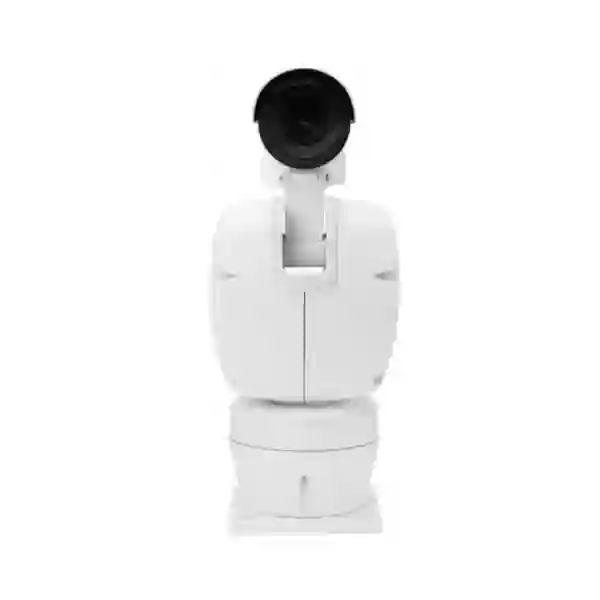
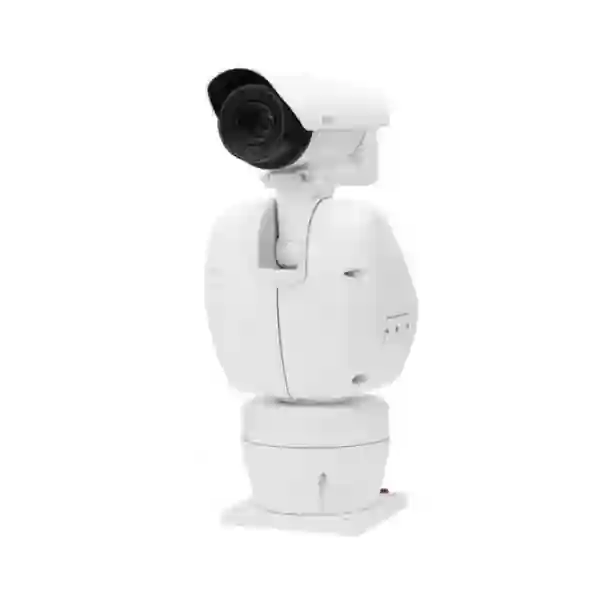
Hanwha TNU-4041T VGA Thermal Positioning Camera
Assess large outdoor surveillance areas with 640 × 480 thermal imaging, a fixed 19 mm lens and continuous 360° pan. Designed for security observation and configurable event workflows, not calibrated temperature measurement. For Tanzania projects, confirm coverage, integration and power requirements before requesting a quote.
Technical specification at a glance
| Model | Hanwha Vision TNU-4041T |
|---|---|
| Camera type | VGA non-radiometric thermal positioning camera |
| Thermal sensor | Uncooled microbolometer; maximum 640 × 480 |
| Lens / view | 19 mm fixed, F1.0; 32° horizontal, 24.3° vertical |
| Pan / tilt | 360° endless pan; -90° to +40° tilt |
| Video | H.265, H.264, MJPEG; WiseStream II |
| Analytical features | Virtual line/area, motion, tampering, temperature change and other listed events |
| Interfaces | Ethernet RJ-45, alarm input/output, audio input/output |
| Compatibility interfaces | ONVIF S/G/T; SUNAPI |
| Local memory | microSD/SDHC/SDXC, up to 256 GB |
| Electrical | 24 VAC; up to 84 W heater on, 62 W heater off |
| Outdoor specifications | IP66, IK10, NEMA 4X; -40°C to +55°C operating range |
| Size / mass | 219 × 528 × 335 mm; approximately 11.7 kg |
Specifications follow the manufacturer’s current global product listing. Confirm exact delivered configuration and current revisions for your project.
A thermal camera built for practical observation decisions
The Hanwha TNU-4041T thermal positioning camera is intended for security teams that need to look across exposed areas where ordinary visible-light video may leave important gaps. Its uncooled thermal detector creates an image from differences in emitted infrared energy, while its motorised positioning assembly lets an operator direct the field of view toward relevant areas. This is a surveillance instrument for observing heat patterns and activity, not an automatic substitute for a complete security design.
For a Tanzanian facility evaluating thermal surveillance, the starting question is not simply whether the camera can see at night. Ask which movement must be discovered, how much area must be watched at once, whether operators can respond to alerts, and what useful evidence must be recorded. The answers determine suitable mounting positions, complementary cameras, recording arrangements and the actual value of motorised thermal observation.
The TNU-4041T pairs a 640 × 480 thermal image with a fixed 19 mm lens. It supports endless 360-degree horizontal panning, a specified tilt range, on-camera analytical events, network streaming and a rugged outdoor enclosure. Each feature contributes something different. Thermal contrast makes certain subjects easier to notice; positioning changes where the camera looks; analytics can flag configured events; and the recording system retains material for review.
Request a project-specific quote only after the desired surveillance zones and operating conditions have been described. Include the site plan, mounting heights, intended detection task, power arrangements and required video management platform. These details are more useful for choosing the right camera than an unqualified claim about maximum viewing distance or a promise that one positioner can guard an entire site alone.
Key specifications and what they mean to a buyer
The manufacturer specifies an uncooled microbolometer with selectable image resolutions of 640 × 480, 640 × 360 and 320 × 240 pixels. Its thermal spectral range is 8–14 micrometres, with a stated NETD of no more than 50 mK and a 17-micrometre pixel size. These figures describe sensor properties; they are not a guaranteed distance for recognising people, reading signs or distinguishing individual identities.
The 19 mm F1.0 fixed-focus lens has a stated horizontal field of view of 32 degrees, vertical field of view of 24.3 degrees and diagonal field of view of 39.2 degrees. The minimum object distance is 11 metres. A buyer should not interpret pan movement as optical zoom: the viewing angle remains fixed when the head rotates, so subjects occupy fewer pixels as distance increases.
Video formats include H.265, H.264 and MJPEG, with WiseStream II supported for video transmission efficiency. The manufacturer’s current specification lists a maximum of 30 frames per second in 60 Hz operation and 25 frames per second in 50 Hz operation for H.265 and H.264. Network and recorder settings can further affect the observed frame rate and delivered image quality.
The enclosure is specified for 24 VAC power, outdoor IP66 protection, IK10 impact resistance and NEMA 4X. The manufacturer’s power figures are up to 84 W with the heater operating and 62 W without it. A project must budget for the camera, appropriate power supply, mounting hardware, data link and recorder or VMS; the camera specifications alone do not establish that those items are included.
Understand thermal imaging before specifying it
A thermal image responds to infrared radiation rather than reflected visible light. This makes it useful when a scene is dark and visible-light cameras would need extra lighting. People, vehicles, surfaces and machinery may create detectable thermal contrasts, but the apparent contrast changes with temperature, background, weather, distance, angle and what lies between the camera and the subject.
Thermal imaging is not X-ray vision. Walls, opaque barriers and many other objects block the view. Heavy rain, atmospheric conditions, foreground vegetation and thermal crossover can reduce effective contrast. When the surroundings and a target reach similar apparent temperatures, detection may become harder even though the camera is functioning normally. A site test should reflect both favourable and difficult conditions.
The TNU-4041T belongs to Hanwha’s non-radiometric thermal imaging family. It provides temperature-change detection as an analytical feature, but the manufacturer distinguishes such cameras from radiometric models that measure object temperature values. Do not select this camera for calibrated temperature inspection, fever screening, precise equipment-temperature reporting or a safety limit that requires an actual measured temperature and stated accuracy.
Think carefully about the evidence needed after an event. Thermal video can reveal a moving heat signature or help establish that something passed through a monitored area, yet it generally cannot deliver the colour, texture or fine facial information expected from a suitable visible-light identification camera. Where both detection and identification matter, a properly planned pair of thermal and optical cameras can play complementary roles.
19 mm optics and field-of-view planning
The 32-degree horizontal angle gives the TNU-4041T a relatively specific view rather than a panoramic image of everything around it. When pointing toward a boundary, the frame covers a section of that boundary at any instant. Longer distances spread the available 640 horizontal pixels over a wider scene and smaller subjects, so practical detection and recognition tasks must be agreed before selecting mounting locations.
A lens cannot be judged solely by its focal-length number. The combination of detector dimensions, pixel pitch and lens establishes the actual field of view. This model is appropriate for applications where the 19 mm view provides the needed balance of scene width and target detail. If the requirement is to inspect a narrow zone at greater distance, another lens configuration or camera class may fit better.
The published minimum object distance is 11 metres. This makes the camera a questionable choice for trying to inspect subjects immediately below or close to the mounting point with the same optics. Designers should check near-field blind areas, changes in site elevation and the relationship between the tilt envelope and the camera’s mounting height. Another sensor may be required for close entrances or sheltered corners.
For a perimeter design, mark intended observation lines and relevant obstacles on a drawing. Record where people might cross, where vehicles move, which buildings and trees interrupt sight lines, and the distances at which an operator needs meaningful evidence. A camera demonstration with representative subjects at representative distances is more dependable than assuming a theoretical detection range will match every site.
Continuous pan is not continuous all-round vision
The positioning head is specified for 360-degree endless panning and a tilt range from minus 90 to plus 40 degrees. It can move between directions and inspect several sectors from one elevated location. However, one thermal sensor observes only its current field of view. The presence of endless pan does not mean that the camera simultaneously records every direction around the mount.
The manufacturer’s specifications include programmable presets and groups, with up to 300 presets and six groups in the current published table. Positioning can be used for operator control, scheduled observation routes or preset movement following an event. The best patrol route depends on how long the camera stays in each sector, what could happen while it is facing elsewhere and whether the recorder captures each move.
Pan speed is specified up to 120 degrees per second, and tilt speed up to 40 degrees per second. These are movement capabilities, not promises about alert response time, tracking accuracy or real-world ability to follow a fast subject. Camera movement, operator workload, network latency, scene conditions and analytics configuration all influence the operational result.
Where a gate, fuel transfer point or other critical area needs uninterrupted observation, a fixed camera may still be necessary. Positioning cameras are especially useful when a trained operator or a well-designed event workflow needs to inspect multiple regions. Use the positioner as one layer of coverage and identify any periods or views where an important scene would otherwise be unattended.
Perimeter surveillance for large and exposed sites
Wide grounds can contain dark boundaries, variable background temperatures and long stretches without nearby power or lighting. A thermal positioning system can help operators locate heat signatures along surveyed sight lines and inspect selected sectors without needing visible-light floodlights for thermal imaging. Appropriate deployments may include industrial property boundaries, isolated service yards, large storage compounds and other permissioned security zones.
Start by defining the security question for every boundary: is the aim to notice a person approaching, classify activity near a fence, follow a vehicle in a service corridor or support a response team? These are different tasks. The camera’s detection capability must be checked against the specific size, distance, speed and orientation of the expected target, rather than inferred from general thermal camera marketing.
Trees, fencing, signs, containers and parked equipment can mask a heat source. Dense vegetation and terrain changes also interrupt viewing opportunities. A high mounting position may improve coverage beyond some obstacles, but it can introduce steep viewing angles or maintenance challenges. Evaluate the geometry through site drawings and, ideally, an onsite demonstration with the camera at a realistic temporary location.
A useful deployment links observation to action. Decide who receives an intrusion or line-crossing event, which footage is recorded, who verifies a potential incident and how the site handles non-threatening movement. Without clear response ownership, additional alarms can overwhelm security teams. The camera should fit a documented operating procedure instead of being treated as an isolated piece of equipment.
Industrial and infrastructure monitoring use cases
Industrial facilities may have equipment zones, outdoor corridors, processing yards and service areas where personnel movement matters after normal working hours. Thermal positioning can support observation of these environments, particularly where visible-light imaging is limited. The TNU-4041T’s network streams and analytical events make it a candidate for incorporating such views into a facility-wide monitoring workflow.
It is important to distinguish security observations from machine-condition measurement. A visible change in thermal pattern may prompt an operator to investigate, but this camera does not provide calibrated radiometric measurement of an object. Projects that need precise bearing temperatures, electrical hotspot thresholds or equipment health measurements should specify an appropriate radiometric instrument and its measurement accuracy separately.
For utility or energy sites, security teams should map critical paths, controlled entrances, fence lines and assets requiring observation. Weather, reflective surfaces, moving vehicles and background heat can affect the apparent scene. The camera may be valuable for human and vehicle awareness, but it is not a substitute for dedicated safety systems, specialised fire detection or the inspections mandated by the facility.
System owners also need to plan for maintenance access and operational continuity. If the camera is installed high above machinery, reliable mounting, service isolation, cable protection and safe access become just as important as the thermal image. Consider who will clean the enclosure, inspect the supports, restore presets after maintenance and verify that recorded video is available when needed.
Yards, logistics areas and movement corridors
Goods yards and logistics properties can include shifting rows of trucks, trailers, containers and temporarily stacked stock. These objects create both surveillance opportunities and blind spots. A positioning thermal camera can help personnel inspect selected travel corridors and exposed edges, but its position changes should be coordinated with the times when activity is likely and with any permanently monitored entrances.
Consider whether the requirement is detecting a person between vehicles, observing vehicle approaches or identifying a registration plate. Thermal imagery may help reveal heat-bearing subjects, but license plates, colour descriptions and facial details usually require separate visible-light equipment with an appropriate view. A design that conflates detection with identification can leave investigators with incomplete evidence.
Activity patterns matter to analytics. A route that is quiet overnight may be busy during shifts, truck arrivals or cleaning operations. Virtual lines and areas should be aligned with legitimate traffic rules and tested over representative periods. Security teams may need different schedules, permissions or analytic sensitivity by operational phase to reduce nuisance events while retaining useful alerts.
Before procurement, document the intended camera mounting point, the distance to critical movement areas, available data connectivity and whether operators can manually take control. Include likely changes to the yard layout. A good system should tolerate ordinary operational rearrangements without relying on an unrealistic promise that one camera will always see through parked trucks or new stock.
Video analytics as decision support
The TNU-4041T lists motion detection, tampering, loitering, directional detection, virtual line crossing, enter and exit events, appearance or disappearance events, audio detection, sound classification, shock detection and temperature-change detection. These functions can provide triggers for a monitoring workflow. Their presence in a specification does not mean every possible event will be detected accurately in every scene.
Virtual areas and lines are especially useful when they correspond to a real site rule. A defined boundary crossing can be easier for an operator to assess than an alarm from an entire frame. However, camera angle, thermal contrast, target size, motion and environmental noise affect performance. Treat detection zones as configurations that need field tuning rather than settings that are correct immediately after installation.
The product supports alarm input and output connections and can produce certain notifications, file uploads, edge recordings or preset actions when configured events occur. Which action reaches which recipient depends on the network, recording platform, user accounts and integration design. The customer should confirm the desired end-to-end event workflow instead of assuming that a built-in feature automatically communicates with every external system.
Temperature-change alerts require particular care. Hanwha identifies T-suffix thermal cameras as non-radiometric; the device does not report a verified absolute temperature reading just because it notices a thermal change. If a business requirement includes temperature logs, engineering thresholds or automated shutdown based on measured degrees, specify a dedicated compatible measurement device and validate its safety design.
From alert to operator action
A security event is valuable only when somebody can interpret and respond to it. Define whether alerts appear in the control room, reach a designated monitoring team or are reviewed later with a recording. Each path has different staffing, connectivity and evidence needs. The TNU-4041T can supply event information, but the responsible organisation must design the response and escalation process.
An example workflow begins with a selected virtual line near a restricted boundary. When a configured event occurs, the system can bring the relevant camera view to the operator’s attention, retain a clip and prompt verification. The operator then applies site rules rather than treating an analytic flag as proof of a security incident. This reduces the risk of acting on a shadow, animal, weather effect or authorised movement.
Plan how operators regain control of the positioning head. Manual review, scheduled presets and event-driven movements may compete for the same camera. Establish which command takes priority, how to return to the usual patrol pattern and what happens when a second event occurs while an operator investigates the first. These choices often have more practical impact than adding another alarm category.
After commissioning, review recorded examples of both useful events and nuisance notifications. Adjust zones and schedules under change control, and document why each adjustment was made. Where events are important for investigation, ensure the recorder uses synchronised time, retains adequate context before and after the trigger and protects access to stored material.
Streaming, compression and image delivery
The camera lists H.265, H.264 and MJPEG video codecs along with WiseStream II. Codec selection affects bandwidth consumption, decoder compatibility, storage demand and viewing performance. An efficient codec can be helpful on a constrained network, but its real benefit depends on scene activity, chosen quality, frame rate and the capabilities of every component that receives the stream.
The published network interface is 10/100BASE-T Ethernet through an RJ-45 connection. The product supports multiple stream profiles, allowing systems to request different settings for live viewing or recording. Multi-profile support should not be mistaken for unlimited independent high-resolution streams; network conditions, processing constraints and recorder requirements remain important design considerations.
A camera operating at a stated maximum frame rate does not guarantee that all workstations or mobile connections will display every frame. The recording server, decoder, switching equipment, uplink and viewing client each influence the experience. Test the intended simultaneous live views and recordings under realistic traffic before deciding whether the link and storage resources are sufficient.
For remote observation, investigate end-to-end bandwidth and network resilience before promising smooth access from another building or region. Thermal video still needs a dependable IP path. If a link is intermittent, agree on local recording and recovery procedures, and confirm whether the chosen recorder and management software can reconcile events or missing periods according to the site’s requirements.
VMS and network interoperability checks
The official specification lists ONVIF Profiles S, G and T, alongside SUNAPI and Hanwha Vision’s Open Platform. These are useful integration starting points, not a guarantee that every function works with every video management system. Basic video, PTZ movement, event delivery, edge recording and advanced analytics may each require different levels of software support.
Before buying, obtain the exact VMS name, version, license type and intended feature list. Ask the integrator to verify a supported driver or tested configuration for the TNU-4041T. Features that appear in a generic ONVIF compatibility statement may still need manufacturer-specific integration. A live demonstration should include any feature that is essential to the security team’s daily work.
Check how the site will handle preset positions, switching between streams, user permissions, camera health alerts and recording schedules. Some operators need an interactive thermal view on a control room wall, while others require events and archived footage in a single incident platform. The desired experience determines which system interfaces must be checked and documented.
If the camera will join an existing surveillance estate, consider firmware baselines and cybersecurity policies as part of compatibility. Hanwha notes that units on firmware versions 1.00 through 1.2X need bridge firmware before upgrading to the newest release. Never skip the manufacturer’s upgrade sequence or assume a firmware change is risk-free for a live monitoring installation.
Network security and access control
Security cameras belong on a managed network rather than an unrestricted public connection. The manufacturer’s current specification includes HTTPS communication, digest authentication, IP-based access control, security logging and IEEE 802.1X network authentication options. Whether these controls protect a deployment depends on correct configuration, suitable certificates, account administration and the surrounding network.
During setup, change default credentials where applicable, create named accounts with appropriate privileges and restrict management access. Separate camera administration from ordinary operator viewing wherever the system allows it. A central password and certificate management process makes it easier to retain control when staff roles change, outside contractors finish work or a device is replaced.
Treat remote access and firewall rules as planned architecture decisions. Avoid exposing camera administration interfaces directly to the internet merely for convenience. Confirm how security personnel connect from authorised locations, how logging is reviewed, and how network or camera alarms are surfaced when a communications link fails. Robust physical surveillance still depends on reliable digital controls.
Firmware management should be deliberate. Review the exact model’s manufacturer documentation and release notes before upgrading, note the bridge-firmware warning, back up settings where supported and schedule changes with an appropriate rollback plan. After the upgrade, test streams, movement, events, storage and VMS integration instead of treating successful installation of a firmware file as the end of validation.
Storage, evidence and retention
The TNU-4041T has one microSD, SDHC or SDXC card slot, with manufacturer-stated capacity up to 256 GB. It also documents event recording options involving edge storage or a network-attached storage destination. The storage interface is useful for certain workflows, but capacity alone does not define recording days, redundancy or the evidential quality of a saved event.
Retention planning starts with stream settings and operating expectations. Continuous recording and event-only recording place different demands on storage. Codec, image complexity, selected resolution, frame rate, bitrate and the number of retained days all affect sizing. Calculate the requirement from an agreed recording profile and allow operational headroom rather than using a universal claim about hours per memory card.
Consider what happens if the network fails or a recorder becomes unavailable. Edge recording may provide a useful layer depending on configuration, but recovery of the footage must be tested with the chosen VMS. Specify how operators notice storage faults, who replaces failed media and how the organisation checks that an event clip is actually playable.
Access to recordings deserves the same attention as capture. Establish authorised roles, sensible retention limits, secure exports, time synchronisation and procedures for requests or investigations. Facilities with specific legal or contractual rules should validate their own requirements. The existence of a card slot does not replace a documented evidence-management policy.
24 VAC power and electrical design
The manufacturer’s current global product specification lists 24 VAC input for the TNU-4041T. Do not assume standard Power over Ethernet will power this camera, and do not transfer supply details from a different regional listing or related Hanwha model without verifying the exact delivered configuration. The electricity provision must be designed for this camera rather than a generic network-camera template.
Power consumption is specified up to 84 watts with the heater on and 62 watts with the heater off. Size the supply, cable runs, protection devices and backup capacity for the relevant maximum condition and any design margins required by the project engineer. Voltage drop, distribution distance and installation conditions deserve attention when the mounting point is far from the nearest suitable electrical equipment.
Network connectivity and camera power are separate design elements. An Ethernet connection transports data, but it does not itself establish that the device receives operating power. If a remote pole or gantry is proposed, include the protected electrical feed, suitable enclosures, earthing arrangements, surge protection approach and means of safely isolating the camera for service.
For facilities where surveillance remains important during power interruptions, establish a supported backup strategy. Battery or UPS sizing depends on the full load and required duration, not only the camera’s nominal figure. Include switches, transmission equipment and any recording or monitoring infrastructure in the continuity plan, and test recovery after both brief interruptions and extended outages.
Outdoor enclosure and mounting considerations
The product is listed with IP66 ingress protection, IK10 impact resistance and NEMA 4X enclosure characteristics. These ratings help specify robustness against defined environmental and impact conditions, but they do not mean the assembled installation can be ignored once mounted. Cable entries, connectors, supports and external enclosures must preserve the intended protection of the complete installed system.
The published operating temperature range is minus 40 to plus 55 degrees Celsius, with stated non-condensing humidity conditions. Actual site suitability also depends on direct sun exposure, mounting orientation, enclosed equipment temperature, air movement and maintenance. Review manufacturer instructions and the chosen installation hardware for the precise environment rather than assuming every outdoor application is identical.
Hanwha lists the camera at approximately 11.7 kilograms, with dimensions of 219 mm wide by 528 mm high by 335 mm deep. These are material considerations for pole strength, wall brackets, vibration and safe lifting. An installer should check supported accessories and structural loads, including the movement of the camera head and the effects of wind on the mounting arrangement.
A site with exposed steel structures, dust, intense sun or seasonal storms needs careful cable routing and inspection access. The positioner should be mounted where its viewing envelope is not obstructed and where routine work can be undertaken safely. Confirm bracket compatibility from current manufacturer documentation; do not assume a visually similar mounting accessory is mechanically suitable.
Planning for Tanzanian operating environments
For projects in Tanzania, the right configuration depends on the actual facility rather than a generic national claim. Coastal, inland, urban and isolated installations can have different environmental and network characteristics. The project team should document the precise site’s weather exposure, background conditions, power continuity, mounting restrictions and security operating hours before selecting equipment or finalising coverage.
Where facilities have long outdoor boundaries, review thermal contrast during both daytime and nighttime conditions. Surfaces warmed by the sun can change background patterns, while rain, humidity and intervening objects can influence visibility. A trial should include typical local conditions and representative subjects. Neither the country name nor the camera’s enclosure rating establishes a guaranteed detection result.
Connectivity planning deserves equal weight. Some sites have robust private networks, while others rely on long cable routes, wireless bridges or links that are shared with business applications. Review capacity and continuity based on the chosen installation, without assuming a specific network operator, fibre service, data plan or provider compatibility. The camera’s streaming specification is only one part of this design.
Commercial details must be confirmed for the target transaction. Product listing, stock, import position, delivery arrangements, installed price, local warranty handling and any service coverage are not established by the camera datasheet. Request written confirmation of what is supplied and what is excluded. Avoid treating the availability of a manufacturer product page as proof of inventory in Tanzania.
Commissioning and acceptance testing
Commissioning should begin with the agreed use cases rather than a simple power-on check. Walk through each critical surveillance zone, record the distances and target types, and verify that intended objects are detectable at the required points. Confirm what the operator actually sees at the chosen monitor and stream settings. Performance should be demonstrated with representative movement and backgrounds.
Test the full pan and tilt movement envelope, preset accuracy, patrol timing and any restricted areas. Confirm that no obstruction, cable arrangement or support creates a collision risk or prevents the view from reaching the planned sector. Compare planned camera positions with observed results, then document any gaps that need a complementary fixed camera or a different mounting location.
Validate analytics with allowed and disallowed movements, as well as non-threatening activity likely to occur onsite. Check that each configured event reaches the correct monitoring destination and that a corresponding recording can be found and exported. An alarm that appears on the camera interface but never reaches the security team’s normal console may fail the operational requirement.
Complete the technical checks with network security, time synchronisation, storage faults, power interruption recovery, user permissions and a review of firmware status. Provide operators with an understandable guide to presets, alarm verification and manual intervention. Acceptance should be tied to documented results, not a blanket statement that every possible situation has been tested.
Trade-offs and limitations to discuss openly
This is a purpose-built thermal positioning camera, not a conventional high-definition colour identification camera. It offers a thermal image and controllable direction, but the fixed 19 mm lens cannot optically zoom and the 640 × 480 sensor does not produce the facial or fine print detail associated with higher-resolution visible-light systems. Plan a complementary view wherever recognition or identification is mandatory.
A movable camera is also not a simultaneous multi-directional sensor. When it turns away from a fence segment, that specific view is not being observed by the same detector. An installation with several independently critical sectors may require several cameras or fixed coverage alongside the positioner. Prioritise continuous coverage of important zones before treating patrol motion as a substitute.
Temperature-change detection must not be presented as calibrated thermometry. The manufacturer distinguishes non-radiometric thermal cameras from radiometric models that can report measured object temperature. For applications involving numerical thermal thresholds or temperature accuracy, a different product class may be essential. An ordinary thermal security camera should not be used as the sole basis for an engineered safety action.
Finally, project costs are broader than the device. Power delivery, network infrastructure, mounting accessories, installation access, VMS licensing, storage, commissioning and operator training can materially affect total cost. A careful evaluation compares the complete functioning system with the site requirement, rather than relying on an isolated camera price or a long feature list.
Comparing possible camera approaches
Consider a thermal positioning camera when operators need to inspect several exposed sectors and lighting conditions make visible-light detection difficult. Its value comes from heat-based imaging combined with controllable orientation. The trade-off is that coverage follows the current view, so the surrounding system must address unseen sectors and the operator’s ability to respond.
Consider a fixed thermal camera when a particular boundary or gate must be observed continuously without waiting for a positioning head to return. It may be easier to maintain a stable analytic zone and recording perspective with a fixed view. The best choice depends on scene geometry, required coverage and the importance of persistent observation, not simply on whether movement seems more versatile.
Consider a visible-light camera when the task relies on colour, identifying details, reading text or collecting evidential imagery that thermal sensors do not supply. Supplemental lighting or low-light technologies may be relevant. A combined design can use thermal video for awareness and an appropriately placed optical camera for detail, provided the operator workflow and synchronization are defined.
Within the Hanwha thermal positioning family, the TNU-4051T is listed with a 35 mm fixed lens and a narrower horizontal field of view than the TNU-4041T’s 19 mm lens. That distinction can matter when targeting a smaller distant area rather than a broader view. Compare exact current specifications and conduct distance-specific testing; do not assume that a narrower angle automatically solves every long-range identification requirement.
Operations, maintenance and lifecycle responsibility
After installation, schedule checks of picture quality, preset alignment, storage state, communications health and analytics performance. Outdoor surroundings change: vegetation grows, objects are moved, new lights or structures appear and site routines evolve. A zone that worked at commissioning can become less useful without a formal change to the camera itself.
Operators should know how to distinguish a useful thermal target from common environmental effects and when to bring in another camera view. Training needs to cover manual positioning, event review, alarm acknowledgements and a safe escalation path. Familiarity with the interface is not the same as a tested security operating procedure, especially when several people share control of one movable device.
Maintain a record of camera identity, firmware version, network settings, authorised access, mounting hardware and the supported video platform. When firmware updates are required, follow the documented upgrade route and verify that positioning, video streams and event functions remain operational. This is particularly important for units on older firmware covered by the manufacturer’s bridge-upgrade notice.
Plan for eventual replacement or expansion. Document why the 19 mm view was chosen, what practical range tests achieved and where other cameras fill gaps. These notes help future teams evaluate changes without repeating assumptions or confusing measured field observations with manufacturer sensor specifications.
What to include in a procurement enquiry
A useful enquiry for the Hanwha TNU-4041T thermal positioning camera includes the intended site type, approximate monitored area, critical locations, mounting positions and distances. Specify whether the goal is general activity detection, intrusion awareness, operator verification or a particular investigation requirement. Clear objectives make it easier to determine whether this exact optical configuration is the right match.
Provide the existing surveillance environment: recorder or VMS manufacturer and version, network design, preferred stream settings, user access needs and retention duration. Mention whether analytic events must trigger presets, alarms or third-party actions. Integration requirements should be checked feature by feature rather than assumed from the presence of ONVIF support.
List environmental and practical constraints such as pole height, power source, cable routes, wind exposure, maintenance access and site operating hours. Ask for an itemised proposal that identifies any power supply, mounting hardware, accessories, licenses, cabling, commissioning and operator training. A transparent scope avoids confusion between the camera alone and a ready-to-use surveillance solution.
Request confirmation of exact model availability, authorised supply terms if relevant, delivery, local support arrangements, warranty terms and the complete commercial offer before placing an order. These details are not verified here and should not be implied by the product description. A responsible next step is a technical suitability review followed by a written quote reflecting the actual project.
Frequently asked questions
Is the TNU-4041T a thermal or visible-light camera?
It is a thermal imaging positioning camera using an uncooled microbolometer. It displays infrared-energy patterns rather than ordinary colour video. This can be useful for locating heat-bearing subjects where visible-light images are weak, but it is not intended to reproduce the colour, surface detail or identification information of an appropriate optical camera.
Can the camera provide precise temperature readings?
No. Hanwha’s guidance distinguishes non-radiometric T models from radiometric TR models. The TNU-4041T has temperature-change detection, but it is not presented as a calibrated instrument for reporting an object’s measured temperature. Specify a radiometric solution if the required outcome is a numerical temperature value with defined accuracy.
Does endless 360-degree pan mean full coverage at the same time?
No. The head can rotate continuously around the horizontal axis, but the thermal detector sees the scene currently inside its fixed lens angle. A patrol can visit several sectors in sequence; it does not create simultaneous observation of every direction. Continuous coverage of critical points may require additional fixed cameras.
Does it have optical zoom?
The official product specification identifies a 19 mm fixed lens. Panning and tilting change the direction of the camera, not the optical focal length. If a project needs to inspect a more distant, narrower field, evaluate another suitable optical configuration and check the required target detail through a practical test.
Will it work outdoors in Tanzania?
The manufacturer specifies an IP66, IK10, NEMA 4X enclosure and an operating temperature range of minus 40 to plus 55 degrees Celsius. Whether it will perform reliably at a particular Tanzanian site depends on the full installation, mounting hardware, power, cable protection, exposure, maintenance and target-view conditions. Site suitability should be confirmed during design.
Can it be powered from a standard PoE switch?
Do not plan power around PoE without manufacturer confirmation of the exact supplied unit. The current global specification lists 24 VAC input and maximum consumption of 84 W with the heater operating. The Ethernet connection handles network communication. An appropriately designed power supply and cabling arrangement are separate requirements.
What recording and integration options are listed?
The camera supports H.265, H.264 and MJPEG video, a single microSD-family slot up to 256 GB and manufacturer-listed ONVIF Profiles S, G and T. It also lists SUNAPI and various event and recording functions. The customer should verify each needed function with the exact VMS and software version before procurement.
Can it detect objects in complete darkness?
Thermal imaging does not rely on ordinary visible-light illumination to generate a scene. It may therefore help security operators observe heat contrast in darkness. Actual target visibility still depends on subject size, thermal contrast, distance, background conditions, obstacles and weather, so a successful practical test is more meaningful than a universal distance promise.
How many cameras are needed for a perimeter?
There is no reliable camera count from a product model alone. Perimeter length, field of view, terrain, structures, target distance, required continuous coverage and operator response determine the design. A positioner may inspect multiple directions, but it cannot watch them all simultaneously. A coverage plan should identify blind spots before quantity is proposed.
What should a quotation request contain?
Describe the security purpose, site layout, mounting heights, critical distances, available 24 VAC power, network links, VMS, recording duration and desired alert actions. Also request confirmation of actual availability, included accessories, warranty and support terms in Tanzania. These commercial details are not established by the manufacturer technical specification.
Request a project-specific TNU-4041T quotation
Share the intended surveillance zones, approximate distances, mounting points, required alarm functions, network and recorder details, and available electrical supply. Request written confirmation of the exact camera configuration, compatible mounting accessories, delivery, warranty and support terms for Tanzania. A technical fit review should come before final procurement.
Next step: contact FourTeck Tanzania with your site requirements for a suitability review and quotation.




Reviews
There are no reviews yet.