
Hanwha Vision | Network Audio Control | Tanzania
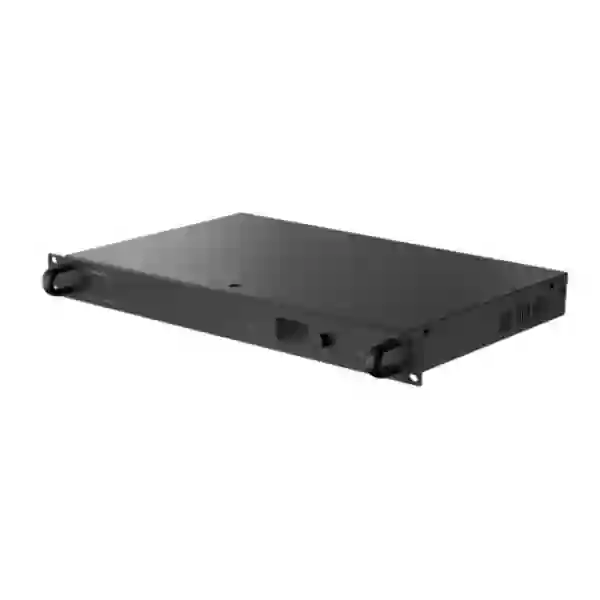
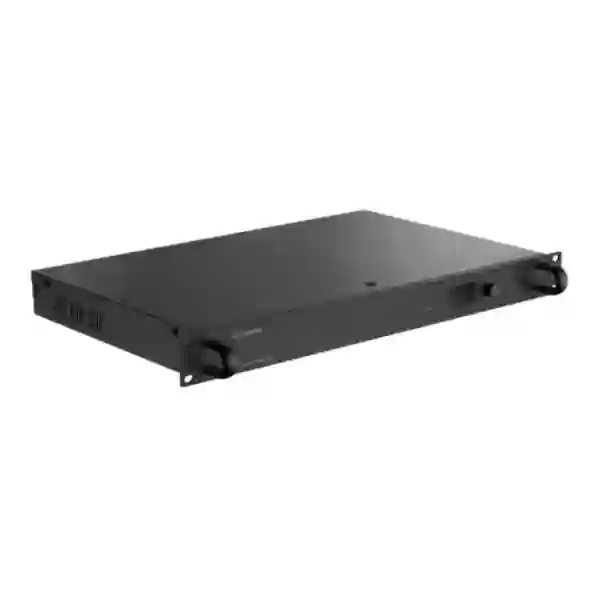
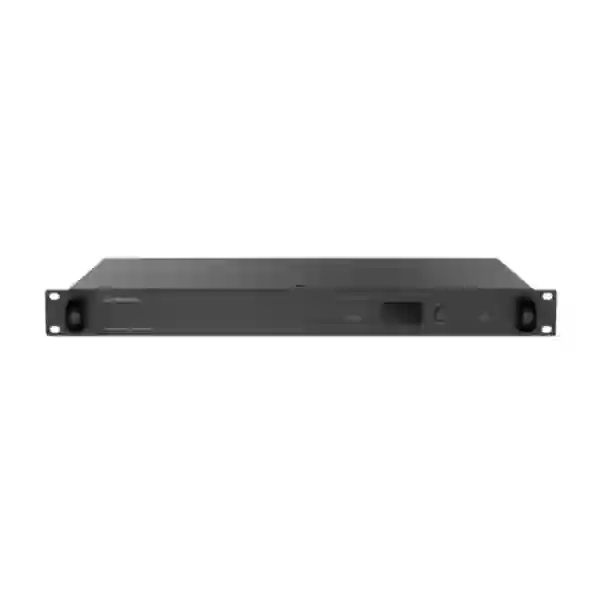
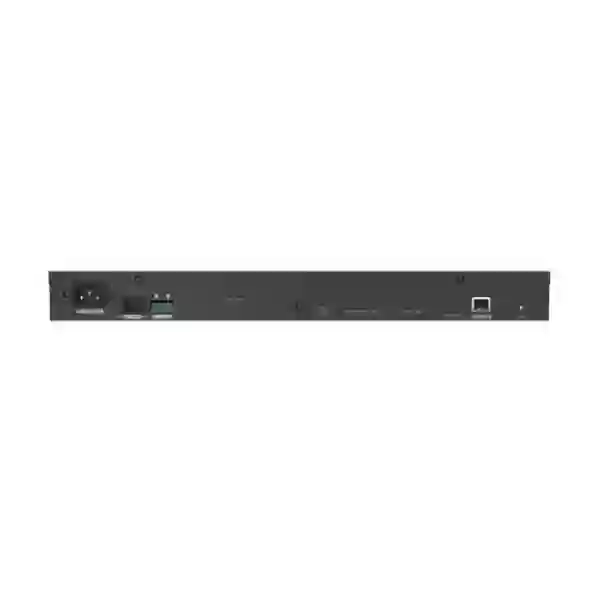
Hanwha SPA-S2000 IP Audio Server
Coordinate large IP audio deployments with a dedicated server designed for systems of up to 512 speakers.
For teams planning network paging and zoned announcements, the Hanwha SPA-S2000 IP audio server offers a central control component rather than a complete speaker package. Review the real network, user and acoustic requirements before requesting a Tanzania project quotation. Compatibility, final model revision, commercial terms and installation scope require confirmation.
Product overview at a glance
| Manufacturer | Hanwha Vision |
|---|---|
| Model | SPA-S2000 |
| Product type | IP audio server |
| Published expansion | Up to 512 speakers, subject to complete-system design |
| Published monitoring | Connection verification and system logging |
| Network communication | IPv4, SIP and other protocols listed in manufacturer materials; confirm exact firmware |
| Integration reference | SUNAPI listed in the manufacturer’s specification area |
| Ethernet detail | Conflicting speeds appear in online manufacturer content; verify current model datasheet |
| Tanzania quote | Price, supply, warranty and scope to be confirmed |
What the SPA-S2000 does in a network audio system
The Hanwha SPA-S2000 is an IP audio server intended to coordinate an installation of network-addressable speakers rather than operate as a conventional power amplifier. Its purpose is to provide a central point for managing audio devices and the way announcements are directed through an IP network. Hanwha Vision identifies expansion to as many as 512 speakers among the model’s key features. That figure helps planners understand the possible scale of a system, but it is not a promise that every network, speaker type, or broadcast arrangement can reach the maximum without engineering. Actual capacity needs to be assessed alongside the selected audio devices, topology, firmware and traffic patterns.
For a prospective buyer, the first question is usually not simply how many speakers the equipment supports. The useful question is how to direct the right announcement to the right people, preserve clarity, and make the system manageable after the installation team has left. The server sits within a broader design that may include compatible IP speakers, audio modules, paging microphones, network switches, operator workstations and approved integration points. These elements must be quoted and verified separately. The SPA-S2000 itself should not be mistaken for a loudspeaker, microphone, recording device or complete installed public-address package.
Buyers in Tanzania assessing a new site or an upgrade can use this product as a starting point for a coordinated IP audio discussion. A credible design begins with the building layout, the messages to be delivered, the network available and the responsible operating team. FourTeck can receive an enquiry describing those requirements so that the proposed server and companion components can be assessed for fit.
Why centralized IP audio control can matter
In a large facility, announcements are rarely identical across every area. A security team might need to address a loading gate, a facilities team might need to call a maintenance group, and a reception desk might need to provide general visitor information. Treating all of those messages as a single building-wide announcement can create noise, confusion and unnecessary interruption. A centralized network audio approach allows the project team to design logical groups and zones around how the site actually operates, subject to the capabilities of the complete solution.
The practical value of a server is easier to appreciate when operations change. Departments move, routes are modified, access policies evolve and new areas are opened. A well-documented IP design can make those changes easier to plan than an ad hoc collection of unrelated paging devices. That does not remove the need for network management or audio engineering; it shifts more attention toward device addressing, logical configuration and operator permissions. Technical teams should allocate time for these tasks rather than treating them as incidental.
The decision should be driven by deployment complexity, not by a desire to purchase the largest component. A small installation with only a few announcements may require fewer central-control functions. Conversely, a multi-building site with many individually managed destinations can justify an audio server. Establish current requirements, forecast reasonable expansion, and confirm that the selected Hanwha Vision components support the intended workflows before committing to a bill of materials.
Verified product capabilities and specification cautions
Hanwha Vision presents the SPA-S2000 as an IP audio server with system expansion of up to 512 speakers, functional monitoring for connection verification and system logging, and support for network communication used in IP audio environments. Its current product feature summary includes IPv4, HTTP, HTTPS, SIP, mDNS, DNS, NTP, TCP, UDP, DHCP, ARP, ICMP and SNMPv3. The manufacturer also lists SUNAPI as a system integration interface in its specification area. These are interface and protocol references, not a blanket compatibility guarantee with every SIP service, management system or third-party speaker.
An important verification point concerns Ethernet speed. Hanwha Vision’s model-specific headline features and its 2026 product-line brochure describe 100/1000 Base-T connectivity, while a specification table on the product page shows 10/100 Base-T. The correct port capability should therefore be checked against the current hardware revision and final manufacturer datasheet before network equipment is selected. Likewise, any protocol or function shown differently in a page headline and detailed table should be confirmed for the firmware supplied.
Technical documents can be updated independently of regional product catalogues. For a Tanzania quotation, the appropriate process is to identify the requested model as SPA-S2000, confirm the exact regional version, and review its current manufacturer documentation. Do not substitute SPA-S1000 specifications without checking the SPA-S2000. Never infer a Tanzania regulatory approval, operating certificate or local warranty from symbols shown on a manufacturer’s international product page.
Understanding the up-to-512-speaker figure
The figure of up to 512 speakers is a published system-expansion characteristic, not a requirement to install 512 devices. A useful project might begin with one building and grow across additional wings or floors. At the planning stage, document the initial number of speakers, the expected total, and the reasons each destination needs individual addressing. Count all relevant endpoints, including any future areas, before selecting the controller and its associated network architecture. Avoid using the maximum as a substitute for an engineered load or acceptance test.
Speaker count is not the same thing as the number of simultaneous announcements, logical zones, paging sources or permitted users. A network could contain many speakers but need only a few announcements at a time; another could have a smaller number of devices with complex priorities and overlapping usage. Those are different design problems. Ask who initiates announcements, how simultaneous requests are resolved, whether scheduled and manual messages overlap, and what should happen during a network incident. Resolve those points before claiming a particular operational capacity.
Where a project approaches the model’s published ceiling, request confirmation of device compatibility, firmware requirements, multicast and unicast behavior, switching capacity, and the practical management workflow. Test a representative set of endpoints and representative traffic before handover. This is particularly important when a design crosses buildings or depends on routing through multiple network segments. The objective is a predictable system with adequate headroom, not merely the largest nominal speaker count on a specification sheet.
Planning zones around people and messages
A zone is useful only when it reflects a real communication need. Typical planning boundaries include a floor, department, loading yard, entrance, workshop, passenger waiting area or collection of rooms. Before configuring anything, draw a simple area map and mark where each announcement should be heard. Consider noise levels, routine activities, accessibility needs and whether people may move between areas while a message is being delivered. Then build a zone schedule showing names, coverage, expected message types and authorized operators.
Large sites may need both local and site-wide announcements. A local request could call staff to a store room; a wider message could notify the entire facility about a planned closure. The system design should distinguish everyday paging from high-priority announcements and document how competing requests are handled. Do not assume an emergency broadcast certification, life-safety priority behavior or statutory evacuation function merely because the product is called an audio server. Any such requirement needs a separate compliance and system-design review.
Zoning also affects maintenance. A vague label such as Speaker 37 tells an operator very little; a consistent label tied to the site map makes faults and changes easier to track. Use short location-based names, an agreed naming convention and an asset register. If a speaker moves, update the map and configuration together. A clear zone plan is one of the most valuable documents a Tanzania project team can prepare before asking for a final equipment quotation.
Network architecture and connectivity checks
The SPA-S2000 belongs on a managed IP network designed for the expected audio traffic. The network team should identify the physical connection point, addressing plan, switching equipment, inter-building links and any security boundaries that separate audio devices from other services. Network diagrams should show the server, compatible endpoints, operator access points and the relationship between VLANs or subnets. This prevents assumptions about automatic discovery or cross-network communication from becoming problems during commissioning.
Where multicast distribution is proposed, the network team should assess switch features, multicast forwarding behavior and how traffic travels between segments. Where unicast operation is required, account for the potentially different traffic characteristics and controller behavior. This is a general network engineering consideration, not a claim that a particular configuration is enabled or supported on every SPA-S2000 firmware release. Relevant settings and limits must be checked against current manufacturer documentation and validated on the intended network.
Before procurement, confirm cabling quality, network uplink capacity, DHCP or static address policy, DNS and time services where applicable, and who is permitted to change switch settings. A site with long distances or multiple buildings may require additional fiber links and suitable network infrastructure. The server does not eliminate those costs. Create a simple acceptance test that verifies normal announcements, a busy-network condition, device reconnection and operation after a planned switch restart.
SIP and integration: what to confirm
SIP is among the protocols Hanwha Vision identifies for the SPA-S2000. For buyers, this indicates a possible connection point in an IP-communications environment, but it should not be interpreted as confirmation that the unit automatically works with a particular PBX, telephone service or intercom platform. A successful integration requires the proposed topology, authentication, network traversal, audio behavior and vendor-supported configuration to align. The originating communication platform may impose its own limits.
If an organisation wants staff to make announcements from desk phones, an IP microphone or an existing communications system, define the exact workflow before hardware is ordered. Who places the call? How is the destination selected? What happens if the destination is busy? Is the operator expected to hear a confirmation? Are messages live, automated or triggered by another application? Each question can affect components, configuration and licensing. Ask for a demonstrable interoperability test if a third-party system is central to the use case.
Hanwha Vision also identifies SUNAPI in its system-integration specifications. That is relevant to integrators considering controlled links with other software, but the existence of an API is not a guarantee that a desired custom function is available without development. Specify the action that must be triggered, the data exchanged, the access controls, and the supported version of the interface. Any bespoke integration should have its own scope, test cases, documentation and support ownership.
Security and access management
An IP audio server is part of a site network and should be treated as managed infrastructure. It is not enough to connect the equipment and leave a shared administrator password in a project folder. A responsible commissioning plan defines who can log in, who can change network settings, who can initiate broadcasts, and who is accountable for reviewing changes. Where supported by the selected firmware, use suitable authentication, secure management methods and the least privileges needed for each operator.
The current manufacturer feature summary mentions HTTPS and SNMPv3, while another specification area presents a shorter protocol list. Confirm which security-related methods are available and enabled on the actual device and firmware before writing a security specification. Do not promise encryption of all audio, automatic vulnerability remediation, integration with a specific identity provider or a particular audit retention period unless those functions have been demonstrated. An equipment security checklist should be based on verified functions rather than generic terminology.
Keep management interfaces away from unrestricted public access. Coordinate network segmentation, firewall policy, patch scheduling and password custody with the organisation’s IT team. Decide how to recover configuration after hardware replacement, who approves firmware changes, and how credentials are transferred when a contractor’s engagement ends. These operational measures are particularly important in sites where announcements may affect visitor safety or interrupt business operations.
Monitoring, diagnostics and operational visibility
Hanwha Vision lists connection verification and system logging among the SPA-S2000’s functional monitoring features. That gives a buyer a useful starting point for evaluating daily administration. The next step is to discover exactly which states can be seen in the supplied software or web interface, how they are interpreted, and whether maintenance staff can act on them. A log that is never reviewed does not improve service reliability by itself.
Agree on routine checks before the system is accepted. A practical check may include verifying server reachability, reviewing device connection states, confirming sample announcements in selected zones, and noting any areas with reduced audibility. Document a baseline after commissioning so that maintenance staff can distinguish a new problem from an original configuration choice. If external monitoring is planned, ask what integration the device actually supports, what information can be exported, and whether any additional management platform is required.
Fault-response planning should also identify human responsibilities. A security desk may notice that an announcement did not reach a loading bay, while the IT team may need to investigate a network interruption and a facilities contractor may need to examine the speaker. Make that escalation path explicit. A maintenance proposal should define the support contact, the available diagnostics and the procedure for an offline endpoint rather than promising fault recovery without evidence.
Live paging, planned announcements and media workflows
A network audio project can be designed around different message types: immediate staff paging, routine visitor announcements, scheduled notices, prerecorded instructions, or alerts initiated by another operational system. Hanwha Vision describes live and prerecorded broadcasts within its broader IP Audio product family. Whether a particular workflow is available in the proposed SPA-S2000 deployment depends on its firmware and the compatible source, speaker and management components selected. Verify each required function in a solution demonstration.
Start by writing down the message journeys rather than buying around feature labels. For a live announcement, identify the input device, initiating user, target zone, message priority and expected confirmation. For a planned notice, identify the source of the recording, who is allowed to change it, and the date and time policy. For event-driven messages, document the trigger, integration point, conditions for repeat playback and the responsible system owner. Use this information to establish what must be demonstrated at handover.
Sound quality and clarity also matter. Speech intelligibility is affected by speaker placement, ambient noise, reverberation, volume selection and user speaking technique. A central controller cannot solve poor acoustic design alone. Plan listening tests in occupied or realistic conditions, not just in an empty room. Where music or other material is played, make sure the organisation has any necessary content rights; buying an audio server does not grant a music licence.
Choosing compatible speakers and source devices
The server is one part of the installed system. Speaker form factor should follow the environment: ceiling devices may suit some indoor rooms, wall units can support corridors or circulation spaces, and horn-style devices may be considered where intelligible announcements are needed across louder or more open areas. These are design considerations, not assurances that every speaker style or specific model is compatible with the SPA-S2000. Build a model-by-model compatibility schedule before ordering.
Check how each endpoint receives power, what cabling and switching it needs, and whether it is appropriate for the actual installation conditions. A product suitable for a protected indoor corridor may be unsuitable outdoors or in dusty industrial conditions. The audio server’s own ingress-protection designation must not be confused with a speaker’s environmental rating. Ask for the exact endpoint environmental specifications, mounting details, sound coverage and maintenance access. Select acoustic coverage first and network connection methods second.
Source devices need equal attention. Staff may prefer a fixed paging microphone in a security room, a workstation interface, or an approved integration with a communications platform. Choose the source around who uses it and how often. Labels and training may matter more than an elaborate interface. The procurement schedule should clearly identify the SPA-S2000 as the control component and itemise every microphone, speaker, audio module, network switch, cable and installation service separately.
Example deployment: schools and training campuses
A school or training campus may have classrooms, offices, a reception area, a courtyard and workshops with very different communication needs. An IP audio design can begin by separating teaching spaces from common areas so that routine messages are not sent unnecessarily into lessons. A central administrative point may need to make a campus-wide announcement, while a department may need to reach only one building. Determine those requirements collaboratively with academic staff, administrators, facilities personnel and the IT team.
During the survey, record the number of zones, the distance between buildings, the network links already installed and the times at which announcements are likely to occur. A central server is worth considering when the installation has many endpoints or requires complex management. However, a small campus with a limited speaker count should also be evaluated for simpler arrangements; scale alone is not a reason to select the SPA-S2000. Verify microphone placement, scheduling requirements and the permissions assigned to each user.
An education setting also requires careful attention to operational continuity and comprehension. Test announcements with doors closed and with realistic occupancy, and consider language accessibility according to the institution’s actual audience. Define what happens if a computer is offline or a network link fails. Any evacuation or statutory alarm requirement needs a separate qualified safety-system assessment; the presence of network paging equipment does not establish compliance.
Example deployment: hospitals and healthcare facilities
Healthcare facilities place particular value on accurate, targeted communication. A reception announcement, a staff notification in a service corridor and a message in a waiting area should not necessarily reach the same people. An audio-server project can be scoped around ward boundaries, public circulation routes and staff-only areas, with local policies governing which messages are appropriate. A careful zone design can reduce avoidable disruption, but no technical specification should promise clinical suitability without the hospital’s own review.
Privacy and operating discipline are central to a healthcare deployment. Do not route patient-identifiable information through a general announcement system without an approved policy and a suitable risk assessment. Work with the facility’s information-security, operations and clinical teams to determine permitted message types. For a possible integration with a nursing, security or telephony system, specify the exact supported interface and acceptance testing; do not assume interoperability because both products use IP networking.
Before the quote is final, examine acoustic conditions in waiting areas and corridors, network separation, power continuity, controlled management access and after-hours support responsibilities. The system should have a documented configuration and a named operational owner. Any emergency voice alarm, fire-related messaging or medical alert function must be assessed against the applicable complete-system requirements rather than attributed to the SPA-S2000 alone.
Example deployment: warehouses and industrial sites
Factories, distribution buildings and logistics yards can combine high ambient noise, wide spaces and operationally distinct areas. A paging system may need to address a receiving dock, production line, loading bay or administrative block without broadcasting every message everywhere. The buyer should begin with a site walk-through, a noise survey and a zone map that includes places where people may be behind machinery or moving vehicles. Speaker quantity without measured audibility is a weak basis for selection.
An SPA-S2000-centered design may be worth evaluating when the site requires numerous addressable endpoints or central coordination. Network engineers need to understand any long cable runs, fiber links between buildings, industrial switching requirements and protection against power interruptions. Acoustic designers need to select appropriate speakers and mounting positions. The controller should be located in an environment suitable for its verified temperature and humidity limits; do not assume it shares the ruggedness of outdoor endpoint equipment.
Operational instructions should distinguish routine paging from alarms that form part of a formal safety process. A site may need a voice system to complement broader risk controls, but that does not make the SPA-S2000 an automatically certified emergency system. Identify what the organisation requires, review applicable standards with the relevant professionals, and test behavior under realistic production noise before relying on the system for important communication.
Example deployment: retail, offices and mixed-use property
Retail centres and mixed-use buildings often need announcements at different scales. A tenant may need a message within one unit, a property team may need to reach shared circulation space, and security personnel may need to communicate in a restricted service area. Design zones around the actual operational boundaries and access rights. A centralised server can be evaluated where the project needs to manage numerous destinations, but management rules must prevent one organisation from interfering with another’s areas.
Background audio, customer information and security-related announcements are different content categories. The wider Hanwha Vision IP Audio family describes several such use cases, but each requested function should be confirmed against the actual server configuration and compatible devices. For a retail project, establish who provides any media, who owns the rights to use it, how it is prioritised against announcements, and whether the organisation’s licensing terms cover the chosen setting.
For offices, user training and consistent labels can be more important than a large feature list. Reception may need a simple set of named zones, while facilities teams need access to maintenance information and system administrators need restricted configuration rights. The project brief should cover tenant boundaries, business-hour patterns, acoustic treatment, network policy, service responsibility and options for future expansion. The aim is communication that feels straightforward to users and manageable to the property owner.
Example deployment: transport and public-facing facilities
Stations, terminals and other public-facing sites may need announcements about movement, access, queueing or operational changes. Such facilities can have unusually complex acoustic conditions and large, moving audiences. A suitable planning process begins with passenger or visitor flows, the locations where people must hear instructions, and a careful distinction between routine information and high-priority notices. Assess indoor halls, covered external spaces and service corridors separately rather than treating them as one acoustic zone.
The SPA-S2000’s published speaker expansion capability can make it relevant to discussions about large distributed audio installations. However, an appropriate controller is only one element of a transport announcement solution. Designers must also address real-time message sources, information-system interfaces if proposed, network availability, operator permissions and intelligibility. Any link to a flight, vehicle, ticketing or information platform requires specific compatibility evidence; such integrations are not inherent in an IP audio server.
Public communication also needs a clear operational process. Test whether users can select the right zone quickly, whether messages remain understandable amid background noise, and how staff correct a mistaken announcement. For facilities with emergency signaling obligations, qualified engineers should specify the required certified system and its integration boundaries. Avoid portraying general network audio as a replacement for regulated life-safety infrastructure.
Power, resilience and service continuity
Power planning should cover the server, network switches, any powered speakers or audio modules, and the supporting routers or links needed for communications. Even if the central unit remains powered, a failed access switch can isolate a group of speakers. A design that depends on one unprotected network segment may not meet the organisation’s continuity expectations. Draw a simple dependency map and ask what loss of each element would mean for routine broadcasts.
Hanwha Vision’s installation guidance for the related server family shows AC supply and DC power connections, but the exact power arrangement, supported source and accessories for the regional SPA-S2000 must be confirmed from its current model-specific installation documentation. Do not assume PoE input, battery backup, dual independent supplies or automatic failover merely because these features exist elsewhere in networking equipment. Where the site requires backup power, have an appropriately qualified professional specify capacity, protection and safe installation.
Resilience is also procedural. Decide who will check system readiness after a prolonged power outage, how saved configuration is handled, whether staff have an alternative communication method, and which failures require immediate attention. Carry out a supervised restoration test and document the result. A server quotation should distinguish equipment supply from any separately engineered UPS, backup network or service agreement.
Installation survey and pre-design evidence
A meaningful project enquiry starts with a site description. Provide a floor plan or simple sketch, the estimated speaker locations, the types of announcements needed and a list of existing network assets. If the equipment is intended to replace an earlier controller, note the current device models and any functions users rely upon. An engineering survey may then identify where extra cabling, network switches, microphone positions or acoustic treatment are required.
Photos and drawings help, but they do not replace measurements. Check distances between equipment positions, ambient noise, ceiling types, exposure to dust or weather and any restrictions on drilling or installing cabinets. Where several buildings are involved, identify available links and their owners. Ask whether project staff can change network configuration and whether traffic must cross security boundaries. These details directly influence installation cost, access requirements and the possibility of adding endpoints later.
Record intended acceptance outcomes before the equipment list is final: the named zones must match the physical map, authorised users must be able to reach the right locations, representative announcements must be intelligible, and connection faults must be recognised through agreed procedures. The SPA-S2000 belongs in a complete proposal that connects each required result to a design decision and a test, not a stand-alone shopping list based on model numbers.
Commissioning and handover checklist
Commissioning should be performed against an approved design. Confirm the exact server model and hardware version, establish secure administrative access, document its network configuration and enroll only compatible audio endpoints. Create clear zone and group names, configure operator permissions and test each planned message route. If schedules, third-party triggers or SIP workflows are part of the project, verify them against specific acceptance criteria rather than relying on a single successful demonstration.
Run functional tests across typical and demanding operating conditions. Sample audio in each zone should be intelligible at the points where the intended audience stands, without unacceptable spillover or excessive volume. Test the expected behavior when an endpoint disconnects and reconnects, when a network component restarts, and when more than one authorised operator attempts an action. Note any device or feature that cannot be verified and resolve it before calling the installation complete.
The handover package should include the as-built diagram, speaker and server inventory, zone list, network details protected in a secure record, configuration backup procedure, software and firmware versions, agreed user roles, maintenance schedule and fault-escalation contacts. Provide operator training based on actual tasks, not just an interface tour. This improves long-term value because the person handling an announcement six months later should not need the original installation engineer to explain every step.
Comparing server-based design with simpler alternatives
Not every public-address requirement needs a dedicated IP audio server. A small reception area, a compact office or a single-zone facility may be better served by fewer components, subject to the chosen product family’s capabilities. Hanwha Vision describes smaller IP Audio installations operating with compatible speaker or module controllers in some configurations. That statement relates to the manufacturer’s broader range and must be checked against the devices and firmware in the actual design; it is not a universal rule for every system.
The SPA-S2000 becomes more relevant when the buyer needs a centralised approach across a larger or more complex population of network speakers. Compare alternatives using practical questions: how many zones are necessary, who can initiate messages, what happens when the network grows, how are faults found, and what is required to keep the system supported? A cheaper controller is not economical if it cannot meet a proven requirement, but excess capacity alone may not justify adding infrastructure.
For replacement projects, the existing system should be audited carefully. Identify which speakers, source devices, switches and integrations are truly reusable and which are tied to another protocol or vendor. A migration plan may need a pilot area, change window and rollback procedure. The best purchase decision is the design that satisfies the operational brief with manageable future support, not simply the configuration with the highest advertised capacity.
Questions to ask before requesting a Tanzania quote
To assess the Hanwha SPA-S2000 IP audio server for a project in Tanzania, share the intended industry, building type, approximate number of speakers, expected future expansion and the locations to be served. Explain whether the system is for general announcements, staff paging, scheduled information, security deterrence or a combination. Include the number of people who may make announcements and whether they will use dedicated microphones, workstations or another approved source.
Next, describe the network situation. Is there an existing managed Ethernet network? Are switches, fiber links or power facilities included in the project? Are the speakers in one building or spread across several? Do messages need to cross subnets? Is there an existing IP audio system to integrate or replace? If connection to a particular PBX, video system or management platform is required, provide its precise model, version and desired function so compatibility can be checked.
Finally, identify procurement details that should be confirmed rather than guessed: current manufacturer revision, available accessories, exact supplied component list, supply lead time, support arrangements, warranty terms, any necessary import or regulatory documentation, installation scope and final price. This page makes no statement about current stock or a Tanzania selling price. A quotation should separate verified product capability from assumptions requiring site assessment.
Ongoing maintenance and responsible operation
After handover, a network audio system needs named owners. Facilities staff may manage speaker locations, IT may manage switches and addressing, and security or operations personnel may control who makes announcements. Write those responsibilities into a maintenance plan. Without them, seemingly minor changes such as moving a speaker or changing a subnet can become hard-to-diagnose faults. Keep the as-built documentation and device inventory current whenever the installation changes.
Periodic reviews should include connection status, representative audio checks, operator permissions, relevant logs and the health of network infrastructure. Establish an approved process for firmware evaluation and backups. The manufacturer’s publication of updated firmware does not mean every live system should be changed immediately or without testing. Before any update, identify the installed release, current compatibility requirements, maintenance window and recovery method. Record the outcome so that future technicians understand the configuration history.
Review the system again when business requirements change. New tenants, extensions, production areas or timetable changes may call for revised zones, additional speakers or better acoustic coverage. Budget for documentation, testing and operator training during such work. A well-maintained deployment is judged by whether messages reach the intended audience reliably and clearly, not by how rarely anyone opens the management interface.
Budgeting for the complete solution
The SPA-S2000 is one specified component, while a working project can involve numerous other costs. A quote may need to account for speaker types and quantities, audio sources, network equipment, cabling, mounting materials, racks, installation labour, configuration, testing and training. Depending on site conditions, the project may also need acoustic measurements, power protection, network upgrades or a staged cutover. Ask suppliers to distinguish included items from optional services and exclusions.
An equipment-only price cannot establish the total cost of ownership. Continued operation may involve periodic site visits, spare parts, configuration changes, updates, monitoring arrangements and a service contract. The buyer should understand which party maintains the network and who is authorised to change the server. If an existing system is being expanded, confirm that old devices are compatible rather than assuming all IP speakers can be added to a single controller.
No verified Tanzania price, stock position, import charge or delivery promise is stated here. Those are quotation-specific commercial facts that need confirmation for the exact supply date and scope. Use the technical requirements above to obtain a transparent, comparable proposal; it is easier to compare two quotes when both are based on the same zone map, component inventory and acceptance tests.
Practical buyer decision matrix
For an organisation comparing a dedicated audio server with a smaller distributed controller, score the options against operational need rather than marketing language. Begin with the present speaker count and a realistic growth forecast. Add the number of distinct announcement areas, the variety of source devices, the need for network integration and the expected level of operator administration. Discuss each criterion with users and IT personnel because their priorities may differ.
Next consider complexity costs. A central server may improve management for a larger deployment but still depends on compatible endpoints, a stable network and trained people. A simpler architecture may reduce equipment count but become difficult to administer at scale. A project should explicitly weigh reliability, intelligibility, support access, lifecycle documentation, expandability and the ability to test critical workflows. Avoid selecting either approach on the assumption that it will automatically meet a life-safety standard.
Set a decision gate before purchase: all mandatory workflows must be supported by documented equipment and validated interfaces, all high-risk unknowns must have owners, and the proposed commercial scope must identify installation and commissioning obligations. If a needed function is unverified, list it as a trial or pre-order clarification rather than burying the uncertainty in a long specification.
A staged approach to larger deployments
Large installations benefit from phased validation. Start with design discovery and a representative test zone. Include a source device, a few endpoints, the proposed network route and any integration that would create a major project risk if it failed. This pilot should test audibility, device discovery, permissions and the behavior of expected announcements. When the pilot is accepted, document the settings and use that evidence to plan broader configuration.
During rollout, work in logical building or zone groups so that commissioning results can be tracked. Keep a register of completed endpoints, cabling labels and unresolved issues. Validate that earlier groups still function after each new segment is introduced. Watch for changes in switch configuration, network policy or operator needs that emerge across different buildings. A project with many speakers should not wait until the final day to discover a naming or routing problem.
At handover, conduct a witnessed demonstration of each approved use case and provide a clear acceptance record. Include a maintenance plan for new areas and the process to request later changes. These steps are procurement and engineering recommendations rather than manufacturer guarantees; they make the published up-to-512-speaker capability useful in a real operating environment.
Frequently asked questions
Is the Hanwha SPA-S2000 a speaker or an amplifier?
No. Hanwha Vision identifies it as an IP audio server used to manage a network audio solution. Speakers, microphones, network switches and other components need to be selected and supplied separately according to the project design. It should not be treated as a complete public-address installation in one box.
How many speakers can the SPA-S2000 support?
Hanwha Vision publishes system expansion of up to 512 speakers. This is an upper product capability and does not specify how many messages can be broadcast simultaneously under every topology. Confirm device models, zone requirements, network behavior and firmware before using the published figure as a final project design limit.
Does it support SIP connectivity?
SIP appears in Hanwha Vision’s published protocol information for this model. Compatibility with a specific PBX, SIP provider, IP microphone or third-party application is not automatically established. Provide the exact systems and required call flow so that the integrator can verify support and test the proposed setup.
Can it be used with existing non-Hanwha speakers?
Do not assume that an ordinary loudspeaker or every third-party IP speaker can be enrolled directly. The proposed endpoint needs a supported architecture and verified compatibility. Existing conventional speakers may require appropriate additional equipment; ask for a compatibility audit before deciding what can be reused.
Does the server provide an emergency evacuation system?
An IP audio server can be part of a broader communications design, but this listing does not claim compliance with any emergency voice-alarm or evacuation standard. A site with a regulated safety requirement needs a separately engineered, approved end-to-end system and verification by qualified professionals.
Does it work across multiple buildings?
A multi-building deployment may be feasible when suitable IP connectivity, supported endpoints, routing and network management are available. The design must consider link availability, security boundaries, audio traffic and failover expectations. A multi-building site survey is needed before confirming the final architecture.
What Ethernet speed does the SPA-S2000 use?
The model-specific headline features and a Hanwha Vision 2026 brochure describe 100/1000 Base-T, while a detailed table on the product page currently shows 10/100 Base-T. Confirm the correct specification for the hardware revision and accompanying datasheet before purchasing equipment that depends on a particular port speed.
Is there a confirmed Tanzania price or available stock?
No current Tanzania price or stock confirmation is provided on this page. Commercial availability, import arrangements, any local support package and supply date should be verified through an actual quotation for the specified model and project. Do not use an overseas retailer’s listing as proof of Tanzania pricing.
What information is useful for a quotation?
Send the approximate speaker count, site layout, zone map, network details, expected audio sources, required third-party integrations and an indication of future expansion. Include whether installation and commissioning should be priced. This lets the proposed solution be reviewed as a complete project rather than as a stand-alone server purchase.
Can an existing SPA-S1000 project be upgraded with SPA-S2000?
Hanwha Vision identifies the SPA-S2000 as a replacement model for SPA-S1000 in some manufacturer materials. That does not establish a drop-in migration for every existing system. Confirm current hardware, firmware, connected devices, configuration export options and possible downtime before specifying a replacement or promising compatibility.
Request an SPA-S2000 project quotation
Share the site type, estimated number of speakers, desired zones, available network infrastructure and any required SIP or other integrations. Ask FourTeck Tanzania to confirm the correct equipment revision, compatible components and complete scope before ordering. No local price, delivery commitment, availability or installation coverage is implied by this description.
Contact FourTeck Tanzania to discuss your requirements and request a tailored quote.




Reviews
There are no reviews yet.