
Ubiquiti · Outdoor wireless transport · Tanzania buyer guide
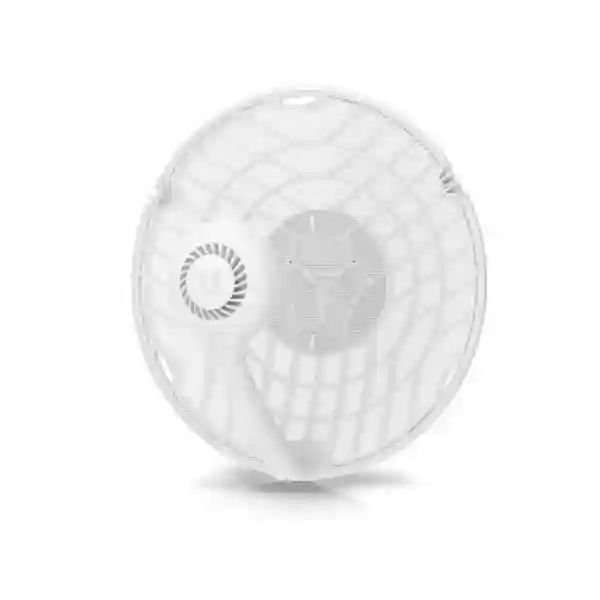
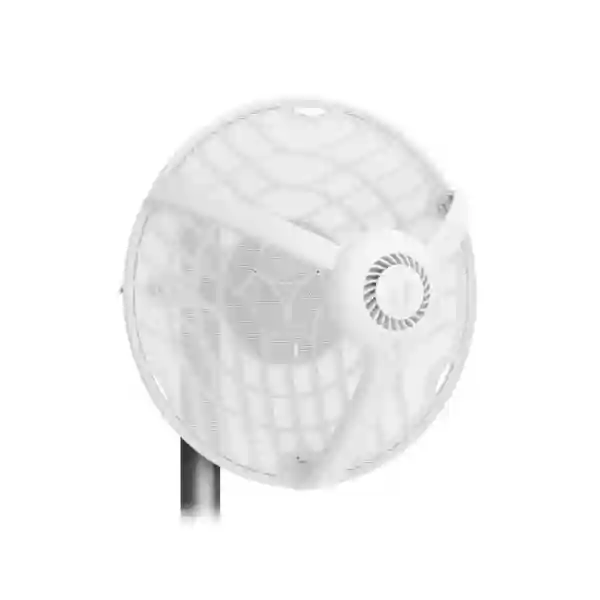
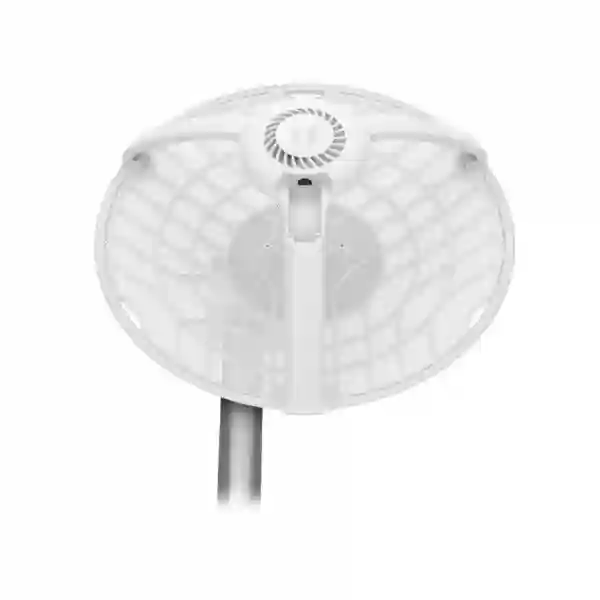
Ubiquiti airFiber 60 Long-Range AF60-LR
Build a high-capacity, long-range 60 GHz wireless connection between suitable sites. Compare the real operating limits, prepare a reliable path design and request an equipment quotation matched to your network.
Important: actual distance, throughput and uptime depend on path conditions, weather, configuration and local rules.
AF60-LR at a glance
| Manufacturer | Ubiquiti |
|---|---|
| Model / manufacturer part number | AF60-LR |
| Band capability | 57–71 GHz worldwide specification; permitted channels depend on region |
| Total radio throughput | 2 Gbps (manufacturer’s current technical specification) |
| Published maximum range | 12+ km, subject to proper engineering |
| Antenna | Integrated 38 dBi dish; 1.6° beamwidth |
| Networking | One Gigabit Ethernet RJ45 port |
| Modes | Point-to-point; compatible point-to-multipoint station |
| Management | UISP; Bluetooth management interface |
| Maximum radio power draw | 22 W (current specification) |
| Power adapter | 48 V DC, 0.65 A gigabit PoE adapter listed as included |
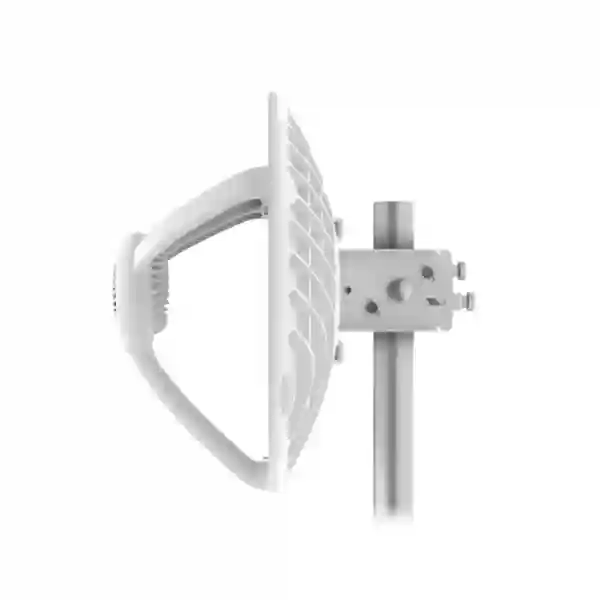
| Physical dimensions | 413 × 360 mm (diameter × depth) |
| Temperature range | -40 to 60 °C |
Figures reflect current Ubiquiti technical documentation and can change with product revisions. The 2 Gbps radio aggregate does not bypass the single Gigabit wired interface.
What the AF60-LR is designed to do
The Ubiquiti airFiber 60 Long-Range AF60-LR is an outdoor 60 GHz wireless radio intended for high-capacity connections between separated network locations. A conventional deployment places one compatible radio at each end of a clear path, creating a point-to-point bridge between Ethernet networks without laying fiber along that path. This makes it a candidate for linking buildings, connecting a remote equipment shelter, extending an ISP distribution network, or carrying data from a site that already has a suitable uplink. The equipment transports network traffic; it is not itself an internet subscription, router, or replacement for the underlying upstream service. Its suitability should be established from a survey, a radio plan, and the site’s availability target rather than its model name alone.
For a Tanzania deployment, the practical question is whether a clear, stable line of sight can be established between mounting locations, with adequate rain-fade margin and a compliant operating configuration. The AF60-LR can help avoid a trench or leased circuit, but a wireless link still needs engineering, maintenance access, power, surge protection, and a realistic plan for outages. Start with the actual site coordinates, measured distance, tower heights, and required traffic level before choosing equipment.
Capacity: interpreting the 2 Gbps specification
Ubiquiti currently lists total throughput of 2 Gbps for this model. This is a radio-system aggregate figure, not a promise that a single user or one Ethernet-connected application will achieve 2 Gbps in one direction. The AF60-LR has one Gigabit Ethernet RJ45 networking port, so the physical port itself is an important constraint when calculating usable throughput through one appliance. Protocol overhead, radio conditions, direction of traffic, packet size, and device configuration further affect real applications. A buyer requiring a single greater-than-gigabit wired handoff should confirm whether a different model with a faster network interface is necessary.
Define capacity in operational terms: expected upstream and downstream megabits per second during the busiest hour, burst behaviour, number of simultaneous users, voice and video sensitivity, and whether monitoring or backups consume bandwidth after business hours. Ask the installer to test throughput in both directions and document the method. Treat a laboratory maximum as a product capability, while measured application performance is the basis for acceptance.
What 12+ km actually means
The advertised maximum range is 12+ kilometres according to the current manufacturer specification. It describes the model’s long-range design; it does not guarantee that every twelve-kilometre link is workable or sufficiently reliable. Terrain, atmospheric absorption, rainfall, path obstruction, mounting stability, local frequency restrictions, alignment accuracy, and available signal margin all matter. Even links much shorter than the stated range may fail if a roof, tree canopy, mast movement, or new building blocks the path. Do not purchase solely because the estimated distance falls beneath the listed range.
For a proposed long route, build a path profile using real endpoint coordinates and elevation information, then verify it with an on-site visual assessment where feasible. Include realistic antenna heights, clearance, tower deflection, and future obstructions. The longest theoretical connection is not always the most economical choice once weather resiliency and installation access are included. Evaluate whether a shorter relay, fiber, or a different radio band offers a stronger design.
How 60 GHz differs from lower frequency wireless
Sixty-gigahertz wireless is attractive for focused, high-capacity connections, but its propagation characteristics demand attention. The narrow 38 dBi dish antenna and 1.6-degree beamwidth help concentrate energy along an intended direction. That narrow beam also means the mounts and alignment need care: tiny angular movement can be significant over a long route. Obstacles are not something to solve by simply increasing transmit power. Clear sight lines and accurate alignment are core requirements.
Rain attenuation is a particularly important design input for 60 GHz in wet environments. Strong rainfall along a lengthy path can reduce signal quality and may interrupt a link that performs well on a dry day. A responsible design uses region-appropriate rainfall statistics and site-specific availability targets, with an alternative transmission path where continuity is critical. The product’s speed rating should never be confused with a service-level guarantee.
Point-to-point and point-to-multipoint station modes
Ubiquiti’s current technical specification lists point-to-point operation as well as point-to-multipoint station mode. In point-to-point mode, the AF60-LR is used as part of a dedicated connection between two endpoints. Ubiquiti also identifies the device as capable of connecting to a compatible Wave access point as a station. These are different network designs, and the planned access point, firmware, radio channels, and supported topology must be checked together. The AF60-LR should not be represented as an arbitrary multipoint base station.
If connecting two facilities, prepare a matched link design and verify peer compatibility before ordering. For a multipoint network, obtain the exact Wave access-point model and software requirements and check client limits, sector coverage, scheduling, network capacity, and allowed channels. A suitable client radio alone does not prove that the entire proposed multipoint system will work as intended.
Where it fits in an ISP network
An internet service provider may consider the AF60-LR when extending capacity from an existing distribution point to another site with clear visibility. It can be used as a wireless transport segment within a larger network, but it does not replace subscriber management, aggregation switching, routing, authentication, power systems, or network operations processes. For planning, draw the complete path from the upstream connection through switching, the wireless segment, and the customer-facing equipment. Identify every bottleneck, especially the Gigabit Ethernet handoff.
Network operators should also document expected oversubscription, maintenance windows, failover behaviour, latency goals, management isolation, and the consequences if this one link fails. Where the AF60-LR carries multiple downstream customers, capacity planning should include peak usage growth rather than only current demand. A route designed for a single enterprise may need a different availability strategy when it becomes shared transport for many connections.
Business and campus building links
A business with two sites separated by a road, industrial yard, or another property may use a point-to-point radio link to bridge its existing network. Typical traffic can include internal applications, managed devices, and office connectivity where permissions and infrastructure allow. This is not the same as automatically extending a secure network: switches, VLAN policies, firewall rules, endpoint access, and the routing model still have to be designed. The wireless bridge should carry only approved traffic with suitable controls and monitoring.
Building-to-building work also requires attention to roof access, landlord consent, safe mounting positions, grounding arrangements, weatherproof cable paths, and appropriate surge protection. A shorter unobstructed path with an accessible mount can be a better solution than the highest available roof. Confirm whether the remote building needs a separate internet connection for continuity and whether the planned link is primary or secondary.
Remote operations and equipment sites
The AF60-LR may provide transport to a remote plant, monitoring station, warehouse, or equipment shelter when its wireless path and service requirements are suitable. These applications often transmit less data than a busy ISP network, yet they can impose stricter operational requirements because technicians cannot visit every day. Power continuity, automatic recovery, monitoring alerts, and protected physical installation may matter more than headline capacity. The cost of a failed link can exceed the cost of its radios.
For equipment-site projects, establish which systems must remain reachable during bad weather, whether local recording or control continues while the link is down, and whether remote staff have an independent recovery path. Document who maintains the mounting structure and who is authorised to change firmware or radio settings. Where essential processes depend on connectivity, consider diverse backhaul or local operating capability rather than relying on a single wireless segment.
RF planning before purchase
A serious link plan starts with geographic coordinates, ground and structure elevations, a predicted path profile, and a preliminary clearance assessment. It should consider obstructions, atmospheric loss, seasonal rainfall, installation tolerances, and appropriate operating channels. Ubiquiti provides planning utilities, but model results are only as good as their inputs. Confirm the assumptions with a site survey and with local spectrum requirements. A design that works on paper can still be undermined by an unexpected parapet, mast sway, or inaccessible alignment location.
The proposal should describe the estimated path length, mounting heights, network topology, required availability, expected data demand, and commissioning test. It should say which assumptions are confirmed and which remain to be surveyed. Avoid describing a not-yet-surveyed long-distance link as guaranteed. When uncertainty is large, pay for a feasibility assessment before ordering all mounting materials and networking equipment.
Precision mounting and alignment
The product includes a precision alignment kit, and Ubiquiti specifies compatibility with mounting poles of approximately 25.4 to 76.2 millimetres in diameter. The dish is about 413 millimetres in diameter, with a specified depth of 360 millimetres. Its narrow beam requires a rigid, properly installed support structure. Alignment needs to be performed from both ends, observing live signal indicators and link quality rather than relying on visual pointing alone. Mounting hardware should be secured to the applicable manufacturer’s instructions and a competent structural design.
Before installation, establish a safe access method, an unobstructed swing and adjustment area, a protected cable route, and a location that permits future servicing. Wind loading should be checked against the support structure rather than assuming a generic pole is adequate. In a coastal or exposed environment, local corrosion and weather exposure also deserve assessment. A temporary alignment success is not enough; the completed mount must remain stable throughout its operating conditions.
Ethernet, power and PoE considerations
The AF60-LR uses one Gigabit Ethernet RJ45 networking interface and passive power over Ethernet. The current manufacturer technical page states that a 48 V DC, 0.65 A gigabit PoE adapter is included, and it lists maximum power consumption as 22 watts. Do not assume it can be powered safely from any available PoE switch port: passive PoE wiring and voltage need explicit compatibility checks. Cable grade, cable length, outdoor ratings, shielding, surge protection, and electrical bonding should form part of the installation specification.
For solar or battery-supported sites, calculate the entire site’s demand, including the radio, switch, router, accessories, inverter or DC conversion losses, and the expected autonomy during poor weather. A power budget based only on the radio’s nominal consumption is insufficient. Ask the installer to verify the supplied adapter variant and confirm the actual power arrangement for the intended country and site before energising the radio.
Environmental and structural requirements
Ubiquiti lists an ambient operating temperature range of minus 40 to 60 degrees Celsius and 5 to 95 percent noncondensing humidity for the AF60-LR. Its enclosure uses aluminium and UV-stabilised polycarbonate, with galvanised steel mounting material. These specifications indicate the equipment is designed for outdoor deployment but do not remove the need for correct weatherproof installation. Cable entries, strain relief, orientation, and the mounting environment can determine whether an otherwise suitable design stays serviceable.
The published wind-loading figure is 420 newtons at a wind speed of 200 kilometres per hour. That number is an engineering input, not blanket permission to mount the device on any tower or roof. A structural specialist should assess anchors and supporting members where required. Inspect corrosion, loosening and water ingress during planned maintenance, particularly at exposed towers and difficult-to-access sites.
Management with UISP
The device supports Ubiquiti’s UISP management ecosystem. The published specification also lists Bluetooth as a management interface and includes discovery, link-alignment and diagnostic utilities. These tools can simplify initial setup and ongoing visibility when configured correctly. Management access should be restricted, credentials protected, and devices updated only through an approved maintenance process. A management dashboard is useful, but it is not a substitute for a documented monitoring and incident-response plan.
When integrating with a wider network, decide whether management traffic crosses the bridge or follows a separate secure path, how alerts are delivered, what data is retained, and who has authority to reset or reconfigure the equipment. Record serial numbers and configuration backups privately within the organisation’s asset system. Avoid exposing management interfaces directly to the public internet. Use operational metrics to spot degradation before users report a complete outage.
GPS and operational visibility
The AF60-LR has an integrated GPS receiver according to Ubiquiti’s technical specification. GPS is an equipment feature and should not be mistaken for proof of automatic fault correction or guaranteed location reporting under every installation condition. Its usefulness depends on positioning, satellite reception, software support, and the way the network is monitored. The radio includes indicators for power, Ethernet, GPS, and active 60 GHz connection states that can help with on-site troubleshooting.
A sound operating procedure should show field staff which indicators to inspect, what link-quality values to record, and when to escalate. For remote links, combine radio telemetry with upstream switch port status, power monitoring, and end-to-end service tests. This allows an engineer to distinguish a radio failure from an upstream internet outage, electrical fault, or configuration mistake more quickly.
Rain fade and reliability planning in Tanzania
For a long 60 GHz path, heavy rain is not a minor afterthought. It can reduce available signal margin and affect both throughput and uptime. Tanzania contains varied local climates, so using one generic national rainfall assumption for every site would be misleading. The design should consider the actual terrain and locally appropriate rain intensity along the proposed route. The consequences of interruption also vary: occasional administrative traffic may tolerate short outages whereas an enterprise backhaul or safety-related monitoring system may not.
Agree an availability target before equipment selection. Then determine whether an engineered 60 GHz path can meet that target with acceptable margin. If it cannot, examine alternative bands, a shorter route, physical fiber, a secondary route, or service redundancy. A backup must be tested independently; a second radio on the same vulnerable power supply or mounting structure may not provide the independence the customer expects.
Checking regulatory requirements
The manufacturer’s worldwide operating frequency specification is 57 to 71 GHz, but Ubiquiti explicitly notes that usable frequencies depend on the regulatory region. This worldwide hardware capability is not a statement that all listed channels or configurations are lawful in Tanzania. Before procurement and commissioning, the buyer or appointed integrator should confirm the current applicable rules with the relevant Tanzanian telecommunications authority and confirm that the exact device and configuration are permitted.
Do not treat certification marks for other regions as evidence of Tanzanian authorisation. Verify any licensing, type-approval, power limits, spectrum conditions and importer requirements that apply to the intended configuration. Record those findings in the project documentation. If approval status cannot be confirmed, leave the local compliance claim open rather than implying that the radio is ready for unrestricted deployment.
How to choose between wireless and fiber
A wireless bridge can be attractive where trenching is costly, disruptive, slow, or prohibited, and where two suitable mounting locations can see one another. Fiber may be preferable where construction is practical and high uptime, long-term capacity growth, or environmental resilience is critical. Neither option is universally best. Evaluate full lifecycle cost: site surveys, permits, towers, power, spares, maintenance, service downtime, cabling, and upgrades. The cheapest purchase price does not necessarily produce the lowest total operating cost.
For long routes with demanding availability, compare a 60 GHz design not only against fiber but against a different spectrum choice and any available licensed-link options. Consider who owns the infrastructure and how quickly faults can be repaired. If a project is geographically difficult, the correct answer may combine technologies: fiber for the central route and wireless for a carefully engineered last connection.
AF60-LR versus a higher-capacity model
The AF60-LR has a Gigabit Ethernet handoff and a published 2 Gbps aggregate radio throughput figure. Those facts should shape model selection. A project requiring multi-gigabit delivery to a switch through a single wired port should examine other Ubiquiti equipment with suitable network interfaces rather than assuming the AF60-LR will provide that handoff. A shorter or lower-capacity site, on the other hand, may not benefit economically from paying for a more advanced unit.
When comparing models, check the exact manufacturer documents for interface speed, radio capacity, link range, compatible peers, operating modes, power consumption, required accessories, and software support. Avoid comparisons based solely on marketing names such as Long-Range, Xtreme-Range, or XG. Each option still needs a site-specific path study and a compliant channel plan. Procurement should follow the engineering requirement, not the other way around.
Procurement checklist for a complete link
A product description normally refers to an individual radio. A complete point-to-point installation generally needs compatible equipment at both ends plus the infrastructure around it. Before ordering, confirm the number of radios, exact peer models, included PoE injectors, mounting components, suitable poles, outdoor-rated data cable, surge protection, upstream switches, backup power and any required spare units. Verify compatibility, accessories and package contents with the seller rather than assuming a two-radio kit is supplied.
The buyer should also ask whether a survey, tower work, cable routing, alignment, network configuration, testing, documentation, travel and maintenance are included in the proposal. An installation price without a precise scope can lead to avoidable delays. For Tanzania purchases, request a specific quotation showing the hardware, any services and the applicable commercial terms. No local price, stock position, delivery commitment or warranty extension is implied by this description.
Commissioning and acceptance testing
Commissioning should prove that the installed system meets agreed requirements at the actual site. Begin by checking electrical safety, the mechanical installation, the power feed and physical cable condition. Confirm firmware compatibility and regulatory configuration. Align the radios precisely, then measure received signal indicators, link stability and end-to-end data transfer using a documented test method. Capture results during both directions of traffic and identify any Ethernet or upstream bottleneck.
Acceptance criteria should cover more than simply obtaining a connected status. Include the agreed target throughput, latency and packet-loss thresholds where applicable, monitoring visibility, correct network segmentation, backup-power behaviour, fault escalation and documentation. Longer observation periods may be needed for sensitive services or weather-exposed links. The test record should note conditions at commissioning so that future performance changes can be compared against a reliable baseline.
Security and network segmentation
Although the radio carries Ethernet network traffic, the security architecture remains the operator’s responsibility. Decide whether two sites should share a Layer 2 broadcast domain or be connected through routing and firewalls. Document where customer, management, voice, surveillance and operational technology traffic may travel. Enforce policy at the appropriate routers and switches rather than assuming the wireless link alone will provide every control.
Restrict management accounts, use strong authentication where supported, retire unused credentials and review access after staffing changes. Protect configuration backups, inventory identifiers and monitoring data. If the link is shared by multiple organisations or tenants, isolation must be explicitly designed and validated. A wireless transport device should not be treated as a firewall or a complete cybersecurity solution.
Maintenance and lifecycle considerations
Wireless infrastructure performs best with a planned inspection routine. Check the mount, torque points, cable seals, protection components, power supply and site cleanliness as permitted by local safety procedures. Review event logs and trend changes in link quality. Environmental incidents, tower work and nearby construction may require a fresh alignment check even when the radio remains powered. Keep a record of firmware versions and software changes so that the effects of upgrades are traceable.
Before a firmware update, review the manufacturer’s relevant release information, confirm rollback or recovery procedures and schedule an appropriate maintenance window. Maintain spare power supplies and other critical components based on site access and acceptable restoration time. Where an outage would cause substantial loss, plan for alternative connectivity rather than relying on replacement hardware being immediately available.
What to send for a useful quotation
The fastest route to a meaningful equipment recommendation is a clear project brief. Provide the two endpoint locations or approximate coordinates, estimated separation, available mounting height at each end, proposed use, current and future data requirements, and whether the link will be business-critical. Include photos of the proposed mounting locations where permitted, details of available AC or DC power, and whether the route is already served by fiber or other wireless infrastructure.
Also describe the required availability target, acceptable downtime, existing switch-port speeds, and whether a survey and professional installation are required. If a point-to-multipoint network is being considered, identify the planned access point and other stations. Request a survey-led proposal instead of asking for a guaranteed distance or bandwidth based on a product datasheet alone.
Frequently asked questions about the AF60-LR
Is the AF60-LR a complete point-to-point kit?
It is a radio model, not an automatic promise that two radios and all installation accessories are included. Verify package quantity, peer equipment, power injectors and mounts in the exact quotation. A working link needs appropriate equipment at both ends and a viable path.
Can I use the AF60-LR for home Wi-Fi coverage?
The intended use is high-capacity outdoor wireless transport, not ordinary indoor Wi-Fi access for phones and laptops. A site needing local client connectivity will generally require separate suitable access points and network design after the link terminates.
Does the 12+ km range apply in heavy rain?
No maximum range is an uptime guarantee. High-frequency radio links can lose signal margin during rainfall, especially across long distances. Have the path engineered to an agreed availability target using site-relevant weather assumptions and consider backup connectivity where interruptions are unacceptable.
Does the radio provide 2 Gbps on its Ethernet port?
No. The published 2 Gbps figure refers to total radio throughput, while the device has one Gigabit Ethernet RJ45 port. Real usable service speeds also depend on traffic direction, radio conditions and overhead. Match the wired interface to the applications rather than quoting the radio figure alone.
Can two offices share one internet connection through this device?
A suitably designed point-to-point bridge can carry traffic between two sites, potentially extending access to an existing upstream connection. Routers, switches, network security, service-provider terms, and a clear radio path still need to be addressed. The device does not create an internet service.
Does this model work with a Wave access point?
Ubiquiti’s current product information identifies point-to-multipoint station operation with a compatible Wave access point. Confirm the exact access point, software level, channel plan and intended topology before purchasing. Do not confuse station compatibility with the ability to serve as the access point itself.
Is there a license fee for using the radio?
The manufacturer’s product sheet alone does not establish the legal permissions for a Tanzania installation. Determine the current applicable spectrum and equipment requirements with the relevant authorities and assess any project-specific operating or service costs. Do not assume unrestricted operation.
What Ethernet cable should be used?
Select outdoor-suitable cable and installation practices appropriate to the environment, supported length and applicable grounding and surge-protection requirements. The choice should be made by a qualified installer who understands the radio’s Gigabit Ethernet interface and passive PoE feed.
Can a regular PoE switch power the AF60-LR?
Not automatically. The radio specifies passive PoE and an included 48 V gigabit adapter; compatibility must be checked for voltage, pair wiring and available power. Using an unsuitable PoE source can cause failure or equipment damage.
How much electrical power should I budget?
Ubiquiti’s current technical page lists a 22 W maximum for the radio. Allow separately for networking equipment, power conversion, monitoring and backup-system losses. Solar and battery sizing should consider actual duty cycle, required autonomy and local conditions.
Is professional alignment necessary?
Precision mounting and alignment are strongly recommended, particularly for lengthy links. The integrated high-gain antenna has a very narrow beam, so small mounting or pointing errors matter. A proper installation includes measurements, secure mechanical fixing and a repeatable acceptance test.
What happens if a tree grows into the path?
A developing obstruction can weaken or interrupt the connection. Include vegetation and future construction in the site survey and maintenance plan. The radio is not designed to penetrate arbitrary obstacles just because its advertised distance is long.
Can the radio connect surveillance cameras between sites?
A properly engineered network bridge can transport surveillance data, subject to capacity and security design. Camera storage, switching, VLANs, resilience and recording continuity require separate planning. Where footage is critical, consider what happens if weather interrupts the bridge.
Does the unit include GPS?
Yes, the current manufacturer specifications list integrated GPS. That feature does not guarantee that the whole network remains reachable or that a site will be mapped or monitored without correct setup. Verify GPS reception and management configuration during commissioning.
Is the device certified for installation in Tanzania?
The manufacturer’s listed certifications for other regions must not be interpreted as Tanzanian approval. Confirm the current status of the exact model, region variant and intended radio settings with the relevant local authority or qualified compliance specialist before deployment.
Will it outperform fiber?
The answer depends on bandwidth, availability, path engineering, installation cost and lifecycle needs. Wireless can avoid trenching where a clear path exists, while fiber may offer superior resilience or growth potential. Compare complete designs rather than isolated equipment prices.
What if I need more than a Gigabit handoff?
Choose an end-to-end architecture with an appropriately fast physical interface. The AF60-LR’s Gigabit Ethernet port is a limiting factor for one wired handoff, even though its aggregate radio figure is higher. Review other models and confirm their actual interfaces.
How can I request the correct AF60-LR configuration?
Provide endpoint coordinates, distance, mounting heights, power availability, expected throughput and uptime goals, plus the intended peer radio or Wave access point. Ask for a feasibility review and itemised quote that distinguishes hardware from installation and support.
Request a Tanzania project quotation
To assess the Ubiquiti airFiber 60 Long-Range AF60-LR for your site, provide endpoint locations, proposed antenna heights, link distance, required throughput, availability target and installation scope. Ask FourTeck Tanzania for an itemised product quotation and engineering suitability review. Price, stock, delivery, warranty terms, installation coverage and local regulatory eligibility must be confirmed for the exact order and location.
Next step: contact FourTeck Tanzania with your site details and request an AF60-LR feasibility and quotation review.




Reviews
There are no reviews yet.