
FortiGate 31G (FG-31G) Tanzania
FortiGate 31G (FG-31G) is a compact Fortinet next-generation firewall designed for small offices, branch locations, distributed business sites and edge deployments that need security and networking functions in one manageable platform. The FG-31G combines FortiOS, Fortinet security processing technology, Gigabit Ethernet connectivity, VPN capabilities, secure SD-WAN functions and 30 GB of local storage. For Tanzanian organizations evaluating a new firewall, branch refresh or secure internet edge, the important purchasing question is not simply how fast the appliance is in an ideal test. The practical decision should consider internet bandwidth, inspection features, encrypted traffic, VPN use, number of users, applications, expected growth, logging requirements and the FortiGuard services that will be enabled.
Verified FG-31G highlights
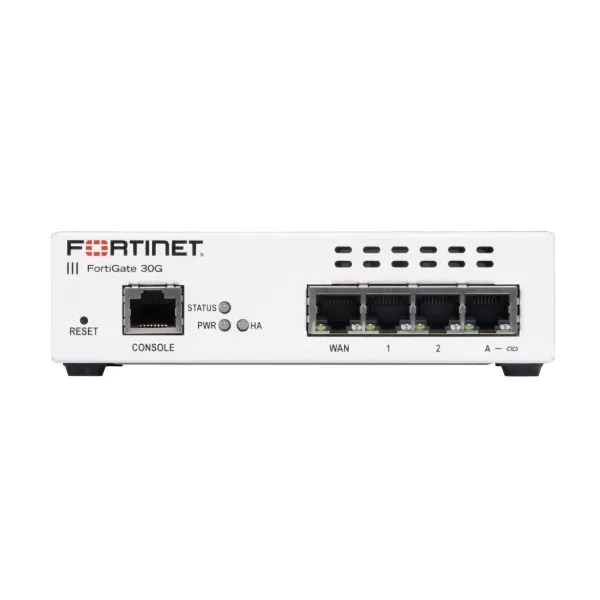
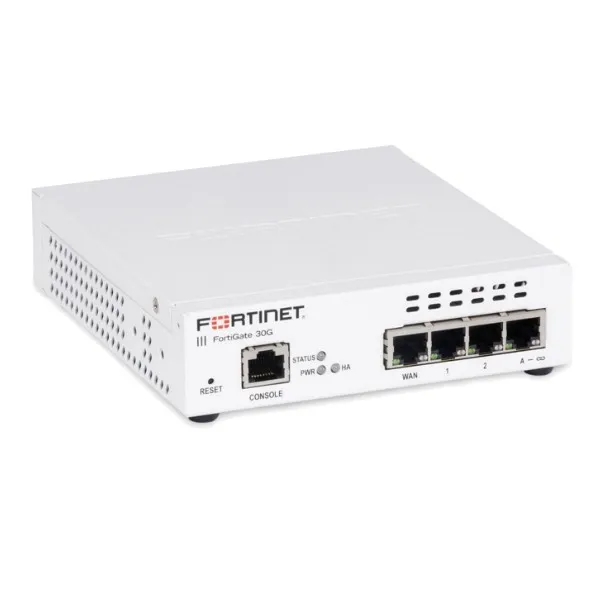
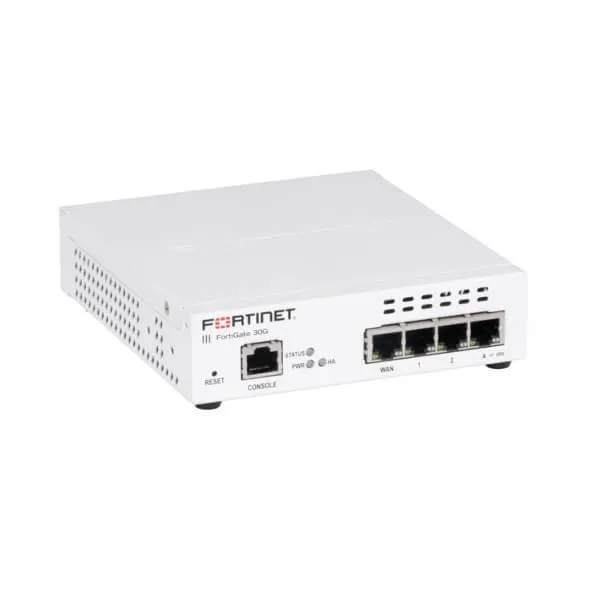
Fortinet documentation for the 30G series identifies one RJ45 console port, one Gigabit Ethernet RJ45 WAN port, two Gigabit Ethernet RJ45 network ports and one Gigabit Ethernet RJ45 FortiLink port. Fortinet’s product matrix identifies the FG-31G with 30 GB of local storage. Published performance figures for the 30G platform include up to 4 Gbps IPv4 firewall throughput for larger packet sizes and 3.9 Gbps at 64-byte packets, with security-service throughput lower when inspection functions are enabled. Buyers should therefore size the appliance against the exact security profile rather than treating raw firewall throughput as the only capacity figure.
Where it fits
The FG-31G is most relevant where a compact desktop firewall is required at the network edge: a small business office, retail or service branch, professional office, remote corporate location, clinic administration network, education office or other site with a modest physical port requirement. Its FortiLink interface can support a Fortinet Security Fabric design involving compatible FortiSwitch infrastructure, while FortiOS can provide firewall policy, routing, VPN, application visibility and SD-WAN functions. Final suitability depends on the planned topology, subscriptions, traffic mix and growth expectations.
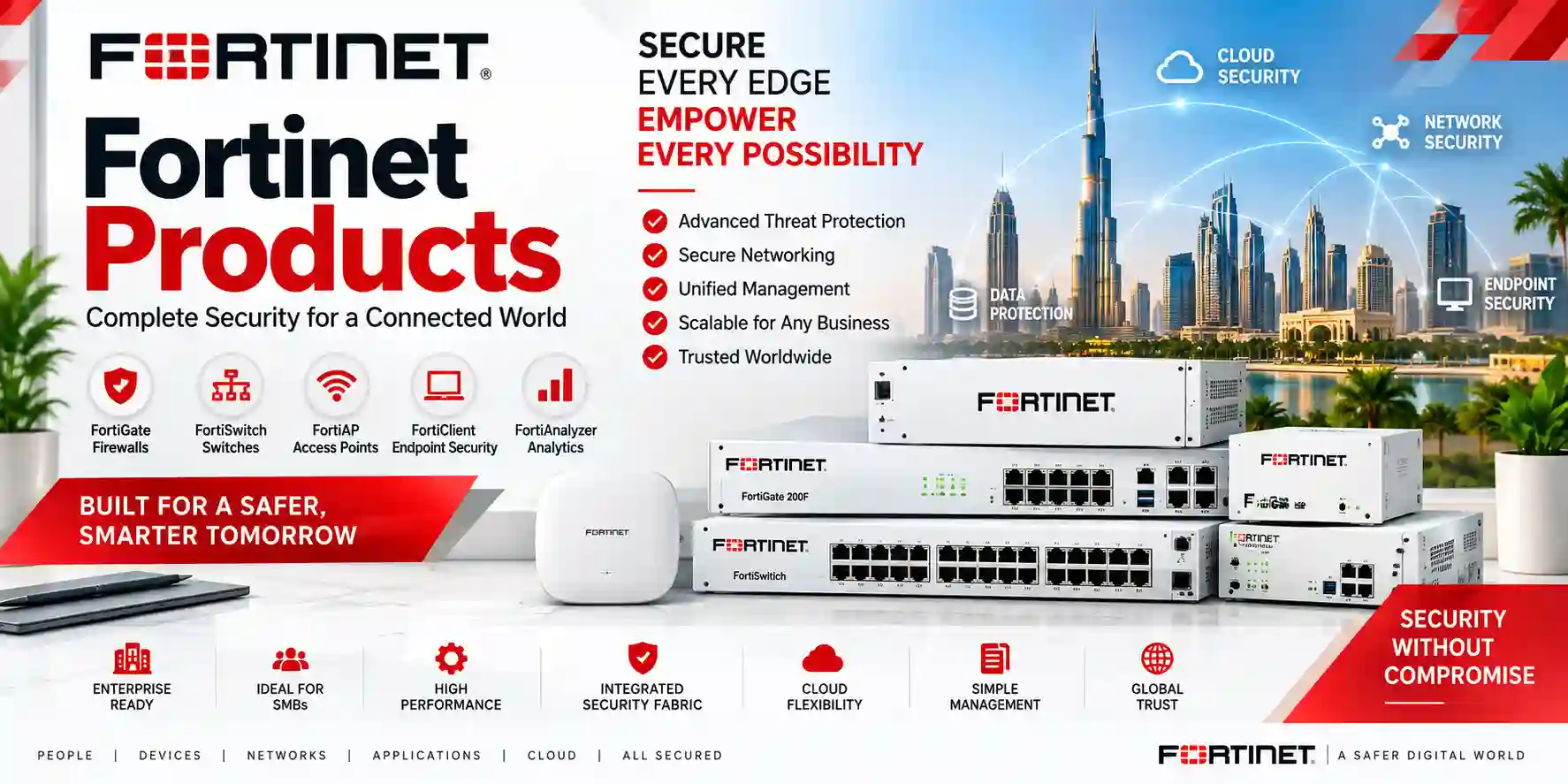
FortiGate 31G features and buying considerations
30 GB local storage
The FG-31G variant includes 30 GB of onboard storage. This differentiates it from the base FG-30G and can be useful when local storage is part of the operational design. Logging strategy should still be planned deliberately, particularly when longer retention, centralized reporting or compliance-driven analysis is required.
Secure SD-WAN
FortiOS integrates SD-WAN with security policy and routing. Organizations with multiple WAN connections can design application-aware path selection, link health monitoring and failover policies. The actual outcome depends on circuit diversity, configuration, application requirements and how health checks are defined.
VPN connectivity
IPsec VPN can connect branches, head offices and approved remote environments across encrypted tunnels. A successful design should account for authentication, address planning, route design, failover, encryption overhead and the amount of simultaneous encrypted traffic expected during busy periods.
FortiGuard services
Security subscriptions determine which continuously updated threat-protection services are available. Procurement teams should identify the required bundle and renewal term before comparing quotations, because hardware-only pricing and a security-services package represent materially different operational capabilities.
Technical specification snapshot
| Model | FortiGate 31G (FG-31G) |
|---|---|
| Form factor | Desktop |
| Local storage | 30 GB |
| Network interfaces | 1 × GE RJ45 WAN, 2 × GE RJ45, 1 × GE RJ45 FortiLink |
| Console | 1 × RJ45 console |
| IPv4 firewall throughput | 4 / 4 / 3.9 Gbps at 1518 / 512 / 64 byte UDP packets |
| IPsec VPN throughput | 3.5 Gbps at 512-byte packets |
| IPS throughput | 800 Mbps |
| NGFW throughput | 570 Mbps |
| Threat protection throughput | 500 Mbps |
Performance figures are vendor test values and should be interpreted with Fortinet’s published test conditions. Real deployments vary with packet size, enabled security services, application mix, encryption, logging and configuration.
FortiGate 31G integration, deployment and licensing
A firewall purchase should begin with the network design. Map the internet circuits, LAN segments, VLANs, wireless infrastructure, servers, cloud services, branch tunnels, remote access requirements and management responsibilities before deciding how the FG-31G will be connected. The appliance has a compact physical interface count, so environments requiring many directly connected network segments will normally use managed switching rather than treating the firewall as a large access switch. FortiLink can be relevant when compatible FortiSwitch equipment is part of the architecture.
For dual-internet or SD-WAN projects, document each circuit’s bandwidth, handoff type, public addressing, upstream equipment and expected failover behavior. A second ISP does not automatically create resilient application delivery; route policies, health checks, DNS dependencies, VPN endpoints and stateful sessions all influence user experience during an outage. See FourTeck’s Tanzania technology and security solutions for related deployment planning. Regional customers can also review FourTeck Uganda, FourTeck Kenya, FourTeck Ghana and FourTeck Nigeria when planning related projects in those markets.
Licensing is equally important. A hardware appliance can route and enforce core firewall policies, but organizations usually purchase FortiGuard services to keep threat intelligence and inspection capabilities current. The appropriate service bundle depends on the intended controls. Buyers should compare quotations using the same hardware, subscription bundle, term, support level and implementation scope. A low hardware-only price is not equivalent to a fully licensed security deployment, and a renewal should be budgeted as part of lifecycle cost rather than treated as an unexpected later expense.
FortiGate 31G Tanzania
For organizations searching for FortiGate 31G Tanzania, the most useful starting point is to define the role of the firewall in the business rather than selecting it from a model number alone. A small office in Tanzania may need a secure internet gateway for business applications, email, web access and cloud services. A branch of a larger organization may instead require encrypted connectivity to a head office, centrally governed security policy, SD-WAN path selection and consistent logging. The FG-31G can address these scenarios when its port count and inspected throughput align with the site design. Its compact desktop form factor is particularly relevant to locations where rack space is limited, while 30 GB of local storage gives the 31G variant an additional operational resource compared with the base 30G.
Tanzanian buyers should document ISP bandwidth today and the likely upgrade path during the expected appliance lifecycle. A site with a modest connection may still generate substantial inspected traffic if cloud backup, video collaboration, software updates and encrypted web applications run concurrently. Because security inspection throughput is lower than raw stateful firewall throughput, procurement teams should evaluate the security features they actually intend to enable. IPS, application control, web filtering, malware inspection and SSL inspection each affect the sizing discussion. The correct target is not maximum utilization; a practical design should retain capacity for traffic bursts, policy growth and future bandwidth changes.
Power and physical placement also deserve attention. The appliance should be installed in a secure, ventilated area with reliable power and protected network cabling. If business continuity depends on internet access, include UPS protection and consider circuit diversity rather than relying on two links that share the same upstream failure point. For multi-site Tanzanian organizations, establish consistent naming, address plans, VPN standards, administrator access controls and backup procedures before rolling out appliances. This reduces configuration drift and makes later troubleshooting easier.
When requesting a Tanzania quotation, specify FG-31G, the desired FortiGuard subscription package and term, whether implementation is required, the number of sites, internet speeds, VPN topology, switching environment and any migration requirement from an existing firewall. This creates a more comparable procurement process and helps distinguish appliance cost from subscription, configuration and ongoing operational services.
FortiGate 31G (FG-31G) Dar es Salaam
Businesses evaluating FortiGate 31G in Dar es Salaam often operate in connectivity-intensive environments where cloud applications, online payments, VoIP, video meetings and remote access share the same edge connection. For a small headquarters, branch, retail operation or professional office, the FG-31G can provide a compact security gateway without requiring a large rack-mounted appliance. Its integrated FortiOS feature set allows firewall policy, routing, VPN and SD-WAN decisions to be administered within one platform, while optional FortiGuard services add continuously updated security intelligence for relevant inspection functions.
A Dar es Salaam deployment should be sized around busy-hour traffic. Internet circuits may be upgraded during the firewall’s service life, so the design should account for expected growth rather than only the current contract speed. If the office depends heavily on SaaS applications, consider how SSL inspection, application control and IPS will affect usable capacity. If two internet links are available, document whether they are intended for active-active distribution, preferred-path routing or failover. SD-WAN rules can be designed around application requirements and link health, but effective resilience depends on the diversity and quality of the underlying connections.
Network segmentation is another practical consideration. Finance, administration, guest access, point-of-sale systems, voice devices and management interfaces may need separate VLANs and policies. Because the FG-31G has a small number of physical Ethernet interfaces, a managed switching layer can provide the required access-port scale while the firewall enforces inter-segment policy. Where compatible FortiSwitch equipment is used, the FortiLink interface can support an integrated Fortinet design.
For quotation preparation in Dar es Salaam, list user count, internet links, VLANs, VPN peers, public services, existing switch models, wireless requirements, security subscriptions and any configuration migration. Buyers replacing an older appliance should export and review the existing rule base rather than automatically copying obsolete policies. A clean migration is an opportunity to remove unused objects, tighten access, standardize naming and document business ownership of important rules. This approach makes the FG-31G purchase part of a maintainable security architecture rather than a simple hardware swap.
FortiGate 31G (FG-31G) Mwanza
Organizations looking for FortiGate 31G in Mwanza may be securing a branch office, service business, distribution point, administration site or other compact network that depends on reliable access to centralized and cloud-based systems. The FG-31G is suited to consideration where a desktop firewall with Gigabit Ethernet interfaces, VPN, SD-WAN and optional FortiGuard security services matches the expected scale. Its 30 GB local storage can support operational needs associated with the 31G variant, while broader log-retention requirements should still be planned around the organization’s reporting and compliance objectives.
For Mwanza sites connected to a head office elsewhere in Tanzania, IPsec VPN design is frequently more important than raw internet browsing throughput. Identify which applications traverse the tunnel, how much bandwidth they consume, whether voice or interactive systems need path priority, and what should happen if the primary circuit fails. If a secondary WAN is available, the VPN architecture should explicitly account for failover so that an ISP outage does not leave the branch with internet connectivity but no route to business systems. Addressing and routing should be documented before deployment to avoid overlapping subnets across branches.
Security policy should reflect the business workflow. Users may need web and cloud access while servers, printers, CCTV management systems, voice infrastructure and guest devices require different levels of reachability. Segmenting these functions reduces unnecessary lateral access and makes policy intent easier to audit. The firewall should not be treated as a substitute for endpoint protection, identity controls, backups or secure switching; it is one component in a layered architecture.
A useful Mwanza procurement request should state the current internet speed, expected future speed, approximate number of active users and devices, VPN requirements, applications that need inbound publishing, desired FortiGuard services, and whether installation or migration assistance is expected. If the site will be remotely managed, define secure administrative access and configuration backup procedures from the start. This information helps determine whether FG-31G is appropriately sized or whether a higher model should be considered before purchase.
FortiGate 31G (FG-31G) Arusha
FortiGate 31G buyers in Arusha can evaluate the appliance for small hospitality administration networks, professional services, branch offices, education administration, travel-sector businesses and other organizations that require a controlled internet edge. The device’s compact design can fit sites where physical space is limited, while FortiOS provides a common platform for firewall policy, VPN, routing and SD-WAN. The relevant question is whether the site’s real security workload fits the appliance once inspection features are enabled, not whether the headline firewall throughput exceeds the nominal ISP speed.
Arusha businesses with guest connectivity should separate guest traffic from corporate systems using VLANs and explicit policies. Guest internet use can generate substantial bandwidth and should not be allowed to consume resources needed for business-critical applications without appropriate traffic policy. Administrative systems, payment environments, staff devices, voice infrastructure and management interfaces should be logically separated where practical. If the existing switching environment supports VLANs, the FG-31G can enforce policy between those segments while a managed switch provides access-port density.
Remote access and site-to-site VPN requirements should be planned separately. A branch tunnel to another office has predictable peer relationships, whereas remote-user access introduces identity, endpoint and authentication considerations. Procurement should therefore include the intended remote-access method and user population instead of assuming that all VPN requirements are equivalent. Where cloud applications dominate, application visibility and internet path quality may be more important than backhauling all traffic through another site.
For an Arusha quotation, provide the planned topology, internet circuits, number of VLANs, switch environment, remote sites, public IP details where relevant, security services required and preferred subscription term. Also identify whether the project is a new deployment or migration. New deployments can establish clean policy and addressing standards from day one; migrations require review of existing rules, VPNs and NAT behavior. A documented acceptance checklist should verify internet access, DNS, VPN connectivity, segmentation, failover and administrative backup before the firewall is placed into normal production.
FortiGate 31G (FG-31G) Dodoma
Organizations searching for FortiGate 31G in Dodoma may include offices that need a compact perimeter firewall for secure access to cloud platforms, centralized applications and inter-office services. The FG-31G provides Fortinet’s FortiOS environment in a desktop appliance with 30 GB of local storage and Gigabit Ethernet interfaces. It can be considered for a modest edge deployment where the physical port requirement is limited and the expected inspected traffic remains within an appropriate capacity envelope.
Policy design should begin with business roles and data flows. Rather than building broad rules that permit entire networks to communicate, identify which user groups and systems need access to specific services. This produces clearer policies and supports later audits. If the Dodoma site is part of a larger organization, use consistent object names, VLAN identifiers where practical, logging standards and change-control procedures across branches. Consistency reduces the time required to diagnose a VPN or application issue and makes central oversight more effective.
Where internet continuity is important, a dual-WAN design can improve resilience, but only when the two circuits provide meaningful diversity. Link health monitoring should test useful destinations rather than merely checking whether an Ethernet interface is electrically up. Critical VPNs should also have a documented failover behavior. For cloud-heavy offices, route selection may prioritize latency and packet loss for interactive applications while bulk traffic follows a different policy. These are configuration decisions that should be defined during implementation.
Dodoma procurement teams should request comparable quotations that identify the exact FG-31G hardware, subscription bundle, service term and implementation scope. If centralized logging, management or reporting is required, include that in the design rather than assuming the appliance’s local storage alone meets every retention objective. Before purchase, document the number of users, devices, circuits, VPNs and security profiles expected during the next few years. That forward view helps avoid selecting an appliance that fits today’s network but leaves insufficient room for planned expansion.
FortiGate 31G (FG-31G) UAE
For customers evaluating FortiGate 31G in the UAE, the appliance is relevant to compact branch and small-office environments that need Fortinet security, VPN and SD-WAN capabilities in a desktop platform. A regional procurement project may involve a standalone UAE office or a branch connected to operations in Tanzania or other countries. In either case, the design should distinguish local internet security from inter-site connectivity and define how traffic will be routed during normal operation and WAN failures.
The FG-31G includes 30 GB local storage and a small set of Gigabit Ethernet interfaces, including a dedicated WAN interface and a FortiLink-designated interface. This makes topology planning important. If the office has multiple VLANs, many wired endpoints or separate voice, guest and server segments, a managed switch should provide access density while the firewall applies security policy at the appropriate boundaries. FortiLink can be considered when compatible FortiSwitch infrastructure forms part of the solution.
UAE buyers should compare offers using consistent licensing assumptions. A hardware-only quote should not be compared directly with a package that includes FortiGuard security services, support and implementation. Identify the desired subscription term, inspection requirements, remote-access needs and any centralized management requirement. For broader Fortinet projects in the UAE, the specialist FourTeck Fortinet UAE resource can provide regional context for related security solutions.
If the UAE branch connects to Tanzania, Kenya, Uganda or another regional office, document addressing, VPN encryption requirements, application flows and failover before configuration. Avoid overlapping private subnets between sites, because overlap complicates routing and VPN design. A commissioning checklist should test internet access, name resolution, business applications, VPNs, policy logging and secondary-link behavior. This structured approach allows the FG-31G to be evaluated as part of an end-to-end network design rather than simply as an isolated firewall appliance.
FortiGate 31G (FG-31G) Uganda
FortiGate 31G in Uganda is a practical search for organizations planning secure connectivity at a small office or branch. The platform combines FortiOS networking and security capabilities with a compact desktop design, while the 31G model provides 30 GB local storage. Typical requirements may include secure internet access, site-to-site IPsec VPN, application visibility, segmentation and multi-WAN policy. Whether the model is suitable depends on the traffic that will be inspected and the number of interfaces and segments required.
Ugandan organizations operating multiple branches should standardize the deployment template. Define VLANs, address ranges, naming, VPN parameters, administrative roles, logging and backup procedures before appliances are installed. A standard template reduces configuration drift while still allowing local variations such as different ISP addressing. If branches use two WAN links, the template should include health-check targets and clear rules for which applications use which path.
Security subscriptions should be selected according to the controls the business expects to operate. Procurement documentation should name the FortiGuard bundle and term rather than simply requesting an FG-31G price. This prevents ambiguity when comparing suppliers and makes renewal planning clearer. Where compliance or incident investigation requires extended log history, determine whether centralized logging is needed in addition to local storage.
For Uganda-wide projects, network teams should inventory each site before rollout: circuit speeds, user count, device count, switch capacity, VLANs, local servers, cloud applications and VPN dependencies. This inventory reveals whether every location truly needs the same firewall model. Some branches may fit FG-31G while larger sites need additional throughput or interfaces. Customers can review FourTeck Uganda technology solutions for regional project context. A model-by-model sizing exercise is more reliable than forcing one appliance across sites with very different workloads.
FortiGate 31G (FG-31G) Kampala
Kampala offices considering the FortiGate 31G commonly need to secure dense business use of cloud applications, email, web services, VoIP and remote connectivity. The appliance can be considered for a small branch or office where a compact form factor and integrated FortiOS functions are valuable. Because encrypted web traffic dominates modern networks, sizing should consider the effect of security inspection rather than relying solely on the raw stateful firewall number.
If the Kampala site hosts public-facing services, inbound publishing should be tightly scoped and separated from ordinary user networks. Where possible, expose only required services and maintain clear ownership of each firewall rule. Administrative interfaces should not be broadly reachable from the internet. Remote management should use secure methods, restricted sources and strong authentication. These operational practices are as important as the appliance selection itself.
A dual-WAN Kampala deployment can use FortiOS SD-WAN capabilities to monitor link quality and steer traffic, but resilience should be tested under realistic failure conditions. Disconnecting a cable is not the only failure scenario; an upstream route can fail while the local Ethernet remains active. Health checks and path policies should therefore reflect real service reachability. Site-to-site VPNs should also be tested across failover paths if they are business critical.
When seeking an FG-31G quotation in Kampala, provide both technical and commercial requirements. Technical details include ISP bandwidth, WAN addressing, VLANs, VPN peers, approximate active users and enabled security functions. Commercial details include subscription bundle, term, desired support and whether migration or implementation is required. This makes quotations easier to compare and helps identify hidden differences in scope. If growth is expected, include planned bandwidth upgrades and new branches in the sizing conversation so the selected firewall has a sensible operational horizon.
FortiGate 31G (FG-31G) Arua
For an Arua branch or small office, FortiGate 31G can be evaluated as a compact security gateway that supports controlled internet access, VPN connectivity and FortiOS networking functions. Branch environments often have a different priority from headquarters: simplicity, remote manageability and predictable failover can matter more than a large number of physical interfaces. The FG-31G’s desktop form factor and Gigabit Ethernet connectivity align with that type of edge design when capacity requirements are appropriate.
Remote branches should be designed so routine operations do not depend on someone physically visiting the firewall. Configuration backups, administrator roles, monitoring, VPN status and WAN health should be visible to the responsible network team. If the branch uses a primary and backup circuit, failover behavior should be documented and tested. Critical business traffic may need a different priority from software updates, guest browsing or other bulk activity.
Segmentation can also reduce operational risk. Staff endpoints, guest devices, printers, cameras and management systems do not necessarily need unrestricted communication. A managed VLAN-capable switch can separate these functions, while the firewall controls permitted flows. This is especially useful at a branch where physical access to devices may be less tightly controlled than at a central data center.
Arua buyers should prepare a concise site profile before requesting pricing: current and planned internet bandwidth, active user count, endpoint count, number of VLANs, branch-to-head-office applications, remote-access requirements and desired FortiGuard services. If local storage is a reason for choosing the 31G over the 30G, clarify the logging objective and retention expectation. The 30 GB onboard storage is a defined hardware feature, but retention duration varies with log volume and settings. For longer-term or centralized analysis, a broader logging architecture may be more appropriate.
FortiGate 31G (FG-31G) Mbarara
FortiGate 31G for Mbarara can suit organizations that need a secure branch edge for internet and inter-office connectivity without deploying a larger appliance than the site requires. The model combines a compact hardware footprint with FortiOS features for policy enforcement, routing, VPN and SD-WAN. Its 30 GB local storage distinguishes the FG-31G within the 30G family and may be useful for operational logging needs, subject to the organization’s retention goals.
Branch sizing should include simultaneous activity rather than average bandwidth alone. A small number of users can still create high traffic when cloud synchronization, video meetings and large downloads occur together. Security inspection adds processing work, so the intended feature set must be part of the capacity discussion. If SSL inspection is planned, organizations should also prepare for certificate deployment and application compatibility testing rather than treating it as a simple checkbox.
For site-to-site connectivity, document which networks are reachable through the VPN and avoid overly broad tunnel policies. If the branch hosts local systems that headquarters depends on, failover should cover both internet access and VPN restoration. Monitoring should distinguish an ISP outage from a tunnel configuration problem so support teams can respond efficiently.
Mbarara procurement can be simplified by issuing a requirement that names the exact FG-31G model, subscription bundle and term, along with configuration expectations. Include any need for VLAN creation, VPN migration, dual-WAN setup, policy cleanup or documentation. If the branch is part of a larger rollout, use a repeatable commissioning checklist. Verify routing, DNS, business applications, security policy, logs, VPNs, backup connectivity and configuration backups. A consistent acceptance process gives the organization a clearer operational baseline after deployment.
FortiGate 31G (FG-31G) Gulu
Organizations seeking FortiGate 31G in Gulu can assess it for small business and branch environments where secure internet access and encrypted connectivity are required. The appliance’s modest physical interface count encourages a clean design in which managed switching handles endpoint density and the firewall focuses on routing and security policy. This separation is often easier to scale than connecting every network function directly to the firewall.
A Gulu site connected to a central office should have a documented addressing plan and VPN topology. If multiple branches reuse the same private subnet, future site-to-site connectivity becomes unnecessarily complex. Assigning unique address ranges and consistent VLAN purposes makes routing, troubleshooting and security policy clearer. Where two WAN links exist, test whether the VPN automatically recovers through the secondary path and whether important applications behave acceptably after the transition.
FortiGuard subscription selection should match the organization’s risk controls and budget. Buyers should understand which services are included in a proposed bundle and how long the term runs. Renewal planning matters because continuously updated security functions depend on active services. Hardware lifecycle planning should also include configuration backups and documented administrator access so the organization is not dependent on undocumented settings.
Before ordering an FG-31G for Gulu, collect the site’s bandwidth, users, devices, VLANs, applications and growth expectations. If the branch may expand significantly, compare the projected inspected traffic and interface requirements against higher models before committing. The goal is to select a firewall with enough headroom for the intended security profile without buying capacity that the site is unlikely to use. A well-defined requirement also enables clearer quotations and a smoother deployment.
FortiGate 31G (FG-31G) Kenya
FortiGate 31G in Kenya is relevant to small offices and distributed branches that need Fortinet’s integrated security and networking capabilities in a compact appliance. Organizations with operations spanning Kenya and Tanzania can use a consistent FortiOS approach across locations while still sizing each site individually. The FG-31G’s 30 GB storage, Gigabit Ethernet ports, VPN support and SD-WAN functions make it a candidate for smaller edges where the intended security workload fits the platform.
Cross-border organizations should avoid treating every branch as identical. A Nairobi office with heavier cloud usage, more users or faster internet may need different capacity from a small satellite site. Establish a standard architecture but allow the hardware model to vary by workload. Standardization can still cover policy naming, VPN encryption, VLAN purpose, logging, administrator controls and backup procedures.
When multiple ISPs are used, SD-WAN policies can help select paths based on health and application requirements. The design should specify which link is preferred for interactive traffic, how bulk traffic is handled and what constitutes a failed path. If branches communicate through IPsec VPN, failover should preserve reachability where possible and should be tested before production reliance. For Kenya-focused related solutions, customers can consult FourTeck Kenya.
A Kenya quotation request should include the exact FG-31G model, FortiGuard service bundle and term, plus implementation scope. If the project involves a migration, include the existing firewall model, number of policies, VPNs and public services so the work can be assessed accurately. For new sites, provide the proposed VLANs, internet links and applications. Clear requirements reduce ambiguity and make it easier to compare lifecycle cost, not just the initial appliance price.
FortiGate 31G (FG-31G) Kuwait
For FortiGate 31G buyers in Kuwait, the appliance can be considered for compact offices and branch locations that require a next-generation firewall with VPN and SD-WAN capabilities. The 31G’s local storage can be useful where appliance-level logs form part of operations, although centralized retention should be evaluated separately for organizations with longer audit or investigation requirements.
Office networks should be segmented according to function and trust. Corporate users, guests, voice devices, printers and management interfaces should not automatically share unrestricted access. A managed switch can provide VLAN separation while the firewall applies policy between segments. This architecture also makes future expansion easier because endpoint growth is handled at the switching layer rather than consuming the firewall’s limited physical ports.
Kuwait organizations connecting to other regional offices should plan IPsec tunnels around unique addressing and clear route ownership. If cloud applications are the primary workload, consider whether direct local internet access provides better performance than backhauling all traffic through another country. SD-WAN can support path policy, but the configuration should be based on measured service requirements and tested failure scenarios.
Procurement should specify the desired FortiGuard services, support term and deployment scope. Ask for a quote that clearly separates hardware, subscriptions and professional services where applicable. Include ISP speeds, user counts, VPN peers, VLANs and expected growth so the model can be checked against the actual environment. The objective is a maintainable firewall deployment with sufficient inspected throughput and a clear renewal plan, rather than a purchase based only on the lowest initial hardware cost.
FortiGate 31G (FG-31G) Ghana
FortiGate 31G in Ghana can serve as a candidate for small offices and branch networks that need secure internet access, segmentation and VPN connectivity. The appliance provides a compact FortiOS platform with Gigabit Ethernet interfaces and 30 GB local storage on the FG-31G variant. Its suitability should be assessed using expected inspected traffic, not just raw firewall throughput.
For a Ghana branch linked to a regional head office, identify the applications that rely on the site-to-site tunnel and their sensitivity to latency or packet loss. If two WAN links are available, define whether the secondary circuit is backup-only or participates in normal traffic distribution. Test the transition of critical applications during failover and confirm that VPN routing follows the intended path.
Security policy should be documented in business terms. Each important rule should have an owner or purpose, and temporary access should not become permanent by default. Segmentation between user, server, guest and management networks can reduce unnecessary exposure. Subscription planning should also be explicit: determine which FortiGuard services are required and budget for renewal as part of ongoing operations. Ghana customers can review FourTeck Ghana for related regional technology requirements.
When requesting an FG-31G quote in Ghana, provide internet bandwidth, active users, device count, VLANs, VPNs, public services and the desired subscription term. State whether configuration, migration or documentation is included in the requirement. If growth is expected, include the projected circuit upgrade and user expansion so the model can be sized with headroom. This structured procurement approach reduces the risk of comparing quotations that contain different security subscriptions or service scopes.
FortiGate 31G (FG-31G) Nigeria
Nigerian businesses evaluating FortiGate 31G may be looking for a compact edge firewall for a branch, professional office, retail location or distributed corporate site. The FG-31G combines FortiOS networking and security features with 30 GB local storage and Gigabit Ethernet connectivity. It is best assessed as part of a complete site design that includes WAN circuits, switching, VLANs, VPNs, security subscriptions and operational management.
Where power or carrier interruptions can affect operations, resilience planning should extend beyond the firewall. Use appropriate power protection, maintain configuration backups and design WAN diversity around genuinely independent paths where possible. SD-WAN policies can react to link quality, but they cannot compensate for two circuits that share the same upstream point of failure. Critical applications should be tested during simulated link loss so staff understand expected behavior.
For distributed Nigerian networks, standard templates improve consistency. Define branch VLANs, address allocation, VPN parameters, security profiles and administrator access centrally, then document justified site-specific differences. The FG-31G can fit smaller branches, while larger locations may require more interfaces or inspected throughput. Customers can use FourTeck Nigeria for regional project context.
A Nigeria procurement request should state whether the quotation is hardware-only or includes FortiGuard services, support and deployment. Include subscription duration, expected internet bandwidth, VPN topology, user count and planned growth. If the firewall replaces another platform, provide a summary of existing rules and tunnels. Migration should be treated as a policy-review opportunity rather than a blind configuration copy, because old environments often contain unused rules and objects that should not be carried forward.
FortiGate 31G (FG-31G) Seychelles
FortiGate 31G in Seychelles can be considered for small business and branch environments where compact hardware, secure internet access and VPN connectivity are priorities. Island and remote-site operations may place particular value on remote manageability and predictable recovery procedures. The FG-31G’s FortiOS platform allows networking and security policy to be administered in a consistent environment, while the 30 GB local storage on the 31G variant provides an additional local resource.
For sites that depend on a limited number of WAN options, document the business impact of circuit failure and determine whether a secondary connection is justified. If a backup circuit has lower bandwidth, SD-WAN and traffic policies should prioritize essential business applications during degraded operation. A failover plan should also cover DNS, VPN reachability and any public services that depend on a particular address.
Network segmentation remains valuable even in a small office. Guest wireless, staff systems, payment or administration devices, voice equipment and management interfaces may require different trust levels. Managed switching can provide VLAN scale while the FG-31G enforces policy. If remote support is part of the operating model, secure administrator access and configuration backup should be established before the site is handed over.
For a Seychelles quotation, provide the exact model, FortiGuard bundle, subscription term, internet speed, user count, VPN needs and any implementation requirement. If the organization operates across several islands or countries, include all sites in the topology so addressing and VPN design can be planned coherently. Capacity should include expected growth and the security features that will actually be enabled. This produces a more dependable purchasing decision than selecting a firewall solely by headline throughput or initial hardware price.
FG-31G quotation checklist
A clear quotation request helps suppliers return comparable proposals. Before requesting pricing, prepare the following information: exact model FortiGate 31G (FG-31G); required FortiGuard security bundle; subscription and support term; current and planned ISP bandwidth; number of WAN links; approximate active users and devices; VLAN count; site-to-site VPN peers; remote-access requirement; public-facing services; existing firewall model if migrating; managed switch environment; logging and retention expectations; centralized management requirements; and whether implementation, migration, testing or documentation is required. Do not assume that hardware-only and licensed security bundles are equivalent offers.
Frequently asked questions about FortiGate 31G
What is the difference between FG-30G and FG-31G?
The key model distinction shown in Fortinet’s product information is local storage: FG-31G includes 30 GB onboard storage. Both belong to the FortiGate 30G family. Buyers should still verify the exact current datasheet and licensing package for the unit being quoted.
Is FG-31G suitable for a small office?
It is positioned as a compact desktop FortiGate and can be suitable for small-office or branch use when the required interfaces, inspected throughput, VPN load and security services fit the platform. Sizing should be based on the real traffic profile and expected growth.
Does FortiGate 31G support SD-WAN?
FortiOS includes secure SD-WAN capabilities. Effective deployment requires suitable WAN circuits, health checks, routing and application policies. A second circuit alone does not guarantee resilience unless failover behavior is correctly designed and tested.
Does FG-31G require a FortiGuard subscription?
Core appliance functions and subscription-based security services should be distinguished. Organizations that want continuously updated FortiGuard security capabilities should select the appropriate service bundle and term. Procurement should identify the bundle explicitly so quotations can be compared fairly.
How should I size an FG-31G deployment?
Start with ISP bandwidth, user and device counts, concurrent application traffic, VPN requirements, security inspection features, SSL inspection plans, VLANs and expected growth. Compare those requirements with vendor performance figures under the relevant test conditions and retain practical headroom.
Decision recap
FortiGate 31G is a compact Fortinet firewall with 30 GB local storage, Gigabit Ethernet connectivity and FortiOS capabilities for firewalling, VPN, routing and secure SD-WAN. It is most appropriate to evaluate for smaller edge environments where its interface count and inspected security throughput fit the workload. The purchasing decision should include the FortiGuard subscription package, expected traffic growth, VPN topology, segmentation design and logging requirements. Organizations with materially higher throughput, more physical interfaces or larger branch populations should compare higher FortiGate models before finalizing the bill of materials.
Plan your FortiGate 31G deployment
Share your internet speeds, user count, number of sites, VPN requirements, existing firewall details and desired security services when requesting a consultation. This information makes it possible to assess the FG-31G against the actual network instead of relying on a generic model recommendation. FourTeck can use the requirement to prepare a commercial discussion around the specified hardware, subscription term and deployment scope without assuming stock, delivery timing or service coverage that has not been confirmed.


Reviews
There are no reviews yet.