
Fortinet enterprise security · Tanzania procurement and deployment guidance
FortiGate 3701F (FG-3701F) Tanzania
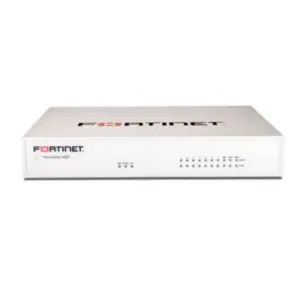
FortiGate 3701F is a high-capacity Fortinet next-generation firewall designed for large enterprise, data-center, service-provider and high-throughput network-security roles. Fortinet’s current 3700F-series documentation identifies the FG-3701F as the storage-equipped member of the series, combining four 400GE-class QSFP-DD interfaces, twenty 50/25/10/1GE SFP56 interfaces including HA ports, four ultra-low-latency 25/10GE SFP28 interfaces, two multigigabit management interfaces, NP7 and CP9 acceleration, two onboard SSDs and redundant AC power supplies. For a Tanzanian buyer, those specifications make the appliance relevant when the project is driven by very high interface capacity, security inspection, segmentation, data-center connectivity, large VPN requirements or a need to consolidate networking and security functions on a resilient platform.
FortiGate 3701F Overview and Verified Hardware
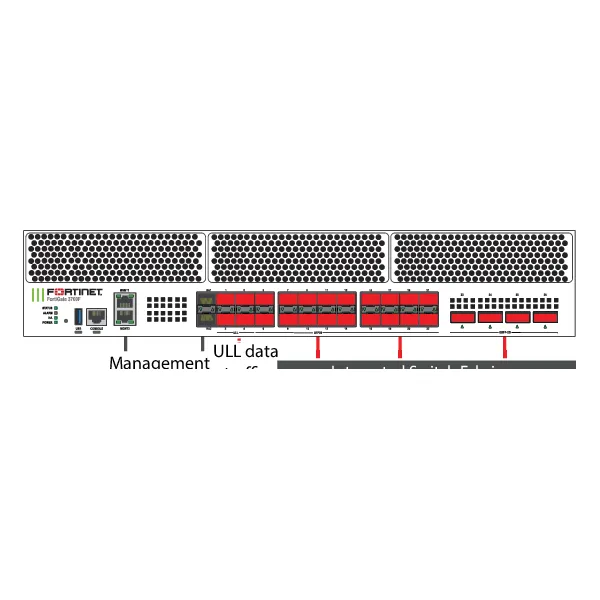
The FG-3701F should be evaluated as an enterprise security platform rather than as a simple internet firewall. Fortinet publishes it in the FortiGate 3700F Series for high-performance NGFW use at enterprise edges, hybrid data-center cores and internal segmentation points. The appliance uses three NP7 network processors in its fast-path architecture. Ports 1–4 are ultra-low-latency interfaces connected directly to an NP7 path, while the remaining front-panel data interfaces use the integrated switch fabric. This architecture is relevant to architects who need to plan east-west segmentation, high-capacity north-south inspection or low-latency paths without treating every port as functionally identical.
Official ordering information identifies the FG-3701F with four QSFP-DD slots supporting high-speed Ethernet options, four ULL SFP28 slots, twenty SFP56 slots including two HA interfaces, two management ports, NP7 and CP9 acceleration, two onboard SSDs and dual AC power supplies. The related FG-3700F has broadly similar network interfaces but does not include the onboard storage of the FG-3701F. That distinction can matter for logging strategy and operational requirements, although organizations with substantial retention, analytics or compliance needs should still design centralized logging rather than assuming appliance storage alone satisfies every requirement.
High-speed fabric
High-density QSFP-DD, SFP56 and SFP28 connectivity supports data-center, aggregation, high-capacity WAN and segmentation designs where conventional gigabit interfaces would create bottlenecks.
Purpose-built acceleration
Fortinet’s NP7 and CP9 processors are designed to accelerate supported networking and security functions, helping the platform address demanding inspected traffic and encrypted workloads.
Storage-equipped variant
The 3701F variant includes onboard SSD storage, an important procurement distinction when comparing it with the FG-3700F and when planning logging and local operational data.
Where the FG-3701F Fits
The strongest use cases are environments where security policy must operate at high network speeds and across many high-bandwidth interfaces. Examples include enterprise internet edges, data-center perimeters, internal data-center segmentation, large campus cores, service-provider security zones and regional hubs aggregating branch or partner traffic. FortiOS can combine firewall policy, routing, IPsec VPN, SD-WAN, application control, intrusion prevention and other security capabilities, while FortiGuard services can add continuously updated security intelligence according to the selected subscription. Buyers should separate hardware capability from subscription entitlement: a quote should state the exact appliance, FortiGuard package, FortiCare level, service term, optics, accessories and implementation scope.
Sizing should use the traffic profile that will actually be inspected. Record peak and projected bandwidth, encrypted traffic percentage, session characteristics, public services, east-west flows, VPN traffic, security profiles, interface speeds, routing scale, virtual-domain requirements, high-availability design and logging volume. Laboratory performance values are useful references, but production behavior depends on enabled features, packet sizes, policy design, firmware and traffic mix. The correct question is therefore not merely whether the FG-3701F has a high headline throughput figure, but whether its interface architecture, inspected-performance profile and operational model fit the proposed network.
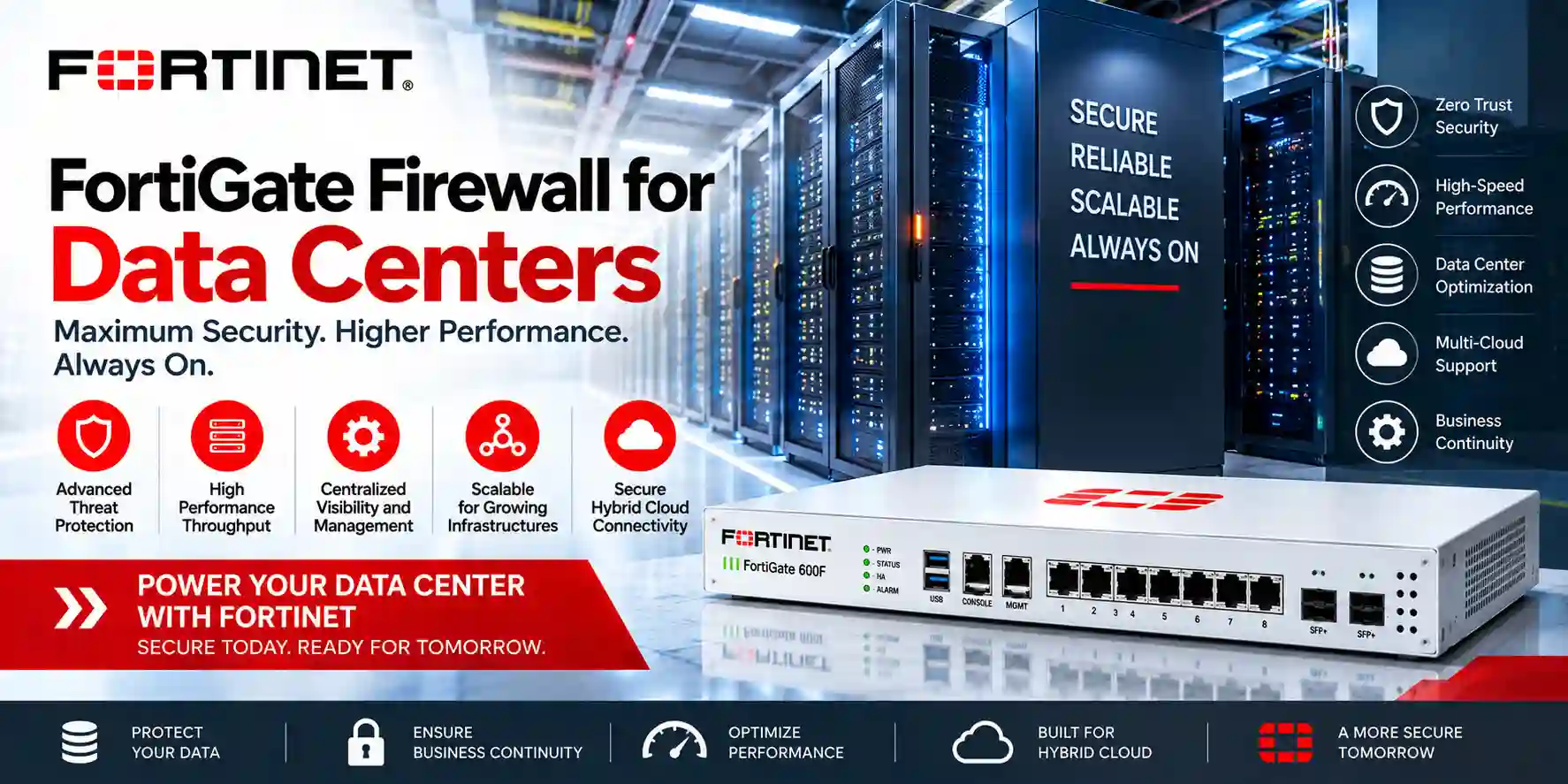
Enterprise firewall projects should coordinate the security appliance with switching, optics, racks, power, WAN design, logging and operational ownership.
FortiGate 3701F Tanzania
Organizations evaluating FortiGate 3701F in Tanzania are typically dealing with requirements that go well beyond a normal office gateway. The appliance is more naturally considered for a large enterprise edge, data center, major campus, carrier-connected environment, regional hub or security segmentation project where multi-gigabit and very-high-speed interfaces are essential. A Tanzanian project should begin with a traffic and topology study: identify ISP and private-circuit handoffs, core-switch uplinks, data-center VLANs, public applications, cloud connectivity, partner networks, remote sites and any traffic that must be inspected between internal zones. This creates the basis for deciding where the FG-3701F sits in the architecture and which links should use its high-speed optical interfaces.
Power, rack and environmental planning are equally important. The FG-3701F is a 2RU enterprise appliance with redundant power supplies, so the bill of materials should consider rack depth, rail requirements, airflow, UPS-backed circuits, power distribution and the heat profile of the surrounding equipment. Optical transceivers and cabling should be specified against the exact switch and carrier interfaces rather than added after the firewall arrives. Where high availability is required, the design should include the second appliance, HA links, upstream and downstream redundancy, routing behavior and failure testing; simply purchasing two units does not eliminate every dependency.
For Tanzania procurement, request a quote that separates appliance hardware, FortiGuard subscriptions, FortiCare support, optics, accessories, centralized management or logging requirements, installation, migration and post-deployment support. If replacing an existing firewall, provide its interface map, routing table, NAT, VPN inventory, policy count and known application dependencies. FourTeck Tanzania’s IT and security services can help frame the wider deployment scope, while the Tanzania technology shop shows related network and security procurement categories. A structured discovery process makes the FG-3701F decision easier to defend technically and commercially.
FortiGate 3701F Dar es Salaam
Dar es Salaam enterprises may evaluate the FG-3701F for headquarters, data centers, telecom-connected facilities, large hospitality or financial environments, logistics hubs and organizations consolidating traffic from many branches. The city’s role as a major commercial and connectivity center means a project may combine high-capacity internet, private circuits, cloud connectivity and multiple internal networks. Before selecting interfaces, map which services terminate on the firewall and which pass through it. A 400GE-capable port is valuable only when the surrounding switching, optics and traffic architecture can use that capacity; otherwise, procurement can become disconnected from the actual network requirement.
For a headquarters or data-center edge, security policy should be organized around zones and business applications rather than a long sequence of undocumented rules. Separate public services, users, servers, management networks, guest access, voice, cameras and partner connections where appropriate. If encrypted inspection is planned, evaluate certificate deployment, application compatibility and expected inspected bandwidth. If the appliance will terminate IPsec VPNs from regional sites, document addressing and routing carefully to prevent overlapping networks from complicating the design. Centralized logs and configuration management can become important when several FortiGate appliances are operated together.
A Dar es Salaam quote should include exact interface media and optics, because high-speed transceivers can materially affect the complete bill of materials. Include rack, power, HA, support and licensing requirements, and state whether the project includes migration from an existing firewall. Test planning should cover ISP failure, routing convergence, HA failover, VPN recovery, public services and critical cloud applications. FourTeck’s FortiGate 400G Tanzania page provides a useful related model reference for buyers comparing FortiGate classes, while the FG-3701F belongs to a substantially higher-capacity design tier. Procurement should therefore be tied to measured architecture needs rather than model prestige.
FortiGate 3701F Mwanza
In Mwanza, an FG-3701F project is most likely to arise where a large regional operation, data-intensive organization or multi-site business needs a high-capacity security hub rather than a conventional branch firewall. The appliance can sit at a central point connecting regional offices, data-center resources, internet links and cloud services, but the architecture should reflect actual bandwidth and growth. Start by documenting the WAN and private connectivity available at the site, the number of connected branches, the volume of east-west and north-south traffic, and whether the firewall will perform deep security inspection or primarily provide segmentation and secure routing.
Resilience is especially important when central services depend on one site. A design should consider dual carriers where practical, diverse physical paths, redundant switching, HA firewalls, independent power protection and centralized monitoring. Secure SD-WAN can help apply policy to multiple WAN links, but link diversity must exist outside the firewall as well. VPN design should use explicit routes and access policies so encrypted connectivity does not become unrestricted lateral access between sites. For remote administration, use controlled management networks and strong authentication rather than exposing management interfaces to untrusted networks.
Mwanza procurement teams should also plan operations after installation. Assign responsibility for policy changes, backups, firmware review, FortiGuard renewals, certificate management and incident response. Define where logs are stored and how long they are retained. If the local site has limited rack or power capacity, verify the 2RU form factor, power feeds, UPS runtime and cooling before ordering. For comparison with smaller enterprise designs, FourTeck Tanzania’s FortiGate 200G product page illustrates another enterprise FortiGate class. The purpose of comparison is not to choose the largest appliance, but to identify the capacity, interfaces and security performance appropriate for the actual Mwanza deployment.
FortiGate 3701F Arusha
Arusha organizations considering FG-3701F are likely to have unusually demanding requirements: a major data center, a large campus, a regional services hub, high-volume hospitality infrastructure, or a central security platform serving multiple properties or offices. In these environments, segmentation can be as important as internet-edge protection. Guest networks, operational systems, finance platforms, server networks, management interfaces, cameras and building systems should not automatically share unrestricted trust. The FortiGate can enforce boundaries, but the VLAN and switching architecture must be designed with those boundaries in mind.
High-speed interface planning deserves careful attention. Determine whether the project needs 400GE, 100GE, 50GE or 25GE connections and confirm compatible optics and switch ports. The FG-3701F’s ultra-low-latency interfaces may be relevant for specific traffic paths, but architects should understand their placement in Fortinet’s fast-path design before assigning them. Where the firewall connects redundant cores, plan link aggregation and routing behavior in conjunction with HA. If traffic passes between internal data-center zones, include those flows in capacity calculations rather than sizing only for internet bandwidth.
For Arusha procurement, the commercial request should state whether the customer needs hardware only or a complete security lifecycle: FortiGuard services, FortiCare, centralized management, logging, deployment, migration and support. Hospitality and service businesses should also define maintenance windows because an edge change can affect reservations, payments, voice, guest internet and operational applications simultaneously. A staged migration with rollback criteria is safer than an undocumented cutover. FourTeck Tanzania’s FortiGate 400F Tanzania page provides a related enterprise reference, while the broader Tanzania IT and security solutions overview explains how firewalls interact with switching, servers, Wi-Fi and other infrastructure.
FortiGate 3701F Dodoma
Dodoma deployments may involve institutions, large administrative environments, data centers, campuses and organizations that require strong separation between departments, public services and internal systems. The FG-3701F can provide a high-capacity enforcement point, but governance should be established before detailed rule creation. Define network owners, approved service flows, administrative roles, change approval and logging requirements. A well-governed firewall with understandable policies is easier to audit and maintain than a technically powerful appliance carrying years of undocumented exceptions.
For sensitive environments, consider management-plane separation and high availability from the beginning. The appliance provides dedicated management connectivity, and the network design can isolate administrative access from user traffic. HA planning should cover upstream and downstream devices, power sources and routing, not only the FortiGate pair. If public-facing systems are hosted behind the firewall, document NAT, DNS, certificates, load-balancing dependencies and failover behavior. If the organization connects to remote offices, design VPN and routing so each site receives only the access required for its function.
Procurement should include lifecycle ownership. FortiGuard security services and FortiCare support have defined terms, so record renewal dates and responsible teams. Where centralized visibility is important, assess FortiAnalyzer and FortiManager rather than treating local device management as the only option. Ask the supplier to identify every hardware and service SKU in the quotation, including optics and accessories. FourTeck Tanzania’s FortiGate 201F page and FortiGate 200F page can help procurement teams understand how lower-capacity enterprise models are positioned. The FG-3701F should be chosen when its much larger interface and performance envelope is justified by the design.
FortiGate 3701F UAE
UAE buyers evaluating FortiGate 3701F often operate high-bandwidth headquarters, data centers, cloud-connected environments or regional hubs where 100GE and 400GE-class connectivity is increasingly relevant. Procurement teams should compare complete configurations rather than appliance prices alone. The same FG-3701F hardware can be quoted with different FortiGuard services, FortiCare levels, subscription terms, transceivers and implementation scopes. A commercially lower quote may therefore represent a materially different security package.
For organizations linking UAE and African operations, the FG-3701F can form part of a standardized FortiOS architecture while smaller branches use appropriately sized models. Standardization should focus on policy conventions, management, logging, identity and change control rather than forcing identical hardware at every site. A UAE data center might use high-speed optical interfaces and extensive segmentation, while a Tanzania branch might require a much smaller appliance with dual WAN. Central management can help maintain consistent objects and policies while allowing local connectivity differences.
Before ordering, provide port-speed requirements, switch models, optic types, ISP handoffs, VPN topology, HA design and expected inspection profile. This reduces the risk of receiving a powerful firewall without the correct transceivers or cabling. The verified FourTeck Fortinet UAE specialist site covers FortiGate procurement, license renewal, deployment and related Fortinet platforms, while FourTeck UAE covers broader IT infrastructure. For cross-border projects, specify destination and implementation responsibility separately for each site, and confirm current availability, licensing and commercial terms at quotation time rather than relying on indexed reseller prices.
FortiGate 3701F Uganda
Ugandan organizations considering FG-3701F are most likely to be large enterprises, data centers, telecom-adjacent environments, major campuses or regional networks with substantial aggregate traffic. The first sizing step is to determine whether the project genuinely requires the 3701F class. Measure internet and private-circuit capacity, internal segmentation traffic, VPN aggregation and expected growth. If the firewall sits between a high-speed core and multiple security zones, include internal traffic in the model rather than focusing only on external bandwidth.
For organizations operating in Uganda and Tanzania, a shared Fortinet architecture can simplify training and operational processes. Use consistent naming, administrator roles, backup procedures and change controls, but adapt WAN and routing behavior to each site. If the Uganda location is a regional hub, document branch subnets carefully to avoid address overlap. Define what each branch can reach, and do not assume encryption alone provides adequate segmentation. Central logging is useful for troubleshooting and security investigation across distributed locations.
A Uganda quote should state exact hardware, FortiGuard bundle, FortiCare term, optics, HA requirement and deployment scope. High-speed optical components should be confirmed against existing switches before procurement. If the project involves a live firewall replacement, collect current rules, NAT, VPNs and routes early enough to clean obsolete configuration rather than copying it automatically. The verified FourTeck Uganda site provides a regional route for technology enquiries. For East African multi-site projects, combine local discovery with a common architecture document so every site has clear responsibilities, acceptance tests and escalation paths.
FortiGate 3701F Kampala
Kampala is a natural location for larger enterprise and regional headquarters requirements, but the FG-3701F should still be justified by workload rather than city or company size alone. A large office with moderate internet bandwidth may not need this class of appliance, while a data center, service platform or hub carrying substantial east-west traffic may. Build a traffic matrix showing source zones, destination zones, peak bandwidth, encryption and security controls. This reveals whether the firewall’s high-speed ports and acceleration can be used effectively.
If Kampala is the central site for branches, VPN and SD-WAN architecture should define application priorities and failure behavior. Business systems, voice, video, backups and guest traffic may need different treatment. Health checks should test meaningful services rather than only interface status. For security inspection, identify which traffic requires IPS, application control, web/DNS controls or encrypted inspection. Broadly enabling every feature without application testing can create avoidable problems, while minimal inspection may fail to meet security objectives.
Kampala procurement should include centralized management and logging discussions when the organization operates multiple FortiGates. FortiManager and FortiAnalyzer may be relevant depending on scale and operational needs. Ask for an itemized bill of materials that includes subscription duration, support, optics, rails and implementation. If HA is planned, verify how the pair connects to redundant switching and how sessions and routes behave during failure. The regional FourTeck Uganda resource can be used for local enquiry routing, while the Tanzania product and service pages can support cross-border standardization discussions. A successful deployment is one where network operations can explain the architecture, reproduce configuration standards and test failover without relying on undocumented knowledge.
FortiGate 3701F Arua
An Arua requirement for FG-3701F would normally indicate a specialized high-capacity site, aggregation point or project with significant future expansion rather than a typical branch office. Before procurement, challenge the requirement constructively: identify the actual interfaces needed, peak inspected traffic, branch aggregation, server or data-center zones and expected lifecycle growth. If the site only needs conventional branch security, a smaller FortiGate may be operationally and commercially more appropriate. If it is a regional infrastructure hub, the 3701F’s port density and acceleration can become meaningful.
Remote manageability should be designed deliberately. Use protected administrative paths, role-based access and strong authentication. Keep configuration backups outside the appliance and define how engineers will reach the firewall when a primary WAN path fails. For remote sites, an out-of-band strategy may be worth evaluating because a firewall cannot be repaired remotely if the only management path depends on the failed network. Monitoring should include interface health, VPN state, routing, resource utilization and security events.
Arua project teams should also review physical infrastructure. Confirm rack space, cooling, redundant power, UPS runtime and the availability of the correct fiber plant and optics. High-speed interfaces are not useful when the supporting cabling or switching cannot match them. For a quotation, provide destination, quantity, required subscription term, support expectations, HA design and installation scope. Avoid relying on web prices from other markets because enterprise Fortinet quotations can differ significantly by service bundle, term and logistics. A documented acceptance plan should verify critical applications, branch connectivity, management access and failover after deployment, giving the local team a repeatable checklist rather than a simple “internet works” sign-off.
FortiGate 3701F Mbarara
Mbarara organizations with distributed operations may consider a centralized FortiGate platform for connecting branches, data resources and cloud services. If the FG-3701F is proposed, establish whether it will serve as a major aggregation hub or security core. Count the branch tunnels, expected aggregate traffic, public services, internal security zones and high-speed uplinks. A model of this class should have a clear architectural reason, such as high inspected throughput, large interface capacity, substantial segmentation or long-term growth that exceeds smaller enterprise appliances.
For multi-site networks, standardization can reduce operational errors. Use predictable address plans, naming, VPN templates and security zones. However, avoid broad rules that allow every branch to reach every central subnet. Define access according to applications and roles. Secure SD-WAN can help use multiple WAN links, but it should be paired with application-aware policy and monitored service-level objectives. When traffic moves to a backup path, confirm that VPNs, DNS and public services continue to behave as expected.
Mbarara procurement should account for subscriptions and renewals at the start. Record appliance serials, service terms, renewal owners and support contacts in an asset register. If centralized logs are required, include the logging platform and storage requirement in the budget. For a live migration, schedule discovery before the change window so hidden NAT, VPN or routing dependencies can be identified. Include transceivers and fiber patching in the bill of materials and confirm compatibility with the connected switches. The goal is not only to install the FG-3701F, but to leave the organization with an understandable security architecture, tested recovery procedures and clear ownership for ongoing policy, firmware and subscription management.
FortiGate 3701F Gulu
Gulu deployments should begin with the same capacity discipline applied to any enterprise firewall project. The FG-3701F is a large platform, so buyers should document why its high-speed connectivity and processing architecture are needed. A regional data hub, large institutional network or service aggregation point may justify it; a standard branch may not. Record current bandwidth, planned upgrades, east-west traffic, VPN aggregation and the security profiles that will run simultaneously. This creates a defensible sizing record for technical and procurement teams.
Operational simplicity matters even on a powerful firewall. Use descriptive objects, zones and policy names. Establish a process for temporary rules so they are removed after the business need ends. Maintain backups and change records, and test restoration procedures rather than assuming a backup file is sufficient. If HA is deployed, conduct controlled failover tests and verify upstream/downstream behavior. A firewall pair cannot compensate for a single ISP, single switch, single power source or undocumented routing dependency.
For Gulu, remote support requirements may influence architecture. Secure management access, monitoring and centralized logs can reduce the need for emergency site visits. If connectivity is variable, design management so administrators can distinguish link degradation from firewall resource issues or security events. A complete quotation should state appliance, subscriptions, support, optics, accessories, configuration and testing. Procurement should also ask how renewal and support escalation will be handled throughout the service term. This lifecycle view prevents the firewall from becoming an isolated capital purchase and instead treats it as a managed security platform with defined operational responsibilities.
FortiGate 3701F Kenya
Kenyan enterprises evaluating FG-3701F may include large data centers, financial or service organizations, carriers, major campuses and regional headquarters. High-capacity connectivity is common in these designs, but model selection should still be based on inspected traffic and interface requirements. Determine whether the firewall will sit at the internet edge, between data-center zones, in front of public services or at a regional VPN hub. Each role produces a different traffic profile and can require different port assignments and security controls.
For Kenya–Tanzania operations, FortiGate standardization can help maintain consistent security policy across borders. Centralized management, shared naming standards and common change processes can reduce configuration drift. At the same time, site-specific WAN providers, public addressing and application paths must remain documented locally. If cross-border VPNs are used, coordinate subnet allocation early to avoid overlapping address space. Logging should allow teams to correlate events across sites and understand whether an incident is local or part of a broader pattern.
Kenyan procurement should compare complete bills of materials. The appliance may require high-speed optics, fiber patching, HA hardware, FortiGuard subscriptions, FortiCare and management or analytics platforms. Confirm current product lifecycle and software support information during final design. The verified FourTeck Kenya site provides a regional enquiry path. For projects spanning both Kenya and Tanzania, prepare one architecture standard plus site-specific appendices. This balances consistency with local reality and gives procurement teams a clearer way to compare quotes, responsibilities and acceptance criteria across locations.
FortiGate 3701F Kuwait
Kuwait buyers may evaluate the FG-3701F for data centers, high-speed enterprise edges and regional hubs where substantial internet, private-cloud or inter-site capacity must be secured. Fast carrier circuits make it important to size for the inspection functions actually enabled rather than for raw routing alone. Document encrypted traffic, IPS requirements, application control, segmentation, VPN, public services and expected peak utilization. Where 100GE or 400GE connectivity is planned, verify the exact optics and switch compatibility before the commercial order is finalized.
Organizations operating between Kuwait, UAE and Africa can use common FortiOS policy principles while selecting different appliance sizes for each site. Central governance should define administrator roles, naming, logging, backup and firmware processes. Cross-region VPN design should avoid overlapping private address space and should define routing ownership clearly. If cloud workloads are involved, document whether traffic should traverse the physical firewall or use cloud-native security components, because inefficient traffic paths can create cost and latency without improving control.
Kuwait procurement should specify the destination, appliance SKU, FortiGuard package, FortiCare level, term, optics, HA and implementation scope. Ask whether the quote includes configuration and migration or only supply. If the device replaces a live security edge, insist on a rollback plan and application-level acceptance testing. Multi-region buyers should also align renewal tracking so subscriptions do not expire unnoticed across different countries. FourTeck’s regional network can support coordinated requirements, while technical approval should remain grounded in Fortinet’s current documentation and the measured workload of each site.
FortiGate 3701F Ghana
Ghanaian enterprises considering the FG-3701F should define whether the project is primarily an internet edge, data-center segmentation platform, branch aggregation hub or combination of roles. The appliance’s high-speed interface density makes it suitable for complex topologies, but those interfaces should be mapped to actual upstream and downstream equipment. Build a logical and physical diagram showing core switches, carriers, server zones, DMZs, management networks and HA paths. This prevents late-stage surprises around optics, port speeds or redundant connectivity.
Security policy should be developed from business flows. Public applications may need tightly controlled inbound rules, internal server tiers may require east-west segmentation, and administrative systems should be reachable only from approved management networks. VPN-connected branches should receive explicit access rather than broad trust. If encrypted inspection is part of the design, test critical applications and certificate deployment before enforcing it widely. Central logging can improve investigation and reporting, particularly when the firewall protects several business units or sites.
A Ghana quote should list hardware and services separately and state subscription duration. Include optics, rack accessories, HA and any management or logging components. Confirm power and cooling requirements at the destination and plan UPS capacity around the full security stack, not just the firewall. The verified FourTeck Ghana site provides a regional technology enquiry route. For multi-country groups, use a common security baseline while preserving site-specific diagrams and contact procedures. This makes the FG-3701F easier to operate over its lifecycle and gives procurement a clear record of what each regional deployment actually includes.
FortiGate 3701F Nigeria
Nigeria deployments can involve very large user populations, multiple carriers, data centers, distributed branches and heavy cloud or application traffic. These conditions can make the FG-3701F relevant, but the design should quantify them. Measure aggregate traffic, peak sessions, encrypted inspection, VPN throughput, public services and internal segmentation flows. Identify which high-speed interfaces connect to carriers, core switches and server fabrics. The resulting model should show both current utilization and expected growth over the planned service life.
Resilience should be treated as a system property. Dual firewalls are only one component. Review carrier diversity, switching, power, DNS, routing and cloud dependencies. Where secure SD-WAN is used, define health checks and application priorities. Where HA is used, test failover under realistic traffic and verify that connected switches and routes converge as expected. Public services may require separate DNS or load-balancing continuity planning. Central logging and monitoring should help operations teams identify whether a problem originates in the firewall, carrier, application or upstream service.
Nigeria procurement should request a complete enterprise bill of materials: appliance, FortiGuard, FortiCare, optics, rails, HA, management, analytics, migration and support. High-speed transceivers can be significant line items and should not be left unspecified. The verified FourTeck Nigeria site provides a regional route for enquiries. For a group operating across Africa, maintain common configuration standards and renewal records, but size each site independently. The FG-3701F is most valuable when its capacity is connected to a clear architectural requirement, not when it is purchased merely as the largest available option.
FortiGate 3701F Seychelles
Seychelles organizations evaluating an FG-3701F are likely to have specialized infrastructure requirements, such as a data center, large hospitality group, service platform or regional network hub. Because many ordinary sites will not require this class of firewall, procurement should validate the business case carefully. Document carrier capacity, internal data-center traffic, VPN aggregation, segmentation and projected growth. If the need is driven by high-speed server or storage networks rather than internet bandwidth alone, include east-west flows in the capacity plan.
Connectivity resilience can be particularly important for island operations. A firewall can manage multiple WAN paths, but it cannot create carrier diversity where none exists. Understand the physical and upstream dependencies of each link and decide which applications receive priority when capacity is reduced. For hospitality environments, guest internet, booking systems, payment services, voice and operational networks should be segmented and tested independently. Remote management should use secure administrative paths, and configuration backups and logs should be available even if the primary site is difficult to reach.
A Seychelles quotation should clarify destination logistics, exact hardware and subscription term, optics, support, installation and acceptance testing. Confirm rack depth, power, cooling and fiber interfaces before shipment. If the firewall replaces an existing edge, complete discovery early enough to document NAT, VPNs, public services and routing. For organizations with regional offices, centralized management can support consistent policy while local diagrams capture unique connectivity. The final acceptance test should verify critical business applications, failover and management access rather than simply confirming internet browsing. This approach makes a high-capacity platform such as the FG-3701F easier to justify, deploy and maintain.
Related FortiGate and Tanzania Infrastructure
Firewall selection is easier when buyers can compare adjacent model classes and the infrastructure around them. The FortiGate 100F Tanzania page is useful for understanding a much smaller enterprise/branch class; the FortiGate 200F, FortiGate 200G, FortiGate 201F, FortiGate 400F and FortiGate 400G pages provide additional verified internal references. These are not substitutes for the FG-3701F; they help demonstrate why FortiGate sizing should match workload and interface requirements.
The FourTeck Tanzania services page is relevant when a firewall project includes migration, network integration, testing or lifecycle support, while the verified Tanzania contact page is the correct route for a formal quotation. Regional projects can also use FourTeck Africa for broader African technology context alongside the country sites already referenced. These links help procurement teams treat the firewall as part of a complete network rather than an isolated appliance.
FortiGuard, FortiCare, Management and Logging
Hardware and subscriptions should be planned together. FortiGate capabilities depend partly on the security services and support package selected, so request the exact FortiGuard and FortiCare SKUs rather than accepting a vague “licensed” description. Determine which inspection services the organization intends to use, how long the subscription should run and who owns renewal. For large environments, consider whether FortiManager is required for centralized configuration and whether FortiAnalyzer is required for centralized logging, analytics and reporting. The FG-3701F includes onboard SSD storage, but local storage should not automatically be treated as the complete logging architecture for an enterprise.
Operational documentation should contain serial numbers, service terms, renewal dates, administrator ownership, backup location, firmware policy and escalation contacts. Security platforms often remain deployed for years, and a disciplined lifecycle process is as important as the original configuration. Plan maintenance windows, configuration review and policy cleanup. Before major firmware changes, read the applicable Fortinet release notes for the deployed version and verify feature compatibility. For HA pairs, follow the supported upgrade process and confirm the cluster is healthy before beginning maintenance.
FG-3701F Quotation Checklist
Traffic and security
Provide current and planned bandwidth, internal segmentation traffic, encrypted traffic estimate, required security profiles, public applications, VPN traffic, branch count and expected growth.
Interfaces and infrastructure
List required 400/200/100/50/25/10GE connections, switch models, optics, fiber type, carrier handoffs, rack space, rails, power, UPS and cooling.
Lifecycle and services
Specify FortiGuard package, FortiCare level and term, HA, FortiManager/FortiAnalyzer needs, migration, configuration, testing, documentation, training and ongoing support.
FortiGate 3701F FAQ
What is the difference between FG-3700F and FG-3701F?
Fortinet’s ordering information shows broadly similar high-speed interface and acceleration architecture, while the FG-3701F includes onboard SSD storage that the FG-3700F base model does not. Confirm current datasheet details when ordering.
Does the FortiGate 3701F have 400GE interfaces?
Yes. Fortinet documents four QSFP-DD interfaces capable of high-speed Ethernet modes including 400GE. Exact breakout, optic and connected-switch requirements should be confirmed for the intended design.
What are the ULL ports on the FG-3701F?
Fortinet documents four ultra-low-latency SFP28/SFP+ interfaces. In the fast-path architecture these ports connect directly to an NP7 path rather than traversing the integrated switch fabric, reducing latency for traffic using the appropriate path.
Should I buy FG-3701F based only on firewall throughput?
No. Review inspected performance, encryption, sessions, interface speeds, segmentation traffic, VPN, HA, logging, subscriptions and growth. A technically sound design matches the model to the complete workload.
What should I send for a Tanzania quotation?
Send quantity, city, current and planned bandwidth, topology, required port speeds, switch models, VPN and segmentation requirements, HA needs, FortiGuard term, FortiCare level, logging/management needs, current firewall and migration scope.
Decision Recap and Consultation
FortiGate 3701F is designed for demanding enterprise and data-center security environments that can make practical use of high-speed optical connectivity, purpose-built acceleration, onboard storage and the broader FortiOS security and networking platform. It should be selected from a documented workload: inspected traffic, high-speed interfaces, internal segmentation, VPN, HA, management, logging and subscription requirements. For Tanzania, a complete procurement discussion should also include rack, power, optics, carrier handoffs, migration and acceptance testing.
To prepare a useful consultation, send FourTeck Tanzania your network diagram or a simple description of WAN links, core switching, current firewall, user and device scale, data-center traffic, required port speeds, VPN topology and preferred FortiGuard term. The team can then discuss whether FG-3701F is appropriately sized and what supporting components should appear in the quotation.

Reviews
There are no reviews yet.