
FortiWiFi 50G 5G (FWF-50G-5G) Tanzania
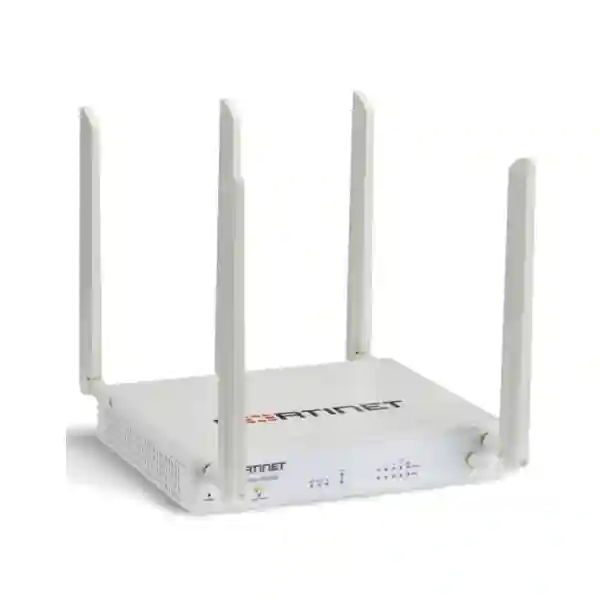
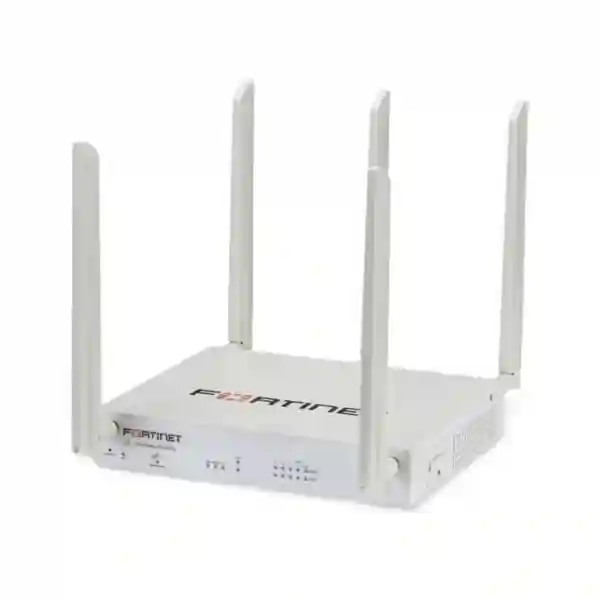
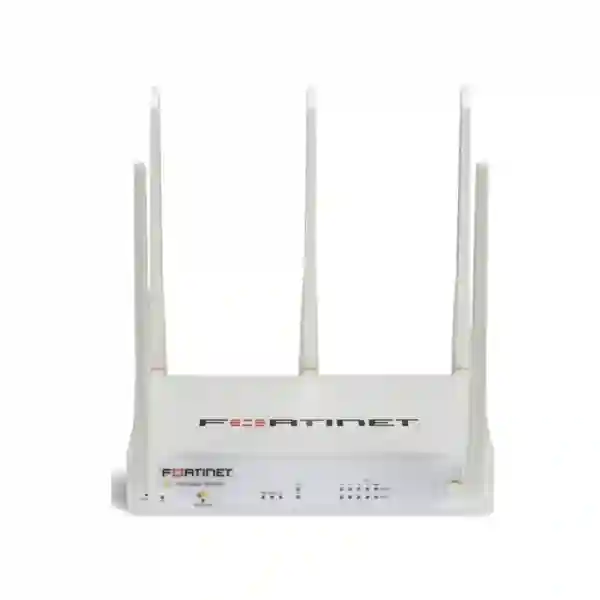
The FortiWiFi 50G 5G is designed for branch, retail, professional-office and distributed-site environments that need security and connectivity in a compact platform. Fortinet documents the FortiGate/FortiWiFi 50G-5G family with a built-in 5G-capable modem that can provide an additional Internet connection or redundant WAN path. That makes the platform especially relevant where business continuity depends on having an alternative to a single fixed-line circuit.
For Tanzanian buyers, the important question is not simply whether a firewall has 5G. The practical design must consider carrier coverage at the actual site, SIM provisioning, antenna placement, fixed-line bandwidth, security subscriptions, VPN requirements, LAN segmentation, Wi-Fi requirements, power protection and how failover should behave. FourTeck can help turn those inputs into a procurement and deployment plan.
Integrated cellular resilience
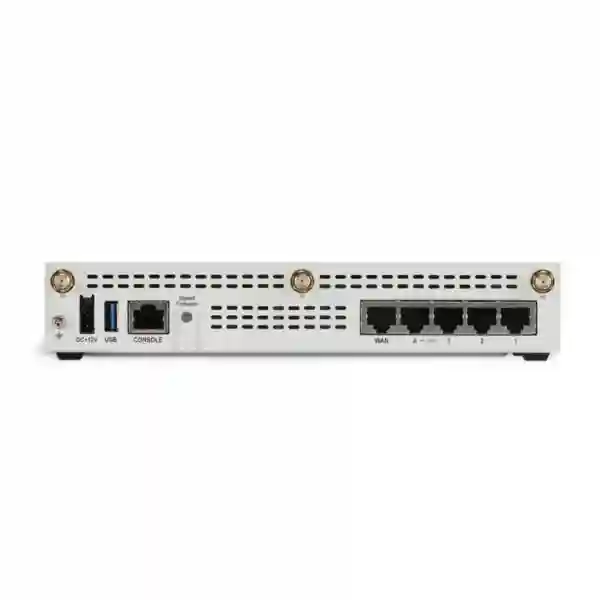
Fortinet documentation identifies an internal 5G-capable modem for the FG/FWF 50G-5G family, intended for Internet access or redundant WAN use. This can reduce dependence on a separate external cellular gateway when the deployment requirements align with the platform.
Dual SIM flexibility
The published modem feature matrix lists dual SIM capability and SIM auto-switching for the 50G-5G family. Organizations can plan cellular continuity around supported carriers and site conditions, while validating local service compatibility before rollout.
Managed branch security
As a FortiGate/FortiWiFi platform, the appliance fits into Fortinet security and network-management workflows. Buyers should size security inspection, VPN usage, subscriptions and future bandwidth as part of the same decision rather than treating cellular connectivity as an isolated feature.
Verified 5G modem capabilities
Fortinet’s current documentation for the family lists 5G, 4G LTE and 3G operation, 3G/4G/5G handover, manual and scheduled modem firmware upgrade functions, carrier-configuration switching, GPS, dual SIM cards and SIM card auto-switching. The documentation also identifies one internal modem in the FG/FWF-50G-5G variant. These are modem-related capabilities; actual carrier service, radio performance and available bands should be checked against the selected operator and deployment location before purchase.
Fortinet also notes that when the built-in modem is used to provide Internet connectivity to endpoints through LAN ports, the device must operate in NAT mode rather than transparent mode. This detail matters for migrations: an organization replacing a transparent firewall or bridge design should review the intended topology before assuming that cellular Internet access can be added without architectural changes.
Buying and deployment guidance
A useful quotation request should include the number of users, current Internet speed, expected future bandwidth, whether the cellular link is primary or backup, preferred mobile operators, VPN requirements, remote branches, Wi-Fi expectations, security services, and any existing Fortinet environment. For failover projects, also describe which applications must remain available during a fixed-line outage and whether inbound services depend on static addressing. Cellular networks can use addressing and NAT models that differ from fixed business circuits, so application reachability should be tested rather than assumed.
Licensing is another procurement item. The hardware decision should be coordinated with the security services and support level required by the organization. Renewal planning matters because security subscriptions, firmware support and operational ownership affect the useful life of a firewall deployment. FourTeck can discuss the intended use and prepare a bill of materials without presenting an unverified stock, price, warranty or delivery promise on this page.
FortiWiFi 50G 5G (FWF-50G-5G) Tanzania
Organizations evaluating the FortiWiFi 50G 5G in Tanzania commonly have two linked objectives: protect the branch network and reduce the operational risk created by a single Internet path. A fixed business circuit may remain the preferred primary connection, while the integrated cellular modem can be planned as an additional route when carrier coverage and the chosen service plan are suitable. The design should begin with a site survey of connectivity rather than with a generic assumption about 5G availability. Signal strength, indoor construction, antenna positioning, operator coverage, congestion and the commercial terms of the SIM plan can all influence the result.
For a head office or important branch, administrators should document which VLANs and services are allowed to use cellular failover. Business-critical cloud applications, email, voice, remote administration and payment systems may need priority, while large backups or software downloads may be restricted during failover to control bandwidth. SD-WAN and policy design can be used to express these business priorities, but the exact configuration should be tested with the live circuits. A resilient design also includes UPS protection for the firewall, switches and access points; a 5G backup path cannot help if the local network loses power at the same time.
Procurement teams should confirm the exact FWF-50G-5G model, required subscriptions, power accessories, antenna components where applicable, SIM requirements and any related switching or wireless infrastructure. Existing Fortinet customers should also review management, logging and configuration standards so the new unit fits established operational processes. Explore FourTeck Tanzania’s integrated IT and security solutions for the broader network context, or use the verified contact page to provide the model, quantity and project requirements.
FortiWiFi 50G 5G (FWF-50G-5G) Dar es Salaam
In Dar es Salaam, the FWF-50G-5G can be evaluated for corporate branches, professional offices, retail locations, hospitality sites and distributed operations that need a security gateway with an integrated cellular option. Dense commercial areas can offer multiple connectivity choices, but resilience still depends on diversity. A second link that follows the same physical route or depends on the same last-mile infrastructure may not provide the independence a business expects. Cellular backup can create a different access path, provided the selected mobile service performs reliably at the exact premises.
A Dar es Salaam deployment should therefore test the modem in the intended equipment location and under realistic load. Server rooms and network cabinets may be deep inside buildings where radio conditions differ from reception areas or windows. Antenna placement, building materials and nearby structures can affect performance. Network administrators should define how quickly failover occurs, what traffic is permitted on the cellular interface, and how users are informed when the branch is operating on backup connectivity. Logging and alerting are valuable because an unnoticed failover can continue consuming cellular data long after the primary circuit is restored or repaired.
For businesses connecting Dar es Salaam to other Tanzanian or international sites, VPN architecture should be reviewed together with cellular behavior. Site-to-site tunnels, remote-access services and cloud connections may respond differently when the public IP changes. Testing should cover both failover and recovery, not just initial connectivity. When requesting a quotation, provide the primary ISP speed, number of users, important applications, VPN destinations, preferred carrier SIMs and whether Wi-Fi from the FortiWiFi platform will be part of the branch design. This information helps distinguish a straightforward appliance purchase from a project that also requires configuration, switching, wireless planning or migration assistance.
FortiWiFi 50G 5G (FWF-50G-5G) Mwanza
For Mwanza organizations, the FortiWiFi 50G 5G can be considered where branch connectivity must remain available even when a primary terrestrial service is interrupted. Typical decision factors include the number of users, dependence on cloud applications, VPN traffic, voice services, remote support and whether the location operates independently when headquarters connectivity is unavailable. The integrated modem is useful only when cellular service at the actual site is adequate, so carrier validation should be part of commissioning.
A practical Mwanza branch policy may reserve the 5G connection for essential business systems during an outage. Administrators can classify traffic so operational applications receive priority while high-volume nonessential transfers are delayed. This is particularly useful where the backup data plan has limits or where cellular capacity varies throughout the day. Security policy should remain consistent during failover: moving to cellular should not bypass inspection, segmentation or access controls. The firewall configuration should also include clear monitoring so support teams can identify whether a problem is caused by the primary ISP, the cellular carrier, local LAN conditions or the security appliance itself.
Before ordering, businesses should inventory existing switches, access points, VLANs and WAN equipment. If the branch already uses a separate router or modem, decide whether it remains in the design or is replaced by the integrated cellular function. Document any static routes, NAT rules, published services and VPN peers that could be affected. Power resilience is equally important; a suitable UPS strategy should keep the firewall and critical network path operating during short interruptions. A quotation request should include the exact FWF-50G-5G model, quantity, intended primary and backup links, required Fortinet subscriptions, user count and installation expectations.
FortiWiFi 50G 5G (FWF-50G-5G) Arusha
Arusha businesses in tourism, professional services, education, logistics and distributed operations may value a branch platform that combines security with an additional cellular WAN option. The FWF-50G-5G can support that architecture, but successful deployment depends on understanding the applications that must survive a fixed-line interruption. Reservation systems, cloud productivity, payment services, VPN access, voice and remote management may have different latency and bandwidth needs. Prioritizing them before an outage creates a more predictable failover experience.
The built-in modem’s dual SIM capability also introduces a useful planning question: whether one or more compatible operators should be provisioned to improve cellular flexibility. This should not be interpreted as a guarantee of coverage or seamless service from every carrier. SIM plans, radio support, account activation and site signal must be verified. Administrators should test the selected configuration at the actual property and record normal signal and throughput baselines. That makes future troubleshooting more objective and helps determine whether a performance change comes from the network, the carrier or environmental conditions.
For multi-building or hospitality environments, the firewall should be integrated with sensible LAN segmentation. Guest access, staff devices, operational systems, cameras, voice and management traffic should not automatically share the same trust level. The FortiWiFi device can be part of that policy architecture while related switching and wireless components provide the access layer. FourTeck’s Tanzania services information is available through IT, networking and security services. When asking for a proposal, include floor or network diagrams where available, ISP details, preferred mobile operators and any existing Fortinet configuration that should be migrated.
FortiWiFi 50G 5G (FWF-50G-5G) Dodoma
In Dodoma, offices and branch operations considering the FWF-50G-5G should start with continuity requirements. If Internet access supports cloud systems, collaboration, remote administration or secure links to other sites, the cost of downtime may justify a second path. An integrated cellular modem can simplify the physical design compared with a separate external gateway, while still requiring careful carrier and SIM planning. The backup path should be treated as part of the network architecture, not as an emergency accessory that is never tested.
Regular failover tests are useful because they expose hidden dependencies. DNS behavior, VPN peer addressing, cloud allowlists, inbound services and application sessions may react differently when traffic leaves through the cellular interface. Administrators should define expected recovery behavior when the fixed circuit returns, including whether sessions should move immediately or remain on the backup path until a maintenance window. Monitoring should record link state and usage so support teams can identify recurring primary-circuit problems and cellular consumption.
Security subscriptions and firmware management should also be included in lifecycle planning. Fortinet documents manual and scheduled modem firmware upgrade capabilities for this family, while normal firewall maintenance has its own operational considerations. Organizations should maintain configuration backups, change records and a tested rollback process. For procurement, specify the exact model, desired support and security services, quantity, deployment address, primary ISP, cellular operator preference, user count, VPN requirements and any installation assistance. FourTeck Tanzania’s verified contact and quotation page provides a place to submit these project details.
FortiWiFi 50G 5G (FWF-50G-5G) UAE
Organizations with operations spanning Tanzania and the UAE can use a common Fortinet architecture to simplify policy standards, VPN design and branch administration. The FWF-50G-5G is relevant where a UAE branch needs an integrated cellular option alongside fixed connectivity, but carrier compatibility and subscription details must be validated for the selected service. Regional standardization is most useful when it defines repeatable security zones, naming, logging, authentication and support procedures rather than forcing every branch to have identical bandwidth or hardware quantities.
A cross-border design should document how site-to-site VPNs behave when either endpoint changes WAN path. Cloud-hosted hubs, dynamic routing, SD-WAN rules or other designs may be appropriate depending on the environment. Businesses should also separate technical capability from telecom commercial terms: the appliance may support cellular features while the SIM contract determines data allowances, roaming rules and public-address options. These details can materially affect disaster-recovery planning and should be confirmed before deployment.
For UAE-focused Fortinet information, the approved FourTeck network includes FourTeck Fortinet UAE. Tanzania buyers with UAE branches can use regional coordination to align equipment lists and configuration standards while still validating each country’s carrier environment. A useful procurement brief includes branch count, WAN speeds, required VPN topology, centralized management expectations, security subscriptions, logging retention, Wi-Fi needs and cellular failover objectives.
FortiWiFi 50G 5G (FWF-50G-5G) Uganda
For Uganda deployments, the FortiWiFi 50G 5G can support branch designs that need a secured primary network and an integrated cellular alternative. Businesses operating between Uganda and Tanzania may benefit from consistent Fortinet policies across sites, especially when staff, applications and support teams span both countries. Consistency can reduce troubleshooting time because interface naming, VLAN structure, VPN policy, authentication and monitoring follow documented patterns.
Cellular performance should nevertheless be validated locally. A dual SIM feature provides operational options, but it does not remove the need to test coverage, service activation and data-plan behavior. Administrators should define whether the second SIM is intended for another operator, another account or another resilience purpose, then confirm that the configuration meets the business requirement. Backup traffic should be prioritized so essential services remain usable without allowing large background transfers to consume capacity unexpectedly.
Organizations planning a Tanzania-Uganda VPN should test tunnel establishment from every expected WAN path. Public addressing, carrier NAT and firewall rules can influence the result. If inbound services are required, the design may need additional consideration beyond simple outbound failover. The approved FourTeck regional network includes FourTeck Uganda IT and network solutions, which can provide regional context. Procurement teams should share the model, quantities, locations, carrier preferences, WAN speeds, VPN topology and subscription requirements when requesting a coordinated quotation.
FortiWiFi 50G 5G (FWF-50G-5G) Kampala
Kampala offices evaluating the FWF-50G-5G may be looking for a compact branch security appliance that can continue providing Internet access when a primary circuit has problems. The built-in cellular capability can support that objective, but the failover design should be based on application importance. Cloud ERP, email, voice, secure remote access and payment systems may deserve priority over streaming, guest traffic or large operating-system updates during a backup event.
The network team should test cellular signal where the appliance will actually be installed. Equipment rooms may have reinforced walls, metal racks or interior positions that reduce radio performance. Antenna and placement considerations should be addressed before finalizing the rack layout. Administrators should also test recovery after the primary circuit returns, because stable restoration is as important as initial failover. Repeated flapping between links can disrupt sessions and make troubleshooting difficult.
A Kampala branch connected to a Tanzanian head office should use documented VPN and routing policies. If centralized services are reached through tunnels, both sides should know how the branch is identified when it moves to cellular. Logging should make the active path visible to support staff. When requesting the product, include expected throughput, user and device counts, security inspection requirements, Wi-Fi expectations, preferred SIM operators and support needs. This creates a clearer basis for model and subscription validation than requesting a firewall solely by price.
FortiWiFi 50G 5G (FWF-50G-5G) Arua
Arua deployments can have a strong reason to examine connectivity diversity where business applications depend on continuous access to headquarters or cloud platforms. The FortiWiFi 50G 5G offers an integrated cellular path within the Fortinet branch platform, allowing the network design to consider fixed and mobile connectivity together. The actual value depends on carrier performance at the site, so signal and service testing should be completed before relying on the modem for continuity.
For a smaller branch, simplicity is often a major goal. Combining security, network policy and cellular capability can reduce the number of separate appliances, power adapters and management interfaces. That does not eliminate planning: the branch still needs suitable switching, Wi-Fi coverage, UPS capacity and documented configuration. Administrators should decide which users and applications may use the cellular path and whether guest traffic is blocked during failover. A clear policy protects limited backup capacity for essential work.
Remote support is another consideration. The branch should generate logs and alerts that help technicians distinguish a local LAN fault from an ISP or cellular issue. Configuration backups and standardized naming reduce the need for guesswork. For procurement, include the intended fixed circuit, expected cellular operator, user count, VPN destination, critical applications and any remote-management requirements. These details help determine whether the request is a hardware-only purchase or a broader branch-network project.
FortiWiFi 50G 5G (FWF-50G-5G) Mbarara
In Mbarara, organizations can evaluate the FWF-50G-5G for branch security where fixed connectivity is important but a cellular backup path would improve continuity. The integrated modem can be incorporated into a planned WAN strategy rather than depending on an ad-hoc hotspot during an outage. A professional design identifies critical traffic in advance, tests the mobile service at the site and documents how the firewall changes routes when the primary link fails.
Dual SIM support can add flexibility for supported services, but buyers should confirm local operator compatibility and provisioning. It is also useful to understand whether the backup link needs only outbound Internet access or must maintain site-to-site VPN and inbound connectivity. Carrier NAT or address changes may affect some applications. Testing should include real business workflows, not just a successful ping or speed test.
Branch resilience also depends on power. If the firewall remains online but the switch, access points or ISP termination equipment lose power, users may still be disconnected. UPS sizing should cover the critical network chain for the desired runtime. Procurement teams should therefore consider the FWF-50G-5G as one part of a branch solution that may include switching, wireless, cabling, power protection, subscriptions and configuration. A detailed quotation request reduces the risk of missing these dependencies.
FortiWiFi 50G 5G (FWF-50G-5G) Gulu
Gulu businesses that rely on centralized applications or cloud services can use the FWF-50G-5G as part of a resilient branch architecture. The integrated cellular modem gives network planners another WAN option, while the Fortinet platform keeps security policy at the branch gateway. The first deployment step should be to validate the intended carrier service and determine whether cellular will be a standby path, an active secondary link or the primary connection for a particular site.
The answer affects data-plan selection, traffic policy and monitoring. A standby link may carry little traffic during normal operation but must be tested regularly. An active secondary link may participate in application steering and therefore needs more continuous performance monitoring. Administrators should record cellular signal, latency and normal throughput ranges so they can recognize changes later. They should also maintain modem and firewall firmware according to a controlled maintenance process.
For multi-site organizations, standard templates can define VLANs, VPNs, administrator access and logging while allowing local WAN differences. This makes it easier to deploy new branches and support them remotely. A Gulu quotation request should include exact model, quantity, desired Fortinet services, fixed-line bandwidth, mobile operator preference, VPN requirements, number of users, critical applications and whether installation or configuration assistance is required. These details support an accurate technical discussion without making assumptions about local stock or delivery.
FortiWiFi 50G 5G (FWF-50G-5G) Kenya
Kenyan organizations with Tanzanian branches can evaluate the FWF-50G-5G as part of a common East African security and connectivity standard. A standardized firewall family can simplify configuration templates, VPN design, logging and support procedures. Cellular connectivity remains local by nature, however, so each site should validate carrier compatibility, SIM terms and signal conditions independently. A configuration that works well in one city should not be assumed to deliver identical radio performance elsewhere.
Cross-border branch design should prioritize secure connectivity between offices and shared cloud resources. Network teams can define which applications use the primary circuit, which may use cellular backup and how VPNs re-establish after a path change. If the business uses IP allowlists, hosted services or inbound connections, public-address behavior must be considered. The goal is controlled continuity rather than simply proving that the branch can reach the Internet through 5G.
FourTeck’s approved regional network includes FourTeck Kenya IT and network security solutions. Businesses procuring across Kenya and Tanzania can provide a consolidated site list with user counts, bandwidth, VPN relationships, subscription requirements and installation scope. That information helps create a repeatable architecture while preserving local differences in connectivity and building conditions.
FortiWiFi 50G 5G (FWF-50G-5G) Kuwait
For Kuwait branches linked to Tanzania or other regional operations, the FWF-50G-5G can be assessed as a secure branch gateway with an integrated cellular alternative. The same procurement principles apply: confirm the exact hardware variant, carrier compatibility, SIM plan, security subscriptions and expected WAN load before deployment. Cellular should be tested in the installed location, especially when the appliance is placed inside a rack or communications room where radio conditions may differ from open office areas.
A regional IT team may use common Fortinet policy standards while adapting WAN configuration to each country. Standardization can cover segmentation, VPN naming, administrator roles, logging and backup procedures. This reduces operational variation without assuming identical telecom environments. During failover, policies can protect critical cloud and business applications from competing with bulk transfers or guest traffic.
Kuwait procurement should also account for lifecycle ownership. Someone must monitor link health, renew subscriptions, review policies, maintain configuration backups and schedule firmware changes. The integrated modem has its own firmware-management considerations documented by Fortinet. A complete quotation brief should state whether the cellular link is primary or secondary, required VPN connectivity, branch user count, fixed WAN speed, security services and any centralized management requirements.
FortiWiFi 50G 5G (FWF-50G-5G) Ghana
Ghana branches can consider the FWF-50G-5G when business continuity benefits from a cellular WAN option integrated into the security gateway. This is particularly relevant for distributed organizations that want a consistent security platform while accommodating different local Internet services. The deployment should verify mobile coverage and SIM compatibility at the exact site and should define what the branch must still be able to do if its main circuit fails.
A good continuity policy identifies essential applications, VPN destinations and administrative services. It may restrict nonessential high-volume traffic while the branch uses cellular. Network segmentation should remain intact during failover, and administrators should receive alerts when the active WAN changes. Regular tests can confirm that DNS, authentication, cloud applications and tunnels recover as expected.
For organizations coordinating Ghana and Tanzania, configuration templates can reduce support complexity. The template should still allow local carrier settings, addressing and bandwidth to vary. Procurement teams should supply the exact branch list, user counts, Internet speeds, mobile operator preferences, Fortinet subscription requirements and support expectations. This approach turns a hardware request into a documented operating design and avoids unsupported assumptions about service availability.
FortiWiFi 50G 5G (FWF-50G-5G) Nigeria
Nigeria deployments often make connectivity resilience a central design topic for distributed businesses. The FWF-50G-5G gives Fortinet users an integrated cellular option that can complement a fixed WAN service, subject to local carrier compatibility and site conditions. Network teams should decide whether 5G is intended as emergency backup, a regular secondary path or a primary connection for a compact location, because that choice affects SIM plans, traffic engineering and monitoring.
When the cellular link is backup, application priority becomes important. Critical SaaS, payment, voice and VPN traffic may need to continue while large downloads, backups or guest use are limited. If the branch connects to Tanzania or another regional hub, VPN behavior should be tested from both WAN paths. Address changes and carrier NAT can affect inbound or peer-to-peer designs, so testing must reflect the real topology.
Operational discipline matters as much as hardware. Teams should maintain configuration backups, link alerts, firmware procedures and subscription renewal records. A procurement request should identify the exact FWF-50G-5G model, number of sites, quantities, fixed WAN speeds, expected mobile operators, user counts, security inspection requirements and centralized management needs. This provides a sound basis for technical validation and quotation.
FortiWiFi 50G 5G (FWF-50G-5G) Seychelles
Seychelles organizations and hospitality or branch environments can assess the FWF-50G-5G where secure connectivity and WAN resilience need to fit into a compact deployment. The integrated cellular modem may provide a useful alternate Internet path, but the actual design must be based on carrier coverage, supported service, building construction and the applications the site depends on. A backup link should be tested before it is treated as part of a continuity plan.
For hospitality and guest-facing environments, segmentation is especially important. Guest Internet, staff systems, payment devices, cameras and management interfaces should be separated according to security requirements. During cellular failover, organizations may choose to preserve operational traffic while limiting guest or bandwidth-heavy services. This prevents the backup connection from becoming congested when it is most needed.
Regional businesses connecting Seychelles with Tanzania can use consistent VPN and security standards while adapting WAN settings to local telecom conditions. Procurement should include model, quantity, subscriptions, user and device counts, primary Internet service, mobile carrier preference, VPN topology and installation requirements. The objective is a supportable branch design with clear ownership, not simply an appliance installed without tested failover procedures.
Related planning resources
The FortiWiFi 50G 5G should be evaluated alongside the rest of the branch network. FourTeck Tanzania describes firewall, VPN, switching, Wi-Fi, structured cabling and integrated IT requirements on its main site and services pages. Regional projects can also reference FourTeck’s approved Kenya, Uganda and Fortinet UAE sites. These links are provided as contextual resources rather than as claims that every product, license or service is stocked in every location.
FortiWiFi 50G 5G FAQs
Does the FWF-50G-5G include a built-in 5G modem?
Yes. Fortinet documentation identifies the FortiGate/FortiWiFi 50G-5G family as having a built-in 5G-capable modem that can provide Internet connectivity or a redundant WAN link.
Does it support dual SIM cards?
Fortinet’s published feature matrix lists dual SIM cards and SIM auto-switching for the FG/FWF-50G-5G family. Carrier service and compatibility should be validated for the deployment country and operator.
Can 5G be used as WAN backup?
Fortinet explicitly describes the internal modem as usable for an additional Internet connection or redundant WAN link. The failover policy, routing, VPN behavior and application priorities should be configured and tested for the specific network.
What information is useful for a quotation?
Provide the exact model, quantity, location, number of users, Internet bandwidth, intended mobile operator, whether 5G is primary or backup, VPN requirements, security subscriptions, Wi-Fi needs and any installation or configuration scope.
Does cellular failover guarantee application continuity?
No. A second WAN path improves connectivity options, but applications can depend on public IP addresses, VPN peers, DNS, allowlists, session persistence and carrier NAT. Continuity should be verified through planned failover tests.
Quotation checklist
Before contacting sales, collect the exact FWF-50G-5G quantity, deployment cities, primary ISP details, expected bandwidth, preferred mobile operators, user and device counts, VPN destinations, critical applications, required security services, Wi-Fi expectations, current firewall model, switch environment, rack and UPS details, and target deployment schedule. If this is a replacement project, include configuration or topology information so migration dependencies can be identified.
Decision recap
Choose the FortiWiFi 50G 5G because its verified feature set matches the architecture you need—not simply because 5G appears in the model name. Its integrated cellular capability, dual SIM features and Fortinet branch-security role can be valuable for resilient sites. The final design should still validate carrier compatibility, subscriptions, traffic policy, VPN behavior, power resilience and operational ownership.
Discuss the FWF-50G-5G with FourTeck Tanzania
Send your site and network requirements through the verified FourTeck Tanzania contact page. The clearer the project information, the easier it is to discuss product fit, licensing, related infrastructure and a meaningful quotation without relying on assumptions about your environment.


Reviews
There are no reviews yet.