
FortiWiFi 60F (FWF-60F) Tanzania
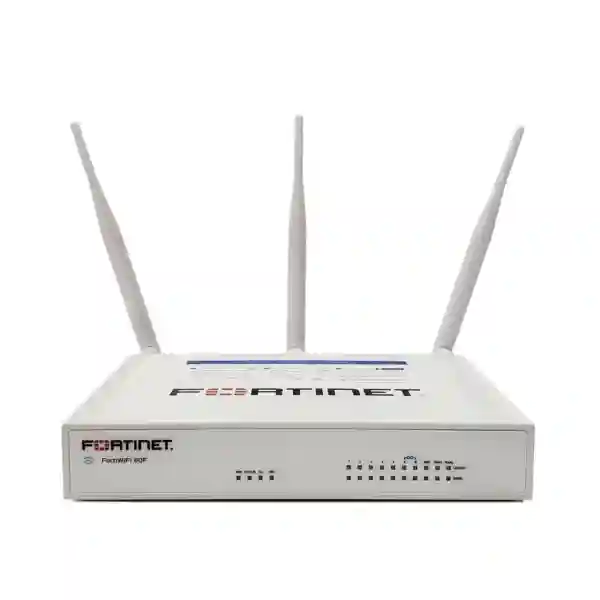
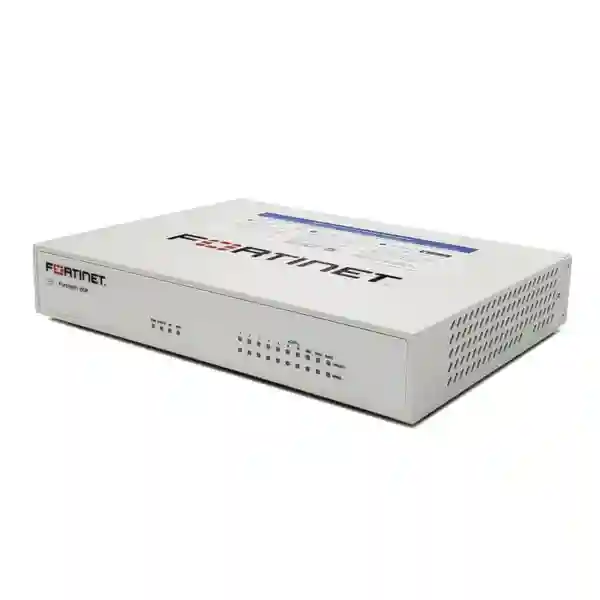
FortiWiFi 60F is the wireless member of Fortinet’s 60F family, combining next-generation firewall functions, secure SD-WAN, VPN and integrated Wi-Fi in a compact desktop appliance. It is designed for distributed offices and mid-sized business environments that want networking and security controlled through FortiOS rather than separate edge devices.
Firewall throughput: 10/10/6 Gbps for 1518/512/64-byte UDP packets. IPS: 1.4 Gbps. NGFW: 1 Gbps. Threat protection: 700 Mbps. IPsec VPN: 6.5 Gbps. These are vendor test ratings and should be interpreted alongside enabled services, traffic mix and deployment design.
What is the FortiWiFi 60F?
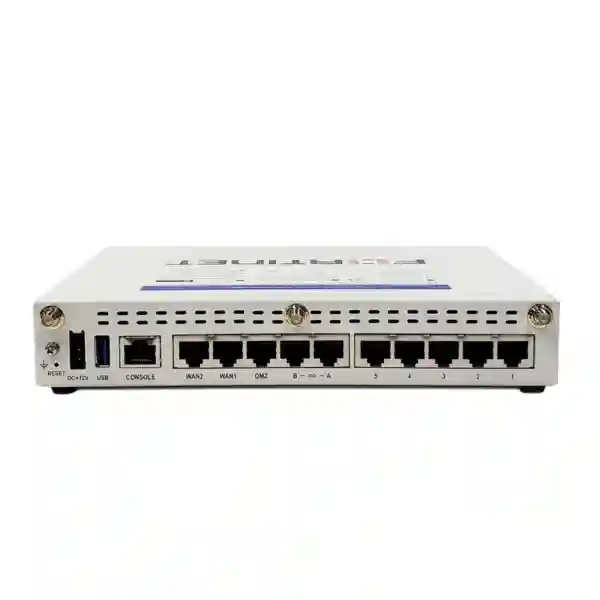
The FortiWiFi 60F, model FWF-60F, is a Fortinet security appliance that adds an integrated single-radio wireless interface to the capabilities of the FortiGate 60F family. The wireless interface supports 2.4 GHz or 5 GHz operation with 802.11 a/b/g/n/ac-W2. For organizations evaluating a compact security gateway, this means one platform can provide firewall policy enforcement, routing, SD-WAN, VPN and local wireless connectivity. The appliance provides two GE RJ45 WAN ports, one GE RJ45 DMZ port, five GE RJ45 internal ports, two GE RJ45 FortiLink ports by default, one USB port and one RJ45 console port. The FWF-60F does not include the 128 GB internal SSD found in the FWF-61F variant.
Selection should not be based on headline firewall throughput alone. A practical design considers inspected internet traffic, encrypted traffic, VPN load, user and device counts, application mix, wireless coverage, logging requirements and expected growth. FortiGuard security services and FortiCare support are subscription or service considerations that should be matched to the required protection and lifecycle. Buyers can review broader FourTeck Tanzania business technology categories, where firewall selection is discussed alongside switching, wireless access points and infrastructure, or use the Tanzania technology services overview to plan integration.
Integrated wireless
Single-radio 2.4/5 GHz 802.11 a/b/g/n/ac-W2 wireless can serve appropriate local Wi-Fi requirements while security policy remains integrated with the edge platform.
Secure SD-WAN
The 60F family combines networking and security through FortiOS, supporting organizations that need resilient WAN design and policy-based traffic handling.
VPN connectivity
The platform supports IPsec and remote-access use cases, making it relevant to branch interconnection and controlled access for authorized remote users.
Fortinet ecosystem
FortiLink and Security Fabric integration can help organizations coordinate the firewall with compatible Fortinet switching, wireless, management and security services.
FortiWiFi 60F verified technical specifications
| WAN / DMZ | 2 × GE RJ45 WAN / 1 × GE RJ45 DMZ |
| Internal / FortiLink | 5 × GE RJ45 internal / 2 × GE RJ45 FortiLink default |
| Wireless | Single radio, 2.4 GHz / 5 GHz, 802.11 a/b/g/n/ac-W2 |
| Firewall throughput | 10 / 10 / 6 Gbps (1518 / 512 / 64 byte UDP) |
| IPS / NGFW / Threat protection | 1.4 Gbps / 1 Gbps / 700 Mbps |
| IPsec VPN throughput | 6.5 Gbps (512 byte) |
| Storage | No internal SSD on FWF-60F; FWF-61F is the storage variant |
Deployment and buying guidance
A useful FortiWiFi 60F quotation begins with the environment rather than the appliance name. Document internet circuits and speeds, number of users and endpoints, guest and staff wireless requirements, VPN users, branch tunnels, security inspection needs, public-facing services, VLANs, logging expectations and anticipated growth. If the site needs broad or high-density wireless coverage, the integrated radio should not automatically be treated as a substitute for a planned multi-access-point WLAN. Building layout, wall materials, floor area, client density and roaming requirements can make dedicated access points more appropriate.
The same discipline applies to security subscriptions. Define which security services the organization needs and for how long, then confirm the appropriate FortiGuard and FortiCare option at quotation stage. Organizations with multiple sites should also decide how configuration, logs and policy consistency will be managed. For wider infrastructure planning, FourTeck Tanzania explains why networking, Wi-Fi and firewall requirements should be designed together and provides a solution-led technology planning approach. The Tanzania enquiry page can be used to submit user counts, bandwidth, site details and quotation requirements.
FortiWiFi 60F (FWF-60F) Tanzania
Businesses researching FortiWiFi 60F Tanzania are often trying to simplify a branch or office edge where internet security, VPN, WAN resilience and wireless access need to be coordinated. The FWF-60F can be relevant to this requirement because it combines FortiOS security and networking functions with integrated wireless connectivity. A Tanzania deployment should begin by mapping the actual internet service, users, cloud applications, local servers, voice systems, cameras, guest devices and remote-access needs. This produces a clearer basis for firewall policy, segmentation and capacity planning than selecting a model solely from its maximum firewall figure.
For Tanzanian organizations, power continuity and internet resilience can also be important project inputs. Where two internet links are available, secure SD-WAN capabilities can be considered as part of a design for application-aware path selection and continuity, subject to correct configuration and circuit characteristics. Where remote branches need encrypted connectivity, IPsec VPN can connect sites under defined policies. Where staff work remotely, the access method should be selected around identity, endpoint security and application requirements rather than opening broad network access. Integrated Wi-Fi can be useful for an appropriate local coverage requirement, but larger premises should be surveyed for dedicated access points, channel planning and roaming.
Procurement teams should request a quotation that separates hardware, required subscriptions, support term, implementation scope and any related switching, access-point or power requirements. It is also sensible to document whether existing VLANs, DHCP, DNS, public IP addressing, ISP equipment and authentication services will remain in place. FourTeck Tanzania’s shop guidance explains how firewall capability changes when inspection and VPN services are enabled, while the services catalogue places security alongside connectivity and lifecycle planning. This makes the FWF-60F conversation a network-design decision, not merely a box purchase.
FortiWiFi 60F (FWF-60F) Dar es Salaam
Dar es Salaam organizations evaluating the FWF-60F may include professional offices, retail operations, logistics teams, clinics, schools and distributed businesses that depend heavily on cloud applications and internet connectivity. In these environments the firewall sits between daily operations and external networks, so the design should identify which traffic is business-critical, which devices should be isolated and how guest access is separated from internal systems. The appliance’s multiple GE interfaces provide flexibility for WAN, DMZ, internal and FortiLink roles, while FortiOS provides a common policy framework for networking and security.
A Dar es Salaam deployment with two internet services can assess SD-WAN policies, health checks and failover objectives. The technical team should record whether links are fiber, fixed wireless or another service, whether public IP addresses are required, and which applications are sensitive to path changes. If the business hosts services in a DMZ, those services should have tightly scoped access policies. If the office uses IP phones, cameras or building systems, VLAN segmentation can reduce unnecessary trust between device groups. Wireless design should distinguish staff, guest and operational devices and should consider whether the integrated radio provides adequate coverage for the premises.
Before requesting pricing, Dar es Salaam buyers can prepare the current internet speeds, peak utilization, number of users, remote users, VPN sites, desired security services, wireless coverage area and existing switch topology. This helps avoid a quotation that is accurate only for hardware but incomplete for deployment. The verified FourTeck Tanzania contact page lists Dar es Salaam contact information and accepts firewall and wireless enquiries. A good proposal should make clear what is included in configuration, testing, documentation, subscriptions and post-deployment support, while avoiding assumptions about stock or delivery until confirmed for the specific order.
FortiWiFi 60F (FWF-60F) Mwanza
For Mwanza businesses, the FortiWiFi 60F can be assessed as a compact secure edge for offices, branches and operational sites that need controlled internet access and encrypted connectivity to other locations. A branch project may prioritize dependable access to ERP, finance, cloud productivity, voice or line-of-business applications. Those priorities should shape SD-WAN rules, VPN design and traffic inspection. The 60F family performance ratings provide a useful reference, but sizing should reflect the security services actually enabled and the traffic profile expected during busy periods.
Mwanza sites that connect to headquarters or another branch should document subnets, overlapping address ranges, routing, DNS dependencies and which systems genuinely require cross-site access. Site-to-site VPN policies can then be limited to necessary traffic. For a branch with local Wi-Fi, administrators should decide whether one integrated radio can meet the physical coverage and capacity requirement. A small office with a compact layout differs significantly from a warehouse, multi-floor building or customer-facing venue where dedicated access points and a structured RF plan may be preferable.
Procurement should also consider operational ownership. Someone needs responsibility for firmware planning, configuration backup, administrator access, logs, security alerts and subscription renewal. If centralized management or reporting is required across several appliances, that requirement should be identified before purchase. A quotation request for Mwanza is more actionable when it includes the number of sites, users, internet links, required VPN tunnels, wireless expectations and support term. FourTeck Tanzania can use these inputs to discuss compatibility and product selection without assuming that a single model is automatically right for every site.
FortiWiFi 60F (FWF-60F) Arusha
Arusha buyers may be planning security for hospitality offices, tour operations, NGOs, professional services, education or multi-site businesses where guest connectivity and staff systems coexist. The FWF-60F can help consolidate firewalling, VPN, SD-WAN and local wireless functions, but the security design should maintain clear separation between trusted corporate traffic and guest or unmanaged devices. Network segments can be aligned to business roles such as staff, voice, cameras, servers, guest Wi-Fi and management, with policies allowing only the communications each segment requires.
Wireless expectations deserve particular attention in Arusha environments that serve visitors or mobile staff. Integrated Wi-Fi is convenient, yet coverage is a physical design issue. Room layout, construction materials, outdoor areas, user density and interference influence the number and placement of radios. If one appliance cannot provide appropriate coverage, dedicated access points can be incorporated while the FortiWiFi remains the security gateway. This prevents a firewall purchasing decision from creating a weak WLAN design simply because wireless is built into the appliance.
For organizations connecting Arusha to Dar es Salaam or other offices, document application flows before creating VPN rules. Finance, file services, identity, voice and management traffic may have different latency and access requirements. If multiple WAN links are used, failover objectives should distinguish complete link failure from degraded quality. Procurement should request the appliance, selected FortiGuard services, FortiCare term and any deployment scope as explicit line items. The FourTeck Tanzania contact page lists an Arusha office contact and is the appropriate path for a current quotation, availability confirmation and project-specific discussion.
FortiWiFi 60F (FWF-60F) Dodoma
Organizations in Dodoma evaluating the FortiWiFi 60F may need a secure gateway for administrative offices, institutions, project sites or branches that exchange information with other locations. The first design task is to define trust boundaries: which users access internal applications, which devices are managed, which systems are exposed externally and which traffic should be isolated. FortiOS can apply policies across these flows, while VPN capabilities can protect traffic between authorized endpoints and sites.
A Dodoma project should also consider continuity. If the site has more than one internet connection, the business should decide which applications need preferred paths, what constitutes an unhealthy circuit and what should happen during failover. Secure SD-WAN is useful when policies are designed around measurable application and link requirements. For a single-link office, the same appliance can still provide security, segmentation and VPN, while a future secondary link can be part of the growth plan. The hardware interfaces should be mapped before installation so WAN, DMZ, internal and FortiLink roles are clear.
The FWF-60F’s integrated wireless can suit a defined local Wi-Fi need, but organizations should measure coverage expectations rather than assuming one radio covers an entire facility. Procurement should capture user counts, internet speeds, VPN sites, remote workers, security-service requirements, Wi-Fi area, logging needs and support term. The verified FourTeck Tanzania contact page lists Dodoma contact information, and buyers can use it to request a current proposal. Any statement about stock, lead time, warranty entitlement or licensing should be confirmed in the actual quotation rather than inferred from the model page.
FortiWiFi 60F (FWF-60F) UAE
UAE businesses considering the FWF-60F may be planning a branch, retail site, professional office or distributed environment where firewall policy, VPN and wireless need to be administered together. The platform’s compact form factor and FortiOS integration make it relevant to branch-edge designs, but model selection should account for inspected traffic, encrypted applications, WAN capacity and the number of security functions enabled. Organizations with high-speed internet should compare expected threat-protection and NGFW traffic against the vendor’s enterprise traffic ratings rather than relying only on the maximum stateful firewall number.
For multi-branch UAE environments, secure SD-WAN can be assessed alongside IPsec VPN to create controlled connectivity between sites. Application steering, circuit health and failover policies should reflect business priorities such as voice, ERP, cloud applications and payment systems. If the branch needs local Wi-Fi, the integrated radio may serve an appropriate area; larger or denser sites should use a WLAN design with suitable access points. Segmentation remains important for guest, corporate, IoT, voice and surveillance traffic.
FourTeck’s UAE IT and network-security portal provides a regional path for broader infrastructure discussions. A useful UAE quotation should identify hardware, FortiGuard security services, FortiCare support, configuration, VPN migration, policy migration and any switching or wireless dependencies. Buyers should confirm the exact ordering code and support bundle at quotation stage because FWF-60F hardware and service bundles can be ordered in different commercial combinations.
FortiWiFi 60F (FWF-60F) Uganda
Uganda organizations can evaluate the FortiWiFi 60F for secure branch connectivity where a single edge device is expected to coordinate internet access, VPN and local wireless. The right fit depends on traffic inspection, user count, application behavior and network architecture. Businesses with branches should map which applications remain local and which cross the WAN, then design VPN and SD-WAN policies around those flows. This reduces unnecessary inter-site access and helps prioritize important services.
For office Wi-Fi, the built-in radio is a capability rather than a guarantee of whole-building coverage. Kampala headquarters, regional offices and operational sites may have very different RF conditions. A compact office may be suitable for integrated wireless, whereas a larger building can require dedicated access points and PoE switching. Security policies should distinguish managed users from guests and device networks. If cameras or voice systems share the LAN, segmentation and quality-of-service planning can improve manageability.
FourTeck’s Uganda technology site covers networking and business connectivity for organizations in the country. Buyers should provide site count, internet links, user and device counts, VPN requirements, Wi-Fi expectations and desired subscription term when requesting a quote. This supports a more accurate bill of materials and helps identify whether centralized management, logging or additional wireless infrastructure should be considered.
FortiWiFi 60F (FWF-60F) Kampala
Kampala offices frequently combine cloud applications, local business systems, voice, wireless and remote users, making the security gateway an important design point. The FWF-60F can consolidate several functions, but administrators should create an inventory of networks and applications before migration. Existing VLANs, DHCP scopes, public services, VPN peers and ISP handoffs need to be understood so a firewall replacement does not unintentionally interrupt dependent systems.
Where Kampala businesses use dual internet circuits, SD-WAN policy should be based on application needs and measurable link health. Voice and interactive applications may value latency and jitter, while bulk transfers may prioritize capacity. VPN tunnels to branches should have clearly defined routes and security rules. Wireless can be separated into corporate and guest SSIDs with corresponding network policies, while dedicated access points can be added when the integrated radio is insufficient for the site.
A Kampala procurement request should specify whether the requirement is new deployment or replacement, current firewall model, internet bandwidth, number of users, branch tunnels, remote users and required inspection services. It should also state whether configuration migration, documentation and administrator handover are expected. These details make it easier to compare the FWF-60F with alternatives on actual operational requirements instead of brand familiarity alone.
FortiWiFi 60F (FWF-60F) Arua
Arua organizations may prioritize a straightforward, supportable branch edge that can secure internet access and maintain encrypted links to a central office. The FortiWiFi 60F can be evaluated for that role because firewall, VPN, SD-WAN and wireless capabilities are available in one platform. The branch design should start with essential applications and dependencies, including DNS, identity, ERP, file services, voice and any cloud systems required for daily work.
If connectivity options vary in quality, administrators should define what successful failover means for the branch. Some applications may reconnect easily after a path change while others require stable sessions. Health checks and routing policies should therefore be tested with real workloads. Local Wi-Fi should be designed around room layout and device count, and sensitive internal resources should not share unrestricted access with guest or unmanaged wireless clients.
For procurement, Arua buyers can prepare a simple network diagram, current ISP details, user count, devices, VPN destination, wireless area and support expectations. The quotation should then identify the appliance, service bundle, term and implementation work separately. This approach gives technical and purchasing teams a common basis for evaluating total scope and reduces the risk that essential subscriptions or deployment tasks are discovered after hardware purchase.
FortiWiFi 60F (FWF-60F) Mbarara
For Mbarara businesses and institutions, a secure edge project can involve more than internet filtering. It may need branch VPN, segmented networks, guest Wi-Fi, remote administration and continuity across more than one connection. The FWF-60F brings these functions into the FortiOS environment, allowing policies to be planned around users, applications and network zones. A good design documents those zones before configuration begins.
The built-in wireless radio can be convenient for a compact site, but a business should not size Wi-Fi by firewall model. User density, walls, floors, interference and application demand determine WLAN requirements. Where dedicated access points are needed, switching and PoE capacity become part of the project. Similarly, VPN capacity should be evaluated using the actual number of branch and remote connections plus the traffic they carry, not simply the theoretical tunnel limit.
Mbarara buyers should request a proposal that explains the intended security services and renewal term. FortiGuard services can add threat intelligence and inspection capabilities, while FortiCare addresses support entitlements; the exact bundle should be confirmed against the organization’s needs. Including configuration backup, firmware policy, monitoring responsibility and renewal ownership in the operational plan makes the security investment easier to maintain after installation.
FortiWiFi 60F (FWF-60F) Gulu
Gulu sites considering the FortiWiFi 60F can approach the decision as a branch architecture exercise. The appliance may sit between staff, devices, local applications, wireless users and external services, so its policies should reflect the business’s actual trust model. Separate network zones for staff, guests, cameras, voice and management can limit unnecessary lateral access and make troubleshooting easier.
For inter-site connectivity, identify the systems that must communicate across VPN and keep access rules as specific as practical. If a Gulu branch connects to a Kampala headquarters, for example, not every device necessarily needs access to every central subnet. Secure SD-WAN can also be considered where multiple internet links are present, with application priorities and failover behavior defined before deployment. Testing should include link failure, VPN recovery and critical application access.
Wireless requirements should include coverage, expected concurrent clients and whether guest access is required. A single integrated radio can be appropriate for some compact sites but not all premises. A quotation should therefore avoid assuming that built-in Wi-Fi eliminates the need for access-point planning. Buyers can use FourTeck Uganda’s regional site to frame networking requirements and should request current availability, commercial terms and support options for the exact FWF-60F configuration they intend to deploy.
FortiWiFi 60F (FWF-60F) Kenya
Kenyan organizations evaluating the FWF-60F may need a branch firewall that combines secure internet access, VPN, SD-WAN and wireless for a manageable edge architecture. Offices in Nairobi and other locations can have high dependence on SaaS, cloud platforms and real-time communications, so sizing should focus on inspected traffic and application behavior. The vendor’s NGFW and threat-protection ratings are more useful for security-service planning than maximum firewall throughput alone.
A multi-site Kenya design can use IPsec VPN and SD-WAN policies to connect branches and steer traffic according to link conditions. The business should define which traffic goes directly to the internet, which traverses private tunnels and how DNS, identity and security policies remain consistent. Integrated wireless may suit a small office area; larger sites should use dedicated wireless design based on coverage and capacity. Network segmentation can separate staff, guests, operational devices and surveillance systems.
The FourTeck Kenya technology portal covers firewall security and enterprise networking in the Kenyan market. A quotation request should include bandwidth, user count, sites, VPN requirements, security services, Wi-Fi scope and desired support period. Buyers replacing an existing firewall should also document public IP mappings, inbound services, VLANs and current VPN peers so migration effort is visible in the project scope.
FortiWiFi 60F (FWF-60F) Kuwait
Kuwait businesses can evaluate the FortiWiFi 60F for office and branch networks that need a compact Fortinet security edge with wireless capability. Selection should account for internet speed, inspected traffic, VPN, users and expected growth. The appliance can support secure SD-WAN and VPN, but effective deployment depends on clear policies and accurate understanding of the surrounding network rather than simply enabling features with default settings.
In a Kuwait office, network zones can separate corporate endpoints, guests, voice devices and other connected systems. If dual WAN is required, define which applications prefer each link and what health criteria trigger path changes. For wireless, assess the floor plan and client density. Integrated Wi-Fi may cover a compact area, while larger premises may need dedicated access points to deliver consistent capacity and roaming.
FourTeck’s Kuwait IT and network-security site provides regional context for firewall, Wi-Fi and infrastructure projects. Procurement teams should ask for the exact hardware and service-bundle ordering details, subscription duration, implementation scope and support entitlement. Where the appliance replaces an existing gateway, migration of policies, NAT, VPN and routing should be included in the project plan rather than treated as an incidental task.
FortiWiFi 60F (FWF-60F) Ghana
Ghana organizations researching the FortiWiFi 60F may be looking for a security gateway that can serve an office or branch while integrating with a broader networking environment. The model’s combination of FortiOS, firewalling, secure SD-WAN, VPN and Wi-Fi can reduce the number of separate edge functions, but design quality remains essential. Internet usage, cloud applications, remote access and local device groups should be documented before sizing.
Businesses with more than one Ghana site can assess IPsec VPN for encrypted interconnection and SD-WAN for multiple circuits. The design should define routing, access control and failover behavior so connectivity remains predictable. Integrated Wi-Fi can be useful for a small area, but high-density or multi-floor environments should be treated as WLAN projects with appropriate access points and switching. Segmentation helps prevent guest or IoT traffic from receiving the same trust as managed business devices.
The FourTeck Ghana technology site discusses firewalls, networking and wireless as connected infrastructure. Ghana buyers should request a quote that clearly identifies subscriptions and support terms, and they should confirm availability and delivery for the exact requirement rather than relying on generic web assumptions. Providing user count, bandwidth, sites and security goals allows a more meaningful comparison of the FWF-60F with other potential models.
FortiWiFi 60F (FWF-60F) Nigeria
Nigerian businesses evaluating the FortiWiFi 60F may prioritize branch security, multiple WAN links, VPN connectivity and controlled wireless access. In a connectivity environment where organizations may use more than one provider for resilience, secure SD-WAN can be considered to steer applications and respond to link degradation. The configuration should be based on measurable health criteria and tested with the applications the business depends on.
Security segmentation is equally important. Corporate users, guests, voice, cameras, servers and management interfaces should not automatically share unrestricted trust. The firewall can enforce policies between zones, while VPN can connect authorized networks and users. Integrated wireless can serve a defined local requirement, but large facilities need an RF design and may require dedicated access points. The firewall’s wireless feature should therefore be evaluated as part of the physical site plan.
FourTeck’s Nigeria IT services portal provides a regional route for networking and cybersecurity discussions. A complete request should identify internet speeds, number of providers, users, VPN sites, Wi-Fi area, security-service needs and support term. The proposal should distinguish product, licensing, implementation and ongoing support so decision-makers can understand the complete lifecycle rather than only the initial appliance cost.
FortiWiFi 60F (FWF-60F) Seychelles
Seychelles organizations may consider the FWF-60F for offices, hospitality administration, professional services and distributed sites where secure connectivity needs to remain manageable. The appliance combines multiple edge functions, but remote-island or multi-location operations can make resilience and support planning especially important. Businesses should document internet options, critical cloud services, VPN dependencies and the operational impact of an outage before deciding how WAN policies are configured.
Where two connections are available, SD-WAN can be evaluated for failover and application steering. Where branches or remote facilities need secure access to central resources, IPsec VPN can be used with carefully scoped routes and policies. Wi-Fi design should reflect the actual building and user density; integrated wireless may suit a compact office but should not be assumed to cover guest areas, multiple floors or separated structures. Dedicated access points can be introduced when coverage and roaming requirements demand them.
Seychelles procurement teams should include lifecycle details in the quotation: security subscription, support term, renewal ownership, configuration backup, firmware planning and remote administration policy. If replacement equipment may take time to source, business continuity planning can also consider configuration documentation and spare strategy without assuming availability. A complete bill of materials should be confirmed before order so the organization understands hardware, subscriptions, accessories and implementation requirements together.
Related FourTeck Tanzania resources
See how firewalls connect with switching, Wi-Fi, servers, voice and other business infrastructure.
Business technology shopReview firewall, wireless access point, switch and infrastructure buying guidance.
Technology servicesPlan security, connectivity, integration and lifecycle support as one project.
About FourTeck TanzaniaUnderstand the outcome-led approach used for product selection and system integration.
Contact and quotationSend bandwidth, users, sites, Wi-Fi and security requirements for a project discussion.
FortiWiFi 60F quotation checklist
For a useful quotation, provide the deployment country and city, number of appliances, internet links and speeds, user and device counts, current firewall if replacing one, number of branch VPN tunnels, remote-access requirements, public-facing services, VLANs, Wi-Fi coverage area, guest-network requirements, security inspection needs, logging or centralized-management expectations, preferred support term and target implementation scope. Ask the proposal to identify hardware, FortiGuard services, FortiCare, accessories, configuration and any related switching or access-point requirements separately.
Frequently asked questions
Does FortiWiFi 60F include Wi-Fi?
Yes. The FWF-60F has a single-radio 2.4 GHz/5 GHz wireless interface supporting 802.11 a/b/g/n/ac-W2. Coverage and capacity still depend on the physical site and client demand.
What is the difference between FortiGate 60F and FortiWiFi 60F?
The FortiWiFi 60F adds integrated wireless capability. Both belong to the same 60F family and share the family performance profile; exact hardware differences should be checked in the Fortinet datasheet.
Does FWF-60F have internal SSD storage?
No. The FortiWiFi 60F is listed without internal SSD storage. The FortiWiFi 61F is the related variant with a 128 GB SSD.
Can it be used for dual WAN?
The platform provides two GE RJ45 WAN ports and supports secure SD-WAN. The correct dual-WAN design depends on ISP handoffs, routing, public IP needs, application behavior and failover objectives.
Which FortiGuard subscription should I buy?
The appropriate service bundle depends on the security functions, support level and term your organization requires. Confirm the exact bundle and entitlement at quotation stage rather than assuming every deployment needs the same package.
Decision recap
Choose the FortiWiFi 60F only after matching its inspected-security performance, VPN requirements, interfaces and wireless capability to the real site. It is particularly relevant when an organization wants Fortinet firewalling, secure SD-WAN, VPN and local Wi-Fi in one compact platform. For larger wireless environments, treat Wi-Fi as a separate coverage-and-capacity design. For multi-site deployments, document routing, VPN, management and logging before ordering. For every purchase, confirm the current hardware ordering code, FortiGuard services, FortiCare term, availability and implementation scope in the formal quotation.
Consult FourTeck Tanzania
Share your internet bandwidth, number of users, locations, VPN needs, Wi-Fi area, current firewall and required security services. FourTeck Tanzania can use that information to discuss product fit, related infrastructure and quotation scope without relying on unsupported assumptions about stock, pricing or delivery.




Reviews
There are no reviews yet.