
FORTINET SECURE WIRELESS • TANZANIA
FortiAP FAP-433F Tanzania
FortiAP FAP-433F is a Fortinet enterprise-class indoor Wi-Fi 6 access point designed for organizations that need high-capacity wireless connectivity, external antenna flexibility and integrated management within a Fortinet network architecture. The model combines three wireless radios plus Bluetooth Low Energy, 4×4 radio capability, five external RP-SMA antennas, multigigabit wired connectivity and enterprise monitoring functions. For buyers in Tanzania, the important question is not simply whether the access point supports Wi-Fi 6; it is whether the building, wired network, PoE design, client density, management platform and radio plan are ready to use the platform effectively.
FortiAP FAP-433F Overview
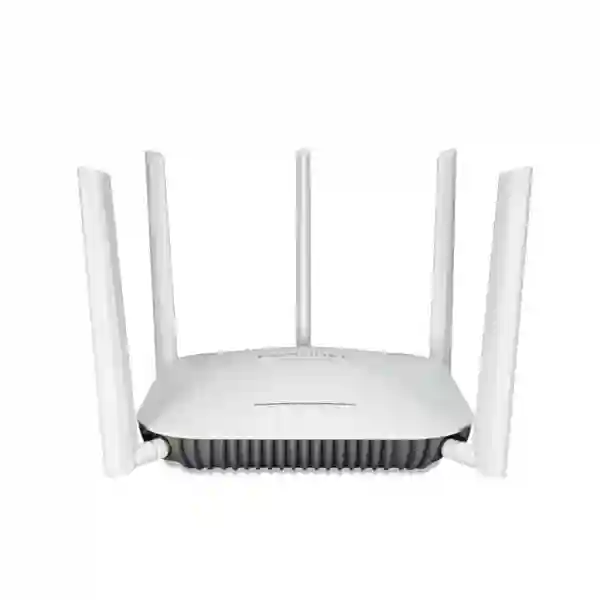
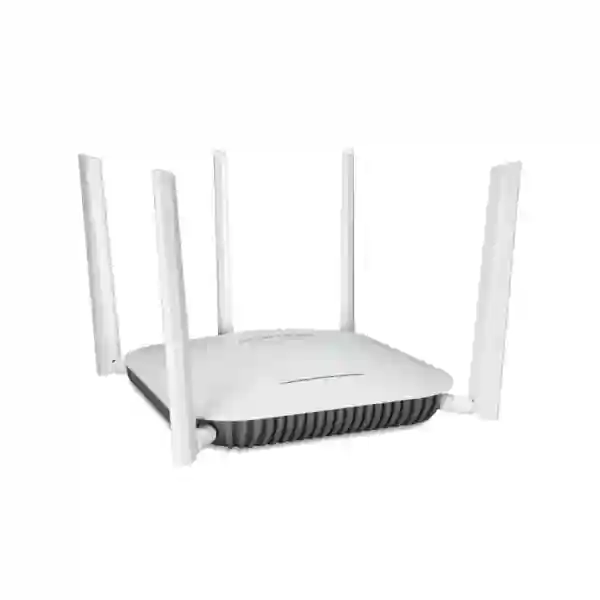
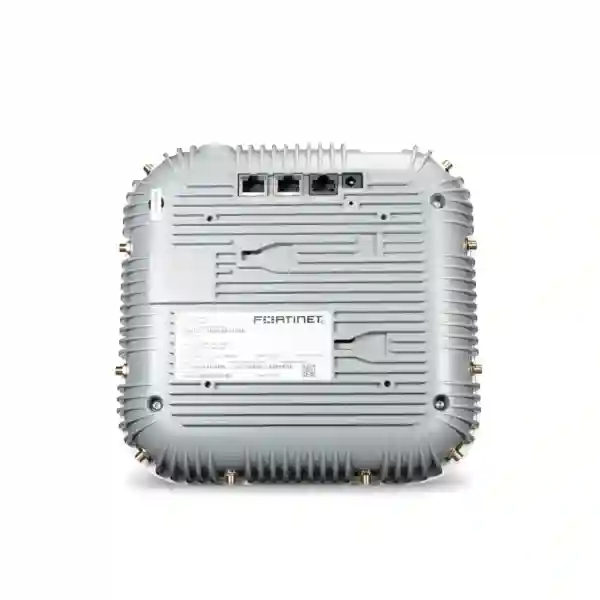
Fortinet identifies the FAP-433F as an indoor FortiAP with three radios plus an integrated BLE radio. Its external-antenna design differentiates it from the related FAP-431F, which uses internal antennas. The FAP-433F provides five external RP-SMA antenna connections and is supplied for enterprise wireless deployments where antenna selection and placement can be an important part of RF design. Fortinet documentation lists Wi-Fi 6 / IEEE 802.11ax operation, 4×4 radio capability, a 2.5 GbE RJ45 interface and an additional 1 GbE RJ45 interface. The platform also includes USB and serial connectivity, while supported wireless-monitoring functions include rogue scanning, WIDS/WIPS modes, packet sniffing and spectrum analysis.
These specifications make the FAP-433F relevant to offices, hospitality properties, education environments, healthcare sites, campuses, large meeting areas and other indoor locations where wireless capacity and centralized operational control matter. They do not remove the need for RF planning. Advertised radio rates are protocol-level references, while real application throughput depends on channel width, interference, client capability, distance, walls, airtime contention, uplink capacity and configuration. A professional design therefore begins with floor plans, user density and application requirements rather than an access-point count copied from another building.
Wi-Fi 6
802.11ax capability for modern business wireless deployments, with OFDMA and 4×4 radio operation documented by Fortinet.
External Antennas
Five external RP-SMA antenna connections support antenna-aware designs and distinguish the FAP-433F from internal-antenna alternatives.
Multigigabit Uplink
A 2.5 GbE interface helps prevent the wired edge from becoming an unnecessary bottleneck when wireless demand grows.
Fortinet Management
Designed for centrally managed Fortinet wireless environments, with firmware and FortiOS compatibility requiring deliberate lifecycle planning.
Verified Technical Highlights
| Hardware type | Indoor wireless access point |
| Wireless generation | Wi-Fi 6 / IEEE 802.11ax |
| Radios | 3 wireless radios + 1 BLE radio |
| Antennas | 5 external RP-SMA antennas + internal BLE antenna |
| Primary wired interface | 10/100/1000/2500 Base-T RJ45 |
| Additional wired interface | 10/100/1000 Base-T RJ45 |
| Monitoring functions | Rogue scanning, WIDS/WIPS modes, packet sniffer and spectrum analyzer support |
| Mounting | Ceiling/wall mounting capability; verify the complete ordered bundle and site hardware before installation |
Exact regulatory radio operation varies by country code and permitted spectrum. Antenna gain and transmit-power settings must remain within applicable regulatory limits. Firmware compatibility should also be checked against the FortiGate/FortiOS release used in the target environment before a rollout or upgrade.
Deployment, PoE and Switching Planning
A high-capacity access point is only one part of the wireless path. The switch port, PoE budget, cable category, VLAN design, firewall policy, DHCP/DNS services and upstream internet capacity all affect the user experience. Before ordering the FAP-433F, confirm the intended power method and the exact Fortinet power accessories or compatible PoE design required for the chosen operating mode. Where the 2.5 GbE interface will be used, confirm that the access switch supports the desired multigigabit speed on the relevant ports and that the structured cabling is suitable. A gigabit-only access layer may still connect the AP, but it should be understood as a potential capacity constraint rather than overlooked during procurement.
SSID and VLAN planning should separate traffic according to business need. Staff, guests, voice devices, operational devices and administrative management do not necessarily belong in the same trust zone. When FortiAP is managed through a Fortinet security architecture, wireless policy can be coordinated with firewall segmentation and identity controls. This is particularly useful when organizations want a consistent operational model across several offices. Administrators should document SSID purpose, VLAN mapping, authentication, address ranges, DNS behavior, permitted destinations and ownership before deployment.
FortiAP FAP-433F Tanzania
Organizations evaluating FortiAP FAP-433F in Tanzania commonly need dependable business Wi-Fi rather than a consumer-style access point installed wherever a cable happens to exist. A Tanzania deployment can involve a head office, hotel, school, clinic, warehouse, retail facility, training center or multi-floor commercial property. Each environment creates a different radio problem. Offices may prioritize meeting-room capacity and roaming, hospitality sites may need controlled guest access, education environments can create concentrated client density, and warehouses can introduce shelving, long aisles and difficult RF reflections. The FAP-433F’s external antennas make antenna orientation and approved antenna selection part of the design conversation rather than a cosmetic detail.
For a Tanzanian project, start by identifying floor area, construction materials, expected simultaneous users, device mix and applications. Video conferencing, cloud productivity, VoIP and large file transfers place different demands on airtime. A site survey is particularly valuable where walls, concrete, metal, machinery or neighboring networks can change coverage. The objective is to design for usable signal quality and capacity, not merely to make an SSID visible everywhere. Channel reuse, transmit power and AP spacing should be planned together so adjacent access points cooperate rather than create avoidable co-channel contention.
The wired network deserves equal attention. Confirm PoE, switch port speed, VLANs, DHCP, firewall policy and internet capacity. If FortiGate is already deployed, check the FortiOS and FortiAP compatibility matrix before selecting firmware. Organizations upgrading an existing Fortinet wireless estate should inventory current AP models, controller configuration, SSIDs and authentication methods before migration. For procurement, request the exact FAP-433F model, quantity, antenna requirements, power method, support requirements and installation scope. Current price, availability and delivery should be confirmed at quotation time rather than inferred from old listings.
FortiAP FAP-433F Dar es Salaam
Dar es Salaam deployments can combine dense office occupancy, hospitality traffic, customer-facing spaces, warehouses and multi-tenant commercial buildings. In these environments, wireless design should distinguish coverage from capacity. A signal may reach a meeting room while still delivering a poor experience when many laptops join a video call at the same time. The FAP-433F can form part of a Wi-Fi 6 design where 4×4 radio capability, external antennas and a multigigabit uplink are useful, but AP quantity and placement should follow the floor plan and expected concurrent demand.
A practical Dar es Salaam assessment should identify meeting rooms, reception zones, executive offices, open-plan seating, corridors and any high-density gathering areas. Construction materials matter: reinforced walls, glass partitions, lifts and service areas can change propagation. External antennas can provide useful deployment flexibility, but antenna choice must remain compatible with Fortinet guidance and local regulatory limits. Do not compensate for poor placement by simply increasing transmit power. Excessive power can create asymmetric client behavior because mobile devices may hear the AP farther away than the AP can reliably hear them.
Business continuity also depends on the supporting LAN. Confirm that PoE switches have adequate per-port and total power budgets and that uplinks can carry aggregated wireless traffic. Guest SSIDs should be isolated from corporate systems, while staff access can be mapped to appropriate VLANs and security policies. For organizations using FortiGate, management and security policy can be coordinated across the edge. A quotation request should include floor plans where available, number of floors, expected users, existing switch models, current firewall, internet bandwidth and any known dead zones. This creates a more useful bill of materials than requesting an arbitrary number of access points.
FortiAP FAP-433F Mwanza
Mwanza organizations considering the FAP-433F may be planning a new office network, improving an existing wireless deployment or standardizing connectivity across regional facilities. A useful design begins with the business workflow. Administrative users may depend on cloud applications and video calls, operational teams may use handheld devices, and guest areas may need internet access without exposure to internal resources. These requirements should become separate wireless policies rather than one shared network with a single password.
The FAP-433F’s external antenna architecture can be relevant where the RF environment benefits from deliberate antenna positioning or approved alternative antennas. That flexibility should be used as part of measured RF design. Long corridors, thick walls, shelving and irregular room shapes can create coverage patterns that are difficult to predict from square-meter estimates alone. A pre-deployment survey or at minimum a careful floor-plan review helps identify likely AP locations. After installation, validation should measure coverage, interference, channel use and roaming behavior in the areas where users actually work.
Mwanza procurement teams should also examine the wired path. If an AP is connected to a congested switch uplink or undersized internet service, replacing the radio alone will not solve application performance. Confirm PoE, switch capability, cabling, VLANs, firewall rules and WAN bandwidth. Where the site connects to a head office, define how branch traffic, cloud traffic and guest traffic should be routed. For a quote, include exact quantity only after the design assumptions are documented, and specify whether the requirement includes access points only, antennas, power accessories, switching, configuration, testing or broader network integration.
FortiAP FAP-433F Arusha
Arusha wireless projects can include hotels, tourism operations, offices, education sites, conference facilities and service businesses where guest connectivity and internal business traffic coexist. The FAP-433F can support an enterprise Wi-Fi 6 architecture, but the network should be designed around distinct user groups. Guests normally need controlled internet access, employees may require protected business applications, and administrative devices need tighter management controls. Segmentation at the SSID, VLAN and firewall layers helps keep those roles understandable.
Hospitality and conference environments can produce rapidly changing client density. A lobby may be lightly used in the morning and crowded later; a conference room can move from empty to dozens of active devices within minutes. Wireless planning should therefore consider peak concurrency and airtime demand rather than average occupancy. External antennas offer design flexibility, but antenna orientation and gain should follow Fortinet documentation and regulatory limits. Where roaming matters, AP cells should overlap appropriately without excessive transmit power that encourages clients to remain attached to distant radios.
For Arusha buyers, a complete proposal should identify the management architecture, switching, PoE, cabling and firewall dependencies. If FortiGate is used as the wireless controller, verify the intended firmware combination before rollout. Guest access requirements, authentication methods and captive portal needs should be discussed before configuration. Organizations with several buildings should identify whether links between buildings are wired fiber, another approved network medium or a separate wireless design. The FAP-433F is an indoor model, so outdoor coverage requirements should be addressed with equipment intended for the environmental conditions rather than by mounting an indoor AP in an exposed location.
FortiAP FAP-433F Dodoma
Dodoma offices and institutions evaluating FortiAP FAP-433F often need wireless networks that are predictable to operate and straightforward to secure. Administrative buildings can contain several departments, meeting rooms, visitor areas and restricted systems. A well-designed wireless architecture should reflect those boundaries. Instead of one flat SSID for every device, define which users and endpoints require internal access, which need internet-only connectivity and which should be managed separately. This reduces unnecessary lateral access and makes firewall policy easier to understand.
Capacity planning should consider the busiest rooms and periods. Training rooms, council or board meeting areas and shared workspaces can concentrate many devices into a small area. Wi-Fi 6 features can improve efficiency in suitable client environments, but the design still depends on clean channel planning, adequate wired backhaul and realistic AP placement. The FAP-433F’s 2.5 GbE interface is particularly relevant when the switching layer can support multigigabit access. Confirm this before purchase rather than assuming every PoE switch provides 2.5 GbE.
Operational ownership is also important in Dodoma deployments. Decide who controls firmware upgrades, SSID changes, guest credentials, administrator accounts and configuration backups. Fortinet recommends matching compatible FortiAP and FortiOS versions where possible, so lifecycle planning should include both the AP and its management platform. A useful quotation request should state the building type, floor count, approximate users, existing FortiGate and switch models, PoE availability, authentication preference and installation scope. If floor plans are available, include them so the discussion can move from product quantity toward an RF and network design.
FortiAP FAP-433F UAE
UAE organizations considering the FAP-433F may be standardizing Fortinet wireless across headquarters, branches or regional operations that also extend into East Africa. The model’s external antennas, Wi-Fi 6 capability and Fortinet management integration can be useful in enterprise environments, but regional standardization should focus on architecture rather than assuming identical AP counts in every office. Building materials, floor layouts, local spectrum rules, user density and switch infrastructure differ between sites.
For a UAE-led multi-country project, establish a common wireless standard covering SSID names, authentication, VLAN conventions, administrator access, firmware policy and monitoring. Then perform local RF planning for each site. This approach gives IT teams repeatable operations without pretending that an office in Dubai and a facility in Tanzania have the same radio conditions. Procurement should also distinguish hardware, antennas, power accessories, support and implementation scope. Country-specific regulatory domains and destination requirements must be confirmed for the actual deployment location.
Organizations can use FourTeck UAE for UAE technology requirements and FourTeck’s Fortinet-focused UAE resource for related Fortinet discussions. If the access points are being procured for Tanzania, clearly state the final destination and deployment environment in the request. Include expected users, floor plans, existing FortiGate/FortiSwitch infrastructure and required support term so the quotation reflects the intended architecture rather than only the access-point hardware.
FortiAP FAP-433F Uganda
Ugandan organizations evaluating FAP-433F can approach the project as part of a secure branch or campus network rather than an isolated Wi-Fi purchase. A distributed business may want consistent wireless policy between Uganda and Tanzania, including common SSID conventions, guest isolation and administrative controls. Fortinet’s centralized management model can support that operational consistency, while each site retains its own RF design based on local building conditions.
The first planning step is to identify client types and peak concurrency. Laptops, smartphones, scanners, voice devices and IoT endpoints can behave differently on the network. Map business-critical applications and decide which traffic needs internal access. Guest networks should be separated from protected systems, and management access should be limited to authorized administrators. Where 2.5 GbE uplinks are desired, verify switch port capability and cabling. PoE requirements should be checked at both the individual port and total switch budget levels.
For Uganda-specific enquiries, FourTeck Uganda provides a regional route for business technology requirements. Multi-country customers should document firmware standards, configuration ownership and support escalation so wireless operations remain consistent. A quote request should include the exact FAP-433F model, quantity after planning, deployment city, building type, existing firewall and switching, antenna requirements and whether installation or RF validation is needed. Availability, commercial terms and delivery scope should be confirmed at quotation time.
FortiAP FAP-433F Kampala
Kampala offices, hotels, schools and commercial properties can generate dense wireless demand in relatively compact areas. In a busy office, many clients may be active on cloud applications, video meetings and web systems simultaneously. In hospitality, guest usage can fluctuate sharply by time and location. The FAP-433F can participate in these higher-capacity designs, but the correct AP count should come from capacity and RF planning rather than a fixed area formula.
External antennas can help an engineer adapt the RF design, provided antenna models, gain and configuration follow Fortinet guidance and regulatory requirements. AP placement should consider ceilings, walls, lifts, metal structures and neighboring networks. Channel planning is important in dense deployments because adding more radios without controlling interference can reduce rather than improve performance. After installation, test actual client behavior, including roaming between access points and performance in high-use rooms.
Kampala procurement should also include the access network. Identify PoE switches, multigigabit ports, uplink capacity, VLAN requirements and firewall segmentation. If a FortiGate will manage the APs, verify firmware compatibility and establish an upgrade policy. If the organization has branches, determine whether wireless traffic breaks out locally or crosses VPN links and how guest traffic is handled. Include these details in the quotation so the proposed equipment and services cover the real network path, not just the radio layer.
FortiAP FAP-433F Arua
Arua deployments may place particular emphasis on supportability, branch connectivity and efficient use of available infrastructure. A wireless network at a branch office should remain manageable even when central IT staff are not physically present. Centralized Fortinet management can help administrators monitor access points and maintain consistent profiles, but remote operation depends on reliable WAN connectivity, secure management access and documented local network design.
Before choosing AP locations, identify where users actually work and which applications matter. Reception areas, meeting rooms, offices and operational zones may have different density. Thick walls and irregular layouts can create coverage gaps that are not obvious from a simple building size estimate. The FAP-433F’s external antenna design can be useful when RF requirements justify it, but an engineer should avoid using antenna gain as a substitute for correct AP placement. Regulatory EIRP limits and supported antenna configuration remain important.
For an Arua quote, provide the number of users and rooms, existing switches, PoE capability, firewall platform, WAN type and whether the site connects to a headquarters over VPN. Clarify whether the requirement is hardware supply only or includes configuration, SSID/VLAN design, installation and testing. Where remote troubleshooting is important, plan logging, administrator roles and configuration backups. A documented design makes it easier for local staff and central IT to communicate when a user reports a wireless problem.
FortiAP FAP-433F Mbarara
Mbarara businesses can use enterprise wireless as part of a broader branch standard covering switching, security and connectivity. The FAP-433F is relevant where Wi-Fi 6, external antennas and higher-capacity radio operation fit the environment. The purchasing process should begin by documenting client count, device types, room layout and critical applications. A branch that mainly handles transactional applications has different priorities from a training facility or hospitality property with large numbers of guest devices.
Network segmentation is particularly useful when the same wireless infrastructure serves employees, visitors and operational devices. Map SSIDs to appropriate VLANs and use firewall policy to control access between zones. Avoid treating the wireless password as the only security boundary. If identity-based authentication is required, include the authentication infrastructure in the design. Where a captive portal is needed for guests, define the user experience, session policy and internet-only restrictions before rollout.
Mbarara buyers should confirm PoE and wired uplink capacity as part of the bill of materials. The FAP-433F’s multigigabit interface only provides value when the connected switch and cabling support the intended speed. For multi-site organizations, align firmware and naming standards across branches while retaining site-specific RF plans. Include quantity, floor plan, existing Fortinet environment, power method and required services in the quotation request. This reduces the risk of receiving a hardware-only proposal that overlooks switching or configuration dependencies.
FortiAP FAP-433F Gulu
Gulu organizations evaluating FAP-433F should plan for maintainability as well as initial wireless coverage. A stable network is easier to support when SSIDs, VLANs, AP names, switch ports and management addresses follow a clear convention. Central management can provide visibility, but documentation still matters when diagnosing cabling faults, PoE issues, interference or application-specific complaints. Establish these standards before deploying several access points.
RF planning should identify obstacles and user concentrations. A single AP transmitting at high power is not automatically better than several correctly placed APs because client devices have their own transmit limits and roaming behavior. External antennas provide flexibility, but supported gain and regulatory constraints must be respected. Channel allocation and transmit power should be reviewed after installation using actual measurements rather than left permanently at assumptions made before the building was occupied.
A Gulu procurement request should describe whether the project is a new deployment, expansion or replacement. Existing AP models and controller settings are important when migrating because SSIDs and authentication may need to remain available during changeover. Check FortiAP/FortiOS compatibility before selecting target firmware. Include switch models, PoE budget, WAN capacity and required guest or staff networks. If the branch is managed from another city, define remote administrative access and escalation procedures so operational support does not depend on an undocumented local workaround.
FortiAP FAP-433F Kenya
Kenyan organizations considering FAP-433F may be connecting offices, hospitality sites, education facilities or multi-country operations. A consistent Fortinet architecture can simplify wireless administration across Kenya and Tanzania, especially when teams want repeatable SSID, VLAN and security conventions. However, each building still requires its own radio design. Nairobi office towers, warehouses, coastal properties and regional branches can have very different construction, interference and client-density conditions.
The FAP-433F’s external antennas can support specialized indoor deployment choices, while Wi-Fi 6 and 4×4 radio capability provide a platform for demanding client environments. Real throughput will remain dependent on client capability, channel width, airtime and wired backhaul. Buyers should therefore compare the complete architecture rather than only the maximum wireless data rate. Confirm switch port speed, PoE, uplinks, firewall segmentation and internet capacity before assuming an AP upgrade will solve every performance issue.
For Kenya-focused requirements, FourTeck Kenya provides a regional project route. For organizations procuring across East Africa, create a common bill-of-materials template but allow quantities and antenna choices to vary by site survey. Record firmware, management ownership and support terms centrally. A useful quote request includes destination, exact model, expected users, floor plans, existing network hardware and whether configuration, installation or RF validation is required.
FortiAP FAP-433F Kuwait
Kuwait enterprises evaluating the FAP-433F can consider it for indoor business wireless environments where external antennas, centralized Fortinet management and Wi-Fi 6 capability align with the design. High-speed internet access does not remove local wireless bottlenecks; client density, interference and switch uplinks can still limit application performance. A proper assessment should therefore measure the entire path from client to AP, switch, firewall and WAN.
Organizations operating between Kuwait, UAE and Africa may benefit from standardized wireless security and management practices. Common SSID names, authentication rules, VLAN numbering and firmware policy can reduce administrative complexity. At the same time, local radio settings must respect the regulatory domain and building environment. External antenna configurations should be selected and configured according to Fortinet guidance and applicable limits, especially where alternative antenna types are being considered.
Use FourTeck Kuwait for Kuwait-focused technology enquiries. If a regional procurement team is ordering FAP-433F units for several countries, list each destination and quantity separately and confirm the appropriate regional model details. Include power accessories, support requirements and deployment services in commercial comparisons. This makes it easier to distinguish a complete wireless project from a hardware-only quote and reduces last-minute omissions during installation.
FortiAP FAP-433F Ghana
Ghanaian businesses evaluating FAP-433F can focus on secure wireless capacity, centralized management and integration with the wired network. Offices, education sites, hotels and service organizations often need more than basic coverage: they need separate staff and guest access, reliable roaming and visibility when users report poor performance. The access point can provide the radio platform, while the surrounding design determines whether those operational goals are met.
A site assessment should identify dense rooms, construction materials, neighboring Wi-Fi and areas where voice or video applications are important. External antennas can be useful for adapting coverage, but only within supported and regulatory parameters. After installation, administrators should review channel utilization, client distribution and signal quality. If one AP attracts too many clients while another is underused, placement and radio settings may need adjustment rather than simply adding more equipment.
For Ghana-specific projects, FourTeck Ghana can support regional technology discussions. Multi-country organizations should maintain an inventory of AP models, serials, firmware, sites and support terms. A quotation should identify exact hardware, antennas or power accessories where required, quantity, management environment and installation scope. Current commercial availability should be confirmed directly rather than relying on cached marketplace listings.
FortiAP FAP-433F Nigeria
Nigeria deployments can involve large offices, education environments, hospitality properties and distributed organizations with substantial wireless demand. The FAP-433F can be evaluated where Wi-Fi 6, 4×4 operation and external antenna flexibility fit the RF plan. In high-density areas, capacity should be designed around concurrent clients and airtime demand. A strong signal alone does not guarantee performance when many devices compete for the same channel.
The wired network must be sized for the wireless edge. Confirm multigigabit switch ports where the 2.5 GbE uplink is expected to be used, adequate PoE, resilient uplinks and VLAN design. Firewall policy should isolate guests and untrusted devices from protected business systems. Where organizations use multiple FortiAPs, centralized configuration can help maintain consistent SSIDs and radio profiles, while monitoring can identify overloaded radios or problematic clients. Firmware should be managed as part of a controlled lifecycle rather than upgraded ad hoc.
For Nigeria-focused enquiries, FourTeck Nigeria provides a regional technology route. Procurement teams should specify deployment city, quantity, existing Fortinet environment, user count, floor plan and desired services. If equipment is part of a wider branch rollout, include switching, firewall, cabling and support requirements in the same project discussion. This helps identify dependencies before shipment and supports a more repeatable rollout.
FortiAP FAP-433F Seychelles
Seychelles organizations may consider FAP-433F for hotels, offices and service environments where reliable indoor Wi-Fi supports both staff operations and guest expectations. Hospitality wireless is particularly sensitive to room layout, walls, corridors and fluctuating occupancy. A high-capacity access point can be valuable, but the design should distribute coverage and airtime appropriately rather than relying on a few radios at maximum power.
Guest and operational traffic should be separated. Hotel management, payment, administration, voice and security systems should not automatically share unrestricted access with visitor devices. SSID and VLAN design, combined with firewall policy, can establish clearer boundaries. External antennas can help with approved RF designs, while indoor placement should avoid environmental exposure beyond the product’s intended conditions. Outdoor pool, garden or walkway coverage should be handled with equipment suited to those locations.
Procurement for island deployments benefits from careful bill-of-materials review before equipment moves. Confirm access points, antenna requirements, mounting hardware, power method, switches and any spares or support services required by the project. Include final destination and installation responsibilities in the quote. For organizations managed from another country, define remote monitoring, firmware ownership and escalation. Clear documentation reduces the need for emergency troubleshooting when local technical resources are limited or travel is required.
Related Tanzania Network and Security Resources
Wireless performance depends on the rest of the network. Review the FourTeck Tanzania integrated technology overview to understand how Wi-Fi fits with switching, security and infrastructure. The Tanzania business technology shop provides the current product browsing route, while the FourTeck Tanzania services page describes broader deployment and support capabilities. Use the Tanzania contact page to submit floor plans, user counts and existing network details.
For Fortinet environments, related firewall pages can help procurement teams plan the security edge alongside wireless. See FortiGate 100F Tanzania, FortiGate 101F Tanzania, FortiGate 120G Tanzania and FortiGate 121G Tanzania. These are not automatic pairings for the FAP-433F; firewall sizing must be based on the actual network workload. They are useful contextual references when an organization is building or refreshing a Fortinet-based network rather than purchasing an AP in isolation.
How to Select and Size an FAP-433F Deployment
Start with the physical environment. Obtain floor plans, mark user areas, identify wall materials and note ceilings, lifts, metal shelving and other RF obstacles. Next, estimate simultaneous clients by zone rather than total employees alone. A building with 200 staff spread across several floors is different from a training hall where 100 people gather in one room. Identify high-demand applications such as video conferencing, voice over Wi-Fi, cloud desktops or large file transfers. These inputs shape AP placement, channel planning and wired capacity.
Then review infrastructure. Confirm PoE power, switch port speed, uplink capacity, VLANs, DHCP, DNS, firewall policy and internet bandwidth. Determine whether FortiGate, FortiEdge Cloud or another supported Fortinet management approach will be used for the specific deployment and licensing model. Verify firmware compatibility before rollout. If external antennas beyond the supplied configuration are being considered, use supported antenna documentation and regulatory guidance. Finally, validate after installation. Wireless design is complete only when measurements confirm the intended coverage and user experience.
FAP-433F Quotation Checklist
✓ Deployment country and city
✓ Building type and number of floors
✓ Floor plans or approximate dimensions
✓ Expected simultaneous users and device types
✓ High-density rooms or public areas
✓ Existing access points and known coverage problems
✓ Existing FortiGate/FortiOS environment
✓ Switch models, PoE budget and port speeds
✓ Required SSIDs, VLANs and guest access
✓ Antenna requirements
✓ Quantity after design review
✓ Installation, configuration, testing and support scope
FortiAP FAP-433F FAQ
Is the FortiAP FAP-433F a Wi-Fi 6 access point?
Yes. Fortinet documents the FAP-433F as an enterprise indoor 802.11ax / Wi-Fi 6 access point with 4×4 radio capability.
Does the FAP-433F use external antennas?
Yes. The model has five external RP-SMA antenna connections, with an internal BLE antenna. Fortinet also documents support for configured external antenna options on supported software releases.
Does FAP-433F have a 2.5 GbE port?
Yes. Fortinet lists one 10/100/1000/2500 Base-T RJ45 interface and an additional 10/100/1000 Base-T RJ45 interface. The connected switch and cabling must support the desired speed.
Can FAP-433F be managed with FortiGate?
The FortiAP platform supports Fortinet management architectures including FortiGate-managed deployments. Check the current FortiAP/FortiOS compatibility matrix for the firmware combination planned for your environment.
How many FAP-433F access points do I need?
There is no reliable universal count based only on square meters. Quantity depends on floor layout, materials, user density, client capability, interference, channel plan and applications. Use a site-specific design and validate it after installation.
What should I provide for a Tanzania quotation?
Provide the deployment city, building type, floor plans if available, expected users, existing FortiGate and switches, PoE details, required SSIDs, known coverage issues, antenna requirements and whether you need installation or configuration.
Decision Recap
FortiAP FAP-433F is a strong fit to evaluate when an indoor Fortinet wireless design needs Wi-Fi 6, 4×4 radio capability, external antennas and multigigabit wired connectivity. Its value depends on correct RF planning, PoE and switching, management compatibility and security segmentation. For Tanzania projects, define the building and user requirements first, then confirm AP quantity, antenna design, switch capacity and firmware architecture. This approach produces a more defensible procurement decision than choosing an access point from headline wireless speed alone.
Consultation Panel
Send FourTeck Tanzania your floor plan, approximate users, existing FortiGate/FortiSwitch details, current wireless problems and target deployment city. The requirement can then be reviewed around coverage, capacity, compatibility, switching and implementation scope before a quotation is prepared.



Reviews
There are no reviews yet.