
FortiAP FAP-831F Tanzania
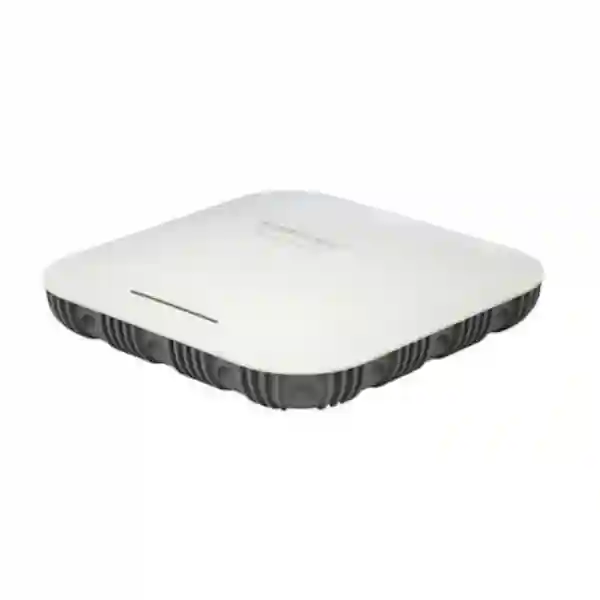
The FortiAP FAP-831F is a high-performance indoor Wi-Fi 6 access point for organizations that need substantial wireless capacity, secure integration and disciplined network management. Fortinet documents three Wi-Fi radios plus Bluetooth Low Energy, with a 4×4 2.4 GHz service radio, an 8×8-capable 5 GHz service radio and a dedicated dual-band scanning radio. For Tanzania businesses planning dense office floors, education facilities, hospitality spaces, healthcare environments or other demanding indoor deployments, the important buying question is not simply how fast an access point looks on a specification sheet. A sound design considers client density, RF conditions, cabling, PoE, uplink capacity, roaming, authentication, VLANs, guest access, management and security policy together.
FortiAP FAP-831F overview
Fortinet positions the FAP-831F as a high-performance 802.11ax indoor access point. Its architecture is built for environments where wireless capacity, RF visibility and secure network integration matter. The 2.4 GHz radio supports 4×4 operation with 20/40 MHz channels, while the 5 GHz radio supports 8×8 operation in one mode or two 4×4 service functions in another documented mode. A separate 1×1 dual-band radio is available for scanning. This separation is useful because wireless monitoring does not have to depend entirely on a client-serving radio.
Fortinet lists PHY data rates up to 5.95 Gbps for 802.11ax operation. That figure is a radio-layer maximum rather than a promise of application throughput to a single device. Real-world performance depends on client capability, channel plan, interference, channel width, airtime contention, signal quality, backhaul, security processing and many other design factors. FourTeck therefore recommends treating the specification as a capacity-planning input rather than a guaranteed speed result.
802.11ax wireless with OFDMA, MU-MIMO and other efficiency features for modern client environments.
Two client-serving radios, a dedicated scanning radio and Bluetooth Low Energy capability.
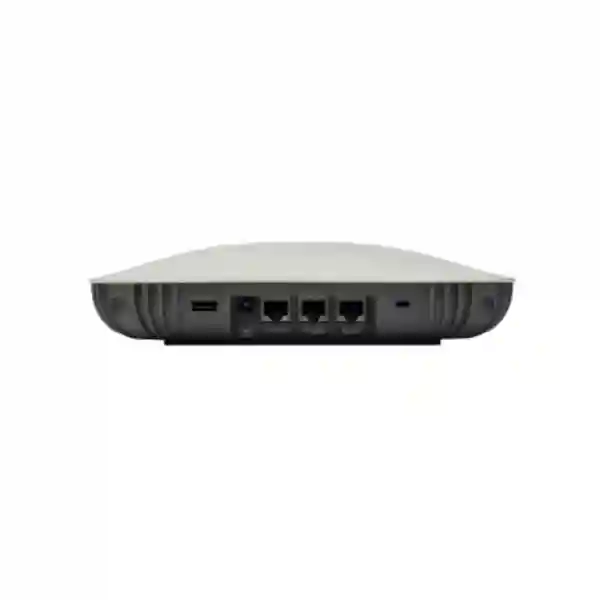
Fortinet documentation lists a multi-gigabit primary RJ45 interface plus a secondary Gigabit Ethernet interface.
Verified technical highlights
| Hardware type | Indoor access point |
| Radios | 3 Wi-Fi radios + 1 BLE radio |
| 2.4 GHz service radio | 4×4, 20/40 MHz |
| 5 GHz service radio | Up to 8×8; supports 20/40/80/80+80/160 MHz channel widths |
| Scanning radio | 1×1 dual-band scanning |
| Maximum 802.11ax PHY rate | Up to 5.95 Gbps |
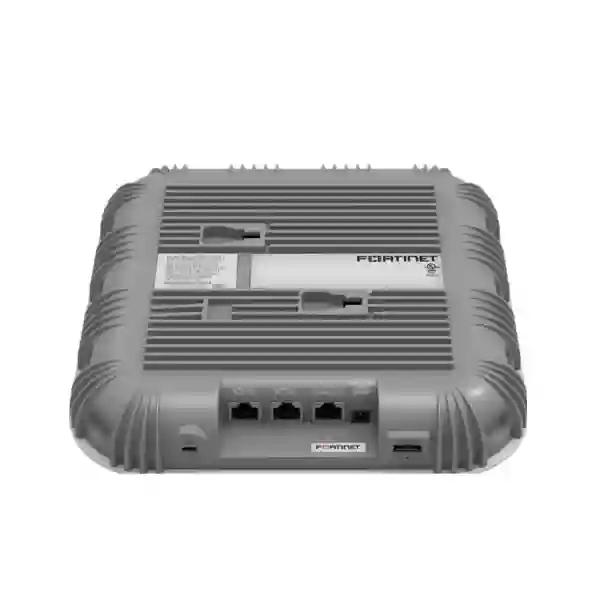
| Interfaces | Multi-gigabit RJ45, Gigabit RJ45, USB and serial interfaces as documented by Fortinet |
| SSID types | Local bridge, tunnel and mesh |
| Authentication/security | WPA/WPA2/WPA3 options, 802.1X/EAP methods, captive portal and MAC controls are documented |
| Mounting | Ceiling, T-rail and wall mounting options |
Specifications should be checked against the current Fortinet datasheet, regulatory domain and exact order code before procurement. Wireless power, available channels and regulatory behavior can vary by country.
Deployment, PoE and switching considerations
A high-capacity access point can only perform well when the wired infrastructure is designed to support it. Before ordering FAP-831F units, review the access-switch port capability, PoE budget, cabling standard, uplink capacity and redundancy expectations. Fortinet documentation identifies PoE operating requirements and notes that reduced power arrangements can affect available functions. The practical lesson for procurement teams is to avoid treating PoE as a checkbox. Confirm the exact switch, power mode and cable path for each AP position.
A site survey remains important. Thick concrete, metal shelving, lift shafts, glass, neighboring networks, ceiling height and the number of active clients can all change RF behavior. In a warehouse, coverage geometry may be very different from an open office. In a hotel, room walls and corridor layouts create another pattern. In a university or conference facility, client density can rise sharply at predictable times. The AP count should therefore be based on capacity and coverage together, not only on floor area.
Organizations already using FortiGate can consider integrated wireless management as part of a broader Fortinet secure networking design. Fortinet also documents cloud-oriented management options for FortiAP. The appropriate management method depends on the installed architecture, software versions, operational model and licensing or subscription requirements. FourTeck can help buyers prepare a bill of materials that separates AP hardware, switching, PoE, management, security subscriptions and implementation services rather than assuming every requirement is included in the access point itself.
FortiAP FAP-831F Tanzania
For organizations searching for FortiAP FAP-831F Tanzania, the strongest procurement approach begins with the wireless workload rather than the model number alone. A Tanzanian enterprise may be refreshing an existing Wi-Fi estate, expanding a Fortinet environment, designing a new office, improving guest access, or building a high-density WLAN for a campus. Each case produces different requirements. An office with managed laptops and voice applications needs predictable roaming and authentication. A hospitality property must think about guest segmentation and room coverage. A school or university may face high concurrency at lecture times. A warehouse may need dependable mobility across aisles and operational areas. The FAP-831F is technically positioned for demanding indoor use, but correct fit should be established through RF and network planning.
Tanzania buyers should include the intended installation city, quantity, building type, approximate coverage area, expected concurrent clients, existing firewall and switch models, internet capacity, VLAN requirements and preferred management method when requesting a quotation. This information makes it easier to distinguish a hardware-only purchase from a complete wireless project. It also helps identify whether new PoE switching, cabling work, mounting accessories or professional configuration should be considered. If the project already uses FortiGate, the WLAN can be evaluated in the context of existing policies, user authentication, segmentation and Security Fabric operations.
Wireless procurement should also account for the regulatory domain. Channel availability and permitted transmit behavior are country dependent, so the exact unit and configuration must be appropriate for Tanzania. Do not assume that a unit sourced for another market is interchangeable simply because the chassis name is similar. Confirm order code, regulatory suitability, support entitlement and management compatibility before purchase. This is especially important for projects standardizing equipment across multiple countries.
FourTeck can support the commercial discussion by turning these inputs into a quotation request. Current pricing and availability should be confirmed at the time of enquiry because they can change. For broader security planning, buyers can also review FourTeck Tanzania technology solutions and discuss FortiGate, switching and wireless requirements together. This approach gives procurement and technical teams a clearer basis for approval than selecting an AP only from a headline speed figure.
FortiAP FAP-831F Dar es Salaam
FortiAP FAP-831F Dar es Salaam enquiries often come from organizations where wireless service is business infrastructure rather than a convenience. Corporate offices, hospitality environments, education facilities, healthcare sites, professional services, logistics operations and multi-floor workplaces can all place substantial demands on Wi-Fi. In these settings, AP selection should begin with the number and type of endpoints, application sensitivity, roaming patterns and physical layout. Video meetings, cloud applications, voice, guest access, mobile devices and operational handhelds compete for airtime differently, so a capacity-oriented design is more useful than simply trying to maximize signal strength everywhere.
The FAP-831F offers an architecture that is relevant to demanding indoor deployments: a 4×4 2.4 GHz service radio, an 8×8-capable 5 GHz radio and a dedicated scanning radio. That does not eliminate the need for channel planning. Dense deployments can perform poorly if neighboring APs are placed too close, channels are too wide for the RF environment or transmit power is not tuned appropriately. A site survey and post-installation validation can help establish whether AP locations, channel assignments and roaming behavior match the intended user experience.
Dar es Salaam projects should also examine the wired edge. If an organization invests in a high-capacity Wi-Fi 6 AP but connects it through constrained switching, insufficient PoE or unsuitable cabling, the wireless investment can be bottlenecked. Procurement teams should document switch port speed, PoE standard, available PoE budget, cable category and uplink capacity. Where FortiSwitch and FortiGate are part of the architecture, management and segmentation can be planned as a coordinated secure networking environment rather than as isolated devices.
For a useful quotation, share floor plans where possible, desired coverage zones, expected client counts, existing network equipment and any requirement for staff, guest, IoT or voice SSIDs. Also state whether installation, configuration, testing or ongoing support is required. FourTeck can use these details to frame the product request without making unsupported assumptions about stock or delivery. The result is a clearer buying conversation for organizations seeking a Fortinet FAP-831F supplier in Dar es Salaam.
FortiAP FAP-831F Mwanza
Businesses researching FortiAP FAP-831F Mwanza may be supporting offices, hospitality properties, educational sites, healthcare environments, retail operations or distributed organizations that need reliable indoor wireless access. The first design question is whether the requirement is coverage led, capacity led or both. A lightly occupied office can have very different RF needs from a training hall, hotel meeting area or busy campus. The FAP-831F is built as a high-performance Wi-Fi 6 AP, making it a candidate for locations where many modern devices and demanding applications share the WLAN, but the number of APs should be determined from the actual site conditions.
For Mwanza deployments, map where users spend time and where mobility matters. Reception areas, meeting rooms, open offices, corridors, classrooms and customer spaces may each need different attention. Building materials can reduce or reflect radio signals, while external interference can alter channel quality. A predictive design is useful at the planning stage, but validation on site gives stronger evidence for final placement. High-density designs may intentionally use more APs at controlled power rather than relying on a few devices transmitting at maximum power.
Security design should be prepared alongside RF design. Decide how staff, visitors and special-purpose devices will authenticate, which VLANs or network segments they should reach, whether guest traffic requires isolation and how logs or policy enforcement will be handled. Fortinet documents WPA3 and enterprise authentication capabilities on the FAP-831F, but the end-to-end result depends on the controller, identity services, client support and network configuration. Existing FortiGate customers can assess how wireless access will align with firewall policies and broader secure networking operations.
When requesting a Mwanza quotation, include the model, quantity, installation environment, management preference, current switch and firewall details, and required project services. Buyers planning multiple sites should also state whether a common SSID, policy and management approach is desired across branches. FourTeck can then discuss product selection and project scope while current price and availability remain items for formal confirmation rather than assumptions embedded in the product page.
FortiAP FAP-831F Arusha
FortiAP FAP-831F Arusha projects can span business offices, tourism and hospitality environments, education, healthcare, conference spaces and other indoor networks where user expectations for Wi-Fi are high. Hospitality and conference use deserves particular planning because the number of active devices can vary quickly. Guests may carry several endpoints, meeting rooms can fill in minutes and cloud applications can create bursty traffic. A high-performance access point helps provide radio capacity, but a successful deployment also requires appropriate AP density, channel reuse, internet capacity and traffic policy.
The FAP-831F includes a dedicated scanning radio, which can contribute to wireless monitoring functions while service radios handle client traffic. For buyers, that highlights an important distinction between basic connectivity and managed enterprise WLAN operations. Organizations may need rogue AP awareness, wireless intrusion monitoring, spectrum analysis or packet troubleshooting in addition to routine client access. The required operational features should be checked against the selected Fortinet management architecture and software release.
Arusha sites should review power and cabling early in the project. Ceiling-mounted AP locations can be difficult or expensive to recable after finishing work is complete. Confirm Ethernet runs, switch-room capacity, PoE budgets and mounting positions before installation. If an AP uses a multi-gigabit uplink, the switch and cable plant must support the intended link mode to benefit from that capability. For resilient designs, consider what happens if an access switch, uplink or internet circuit fails and whether critical areas require additional planning.
Procurement teams can improve quotation accuracy by providing a basic network brief: site type, floor count, approximate area, client estimates, applications, existing Fortinet products, authentication method and whether guest access is required. A hospitality buyer may also need separate guest and operations networks; an education site may prioritize high concurrency and content policy; an office may focus on secure corporate access and meeting-room performance. These distinctions allow the FAP-831F discussion to stay tied to business requirements rather than generic Wi-Fi claims.
FortiAP FAP-831F Dodoma
Organizations searching FortiAP FAP-831F Dodoma may need enterprise wireless for administrative offices, institutions, education environments, professional services or expanding multi-building networks. In these settings, network governance can be as important as raw radio performance. IT teams often need predictable authentication, controlled guest access, segmentation, configuration consistency and clear operational ownership. The FAP-831F can participate in a centrally managed Fortinet wireless architecture, allowing buyers to consider Wi-Fi as part of a wider secure network rather than a collection of independent access points.
A Dodoma project should document users and devices by zone. Desktop-heavy departments may generate modest wireless movement, while meeting spaces and public-facing areas can create dense temporary loads. IoT devices may use 2.4 GHz even when laptops and smartphones favor 5 GHz. Designing around these behaviors helps determine radio settings and AP placement. The FAP-831F has substantial radio capability, but excessive cell overlap or poorly selected channel widths can still reduce efficiency. Capacity engineering remains necessary.
For secure access, define identity and network policy before deployment. Decide whether corporate users authenticate through enterprise credentials, whether visitors use a captive portal, and how printers, scanners or other devices without full enterprise supplicant support should be handled. Fortinet documents multiple EAP methods and WPA3 capability, but client compatibility must be validated. A phased rollout can be valuable when replacing an older WLAN because it gives IT teams time to test critical endpoint classes and roaming-sensitive applications.
A procurement request for Dodoma should therefore include more than the phrase “FAP-831F price.” Include quantity, regulatory destination, current FortiGate or controller environment, switching and PoE information, desired support term and whether configuration or deployment assistance is needed. For multi-site organizations, state how many branches will use the design and whether centralized visibility is a requirement. This gives FourTeck a practical basis for quotation and reduces the chance of missing supporting components.
FortiAP FAP-831F UAE
FortiAP FAP-831F UAE procurement often involves enterprise offices, hospitality groups, schools, healthcare organizations, warehouses and regional businesses that want to standardize secure wireless across several sites. The FAP-831F can be evaluated for high-performance indoor Wi-Fi 6 deployments where client density and operational visibility justify an enterprise access point. Buyers should still compare the model with the actual RF and capacity requirement because an oversized AP does not correct poor placement, inadequate switching or insufficient internet capacity.
Regional organizations with both UAE and Tanzania operations can benefit from documenting a common wireless design standard while respecting each country’s regulatory domain. Standardization can cover SSID naming, authentication, VLAN architecture, logging, firmware governance and monitoring, but the exact AP order code and radio configuration must remain appropriate to the deployment country. This distinction is important for cross-border procurement teams that may otherwise assume one hardware SKU can simply be moved between markets.
The UAE environment also makes multi-site management a frequent consideration. Organizations may have a headquarters, warehouses, retail sites or branch offices that need consistent wireless policy. Fortinet’s wider secure networking portfolio allows FortiAP to be considered with FortiGate and FortiSwitch, while management choices should be matched to the existing architecture. For regional Fortinet enquiries, buyers can review FourTeck UAE and its Fortinet-focused product and service coverage.
Before requesting a UAE quotation, provide the installation emirate, quantity, building type, estimated concurrent clients, switch and PoE environment, management platform and required support scope. If the equipment is part of a Tanzania-led regional project, identify the final installation country for every unit. That allows commercial and technical teams to separate local requirements and avoid ambiguity around regulatory suitability, support and deployment responsibilities.
FortiAP FAP-831F Uganda
FortiAP FAP-831F Uganda buyers may be planning secure wireless for offices, education, hospitality, healthcare, logistics or multi-branch organizations. A high-density AP is most valuable when the rest of the network is prepared to support it. Start by estimating concurrent clients and traffic patterns, then check RF coverage, switch capacity, PoE, VLANs, firewall policy and internet bandwidth. This prevents a common design problem in which a powerful AP is deployed on an access layer that cannot deliver the intended performance.
Fortinet’s architecture is particularly relevant to organizations already using FortiGate. Wireless access can be considered alongside security policy, segmentation and centralized operations. For Uganda customers building a broader Fortinet environment, FourTeck Uganda provides regional information on Fortinet security and networking solutions. A cross-border organization operating in both Uganda and Tanzania can also plan consistent operational standards while validating regulatory and procurement details separately for each country.
Site conditions should guide AP placement. Offices with partitions, hotels with many rooms, schools with crowded classrooms and warehouses with tall racks all create different RF challenges. A drawing-based prediction can establish an initial plan, but survey measurements and validation improve confidence. The FAP-831F’s dedicated scanning capability can support wireless visibility, yet troubleshooting processes and monitoring ownership still need to be defined.
For a quotation, Uganda buyers should specify destination, quantity, deployment type, current network equipment and whether they need hardware only or project services. Include expected SSIDs, authentication requirements and any guest-network requirement. Price, availability and delivery timing should be confirmed in the written quotation rather than assumed from web content, particularly for project quantities or cross-border procurement.
FortiAP FAP-831F Kampala
FortiAP FAP-831F Kampala projects can be driven by office growth, WLAN refresh, branch standardization or demand for better performance in high-occupancy areas. Kampala offices often need wireless networks that support cloud productivity, video meetings, voice, mobile endpoints and guest connectivity at the same time. The design should therefore identify where concurrent demand peaks occur. Boardrooms, training rooms, customer spaces and shared work areas may require more capacity than corridors or low-occupancy rooms.
The FAP-831F’s 5 GHz radio capability is designed for high-performance service, but client devices determine how much of that capability can be used. Many endpoints have fewer spatial streams than the AP. The advantage of an enterprise AP is therefore not simply delivering the headline PHY rate to one laptop; it is supporting efficient airtime use across many devices, subject to RF design and client behavior. OFDMA and MU-MIMO are relevant Wi-Fi 6 mechanisms, though practical gains depend on compatible clients and traffic conditions.
Kampala buyers should also decide how the WLAN will be operated after installation. Who approves SSID changes? How are guest credentials handled? How are firmware updates scheduled? How are rogue devices investigated? Which logs are retained? A technically strong AP still requires operational processes. Organizations with FortiGate and FortiSwitch can evaluate a more unified management approach, while other deployments should confirm the intended controller or cloud management design before ordering.
When contacting FourTeck for Kampala requirements, include floor plans if available, client estimates, existing network topology and desired implementation scope. This supports a more meaningful discussion than a model-only request. Customers can use the regional Uganda FourTeck resource for related Fortinet planning while confirming the exact FAP-831F commercial offer for the project.
FortiAP FAP-831F Arua
A FortiAP FAP-831F Arua requirement should be evaluated in the context of the site rather than by city name alone. Organizations may need secure wireless for offices, institutions, hospitality, healthcare, logistics or other indoor facilities. Start with the expected number of users and devices, then map the applications they use. Basic browsing has different performance characteristics from video collaboration, cloud file synchronization, voice or operational mobility. This workload view helps determine whether a high-performance AP such as the FAP-831F is justified and how many units are appropriate.
Connectivity to the AP matters as much as radio capacity. Check whether the installed switch supports the required Ethernet speed and PoE arrangement, and whether cabling can sustain the intended link. If infrastructure upgrades are required, include them in the project scope before procurement approval. This is particularly important where ceiling access or cable routes are difficult after a facility becomes operational.
Security planning should cover staff, visitors and non-user devices separately. A single shared password for every device may be easy to deploy but can be difficult to govern. Enterprise authentication, role-based network access, guest isolation and separate IoT policies may offer stronger control when the supporting identity and network systems are available. Fortinet documents multiple authentication methods for the FAP-831F, but compatibility should be checked with actual client devices and the selected management platform.
For Arua procurement, provide the final installation location, quantity, current firewall and switch information, coverage area, user estimate and service requirements. If the project is part of a larger Uganda rollout, state whether configurations should be standardized across Kampala, Arua, Mbarara, Gulu or other sites. A shared design can simplify operations, while local RF surveys and regulatory checks remain necessary for each installation.
FortiAP FAP-831F Mbarara
FortiAP FAP-831F Mbarara buyers can use a structured wireless assessment to decide whether the model fits their environment. First identify coverage boundaries and client density. Next classify applications and mobility requirements. Then review the wired network, security policy and management platform. This sequence is more reliable than selecting an AP based on maximum data rate alone because enterprise Wi-Fi is a shared medium whose behavior depends on the entire design.
In education, hospitality and healthcare environments, user groups often have very different access requirements. Students, guests, staff, administrators, operational devices and contractors may need separate network treatment. VLAN segmentation and identity-aware policy can help keep these groups appropriately separated. The FAP-831F supports enterprise wireless security capabilities, but the policy is enforced through the wider architecture, so firewall, switching, RADIUS or identity services and management should be included in planning.
The physical environment can also change performance. Reinforced walls, metal surfaces and neighboring WLANs affect propagation and interference. Rather than aiming for the strongest possible signal from every AP, enterprise design seeks suitable coverage, controlled cell overlap and enough capacity for expected clients. Post-installation testing should check critical areas, roaming paths and application performance. If voice over Wi-Fi or other latency-sensitive traffic is important, include that requirement in the design brief.
A Mbarara quotation request should include the exact FAP-831F model, quantity, final destination and desired services. State whether the organization already uses FortiGate or FortiSwitch, and provide software or management details where known. FourTeck can then discuss the equipment and supporting scope. Current price and availability should be confirmed when the formal quotation is prepared.
FortiAP FAP-831F Gulu
FortiAP FAP-831F Gulu projects should connect technical specifications to measurable business needs. If an organization is replacing older Wi-Fi, document current pain points such as dead zones, congestion, unstable roaming, limited visibility or weak guest separation. If the deployment is new, estimate device counts and identify critical applications. These inputs help determine whether the FAP-831F’s high-performance radio design is appropriate or whether another FortiAP model may offer a better fit for lower-density areas.
High-capacity Wi-Fi also depends on spectrum discipline. Wider channels can increase peak throughput when spectrum is clean, but in dense deployments they consume more available channel space. The FAP-831F supports multiple channel widths on 5 GHz, so the correct configuration depends on local RF conditions and AP density. An experienced WLAN design may choose narrower channels in dense environments to improve reuse. This is why a specification such as 160 MHz support should be viewed as an option, not a universal recommendation.
Operational resilience deserves attention as well. Consider switch redundancy, UPS coverage, internet failover and configuration backups where wireless access is business critical. The AP itself is only one component in the service chain. If the access switch loses power or the upstream network fails, client radio capability cannot preserve application access. Procurement planning should therefore distinguish AP hardware from the infrastructure and services needed to deliver a reliable WLAN.
Gulu buyers can prepare a stronger request by sharing site drawings, user estimates, network diagrams and required security policies. For organizations operating several Uganda locations, a standard Fortinet architecture can make support and change management easier, while each site should still be surveyed and validated. FourTeck can help structure the quotation around the confirmed project requirements.
FortiAP FAP-831F Kenya
FortiAP FAP-831F Kenya enquiries may come from enterprises, hotels, schools, hospitals, warehouses and multi-site organizations seeking secure high-capacity indoor Wi-Fi. The FAP-831F can be evaluated as part of a Fortinet secure networking design that includes FortiGate and FortiSwitch. FourTeck’s Fortinet Kenya solution resource describes the broader role of FortiAP, FortiSwitch and FortiGate for regional business networks.
For Kenyan deployments, the decision process should separate coverage, capacity and security. Coverage asks whether devices can maintain a suitable signal across required areas. Capacity asks whether the WLAN has enough airtime and backhaul for active clients. Security asks how users and devices authenticate, what resources they can reach and how suspicious wireless activity is monitored. These three concerns overlap but are not identical. Adding APs can improve capacity while also increasing interference if channel planning is poor.
Organizations standardizing networks across Kenya and Tanzania should document common architecture principles while procuring correct country-specific equipment. A common policy model can simplify IT operations across Nairobi, Mombasa, Dar es Salaam and other sites, but regulatory domains, ISP environments and building conditions differ. Cross-border projects should list the final destination of each AP and confirm support and management requirements before ordering.
Kenya quotation requests should include quantity, destination, expected client density, building layout, switching and PoE information, management preference and project services. Current commercial terms can then be confirmed. Buyers can also explore Fortinet solutions in Kenya when the wireless project also requires firewall, switching, centralized management or related security components.
FortiAP FAP-831F Kuwait
FortiAP FAP-831F Kuwait buyers may need high-performance indoor wireless for offices, education, healthcare, hospitality, retail or distributed business environments. In climate-controlled indoor deployments, AP placement should still account for building materials, ceiling structure, client density and neighboring wireless networks. The model’s internal antennas simplify the physical appearance of many indoor installations, while mounting position and orientation should follow Fortinet guidance and the RF design.
A Kuwait enterprise already operating FortiGate can consider FortiAP within a coordinated secure networking architecture. This can help align wireless access with segmentation and security policy, though the exact management approach must match the installed Fortinet environment. Buyers with wider regional operations can review FourTeck Kuwait for regional Fortinet and network-security discussions while separately identifying Tanzania project requirements where applicable.
For dense office floors, do not assume that maximum channel width is always best. Spectrum reuse and neighboring networks can make narrower channels more efficient. Similarly, transmit power should be engineered rather than simply maximized. Client devices usually transmit at lower power than enterprise APs, so excessive AP power can create asymmetric links where a device hears the AP but cannot respond reliably. RF tuning should therefore be based on measurements and client behavior.
A Kuwait quotation request should state quantity, installation location, regulatory destination, existing switches and firewall, required management, support expectations and whether professional deployment is needed. If the purchase supports a regional rollout, provide a country-by-country quantity breakdown. This allows the bill of materials to reflect correct commercial and regulatory requirements rather than treating all destinations as identical.
FortiAP FAP-831F Ghana
FortiAP FAP-831F Ghana projects can serve organizations that need enterprise wireless with stronger capacity and management than consumer or small-office access points typically provide. Offices, hospitality facilities, educational institutions, healthcare sites and operational environments may all benefit from a WLAN designed around user density and business applications. The FAP-831F is a high-performance model, so buyers should identify the zones where its capacity is actually needed and avoid assuming that every area requires the same AP type.
A mixed-model design can sometimes be appropriate in larger estates: high-density areas may require more capable APs while low-density spaces may be served by other models. Any such design should be validated for management compatibility and roaming behavior. The goal is a coherent WLAN rather than a collection of independently selected devices. Fortinet’s FortiAP portfolio provides multiple form factors and radio configurations, so model selection should follow the site requirements.
For organizations connecting Ghana operations with Tanzania or other African markets, common security standards can reduce operational complexity. SSID structure, authentication, VLAN naming, firmware policy and monitoring can be standardized where appropriate, while radio settings and regulatory requirements remain site specific. Regional buyers can visit FourTeck Ghana for market-specific technology enquiries and use the Tanzania contact channel for Tanzania deployments.
To request an FAP-831F quotation for Ghana, share the quantity, final destination, site profile, client estimate, current firewall and switch infrastructure, management preference and required services. If PoE switches are part of the project, include port counts and uplink requirements. This gives procurement teams a more complete bill of materials and reduces the risk of discovering infrastructure gaps during installation.
FortiAP FAP-831F Nigeria
FortiAP FAP-831F Nigeria procurement can be relevant to enterprises and institutions with demanding indoor wireless requirements. Large offices, campuses, hotels, hospitals and high-occupancy facilities need Wi-Fi designs that manage contention, roaming and security while supporting modern client devices. The FAP-831F offers substantial Wi-Fi 6 radio capability, but the correct AP count and placement depend on the environment. A site survey is particularly valuable where building construction or neighboring RF activity is complex.
Power resilience may also be an important part of the overall network design. Wireless service depends on switches, upstream network devices and internet connectivity, so UPS and power-continuity planning should cover the entire chain where business operations require it. This is separate from the AP’s own PoE specification. Buyers should calculate switch PoE budgets for the full AP quantity and leave suitable design margin rather than sizing only for nominal conditions.
Security architecture should include user identity, guest access, device segmentation and monitoring. Fortinet documents enterprise authentication and WPA3 options for the FAP-831F. Whether those capabilities can be used depends on endpoint support and the wider infrastructure. Organizations with a Fortinet security environment can assess integrated operations with FortiGate and related products. Regional customers can use FourTeck Nigeria for Nigeria-specific technology enquiries.
A Nigeria quotation request should identify exact deployment cities, quantities and project scope, especially for multi-branch rollouts. Provide client estimates, applications, floor plans, switching, PoE and management details. If the same organization also operates in Tanzania, separate the country quantities and regulatory destinations. This gives commercial teams a clearer basis for preparing the appropriate offer and technical teams a better starting point for implementation planning.
FortiAP FAP-831F Seychelles
FortiAP FAP-831F Seychelles enquiries may be especially relevant to hospitality, corporate, institutional and service environments where indoor wireless quality directly affects staff or guest experience. Hotels and resorts present distinctive WLAN challenges: guest rooms create repeated wall attenuation, public spaces can become densely occupied, and operational networks may need separation from guest access. A high-performance AP can contribute to capacity, but the final design must reflect the property layout and user distribution.
For hospitality projects, consider guest onboarding, bandwidth policy, roaming, segmentation and monitoring alongside coverage. Back-office systems, payment devices, staff endpoints and guest devices should not automatically share the same trust level. Fortinet wireless can be planned as part of a broader security architecture, with firewall and switching components enforcing network policy. The specific design depends on the property’s systems and existing infrastructure.
Logistics and procurement also deserve careful preparation for island projects. Confirm the exact model and regulatory destination before shipment, and make sure mounting, PoE switching and other supporting components are included in the bill of materials. Spare strategy can be discussed for business-critical deployments, but quantities should be based on the organization’s support model rather than a generic rule. Current delivery and availability must be confirmed in the quotation.
Seychelles buyers should share property or site drawings, room or workspace counts, expected users, current network architecture and service requirements. For a hotel, identify guest rooms, lobby, restaurants, meeting spaces and staff areas separately. For an office, identify high-density meeting zones and critical applications. These details allow the FAP-831F to be evaluated on practical wireless needs rather than only its technical headline specifications.
Compatibility and integration planning
The FAP-831F should be checked against the intended Fortinet management environment before ordering. Fortinet describes FortiAP access points as manageable through FortiGate-integrated wireless control and cloud-oriented management options, but supported software versions and feature behavior should be verified for the specific deployment. Existing customers should record FortiGate model, FortiOS version, FortiSwitch models and any current wireless controller or cloud service information.
Authentication integration is another key area. Enterprise WLANs may use RADIUS-backed 802.1X, captive portals, pre-shared keys or other methods. The right method depends on identity infrastructure, endpoint ownership and security policy. Corporate laptops may support certificate-based access while guest devices need a different workflow. Printers, scanners and IoT equipment may require separate handling. Designing these access classes before rollout can reduce troubleshooting later.
For Fortinet-centric environments, review the wireless project together with firewall and switching. The FourTeck Fortinet UAE resource can support wider regional Fortinet research, while FourTeck Africa provides a regional technology context for organizations operating across African markets.
Who should consider the FAP-831F?
The strongest candidates are indoor environments that genuinely need high wireless capacity, advanced RF capability or an enterprise Fortinet management model. High-density offices, training facilities, universities, hotels, healthcare campuses and busy shared spaces are examples. A smaller branch with a modest number of devices may not need an 8×8-capable high-performance AP, and another FortiAP could be more economical. Model selection should therefore be based on measured requirements.
A useful decision framework asks five questions: how many active devices will be present at peak time; which applications matter most; what are the building and RF conditions; what switching and PoE infrastructure exists; and how will the WLAN be secured and managed? If these questions are answered, the procurement team can compare the FAP-831F with alternatives on a realistic basis.
Quotation checklist
For a faster and more accurate FAP-831F quotation, prepare the following project information. Exact commercial terms remain subject to confirmation.
FortiAP FAP-831F FAQs
Is the FortiAP FAP-831F a Wi-Fi 6 access point?
Yes. Fortinet documents the FAP-831F as an indoor 802.11ax Wi-Fi 6 access point with a high-performance multi-radio architecture.
How many radios does the FAP-831F have?
Fortinet lists three Wi-Fi radios plus a Bluetooth Low Energy radio. Two Wi-Fi radios serve clients and a dedicated dual-band radio supports scanning functions.
Does the FAP-831F support WPA3?
Fortinet documentation lists WPA3 among the supported user/device authentication options. The actual authentication design should also consider client compatibility and the selected controller or management environment.
Can the FAP-831F be managed with FortiGate?
Fortinet positions FortiAP as part of its FortiGate-managed secure networking architecture. Confirm the FortiGate model, FortiOS version and supported feature set for the intended deployment before procurement.
What PoE does the FAP-831F require?
Fortinet documentation specifies PoE operating modes for the model, including full-function power arrangements and a reduced arrangement where USB functionality is affected. Confirm the current datasheet and the intended switch before deployment because PoE budgeting is a project-level requirement.
Is the maximum 5.95 Gbps rate the speed one user will receive?
No. The figure is a maximum 802.11ax PHY data-rate specification across the radio architecture, not a guaranteed application throughput figure for one client. Real performance depends on client capability, RF conditions, channel plan, backhaul, contention and network design.
How many FAP-831F access points do I need?
There is no reliable universal AP-per-square-meter formula. The quantity depends on building materials, client density, applications, required signal levels, channel reuse and other RF conditions. A survey or professional WLAN design is recommended.
Can FourTeck quote FAP-831F for Tanzania?
Yes, customers can submit a quotation enquiry with quantity, destination and deployment details. Price, stock, lead time, support and exact order code should be confirmed in the written quotation.
Decision recap
FortiAP FAP-831F is a high-performance indoor Wi-Fi 6 access point with substantial radio capacity, dedicated scanning and enterprise security capabilities. Its strongest value appears in environments where many users, demanding applications and managed security justify that capacity. A successful purchase still depends on correct RF design, PoE, multi-gigabit switching, cabling, management compatibility and regulatory suitability.
For Tanzania procurement, prepare the site, user, switching and management details before requesting price. FourTeck can use that information to discuss the FAP-831F and related Fortinet requirements without relying on generic assumptions. This produces a cleaner bill of materials and a stronger basis for deployment planning.
Consult FourTeck about FortiAP FAP-831F
Share your quantity, city, floor plan or coverage area, client estimate, existing Fortinet environment and project scope. FourTeck can help structure the commercial enquiry around the exact deployment requirement. For related regional technology planning, explore FourTeck, FourTeck IT Services and the country resources linked throughout this page.

Reviews
There are no reviews yet.