
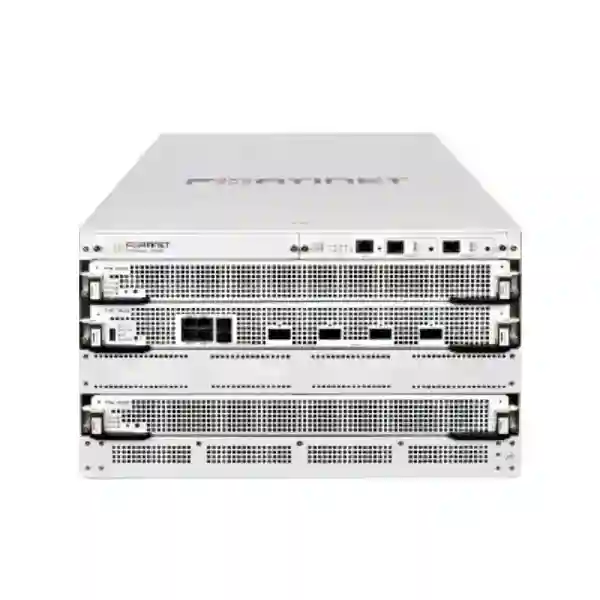
FortiAnalyzer FAZ-3100G Tanzania
FortiAnalyzer FAZ-3100G is designed for organizations that need a substantial centralized platform for Fortinet security log collection, analytics, reporting and security operations. For Tanzanian enterprises operating multiple sites, data centers, branches, virtual domains or managed customer environments, the appliance provides a consolidated place to retain and analyze security telemetry while reducing the operational friction created by isolated device logs. Fortinet specifies capacity of up to 3,000 GB of logs per day, a sustained analytics rate of 42,000 logs per second, a collector sustained rate of 60,000 logs per second, and support for up to 4,000 devices or VDOMs. Those figures make sizing, retention planning and operational architecture important parts of procurement rather than afterthoughts.
Official maximum daily log capacity.
Sustained analytics log rate.
Collector-mode sustained rate.
Maximum devices or VDOMs.
FortiAnalyzer 3100G overview
Security teams often accumulate telemetry across firewalls, branches, remote-access environments, segmented networks and virtual domains. The operational challenge is not simply receiving logs; it is keeping enough relevant data, searching it efficiently, correlating activity, producing useful reports and giving analysts a consistent workflow. FortiAnalyzer addresses that requirement as Fortinet’s centralized logging, analytics and security operations platform. The FAZ-3100G is positioned toward high-volume deployments where smaller appliances may not provide the required ingestion capacity, device scale or local storage.
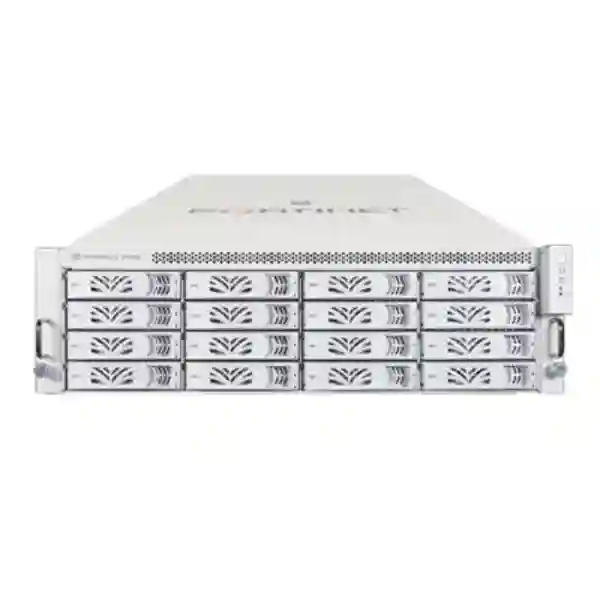
The appliance uses a 3 RU rackmount form factor. Fortinet lists two GE RJ45 interfaces and two 25GE SFP28 interfaces. Raw storage consists of sixteen 4 TB 3.5-inch SAS self-encrypting hard drives plus two 1.92 TB 2.5-inch NVMe SSDs, with 56 TB usable storage after RAID. Hardware RAID is hot swappable and supports RAID 0/1, 1s/5, 5s/6, 6s/10/50/60, with RAID 50 as the default. Redundant hot-swap power supplies and a Trusted Platform Module are also specified. These details matter for data-center planning because rack space, power, cooling, interface selection and storage policy should be checked before purchase.
Verified FAZ-3100G specifications
| Daily logs | 3,000 GB/day |
| Analytics sustained rate | 42,000 logs/second |
| Collector sustained rate | 60,000 logs/second |
| Devices / VDOMs | Up to 4,000 |
| Maximum analytics days at stated sizing | 30 days |
| Maximum ADOMs | 500 |
| Interfaces | 2 × GE RJ45, 2 × 25GE SFP28 |
| Storage | 64 TB SAS SED HDD plus 3.84 TB NVMe SSD; 56 TB usable after RAID |
| Form factor | 3 RU rackmount |
Security operations and analytics value
A centralized analytics platform can help network and security operations teams move from device-by-device troubleshooting toward a broader view of events and activity. FortiAnalyzer is designed to consolidate security data, support investigation and reporting, and integrate with the Fortinet Security Fabric. For a large FortiGate estate, centralized analytics can be particularly useful when operations teams need to investigate an incident across sites, compare patterns, retain evidence for internal review, or produce recurring security reports for technical and management stakeholders.
Optional FortiAnalyzer services listed by Fortinet include FortiGuard IOC and Outbreak Detection, Security Automation, Enterprise and Hardware bundles, OT Security Service, Security Rating and Compliance Service, FortiGuard Threat Intel Platform service, FortiAI subscription and SOCaaS monitoring and management. Availability and commercial terms should be confirmed for the required contract and region. A quotation should therefore distinguish the base FAZ-3100G hardware from any FortiCare, protection bundle, subscription, service add-on or renewal required for the intended deployment.
Sizing and procurement guidance
Do not select a FortiAnalyzer only by counting firewalls. A useful sizing exercise should include current and expected log volume, peak log rate, number of managed devices and VDOMs, desired analytics retention, compliance retention requirements, ADOM design, growth expectations and whether the system will primarily operate in analytics mode, collector mode or as part of a broader distributed architecture. The published platform maximum is a boundary, not a recommendation to design every production environment at the limit.
Procurement teams should also document rack space, power feeds, cooling, interface optics or cabling, IP addressing, management-network placement, backup strategy and administrative access requirements. The FAZ-3100G measures approximately 13 × 44 × 65 cm and weighs about 31.57 kg. Fortinet publishes average/max power consumption of 395 W/510 W, front-to-back airflow and an operating temperature range of 0°C to 40°C. These physical requirements are important for Tanzanian server rooms and data centers where power conditioning, UPS capacity, generator strategy and environmental control should be reviewed before installation.
FortiAnalyzer FAZ-3100G Tanzania
Organizations evaluating FortiAnalyzer FAZ-3100G in Tanzania are typically addressing centralized visibility across a substantial security estate rather than a single-site logging requirement. Banks, telecommunications environments, public-sector networks, large commercial groups, universities, industrial operators, service providers and enterprises with many branches may need a platform capable of receiving large log volumes while keeping investigations and reporting manageable. The 3,000 GB/day capacity and support for up to 4,000 devices or VDOMs make the model relevant where the design has already outgrown entry and midrange analytics platforms.
For a Tanzania quotation, prepare an inventory of FortiGate appliances and other Fortinet sources, approximate daily log generation, retention targets and the number of administrative domains required. This prevents procurement from becoming a simple hardware comparison. If security data must be retained beyond the analytics window, discuss archival and retention architecture as part of the design. Organizations should also identify which reports are operationally important, who will administer the appliance, whether separate teams or tenants require ADOM separation, and how incident-response workflows will use the collected information.
Infrastructure readiness is equally important. Confirm rack depth and available 3 RU space, redundant power availability, cooling, network uplinks and any 25GE SFP28 connectivity requirements. A deployment plan should cover secure management access, time synchronization, DNS, administrator roles, backup, log-source onboarding and validation. For related Fortinet infrastructure, review FourTeck Tanzania technology solutions and regional Fortinet resources through FourTeck Africa. The goal is to quote a complete operational solution rather than an appliance that arrives without a defined log, licensing and deployment plan.
FortiAnalyzer FAZ-3100G Dar es Salaam
Dar es Salaam hosts many of Tanzania’s large commercial, financial, logistics, telecom and technology operations, making centralized security monitoring a practical concern for organizations with headquarters, data centers and branch networks. FAZ-3100G can be considered where log ingestion is already measured at enterprise scale and where analysts need a central system for search, reporting and investigation. Before specifying this model, calculate actual log generation from production devices and include expected growth from new branches, segmentation projects, additional VDOMs and higher security logging levels.
A Dar es Salaam deployment should be planned as data-center infrastructure. Verify rack dimensions, equipment weight, redundant electrical feeds, UPS and generator coverage, cooling and airflow direction. Because the platform includes high-capacity SAS storage and NVMe components, environmental stability and maintenance access deserve the same attention as network connectivity. Network architects should decide whether GE management connectivity and 25GE SFP28 data connectivity are appropriate for the design, then confirm compatible optics and switching separately rather than assuming accessories are included.
For procurement, request a quote that clearly identifies FAZ-3100G hardware, the desired FortiCare term, any Enterprise Protection or other optional service, implementation scope and required accessories. This makes competing quotations easier to compare. If the wider project includes FortiGate security appliances or Security Fabric integration, document those models and software versions at the same time. FourTeck can use this information to frame the requested bill of materials and implementation discussion without assuming stock, delivery time or licensing terms that must instead be confirmed at quotation stage.
FortiAnalyzer FAZ-3100G Mwanza
For organizations in Mwanza operating distributed business systems, regional branches, healthcare, education, financial services, manufacturing or logistics networks, centralized security analytics can reduce the difficulty of reviewing events separately on many security appliances. FAZ-3100G is a high-capacity option and should be selected only when measured log volumes, device scale and retention objectives justify it. The key procurement question is therefore not whether centralized logging is useful, but whether this specific appliance is correctly sized for the organization’s present and planned environment.
Connectivity between Mwanza sites and the location hosting FortiAnalyzer should be reviewed carefully. Sending security telemetry across WAN links introduces bandwidth, resilience and routing considerations. Teams should map which devices send logs directly, whether intermediate collection architecture is needed, what happens during link interruption and how much log traffic the chosen logging policy produces. These design decisions influence user experience during investigation and the completeness of centralized data.
Operational readiness should cover administrator roles, ADOM structure, backup, software lifecycle planning, report ownership and escalation processes. If the appliance supports multiple business units or customers, the maximum 500 ADOM capability may be relevant, but the practical design should be based on governance requirements rather than simply maximizing the count. A structured quotation request should include the device inventory, VDOM count, daily log estimate, retention target, network topology and required subscription term. That information gives the supplier and technical team a stronger basis for validating FAZ-3100G against the deployment rather than relying on generic product positioning.
FortiAnalyzer FAZ-3100G Arusha
Arusha organizations with multi-site hospitality, tourism, education, international operations, enterprise campuses or regional offices may use Fortinet security products across different network zones. Centralized analysis becomes more valuable as the number of sites and devices increases because security teams need consistent visibility and repeatable reporting. FAZ-3100G offers substantial ingestion and storage capacity, but the business case should connect that capacity to measurable requirements such as log volume, incident investigation, audit reporting and planned network expansion.
When preparing an Arusha deployment, identify where the appliance will physically reside and whether remote sites can deliver logs reliably to that location. Confirm routing, firewall policies, management access and time synchronization before onboarding production sources. Establish naming conventions and ADOM ownership so analysts can find the correct data quickly. It is also sensible to define how long analytics data must remain immediately searchable and what archival approach applies to longer retention requirements.
The hardware itself requires appropriate rack, power and cooling infrastructure. Its 3 RU footprint and redundant hot-swap power supplies should be incorporated into the data-center plan. Procurement teams should ask for licensing and support options as separate line items where possible, making renewal implications easier to understand. If a project also requires firewall upgrades, switching, secure remote access or other Fortinet components, include them in the architecture discussion so FortiAnalyzer sizing reflects the future environment, not only today’s device list.
FortiAnalyzer FAZ-3100G Dodoma
Dodoma enterprises, institutions and public-sector environments may require centralized logging for operational monitoring, incident investigation and governance across multiple security devices. FAZ-3100G is suited to large deployments and should be evaluated with a documented sizing model. The official 3,000 GB/day log capacity, 42,000 analytics LPS and 4,000-device/VDOM maximum provide useful boundaries, but real design decisions should include headroom, peak behavior and future expansion.
For environments with formal audit or compliance processes, distinguish searchable analytics retention from longer-term record-retention obligations. Fortinet lists a maximum 30 analytics days for the FAZ-3100G at its stated sizing conditions; organizations with different ingestion rates and retention needs should model their expected outcome rather than assuming a fixed number of days in every deployment. Report requirements should also be agreed before commissioning so log sources and event settings provide the data stakeholders expect.
A procurement checklist should include hardware SKU, support term, optional services, rack and power readiness, network interfaces, transceivers if needed, implementation scope, migration requirements and training or handover expectations. Where security operations span multiple administrative teams, define ADOMs and role-based responsibilities in advance. This preparation helps turn FortiAnalyzer into an operational platform instead of a passive log repository and gives decision makers a clearer basis for comparing appliance, subscription and deployment costs.
FortiAnalyzer FAZ-3100G UAE
UAE organizations evaluating FAZ-3100G often operate dense data-center, cloud-connected and multi-branch environments where centralized analytics must keep pace with substantial security telemetry. The appliance’s high daily log capacity and 25GE SFP28 interfaces make network and storage planning important. Buyers should validate measured log rates, VDOM counts and retention goals, then map them against the published specifications with appropriate design headroom.
Procurement should distinguish the base appliance from FortiCare and optional FortiAnalyzer services. Fortinet’s ordering information lists hardware bundles and renewal paths, and exact commercial terms depend on the selected duration and services. For UAE-focused Fortinet resources, visit FourTeck Fortinet UAE or the broader FourTeck UAE technology portfolio. These regional resources are relevant when a group is coordinating security infrastructure across Tanzania and UAE operations.
Implementation planning should cover data-center rack space, redundant power, cooling, interface optics, management addressing, administrator access, backup, ADOM structure and log-source onboarding. For multinational organizations, agree which sites report to which analytics system and how governance responsibilities are separated. A precise bill of materials should identify subscriptions and support terms explicitly so renewal planning is visible from the beginning.
FortiAnalyzer FAZ-3100G Uganda
Ugandan enterprises with distributed Fortinet deployments can evaluate FAZ-3100G when centralized log volumes and device counts have reached a scale that requires a high-capacity appliance. Multi-site financial, telecom, public-sector, education, healthcare and service-provider networks may particularly benefit from consolidating security telemetry for analysis and reporting. Sizing should begin with real measurements rather than the number of offices alone.
WAN design is a major consideration for regional logging. Teams should assess log traffic from branches, resilience during connectivity interruptions and the location of the central analytics appliance. Where the wider network crosses national boundaries, data-governance and operational ownership requirements should also be reviewed. The FAZ-3100G’s device and ADOM scale can support complex environments, but administrative design remains essential for usability.
For Uganda-specific technology resources, see FourTeck Uganda. When requesting a quotation, provide the Fortinet device inventory, VDOM count, daily log estimate, desired support period, optional protection services and deployment scope. This allows the commercial proposal to separate hardware, licensing and services clearly and avoids assumptions about availability or lead time.
FortiAnalyzer FAZ-3100G Kampala
Kampala-based headquarters and data-center operations may centralize logs from branches across Uganda or a wider East African network. In that architecture, FAZ-3100G can serve as a substantial analytics platform when the environment generates high daily log volumes. Network teams should quantify branch telemetry, identify peak rates and decide how much searchable history analysts need for investigations and reporting.
The physical appliance should be treated as core data-center equipment. Reserve 3 RU rack space, check depth, cooling and redundant power, and determine whether GE or 25GE connectivity will be used. Validate optics and cables separately. Operational teams should also agree backup procedures, software maintenance responsibilities, account governance and ADOM separation before production onboarding begins.
For procurement, avoid comparing quotations that bundle different services under the same product label. Ask each proposal to identify FAZ-3100G hardware, FortiCare term, Enterprise Protection or other optional services, accessories and professional services. This provides a clearer lifecycle-cost view and makes renewal planning easier. A well-defined Kampala project should also include acceptance criteria, such as successful onboarding of representative log sources, report validation and administrator handover.
FortiAnalyzer FAZ-3100G Arua
Organizations in Arua may be part of wider national networks whose security administration is centralized elsewhere. In such cases, the main design issue is how reliably remote security devices can deliver logs to FortiAnalyzer and how operations continue during WAN disruption. FAZ-3100G offers enterprise-scale centralized capacity, but remote-site topology and connectivity should be evaluated before selecting the final architecture.
Security teams should classify which events and traffic logs are necessary for operational and audit purposes, because logging policy directly affects bandwidth and storage. Collect baseline log volumes from representative sites, account for future growth and use those figures to size the platform. If multiple departments or tenants require separation, plan ADOMs and administrative roles early.
Arua procurement requests should describe the complete environment instead of requesting only a unit price. Include device models, VDOMs, software versions, expected log volume, desired retention, central hosting location, support term and optional services. This context helps technical teams validate whether FAZ-3100G is appropriate and identify dependencies such as switching interfaces, optics, rack capacity or implementation work. It also supports a cleaner comparison between the high-capacity appliance and alternative FortiAnalyzer deployment models.
FortiAnalyzer FAZ-3100G Mbarara
For Mbarara organizations with growing branch networks or regional operations, centralized logging can improve the consistency of security investigations and reporting. FAZ-3100G is designed for much larger workloads than a typical small deployment, so buyers should first establish whether daily log generation and projected growth justify this class of appliance. Over-sizing can create unnecessary lifecycle cost, while under-sizing can constrain retention and operational performance.
Plan the flow of logs from remote FortiGate and other supported Fortinet systems to the central platform. Review WAN utilization, resilience, naming standards, time synchronization and source onboarding. Analysts should know which business units and sites correspond to each log source so incident searches remain practical. ADOM design can provide administrative separation where required, but should reflect organizational responsibilities.
The commercial request should state whether the requirement is base hardware or a bundle with FortiCare and additional services. Support duration, renewal expectations and deployment assistance should be explicit. If FAZ-3100G is hosted in a data center outside Mbarara, document the operational ownership and remote-management method. These steps make the purchase easier to defend internally because the chosen model is linked to measurable security and infrastructure requirements.
FortiAnalyzer FAZ-3100G Gulu
Gulu businesses and institutions connected to larger national or regional networks may require centralized security telemetry for visibility, troubleshooting and incident response. FAZ-3100G is relevant when the central environment must handle very high log volumes from many devices or VDOMs. The sizing process should therefore capture actual log rates from representative security appliances and include growth for planned sites, services and segmentation.
Remote connectivity should be tested for reliable log transport, and teams should define how temporary WAN outages are handled operationally. Time synchronization across sources is particularly important for incident timelines. Security operations teams should also determine which reports and alerts are meaningful, rather than enabling broad logging without a clear use case. This keeps the centralized platform aligned with operational objectives.
When requesting FAZ-3100G pricing for a Gulu-connected environment, provide a detailed inventory and desired service term. Ask the proposal to separate appliance, support, optional subscriptions and implementation. Confirm rack and power requirements at the hosting site, including the appliance’s 3 RU footprint and redundant power design. A complete architecture review should happen before purchase so that connectivity, storage, retention and administration are addressed together.
FortiAnalyzer FAZ-3100G Kenya
Kenyan enterprises and regional groups can use centralized FortiAnalyzer architecture to bring security telemetry from branches, data centers and virtual domains into a common operational view. FAZ-3100G’s published scale makes it suitable for demanding environments, but organizations should validate whether 3,000 GB/day and the associated device capacity match real requirements. Daily volume, peak LPS, retention and administrative separation are more useful sizing inputs than employee count.
For East African organizations operating across Kenya and Tanzania, architecture discussions should cover where logs are stored, which team owns investigations, WAN dependencies and any organizational data-handling requirements. A single centralized system may simplify operations in some designs, while other environments may need distributed collectors or separate administrative domains. The final approach should be based on network topology and governance.
Kenya-focused product and solution information is available through FourTeck Kenya. A procurement request should list required hardware, FortiCare duration, optional FortiAnalyzer services, accessories and implementation expectations. This provides a consistent basis for regional comparison while avoiding unsupported assumptions about stock, delivery or local service coverage.
FortiAnalyzer FAZ-3100G Kuwait
Kuwait organizations evaluating FortiAnalyzer FAZ-3100G may require centralized analytics for large Fortinet estates, segmented data centers or multiple business units. High log volumes can make local storage, analytics performance and retention key purchasing criteria. The FAZ-3100G provides 56 TB usable storage after RAID and supports hardware RAID with hot-swappable drives, helping it fit data-center deployments where serviceability and storage resilience are important.
Environmental planning should account for the published 0°C to 40°C operating range, front-to-back airflow and maximum power consumption. In data-center deployments, validate rack dimensions, power feeds, UPS capacity and cooling before delivery. Network design should identify the appropriate interfaces and any required 25GE optics.
For Kuwait procurement, clarify whether the requested price covers only FAZ-3100G hardware or includes FortiCare and optional protection services. Regional technology information is available through FourTeck Kuwait. Organizations coordinating procurement across several countries should standardize the bill-of-material format so support periods, subscriptions and implementation services can be compared consistently.
FortiAnalyzer FAZ-3100G Ghana
Ghanaian enterprises considering FAZ-3100G should frame the purchase around centralized security operations requirements. The platform is intended for substantial workloads and can consolidate telemetry from many devices and VDOMs. Before choosing it, gather current daily log volume, peak rates, desired analytics retention and expected growth. These measurements help determine whether the appliance provides appropriate headroom.
For multi-branch environments, map WAN paths from log sources to the FortiAnalyzer location and review resilience. Define administrative domains, user roles, reporting requirements and backup procedures. If compliance or audit teams require long retention, document that separately from immediate analytics needs and design the retention approach accordingly.
Commercial proposals should identify the base appliance and optional services separately. Avoid assuming that every advertised bundle contains the same FortiCare level or subscription set. Confirm the exact term and product codes on the quotation. Regional procurement information can be coordinated through the broader FourTeck network, while technical sizing should remain tied to the organization’s measured environment.
FortiAnalyzer FAZ-3100G Nigeria
Nigeria’s large enterprise, financial, telecom, energy, public-sector and service-provider environments can generate security telemetry at a scale where centralized analytics becomes a core operational platform. FAZ-3100G offers capacity for up to 3,000 GB of logs per day and 4,000 devices or VDOMs, making it a candidate for high-volume designs. The actual selection should be based on measured log generation and future architecture rather than market segment alone.
Security teams should model both steady-state and peak log rates. They should also define how many days of analytics data must remain immediately available and how longer retention is handled. Where many business units share the platform, ADOM and role design can help organize operations, but governance and access policies should be documented before onboarding.
Procurement should include rack, power, cooling, connectivity and support planning. Ask for explicit line items covering hardware, FortiCare, optional services and deployment. This helps stakeholders understand recurring costs and renewal timing. If a multinational group is standardizing Fortinet operations across Nigeria and Tanzania, use the same sizing worksheet for each environment so architecture decisions remain comparable and evidence based.
FortiAnalyzer FAZ-3100G Seychelles
Seychelles organizations with centralized data-center operations, hospitality groups, financial services, public institutions or multi-site networks may need consolidated visibility across security appliances. FAZ-3100G is a high-capacity platform, and its suitability depends on the amount of telemetry produced by the actual environment. For island and distributed networks, WAN dependency and resilience can be especially important considerations when log sources are separated from the central appliance.
A technical assessment should capture device inventory, VDOMs, log volume, retention requirements, interface design and hosting location. Operational teams should define who reviews alerts and reports, how backups are managed and how administrative access is protected. If the system supports several independent sites or business units, establish a clear ADOM structure and naming convention.
A quotation should identify hardware, support term, subscriptions, accessories and implementation separately. Confirm delivery and availability only through the live quotation process rather than assuming them from another market. Because FAZ-3100G is physically substantial, verify rack depth, 3 RU space, redundant power and cooling at the destination data center. This preparation reduces deployment delays and ensures that the appliance is purchased as part of a complete operational design.
Quotation checklist
For an accurate FortiAnalyzer FAZ-3100G quotation, provide: the number and models of Fortinet devices; total VDOM count; measured daily log volume and peak LPS where available; desired searchable analytics retention; number of ADOMs; current FortiAnalyzer architecture if replacing or expanding a system; software versions; rack and power environment; required interfaces and optics; desired FortiCare term; optional security services; implementation or migration requirements; and the target deployment location. These details help distinguish a hardware request from a complete security-operations solution.
Frequently asked questions
How much log data can FAZ-3100G handle?
Fortinet specifies up to 3,000 GB of logs per day, with a sustained analytics rate of 42,000 logs per second and collector-mode sustained rate of 60,000 logs per second. Real deployment sizing should include headroom and retention requirements.
How many devices can FortiAnalyzer 3100G support?
Fortinet lists a maximum of 4,000 devices or VDOMs and up to 500 ADOMs. Practical designs should consider log rate and operational complexity in addition to device count.
What storage does FAZ-3100G provide?
The appliance includes sixteen 4 TB SAS self-encrypting HDDs plus two 1.92 TB NVMe SSDs. Fortinet specifies 56 TB usable storage after RAID.
Is FortiCare included with FAZ-3100G?
The base hardware and bundled offerings are distinct ordering options. Confirm the exact FortiCare term and any Enterprise Protection or other services on the quotation.
What should be checked before installation?
Verify 3 RU rack space and depth, redundant power, cooling, management connectivity, required 25GE optics or cabling, addressing, DNS/NTP, administrator roles, backup, ADOM design, log-source inventory and retention policy.
Decision recap
FortiAnalyzer FAZ-3100G is a high-capacity centralized log and analytics appliance for large Fortinet environments. Its 3,000 GB/day capacity, 42,000 analytics LPS, 60,000 collector LPS, 4,000-device/VDOM maximum, 500 ADOM maximum and 56 TB usable storage position it for substantial security operations workloads. The strongest purchasing decision comes from matching those capabilities to measured telemetry, retention, administrative and infrastructure requirements.
Plan your FortiAnalyzer deployment
Share your Fortinet device inventory, VDOM count, log-volume estimate, retention requirement and preferred support term with FourTeck. The resulting discussion can focus on whether FAZ-3100G is appropriately sized, which support or subscription options belong in the bill of materials, and what infrastructure must be prepared before deployment.



Reviews
There are no reviews yet.