
FORTINET IDENTITY & ACCESS MANAGEMENT
FortiAuthenticator FAC-800F Tanzania
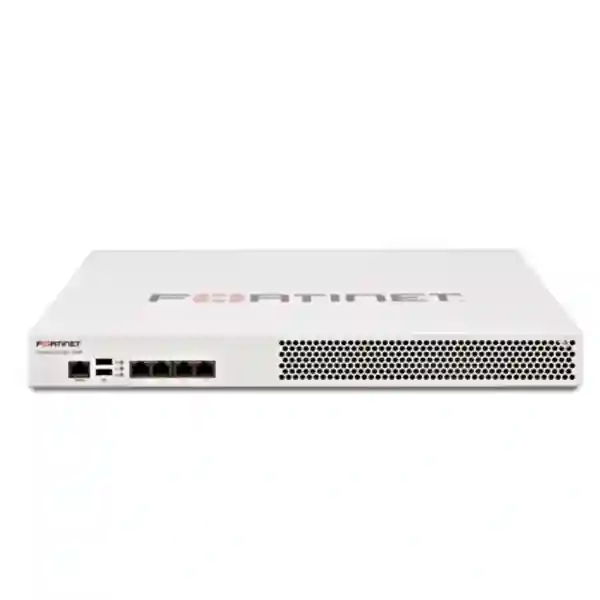
FortiAuthenticator FAC-800F gives enterprises a dedicated platform for centralized identity, authentication, multi-factor authentication, single sign-on, certificate management and guest access. For Tanzania organizations building identity-aware Fortinet environments, FAC-800F provides a practical hardware platform with substantial user capacity, redundant storage and power, and standards-based integration for enterprise directories and applications.
Base users: 8,000
Upper licensed limit: 18,000
Network: 4× GE RJ45 + 2× GE SFP
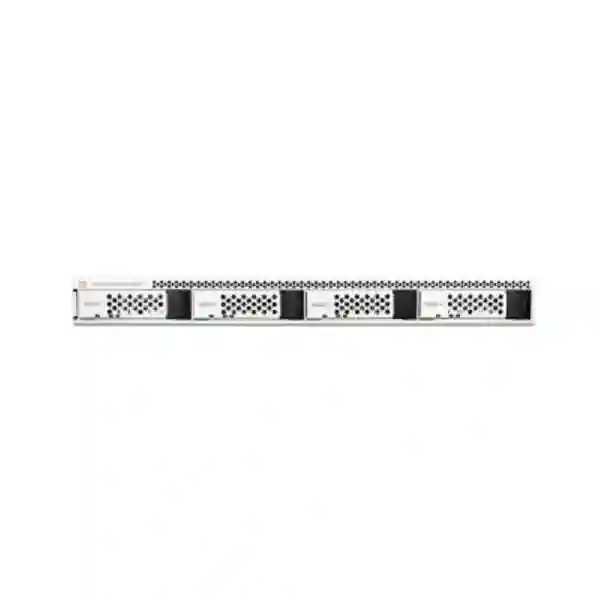
Storage: 2×2 TB HDD, RAID 1
What FortiAuthenticator FAC-800F Does
Identity has become a primary control point for business security. Firewalls can inspect traffic, but organizations also need confidence that the person requesting access is the person they claim to be and that the access policy reflects that user’s role. FortiAuthenticator provides centralized authentication services for the Fortinet Security Fabric and supports single sign-on, certificate management and guest management. It can integrate identity information with FortiGate environments and third-party directory services, helping security teams move from network-only controls toward policies informed by verified users and groups.
The FAC-800F is positioned for organizations whose requirements exceed entry-scale identity appliances. Fortinet lists 8,000 local plus remote users as the base capacity and an 18,000-user upper limit when appropriate upgrade licensing is used. This makes sizing important: procurement teams should count employees, contractors, remote users, administrators, guest workflows, RADIUS clients, token requirements and anticipated growth before selecting the appliance and licenses.
MFA
Combine identity information with supported FortiToken and FIDO2 authentication approaches to strengthen access beyond passwords.
Single Sign-On
Identify users and integrate with directory systems so identity and group context can support access policy decisions.
Certificates
Centralize certificate services for enterprise wireless, VPN and other certificate-based access requirements.
Guest Access
Support controlled guest authentication workflows for wired and wireless network environments.
Verified FAC-800F Hardware and Capacity
| GE RJ45 interfaces | 4 |
| GE SFP interfaces | 2 |
| Local storage | 2×2 TB HDD, RAID 1 |
| TPM | Yes |
| Power | Dual (1+1) 300W redundant, 100–240V |
| Local + remote users | 8,000 base / 18,000 upper limit |
| FortiTokens | 16,000 |
| RADIUS clients | 2,666 base / 6,000 upper limit |
| User groups | 800 |
| User certificates | 40,000 |
| Form factor | 1RU rack mount |
Standards, Integration and High Availability
Fortinet documents standards and protocols including RADIUS, LDAP, X.509, certificate revocation, PKCS#12 certificate import, PKCS#10 CSR import, OCSP, EAP-TLS, SCEP, OAuth, OIDC and SAML 2.0. Management options include CLI, direct console CLI and HTTPS. Fortinet also documents Active-Passive HA and configuration-sync HA. These capabilities matter when FAC-800F must fit an existing enterprise identity architecture rather than operate as an isolated appliance.
A deployment plan should identify authoritative user directories, authentication flows, applications, network access servers, VPN requirements, wireless authentication, certificate lifecycle, MFA enrollment and recovery processes. High availability should be considered when authentication is business-critical because an identity service can become part of the access path for many users and applications.
FortiAuthenticator FAC-800F Tanzania
For Tanzania enterprises, the FAC-800F is relevant when authentication has grown beyond individual application accounts and disconnected password systems. Banks, universities, healthcare groups, telecom environments, large professional organizations, government-related environments, hospitality groups and distributed businesses may need a central point for RADIUS authentication, MFA, directory integration, certificate workflows and identity-aware network access. The buying process should begin with an identity inventory rather than only a hardware request. Count users, remote workers, branch users, administrators, network devices and applications that will depend on authentication. Identify whether Microsoft Active Directory or another LDAP directory is authoritative, which services need SAML or OIDC federation, and whether certificates are required for wireless or VPN access.
Tanzania buyers should also define resilience requirements. FAC-800F includes redundant power and RAID-1 local storage, while FortiAuthenticator supports HA approaches. However, redundancy should be designed as an end-to-end service requirement: power, switching, DNS, directory connectivity, time synchronization and upstream network paths can all affect authentication. A quotation request should therefore include the desired appliance quantity, user count, token requirement, HA requirement, directory environment and intended Fortinet integrations. FourTeck can use this information to prepare a clearer commercial and technical scope without making unsupported assumptions about the customer network.
For broader security planning, customers can review FourTeck Tanzania for related business technology requirements and FourTeck Fortinet specialist resources when comparing Fortinet ecosystem components. The identity layer is most valuable when it is planned alongside firewall policy, secure access, switching, wireless and endpoint requirements rather than treated as a standalone login server.
FortiAuthenticator FAC-800F Dar es Salaam
Organizations in Dar es Salaam often operate headquarters, branch connectivity, cloud applications, data rooms, Wi-Fi networks and remote access at the same time. FAC-800F can serve as a centralized identity component where IT teams want to reduce fragmented authentication and provide consistent user identity to security systems. A head-office deployment may integrate corporate directories, FortiGate security, RADIUS-enabled infrastructure, enterprise wireless and web applications. The practical objective is not simply to add another appliance; it is to establish repeatable authentication policies and lifecycle processes for employees, contractors and guests.
Before procurement, Dar es Salaam teams should document how users join, change roles and leave the organization. MFA enrollment, lost-token recovery, guest sponsorship, certificate renewal and administrator access are operational workflows that affect security after installation. For a multi-building or multi-branch business, administrators should also map which RADIUS clients and network access systems will query FortiAuthenticator. FAC-800F’s documented capacity provides room for substantial environments, but capacity figures should be checked against the actual configuration and licensing plan rather than interpreted as guaranteed application performance.
Power and rack planning also matter. The appliance is 1RU, approximately 44 × 438 × 701.2 mm and 15 kg, with front-to-back airflow and dual redundant power. Buyers should confirm rack depth, airflow, power distribution and data-center environmental suitability before installation. A useful quote request should state whether the project is new deployment, migration, expansion or HA addition, plus the expected user count and integration list.
FortiAuthenticator FAC-800F Mwanza
Mwanza organizations with distributed offices, education campuses, healthcare facilities, logistics operations or regional administration can use centralized authentication to apply a more consistent identity model across network services. Where users connect through VPN, enterprise Wi-Fi or branch infrastructure, FortiAuthenticator can help consolidate authentication while preserving integration with existing directory services. This is particularly useful when an IT team needs stronger assurance than passwords alone and wants to introduce MFA without creating separate identity stores for every protected service.
The FAC-800F procurement conversation should include connectivity between Mwanza sites and the location hosting the appliance. Authentication traffic is typically lightweight compared with application traffic, but service dependency is high: unreliable WAN paths can affect remote users if all authentication is centralized. Architecture teams should decide whether HA, local fallback methods or carefully designed service dependencies are required. They should also confirm time synchronization because certificate and token-based authentication depends on accurate system time.
For organizations expanding a Fortinet environment, identity can complement firewall and access controls by allowing policies to reflect users and groups rather than relying only on IP addresses. Review FourTeck Africa technology coverage when coordinating wider regional projects. Procurement teams should request a bill of materials that clearly distinguishes the FAC-800F hardware, any required upgrade licensing, FortiToken requirements, support services and implementation scope.
FortiAuthenticator FAC-800F Arusha
Arusha businesses in hospitality, tourism, education, professional services and regional operations can face a mixed identity environment: permanent staff, seasonal personnel, contractors, visitors and remote administrators may all require different access. FortiAuthenticator supports enterprise identity functions that can help separate these workflows. Guest authentication can be planned independently from employee authentication, while certificate and MFA capabilities can strengthen access to sensitive services.
A sound Arusha deployment starts by classifying users and services. Employee access may rely on an existing LDAP or Active Directory environment; guest access may require a controlled registration workflow; administrators may require stronger MFA; enterprise wireless may use RADIUS and certificates. These are design decisions rather than default settings, and they should be captured before ordering licenses or implementation services. FAC-800F offers substantial user and RADIUS-client capacity, making it suitable for organizations that expect identity requirements to grow.
Facilities planning should include rack depth, redundant power feeds where available and environmental conditions. Fortinet specifies an operating temperature of 0–40°C and 5–95% non-condensing humidity for FAC-800F. Those published limits should be respected in equipment-room design. For quotation accuracy, Arusha customers should share expected user totals, directory type, MFA method, number of network access devices and whether high availability is required.
FortiAuthenticator FAC-800F Dodoma
Dodoma institutions and enterprises may require auditable, centralized authentication for staff, administrators, network access and business applications. FortiAuthenticator can contribute to such an architecture through RADIUS, LDAP integration, MFA, SSO, certificate services and standards-based federation. The appliance itself is only one component of identity governance: organizations should maintain appropriate joiner, mover and leaver processes, role definitions and administrative controls around it.
For public-sector, education or enterprise procurement, the FAC-800F specification should be evaluated against a documented requirement rather than chosen only because of its model tier. Base and upper user limits, FortiToken capacity, RADIUS-client capacity, certificate capacity, HA design and physical requirements should be checked. If procurement documents require exact standards, certifications or firmware capabilities, teams should validate them against the current Fortinet datasheet and release documentation at the time of purchase.
A structured request for quotation should include appliance quantity, target firmware policy, support expectations, user count, RADIUS clients, token count, certificate requirements, HA design and installation scope. This reduces ambiguity and helps prevent a hardware-only quote from omitting necessary licensing or deployment work.
FortiAuthenticator FAC-800F UAE
UAE enterprises commonly operate hybrid environments spanning offices, cloud services, data centers, remote staff and multiple branches. FAC-800F can provide centralized authentication where Fortinet infrastructure and third-party identity systems must work together. Its support for RADIUS and LDAP addresses established enterprise access patterns, while SAML 2.0, OAuth and OIDC support modern federation scenarios. Certificate services and MFA can add stronger identity assurance for VPN, wireless and application access.
For UAE procurement, organizations should define whether FAC-800F is a new identity platform, replacement, capacity expansion or HA peer. The correct commercial scope may include hardware, support, user-capacity upgrades and FortiToken-related requirements. Buyers should avoid assuming that every authentication method or token option is included with the base appliance. Exact licensing should be checked against the current Fortinet ordering guide and the intended architecture.
Customers coordinating Tanzania and UAE operations can consult FourTeck UAE and Fortinet UAE resources for regional project discussions. Cross-border designs should standardize identity policy while accounting for each site’s network dependency, directory location and resilience requirements.
FortiAuthenticator FAC-800F Uganda
Uganda organizations can use FAC-800F when identity services need to scale across corporate users, branch networks and remote access. Centralizing authentication can simplify the relationship between directories, FortiGate policies, enterprise Wi-Fi and VPN services. The appliance supports a base of 8,000 local plus remote users, giving larger organizations room to consolidate identity workflows while retaining a defined path to a higher licensed user limit.
Architecture planning should identify which sites can reach the authentication service reliably and what happens if a WAN link fails. For multi-site deployments, HA and directory availability deserve as much attention as appliance capacity. Network teams should document RADIUS clients, certificate-dependent services, federation targets and MFA enrollment. Security teams should separately define privileged administrator access and recovery processes.
For related regional security planning, see FourTeck Uganda. Customers operating both Tanzania and Uganda can benefit from a consistent identity architecture while keeping local connectivity and operational requirements in the design.
FortiAuthenticator FAC-800F Kampala
Kampala enterprises with headquarters and branch operations can use FAC-800F as an authentication hub for users and network access systems. When a business already uses FortiGate, adding FortiAuthenticator can improve the availability of identity information for access policy while supporting MFA and SSO workflows. This is useful for organizations that want to reduce dependence on shared credentials and static network identifiers.
Kampala buyers should plan the migration path carefully if replacing an existing RADIUS server or authentication platform. Network access devices, VPN gateways, wireless controllers and applications may need staged migration and testing. User communication is equally important when MFA is introduced, because enrollment and recovery can affect support workload. A pilot group can validate directory mapping, token behavior and application federation before broader rollout.
The commercial request should separate appliance procurement from professional services and recurring support or token requirements. This gives finance and IT teams a clearer view of first-year and ongoing costs without assuming a specific license package before requirements are known.
FortiAuthenticator FAC-800F Arua
For organizations connecting Arua operations to a central enterprise network, FAC-800F can support identity-driven access without requiring every branch to maintain an independent authentication database. Users can be validated against central identity sources, while RADIUS and federation services support network and application access. The design must nevertheless account for WAN dependency and should avoid making remote sites dependent on a single fragile path.
Before deployment, teams should list critical services that require authentication during connectivity disruptions. This exercise informs decisions around redundancy, alternate access methods and operational procedures. It also helps determine whether the FAC-800F will be placed at a headquarters, data center or other resilient location. Power, cooling and rack requirements should be verified against Fortinet’s hardware specifications.
Arua procurement requests are stronger when they include actual user and device counts instead of broad descriptions such as “enterprise authentication.” Include expected growth, branch count, RADIUS clients, MFA population, certificates and integration targets so the proposed configuration can be checked against documented limits.
FortiAuthenticator FAC-800F Mbarara
Mbarara businesses and institutions may need centralized identity as their networks expand from a single office into branches, remote users and cloud applications. FAC-800F can support this transition by consolidating authentication services and integrating with existing directory systems. It can also support guest authentication and certificate workflows where organizations need distinct controls for visitors, employees and managed devices.
Sizing should include more than employee headcount. Consider contractors, remote users, administrators, service accounts where applicable, token population, network access servers and certificate issuance. The FAC-800F’s base capacity is substantial, but procurement should still validate licensing and future growth. Where authentication downtime would interrupt business, HA planning should be included at the design stage rather than added after deployment.
For branch projects, document how Mbarara users reach the central authentication service and whether multiple WAN paths exist. This helps network and security teams align identity availability with SD-WAN, VPN or branch connectivity designs.
FortiAuthenticator FAC-800F Gulu
Gulu organizations planning secure digital services can use FAC-800F to centralize identity functions across staff access, remote connectivity, enterprise Wi-Fi and selected applications. A standards-based authentication platform can reduce the number of isolated credential stores that IT teams must administer. FortiAuthenticator’s support for LDAP, RADIUS, SAML, OAuth and OIDC gives architects several integration paths depending on the application and access method.
The strongest deployment plan maps each service to its authentication protocol and identity source. For example, network access may use RADIUS, an internal directory may use LDAP integration, and a web application may use SAML or OIDC. Certificates may support managed wireless or VPN scenarios. These examples should be validated against the actual customer systems before implementation.
Gulu buyers should request a quote only after identifying these dependencies because the final bill of materials can vary with user upgrades, token needs, support and HA. FourTeck can use the requirement list to structure a more relevant proposal.
FortiAuthenticator FAC-800F Kenya
Kenya enterprises with users across Nairobi, Mombasa and other business locations may need centralized authentication for multi-site networks, remote users and cloud-connected applications. FAC-800F provides a hardware identity platform that can integrate with Fortinet security and third-party directories. It is especially relevant where organizations need MFA, SSO, RADIUS, guest authentication or certificate management at a scale beyond smaller appliances.
A Kenya deployment should define the relationship between the identity platform and existing FortiGate, FortiSwitch, FortiAP or third-party infrastructure. Central identity does not replace firewalling or network segmentation; it enriches access decisions by providing stronger user context. Organizations should also decide whether application federation is required and which services will use SAML or OIDC.
For regional information, visit Fortinet Kenya solutions. Procurement teams spanning Kenya and Tanzania should document common standards for MFA, certificates and privileged access while accounting for connectivity between sites.
FortiAuthenticator FAC-800F Kuwait
Kuwait enterprises evaluating FAC-800F typically need a centralized identity service that can work across established directory infrastructure and modern applications. The appliance’s combination of RADIUS, LDAP, certificate services and federation protocols makes it suitable for mixed environments where network and application authentication must be managed consistently. MFA can add an additional verification layer for administrators, remote users and other sensitive access paths.
Procurement should validate the required FortiAuthenticator software version and compatibility with dependent systems. Fortinet publishes model and firmware documentation, and the FAC-800F is represented in current FortiAuthenticator documentation. Exact interoperability should still be checked for the customer’s directory versions, applications and network devices.
Regional buyers can review FourTeck Kuwait when coordinating procurement. A useful requirement pack includes user counts, protocols, MFA population, HA expectation, rack environment and support term.
FortiAuthenticator FAC-800F Ghana
Ghana organizations modernizing access controls can use FAC-800F as a central authentication platform for network users, remote access, enterprise wireless and federated applications. Consolidating identity services can make policy administration more consistent and reduce the need to maintain separate credentials for every network service. The platform’s certificate management capabilities can also support environments moving toward certificate-based device or user authentication.
For multi-branch organizations, resilience and directory reachability should be tested before rollout. Authentication architecture should identify primary and secondary dependencies, including DNS, NTP, directory services and network routes. If the organization needs uninterrupted authentication, HA should be designed alongside these dependencies rather than considered only at the appliance level.
See FourTeck Ghana for regional coordination. Ghana and Tanzania teams operating under one group can standardize identity policy while maintaining appropriate regional infrastructure.
FortiAuthenticator FAC-800F Nigeria
Nigeria enterprises with large user populations, multiple sites and diverse application estates can evaluate FAC-800F where centralized identity is required. Its base capacity of 8,000 local plus remote users and documented upgrade path to 18,000 users make capacity planning straightforward at a high level, but actual design should also count RADIUS clients, tokens, certificates and user groups. These limits are configuration considerations, not promises of application performance.
Large organizations should define authentication ownership and operational processes before implementation. Security teams may own MFA policy, infrastructure teams may manage RADIUS clients, application teams may configure SAML or OIDC, and service desks may handle user enrollment and recovery. Clear roles reduce the risk of a technically sound platform becoming difficult to operate.
Regional buyers can consult FourTeck Nigeria. For cross-country projects, provide a common requirement matrix so appliance sizing and identity policy can be compared consistently.
FortiAuthenticator FAC-800F Seychelles
Seychelles organizations in hospitality, financial services, government-related operations and multi-site business environments may need centralized identity for employees, guests, administrators and remote users. FortiAuthenticator supports these different access patterns from one identity platform, while FAC-800F provides hardware capacity suitable for organizations expecting significant growth or consolidation.
Island and distributed-site environments should give particular attention to connectivity dependencies. If remote properties or offices authenticate against a central appliance, the WAN architecture becomes part of the identity service. Teams should plan resilience, monitoring and recovery procedures, and should document what access remains available during an outage. Guest authentication should also be separated from privileged employee and administrator workflows.
A Seychelles quotation request should specify the number of sites, users, guest workflows, network access devices, tokens, certificates and desired HA arrangement. This gives the supplier enough information to distinguish hardware capacity from licensing and implementation requirements.
Buying and Deployment Checklist
✓ Count current and three-year user growth.
✓ List RADIUS clients and network access devices.
✓ Identify LDAP or Active Directory sources.
✓ Define MFA population and token method.
✓ List SAML, OAuth and OIDC applications.
✓ Define certificate use cases.
✓ Decide whether HA is required.
✓ Confirm rack depth, power and cooling.
✓ Define migration and testing phases.
✓ Separate hardware, licenses and services in the quote.
Frequently Asked Questions
What is FortiAuthenticator FAC-800F?
FAC-800F is a Fortinet FortiAuthenticator hardware appliance for centralized identity and authentication services, including MFA, SSO, certificate management and guest authentication.
How many users does FAC-800F support?
Fortinet’s datasheet lists 8,000 local plus remote users as the base capacity and 18,000 as the upper limit with appropriate hardware upgrade licensing.
Does FAC-800F support high availability?
Fortinet documents Active-Passive HA and configuration-sync HA for FortiAuthenticator. The complete resilience design should also account for directories, DNS, NTP, switching and WAN paths.
Does FAC-800F support SAML and OIDC?
Yes. Fortinet lists SAML 2.0, OAuth and OIDC among supported standards, alongside RADIUS and LDAP.
What information should I provide for a quotation?
Provide user count, expected growth, directory platform, number of RADIUS clients, MFA/token requirements, certificate use cases, application federation requirements, HA preference, appliance quantity and desired implementation scope.
Decision Recap
Choose FAC-800F when the requirement calls for a dedicated FortiAuthenticator hardware platform with substantial user scale, redundant storage and power, multiple network interfaces and centralized identity services. Validate the model against actual user, token, RADIUS-client, certificate and HA requirements. If the project is smaller or substantially larger, compare the requirement against other FortiAuthenticator appliance or virtual options before finalizing procurement.
Plan Your FAC-800F Deployment
Send FourTeck your user count, authentication methods, directory platform, branch design, token requirement and HA expectations. A requirements-led quotation helps ensure the appliance, licensing and deployment scope match the intended identity architecture.




Reviews
There are no reviews yet.