
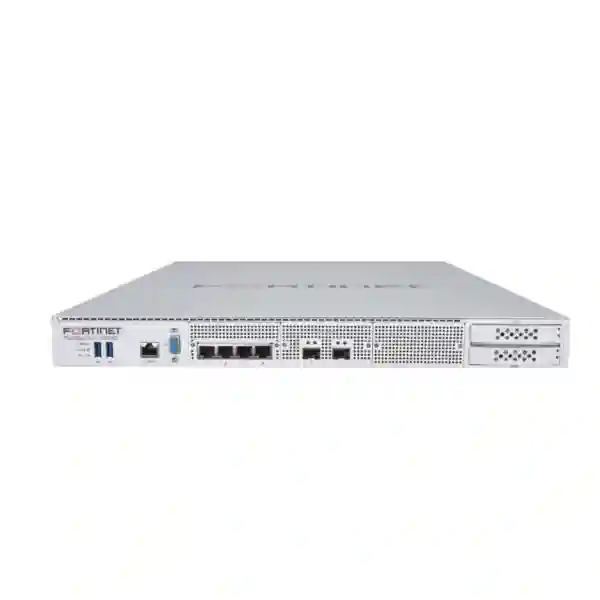
FortiSandbox FSA-1500G Tanzania
FortiSandbox FSA-1500G is a purpose-built 1RU sandboxing appliance designed for organizations that need to examine suspicious content beyond conventional signature-based controls. Fortinet positions FortiSandbox around advanced AI, purpose-built machine learning, static and dynamic analysis, and FortiGuard threat intelligence for detecting and classifying emerging, evasive and unknown threats. For Tanzania enterprises, financial institutions, government environments, service providers, large campuses and security operations teams, the FSA-1500G provides an on-premises option for keeping advanced analysis close to the protected environment while integrating with the broader Fortinet Security Fabric.
What the FortiSandbox FSA-1500G does
Modern malware frequently uses packing, obfuscation, delayed execution, malicious documents, scripts and other techniques intended to evade basic inspection. A sandbox adds a controlled analysis layer in which suspicious objects can be evaluated before security teams decide how to treat them. FortiSandbox combines multiple analysis methods rather than relying on a single detector. Static techniques can inspect characteristics without execution, while dynamic analysis observes behavior in isolated virtual environments. Fortinet also applies advanced AI and machine-learning techniques to accelerate classification and improve contextual detection.
The FSA-1500G is the mid-range G-series hardware model in Fortinet’s current FortiSandbox appliance family. It can operate as part of a coordinated security architecture and integrates with Fortinet products including FortiGate, FortiMail, FortiNDR, FortiEDR, FortiProxy, FortiSIEM, FortiADC, FortiClient, FortiSOAR and FortiWeb. This matters when a buyer is not simply purchasing an isolated appliance, but designing a workflow in which suspicious content is submitted for analysis and verdicts can inform prevention, investigation and response.
Verified FSA-1500G hardware specifications
1RU appliance for rack deployment.
4 × GE RJ45 ports and 2 × 10 GE SFP+ slots.
2 × 960 GB configured as RAID1.
Trusted Platform Module (TPM).
Two 100–240V AC, 50/60 Hz power supplies with redundancy and hot-swap capability.
44 × 438 × 610 mm; weight 11.30 kg.
Fortinet specifies average/max power consumption of 238.1 W / 291.06 W, front-to-back forced airflow, 1027.22 BTU/h heat dissipation, 0°C to 40°C operating temperature and 10% to 90% non-condensing humidity. These values should be included in rack, UPS, cooling and data-room planning rather than treated as incidental product details.
Deployment, integration and procurement planning
A successful FortiSandbox deployment starts with the inspection workflow. Buyers should identify which security controls will submit suspicious objects, expected file volume, required virtual-machine analysis environments, retention and reporting expectations, network placement, management access, uplink design and incident-response ownership. Fortinet offers FortiSandbox in hardware, virtual and hosted forms, so an appliance purchase should be based on the need for an on-premises analysis platform rather than model name alone.
For FSA-1500G projects, procurement should separate the base appliance from subscriptions, support and any VM-capacity expansion required for the intended analysis profile. Fortinet’s current ordering guidance lists the FSA-1500G as a hardware option and provides separate licensing constructs for analysis environments and services. Because licensing evolves, quotation preparation should use the current Fortinet ordering guide and exact desired term instead of assumptions from an older bill of materials.
FourTeck Tanzania buyers can also review broader IT, networking and cybersecurity solutions in Tanzania when the sandbox is part of a larger security modernization project. For regional requirements, the FourTeck Uganda technology portfolio and FourTeck Kenya IT solutions provide regional context, while FourTeck Fortinet UAE specialist resources can support Fortinet-focused research across the wider FourTeck network.
FortiSandbox FSA-1500G Tanzania
Organizations evaluating FortiSandbox FSA-1500G in Tanzania are usually trying to solve a specific advanced-threat problem: suspicious files are entering through email, web traffic, endpoints, file sharing or business applications, and the existing security stack needs a deeper analysis layer. The purchasing conversation should therefore begin with traffic and content flows. Identify where potentially malicious objects originate, which Fortinet or third-party controls can submit them, how quickly a verdict is needed, and which team will investigate high-risk results. In a multi-site organization, it is also important to decide whether analysis will be centralized in one data room or whether architecture and connectivity requirements justify another deployment model.
Tanzania deployments should include practical infrastructure checks. The 1RU chassis needs suitable rack depth, front-to-back airflow and adequate cooling. Redundant hot-swappable power supplies are valuable only when they are connected to an appropriately designed resilient power arrangement. The 2 × 10 GE SFP+ slots can be useful in higher-throughput environments, but optics, switching and cabling must be specified separately according to the network design. Management addressing, DNS, NTP, routing, access-control rules and secure administrative access should be documented before commissioning. Where FortiGate, FortiMail, FortiWeb, FortiClient or other Fabric products are already deployed, integration requirements should be mapped so submissions and response workflows are intentional rather than added after installation.
For procurement, request a quotation that identifies the FSA-1500G hardware, support level, relevant FortiSandbox threat-intelligence services, required analysis VM licensing, any expansion licensing, optics if required, rack and power dependencies, implementation scope and training or handover expectations. Avoid comparing quotations only on appliance price because licensing terms and service scope can materially change the delivered solution. FourTeck Tanzania’s verified technology enquiry page is the appropriate starting point for a model-specific requirement.
FortiSandbox FSA-1500G Dar es Salaam
Dar es Salaam organizations often operate dense headquarters, financial offices, logistics environments, service-provider networks, hospitality systems and multi-branch infrastructures where email, internet access and externally exchanged files create a broad attack surface. An FSA-1500G project in Dar es Salaam should be planned around the systems that actually receive and move content. A security team may prioritize email attachments and phishing payloads, while another may be concerned with web downloads, endpoint-originated files, application uploads or files crossing trust zones. Mapping these flows helps determine which integrations provide the most operational value.
Data-room readiness is equally important. The FSA-1500G is a 1RU appliance measuring 610 mm deep, so cabinet depth and cable clearance should be checked before delivery. Its specified maximum power consumption and heat dissipation should be included in UPS and cooling calculations. Redundant PSUs should be fed from a resilient design where possible; plugging both into the same unprotected source does not deliver the same availability benefit. If the two 10 GE SFP+ interfaces are part of the intended topology, confirm compatible transceivers and switch ports during bill-of-material preparation rather than after installation.
For a Dar es Salaam SOC or IT security team, the operational design should state who reviews FortiSandbox findings, how high-risk verdicts are escalated, and which integrated security controls can take action. The product can add valuable analysis, but value depends on process: alert ownership, incident tickets, evidence retention, threat hunting and response need defined responsibilities. Buyers should request implementation documentation covering addressing, routing, integration endpoints, administrative roles, update access and backup or recovery procedures. This turns the appliance from a standalone security purchase into an accountable part of the organization’s detection and response architecture.
FortiSandbox FSA-1500G Mwanza
For enterprises and institutions in Mwanza, a FortiSandbox FSA-1500G evaluation should consider whether advanced file analysis will be centralized for one site, shared across branches or integrated into a wider Fortinet security architecture. Distributed organizations often have security controls at several locations while specialist analysis is centralized. That design can be efficient, but it depends on dependable connectivity, sensible routing and clear rules governing what is submitted for inspection. Before purchasing, document the main content sources, approximate inspection demand and which systems will consume sandbox verdicts.
Mwanza buyers should also examine operational resilience. The appliance provides RAID1 storage and redundant hot-swappable power supplies, but the surrounding environment still determines availability. Rack power, UPS runtime, cooling, grounding, upstream switching and management-network access should be reviewed as one system. The operating range specified by Fortinet is 0°C to 40°C, so equipment-room temperature control is a design requirement. Administrators should have secure access paths and documented credentials and roles; unrestricted management exposure should be avoided.
A useful quotation request describes the security objective rather than listing only FSA-1500G. Include existing FortiGate, FortiMail, FortiWeb, endpoint, SIEM or SOC tooling; expected user and site scale; important file-transfer workflows; any data-handling constraints; preferred support term; and whether deployment assistance is required. This allows licensing and integration to be scoped against the real environment. If the organization is modernizing firewall, switching, server or security operations infrastructure at the same time, those dependencies should be discussed together so network interfaces, VLANs, logging and response processes are coordinated.
FortiSandbox FSA-1500G Arusha
Arusha organizations considering FortiSandbox FSA-1500G may include corporate offices, hospitality groups, NGOs, education environments, public-sector entities and businesses exchanging documents with many external parties. In such environments, the security question is not simply whether antivirus exists; it is how the organization treats files that appear suspicious or unknown after first-line inspection. FortiSandbox is designed to provide additional static and dynamic analysis so security teams can obtain a richer verdict before allowing, blocking or investigating content.
Planning should start with integration. If email is the primary risk channel, document the mail-security platform and attachment flow. If web applications receive uploads, examine the web-security path. If endpoints and file shares are the concern, determine how objects will reach the sandbox and how findings return to the operational team. Fortinet lists integrations across multiple Security Fabric products, but the exact configuration depends on deployed versions, licenses and architecture. Compatibility should therefore be verified during design rather than inferred from product-family names alone.
Physical deployment also deserves attention. Confirm rack depth for the 610 mm chassis, cooling for the specified heat output, redundant power design, network uplinks and management connectivity. Procurement teams should ask for an itemized bill covering hardware, current subscriptions, support, VM licensing and any required implementation services. They should also define acceptance criteria: successful system access, updates, configured integrations, test submissions, expected verdict flow, administrative handover and documentation. A structured acceptance process is particularly useful when cybersecurity appliances are integrated with several other controls.
FortiSandbox FSA-1500G Dodoma
In Dodoma, FortiSandbox FSA-1500G can be evaluated for environments where government, institutional, enterprise or regulated workloads require stronger handling of unknown and evasive threats. Security teams should begin by defining the trust boundaries that matter: inbound email, internet downloads, partner file exchange, endpoint activity, application uploads and inter-department transfers can all represent different inspection scenarios. The objective is to place sandbox analysis where it contributes useful evidence and timely verdicts, not simply to add another appliance to the rack.
Organizations with formal governance requirements should include operational documentation in the project. Define administrator roles, access approval, change management, alert escalation, incident retention and reporting. FortiSandbox findings may support investigation, but organizations should decide how those findings enter existing SOC, SIEM or ticketing workflows. Where FortiSIEM, FortiSOAR or other Fortinet security operations tools are part of the architecture, integration should be designed with clear event ownership and response procedures. Where third-party platforms are involved, verify supported integration methods and versions.
Procurement should also consider lifecycle costs. Hardware is one component; support, subscriptions, analysis environments, upgrades and operational staff time influence total cost. Request the current Fortinet ordering information for the chosen support term and confirm whether the desired analysis profile requires additional VM licensing. Infrastructure readiness should cover rack, cooling, redundant power, network optics and secure management. A pre-deployment checklist and post-installation acceptance test can reduce delays and make responsibility clear between procurement, networking and security teams.
FortiSandbox FSA-1500G UAE
UAE buyers evaluating the FortiSandbox FSA-1500G commonly need an on-premises advanced threat-analysis platform that can fit into mature Fortinet deployments and high-capacity enterprise networks. The 10 GE SFP+ connectivity, redundant power and rack form factor make physical integration straightforward when the data-center design is prepared, but the larger decision is architectural. Teams should identify which controls submit suspicious content, what analysis environments are required, how verdicts are distributed and which SOC processes act on them.
Organizations operating hybrid and multi-cloud environments should compare the hardware model with Fortinet’s other FortiSandbox deployment options before finalizing the bill of materials. On-premises hardware can be appropriate when local analysis, infrastructure control or integration patterns favor an appliance, while virtual or hosted options may fit other workloads. The decision should be based on data flow, performance, governance, operations and lifecycle requirements rather than a general preference for hardware.
For UAE procurement, specify exact SKU, support term, threat-intelligence services, required VM capacity, installation scope and integration targets. If 10 GE links are planned, include compatible SFP+ modules and fiber type. If the appliance will be installed in an existing Fortinet Security Fabric, document FortiGate, FortiMail, FortiWeb, FortiClient, FortiSIEM or other relevant systems and software versions. FourTeck’s Fortinet UAE resource provides a regional route for Fortinet-focused requirements.
FortiSandbox FSA-1500G Uganda
Uganda organizations assessing FortiSandbox FSA-1500G should first decide where advanced analysis fits into their security architecture. A sandbox is most effective when it receives suspicious content from meaningful control points and when its verdicts lead to defined actions. Enterprises with branch networks can centralize advanced analysis while maintaining prevention controls closer to users, but the design depends on connectivity, security policy and the products already deployed. Mapping email, web, endpoint and application file flows provides a practical starting point.
The hardware design requires standard data-room preparation: 1RU rack space, sufficient depth, front-to-back cooling, resilient power and appropriate network ports. The appliance includes two redundant hot-swappable power supplies and RAID1 storage, but external resilience still matters. Network administrators should reserve management addressing and establish secure access, while security administrators define update access, roles and integrations. If 10 GE uplinks are required, optics and switch compatibility should be confirmed in advance.
Procurement teams should ask for current licensing and support details rather than relying on old internet price lists. Fortinet ordering structures can include hardware, threat-intelligence services, FortiCare and analysis VM licensing. State the desired contract period, expected integrations and deployment assistance in the RFQ. For broader regional infrastructure discussions, buyers can reference FourTeck Uganda when coordinating security with networking, communications and related IT requirements.
FortiSandbox FSA-1500G Kampala
Kampala enterprises with centralized IT teams may use FortiSandbox FSA-1500G as part of a broader SOC or network-security architecture. The strongest use case is not simply malware scanning; it is adding controlled behavioral analysis for objects that require deeper inspection. Security teams should document the systems that will submit files, the categories of files most relevant to the business, the acceptable delay for analysis and the response expected when a malicious verdict is returned.
For organizations already standardized on Fortinet, Security Fabric integration can reduce disconnected workflows. Fortinet lists FortiGate, FortiMail, FortiNDR, FortiEDR, FortiProxy, FortiSIEM, FortiADC, FortiClient, FortiSOAR and FortiWeb among FortiSandbox integrations. The exact design should be validated against current software versions and licensing. A proof-of-concept or structured test plan can be valuable for complex environments: submit representative benign and test objects, verify verdict visibility, confirm alert routing and document response behavior without using live malware in an uncontrolled manner.
Kampala buyers should also include physical and operational requirements in the RFQ. Rack depth, cooling, power, uplinks, management VLANs, administrator access, support level and handover are part of the solution. If the appliance will serve multiple sites, include branch count and connectivity patterns so the architecture can be assessed. An itemized quotation makes it easier to distinguish the base appliance from subscriptions, support and implementation services and helps procurement compare proposals on equivalent scope.
FortiSandbox FSA-1500G Arua
For an Arua deployment, the central design question is whether local infrastructure and connectivity support a centralized advanced-analysis workflow. If suspicious files originate across branch offices, remote sites or partner links, teams should decide how submissions reach FortiSandbox and what happens when connectivity is constrained. The FSA-1500G is an on-premises appliance, so it can keep analysis resources under organizational control, but integrations still rely on correctly designed network paths and security policies.
The installation plan should cover rack dimensions, power resilience and environmental conditions. Fortinet specifies a 610 mm chassis depth, front-to-back airflow and a 0°C to 40°C operating range. Those details matter in smaller equipment rooms where rack depth, cooling and UPS capacity may be limited. The redundant power supplies should be connected according to the site’s resilience design, and management access should be restricted to authorized administration networks.
Arua procurement requests should describe current security controls, expected number of sites, primary file channels, internet connectivity, desired support term and whether configuration assistance is needed. This helps distinguish a simple hardware supply request from a complete deployment. Buyers should also confirm current subscription and VM licensing requirements because sandbox analysis environments are part of the functional design. Documentation and remote support procedures can be especially important for sites where specialist security staff are centralized elsewhere.
FortiSandbox FSA-1500G Mbarara
Mbarara organizations considering the FSA-1500G can approach the project as an advanced threat-analysis service for the wider enterprise rather than a standalone box. First identify the business systems that exchange untrusted files: email gateways, web applications, internet browsing, endpoints, shared storage and partner portals may each require different integration paths. Prioritizing the highest-risk flows prevents unnecessary complexity and gives the security team a measurable deployment objective.
Operational planning should define what happens after analysis. A malicious or suspicious verdict needs an owner, an escalation path and, where supported, an automated or manual containment action. If the organization uses SIEM or SOAR tooling, decide which events are forwarded and how cases are correlated. If Fortinet Fabric products are already installed, validate supported integration and software versions. The sandbox can improve context, but incident response remains a process involving people, policy and other controls.
For the physical installation, confirm 1RU rack space, adequate depth, cooling and resilient power. Include network transceivers and cabling if the 10 GE SFP+ interfaces will be used. Procurement should request a current itemized quotation with hardware, subscriptions, support and any VM expansion. Implementation scope should specify integration configuration, test submissions, administrator handover and documentation. These details make the delivered system easier to operate and reduce ambiguity between supplier, network team and security team.
FortiSandbox FSA-1500G Gulu
Gulu deployments may serve organizations with a central office and geographically distributed users or sites. In that scenario, the FSA-1500G should be evaluated in the context of WAN connectivity and centralized security operations. Determine which branch security devices can submit suspicious objects, whether submission paths traverse constrained links and whether verdicts can be consumed centrally. The architecture should avoid creating a dependency that disrupts ordinary business traffic when a remote link is unavailable.
Infrastructure preparation is straightforward but should be explicit. The appliance needs one rack unit, sufficient cabinet depth, front-to-back airflow and power capacity. Its redundant hot-swappable PSUs and RAID1 storage support appliance resilience, while the surrounding UPS, switching and cooling design determines site-level resilience. Secure management access, time synchronization, DNS, routing and update connectivity should be prepared before commissioning.
For quotation purposes, list the exact FSA-1500G model, support duration, required security subscriptions, desired VM analysis capacity and integration targets. Include whether installation will be on-site or coordinated remotely, and identify who will own post-deployment monitoring. If the organization has FortiGate firewalls, FortiMail email security or FortiSIEM, mention the deployed models and software versions so integration can be checked. A complete requirement produces a more useful proposal than asking only for the lowest hardware price.
FortiSandbox FSA-1500G Kenya
Kenya enterprises evaluating FortiSandbox FSA-1500G may have large internet-facing environments, distributed branches, financial workloads, service-provider infrastructure or established SOC operations. The appliance can add advanced analysis for unknown and evasive threats, but sizing and architecture should follow the actual submission workload. Security teams should identify high-volume sources, expected file types, peak activity and the systems that require verdicts. Where a sandbox is shared across multiple business units, governance should define ownership and service expectations.
Organizations should compare on-premises hardware with Fortinet’s virtual and hosted FortiSandbox choices. Hardware provides a dedicated appliance under the organization’s infrastructure control; virtual deployment may fit software-defined environments; hosted options may reduce local infrastructure. The correct choice depends on security policy, data handling, operational skills, latency, integration and lifecycle cost. For hardware, plan rack depth, redundant power, cooling, uplinks and management access alongside the licensing model.
A Kenya RFQ should specify existing Fortinet components, required support term, analysis VM needs and implementation expectations. Include test and acceptance requirements so the project ends with verified integrations rather than only powered-on hardware. For regional IT planning, FourTeck Kenya provides a related route for networking and security requirements that may accompany the sandbox project.
FortiSandbox FSA-1500G Kuwait
Kuwait organizations looking at FSA-1500G typically need a controlled, enterprise-class method for analyzing suspicious files that survive initial security checks. The procurement team should involve SOC, network and infrastructure stakeholders early because the appliance touches all three areas. Security defines analysis use cases and response; networking provides connectivity and segmentation; infrastructure provides rack, power and cooling. A coordinated design prevents the common problem of purchasing hardware before the integration workflow is agreed.
The FSA-1500G’s 1RU format, redundant PSUs, RAID1 storage and 10 GE SFP+ capability suit data-center installation, but exact network design depends on the deployment. Administrators should document management and data interfaces, routing, allowed services and monitoring. If FortiGate, FortiMail, FortiWeb, FortiClient or SOC products will integrate, confirm supported versions and required configuration. Fortinet’s Security Fabric approach can coordinate products, but configuration and licensing still need project-specific validation.
For procurement, request current Fortinet licensing and support options for the desired term and analysis capacity. Do not treat a historical web price as a current project quotation. Include transceivers, implementation, testing and handover if required. Organizations with compliance obligations should also document administrative access, change control and incident handling around sandbox verdicts. The result should be an operational security capability, not simply a capital asset installed in a rack.
FortiSandbox FSA-1500G Ghana
Ghana enterprises can evaluate FortiSandbox FSA-1500G when existing controls need an additional layer for suspicious and unknown content. The first design exercise is a threat-flow map: identify where files enter, which controls inspect them, where uncertainty remains and what action should follow a sandbox verdict. This is more useful than starting with a feature checklist because it links the appliance directly to risk reduction and incident-response processes.
A central FSA-1500G can support a broader environment when network and security architecture permit. Multi-site organizations should assess WAN paths, submission volume and operational ownership. If branches use FortiGate and headquarters operates centralized security services, the design should confirm how suspicious objects and verdict information traverse the environment. If email is the dominant channel, FortiMail integration may be particularly relevant. If web applications accept uploads, FortiWeb may be part of the analysis workflow. Exact integration must be validated for deployed versions.
Procurement should include hardware, support, subscriptions, VM licensing, implementation and infrastructure dependencies. Confirm rack depth, cooling, UPS and 10 GE optics where applicable. Define acceptance tests such as successful administration, update status, integration connectivity, test-file submission, verdict visibility and logging. This creates a clear handover point and helps security teams begin operating the platform with documented expectations.
FortiSandbox FSA-1500G Nigeria
Nigeria organizations with large user populations, extensive branch networks or high volumes of external communication may consider FortiSandbox FSA-1500G as part of a layered advanced-threat strategy. The key is to determine which suspicious content merits sandbox analysis and how the system scales with the organization’s workflow. High-volume environments should assess submission patterns and licensing carefully, while regulated teams may also need to consider data handling, audit trails and administrative controls.
Integration design should connect sandbox verdicts with prevention and response. Fortinet supports integrations across network, email, endpoint, web and security-operations products, allowing the sandbox to contribute intelligence rather than operate in isolation. Before deployment, document product versions, network paths, authentication and administrative roles. If a SIEM or SOAR platform will consume results, define the event fields, severity mapping and case-handling process needed by the SOC.
Infrastructure teams should prepare the rack and data-room environment for the 1RU, 610 mm-deep appliance and its front-to-back airflow. Redundant power should connect to a resilient electrical design, and 10 GE SFP+ links require compatible optics and switching. Procurement should request current support and subscription terms and any required analysis VM expansion. A detailed bill of materials and statement of work make comparisons more meaningful than a single appliance price.
FortiSandbox FSA-1500G Seychelles
Seychelles organizations may place particular value on centralized security capabilities that can support limited local specialist resources. FortiSandbox FSA-1500G can provide on-premises advanced file analysis, but the operating model should be designed before procurement. Decide who monitors findings, who receives critical alerts, how incidents are escalated and whether remote security specialists need secure administrative access. These questions are as important as hardware specifications.
For island and distributed environments, support logistics and resilience should be included in planning without assuming stock or response times. The appliance provides redundant hot-swappable power supplies and RAID1 storage, while local UPS, cooling, spare network components and documented recovery procedures support broader continuity. Secure remote administration can help operational support, but it should use controlled access paths, strong authentication and role-based privileges according to organizational policy.
A Seychelles quotation request should identify existing firewalls, email security, endpoints, SIEM or web-security systems; expected sites and users; preferred support term; and any required implementation assistance. Confirm current Fortinet licensing for threat intelligence and analysis environments. If remote commissioning is expected, define prerequisites such as rack installation, addressing, internet access, management credentials and a local technical contact. A well-prepared deployment can reduce avoidable troubleshooting and make handover more predictable.
FortiSandbox FSA-1500G selection checklist
Before requesting a final quotation, confirm the primary inspection use cases, expected submission sources, existing Fortinet and third-party security products, required VM analysis environments, desired support duration, rack availability, UPS and cooling capacity, 1 GE or 10 GE connectivity, management network, SOC ownership, logging requirements and implementation scope. Where multiple sites are involved, include branch count, WAN architecture and where security operations are centralized. These details help align hardware and licensing with the intended outcome.
Which systems submit files, who reviews verdicts, and what response follows?
Confirm current subscriptions, support and VM requirements for the selected term.
Verify rack depth, cooling, redundant power, optics and management connectivity.
Test administration, updates, integrations, submissions, verdicts, logging and handover.
Frequently asked questions
What is FortiSandbox FSA-1500G?
It is Fortinet’s 1RU mid-range G-series FortiSandbox hardware appliance for advanced threat analysis using techniques including static analysis, dynamic analysis, advanced AI and machine learning. It can integrate with multiple Fortinet Security Fabric products.
What interfaces does FSA-1500G provide?
Fortinet specifies 4 × GE RJ45 ports and 2 × 10 GE SFP+ slots. Optics and cabling should be selected according to the deployment network.
Does the FSA-1500G have redundant power?
Yes. Fortinet specifies two redundant, hot-swappable 100–240V AC power supplies. Site-level resilience still depends on UPS and electrical design.
Can FortiSandbox integrate with FortiGate and FortiMail?
Fortinet lists both FortiGate and FortiMail among FortiSandbox Security Fabric integrations, along with several endpoint, web, network and security-operations products. Exact compatibility should be checked for current versions and licenses.
What should be included in an FSA-1500G RFQ?
Include exact model, quantity, support term, required threat-intelligence services, analysis VM requirements, integration targets, rack and network requirements, optics where needed, implementation scope, testing, documentation and handover expectations.
Decision recap and consultation
Choose the FSA-1500G when your design calls for a dedicated on-premises FortiSandbox hardware appliance and the verified interface, rack, power and storage profile fits the environment. Final selection should also account for submission workload, analysis VM requirements, support, subscriptions, integration and the SOC process that will use the results.
When contacting FourTeck Tanzania, provide your existing Fortinet products, approximate user/site scale, main threat channels, required support term and target deployment environment. That information supports a more precise bill of materials and implementation discussion.

Reviews
There are no reviews yet.