
FortiWeb FWB-600F Tanzania
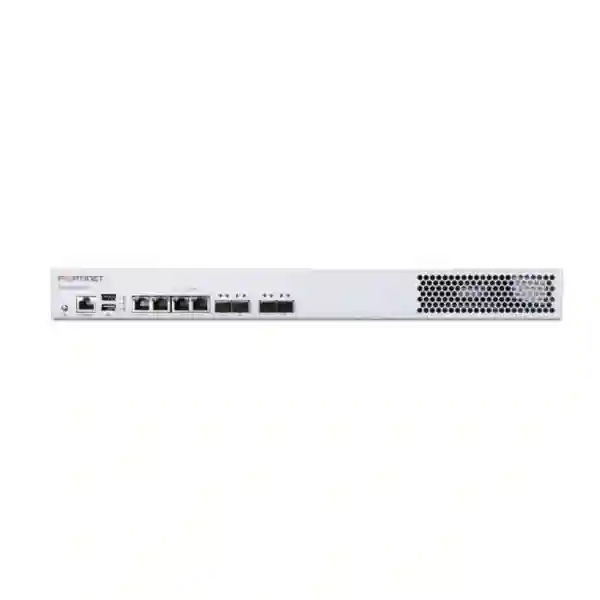
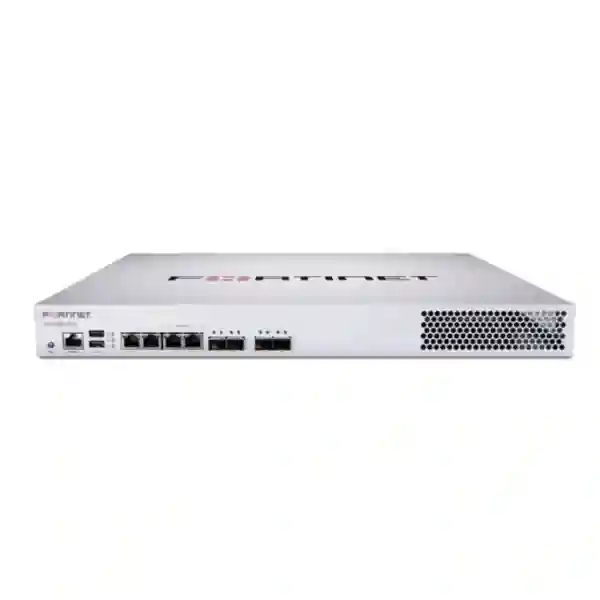
FortiWeb FWB-600F is a dedicated Fortinet web application firewall for organizations that need application-layer inspection and protection for websites, portals, APIs and internet-facing business services. Fortinet positions FortiWeb as a Web Application and API Protection platform that uses machine learning, behavioral analysis and FortiGuard intelligence to address known vulnerabilities, zero-day threats, malicious bots, application-layer denial-of-service activity and other web risks. For the 600F appliance, Fortinet publishes up to 1 Gbps WAF throughput and a hardware interface set of 4 GE RJ45 ports, including two bypass ports, plus 4 SFP GE interfaces. Actual performance depends on traffic and configuration.
Fortinet-published WAF throughput for the FortiWeb 600F hardware model.
Protection capabilities for modern web applications, APIs, bots and application-layer attacks.
FortiWeb can integrate with FortiGate and FortiSandbox as part of the Fortinet Security Fabric.
FortiWeb FWB-600F Overview
A network firewall and a web application firewall solve different security problems. Traditional network controls primarily govern network connectivity, while a WAF inspects HTTP and HTTPS application traffic at Layer 7. FortiWeb is designed specifically for this application-facing role. It can help security teams apply policies to requests reaching web servers and APIs, identify suspicious behavior, and reduce exposure to attacks such as SQL injection and cross-site scripting. The 600F is a physical appliance option for organizations that prefer an on-premises or data-center security control rather than relying only on a virtual or SaaS WAF.
Fortinet describes FortiWeb as using dual-layer machine learning to model applications and identify malicious patterns while reducing false positives. The platform also includes API discovery and protection, bot mitigation, client-side protection and threat analytics. FortiGuard security services are available through subscriptions, so procurement should consider both the appliance and the service bundle that matches the required security capabilities and support period.
Verified FortiWeb 600F Specifications
| Product family | Fortinet FortiWeb Web Application Firewall |
| Model | FortiWeb 600F / FWB-600F |
| WAF throughput | Up to 1 Gbps as published by Fortinet; actual performance varies with traffic and configuration |
| RJ45 interfaces | 4 GE RJ45, including 2 bypass |
| SFP interfaces | 4 SFP GE |
| Primary role | Web application and API protection |
Security Capabilities and Business Value
Web Application Protection
FortiWeb is designed to defend web applications against attacks targeting known and unknown exploits. This makes the appliance relevant for customer portals, ecommerce platforms, enterprise applications, online services and other workloads exposed through HTTP or HTTPS.
API Discovery and Protection
Modern applications often depend on APIs for mobile apps, partner connectivity and machine-to-machine workflows. FortiWeb can discover APIs from application traffic and apply protection policies, including positive security models based on supported schema specifications.
Bot Mitigation
Automated traffic ranges from useful search and monitoring bots to credential abuse, scraping and malicious automation. FortiWeb provides bot-defense controls intended to distinguish unwanted automated activity while preserving legitimate traffic.
Machine Learning
Fortinet uses machine learning to model application behavior and improve detection of malicious patterns and zero-day activity. Buyers should plan a tuning and observation phase so policies align with real application behavior and business workflows.
Deployment and Integration Planning
A successful FWB-600F deployment starts with application inventory rather than appliance installation alone. Document the applications to protect, their DNS names, server pools, TLS certificates, authentication paths, API endpoints, expected transaction patterns and availability requirements. Determine whether the WAF will sit inline, how traffic will reach it, how failover will operate, and which logs need to reach a SIEM or operations platform. Fortinet documentation supports multiple FortiWeb architectural and high-availability approaches, so the design should be chosen for the application topology rather than copied from a generic template.
Where organizations already use Fortinet security controls, FortiWeb can participate in a broader Security Fabric design. Fortinet highlights integration with FortiGate NGFW and FortiSandbox. A practical design review should still separate responsibilities: FortiGate can enforce network security and segmentation while FortiWeb applies application-specific HTTP/HTTPS and API protection. This layered approach helps teams avoid treating a network firewall as a substitute for application security.
FortiWeb FWB-600F Tanzania
Organizations evaluating FortiWeb FWB-600F in Tanzania commonly need to protect public websites, customer portals, digital service platforms, payment-facing applications, APIs and externally accessible business systems. The first procurement question should be whether the application environment fits the published 1 Gbps WAF throughput envelope after security inspection is enabled. Traffic peaks, encrypted sessions, application complexity, policy depth and growth plans should all be included in sizing. A quotation should therefore describe protected applications and expected traffic instead of specifying only the appliance model.
For Tanzanian enterprises, banks, service providers, universities, government environments, healthcare organizations, retailers and other application operators, the WAF project should also address application ownership. Security teams need coordination with developers, infrastructure teams and application owners because legitimate application changes can alter traffic patterns. API inventories should be maintained as applications evolve, and certificates should be renewed before expiry. Operational processes for policy changes, exception handling, log review and incident response are as important as the hardware itself.
Procurement teams should confirm the exact FortiWeb bundle, subscription term and support requirement in the commercial quotation. Fortinet publishes Standard and Advanced bundle options for the 600F family, with order codes varying by term. Rather than assuming that every FWB-600F purchase includes identical services, request an itemized quote showing appliance, FortiCare level, FortiWeb security services and subscription duration. For complementary perimeter security planning, see FourTeck Tanzania technology solutions, and for wider Fortinet portfolio context use FourTeck Fortinet specialist resources.
FortiWeb FWB-600F Dar es Salaam
Dar es Salaam organizations often operate customer-facing applications that connect headquarters, branches, hosted platforms, payment services and partner systems. A FortiWeb FWB-600F project in Dar es Salaam should begin by mapping which applications are truly internet-facing and which APIs expose sensitive business functions. This produces a clearer policy scope and prevents teams from applying one generic WAF rule set to unrelated applications.
Data-center and enterprise buyers should review upstream and downstream dependencies before inserting the appliance. Load balancers, reverse proxies, DNS, TLS termination, identity providers, web servers and API gateways can affect the correct placement. The 600F provides GE copper and SFP connectivity, including bypass-capable RJ45 interfaces, but interface availability alone does not determine the architecture. Redundancy, maintenance windows and failure behavior should be documented before production cutover.
A quotation request from Dar es Salaam should state application count, approximate peak throughput, TLS requirements, expected API usage, high-availability objectives and desired subscription term. This allows a supplier to validate whether the FWB-600F is appropriately sized and which FortiWeb service bundle should be included. Organizations planning broader network protection can also review FourTeck firewall solution guidance for complementary perimeter-security concepts while keeping WAF policy focused on application traffic.
FortiWeb FWB-600F Mwanza
For businesses and institutions in Mwanza, FortiWeb FWB-600F can be evaluated where important applications must remain reachable while receiving dedicated Layer-7 protection. Suitable projects may include public portals, online ordering systems, business-to-business APIs, university services, healthcare applications and enterprise web platforms. The decision should be based on measured application traffic and risk rather than company size alone.
Deployment planning should identify normal user behavior before aggressive blocking policies are introduced. Machine-learning-based application modeling is useful because legitimate applications can have complex request patterns, but security teams still need governance around policy tuning, exceptions and release changes. New application versions, API endpoints and third-party integrations should be reviewed so that the WAF configuration remains aligned with the live environment.
Mwanza procurement teams should ask for an explicit bill of materials and avoid assuming that the base hardware SKU and subscription bundles are interchangeable. Confirm appliance model, security-service bundle, FortiCare support level and duration. If the application estate is expected to grow substantially, include a capacity review and future model comparison in the design stage. This reduces the chance of selecting a platform solely for current traffic while ignoring expansion, new digital services or additional protected domains.
FortiWeb FWB-600F Arusha
Arusha organizations supporting tourism, hospitality, education, public services, professional services and regional operations may expose booking portals, customer applications and APIs to internet users and business partners. FortiWeb FWB-600F provides a dedicated WAF platform for inspecting this traffic and applying controls against application-layer threats. The design should distinguish public services from internal-only systems so inspection policies can be tuned to each exposure profile.
For applications handling login flows, forms, uploads or payment-related interactions, teams should document sensitive paths and expected transaction behavior. FortiWeb includes capabilities for bot mitigation, API protection and client-side security, but features should be enabled according to application requirements and tested before broad enforcement. Security controls that are technically available are most effective when application owners understand how legitimate users interact with the service.
Arusha buyers should include deployment services, configuration scope and knowledge transfer in the quotation discussion when internal teams require implementation assistance. Hardware procurement without an agreed policy and migration plan can delay production use. Ask for clarity on subscription services, renewal timing and support coverage, and keep configuration backups and operational documentation as part of the security lifecycle.
FortiWeb FWB-600F Dodoma
In Dodoma, public-sector bodies, institutions and enterprises evaluating FortiWeb FWB-600F may be focused on securing citizen-facing portals, business systems, APIs and digital services that cannot be protected adequately by network filtering alone. FortiWeb operates at the web application layer, allowing inspection of HTTP and HTTPS transactions and application-specific policies. This is especially relevant when services are intentionally reachable from the internet but still require controls against malicious requests.
Governance should be built into the deployment. Define who approves WAF policy changes, who investigates alerts, who owns certificate renewal and how application teams notify security staff before releases. This prevents security controls from becoming disconnected from application development. For high-availability services, document maintenance procedures and failure scenarios and choose an architecture supported by current Fortinet documentation.
Procurement specifications should avoid unsupported assumptions about throughput under every security profile. Fortinet states that actual performance varies with network traffic and system configuration. A technically useful request for quotation therefore includes traffic characteristics, application types, encrypted-session requirements, desired resilience and subscription period. The resulting design can then be evaluated against the published 600F capabilities and alternative FortiWeb models if necessary.
FortiWeb FWB-600F UAE
UAE organizations evaluating the FWB-600F often operate high-value ecommerce, financial, hospitality, logistics and enterprise applications where web availability and application security need to be designed together. FortiWeb provides application and API protection while the 600F hardware platform offers a published WAF throughput of up to 1 Gbps. Buyers should compare this against measured peak traffic and planned growth rather than using internet-circuit bandwidth as the only sizing input.
For hybrid environments, architecture may span on-premises servers, private cloud and public cloud services. Fortinet also offers FortiWeb in virtual and cloud forms, so the physical 600F should be selected when its appliance form factor and network placement match the workload. Some organizations may use physical WAFs for data-center applications while choosing cloud-native FortiWeb options for cloud workloads. The security policy model should remain coordinated across those environments.
For UAE sourcing and complementary infrastructure planning, organizations can review FourTeck UAE solutions and FourTeck IT services resources. Commercial proposals should specify the exact FWB-600F hardware and bundle code, support period, security subscriptions, deployment scope and renewal expectations.
FortiWeb FWB-600F Uganda
Ugandan organizations can consider FortiWeb FWB-600F when internet-facing applications require controls beyond perimeter firewalling. Web portals, APIs, online service platforms and applications that accept credentials, forms or uploaded content are typical candidates for dedicated WAF assessment. The appliance should be sized using real traffic data, security inspection requirements and expected growth.
Before deployment, inventory application owners, backend servers, certificates and API dependencies. Establish baseline behavior and introduce blocking policies in a controlled manner. FortiWeb machine-learning and analytics capabilities can support threat detection, but operating procedures remain essential: teams need a process for reviewing events, tuning exceptions and validating policy behavior after application releases.
Uganda procurement can be coordinated with broader regional technology requirements. FourTeck Uganda provides a regional FourTeck reference point. For the FWB-600F quotation itself, request a clear breakdown of hardware, FortiCare, FortiWeb subscription services, term and any professional deployment scope rather than comparing quotes only on a single headline price.
FortiWeb FWB-600F Kampala
Kampala hosts organizations with growing digital application estates, from financial and professional services to education, retail, technology and public platforms. For these environments, the FortiWeb FWB-600F can provide a dedicated inspection point for web and API traffic. The security objective is to allow legitimate users to reach applications while identifying requests that match known attack techniques or abnormal application behavior.
Application security projects should include developers and infrastructure teams from the beginning. A WAF can reduce exposure to application attacks, but it should complement secure development, vulnerability management and patching rather than replace them. When virtual patching or protective policies are used to reduce immediate exposure, remediation of the underlying application issue should remain part of the workflow.
For Kampala deployments, document availability objectives and maintenance procedures. If the protected service requires resilient operation, evaluate the FortiWeb high-availability options described in current Fortinet architecture documentation. Include logging and monitoring requirements so events can be correlated with server, identity and network telemetry during investigation.
FortiWeb FWB-600F Arua
Organizations in Arua considering FortiWeb FWB-600F should first identify which externally accessible applications carry enough business or security risk to justify dedicated WAF controls. The answer may include customer portals, institutional systems, web-based line-of-business applications and APIs used by partners or mobile applications. Focusing the initial deployment on clearly identified services makes policy design and operational ownership easier.
Connectivity constraints and centralized hosting models can influence where the appliance should be installed. If applications used in Arua are hosted in a central data center elsewhere, WAF placement should follow the application traffic path rather than the physical location of users. The key objective is to inspect traffic before it reaches protected web servers while maintaining a reliable path for legitimate sessions.
Arua procurement requests should include the expected protected domains, peak application traffic, security features required, subscription duration and support needs. This allows the FWB-600F to be assessed against actual workload requirements. Configuration documentation, backup procedures and renewal tracking should be included in the operational handover so the WAF remains maintainable after deployment.
FortiWeb FWB-600F Mbarara
Mbarara businesses and institutions using public-facing digital services can evaluate the FortiWeb FWB-600F as an application-security control between users and protected web infrastructure. Unlike basic access-control rules, a WAF understands application-layer requests and can apply policies to HTTP and HTTPS traffic. This distinction matters for services that must remain publicly accessible but need protection from malicious request patterns.
Sizing should account for more than average bandwidth. Review peak request rates, encrypted traffic, application count, API traffic and expected expansion. Fortinet publishes a 1 Gbps WAF throughput figure for the 600F while noting that actual performance varies with traffic and configuration. Projects close to a platform limit should be reviewed against higher FortiWeb models rather than relying on theoretical maximums.
For ongoing operations, assign ownership for alert review, certificate management, policy tuning and application-change coordination. This helps maintain security after the initial installation. Procurement teams should also record renewal dates for FortiGuard and support services and confirm which bundle is being quoted so future renewal planning is based on the correct entitlement.
FortiWeb FWB-600F Gulu
Gulu organizations deploying new online services can incorporate WAF planning early instead of adding application protection only after an incident or audit finding. FortiWeb FWB-600F can protect web applications and APIs through Layer-7 inspection, machine-learning-based detection and FortiGuard-supported security services. The architecture should be based on where applications are hosted and how users connect to them.
During implementation, teams should identify expected application behavior, administrative paths, authentication endpoints, uploads, API routes and integrations. Policies can then be tested against real workflows. Security controls that block legitimate transactions create operational friction, while policies that are too permissive reduce protection, so staged tuning and monitoring are important parts of the rollout.
For a Gulu quotation, provide application and traffic details and ask the supplier to identify the exact hardware SKU, service bundle, subscription term and implementation assumptions. Organizations should also plan log retention and escalation processes so WAF alerts lead to investigation and corrective action rather than becoming isolated events.
FortiWeb FWB-600F Kenya
Kenyan enterprises operating ecommerce, fintech, education, government, healthcare, logistics and digital-service applications can evaluate FortiWeb FWB-600F for dedicated web and API protection. The appliance provides a physical WAF option for data-center environments, while Fortinet also offers virtual and cloud FortiWeb formats. The correct form factor depends on application hosting, traffic flow and operational strategy.
Security architects should assess how FortiWeb will interact with load balancers, reverse proxies, FortiGate firewalls, server networks and cloud connectivity. For APIs, inventory endpoints and schemas where available and establish who owns changes. For customer-facing web applications, include authentication, payment-related flows, content uploads and administrative interfaces in the risk assessment.
Regional sourcing information is available through FourTeck Kenya. When requesting FWB-600F pricing, specify whether the requirement is hardware only or a Standard/Advanced bundle with FortiCare and FortiWeb services. Comparing identical term lengths and service levels produces a more meaningful procurement comparison.
FortiWeb FWB-600F Kuwait
Kuwait organizations protecting online portals, enterprise applications and APIs can consider FortiWeb FWB-600F where a physical WAF fits the data-center design. Application-layer security is particularly relevant for systems intentionally published to external users, because network access must remain open while malicious web requests still need to be detected and controlled.
The 600F should be assessed against traffic peaks, TLS inspection, number of applications and expected growth. Application teams should participate in tuning so security policies reflect legitimate transaction patterns. Bot defense, API protection and client-side controls can then be enabled according to actual exposure and business requirements rather than as a generic checklist.
For regional technology sourcing, see FourTeck Kuwait. A complete procurement request should state the desired subscription period, support level and deployment scope, and should confirm the exact Fortinet order code before purchase.
FortiWeb FWB-600F Ghana
Ghanaian organizations expanding digital channels can use a WAF assessment to identify application risks that perimeter security alone does not address. FortiWeb FWB-600F is designed for web application and API protection and can be placed in the traffic path to inspect requests before they reach protected servers. Candidate workloads include portals, online services, APIs and web applications handling sensitive business transactions.
Implementation should include application discovery, certificate planning, traffic baselining and policy testing. Where FortiWeb is integrated with other Fortinet products, define which control is responsible for network segmentation, malware analysis and application-layer enforcement. Clear role separation makes troubleshooting and incident investigation more effective.
For Ghana-focused sourcing, FourTeck Ghana provides a regional reference. Buyers should request the exact FWB-600F bundle and term, along with implementation and support assumptions, so commercial comparisons reflect equivalent service coverage.
FortiWeb FWB-600F Nigeria
Nigeria has a large and diverse digital-services environment where web applications and APIs can be business-critical. FortiWeb FWB-600F can be considered for dedicated WAF enforcement in data centers hosting customer portals, financial applications, enterprise platforms, ecommerce systems and API-driven services. The model’s published 1 Gbps WAF throughput should be compared with measured application demand and security inspection requirements.
Large application estates benefit from prioritization. Begin with externally exposed and high-value applications, establish policy baselines, then expand coverage in controlled stages. API discovery and protection are particularly relevant where mobile and partner services rely on backend APIs. Bot mitigation can also help organizations distinguish legitimate automation from unwanted activity, subject to appropriate configuration and tuning.
For regional FourTeck information, visit FourTeck Nigeria. Procurement documents should identify appliance quantity, high-availability requirements, service bundle, subscription duration and implementation scope. This makes it easier to validate the architecture and avoid ambiguity about what is included in the quoted solution.
FortiWeb FWB-600F Seychelles
Seychelles organizations in hospitality, financial services, public administration and other sectors may depend on web applications that serve both local and international users. A dedicated WAF such as FortiWeb FWB-600F can provide application-layer protection for those services while allowing normal HTTP and HTTPS access. The security design should focus on the hosting location and application architecture, not simply the geographic location of users.
For environments with limited on-site infrastructure teams, operational simplicity and remote management procedures should be considered alongside security capabilities. Define how alerts are reviewed, how policy changes are approved, how certificates are renewed and how configuration backups are protected. If applications are cloud-hosted, compare the physical 600F approach with Fortinet’s virtual and cloud FortiWeb options before finalizing the architecture.
Quotation requests should include application count, traffic expectations, availability requirements and subscription period. This allows the proposed solution to be validated technically and commercially. For broader African technology context, FourTeck Africa can complement the Tanzania-focused procurement discussion.
FortiWeb Licensing, Services and Renewal Guidance
Fortinet publishes multiple FortiWeb bundle families. The ordering guide lists Standard and Advanced hardware bundles for the FortiWeb 600F, with term-specific order codes. FortiGuard security services are subscription-based, and FortiCare support options are part of many bundles. Because entitlements and bundle structures can change, buyers should use the current Fortinet ordering guide and a dated supplier quotation rather than relying on an old SKU copied from a marketplace listing.
Before approving a purchase, confirm the base hardware, security bundle, FortiCare level, subscription start and end dates, renewal code, quantity and any professional services. If high availability is required, account for the appropriate appliance and licensing design. Renewal planning should begin before expiration so security-service continuity and support expectations can be reviewed without last-minute procurement pressure.
Related Security and Infrastructure Resources
FortiWeb is one component of a layered security architecture. Organizations may also need network firewalls, secure remote connectivity, server infrastructure, monitoring and professional IT services. Explore FourTeck Tanzania for the Tanzania technology portfolio, FourTeck global solutions for wider infrastructure context, Fortinet-focused solutions for complementary Fortinet technologies, server infrastructure resources for protected application hosting considerations, and IT services resources for deployment and operational planning.
FortiWeb FWB-600F Quotation Checklist
For a useful quotation, provide the number and type of applications, approximate peak WAF traffic, expected encrypted traffic, API usage, hosting architecture, required appliance quantity, high-availability objectives, preferred support level, subscription term, implementation requirements and target deployment schedule. Ask the quotation to identify the exact Fortinet hardware and bundle codes rather than using only a generic model description.
Also identify integrations such as FortiGate, FortiSandbox, SIEM, load balancers, identity services or existing reverse proxies. These details help scope deployment and reduce changes during implementation.
FortiWeb FWB-600F FAQ
What is the FortiWeb FWB-600F?
It is a Fortinet physical web application firewall appliance designed to protect web applications and APIs from application-layer attacks, including known vulnerabilities and zero-day threats.
What WAF throughput does Fortinet publish for the 600F?
Fortinet lists FortiWeb 600F WAF throughput at up to 1 Gbps and notes that actual performance can vary depending on traffic and system configuration.
Which interfaces are listed for FortiWeb 600F?
Fortinet’s current FortiWeb product page lists 4 GE RJ45 interfaces, including 2 bypass ports, and 4 SFP GE interfaces for the FortiWeb 600F.
Does FortiWeb replace a FortiGate firewall?
They perform different primary roles. FortiGate is a network security platform, while FortiWeb specializes in web application and API protection. Fortinet supports integration between FortiWeb and FortiGate as part of a layered security design.
Can FortiWeb protect APIs?
Yes. Fortinet describes API discovery and protection as a core FortiWeb capability, including traffic-based API discovery and security policy support for API schemas.
What should be included in a FortiWeb 600F quote?
Request the exact hardware SKU, FortiWeb service bundle, FortiCare level, subscription duration, quantity, high-availability requirement and any installation or configuration services. Provide application and traffic details so sizing can be validated.
Decision Recap
FortiWeb FWB-600F is a physical Fortinet WAF positioned for web application and API protection, with published WAF throughput up to 1 Gbps and GE copper/SFP connectivity. Its suitability depends on application traffic, security policies, TLS requirements, availability design and growth. The strongest procurement process validates those requirements first, then selects the exact hardware, subscription bundle and support term.
Consult FourTeck for FortiWeb FWB-600F Tanzania
Share your protected applications, traffic expectations, API requirements, availability objectives and preferred subscription period so the FWB-600F requirement can be reviewed and quoted with the correct commercial components. Avoid basing a WAF purchase on model name alone: application architecture, capacity and service entitlements determine the usable solution.



Reviews
There are no reviews yet.