
FortiWeb FWB-1000F Tanzania
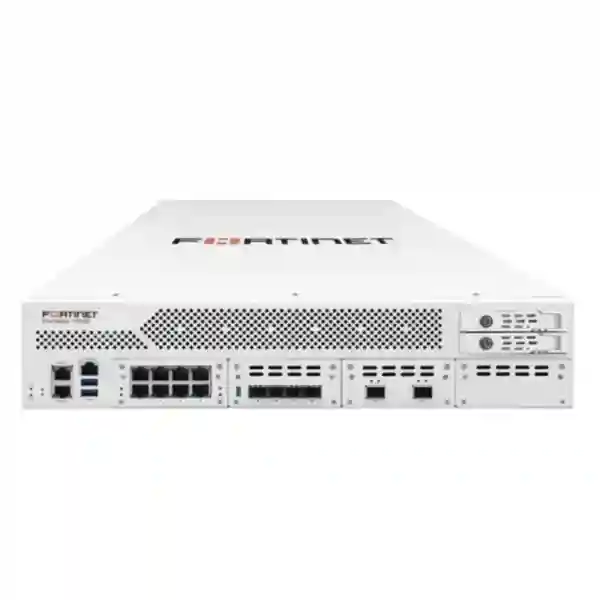
FortiWeb FWB-1000F is an enterprise-class Fortinet web application firewall for organizations that need dedicated protection for public websites, customer portals, web applications and APIs. The appliance combines application-aware security controls, machine-learning-assisted threat detection, API protection, bot mitigation and hardware-assisted SSL/TLS processing. Fortinet publishes 2.5 Gbps HTTP and HTTPS throughput for the 1000F, making it a candidate for substantial application environments where security teams need predictable appliance capacity rather than a small branch-class WAF.
FortiWeb FWB-1000F Overview
Modern application security is different from perimeter firewalling. Internet-facing applications accept legitimate HTTP and HTTPS sessions by design, so attacks can travel through ports that must remain open. FortiWeb is built to inspect application behavior and help identify malicious requests, abnormal patterns, bots, API misuse and attacks associated with common web vulnerabilities. Fortinet positions FortiWeb for protection against OWASP Top 10 threats, zero-day attacks, bots, DDoS activity and API risks while providing integrations with the broader Fortinet Security Fabric.
For procurement teams, the important distinction is that FWB-1000F identifies the base hardware appliance. FortiCare and FortiGuard services can be purchased through applicable bundles or subscriptions, and the appropriate service combination should be selected against the required protection functions and support term. Buyers should therefore request a quotation that clearly separates hardware, service bundle, subscription duration, optics or transceivers, implementation work and any high-availability requirements.
Verified Hardware Highlights
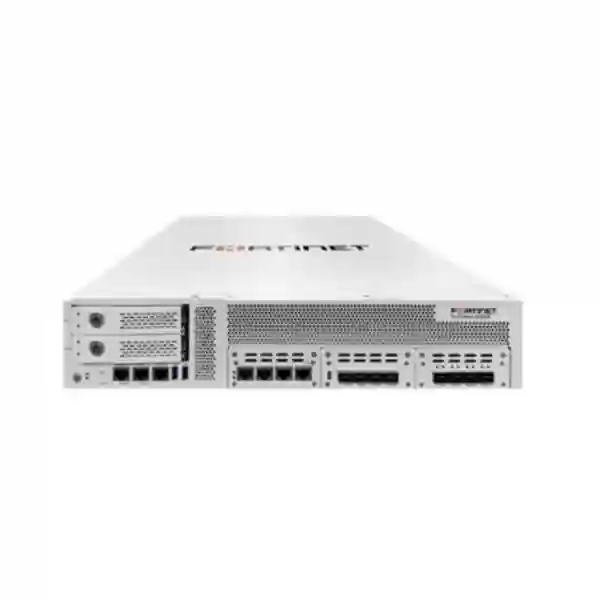
Fortinet specifies the FortiWeb 1000F with 2×10GE SFP+ ports, GE RJ45 bypass connectivity, GE SFP interfaces, dedicated management connectivity, hardware SSL/TLS processing, dual AC power supplies and 2×480 GB SSD storage. The appliance is a 2U rack-mountable platform. These characteristics suit data-center and enterprise application-security designs where redundant power, fiber connectivity and dedicated application inspection are important design considerations.
Application and API Security
FortiWeb provides multilayer protection for web applications and APIs. Capabilities described by Fortinet include machine-learning-assisted application protection, API discovery and protection, bot mitigation, client-side protection, threat analytics, virtual patching and integration with FortiGate and FortiSandbox. Exact services and feature availability can depend on FortiWeb software release and purchased subscriptions, so deployment planning should validate the intended feature set before ordering.
Technical Specifications for FortiWeb 1000F
| HTTP throughput | 2.5 Gbps |
| HTTPS throughput | 2.5 Gbps, published Fortinet ordering-guide figure |
| 10GE connectivity | 2×10GE SFP+ |
| Storage | 2×480 GB SSD |
| SSL/TLS processing | Hardware |
| Form factor | 2U rack mountable |
| Power | Dual AC power supplies; 100–240V AC, 50–60 Hz |
| Maximum ML domains | 32 in Fortinet’s current ordering guide |
Published performance values are reference figures and actual performance can vary with traffic characteristics, enabled security functions, software configuration and application behavior. Capacity planning should include expected peak HTTPS traffic, concurrent connections, TLS profile, application count, API traffic and future growth rather than selecting solely from nominal internet bandwidth.
Deployment, Integration and Buying Guidance
A successful WAF project starts with application inventory. Identify every protected hostname, origin server, API endpoint, authentication flow, certificate, upstream load balancer and dependency. Determine whether the appliance will operate as a reverse proxy, transparent component or another supported deployment mode. Document existing NAT, routing, DNS, high-availability and monitoring architecture before cutover. Security policy should initially be tuned around normal application behavior so protection is strong without interrupting legitimate transactions.
FortiWeb can complement a FortiGate deployment rather than replace the network firewall. FortiGate addresses broad network-security functions while FortiWeb specializes in application-layer and API protection. Organizations already using Fortinet can explore FourTeck Tanzania technology solutions when planning a coordinated security architecture, and can also review the specialist Fortinet solution portfolio for related Fortinet security technologies.
Before requesting a quote, decide whether one appliance is sufficient or whether high availability is required. Include rack space, redundant power feeds, transceiver type, switch port availability, management network, logging destination and certificate-handling requirements. Also identify whether advanced bot protection, credential defense, sandboxing, threat analytics or other FortiGuard services are required. This produces a quotation that reflects the actual security objective rather than only the appliance model.
FortiWeb FWB-1000F Tanzania
Organizations evaluating FortiWeb FWB-1000F in Tanzania are commonly protecting customer portals, online transaction systems, ERP web interfaces, mobile-app APIs, e-commerce platforms, public-sector services and enterprise websites. The procurement conversation should start with application exposure and risk rather than simply asking for a firewall. A web application firewall sits close to critical application traffic, so design teams need to understand application ownership, certificate management, origin-server architecture, maintenance windows and how security events will be monitored after deployment.
For Tanzanian enterprises with services hosted in a local data center, private cloud or hybrid environment, the 1000F provides a physical appliance option with dedicated hardware and redundant power. Its published 2.5 Gbps HTTP/HTTPS throughput should be assessed against peak protected traffic, not total office internet traffic. A business may have a large WAN connection but a smaller protected web workload, or conversely a modest average workload with sharp transaction peaks. Growth projections, seasonal demand and new API initiatives should be included in sizing.
A Tanzania quotation request should state the number of web applications and domains, expected HTTPS throughput, required service bundle, support term, high-availability preference, SFP/SFP+ requirements and whether deployment assistance is needed. Buyers should also describe existing FortiGate, load-balancer, SIEM and server infrastructure. This allows the solution to be considered as part of the complete application-delivery path. FourTeck can use these details to prepare a more relevant commercial and technical response without making assumptions about stock, delivery dates or subscription coverage.
FortiWeb FWB-1000F Dar es Salaam
Dar es Salaam organizations often operate the country’s most concentrated enterprise, financial, commercial, telecom and digital-service environments. For a business running customer-facing applications from a primary data center or colocated infrastructure, FortiWeb FWB-1000F can be evaluated as a dedicated control point between internet traffic and protected application servers. Its role is to inspect web and API requests in greater application context than a conventional network firewall.
The design should account for how applications enter the data center. If public traffic passes through upstream DDoS protection, an edge firewall and a load balancer, the FortiWeb placement must preserve the client information and application routing needed for useful security decisions. Certificate ownership and TLS termination also need a clear plan. Teams should document whether encryption is terminated at FortiWeb, re-encrypted toward origin servers, or handled in another approved architecture.
For procurement in Dar es Salaam, include business continuity requirements in the bill of materials. A production portal that cannot tolerate a single appliance outage may justify an HA design, redundant switching and separate power paths. The quotation should also capture the chosen FortiCare/FortiGuard term and any implementation or policy-tuning assistance. Buyers can review broader FourTeck Africa enterprise technology coverage when a Tanzanian application environment connects to wider regional operations.
FortiWeb FWB-1000F Mwanza
For organizations in Mwanza, the FortiWeb FWB-1000F can support a centralized application-security strategy where business systems are exposed to customers, partners or remote branches. Relevant workloads may include portals, web-based operational systems, online ordering, partner applications and APIs used by mobile or integration services. The main sizing question is the volume and nature of protected application traffic rather than the number of office users.
A Mwanza deployment may protect applications hosted locally, in a national data center or through a hybrid architecture. Network latency between users and application origins, DNS design and failover behavior should be considered before deciding where to insert a physical WAF. If the protected applications are hosted elsewhere, teams should compare the operational advantages of placing the appliance close to the application servers against alternative FortiWeb form factors. The 1000F is specifically the physical hardware option and should be selected when that deployment model fits the architecture.
Procurement teams should provide a concise application inventory with domain names, estimated peak throughput, TLS requirements, API usage and desired security services. They should also identify whether log retention or SIEM integration is required and who will own ongoing policy changes. This information helps avoid under-scoping the implementation. A WAF delivers its best value when application owners, network teams and security administrators agree on deployment and change-management responsibilities before production traffic is moved through it.
FortiWeb FWB-1000F Arusha
Arusha businesses evaluating FortiWeb FWB-1000F may include hospitality groups, regional organizations, service companies, institutions and enterprises with public booking, customer, supplier or workforce applications. Such systems can contain valuable personal and business information while remaining accessible from the internet. FortiWeb provides application-focused controls intended to detect malicious web requests, API abuse, bots and other threats that require more context than simple port-based filtering.
The 1000F should be sized using measured or well-estimated application traffic. Teams should gather peak HTTPS throughput and growth expectations and review whether multiple applications can share the appliance under an appropriate policy design. Fortinet publishes support for machine-learning-based application protection, but administrators still need a controlled rollout: baseline normal traffic, review detections, tune exceptions carefully and coordinate changes with application owners. This is particularly important for applications that change frequently.
For an Arusha quotation, list required interfaces and optics, rack and power constraints, HA requirements, service subscriptions and desired support period. If applications use APIs for mobile apps or partner integration, include those endpoints in the scope instead of treating them as an afterthought. API inventory is increasingly important because undocumented or forgotten interfaces can create exposure. The buying decision should therefore cover both today’s web applications and the organization’s expected digital-service roadmap.
FortiWeb FWB-1000F Dodoma
Dodoma organizations considering FortiWeb FWB-1000F can use a dedicated WAF architecture to protect web services and APIs that must remain reachable to citizens, customers, staff or partner organizations. Public-facing applications require strong availability as well as security, so the design should consider failure behavior, maintenance procedures and monitoring alongside attack prevention. The appliance’s dual power supplies and bypass-capable connectivity are useful hardware characteristics to consider within a resilient design.
Application security policy should be based on the actual systems being protected. A public information portal has different traffic patterns from a transaction platform, identity service or API gateway. Before deployment, classify applications by business criticality and data sensitivity, then decide which protections and alerting thresholds apply. FortiWeb’s capabilities can include web attack protection, bot controls, API protection, threat analytics and integration with other security systems, subject to software and subscription requirements.
Procurement documentation in Dodoma should clearly distinguish the FWB-1000F appliance from optional or bundled services. Ask for the required FortiCare and FortiGuard term to be itemized, along with any implementation scope. Include expected traffic, number of domains, high-availability requirement, logging integration and certificate-management plan. This helps technical and purchasing teams compare quotations on equivalent scope rather than comparing only the base hardware line.
FortiWeb FWB-1000F UAE
UAE enterprises often operate high-availability web platforms, e-commerce services, customer portals and API-driven digital systems across private data centers and cloud environments. FortiWeb FWB-1000F offers a physical appliance option for architectures where application traffic is intentionally routed through a dedicated WAF. Its 10GE connectivity and 2.5 Gbps published HTTP/HTTPS throughput make it relevant to substantial protected workloads, while final sizing should still be based on actual traffic and enabled inspection functions.
A UAE design may need to coordinate FortiWeb with FortiGate, upstream DDoS services, ADC/load-balancing platforms, cloud connectivity and centralized SOC tooling. The security team should decide where TLS is terminated and how original client information is retained across proxies. Where applications are deployed across multiple sites, the organization should document whether each location needs a WAF, whether traffic is centralized, or whether physical and cloud FortiWeb options should be combined.
For related regional expertise, buyers can review FourTeck UAE enterprise solutions. A useful quotation request includes application count, peak throughput, HA requirements, subscription bundle, support term, transceivers, implementation expectations and integration requirements. Avoid treating a published appliance throughput figure as a guarantee for every policy combination; production performance depends on traffic and configuration.
FortiWeb FWB-1000F Uganda
Ugandan organizations deploying internet-facing portals and APIs can evaluate FortiWeb FWB-1000F when a physical enterprise WAF fits their hosting architecture. The appliance can sit in front of protected application infrastructure and apply security policies to HTTP and HTTPS traffic. Use cases can include online services, customer portals, web-based business applications and API endpoints that support mobile or partner systems.
The procurement process should begin with an application map. Identify public DNS records, application servers, certificates, load balancers, firewalls and network paths. Then estimate peak protected throughput and define whether high availability is required. If the organization already uses FortiGate, integration can form part of a broader Fortinet security design, but WAF policy remains application-specific and requires coordination with application teams.
Organizations can consult FourTeck Uganda technology solutions for Uganda-focused requirements. A quote should specify the exact FWB-1000F hardware, service bundle and duration, interfaces or optics, deployment assistance and any renewal expectations. This makes the commercial scope clearer and reduces the risk of assuming that optional FortiGuard services are automatically included with base hardware.
FortiWeb FWB-1000F Kampala
Kampala is a natural concentration point for enterprise data centers, financial systems, service providers and digital platforms in Uganda. For organizations hosting business-critical applications, FortiWeb FWB-1000F can provide dedicated application-layer inspection in front of web servers and APIs. The project should define which applications require protection and how the WAF fits between upstream security controls and application infrastructure.
Capacity planning should use peak HTTPS traffic, concurrent demand, application count and expected growth. Security teams should also identify applications with frequent releases because policy tuning must keep pace with legitimate changes. FortiWeb’s machine-learning-assisted capabilities are intended to reduce management burden and false positives, but change control and validation remain important operational practices. A staged rollout with monitoring before strict blocking can help teams understand normal behavior.
For Kampala procurement, ask suppliers to itemize hardware, subscriptions, support, optics and professional services. If the application platform is designed for continuous availability, include a second appliance and supporting network redundancy in the architecture review rather than adding resilience after launch. Define who will manage certificates, review security events, approve exceptions and maintain application policies so the technology has clear operational ownership.
FortiWeb FWB-1000F Arua
Arua organizations may consume centralized applications hosted elsewhere while still operating important public or partner-facing digital services. Before selecting FWB-1000F, determine where the protected origin applications actually reside and where traffic should be inspected. A physical WAF is most useful when its placement aligns with the application hosting architecture, operational control and resilience plan.
If applications are hosted in a central data center, teams should avoid placing a WAF merely according to user location. Instead, secure the traffic path closest to the protected service unless architecture dictates otherwise. For locally hosted services, confirm suitable rack space, power redundancy, switching and fiber interfaces. The 1000F’s enterprise hardware profile can support substantial workloads, but selecting it should be justified by protected throughput, application count, growth and feature requirements.
A useful Arua quotation brief includes the number and type of applications, domain and API inventory, peak traffic, certificates, existing firewalls, desired subscription services and whether HA is required. If remote administration is expected, define secure management access and centralized logging. These planning details help turn a hardware purchase into an application-security deployment with measurable scope and clear responsibility.
FortiWeb FWB-1000F Mbarara
Businesses and institutions in Mbarara can evaluate FortiWeb FWB-1000F for protecting externally reachable applications that process customer, operational or partner transactions. WAF deployment is especially relevant where applications expose login pages, forms, upload functions, APIs or business workflows that attackers can target through legitimate web protocols. FortiWeb adds controls specifically designed for this application layer.
Sizing should be evidence-driven. Gather traffic statistics from load balancers, firewalls or application monitoring tools and focus on peak HTTP/HTTPS traffic for the systems that will actually traverse FortiWeb. Consider expected new applications over the intended appliance lifecycle. Also define whether SSL/TLS processing will occur on the WAF and whether re-encryption to origin servers is required, because certificate and encryption design affects deployment complexity.
Mbarara procurement teams should ask for clear licensing and renewal information. FortiGuard services and FortiCare support can be packaged in different ways, so quotations should state service names and durations rather than using vague terms such as ‘licensed firewall.’ Include implementation and policy-tuning requirements if internal teams need assistance. The result is a more complete cost and deployment picture for decision makers.
FortiWeb FWB-1000F Gulu
Gulu organizations with web applications or APIs can use the FWB-1000F evaluation process to formalize application-security requirements. Start by distinguishing public applications from internal-only systems and identify which services contain sensitive data or support critical operations. Internet exposure, authentication, file uploads, APIs and third-party integrations can all influence the protection policy required.
For a physical FortiWeb deployment, the data-center environment matters. Confirm rack capacity, redundant power, network interface compatibility and management connectivity. Plan how the device will be monitored and how configuration backups and upgrades will be managed. If an outage would interrupt critical services, evaluate HA and upstream/downstream redundancy as part of the initial design rather than relying on the appliance alone for availability.
A Gulu quotation request should provide technical context instead of only the model number. Include expected peak traffic, protected domains, APIs, desired FortiGuard functions, support duration and deployment topology. This enables more accurate solution discussion and makes it easier to compare whether the FWB-1000F is appropriately sized or whether another FortiWeb model or form factor better matches the workload.
FortiWeb FWB-1000F Kenya
Kenyan enterprises operate a broad range of digital financial, retail, government, logistics and customer-service applications. FortiWeb FWB-1000F can be evaluated for physical data-center deployments that need dedicated web application and API protection with enterprise connectivity. The 2.5 Gbps published throughput figure provides a sizing reference, but application security architecture should also consider TLS processing, policy complexity, traffic peaks and future growth.
For applications that span private infrastructure and cloud services, determine whether a single physical enforcement point is practical. FortiWeb is also available in other form factors, so architecture teams should choose the deployment method that follows the applications. Where the 1000F is selected, document routing, reverse-proxy behavior, DNS changes, certificate handling, load balancing and failover before production cutover.
Kenya-focused procurement can reference FourTeck Kenya technology solutions. Request an itemized quotation covering base appliance, support, security subscriptions, optics and services. If the organization operates across Kenya and Tanzania, use consistent application-security standards while still sizing each enforcement point according to its own traffic and application portfolio.
FortiWeb FWB-1000F Kuwait
Kuwait organizations evaluating FWB-1000F may be protecting enterprise portals, e-commerce systems, customer self-service platforms and API-driven integrations. The appliance is designed for web application and API security and provides hardware-based SSL/TLS processing, which is relevant when encrypted traffic represents most application sessions. Security teams should define how certificates and private keys will be managed and who is authorized to administer them.
Deployment planning should include upstream and downstream dependencies. A WAF can be positioned alongside edge firewalls, DDoS controls, load balancers and server infrastructure, but each component’s role must be clear. Ensure health checks, source-IP visibility, logging and failover behavior are preserved. Where applications have strict uptime requirements, evaluate an HA design and maintenance process that allows upgrades without avoidable service interruption.
Commercial evaluation should separate appliance hardware from support and FortiGuard services. Buyers should request exact subscription descriptions and terms, along with implementation scope and renewal information. This avoids ambiguity and helps procurement compare equivalent configurations. Traffic measurements, domain count, API usage and expected growth should accompany the request so the proposed model can be validated against the real workload.
FortiWeb FWB-1000F Ghana
Ghanaian organizations with expanding digital services can evaluate FortiWeb FWB-1000F when application-layer security is needed in a physical data-center design. Public websites alone are not the only consideration: APIs supporting mobile applications, partner integrations and automated business processes can expose valuable functions that need discovery, validation and protection. FortiWeb’s product family includes controls aimed at both web and API traffic.
Before ordering, map the protected applications and establish realistic traffic baselines. Identify whether applications are centralized or distributed, whether traffic already passes through load balancers and where TLS termination currently occurs. The WAF design should preserve application availability and make security events visible to operations teams. If centralized logging or SIEM is used, include integration requirements during planning.
A Ghana procurement request should specify FWB-1000F, required service bundle, support duration, HA requirements, interfaces, transceivers and deployment assistance. Buyers should also document renewal expectations so ongoing security services are budgeted beyond initial purchase. This structured approach supports a cleaner comparison of proposals and reduces the risk of discovering missing subscriptions or implementation tasks late in the project.
FortiWeb FWB-1000F Nigeria
Nigeria’s large digital-service environment includes banking, fintech, commerce, telecom, public services and enterprise platforms that depend heavily on web applications and APIs. For organizations choosing an on-premises or colocated physical WAF, FortiWeb FWB-1000F provides an enterprise appliance with 10GE interfaces, redundant power and 2.5 Gbps published protected throughput. It should be evaluated against the actual protected workload and availability objectives.
Large application estates benefit from grouping applications by risk and business criticality. Internet banking or transaction services may require stricter controls, more intensive monitoring and HA architecture than lower-risk informational services. API endpoints should be inventoried alongside conventional websites, especially when mobile applications and third-party integrations rely on them. Security policy and incident response should involve application owners as well as network teams.
For Nigeria procurement, request a complete bill of materials rather than a single appliance price. Include service bundle, support term, HA peer if required, optics, implementation and policy tuning. Confirm how ongoing subscription renewals will be handled. Where multiple data centers are involved, provide per-site traffic and application information so sizing is not based on an aggregate number that may hide different requirements at each location.
FortiWeb FWB-1000F Seychelles
Seychelles organizations in hospitality, financial services, government and other service sectors may rely on internet-facing booking systems, customer portals, payment-related applications and APIs. FortiWeb FWB-1000F can be considered when those applications are hosted behind infrastructure where a physical enterprise WAF is operationally appropriate. Its application-focused security controls complement network firewalling by inspecting the content and behavior of web requests.
Architecture should account for the physical location of application servers and the connectivity path used by customers. If workloads are predominantly cloud-hosted outside the local data center, compare physical and cloud FortiWeb deployment options before committing to hardware. If applications are hosted locally, confirm rack, power, network interfaces, HA needs and management access. The correct enforcement point is determined by application topology rather than the location name alone.
A Seychelles quotation request should include protected domains and APIs, peak HTTPS traffic, desired FortiGuard services, support period, certificate requirements and implementation expectations. For hospitality or transaction systems with seasonal traffic, sizing should consider peak periods rather than annual averages. Buyers should also identify maintenance windows and business-continuity requirements so security upgrades can be planned without unnecessary disruption.
FortiWeb FWB-1000F Licensing and Subscription Planning
Fortinet’s ordering information distinguishes base hardware from service bundles. FortiGuard services extend the appliance with continuously updated security intelligence and specialized capabilities. The correct package depends on the organization’s risk profile and desired functions. Rather than assuming every advertised FortiWeb feature is present in a base purchase, ask for the exact bundle and service description to be listed on the quotation.
Support duration is another procurement variable. Organizations should align support and security-service terms with internal budgeting and lifecycle policies. If an HA pair is deployed, ensure both appliances are covered appropriately. Record renewal dates in asset-management systems and assign ownership before the first term expires. Application security depends on current software and threat intelligence, so renewal planning is part of the operating model rather than an administrative afterthought.
Quotation Checklist
Number of domains, applications, APIs, origin servers and business-critical services.
Peak HTTP/HTTPS throughput, growth estimate, TLS usage and traffic characteristics.
Single appliance or HA, redundant power, switching and maintenance expectations.
Required FortiGuard capabilities, FortiCare level, term and renewal expectations.
Frequently Asked Questions
What is FortiWeb FWB-1000F?
It is Fortinet’s FortiWeb 1000F physical web application firewall appliance, designed to protect web applications and APIs. Fortinet publishes 2.5 Gbps HTTP/HTTPS throughput for the model.
Does FortiWeb replace FortiGate?
They serve different primary roles. FortiGate is a network security platform, while FortiWeb specializes in web application and API protection. They can be used together in a layered architecture.
Is FortiGuard included with FWB-1000F hardware?
Do not assume optional services are included with base hardware. Fortinet offers service bundles and subscriptions. Request an itemized quotation showing the exact services and term.
How should the FortiWeb 1000F be sized?
Use peak protected HTTP/HTTPS traffic, application and API count, TLS requirements, enabled security functions, HA design and growth expectations. Published maximum figures should be treated as sizing references rather than guaranteed performance for every configuration.
Can FortiWeb protect APIs and bots as well as websites?
Yes. Fortinet describes API discovery and protection, bot mitigation and application protection among FortiWeb capabilities. Some advanced services can depend on subscriptions and software version, so validate the required feature set during quotation.
Decision Recap
Choose FortiWeb FWB-1000F when the architecture calls for a dedicated physical WAF and its capacity, interfaces and service options align with the protected application estate. Validate peak traffic, TLS design, API exposure, HA requirements, subscription bundle and operational ownership before purchase. For multi-country planning, related regional FourTeck resources can help align broader infrastructure requirements while keeping each deployment sized to its local application workload.
Consultation for FortiWeb FWB-1000F
Prepare your application count, peak HTTPS throughput, required security services, deployment topology, existing Fortinet equipment and preferred support term. FourTeck can use that information to discuss configuration and quotation scope for FortiWeb FWB-1000F without assuming unverified stock, delivery or service coverage.



Reviews
There are no reviews yet.