
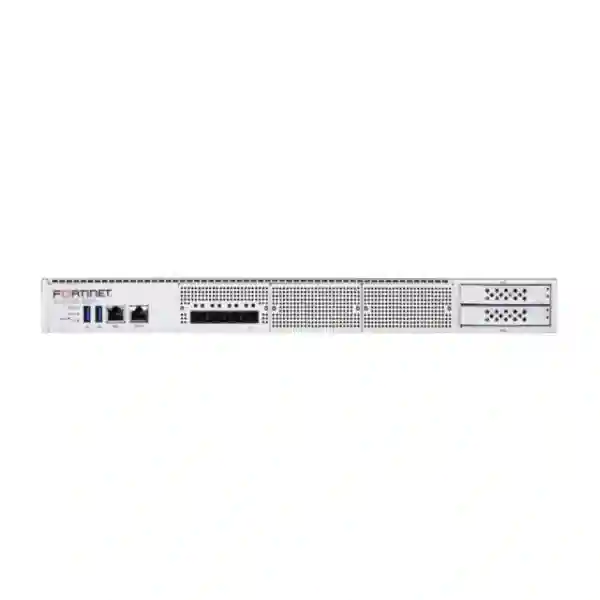
FortiNAC FNC-CA-500F Tanzania
FortiNAC FNC-CA-500F, officially identified by Fortinet as the FortiNAC-CA-500F Control and Application Server, is an F-series physical appliance for organizations building network access control around device visibility, policy enforcement and coordinated response. For Tanzanian enterprises, campuses, healthcare environments, hospitality groups, public-sector networks and distributed businesses, a successful FortiNAC project starts with architecture rather than a box-only purchase. The design should account for endpoint population, network-device compatibility, segmentation goals, authentication sources, operational workflows, resilience requirements and the correct FortiNAC licensing. FourTeck supports procurement discussions by helping customers define these requirements before quotation.
Verified product identity
Fortinet documentation lists FNC-CA-500F as the part number for the FortiNAC-CA-500F Control and Application Server. The F-series uses FortiNAC-OS. Fortinet also documents physical-appliance installation, access configuration and high-availability considerations for the platform. Buyers should match software release, licensing and deployment topology to the intended environment rather than assume that every FortiNAC feature is enabled by the appliance alone.
What FortiNAC helps address
Modern networks contain managed computers, employee devices, phones, printers, cameras, operational technology, wireless clients, IoT systems and temporary guest endpoints. Network access control provides a policy layer for discovering and classifying devices, determining whether access should be permitted, and applying controls that fit identity, device type and security posture. FortiNAC is positioned by Fortinet for visibility, control and response across network environments.
Planning a FortiNAC FNC-CA-500F deployment
The appliance decision should follow a structured discovery process. Start with an inventory of sites, switches, wireless infrastructure, VLANs, authentication systems and endpoint categories. Document which devices are corporate managed, personally owned, headless, IoT or operational technology. Define the access outcomes required for each class: normal production access, guest access, restricted access, quarantine, remediation or denial. Then identify how administrators want to receive alerts and how security workflows should interact with existing controls. This prevents a NAC project from becoming a collection of disconnected rules.
Fortinet states that each FortiNAC deployment requires Control and Application functionality and that larger deployments can use additional servers. Capacity terminology should always be checked against the current Fortinet datasheet and the exact licensing proposal because Fortinet materials may express scale using endpoints, ports or deployment-specific measures. FourTeck therefore recommends sizing from the actual environment rather than relying on a single headline number.
| Planning area | Questions to confirm |
|---|---|
| Network scope | How many sites, endpoint classes, access switches, wireless systems and logical segments are in scope? |
| Identity | Which directories, identity sources and onboarding processes will participate in access decisions? |
| Policy | Which device categories need production, guest, restricted, quarantine or remediation access? |
| Resilience | Is high availability required, and what failover and maintenance objectives must be met? |
| Operations | Who will own profiling, policy changes, exceptions, upgrades and incident-response workflows? |
Security and deployment considerations
Fortinet’s FortiNAC-F installation guidance notes that F-series appliances use FortiNAC-OS and limit open TCP/UDP services by default. Administrators enable access required by configured functions through the appliance CLI. That operational model makes deployment planning important: management addressing, DNS, NTP, certificates, routing, firewall policy and administrative access should be documented before installation. The management plane should be protected, unnecessary access should remain closed, and changes should follow the organization’s security-control process.
For high availability, consult the documentation for the exact FortiNAC release before finalizing appliance pairing. Fortinet publishes version-specific requirements and examples, and software images can be appliance-specific. A procurement team should therefore confirm the target FortiNAC release, appliance combination, license entitlements and maintenance procedure as part of the bill of materials.
FortiNAC FNC-CA-500F Tanzania
Organizations evaluating FortiNAC FNC-CA-500F in Tanzania commonly need to bring more discipline to networks that have expanded across offices, branches, wireless environments and specialized devices. The practical buying question is not simply whether a NAC appliance can be installed. It is whether the organization can translate its security policy into repeatable access decisions without creating unnecessary friction for employees and operational teams. A useful Tanzania discovery workshop should identify critical business services, endpoint categories, trusted infrastructure, guest requirements, privileged devices and exception processes. It should also map the network equipment that FortiNAC must observe or control.
Tanzania deployments may include a mixture of headquarters, branches, warehouses, educational facilities, hospitality sites or service locations. That diversity makes consistent classification valuable. A printer, camera, access-control panel or industrial endpoint should not automatically receive the same network privileges as an employee laptop. NAC architecture can support segmentation objectives by helping determine what is connected and what access policy should apply. Before quotation, buyers should provide site counts, approximate endpoint counts, switch and wireless vendors, identity platforms and any existing Fortinet security products.
Procurement should also separate appliance requirements from software licensing, implementation effort and ongoing operational ownership. Confirm the FortiNAC edition and endpoint entitlements required for the intended feature set. If resilience is required, include high-availability design in the initial scope rather than adding it after rollout. For regulated or operationally sensitive networks, define maintenance windows, change approval and rollback procedures. FourTeck can use this information to build a clearer commercial request and reduce ambiguity between hardware, subscriptions and services.
FortiNAC FNC-CA-500F Dar es Salaam
Dar es Salaam organizations often operate dense user populations, multiple office floors, data-centre connectivity, wireless access and a growing number of non-user devices. For these environments, FortiNAC planning should begin with visibility: identify what connects, where it connects and which systems require differentiated access. Corporate laptops, contractors, guests, IP phones, cameras and building systems can have very different security requirements. A policy matrix created before deployment gives the technical team a practical foundation for profiling and enforcement.
For enterprises with a head office in Dar es Salaam and remote sites elsewhere, the architecture should consider WAN dependency and how access policies behave during connectivity interruptions. Document which services are local to a branch and which depend on central systems. Review management reachability, DNS, time synchronization, authentication sources and network-device administration. This is also the right stage to identify whether a single appliance design is sufficient or whether resilience and additional FortiNAC components are needed.
A quotation request should include the approximate number of endpoints, network access devices, sites and expected growth, together with the desired policy outcomes. Avoid sizing solely from today’s employee count because IoT, printers, phones and unmanaged devices can materially change the population visible to NAC. Buyers should also identify their preferred support lifecycle and upgrade practices. These details allow a FortiNAC FNC-CA-500F proposal for Dar es Salaam to be evaluated as an operational security solution rather than a standalone server purchase.
FortiNAC FNC-CA-500F Mwanza
For Mwanza businesses, institutions and distributed operations, network access control can be particularly useful when IT teams need consistent policy across locations with different device mixes. The design should distinguish known managed assets from unknown or unmanaged equipment and determine how each category is handled. Rather than immediately blocking every unfamiliar endpoint, organizations can define staged policies for visibility, notification, restricted access and remediation based on risk and business impact.
Before selecting FortiNAC FNC-CA-500F, map the switching and wireless infrastructure at each site and verify integration against current Fortinet documentation. Older access switches, specialized industrial networks or third-party wireless systems deserve particular attention during discovery. Authentication dependencies should also be documented so that onboarding workflows remain predictable. Where remote locations depend on central identity or management services, WAN resilience should be considered as part of the access-control design.
Mwanza procurement teams can improve quote accuracy by preparing a simple network inventory and policy brief. Include the number of locations, endpoint estimates by category, network vendors, current VLAN design, guest-access requirements and any compliance objectives. If the organization expects rapid expansion, discuss future capacity and management architecture at the outset. This makes it easier to evaluate the FNC-CA-500F within a complete FortiNAC solution and to identify any additional licenses, appliances or professional services required.
FortiNAC FNC-CA-500F Arusha
Arusha organizations in hospitality, tourism, education, services and administration may support highly varied endpoint populations. Guest devices, staff systems, point-of-service equipment, cameras, phones and building technologies should not automatically share equivalent network privileges. FortiNAC can form part of an architecture that improves device visibility and applies differentiated access policies, but effective results depend on careful profiling and integration planning.
A useful Arusha deployment plan starts with business zones and trust levels. Identify which resources guests can reach, which systems require employee identity, which devices are headless, and which equipment must remain isolated from general user traffic. Map those requirements to the existing VLAN and security architecture. The technical team should also establish exception handling for devices that cannot participate in normal authentication workflows, with ownership and expiry dates for exceptions.
When requesting a FortiNAC FNC-CA-500F quotation, provide realistic endpoint estimates and details of access infrastructure. Include seasonal or event-driven peaks where they affect device counts. Confirm whether high availability is required and which FortiNAC software release is planned. Licensing should be matched to the required capabilities and endpoint scope. FourTeck can use these inputs to help organize a procurement discussion around the actual network rather than a generic hardware list.
FortiNAC FNC-CA-500F Dodoma
Dodoma deployments may involve government, education, enterprise and multi-building networks where access policy needs to remain understandable and auditable. Network access control works best when policy is based on clear business rules: who or what is connecting, what trust level applies, what resources are required, and what happens when a device falls outside policy. The FNC-CA-500F can provide Control and Application Server functions within a FortiNAC architecture, while licensing and surrounding components should be scoped to the project.
During design, document network ownership across departments and sites. Central IT may manage core services while local teams control access switching or wireless infrastructure. Agree on administrative responsibilities before enforcement begins. Pilot policies with representative device groups and monitor the results before broad rollout. This reduces the risk of legitimate operational devices being disrupted by an overly aggressive initial rule set.
For procurement, include network diagrams where available, endpoint categories, switch and wireless inventories, authentication platforms, segmentation objectives and resilience expectations. Security teams should also define reporting and incident-response needs. These inputs help determine whether FortiNAC FNC-CA-500F fits the planned architecture and what additional licenses or services are needed. A structured bill of materials is especially important when the project must pass formal technical and commercial review.
FortiNAC FNC-CA-500F UAE
UAE organizations evaluating FortiNAC FNC-CA-500F may be managing high-density offices, campuses, hospitality properties, logistics environments or distributed branches. In such networks, NAC can support security programs by providing better understanding of connected devices and by applying policy according to identity, device class and risk. The design should be aligned with the existing switching, wireless, directory and security architecture.
Projects should define whether the primary objective is visibility, controlled onboarding, segmentation, guest management, response automation or a combination. This affects rollout sequencing and operational ownership. Large environments should also document growth and resilience requirements. Fortinet publishes model- and release-specific guidance for FortiNAC-F high availability, so the exact software version and appliance topology should be confirmed during design.
For UAE procurement and specialist Fortinet discussions, customers can also review FourTeck’s Fortinet UAE resource and FourTeck UAE. These network resources can complement the Tanzania-focused page when a group operates across both markets. The commercial request should still identify the deployment country, endpoint scope, required licenses, implementation expectations and support requirements so that proposals remain comparable.
FortiNAC FNC-CA-500F Uganda
Ugandan organizations can approach FortiNAC as a policy and visibility project rather than a one-time appliance installation. Begin by identifying endpoint classes and business-critical network segments. Then decide what access should be granted to managed users, guests, contractors, IoT equipment and infrastructure devices. This policy-first approach makes technical configuration easier to validate and gives stakeholders a clear reason for each enforcement rule.
Distributed organizations should document connectivity between Kampala and regional sites, especially where authentication or management services are centralized. The architecture should account for expected behavior when WAN connectivity is impaired. Device profiling should also be tested against representative equipment before enforcement is expanded. FortiNAC integrations and supported infrastructure can evolve with software releases, so current Fortinet documentation should be checked during implementation.
For regional product and procurement context, visit FourTeck Uganda. A useful quote request should include endpoint estimates, network-vendor details, identity sources, desired policy outcomes and high-availability expectations. This enables the FNC-CA-500F to be evaluated within the complete licensing and deployment scope.
FortiNAC FNC-CA-500F Kampala
Kampala enterprises often combine wired access, enterprise Wi-Fi, guest connectivity and specialized devices across offices or campuses. FortiNAC planning can help create a consistent method for identifying these connections and assigning policy. The discovery stage should catalogue access switches, wireless controllers or access points, VLANs, authentication sources and important endpoint categories. Any unsupported or unusual infrastructure should be identified before purchase rather than during production rollout.
Policy design should reflect business operations. Finance systems, administrative networks, guest services, cameras and building systems may each require different access paths. Exceptions should be controlled and documented. Where automated response is planned, teams should define escalation and rollback procedures so that a false classification does not create an unnecessary outage. A pilot phase is valuable for tuning profiles and validating the expected user experience.
Kampala buyers should request a complete proposal that distinguishes appliance hardware, FortiNAC licenses, implementation and support. Include growth estimates and resilience requirements. This makes commercial comparison clearer and helps avoid under-scoping. FourTeck Uganda resources can provide additional regional context while the final architecture should always be validated against current Fortinet documentation and the actual customer environment.
FortiNAC FNC-CA-500F Arua
Arua organizations with branch or regional networks may benefit from centralized visibility while still needing practical policies that tolerate local connectivity conditions. A FortiNAC project should document which network services are available locally and which depend on remote data centres. This helps teams understand how authentication, profiling and administrative workflows behave during WAN disruption and maintenance.
Device categories should be mapped carefully. Branch environments can include employee endpoints, printers, phones, cameras, payment or service terminals and other headless devices. These systems should be profiled and assigned appropriate access rather than grouped into a broad trusted network. Start enforcement with well-understood device classes and expand as the operations team gains confidence in classification accuracy.
For an FNC-CA-500F quotation, provide the number of sites, approximate endpoint population, network access infrastructure and central identity systems. State whether the appliance is part of a new FortiNAC deployment, an expansion or a refresh. Also identify support and maintenance expectations. These details help determine the appropriate FortiNAC licensing and whether additional architecture components are required.
FortiNAC FNC-CA-500F Mbarara
Mbarara businesses and institutions planning stronger network access governance should first define the assets that matter most. Critical servers, business applications, administrative systems and operational devices can then be associated with access zones and endpoint policies. FortiNAC can contribute visibility and control, but the effectiveness of the solution depends on accurate network discovery and policies that reflect real operational requirements.
The technical assessment should include switching, Wi-Fi, VLANs, DHCP and DNS dependencies, identity services and existing security controls. If the environment contains legacy or specialized devices, test profiling and enforcement in a controlled phase. Avoid moving immediately from visibility to strict blocking across the whole network. A staged rollout provides time to tune classification and document exceptions.
Commercially, the FNC-CA-500F should be quoted together with the required FortiNAC license entitlements and any implementation scope. Buyers should provide current and forecast endpoint counts, site information and resilience objectives. This creates a clearer basis for technical validation and budgeting and helps ensure that future growth has been considered.
FortiNAC FNC-CA-500F Gulu
Gulu deployments can use NAC principles to reduce uncertainty about what is attached to business networks. Visibility is especially valuable where a small IT team supports many endpoint types. Before enforcement, establish a baseline of known devices and determine which systems require unrestricted business access, restricted service access, guest connectivity or quarantine workflows.
Network diagrams and equipment inventories improve project accuracy. Record switch models, wireless infrastructure, uplinks, site connectivity and authentication sources. Review Fortinet’s current compatibility and deployment documentation for the target release. If high availability is needed, include it in the original design and ensure that the selected appliance topology follows the applicable FortiNAC-F guidance.
A Gulu procurement request should explain the desired security outcome, not just list FNC-CA-500F. Include endpoint estimates, sites, network vendors, licenses, implementation requirements and support expectations. This gives suppliers enough information to distinguish hardware from the broader FortiNAC solution and helps stakeholders compare proposals on equivalent scope.
FortiNAC FNC-CA-500F Kenya
Kenyan organizations operating campuses, offices, retail networks, hospitality properties or distributed branches may need consistent device visibility across a heterogeneous access layer. FortiNAC can be considered where teams want to discover and classify endpoints, enforce access policy and coordinate response. A design workshop should map endpoint types, identity sources, network vendors, segmentation and security operations before appliance sizing is finalized.
Enterprises with many sites should consider how policy will be managed consistently and how local outages affect central services. Operational ownership matters as much as initial configuration: teams need processes for new device classes, policy exceptions, software upgrades and incident investigation. High availability should be based on business continuity requirements and current Fortinet guidance.
For regional procurement context, visit FourTeck Kenya. A request for quotation should state the FNC-CA-500F model, deployment scope, endpoint population, required licenses and expected professional services. Buyers should also indicate whether the project must integrate with existing Fortinet products or third-party network infrastructure.
FortiNAC FNC-CA-500F Kuwait
Kuwait enterprises considering FortiNAC FNC-CA-500F should assess the product in the context of their full access network. Device diversity, high-density Wi-Fi, contractors, IoT and business-critical systems can create different trust requirements. NAC policies should be designed around those requirements and tested before organization-wide enforcement.
Technical planning should cover identity, network-device integration, segmentation, management access and resilience. FortiNAC-F appliances use FortiNAC-OS, and Fortinet publishes release-specific installation and HA guidance. The implementation team should follow the documentation matching the software version being deployed and maintain a controlled upgrade process.
For Kuwait-focused procurement resources, visit FourTeck Kuwait. Provide a bill-of-materials request with endpoint estimates, network topology, required FortiNAC capabilities, licensing and service scope. A precise request makes it easier to compare commercial proposals and plan lifecycle costs.
FortiNAC FNC-CA-500F Ghana
Ghanaian organizations can use a NAC assessment to identify gaps between network connectivity and security policy. Start by determining which devices connect to wired and wireless infrastructure and whether they can be reliably associated with an owner, function or trust level. FortiNAC can support visibility and access-control objectives when the underlying network and policy design are prepared correctly.
Deployment planning should include identity sources, switching, wireless infrastructure, VLAN design and exception handling. Organizations with operational technology or headless IoT should create dedicated policy paths rather than force those devices into employee authentication workflows. Pilot testing helps confirm how profiling behaves with representative equipment.
For Ghana market context, visit FourTeck Ghana. When requesting FNC-CA-500F pricing, specify the endpoint scope, required FortiNAC licenses, implementation expectations and any HA requirement. This supports a technically complete quotation rather than a hardware-only price.
FortiNAC FNC-CA-500F Nigeria
Nigerian enterprises with large or distributed networks often need to manage a wide variety of user and non-user devices. FortiNAC can be evaluated as part of a strategy for discovering endpoints, applying network access policy and improving response. The project should define business-critical segments, identity sources and network-device integrations before selecting enforcement workflows.
At scale, operational process becomes essential. Teams should define how new device types are approved, how exceptions expire, who can change policies and how incidents are investigated. Resilience requirements should be tied to business impact. Fortinet’s release-specific guidance should be used when designing high availability and planning software upgrades.
For Nigeria-focused procurement information, visit FourTeck Nigeria. A strong RFQ includes the exact FNC-CA-500F requirement, endpoint estimates, sites, network infrastructure, license tier, implementation scope and support expectations. This helps prevent differences in assumptions between competing proposals.
FortiNAC FNC-CA-500F Seychelles
Seychelles organizations in hospitality, services and multi-site operations may have networks where guest connectivity and business systems coexist closely. NAC planning can help create clearer boundaries by identifying device classes and applying access policy appropriate to each role. The discovery phase should include staff endpoints, guest devices, phones, cameras, building systems, payment equipment and other specialized technology.
Because island and distributed environments can depend on remote services and WAN connectivity, document which authentication and management functions are local and which are remote. Define expected behavior during connectivity interruptions. Network-device compatibility and software-release requirements should be verified against current Fortinet documentation before implementation.
For procurement, provide current and projected endpoint counts, site topology, network vendors, identity platforms, desired policy outcomes and resilience needs. Separate appliance, license, implementation and support costs so that lifecycle planning is clearer. The FNC-CA-500F should be selected as part of this complete architecture rather than by model name alone.
Related FourTeck resources
Customers building a broader security architecture can explore FourTeck Tanzania technology solutions for local product and solution context. For cross-border requirements, the FourTeck network includes FourTeck Africa, FourTeck Kenya, FourTeck Uganda, FourTeck Ghana, FourTeck Nigeria and Fortinet UAE solutions. These links are useful for organizations coordinating technology procurement across multiple operating countries.
FortiNAC FNC-CA-500F quotation checklist
To prepare a useful quotation, share the exact model requirement, number of sites, approximate endpoint population, access-switch and wireless vendors, identity platform, current segmentation, expected growth, required FortiNAC capabilities, high-availability requirement and preferred implementation scope. Also identify whether the project is a new deployment, expansion or refresh. This information helps separate hardware, licenses and services and reduces the risk of missing dependencies.
Frequently asked questions
What is FNC-CA-500F?
FNC-CA-500F is Fortinet’s SKU for the FortiNAC-CA-500F, an F-series FortiNAC Control and Application Server physical appliance.
Does the appliance alone complete a FortiNAC deployment?
No. A production design must account for FortiNAC licensing, deployment architecture, endpoint scope, network integrations, configuration and operational requirements. Fortinet states that FortiNAC deployments require Control and Application functionality, and larger designs may use additional servers.
What operating system does the F-series use?
Fortinet documentation states that FortiNAC-F series appliances use FortiNAC-OS. Administrators should use documentation matching the exact FortiNAC software release deployed.
Can FNC-CA-500F be used in high availability?
Fortinet publishes high-availability guidance for FortiNAC-F appliances, including FNC-CA-500F. Requirements vary by release and topology, so the intended software version and appliance pairing should be validated during design.
What information is needed for a Tanzania quote?
Provide endpoint and site estimates, network infrastructure, identity systems, desired access-control outcomes, license requirements, HA expectations and implementation scope. These details allow the commercial proposal to reflect the complete project.
Decision recap and consultation
FortiNAC FNC-CA-500F is best evaluated as one component of a network access control architecture. Confirm the endpoint scope, infrastructure compatibility, licensing, resilience, operational workflows and implementation plan before purchase. For Tanzania projects, FourTeck can use your network inventory and security objectives to structure a product and deployment discussion. A well-defined scope produces a more useful quotation and a clearer path from procurement to implementation.



Reviews
There are no reviews yet.