
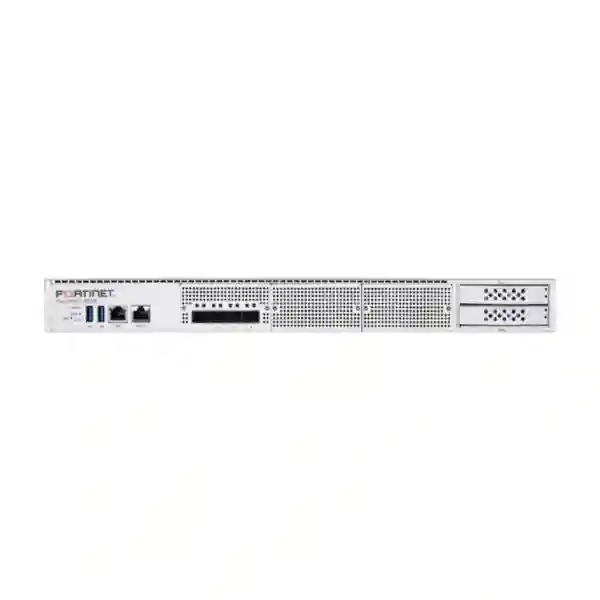
FortiNAC FNC-CA-700C Tanzania
FortiNAC FNC-CA-700C is a Fortinet Network Control and Application Server built for network access control projects where organizations need better visibility of connected users and devices, policy-based access decisions and coordinated response across complex network infrastructure. Fortinet documentation identifies the FNC-CA-700C as a FortiNAC 700C Control and Application appliance with RAID and redundant power supplies. It belongs to the earlier CentOS-based FortiNAC hardware generation; Fortinet’s current ordering guide maps FortiNAC-CA-700C to the newer FortiNAC-CA-700F generation. This distinction matters when a Tanzania customer is replacing an existing 700C, extending a legacy deployment, planning support, or evaluating migration rather than purchasing on model name alone.
Network access control
Use FortiNAC to build visibility and access-policy workflows around users, endpoints, IoT equipment and other connected assets.
Enterprise appliance
The 700C is a 1U rack-mount Control and Application Server with RAID 1 and dual power supplies documented by Fortinet.
Migration-aware buying
Because the 700C is from the earlier generation, procurement should confirm lifecycle, software, licensing and migration requirements before committing to a bill of materials.
Verified FortiNAC FNC-CA-700C hardware facts
| Role | FortiNAC Network Control and Application Server |
| Processor | Two Intel Xeon Gold 6132 2.6 GHz processors, 14 cores / 28 threads each |
| Memory | 12 × 8 GB RDIMM, 2666 MT/s |
| Storage | 2 × 600 GB 15K RPM SAS hot-plug drives, RAID 1 |
| Network interface | Broadcom 5720 quad-port, 4 × 1 GbE RJ45 |
| Form factor | 1U rack mountable |
| Power | Dual 750 W AC power supplies, 100–240 V AC input |
| Generation note | 700C is the older generation; Fortinet’s ordering guide identifies 700F as the next-generation hardware model. |
What FortiNAC helps an enterprise control
Network access control becomes important when a business can no longer treat every Ethernet port, wireless client and connected device as equally trusted. Corporate laptops, employee phones, guest devices, printers, cameras, building systems, industrial endpoints and contractor equipment may all share network infrastructure while requiring different access. FortiNAC is designed to improve visibility into what is connected and provide controls that can be tied to device and user context. For a buyer, the practical question is not simply whether NAC is desirable. The project must define which devices need to be discovered, which infrastructure FortiNAC will integrate with, how identities will be mapped, what access policies will be enforced, and what should happen when a device is unknown or fails a policy condition.
A successful deployment therefore begins with discovery and policy design. Inventory switches, wireless systems, firewalls, identity services, VLANs, critical servers, guest networks and major endpoint classes. Document which devices are managed by IT and which cannot run endpoint software. Define exceptions before enforcement starts. A hospital, university, manufacturing site and financial office can all need NAC, but their device populations and tolerance for disruption differ substantially. FourTeck can use this information to prepare a more accurate product and deployment discussion rather than treating FNC-CA-700C as an isolated rack appliance.
Compatibility, licensing and deployment checks
Fortinet documentation distinguishes the CentOS-based FNC-CA family from the newer FortiNAC-OS FNC-CAX/F-series generation. That makes software version and migration status essential for an existing FNC-CA-700C environment. Buyers should record the installed FortiNAC version, support entitlement, current endpoint licensing, appliance serial information, integration inventory and desired future architecture. Fortinet documentation describes Base, Plus and Pro license families and both perpetual and subscription-related registration workflows; the exact entitlement required should be confirmed against the intended software release and project scope rather than inferred from an old purchase order.
Integration planning should also cover the wired and wireless infrastructure that will actually participate in access control. Fortinet publishes integration guidance for FortiSwitch, FortiAP and FortiGate-related environments, while FortiNAC is intended to work across heterogeneous networks. Confirm device models and software versions rather than assuming every switch or controller behaves identically. Define management reachability, DNS and NTP readiness, certificates, directory access, VLAN design, quarantine or isolation behavior, administrative roles, backup procedures and rollback steps. For production environments, a staged approach—visibility, classification, pilot enforcement and then broader enforcement—can reduce operational surprises.
700C or newer 700F?
Fortinet’s current ordering guide explicitly maps FortiNAC-CA-700C to FortiNAC-CA-700F as the next-generation hardware path. That does not mean every existing 700C must be replaced immediately, nor does it mean a 700F can be substituted without design work. Existing customers should first establish software compatibility, licensing, support status, integration dependencies and migration requirements. New projects should request a current architecture review so the quotation reflects presently orderable hardware and the right licensing model.
FortiNAC FNC-CA-700C Tanzania
Tanzania organizations evaluating FortiNAC FNC-CA-700C commonly have a broader requirement than buying a server. They may be trying to control a growing mix of employee devices, guest Wi-Fi, IP surveillance, printers, access-control systems, branch endpoints, operational technology or unmanaged IoT equipment. A NAC project can provide a structured way to identify these connections and apply different access policies, but the design should begin with a reliable network inventory. Tanzania buyers should document the number of sites, switches, wireless controllers or access points, firewall environment, directory services, endpoint categories and expected policy actions. This creates a practical basis for deciding whether an existing 700C remains appropriate, whether a migration is required, and which licenses or support services belong in the quotation.
Power, rack and environmental planning also matter for this particular appliance. Fortinet’s published 700C specifications describe a 1U rack server with dual 750 W power supplies and an operating temperature range of 10–35°C. Data-room cooling, stable power, UPS capacity, rack depth and redundant power feeds should therefore be checked as part of procurement. For multi-site Tanzania networks, the project team should also decide where the control plane will reside and how remote infrastructure will communicate with it. Avoid basing the design only on headquarters device counts if branches, warehouses, campuses or remote facilities are also expected to participate.
For quotation preparation, provide FourTeck with the exact existing FortiNAC model and version if this is an expansion or replacement, plus an approximate endpoint inventory, infrastructure vendor list, site count, HA requirement, desired onboarding flows and enforcement objectives. This information helps separate hardware replacement from licensing, migration, professional services and operational support. Customers can also review FourTeck Tanzania technology solutions for the wider local solution context and FourTeck’s Fortinet specialist portal for related Fortinet solution information.
FortiNAC FNC-CA-700C Dar es Salaam
Dar es Salaam enterprises often operate the kind of mixed networks that make access-control planning valuable: corporate offices, hospitality properties, logistics operations, educational campuses, healthcare environments, retail estates and organizations with branch connectivity. In these settings, the main NAC challenge is not simply detecting laptops. Security teams may need to distinguish corporate devices from contractors, guests, cameras, printers, phones and embedded systems, then ensure each class reaches only appropriate resources. FNC-CA-700C can be part of an existing FortiNAC architecture, but buyers should validate the appliance generation and support position before treating it as a new-project default.
A Dar es Salaam deployment plan should map the access layer in detail. Record switch and wireless models, management addresses, software versions, VLANs, authentication sources and the location of critical applications. Identify high-impact endpoints that should not be unexpectedly quarantined, such as payment terminals, building controls or specialized operational systems. During a pilot, monitor discovery accuracy and policy outcomes before enabling broad enforcement. This is especially useful in networks that have grown over time and contain equipment from several vendors or generations.
Procurement teams should request a bill of materials that clearly separates appliance hardware, endpoint licensing, support entitlement, migration work and optional implementation services. If the requirement is driven by an aging 700C, provide current software and license details so the replacement path can be reviewed against Fortinet’s newer F-series. If the requirement is a fresh NAC project, size the architecture around current Fortinet guidance rather than assuming a legacy model is the correct purchase. FourTeck can discuss these inputs and align NAC planning with firewall, switching, wireless and security operations requirements.
FortiNAC FNC-CA-700C Mwanza
Mwanza businesses considering FortiNAC may be connecting headquarters users, branch staff, warehouses, guest networks, surveillance systems and specialist devices across a network that was originally designed for simpler access. NAC can help impose clearer boundaries by discovering endpoints and linking access decisions to known device or user context. For an FNC-CA-700C requirement, start by determining whether the project concerns an installed appliance, a spare or replacement need, or a new deployment. The answer changes the procurement path because Fortinet now identifies the 700F as the next-generation counterpart.
For an existing environment, document current appliance health, RAID status, software version, backup process, license entitlement and integrations before planning change. Capture the switch and wireless estate at each Mwanza site, including remote links and any network segments where enforcement could interrupt critical operations. Define a pilot group that represents common endpoint types without placing essential systems at unnecessary risk. The project team should agree how unknown devices are treated, how exceptions are approved and who receives alerts when policy conditions fail.
When requesting a quotation, include endpoint estimates and expected growth rather than only today’s registered users. Connected-device counts can exceed employee numbers because phones, printers, cameras, sensors and shared equipment also consume network presence. Include requirements for redundancy, centralized management, implementation assistance and knowledge transfer. This gives the supplier enough context to discuss a supported architecture and prevents a hardware-only quote from hiding important licensing or deployment dependencies.
FortiNAC FNC-CA-700C Arusha
Arusha organizations in hospitality, education, professional services, tourism support and multi-site business operations can face a particularly diverse access environment. Guest devices may coexist with employee laptops, IP phones, cameras, payment systems and building technology. A NAC design should separate these populations according to business need and risk, not simply place every authenticated device on the same internal network. FortiNAC provides the framework for visibility and access-control workflows, while the underlying switching, wireless, identity and segmentation design determines how those decisions are enforced.
If FNC-CA-700C is already deployed in Arusha, migration planning should preserve the operational knowledge embedded in existing policies. Inventory device groups, roles, VLAN mappings, registration workflows, certificates and third-party integrations before any platform change. Review support and licensing records and confirm the target software path. Fortinet documentation notes an appliance migration when moving from older CentOS systems to the newer FNC-CAX/FortiNAC-OS environment, so a generation change should be handled as a planned project rather than a simple chassis swap.
For new procurement, ask for architecture validation based on the current product family. Include the number of sites, approximate endpoints, switch vendors, wireless platform, directory services, guest requirements and desired response actions. Arusha buyers should also plan for rack space, power redundancy, cooling and secure management access if physical appliances are involved. A well-prepared scope makes it easier to compare hardware, virtual and migration options and to obtain a quotation that reflects the complete operational requirement.
FortiNAC FNC-CA-700C Dodoma
Dodoma organizations evaluating network access control may prioritize governance, controlled administrative access, visibility of unmanaged devices and repeatable onboarding across departments or sites. FortiNAC can support these objectives by helping network teams identify what connects and associate network access with policy. The design should be based on documented roles and device categories. For example, a managed staff laptop, contractor computer, visitor phone, printer and security camera should not automatically receive identical reachability simply because they are all physically connected to the same campus infrastructure.
An FNC-CA-700C project in Dodoma should include a lifecycle check at the beginning. The model belongs to Fortinet’s earlier hardware generation, while the 700F is listed as the next-generation counterpart. Existing installations can require support, expansion or migration decisions; new projects should be reviewed against current orderable products and licensing. This avoids locking a procurement specification to a model number without considering the supported target architecture.
Before quotation, assemble a network diagram, endpoint estimate, site list, identity sources, switch and wireless inventory, VLAN plan, critical-device list and desired enforcement outcomes. If high availability or centralized management is required, state that explicitly. Also define whether the requested scope includes supply only, configuration assistance, migration, testing, documentation or administrator handover. These details allow technical and commercial teams to discuss a complete NAC project instead of treating the appliance as a standalone security purchase.
FortiNAC FNC-CA-700C UAE
UAE enterprises often evaluate NAC for large offices, campuses, hospitality estates, healthcare networks, logistics facilities and industrial environments where connected assets extend far beyond managed computers. FortiNAC can add visibility and policy control across these mixed environments. For customers specifically requesting FNC-CA-700C, the first step is to determine whether the requirement comes from an installed legacy architecture or an old specification. Fortinet’s ordering guide maps the 700C to the newer 700F generation, so current procurement should be validated before purchase.
UAE project teams should document endpoint scale, site topology, access switching, wireless infrastructure, identity services and desired segmentation. Where FortiGate, FortiSwitch or FortiAP already form part of the network, record the exact models and software versions for compatibility review. Where third-party infrastructure is used, include it in the same inventory. A NAC project is strongest when policy outcomes are explicit: which users and devices are allowed, what restricted access means, how guests are handled and what automated response should occur when a device is unknown or non-compliant.
FourTeck’s UAE technology portal and Fortinet UAE specialist site provide regional paths for related infrastructure and Fortinet discussions. Buyers should request confirmation of the exact current model, licensing term, support and migration scope instead of relying on unverified stock or lifecycle assumptions.
FortiNAC FNC-CA-700C Uganda
Uganda enterprises can use NAC planning to bring structure to networks containing corporate endpoints, guest users, branch devices, surveillance, printers and IoT equipment. FortiNAC is intended to improve visibility and control, but the architecture must be aligned with the real access infrastructure. An organization with sites in Kampala and regional locations should document switches, wireless systems, firewall connections and identity sources at each site rather than assume the headquarters design represents the entire estate.
When FNC-CA-700C appears in an Uganda requirement, establish whether it is an existing appliance. For installed systems, capture software, licensing, policies, integrations, backups and hardware status before considering migration. For a fresh requirement, ask for the current FortiNAC generation to be evaluated because the 700C is the older model mapped by Fortinet to 700F. This protects procurement teams from purchasing against an outdated specification without understanding lifecycle implications.
The quotation request should include approximate endpoint counts, growth expectations, site count, redundancy goals, infrastructure vendors, guest access requirements and desired enforcement actions. FourTeck’s Uganda technology site can be used for related regional product and solution information. The final bill of materials should clearly distinguish appliance, licensing, support and professional services so stakeholders can understand both initial acquisition and ongoing operational responsibilities.
FortiNAC FNC-CA-700C Kampala
Kampala networks often combine head-office users with guest Wi-Fi, IP telephony, CCTV, printers, cloud-connected devices and branch links. NAC becomes useful when IT teams need a consistent method for identifying these devices and assigning access according to role or trust. A FortiNAC project should begin with visibility goals and progress toward enforcement after classifications and exceptions have been validated. This staged method can reduce the chance that an essential device is incorrectly restricted during rollout.
For FNC-CA-700C, confirm the reason the legacy model is specified. Existing Kampala customers may need replacement planning or support continuity, while a new project may be better served by the current generation after technical review. Fortinet’s own ordering material identifies CA-700F as the next-generation counterpart. Existing policy data, endpoint licenses, certificates and infrastructure integrations should be documented before migration planning so the target design preserves required business behavior.
Kampala procurement teams can improve quote accuracy by supplying a current network diagram and infrastructure inventory. Include access-switch models, wireless controllers or access points, firewall platform, authentication sources, expected endpoint count and any HA requirement. State whether implementation, migration, policy design, testing and administrator training are required. These inputs help turn a generic NAC appliance inquiry into a supportable project scope.
FortiNAC FNC-CA-700C Arua
Arua organizations planning network access control may have smaller local IT teams but still operate mixed device environments that require clear access boundaries. Branch users, visitors, cameras, printers, wireless endpoints and business systems can create security and support challenges when device identity is unclear. FortiNAC can help provide a central framework for discovering and controlling network access, provided the project is designed around the switches, wireless systems and identity sources actually deployed.
If FNC-CA-700C is part of an existing central FortiNAC environment serving Arua, the branch design should be reviewed as part of the overall architecture rather than as an isolated appliance requirement. Confirm WAN reliability, management reachability, VLAN and enforcement behavior, and what happens to access during connectivity interruptions. For a new hardware purchase, validate the current product generation because the 700C is an earlier FortiNAC model.
A useful procurement brief should identify endpoint types, critical services, site connectivity, network equipment and expected policy outcomes. Include support and implementation requirements, especially if local administrators need documentation or knowledge transfer. This preparation enables a more realistic discussion of whether the project requires hardware replacement, centralized management changes, licensing updates or simply policy and integration work.
FortiNAC FNC-CA-700C Mbarara
Mbarara businesses expanding wired and wireless networks can reach a point where knowing who or what is connected becomes as important as providing connectivity itself. FortiNAC can support device visibility, classification and access-control workflows for mixed environments. Before introducing enforcement, teams should identify business-critical equipment, unmanaged endpoints and guest requirements, then create policies that reflect actual operational needs rather than broad assumptions.
FNC-CA-700C should be treated as a generation-specific model. If an installed appliance is being maintained or replaced, gather its software version, licensing, integrations and policy configuration. If a procurement document simply lists 700C, ask for a current architecture review because Fortinet now identifies 700F as its next-generation counterpart. This step is particularly important when support terms and migration effort are part of the commercial decision.
For Mbarara quotation planning, provide endpoint estimates, network equipment lists, site topology and required onboarding methods. Define whether guests, contractors, corporate devices and IoT assets need different network segments. Also state whether the scope includes high availability, migration, implementation or operational handover. These details help the supplier propose the correct combination of product, entitlement and services rather than quote a chassis without its dependencies.
FortiNAC FNC-CA-700C Gulu
Gulu organizations considering FortiNAC can approach NAC as a policy project supported by technology, rather than a single appliance installation. The key questions are which endpoints connect, how they are identified, which resources each class needs and how the network should respond when a device falls outside policy. Mapping these requirements makes it easier to configure segmentation and access decisions without unnecessarily disrupting legitimate users.
Where FNC-CA-700C already exists, document its current role in the architecture. Determine whether it is standalone, part of a resilient design or integrated into a wider deployment. Record licensing, software, switch and wireless integrations and administrative workflows. A future migration to the newer generation should preserve required access logic while taking account of Fortinet’s documented platform changes between CentOS-based FNC-CA appliances and FortiNAC-OS systems.
Gulu buyers requesting a new quote should include site count, endpoint estimates, infrastructure vendors, identity services and desired enforcement outcomes. Consider operational ownership after deployment: who reviews new device classifications, approves exceptions, maintains integrations and handles policy changes? A technically sound NAC platform still requires clear administration. Including these responsibilities in the project discussion supports a more sustainable deployment.
FortiNAC FNC-CA-700C Kenya
Kenya enterprises with campuses, offices, branches and connected operational systems can use FortiNAC to strengthen visibility and policy-based network access. The product can complement firewall, switching and wireless controls by focusing on the identity and characteristics of devices and users joining the network. A complete design should document access infrastructure, directory services, endpoint classes, guest workflows and segmentation goals before hardware is selected.
Customers asking specifically for FNC-CA-700C should distinguish legacy support from new procurement. Fortinet lists 700F as the next-generation hardware counterpart, so a current quote should validate which model is appropriate and available. Existing 700C users should record installed software, license status and integration dependencies before migration. New projects should compare current hardware and virtual deployment options against scale and operational requirements.
FourTeck’s Kenya technology portal provides regional context for related infrastructure. A useful FortiNAC quotation request should include endpoint estimates, locations, switching and wireless vendors, HA needs, implementation scope and support expectations. This makes it possible to evaluate NAC as part of the broader security architecture rather than as an isolated appliance purchase.
FortiNAC FNC-CA-700C Kuwait
Kuwait organizations operating dense office, hospitality, healthcare, retail or industrial networks may need access controls that distinguish managed users from guests, contractors and embedded devices. FortiNAC can provide visibility and policy workflows across these device populations. The architecture should define how devices are discovered, how identities are associated, which network segments are available and how non-compliant endpoints are handled.
An FNC-CA-700C request should trigger a lifecycle and migration review because it belongs to the earlier FortiNAC generation. Existing customers may have valid reasons to reference the model, including replacement planning or support of a deployed architecture. New projects should validate current Fortinet hardware and licensing before purchase. Rack, cooling and redundant power planning should also be included when physical appliances are selected.
FourTeck’s Kuwait regional site can support related technology discussions. Procurement teams should submit endpoint counts, site topology, network equipment, identity sources, required policy workflows and implementation expectations. Clear inputs make it easier to separate appliance cost from licensing, support, migration and professional services and reduce ambiguity during technical evaluation.
FortiNAC FNC-CA-700C Ghana
Ghana businesses modernizing corporate networks can use NAC to gain better awareness of endpoints and reduce uncontrolled access. This is useful where employee devices coexist with guest systems, cameras, printers, phones and IoT equipment. FortiNAC can help classify and control access, but effective deployment depends on a well-documented switching, wireless, identity and segmentation environment.
For FNC-CA-700C, establish whether the model is already installed. Legacy environments should be assessed for software, licensing, backups, integration compatibility and migration requirements. For a new project, use Fortinet’s current product guidance rather than assuming 700C remains the target hardware; Fortinet identifies 700F as the next-generation counterpart. This protects the project from unnecessary lifecycle risk.
Ghana buyers should prepare a quotation checklist covering endpoint volume, locations, critical device types, access switches, wireless platform, firewalls, identity sources, HA requirements and desired enforcement behavior. Include the expected professional-services scope. A NAC deployment is easier to operate when policy ownership, exception handling and administrator training are considered before rollout rather than after the system enters production.
FortiNAC FNC-CA-700C Nigeria
Nigeria enterprises may operate large and distributed device populations across headquarters, branches, campuses, logistics sites and customer-facing locations. FortiNAC can support a consistent network access-control strategy by improving endpoint visibility and linking access to policy. The design should account for the diversity of devices and network infrastructure rather than relying solely on employee headcount as a sizing indicator.
An FNC-CA-700C specification should be reviewed in the context of product generation. Existing deployments may require continuity, migration or support planning. New deployments should validate current FortiNAC hardware and licensing because Fortinet maps 700C to the newer 700F generation. Migration planning should include policy data, certificates, identity integrations, network-device integrations and rollback procedures.
For procurement, document endpoint estimates by site, expected growth, switch and wireless vendors, firewall environment, identity sources, guest workflows, critical systems and HA expectations. State whether the supplier is expected to provide only products or also design, migration, testing and handover. This produces a clearer commercial comparison and helps avoid under-scoping the operational work required for enterprise NAC.
FortiNAC FNC-CA-700C Seychelles
Seychelles organizations in hospitality, professional services, government-related operations and distributed island environments can face network access challenges that combine staff, guests, contractors and specialized connected systems. FortiNAC can help create better visibility and access separation, but the deployment should be adapted to site connectivity and operational realities. Where remote locations depend on WAN links, architects should understand how management and enforcement behave during connectivity changes.
For an existing FNC-CA-700C environment, document hardware status, software, licensing, backups and network integrations before planning change. For a new requirement, validate the current FortiNAC generation because 700C is the earlier platform and Fortinet identifies 700F as its next-generation counterpart. Physical appliance planning should also account for suitable rack depth, cooling, UPS capacity and redundant power.
A Seychelles quotation request should include the number of sites, endpoint estimates, network vendors, identity systems, guest onboarding requirements and desired response actions. If the network includes hotels or other guest-heavy environments, clearly separate guest access goals from internal staff and operational device policies. Define implementation and handover needs so the final proposal covers not only acquisition but also the work required to establish reliable, maintainable access controls.
Related security and infrastructure planning
FortiNAC is most useful when access control is connected to a wider network-security design. Customers can review Fortinet-focused solutions for related Fortinet ecosystem planning, FourTeck IT services when implementation and infrastructure work must be scoped, FourTeck Kenya for Kenya requirements, FourTeck Uganda for Uganda requirements and FourTeck Kuwait for Kuwait requirements. These regional paths are useful when one organization is coordinating procurement or network standards across more than one country.
Quotation checklist
FortiNAC FNC-CA-700C FAQ
What is FNC-CA-700C?
FNC-CA-700C is the SKU for Fortinet’s FortiNAC-CA-700C Network Control and Application Server from the earlier FortiNAC hardware generation.
Is FortiNAC-CA-700C the current generation?
Fortinet’s ordering guide maps FortiNAC-CA-700C to FortiNAC-CA-700F as the next-generation hardware model. Buyers should confirm current ordering and migration requirements for their project.
Does the 700C have redundant storage and power?
Fortinet’s published specifications list two 600 GB SAS drives configured as RAID 1 and dual 750 W AC power supplies.
What should be checked before migrating from a 700C?
Review the installed software, endpoint licenses, support status, integrations, certificates, policies, backups, HA design and target platform. Fortinet documents a platform transition between CentOS-based FNC-CA systems and newer FortiNAC-OS systems.
Can FortiNAC work with Fortinet network products?
Fortinet publishes integration guidance involving FortiSwitch, FortiAP and FortiGate-related environments. Exact compatibility should be checked for the models and software releases in the customer’s network.
What information should I provide for a Tanzania quote?
Provide the required model or current installed model, endpoint estimate, locations, switch and wireless inventory, firewall environment, identity services, licensing status, HA requirement, desired access policies and required implementation or migration services.
Decision recap
FortiNAC FNC-CA-700C remains relevant when an organization is supporting or planning around an existing 700C deployment. For a new procurement, the model should not be selected solely from an old specification: Fortinet identifies 700F as the next-generation counterpart. Confirm the current architecture, endpoint licensing, integration compatibility, lifecycle position and migration scope first. FourTeck can use those details to prepare a quotation discussion aligned with the customer’s actual network rather than a hardware-only assumption.
Discuss your FortiNAC requirement
Share your existing FortiNAC version, endpoint count, site list and infrastructure inventory with FourTeck. The sales and technical discussion can then focus on the correct current model, licensing, support, migration path and deployment scope for Tanzania or your wider regional network.




Reviews
There are no reviews yet.