
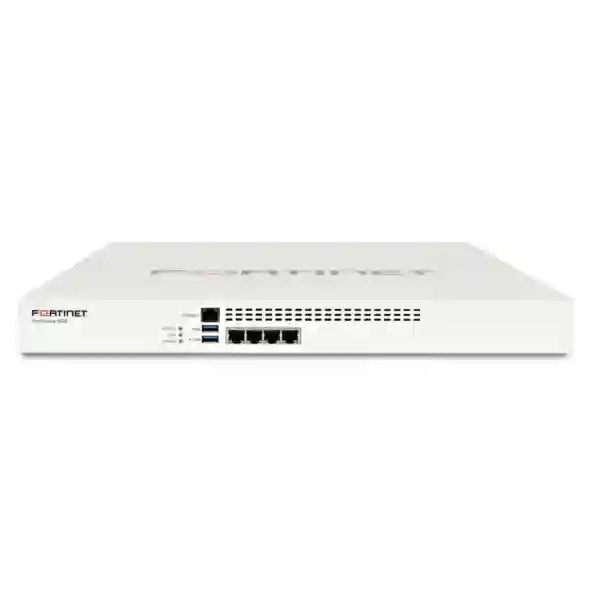
FortiVoice FVE-500F Tanzania
A business-focused enterprise IP PBX platform for organizations that need structured voice communications, centralized administration, scalable extensions and a practical path to unified communications. Fortinet lists the FVE-500F with capacity for up to 500 extensions and 50 VoIP trunks, making it relevant to medium and larger offices, multi-department organizations, hospitality environments and service teams that want an appliance-based FortiVoice deployment.
500 extensions • 50 VoIP trunks • 75 concurrent calls • 1 TB storage • 4 RJ45 network interfaces • 1U rack mount • up to 55 call-center agents.
FortiVoice FVE-500F Overview
The FortiVoice FVE-500F is part of Fortinet’s enterprise phone-system family. It is intended for organizations that want business calling, extension management and communications features delivered through a dedicated appliance rather than relying only on basic carrier calling. Fortinet positions FortiVoice around secure unified communications, centralized management, support for FortiFone endpoints and flexible work patterns. For a buyer in Tanzania, the important purchasing question is not simply whether the appliance supports 500 extensions. A successful project starts by mapping the real number of users, concurrent call demand, SIP trunk requirements, departments, reception flows, hunt groups, call queues, remote users, recording needs, conference use, branch connectivity and expected growth.
The FVE-500F provides 50 VoIP trunks and 75 concurrent calls according to Fortinet’s enterprise FortiVoice datasheet. It also provides 20 conference bridges with up to 20 attendees per bridge and supports a maximum of 55 call-center agents in the published capacity information. Those figures are useful design boundaries, but they should be interpreted in the context of the planned deployment. Extension count is not the same as simultaneous calling demand, and call-center licensing or add-on requirements should be confirmed for the exact project. Fortinet also notes that FortiVoice products are subject to regional telecommunications regulations, so carrier interoperability, numbering and local service requirements should be validated before implementation.
Maximum published extension capacity for the FVE-500F.
VoIP trunks for SIP-based business calling designs.
Published concurrent-call capacity.
Published internal hard-drive capacity.
What the FVE-500F Helps Businesses Solve
Growing organizations often reach a point where a collection of standalone phone lines, unmanaged mobile numbers and small-office PBX equipment becomes difficult to operate. Reception teams need predictable routing, departments need extension plans, managers need clearer call handling, and IT teams need one place to manage users and communications settings. FortiVoice addresses that requirement with an appliance-centered platform that can support auto attendants, voicemail, conferencing, business call routing and related unified-communications capabilities. The value is operational structure: calls can be directed according to business rules rather than depending on manual forwarding or informal processes.
For procurement teams, the FVE-500F is especially relevant when a project is large enough to require hundreds of extensions but does not need the capacity of Fortinet’s larger 2,000- or 5,000-extension appliances. Capacity planning should include a margin for growth. A 300-user organization may be comfortable on a 500-extension platform if its concurrent call requirement, trunk count, call-center profile and application needs remain inside supported limits. Conversely, a smaller organization with unusually high simultaneous call traffic should examine concurrency and queue behavior carefully rather than selecting only by employee count.
Verified Technical Specifications
| Specification | FortiVoice FVE-500F |
|---|---|
| Extensions | 500 |
| VoIP trunks | 50 |
| Concurrent calls | 75 |
| Network interfaces | 4 × RJ45 |
| Storage | 1 TB |
| Form factor | 1U rack mount |
| Power supply | Single |
| Dimensions | 44 × 432 × 270 mm |
| Weight | 10 lb / 4.54 kg |
| Auto attendants | 50 |
| Conference bridges | 20 |
| Attendees per bridge | 20 |
| Maximum call-center agents | 55 |
Fortinet’s published codec support for this family includes G.711 μ-law/A-law, G.729a, G.722 and Opus audio, with H.263 and H.264 video listed in the enterprise datasheet. Exact feature availability can depend on FortiVoice software version, licensing and deployment configuration, so a quotation should identify the intended software and add-ons rather than treating every capability as automatically included.
Deployment, Integration and Buying Guidance
A FortiVoice project should begin with an extension inventory. Separate desk-phone users, softclient users, shared phones, reception positions, meeting rooms, common areas and service extensions. Then estimate peak simultaneous calls, not merely average calls. Organizations with customer-service desks, reservations, collections, sales campaigns or help desks can generate concentrated call peaks that make concurrency more important than headcount. Confirm how many external SIP channels the carrier will provide, what number ranges are required, whether direct inward dialing is needed and how inbound calls should be distributed.
Network readiness is equally important. Voice traffic depends on stable LAN switching, suitable quality-of-service design, dependable WAN connectivity and correct firewall policies. Where voice crosses sites or reaches remote users, latency, jitter, packet loss and failover behavior deserve attention. FortiVoice can form part of a wider Fortinet environment, but the voice design should still be documented independently: VLANs, DHCP options, DNS, time synchronization, endpoint provisioning, emergency calling policy, recording policy, backup approach and administrator access all belong in the implementation plan.
Fortinet offers FortiFone phones and a mobile-friendly FortiFone softclient as part of the broader FortiVoice ecosystem. Auto-provisioning can simplify endpoint rollout when supported devices and the planned configuration are aligned. Buyers should confirm the exact phone models, quantities, PoE requirements, switch-port availability and headset needs before ordering. Analog devices or legacy lines may require FortiVoice Gateway products because the FVE-500F itself is published with no onboard FXO, FXS or PRI ports.
FortiVoice FVE-500F Tanzania
For Tanzania organizations evaluating the FortiVoice FVE-500F, the most useful procurement approach is to define the complete communications outcome before asking for a hardware price. A head office with several departments may need receptionist consoles, extension groups, direct numbers, voicemail, conference functions and controlled outbound dialing. A hospitality property may place greater emphasis on front-desk workflows, room-related communications and hotel-management integration options. A service organization may care most about queues, agent capacity and call reporting. Fortinet lists call center and hotel management among FortiVoice add-on areas, but the exact licenses and supported workflows should be checked against the project.
Tanzania deployments can also involve offices separated by long distances, so branch communication planning should consider the quality and resilience of each site’s connectivity. The FVE-500F can serve as the central communications platform while remote sites and users are designed around the organization’s WAN architecture. The buyer should document expected extensions by site, concurrent calls between sites, external carrier calls, remote-worker requirements and contingency behavior if a WAN link becomes unavailable. This prevents a quotation from being reduced to a single appliance when phones, gateways, switches, power protection, rack space, licensing, configuration and carrier services may all affect the usable solution.
For a Tanzania quotation, share the present extension count, expected three-year growth, number of locations, SIP provider details if already selected, current phone system, phone quantities, call-center agent count, recording requirements and desired integrations. This information helps create a bill of materials that is easier for both IT and finance teams to review. Buyers should also confirm regional telecommunications requirements with their service providers because Fortinet explicitly notes that FortiVoice availability and use are subject to regional telecommunications regulations.
FortiVoice FVE-500F Dar es Salaam
Dar es Salaam businesses often need communications systems that can serve headquarters, customer-facing teams and distributed operational sites without turning extension management into a manual task. The FVE-500F’s 500-extension ceiling provides room for a substantial organization, while 50 VoIP trunks and 75 concurrent calls establish the key published boundaries for external and simultaneous traffic. A company should compare these limits with busy-hour demand. A workforce of 400 does not automatically require 400 simultaneous calls, but a contact-heavy sales or service operation may produce far more concurrent traffic than an administrative organization of the same size.
A Dar es Salaam deployment plan should identify reception routing, departments, queues, business hours, after-hours treatment, holiday schedules, voicemail policies and escalation paths. For multi-floor offices, IP phone deployment also affects switching and power design. Confirm PoE capacity, voice VLAN configuration and cabling before phones arrive. If the project includes remote employees, define whether they will use supported softclient options, desk phones over secure connectivity or another approved method. These details influence licensing, security policies and support documentation.
Organizations replacing an older PBX should inventory analog devices and carrier interfaces early. Because the FVE-500F does not list onboard FXO, FXS or PRI ports, legacy analog requirements may call for appropriate FortiVoice gateways or a migration to SIP services. The cleanest quotation therefore lists what remains from the existing environment, what will be replaced, and what must interoperate during transition. This reduces disruption and gives procurement teams a clearer view of appliance, endpoint, gateway and implementation costs.
FortiVoice FVE-500F Mwanza
For Mwanza organizations, the FVE-500F can be evaluated as a central IP communications platform for growing offices, education environments, healthcare administration, trading businesses, hospitality operations and regional service teams. The decision should begin with communications workflows rather than brand alone. Map the people who require direct extensions, the teams that share queues, the callers who need an auto attendant, and the managers who require conference or mobility features. Fortinet publishes 50 auto attendants and 20 conference bridges for the FVE-500F, giving designers concrete capacity figures to compare with the intended configuration.
Connectivity planning matters when Mwanza is part of a wider organization with Dar es Salaam or other regional locations. Voice quality can be affected by congested WAN links, poorly prioritized traffic or unstable last-mile connectivity. The implementation scope should therefore include bandwidth assessment, quality-of-service planning, failover expectations and monitoring responsibilities. Where two internet paths are available, the network design should define how voice behaves during a link failure rather than assuming every application will recover identically.
Procurement should also distinguish between the FortiVoice appliance and the surrounding solution. The FVE-500F provides the PBX platform, but a complete project may need FortiFone endpoints, headsets, PoE switching, gateways, rack accessories, UPS capacity, SIP service and professional configuration. Asking suppliers to quote against a shared requirements document makes offers easier to compare. Include the expected number of extensions, simultaneous calls, sites, phone models, call-center agents and any integration requirements so the proposal can be validated against Fortinet’s published limits.
FortiVoice FVE-500F Arusha
Arusha has a diverse business environment in which hospitality, tourism, professional services, education and regional administration can create different phone-system requirements. A hotel or travel operation may emphasize reception availability, departmental routing and guest-service workflows, while a professional office may prioritize direct dialing, voicemail, conferences and remote-worker continuity. The FVE-500F provides a common appliance foundation, but the configuration should reflect the actual customer journey for callers. A well-designed call flow minimizes unnecessary transfers and gives callers predictable options during business hours and after hours.
Fortinet lists hotel management as an available FortiVoice add-on area. That does not mean every property-management system is automatically compatible, so an Arusha hospitality project should name the exact PMS or integration target before purchase. The same principle applies to call-center and unified-communications requirements: specify the workflow and confirm the required license or integration instead of assuming it is part of the base appliance. This protects the implementation schedule and makes acceptance testing more objective.
A practical Arusha bill of materials should include endpoints and network readiness. Count desk phones by role, identify executive or reception feature needs, decide where softclients are appropriate, and check switch PoE budgets. If the organization has remote lodges, offices or service locations, document their connectivity and local survivability expectations. The resulting design can then use the FVE-500F’s published capacity intelligently while leaving appropriate room for expansion.
FortiVoice FVE-500F Dodoma
Dodoma organizations considering an enterprise IP PBX often need clear governance as much as calling features. Public-facing institutions, associations, education organizations and larger private enterprises can have many departments, shared service desks and approval processes. The FVE-500F’s 500-extension capacity can support a structured numbering plan, but extension design should be standardized before deployment. Define ranges for departments, shared services, meeting rooms and future growth so new users can be added without repeatedly redesigning the dial plan.
Business continuity should be documented alongside the phone configuration. The appliance uses a single power supply according to the Fortinet datasheet, so rack power, UPS design and recovery procedures deserve attention. Configuration backups, administrator access controls, firmware planning and change documentation should form part of operational handover. For organizations with compliance or internal audit requirements, call recording and retention should be designed according to applicable policy and law rather than enabled without governance.
When requesting a Dodoma quotation, include expected users, departmental call flows, SIP trunk channels, existing numbers, remote sites, phone quantities, recording needs and any call-center requirement. This allows suppliers to distinguish mandatory components from optional enhancements. It also helps prevent the common mistake of selecting a PBX solely on extension count while overlooking concurrent calls, trunk capacity and endpoint infrastructure.
FortiVoice FVE-500F UAE
UAE buyers assessing the FVE-500F should treat regional telecommunications compliance and carrier compatibility as core design inputs. Fortinet states that FortiVoice products are subject to regional telecommunications regulations, so an enterprise should validate the intended service provider, SIP service and numbering arrangement before finalizing the system. The appliance’s published 50 VoIP trunks and 75 concurrent calls provide clear sizing references for offices that expect substantial call activity, while 500 extensions give room for a multi-department deployment.
For organizations operating between the UAE and East Africa, the phone-system project may also need consistent extension plans, branch dialing rules and secure WAN connectivity. A centralized approach can simplify administration, but network conditions and regulatory requirements differ by country. Keep the PBX design modular: document which site owns carrier services, which users are local or remote, how calls are routed during outages and which functions must remain available at each location.
FourTeck’s broader UAE technology presence can be explored through FourTeck UAE for regional infrastructure context. Buyers should request a project-specific quote rather than assuming a published web price covers phones, licenses, gateways, implementation or carrier services. A complete requirement makes cross-border procurement and technical review substantially easier.
FortiVoice FVE-500F Uganda
Uganda organizations can evaluate the FVE-500F for central offices, multi-branch companies, service operations and institutions that require more structure than a small-office phone system provides. The first sizing exercise should compare the 500-extension platform limit with current users and planned growth, then compare the 75 concurrent-call capacity with busy-hour behavior. Organizations with many staff but relatively low external calling may have very different needs from a smaller customer-service operation with heavy queue traffic.
For multi-site Uganda projects, extension dialing can simplify collaboration, but WAN design becomes part of the voice project. Identify which branches depend on the central appliance, how calls are handled during connectivity failures and whether remote users require softclient access. Network security policies should allow required voice traffic without unnecessarily exposing management interfaces. Administrators should also keep configuration backups and maintain clear documentation for SIP settings, extensions, routing and emergency procedures.
For related regional infrastructure planning, buyers can review FourTeck Uganda. A FortiVoice quotation should separately identify the appliance, phones, gateways, software or add-ons, implementation and support scope so procurement teams can compare like with like.
FortiVoice FVE-500F Kampala
Kampala enterprises frequently combine headquarters users, reception teams, sales departments, customer service and remote branches. That mix makes call-flow design a major part of an FVE-500F project. Build an inbound call map before configuration: main number, language or department options, queue destinations, overflow paths, voicemail treatment and after-hours behavior. Then map outbound requirements such as dialing permissions, caller identity and trunk selection. These decisions are easier to review before hundreds of extensions are provisioned.
Call-center requirements deserve separate validation. Fortinet’s published capacity material lists up to 55 call-center agents for the FVE-500F, but the exact features and licenses required for the intended operation should be confirmed. A service desk should specify agent count, supervisor requirements, queues, operating hours, reporting needs and recording policy. This allows the PBX and network to be tested against measurable business workflows rather than a generic feature list.
Kampala buyers replacing an analog or hybrid system should identify all legacy devices. Since the FVE-500F has no onboard FXO, FXS or PRI interfaces in the published specification, analog lines or endpoints can require separate gateway planning. Migrating to SIP may simplify some environments, but carrier readiness and business continuity must be confirmed first.
FortiVoice FVE-500F Arua
For an Arua branch or regional organization, the FVE-500F may be considered when the communications system must serve a broader network rather than a single small site. The appliance’s capacity can accommodate substantial growth, but buyers should avoid oversizing simply because a larger model appears more future-proof. Calculate extension demand, simultaneous calling and trunk requirements, then consider whether centralizing multiple sites on one platform creates operational benefits that justify the capacity.
Connectivity resilience is particularly important for any branch that depends on a central PBX over a WAN. The project document should state what happens if the primary internet link fails, which calls remain possible, and how staff communicate during recovery. Where analog fallback or local carrier connectivity is required, suitable gateways and routing policies should be designed explicitly. Power continuity for phones, PoE switches, routers and the PBX environment should also be considered as one chain rather than as isolated devices.
Arua procurement teams can improve quote accuracy by sharing a site list, user count per site, phone count, current carrier services and expected call patterns. This gives solution designers enough information to decide whether the FVE-500F is an appropriate central platform and what supporting infrastructure is needed.
FortiVoice FVE-500F Mbarara
Mbarara businesses that are expanding from basic telephony to a managed IP phone system can use the FVE-500F as a framework for standardized communications across departments and sites. The strongest business case comes from simplifying administration and creating consistent call handling. A centralized directory, structured extension plan, auto-attendant logic and defined queue behavior can reduce dependence on individual staff knowledge when calls need to reach the right team.
Before deployment, verify the LAN. Voice endpoints need reliable switching and adequate PoE where applicable. Separate voice traffic logically when the network design calls for it, apply quality-of-service policies, and confirm that WAN security rules support the chosen SIP and remote-user architecture. Poor network preparation can undermine call quality even when the PBX itself has ample capacity. For that reason, implementation acceptance should include call-quality tests, inbound and outbound routing, failover behavior, voicemail, conferencing and administrator backup procedures.
A Mbarara quote request should identify whether the project is new or a migration. Migration projects should list existing numbers, analog devices, current PBX, phone models and any integrations that must remain operational. This information helps define gateway requirements and a phased cutover plan, reducing avoidable downtime.
FortiVoice FVE-500F Gulu
Gulu organizations considering the FVE-500F should align the platform with operational roles. Reception users may need richer call-control functions, executives may prioritize mobility and conferencing, service desks may require queues, and general staff may only need standard calling and voicemail. Creating user profiles before ordering phones can reduce unnecessary endpoint cost and make provisioning more consistent. Fortinet’s FortiFone ecosystem is designed to work with FortiVoice, but exact phone models and features should be matched to each role.
The FVE-500F’s 1 TB storage and rack-mount form factor also make physical deployment planning relevant. Confirm rack space, environmental conditions, power protection and network patching. Because the published hardware specification lists a single power supply, continuity planning should consider UPS protection and documented recovery rather than assuming power redundancy inside the appliance. Backups and administrative controls should be part of handover.
For Gulu branches connected to other Uganda sites, document extension dialing and WAN dependency. The final design should clearly state whether the PBX is centralized, which site hosts carrier trunks and what users can do during a WAN outage. This turns a hardware purchase into an operationally testable communications solution.
FortiVoice FVE-500F Kenya
Kenya organizations can evaluate the FVE-500F when a 500-extension class appliance aligns with their office, campus or multi-site communications plan. The published 50 VoIP trunks and 75 concurrent calls are key sizing values. A procurement team should obtain busy-hour calling information from the current system when possible, because real call concurrency provides better evidence than employee count alone. If no historical data exists, estimate by department and add reasonable growth margin.
A multi-branch Kenya deployment should coordinate PBX design with routing, security and WAN policies. Voice quality is sensitive to packet loss and jitter, so bandwidth planning and prioritization matter. If branches use different service providers, test interoperability and failover behavior before the final cutover. Remote-user access should be designed with appropriate authentication and security rather than opening management or signaling services broadly to the internet.
For regional procurement and infrastructure context, visit FourTeck Kenya. When requesting an FVE-500F proposal, include endpoints, gateways, licensing, configuration, training and support requirements in addition to the appliance so the commercial comparison reflects the complete deployment.
FortiVoice FVE-500F Kuwait
Kuwait buyers should approach the FVE-500F as a regulated telecommunications component as well as an IT appliance. Confirm local carrier compatibility, SIP service details and any applicable regulatory requirements before committing to a design. Fortinet itself notes regional telecommunications regulation for FortiVoice products. This validation is especially important when an organization intends to migrate existing business numbers or connect multiple offices through a centralized phone system.
The 500-extension capacity can suit a sizeable enterprise, while 50 VoIP trunks and 75 concurrent calls define external and simultaneous traffic limits that should be checked against busy-hour demand. If a project includes customer service, Fortinet’s published maximum of 55 call-center agents for this model should be compared with the intended queue and supervisor structure. Licensing and add-on requirements should be confirmed separately.
Kuwait projects should also specify endpoint standards, PoE switching, voice VLANs, rack and UPS requirements, backup procedures and security controls. For regional FourTeck context, see FourTeck Kuwait. A complete requirements schedule helps avoid quoting only the PBX appliance while leaving essential implementation components undefined.
FortiVoice FVE-500F Ghana
Ghana organizations looking for an enterprise phone platform can assess the FVE-500F for headquarters, service organizations, educational institutions, hospitality operations and distributed companies. The system should be sized using three separate measures: extensions, VoIP trunks and concurrent calls. Fortinet publishes 500, 50 and 75 respectively for this model. Treating those as separate design dimensions prevents the common error of assuming that extension capacity alone determines system suitability.
For distributed operations, define whether branches connect to a central FortiVoice appliance or use another architecture. Review bandwidth, latency, security and failover for each site. If existing analog lines or devices must remain, account for the lack of onboard FXO, FXS and PRI on the FVE-500F and plan appropriate gateways where supported. A phased migration can be safer than replacing all telephony components at once when business continuity is critical.
Buyers can review FourTeck Ghana for related regional technology information. For an accurate quote, provide user roles, phone quantities, carrier details, call-center needs, recording policy and growth expectations so the appliance and surrounding solution can be evaluated together.
FortiVoice FVE-500F Nigeria
Nigeria enterprises with large user populations or multi-site operations can evaluate the FVE-500F when a 500-extension appliance matches their scale. A disciplined design separates internal extension count from external call demand. Fifty VoIP trunks and 75 concurrent calls may be sufficient for many organizations with hundreds of users, but contact-heavy operations should measure or estimate busy-hour concurrency carefully. Call-center projects should also compare the published 55-agent maximum with the required staffing model.
Network and power resilience should be included in the communications design. IP telephony depends on switches, routers, WAN links and power as well as the PBX. Define UPS coverage, switch PoE capacity, WAN failover and recovery procedures. For branches, document how extension dialing and external calls behave when connectivity is impaired. This produces a more realistic continuity plan than focusing on the appliance alone.
Procurement teams should request clear separation of hardware, endpoint, gateway, license, installation and support costs. Confirm exact FortiVoice software and add-ons required for unified communications, call center, hotel management or softclient use. Regional information is available from FourTeck Nigeria, while project-specific availability and pricing should be confirmed at quotation time.
FortiVoice FVE-500F Seychelles
Seychelles organizations may have communications requirements shaped by hospitality, professional services, government, education and multi-property operations. The FVE-500F can be assessed where the planned environment needs up to 500 extensions and where its 50 VoIP trunks and 75 concurrent-call capacity match expected traffic. Hospitality projects should pay particular attention to integration requirements. Fortinet lists hotel management as an add-on area, but the exact property-management system and workflow should be validated before purchase.
Island and multi-property environments can make WAN dependency especially important. If one central appliance serves several locations, document bandwidth, redundancy and what happens when a site loses connectivity. Local carrier arrangements and telecommunications rules should be checked early. The objective is to avoid discovering during deployment that a required trunk, numbering plan or legacy interface needs additional equipment or approval.
A Seychelles quotation should therefore include the property or site count, extensions by location, peak call demand, endpoint models, reception positions, SIP services, analog requirements, integrations and continuity expectations. This enables a solution designer to decide whether centralization on the FVE-500F is appropriate and to identify gateways, network upgrades or add-ons before the implementation window.
Related Fortinet and Infrastructure Planning
A phone system works best when the surrounding network is designed for stable voice delivery. Organizations already using Fortinet security can coordinate FortiVoice deployment with firewall policy, WAN design and segmentation while keeping voice administration appropriately controlled. FourTeck’s global technology site at FourTeck provides broader infrastructure context. The Tanzania site itself at FourTeck Tanzania is the regional starting point for product and solution enquiries.
When evaluating related products, do not assume every Fortinet appliance or subscription is required for FortiVoice. Select network security, switching, wireless and management components according to the actual topology. The communications bill of materials should remain readable: PBX appliance, FortiFone endpoints, gateways if needed, network prerequisites, licenses/add-ons, installation scope, training and support. This structure makes both technical validation and commercial approval easier.
Quotation Checklist for FortiVoice FVE-500F
Provide current extensions, three-year growth, locations, remote users and departments.
Estimate peak concurrent calls, SIP channels, inbound numbers and outbound call patterns.
List desk phones, reception phones, softclients, conference devices, headsets and analog devices.
Specify call center, hotel management, recording, conferencing and integration requirements.
Document PoE switches, VLANs, WAN links, QoS, firewall policies, rack space and UPS capacity.
List existing PBX, carrier, numbers, analog interfaces, cutover constraints and fallback plan.
FortiVoice FVE-500F Frequently Asked Questions
How many extensions does FortiVoice FVE-500F support?
Fortinet publishes a capacity of up to 500 extensions for the FVE-500F.
How many concurrent calls can the FVE-500F handle?
The enterprise FortiVoice datasheet lists 75 concurrent calls for this model. Real project sizing should still account for software version, configuration, call flows and required features.
Does FVE-500F include analog FXO or FXS ports?
No onboard FXO or FXS ports are listed for the FVE-500F. Legacy analog connectivity may require suitable FortiVoice gateway equipment.
Is FortiVoice FVE-500F suitable for a call center?
Fortinet publishes a maximum of 55 call-center agents for the FVE-500F in its capacity information. Confirm the exact call-center features, licensing, queue design and reporting requirements for the intended software release.
Can FVE-500F work with FortiFone phones?
Fortinet positions FortiFone endpoints as part of the FortiVoice ecosystem and highlights auto-provisioned FortiFone phones. Confirm the exact supported endpoint model and required feature set before ordering.
What should I provide for a Tanzania price quotation?
Provide extension count, sites, concurrent-call estimate, SIP trunk requirement, phone quantities, call-center or hospitality requirements, current PBX details, analog devices, integrations and implementation scope. Current pricing and availability should be confirmed through a quotation.
Decision Recap
FortiVoice FVE-500F is a 1U enterprise phone-system appliance with published capacity for 500 extensions, 50 VoIP trunks and 75 concurrent calls. It is best evaluated as part of a complete communications design rather than as a standalone box. Confirm user growth, busy-hour calling, endpoint mix, SIP carrier service, analog migration, call-center needs, network readiness and licensing before purchase. Organizations that fit comfortably inside these limits can then compare the FVE-500F with smaller or larger FortiVoice models based on capacity and operational requirements.
Plan Your FortiVoice FVE-500F Deployment
Share your number of users, sites, SIP channels, phone quantities, call-center needs and current telephony environment. FourTeck can use that requirement to prepare a product and deployment discussion for Tanzania without assuming stock, pricing, carrier compatibility or licensing that has not yet been confirmed.



Reviews
There are no reviews yet.