
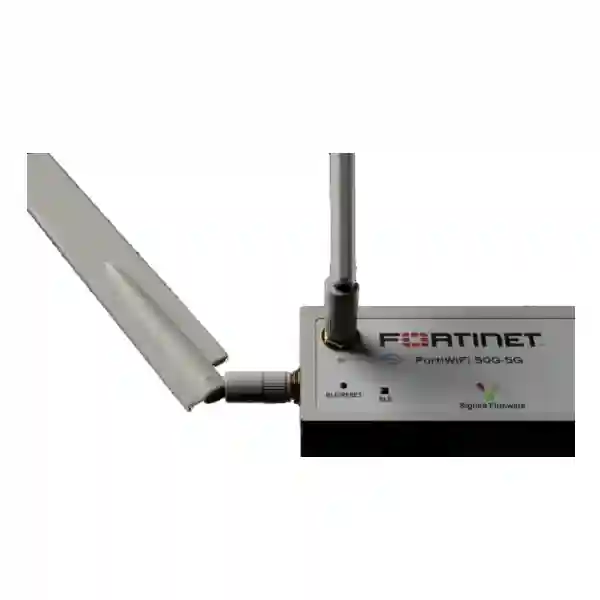
FortiWiFi Series Tanzania
FortiWiFi Series appliances bring Fortinet next-generation firewall security, SD-WAN and integrated wireless into a compact branch platform. Current Fortinet documentation includes FortiWiFi families such as 30G, 50G and 70G, alongside documented F-series platforms including 40F, 60F and 80F variants. Exact radio standards, ports, storage, cellular, PoE, performance and subscription options differ by model, so procurement should begin with the business requirement rather than a model-name assumption.
Converged security
FortiOS brings networking and security policy into one operating environment, helping branches manage internet access, segmentation, VPN and threat controls consistently.
Integrated wireless
FortiWiFi variants include built-in Wi-Fi, reducing the number of separate devices required at compact sites where appliance placement can also provide appropriate wireless coverage.
Branch connectivity
Secure SD-WAN and VPN capabilities make the family relevant to distributed offices that need controlled internet breakout and encrypted connectivity between sites.
How to choose a FortiWiFi model
Start with internet bandwidth, expected concurrent users and devices, the security inspection features that will actually be enabled, VPN traffic, number of WAN links, wired port requirements, wireless coverage, client density and expected growth. A headline firewall-throughput number should not be treated as the only sizing metric because real deployments can enable intrusion prevention, application control, web filtering, malware inspection, encrypted-traffic inspection and other services that affect capacity. Wireless requirements also deserve separate attention: office size, walls, floor layout, interference and user density determine whether an integrated radio is sufficient or whether separate FortiAP access points are more appropriate.
Fortinet publishes model-specific datasheets and quick-start guides. Buyers should therefore confirm the exact FortiWiFi part number and current lifecycle status before ordering. The newer 30G, 50G and 70G families illustrate the continuing FortiWiFi approach of combining secure networking with wireless at the edge. Older or established F-series families may still appear in installed environments and procurement discussions. FourTeck can help compare a requested model against current alternatives without mixing specifications between families.
FortiGuard, FortiCare and lifecycle planning
Hardware is only one part of a FortiWiFi purchase. Organizations should identify which FortiGuard security services and FortiCare support term are required, how long the subscription should run, who will manage renewals and whether centralized logging or management is needed. Security services can add threat intelligence and inspection capabilities, while support entitlements affect access to vendor support and software maintenance according to the purchased agreement. A procurement team should record appliance serial information, contract dates, administrator ownership and renewal milestones so protection does not lapse unexpectedly.
Integration with the rest of the network
A FortiWiFi appliance should be designed as part of the LAN rather than installed as an isolated router. VLANs can separate staff, guest, voice, camera, server and operational traffic. Managed switches can extend those segments across the site, while additional access points can provide wider coverage where the integrated radio cannot serve the whole building. Site-to-site VPN can connect branches, and SD-WAN policies can use multiple links when the selected model and design support the requirement. Review FourTeck Tanzania integrated IT solutions, the Tanzania technology shop, IT deployment and support services, and the Tanzania quotation contact page when planning related switching, Wi-Fi, cabling and security work.
FortiWiFi Series Tanzania
For Tanzanian organizations, FortiWiFi is particularly relevant when a branch, professional office, retail location, clinic, school administration site or compact operational facility needs firewall controls and business wireless without building a large equipment stack. The procurement conversation should begin with the number of people and devices, internet services in use, cloud applications, remote-access needs and any branch-to-branch connectivity. A small office may value a compact all-in-one edge, while a growing site may need the FortiWiFi appliance primarily as the security gateway and use additional access points for broader coverage.
Connectivity conditions can differ significantly between sites, so WAN planning matters. Where a business uses more than one internet connection, the design can consider failover or SD-WAN policies rather than assuming that a second circuit automatically provides resilience. Administrators should define which applications are critical, how sessions should behave during a link failure and how monitoring will identify degradation. For VPN-connected branches, address planning and consistent security policies make future expansion easier.
Wireless design should consider the building itself. Reinforced walls, multiple floors, shelving, neighboring radios and high client density can reduce the value of simply choosing the strongest radio specification. In many Tanzanian projects, the practical question is whether the integrated Wi-Fi can cover the intended zone or whether FortiAP units should extend service. Guest access should be separated from business resources, and operational devices should receive only the access they need.
For quotation preparation, Tanzania buyers should share the preferred FortiWiFi model if known, current firewall, internet speed, user and device counts, required VPNs, number of WAN circuits, Wi-Fi coverage area, license term and deployment location. This allows a more useful model and subscription discussion than asking for hardware price alone. Related regional resources include FourTeck Africa for wider African procurement context and FourTeck Fortinet UAE for Fortinet portfolio and renewal information.
FortiWiFi Series Dar es Salaam
Dar es Salaam businesses often combine office users, cloud applications, guest connectivity, IP phones, cameras and remote access on the same underlying network. A FortiWiFi deployment can provide a controlled security edge for a compact site, but good results depend on segmenting these different traffic types. Staff devices should not automatically share the same trust level as visitors or unmanaged equipment. VLANs, firewall policies and appropriate authentication can create clearer boundaries while preserving normal business access.
For offices in multi-tenant buildings, radio conditions can be crowded. The built-in wireless capability may suit a reception area, small office or branch, but coverage should be assessed instead of assumed. Larger floors, meeting rooms behind dense walls and busy client areas can justify additional managed access points. The wired uplink, switch capacity and PoE plan should be considered at the same time so wireless expansion does not create a new bottleneck.
Dar es Salaam organizations with cloud ERP, Microsoft 365, video meetings, VoIP or hosted business systems should also consider internet resilience. A second WAN can be useful when the selected appliance and service design support it, but failover objectives need to be defined. Critical applications may need preferred paths, while bulk traffic can use another link. VPN tunnels to headquarters, data centers or other branches should be documented with address plans and recovery procedures.
A useful quote request includes current and planned bandwidth, the number of wired and wireless endpoints, security services required, remote users, branch tunnels and the expected support term. FourTeck can use these inputs to discuss model fit, licensing and integration. Buyers should avoid selecting a FortiWiFi solely because it appears to match a previous branch; a different floor plan, internet speed or inspection workload can change the correct choice.
FortiWiFi Series Mwanza
Mwanza organizations evaluating FortiWiFi may include branch offices, distribution operations, professional services, education facilities and retail environments that need secure internet and wireless connectivity in one manageable edge platform. The first design task is to map business functions to network zones. Finance systems, general staff access, guest Wi-Fi, CCTV, voice and operational devices do not need identical permissions. Segmentation reduces unnecessary lateral access and gives administrators clearer policy control.
Where a Mwanza site communicates with a Dar es Salaam headquarters or other regional branches, encrypted site-to-site VPN can form part of the architecture. The team should document subnets, routing, DNS dependencies and which applications must remain reachable across the tunnel. If multiple WAN services are available, SD-WAN policy can be considered according to application priorities and the exact appliance capabilities. Resilience should be tested rather than assumed from configuration alone.
Integrated Wi-Fi is attractive for compact locations, yet coverage and capacity remain physical design questions. A firewall positioned in a rack or secure equipment room may not be in the best place for radio coverage. If the desired security location conflicts with the ideal wireless location, separate FortiAP access points can be a cleaner design. This is especially relevant for multi-room facilities, thick walls or spaces with many simultaneous users.
Procurement teams should ask for a complete bill of requirement rather than a bare appliance. That discussion can include the hardware variant, FortiGuard services, FortiCare term, rack or desktop placement, switching, access points, UPS protection, configuration, documentation and renewal planning. Providing these details early helps distinguish an appropriate FortiWiFi design from a purchase that later needs unplanned accessories or replacement.
FortiWiFi Series Arusha
Arusha has business environments where staff and guest connectivity may coexist, including offices, hospitality-related operations, travel businesses, education and service organizations. FortiWiFi can suit compact sites that want security policy and wireless in a single edge appliance, but guest connectivity should be designed as a separate service rather than simply sharing the staff network password. Guest isolation, controlled internet access and appropriate logging can protect internal resources while keeping visitor access practical.
Hospitality and customer-facing environments can experience bursts of wireless demand that differ from a conventional office. Coverage may need to extend across reception, meeting spaces or customer areas, while the firewall remains secured near the network rack. This can make a mixed architecture sensible: FortiWiFi at the edge with additional FortiAP units where coverage requires them. Channel planning and wired backhaul remain important even when modern wireless standards are available.
For organizations linking Arusha to other offices, VPN and SD-WAN requirements should be sized around real application use. Cloud systems, voice, video and file transfers have different sensitivity to delay and loss. Administrators can define which traffic deserves priority and how alternate links should be used. Security inspection also consumes resources, so model selection should reflect enabled protections rather than only the nominal internet circuit speed.
When requesting a FortiWiFi quotation for Arusha, provide a simple floor description, user count, wireless device estimate, WAN bandwidth, number of branches, VPN requirements and desired subscription period. If the site already uses Fortinet equipment, include current models and software versions so compatibility and migration can be reviewed. A planned migration should preserve access requirements while removing obsolete rules instead of blindly copying an old configuration.
FortiWiFi Series Dodoma
Dodoma organizations can use FortiWiFi for controlled branch connectivity where a compact security gateway must support office users, remote administration, cloud services and wireless access. Procurement should be driven by operational requirements and any institutional security policies. The appliance can become the enforcement point between internal networks and the internet, but its effectiveness depends on clear rules, maintained software and active security subscriptions where those services are required.
A good deployment separates administrative users, guests and specialized devices instead of placing every endpoint on one flat network. Where voice, CCTV or building systems share the LAN, segmentation can reduce unnecessary exposure and make troubleshooting easier. Switch configuration must carry the required VLANs correctly, and access points should map wireless networks to the intended segments. Documentation is important so future changes do not accidentally weaken those boundaries.
For remote offices, administrators should plan how the appliance will be monitored and recovered. Configuration backups, controlled administrator accounts, change records and renewal dates should be maintained. If site-to-site VPN is critical, teams should know which business services depend on it and what happens during a WAN outage. Where multiple links are used, failover behavior should be tested with realistic traffic.
A Dodoma quote request becomes more accurate when it includes internet capacity, expected growth, wireless coverage, VPN users, branch tunnels, interface needs and subscription preference. Organizations should also state whether they need hardware supply only or assistance with configuration, migration and documentation. This avoids comparing quotations that appear similar but include different support and security-service scopes.
FortiWiFi Series UAE
Organizations with operations in both Tanzania and the UAE may use FortiWiFi to standardize smaller branch security while keeping policies aligned with a broader Fortinet environment. Standardization can simplify naming, VPN templates, administrator roles and renewal tracking, but the same hardware model is not automatically correct for every site. UAE branches can have different internet speeds, user density, application use and wireless layouts, so each location should still be sized independently.
A multi-country design benefits from common security principles: separate staff and guest access, restrict management interfaces, document VPN relationships and keep subscription ownership clear. Centralized management or logging may become useful as the number of appliances grows. The exact management architecture depends on scale and operational requirements, and buyers should confirm the appropriate Fortinet products and licenses for their environment.
Wireless planning in dense commercial buildings can require careful radio design. An integrated FortiWiFi radio can be useful for a compact branch, while larger offices can use dedicated FortiAP access points managed as part of the Fortinet ecosystem. The firewall should not be moved to an insecure physical position merely to improve Wi-Fi coverage; instead, the security edge and radio design should be optimized together.
For UAE procurement and Fortinet-specific portfolio information, businesses can review FourTeck UAE and Fortinet solutions from FourTeck UAE. Cross-border teams should provide site-by-site bandwidth, users, wireless requirements, VPN topology and subscription terms so quotations remain comparable across locations.
FortiWiFi Series Uganda
Uganda businesses considering FortiWiFi can use the platform for secure branch internet, wireless access and encrypted connectivity between offices. The key planning question is whether the integrated appliance matches both security workload and radio coverage. A compact Kampala office and a larger regional facility may need different designs even when they share the same corporate security policy.
FortiWiFi can enforce segmentation between staff, guest and device networks, while VPN can connect branches to shared applications. If organizations operate across Uganda and Tanzania, consistent IP addressing and policy naming can simplify administration. Teams should avoid overlapping branch subnets because they complicate VPN routing and future integrations. A documented address plan is inexpensive and valuable.
Subscription planning should be included at purchase time. Buyers need to understand the desired FortiGuard security services, FortiCare period and renewal responsibility. Security controls that depend on active services should not be treated as permanent hardware-only features. The organization should keep renewal dates visible to both IT and procurement teams.
Uganda customers can also use FourTeck Uganda for regional IT context. For a FortiWiFi quote, provide the appliance model if already specified, or share user count, bandwidth, wireless area, number of sites, VPN requirement and license duration so the model discussion can start from measurable needs.
FortiWiFi Series Kampala
Kampala offices often need dependable access to cloud applications, collaboration platforms and remote resources while also providing wireless service to staff and visitors. FortiWiFi can consolidate the security gateway and local wireless role for suitable sites. Administrators should still design separate SSIDs and network segments for different trust levels, ensuring guest users cannot reach internal systems by default.
Internet resilience is another buying consideration. If a branch uses two providers, the selected FortiWiFi variant must have the appropriate interfaces and the configuration must define desired link behavior. SD-WAN policies can help select paths based on business rules, but organizations should establish what constitutes an acceptable failover and test it. Voice and video traffic may require different treatment from backups or software downloads.
A firewall located in a communications cabinet may not deliver ideal wireless coverage to an entire office. For larger Kampala sites, separate access points can extend coverage while FortiWiFi remains the security edge. Switch capacity, PoE budgets and cabling routes should be assessed before adding radios. This creates a more maintainable network than relying on repeaters or unmanaged extensions.
When comparing FortiWiFi quotations, confirm the exact model suffix, included subscriptions, support duration and configuration scope. Similar product names can represent different hardware or service bundles. Ask suppliers to state what is included rather than assuming that all security services are active indefinitely.
FortiWiFi Series Arua
For an Arua branch or regional office, FortiWiFi can be evaluated as a compact secure edge that combines firewall policy, VPN and wireless connectivity. Remote-site design should emphasize maintainability because specialist access may not always be immediate. Clear documentation, configuration backups, labelled cabling and controlled administrator access make troubleshooting easier when assistance is provided remotely.
WAN reliability should be considered alongside firewall performance. If the site has one primary link and an alternate service, define how the appliance should detect failure and which traffic can use the backup. Bandwidth on the alternate connection may be lower, so business-critical applications should be prioritized. The exact cellular or WAN options depend on the FortiWiFi model and should be verified from the relevant datasheet.
Wireless coverage can be affected by building materials and appliance placement. A secure equipment location may be distant from user areas. In that case, an external FortiAP design can provide better coverage while keeping the gateway protected. Staff and guest wireless should remain separated through policy and VLAN design.
Arua buyers should share site conditions, internet services, user count, coverage needs, VPN destination and support expectations before ordering. This helps determine whether an integrated FortiWiFi solution is sufficient or whether the project also requires switching, access points, UPS protection or other infrastructure.
FortiWiFi Series Mbarara
Mbarara businesses with branch connectivity requirements can consider FortiWiFi where secure internet and local wireless need to be managed from one Fortinet platform. Retail, professional offices, education, healthcare administration and distribution sites may all have different traffic patterns, so sizing should reflect applications rather than industry labels alone.
The firewall can separate point-of-sale, staff, guest, voice or operational traffic when the LAN is designed with corresponding VLANs and switch policies. This segmentation is especially useful when devices have different security requirements. Administrators should permit only the communication paths needed for business operations and document exceptions.
If the Mbarara site connects to Kampala or another headquarters, site-to-site VPN design should consider addressing, routing and application dependencies. A migration from an older firewall is an opportunity to review rules rather than copying every legacy object. Unused services and obsolete access can be removed after validation.
For procurement, compare exact FortiWiFi model numbers and subscription terms. Include expected internet upgrades in the sizing discussion so the appliance does not immediately become a constraint. Where wireless demand is likely to grow, plan whether additional FortiAP units and PoE switching may be needed later.
FortiWiFi Series Gulu
Gulu organizations can evaluate FortiWiFi for branch security where simple operations and centralized policy are priorities. An all-in-one appliance can reduce the number of devices at a small site, but consolidation does not remove the need for careful design. Firewall rules, wireless networks, VPNs and administrator access should be documented so the environment remains understandable after staff changes.
For distributed organizations, a Gulu branch may rely on applications hosted elsewhere. VPN availability and WAN quality therefore become operational concerns, not just technical settings. Monitoring should distinguish local LAN problems from ISP issues and remote application outages. If alternate connectivity is planned, failover should be tested under realistic load.
Wireless users may include employees, visitors and managed devices. Separate SSIDs mapped to appropriate network segments help enforce different access rules. If the integrated radio cannot cover the required area, additional access points are preferable to weakening appliance placement or security.
A quotation should identify whether the request includes only FortiWiFi hardware or also FortiGuard subscriptions, FortiCare, configuration, migration and support. Stating these elements clearly allows buyers to compare total scope rather than only the appliance price.
FortiWiFi Series Kenya
Kenyan organizations with Tanzanian branches can use a consistent Fortinet architecture to simplify cross-border network administration. FortiWiFi is suitable for consideration at compact offices that need integrated wireless and NGFW functions, while larger sites may pair FortiGate security with dedicated FortiAP wireless. The choice should follow coverage, throughput and operational requirements.
For multi-country VPNs, teams should maintain a non-overlapping IP plan, standard naming and clear ownership of firewall changes. SD-WAN can support multiple connectivity paths where the hardware and services are appropriate, but application priorities should be documented. Cloud, voice and business-system traffic can have different performance requirements.
Procurement should align subscription terms where practical. A mix of one-year and multi-year renewals across many branches can create administrative overhead, so renewal calendars and serial-number records are valuable. Model lifecycle should also be checked before standardizing a new rollout.
For Kenya-specific enquiries, see FourTeck Kenya. Teams planning a Tanzania-Kenya deployment should provide requirements for each site separately and then identify which standards should be common across the group.
FortiWiFi Series Kuwait
Kuwait businesses and regional groups may consider FortiWiFi for smaller offices requiring a Fortinet security edge with integrated wireless. The same procurement discipline applies: confirm the exact model, interface requirements, radio capability, FortiGuard services and FortiCare term. Environmental and building conditions can also influence equipment placement and wireless design.
Cross-region companies should avoid assuming a Tanzania branch template can be copied unchanged. Internet bandwidth, ISP handoff, office density and wireless interference may differ. A common security baseline can still be maintained through consistent segmentation, administrator controls, VPN standards and logging practices.
Where branch traffic is heavily cloud-based, SD-WAN and local internet breakout can be considered within the organization’s security policy. Where applications remain centralized, VPN capacity and path resilience may matter more. These requirements should be stated before selecting hardware.
A useful Kuwait quotation request includes site size, users, devices, internet circuits, VPN topology, Wi-Fi area and preferred support duration. This provides enough context to compare FortiWiFi against other Fortinet branch designs without relying on model popularity alone.
FortiWiFi Series Ghana
Ghana organizations can assess FortiWiFi for secure branch connectivity where integrated wireless reduces equipment complexity. A branch gateway should be sized for security inspection, not merely raw routing, and wireless should be evaluated for both coverage and client capacity. These two sizing questions are related but not identical.
Multi-site companies can use VPN to connect branches and apply consistent segmentation. Guest networks, employee devices and operational systems should have clearly defined access. If a site handles payment, healthcare, education or other sensitive workflows, internal policies and applicable requirements should guide the security design.
Subscription planning is essential. Buyers should identify which security services are needed, who will monitor renewal dates and how configuration backups are protected. Firmware and policy maintenance should be part of the operational plan after installation.
When requesting a Ghana FortiWiFi quote, provide current internet speed, expected growth, user/device count, branch connectivity and wireless layout. This enables a model-specific recommendation without inventing performance assumptions.
FortiWiFi Series Nigeria
Nigeria businesses with distributed offices can consider FortiWiFi as part of a standardized secure-branch architecture. Compact branches may benefit from integrated wireless, while higher-density or larger sites can extend coverage with separate access points. The security gateway should remain physically protected and positioned for cabling and WAN access rather than being moved solely for radio convenience.
Connectivity resilience can be important where multiple internet services are used. The selected FortiWiFi model must support the required interfaces, and SD-WAN or failover policies should reflect application priorities. Backup links may not have the same capacity as primary links, so critical traffic should be identified before an outage occurs.
Organizations with many branches should consider centralized operational practices: consistent objects and policy names, controlled administrator roles, configuration backups, logging and renewal tracking. Centralized Fortinet management and analytics products may be relevant depending on scale and reporting needs.
For procurement, request exact part numbers and subscription terms. State whether deployment, migration and ongoing support are required. This avoids comparing a hardware-only offer against a bundle that includes security services and implementation.
FortiWiFi Series Seychelles
Seychelles organizations can evaluate FortiWiFi for offices, hospitality administration, retail and other compact business locations where a secure gateway and wireless access are both required. Site conditions and building layout are important because radio coverage can vary greatly even in relatively small premises.
For hospitality-related environments, guest access should be isolated from administrative systems. Staff, guest and operational networks can be separated through SSIDs, VLANs and firewall policies. Larger guest areas may require dedicated access points rather than relying on the gateway’s integrated radio.
Where connectivity is business-critical, WAN resilience and VPN dependencies should be documented. A second link is most useful when failover behavior has been configured and tested. Cloud applications, payment systems, voice and remote management may need different priority during constrained backup operation.
Seychelles buyers should provide site size, floor layout, internet bandwidth, user count, security-service requirements and subscription duration. Model-specific datasheets should be checked before ordering so interfaces and wireless capabilities match the intended design.
Related network and security planning
Firewall and VPN
Use the Tanzania security portfolio to plan segmentation, remote access, site-to-site VPN and policy design alongside FortiWiFi.
Switching and LAN
Managed switching supports VLANs, wired endpoints and access-point uplinks that extend a FortiWiFi deployment.
Deployment services
Configuration, migration, documentation and infrastructure work can be planned with the wider site requirement.
FortiWiFi quotation checklist
Before requesting a quotation, prepare: preferred FortiWiFi model or current firewall model; internet bandwidth and expected upgrade; number of users and devices; wired-port requirement; office size and wireless coverage zones; number of WAN links; site-to-site and remote-access VPN needs; required FortiGuard services; preferred FortiCare and subscription term; switching and access-point requirements; deployment city/country; and whether configuration, migration, documentation or ongoing support is required. These inputs make it easier to identify the correct appliance and bundle.
Frequently asked questions
What is FortiWiFi?
FortiWiFi is Fortinet’s family of FortiGate-based security appliances with integrated wireless capability. Depending on model, the platform combines next-generation firewall functions, secure networking, SD-WAN, VPN and Wi-Fi in a compact appliance.
Which FortiWiFi model should I buy?
Choose by inspected traffic, users and devices, internet speed, interfaces, VPN load, wireless coverage and required subscriptions. Current Fortinet documentation includes 30G, 50G and 70G families, while established F-series models remain relevant in existing environments. Verify the exact datasheet and lifecycle before purchase.
Does FortiWiFi replace separate access points?
It can provide integrated wireless for suitable compact sites, but larger, denser or multi-floor locations may still require dedicated FortiAP access points. Coverage should be assessed from the building layout and user density.
Do I need FortiGuard and FortiCare?
The required subscriptions depend on the security services and support level the organization needs. Buyers should specify desired protections and support duration and confirm exactly what is included in the quoted bundle.
Can FortiWiFi connect multiple branches?
FortiWiFi platforms support branch networking capabilities such as VPN and, depending on model and configuration, SD-WAN. The topology, bandwidth and security requirements should be planned for the specific deployment.
Decision recap
FortiWiFi is best evaluated as a secure branch platform rather than simply a wireless router. Confirm the exact model, real security workload, WAN design, Wi-Fi coverage, VPN topology and subscription term. For a small office, integrated wireless may simplify deployment; for a larger site, the appliance can remain the security edge while FortiAP expands coverage. Keep model-specific specifications tied to the relevant Fortinet datasheet and include lifecycle and renewal planning in the purchase decision.
Consult FourTeck Tanzania
Send your user count, bandwidth, site layout, current firewall, VPN requirements, Wi-Fi coverage and preferred subscription term. FourTeck can use these details to prepare a FortiWiFi discussion around the actual site requirement and related switching, access-point and deployment needs.




Reviews
There are no reviews yet.