
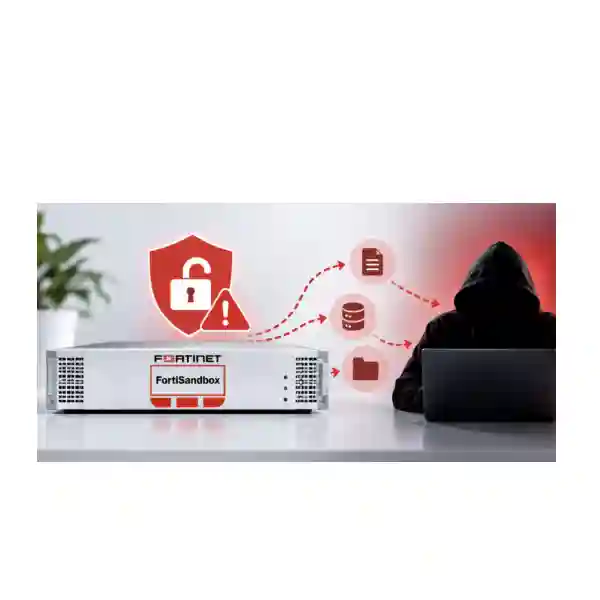
FortiSandbox G Series Tanzania
FortiSandbox G Series is Fortinet’s current generation of dedicated hardware sandbox appliances for organizations that need scalable analysis of suspicious files, advanced malware, ransomware, phishing payloads and previously unseen threats. The family includes FortiSandbox 500G, 1500G and 3000G. It combines static and dynamic analysis, advanced AI and purpose-built machine learning with FortiGuard threat intelligence, while integrating with the wider Fortinet Security Fabric and supported third-party security infrastructure. For Tanzanian enterprises, financial institutions, service providers, government environments, universities and security operations teams, the practical buying question is not simply whether to deploy a sandbox; it is how much analysis capacity, isolation, integration and operational visibility the organization needs.
What FortiSandbox G Series does
Traditional signature-based controls remain useful, but unknown files and newly developed attack techniques require additional inspection. FortiSandbox provides a controlled analysis environment in which suspicious content can be examined using multiple detection techniques. Fortinet positions the platform for emerging and unknown threats, including zero-day malware and ransomware, using static and dynamic analysis together with AI-assisted detection. This makes the platform relevant where security teams want to enrich prevention systems with deeper file analysis and actionable threat information.
The G Series advances Fortinet’s earlier appliance generations with greater processing resources and VM capacity. Fortinet states that the 500G replaces the 500F, while the 1500G replaces the 1000F and 2000E. The 3000G is positioned as the fastest current FortiSandbox hardware appliance and supports 150 VMs. Exact sizing should be based on file submission volume, peak demand, integrations, desired virtual-machine mix, retention and operational workflows rather than selecting an appliance solely from its model number.
FortiSandbox 500G
An entry point in the current G-Series hardware family for organizations that require a dedicated on-premises sandbox with modern processing resources. It replaces the earlier 500F generation. Suitability depends on actual file volume and integration requirements.
FortiSandbox 1500G
A higher-capacity G-Series option replacing the earlier 1000F and 2000E platforms. It is relevant for organizations with broader submission sources, larger user populations or SOC workflows that require more analysis capacity.
FortiSandbox 3000G
Fortinet’s highest-performance current FortiSandbox hardware appliance, designed for demanding environments and high file volumes. Fortinet documents 150 VMs and up to twice the performance and capacity of the preceding 3000F.
Core security and integration capabilities
FortiSandbox combines static inspection, dynamic behavior analysis, machine learning, neural-network techniques and FortiGuard intelligence to classify suspicious content. Hardware appliances can integrate natively with the Fortinet Security Fabric and can receive content from supported Fabric products, partner integrations, adapters, APIs, network shares and sniffing workflows. Common architectural discussions therefore include FortiGate, FortiMail, FortiWeb, FortiClient and security-operations platforms. The objective is to make sandbox verdicts useful beyond a standalone analysis console by feeding detection and remediation processes.
Fortinet offers Standard Sandbox Threat Intelligence and an Advanced AI subscription tier in its current ordering guidance. Advanced capabilities include FortiGuard Advanced AI, real-time anti-phishing and IOC threat enrichment. Buyers should verify the subscription, firmware and feature combination required for their intended workflow at quotation time because licensing requirements can change and not every feature belongs to the same entitlement.
FortiSandbox G Series Tanzania
Organizations evaluating FortiSandbox G Series in Tanzania commonly need to connect malware analysis with an existing firewall, email-security, web-security, endpoint or SOC architecture. A useful procurement process begins with the sources that will submit files: internet gateways, email, web applications, endpoints, file repositories or analyst-driven submissions. The number of sources matters because a sandbox sized for occasional manual analysis is different from one expected to receive automated submissions from several security controls throughout the day.
Tanzania buyers should document expected file volume, peak periods, current Fortinet products, third-party integrations, preferred deployment location, data-handling requirements and the people who will review incidents. Organizations with regulated or sensitive data may prefer a dedicated on-premises appliance because it keeps analysis infrastructure under organizational control, while others may compare hardware with FortiSandbox virtual, hosted or SaaS options. The correct architecture should reflect security policy rather than assuming hardware is automatically preferable.
For a quotation, specify whether the requirement is for 500G, 1500G or 3000G, or ask for sizing assistance if the model is not yet known. Include current firewall and email-security models, approximate users, internet bandwidth, daily or peak file-analysis expectations, HA or resilience expectations, rack and power considerations, subscription requirements and desired integration outcomes. This information helps distinguish an appliance purchase from a complete advanced-threat-protection project.
FortiSandbox G Series Dar es Salaam
Dar es Salaam organizations can approach FortiSandbox sizing from workload and risk. Large corporate headquarters, banks, service providers and organizations with internet-facing applications may generate suspicious files from several inspection points. A design can therefore map the flow from FortiGate, FortiMail, FortiWeb or other supported sources into FortiSandbox, then define how verdicts return to enforcement and analyst workflows. This avoids buying a powerful appliance without planning how its intelligence will be consumed.
For environments with an established SOC, the project should include analyst access, alert triage, reporting, IOC enrichment and escalation processes. Where security operations are smaller, automation and integration become particularly important because a sandbox should reduce uncertainty rather than create another isolated console. Procurement teams should also confirm rack space, power, network interfaces, management addressing, segmentation and change windows before deployment.
Dar es Salaam buyers requesting a commercial proposal should identify the required appliance family, desired subscription tier and support expectations. If replacing an older FortiSandbox model, include the existing platform and software version so migration considerations can be reviewed. FourTeck Tanzania’s technology enquiry page explains the project information that can improve quotation accuracy.
FortiSandbox G Series Mwanza
In Mwanza, a FortiSandbox project may serve a regional enterprise, education environment, healthcare organization, industrial operation or distributed business with branch connectivity. The design question is whether suspicious content is best submitted centrally or whether network architecture and policy require another approach. Centralization can simplify operations, but bandwidth, latency, file movement, security policy and data-governance requirements should be evaluated before finalizing the topology.
A buyer should inventory existing security controls and identify which ones can submit content to FortiSandbox. This inventory prevents assumptions about integration and helps define the operational path for detected malware. If FortiGate appliances protect branches, for example, the broader Security Fabric design may be as important as the sandbox model itself. Email and web traffic can introduce different file types and submission patterns, so peak analysis demand should be estimated rather than relying only on employee count.
For procurement planning, include expected growth. A platform that is adequate today should have reasonable headroom for new branches, additional inspection sources or increased file traffic. The G Series’ increased processing and VM capacity is relevant to this planning, but model selection should still follow measured or estimated workload. Subscription terms and Advanced AI requirements should be confirmed in the bill of materials.
FortiSandbox G Series Arusha
Arusha organizations evaluating advanced malware analysis may include hospitality groups, international organizations, education, government-related environments and multi-site businesses. FortiSandbox can add a deeper inspection layer when suspicious files require analysis beyond conventional signatures. The useful design conversation starts with business-critical applications, common file-transfer channels, email exposure and the security products already deployed.
Organizations operating multiple sites should decide where the appliance will reside and how remote security devices submit suspicious objects. Network segmentation should keep management and analysis flows controlled. Administrators also need a process for reviewing verdicts and taking action. Sandbox technology is most valuable when detection results lead to containment, blocking, investigation or policy improvements rather than remaining only as reports.
An Arusha quotation request should identify the number of sites, approximate users, relevant Fortinet appliances, current email and endpoint security, preferred data-center location and desired retention/reporting workflow. If the project is part of a wider firewall refresh, buyers can also review the FourTeck Tanzania technology shop and discuss a coordinated architecture rather than treating sandboxing as an isolated purchase.
FortiSandbox G Series Dodoma
Dodoma deployments may involve public-sector, institutional, education and enterprise networks where control of sensitive files and security infrastructure is important. A dedicated FortiSandbox appliance can be evaluated when policy favors on-premises analysis. Procurement teams should document whether files contain regulated, confidential or operationally sensitive information and determine how analysis, reporting and administrator access fit existing governance requirements.
Sizing should include both normal and exceptional traffic. Security incidents can create bursts of suspicious submissions, and new integrations can increase workload after the initial installation. FortiSandbox 500G, 1500G and 3000G provide different capacity points; the selection should be tied to workload rather than organizational prestige or a generic small/medium/large label.
Deployment preparation should include rack and power planning, management network design, DNS and time services, update connectivity, integration credentials and operational ownership. Buyers should also clarify subscriptions and renewal planning. A complete quotation can separate appliance hardware, required threat-intelligence subscriptions, support and any deployment or integration services so commercial comparison remains clear.
FortiSandbox G Series UAE
UAE organizations often evaluate sandboxing alongside data-center security, SOC modernization, email protection and high-throughput firewall environments. The G Series provides dedicated hardware choices for organizations that want analysis capacity under their own operational control. The 3000G is particularly relevant to high-volume environments because Fortinet positions it for large enterprises, financial institutions and cloud-storage providers, while 500G and 1500G offer other capacity points.
Architecture teams should establish the sources of suspicious content and the expected remediation path. Integration with Fortinet Security Fabric components can coordinate detection, while APIs and supported third-party integrations can fit mixed-vendor environments. Organizations should validate required integrations against the current FortiSandbox release and avoid assuming that every third-party product has identical submission or remediation capabilities.
For UAE regional requirements, buyers can also consult FourTeck’s Fortinet UAE resource for Fortinet-focused enquiries and FourTeck UAE for wider infrastructure planning. Commercial requests should state appliance preference, quantities, subscriptions, deployment location and integration scope.
FortiSandbox G Series Uganda
Ugandan enterprises can use the same workload-led approach to FortiSandbox selection. Start by identifying how suspicious files currently enter the organization and which security controls can submit them for analysis. Email attachments, web downloads, file-sharing services and application uploads can produce different volumes and risk profiles. The sandbox should be positioned where its verdicts can influence prevention and incident response.
A central appliance can be considered for organizations with multiple branches, but connectivity and data-handling policy should be reviewed. SOC teams should define who receives alerts, how incidents are prioritized and whether indicators are shared with other controls. Licensing also deserves early attention because Advanced Sandbox Threat Intelligence capabilities are tied to the appropriate subscription and supported firmware.
For Uganda-focused infrastructure discussions, FourTeck Uganda provides a regional path for technology enquiries. A quotation should include the intended G-Series model or sizing inputs, integration list, expected file volume, desired subscription and any deployment assistance required.
FortiSandbox G Series Kampala
Kampala organizations with concentrated headquarters, data centers or SOC functions may benefit from placing sandbox analysis close to core security infrastructure. This can simplify integrations with gateways, email systems and analyst platforms while maintaining centralized administration. Capacity planning should consider both current submissions and planned expansion because adding another FortiGate, mail gateway or file-analysis source can materially change workload.
The choice among 500G, 1500G and 3000G should be made after understanding expected throughput and VM requirements. Fortinet’s G-Series improvements provide additional processing and virtualization resources, but exact performance varies by analysis profile. Buyers should use current Fortinet documentation and a properly scoped bill of materials rather than comparing appliances only on a single headline metric.
Operational planning is equally important. Define administrator roles, reporting recipients, escalation paths and maintenance windows. If the sandbox is expected to support incident hunting, confirm how analysts will access samples and intelligence while preserving internal security procedures. These details turn the appliance into part of a repeatable security process.
FortiSandbox G Series Arua
For Arua and distributed regional operations, organizations may be deciding whether a dedicated sandbox should sit locally or in a central Ugandan security location. The answer depends on file volume, WAN connectivity, data policy, local infrastructure and the location of the team that will operate the platform. A centralized model may simplify administration, while certain sensitive environments may prioritize local control.
Before requesting equipment, map the security workflow. Identify devices that will submit suspicious files, determine whether automated blocking is required, and document how analysts will investigate high-risk verdicts. FortiSandbox’s value comes from combining analysis with actionable intelligence, so the deployment should avoid becoming an isolated appliance that receives files but is not connected to response processes.
Commercial planning should include rack availability, power protection, network segmentation and subscription renewal. If future branches or additional security products are expected, include them in sizing assumptions. This provides a more realistic basis for choosing between G-Series models and reduces the chance of immediate capacity pressure after deployment.
FortiSandbox G Series Mbarara
Mbarara businesses and institutions can evaluate FortiSandbox where advanced malware analysis is needed as part of layered defense. The platform is not a replacement for firewall, endpoint or email security; it complements these controls by providing deeper analysis of suspicious content. That distinction matters when budgeting because the project should account for both the submission sources and the actions taken after a malicious verdict.
A useful sizing exercise records typical and peak file submissions, file types, number of integrated systems and anticipated growth. Organizations should also consider whether they need Advanced AI subscription capabilities such as real-time anti-phishing and IOC enrichment. Current ordering guidance should be checked when the quotation is prepared so licenses match the intended firmware and features.
For branch-heavy organizations, the network path to the sandbox needs adequate reliability and appropriate security. Management access should be restricted and documented. Administrators should plan backups, updates, monitoring and incident ownership as part of implementation rather than leaving these decisions until after hardware arrives.
FortiSandbox G Series Gulu
Gulu organizations considering a G-Series appliance should first decide whether the requirement is driven by compliance, repeated malware incidents, SOC modernization, email threats or broader Security Fabric integration. Each driver changes the design emphasis. Compliance-focused environments may prioritize on-premises control and reporting, while incident-response teams may emphasize analysis speed, IOC enrichment and integrations.
The current hardware range provides a progression from 500G through 1500G to 3000G. Rather than selecting solely by organization size, use submission volume and virtual-analysis requirements. A relatively small organization with a high-volume file service may need more capacity than a larger office environment with limited submission sources.
The quotation should specify any required subscriptions and support alongside the appliance. Deployment planning should include network placement, management connectivity, update access and integrations. If the organization already operates FortiGate or other Fortinet products, document exact models and software versions so compatibility can be checked against current Fortinet guidance.
FortiSandbox G Series Kenya
Kenyan organizations can evaluate FortiSandbox G Series for advanced-threat analysis in enterprise, financial, cloud, government, education and service-provider environments. High-volume environments should pay particular attention to the 3000G, while other workloads can be assessed against 500G and 1500G. The correct choice depends on analysis demand and architecture rather than geography.
Security teams should document integration with firewalls, email security, web applications, endpoints and SOC tools. Mixed-vendor environments should validate supported API or partner integrations before procurement. Where several sites submit files to one appliance, network design and data policy need to support the central analysis model.
For Kenya-specific technology sourcing, FourTeck Kenya provides a regional resource. Buyers should request a bill of materials that clearly identifies hardware, subscriptions, support and optional deployment scope. This makes renewal obligations and implementation responsibilities visible from the start.
FortiSandbox G Series Kuwait
Kuwait enterprises evaluating dedicated sandbox hardware may prioritize data control, high availability, integration and SOC workflows. FortiSandbox G Series can be assessed as part of a layered advanced-threat architecture, with suspicious content submitted from supported security controls and verdicts used to improve response. On-premises hardware can be attractive where organizational policy requires local infrastructure control.
Sizing should reflect actual submission rates and the number of dynamic-analysis VMs required. The 3000G offers the highest current hardware capacity, while 500G and 1500G address other deployment scales. Subscription selection should be reviewed at the same time because advanced AI and threat-enrichment features may depend on the appropriate entitlement.
Regional procurement enquiries can also use FourTeck Kuwait. Provide existing Fortinet models, desired integrations, expected workload, rack environment and support requirements to build a meaningful commercial and technical proposal.
FortiSandbox G Series Ghana
Ghanaian organizations can position FortiSandbox as an analysis layer for files that need more scrutiny than conventional controls provide. Financial services, government, education, telecom and larger enterprises may have different submission profiles, but the sizing method is consistent: identify sources, measure or estimate file volume, define peak demand and determine how verdicts are consumed.
Where a Security Fabric is already deployed, FortiSandbox can participate in coordinated detection and response. Third-party integrations can also be relevant, but exact support should be validated. Buyers should distinguish between appliance capability and subscription capability so the bill of materials includes the services required for the desired Advanced AI functions.
For Ghana-focused enquiries, FourTeck Ghana can support regional technology discussions. Include data-location requirements, current security architecture and growth plans when seeking model guidance.
FortiSandbox G Series Nigeria
Nigeria’s large enterprise and service-provider environments can generate substantial security-analysis workloads, particularly where many users, branches, internet-facing services or file-transfer systems are involved. FortiSandbox G Series provides dedicated hardware choices for organizations that want scalable on-premises analysis. High volume alone does not automatically dictate a 3000G; sizing should account for file types, dynamic-analysis demand and the number of integrated sources.
SOC teams should define the lifecycle from suspicious-file submission through verdict, enrichment, containment and investigation. This operational design determines which integrations matter most and helps avoid unnecessary complexity. Organizations using FortiGate, FortiMail, FortiWeb or other Security Fabric components can assess native workflows, while mixed environments can review APIs and supported third-party connections.
For Nigeria-specific sourcing, FourTeck Nigeria provides a regional route. Quotations should identify appliance, subscription, support and integration services separately, with current documentation used to validate features.
FortiSandbox G Series Seychelles
Seychelles organizations may have smaller user populations than major continental markets while still handling sensitive financial, hospitality, government or international-business data. Sandbox sizing should therefore follow risk and workload rather than population assumptions. A dedicated appliance can be evaluated where local analysis and infrastructure control are important.
Connectivity to external services, branch topology and data-handling policy should be considered when comparing hardware with virtual or hosted FortiSandbox options. If a G-Series appliance is selected, implementation should include secure management, update connectivity, integration testing and a documented process for responding to malicious verdicts.
Procurement teams should provide expected file-analysis volume, integrated products, desired subscription features and support requirements. For broader African technology planning, FourTeck Africa can provide additional regional context while Tanzania enquiries can begin with the FourTeck Tanzania contact channel.
How to select the right FortiSandbox G Series model
Start with workload. Count every system expected to submit files and estimate normal and peak daily volume. Then identify the types of files and the proportion expected to require dynamic analysis. Next, define the required VM environment, operational retention and analyst workflow. Finally, add growth headroom for new branches, additional Fortinet controls, application uploads or increased email traffic. These inputs provide a stronger sizing basis than employee count alone.
Also decide whether hardware is the right form factor. Fortinet offers hardware, virtual appliance, PaaS and SaaS approaches. Dedicated G-Series hardware is especially relevant when an organization wants appliance-based on-premises resources, but cloud or virtual options may suit other operational models. Compare control, scalability, infrastructure ownership, data policy and total lifecycle requirements.
Related security planning on FourTeck Tanzania
FortiSandbox is usually one component of a wider security architecture. Review FourTeck Tanzania’s main technology portfolio for the broader infrastructure context, use the Tanzania product catalogue when comparing related equipment, and consult the technology services page for project-oriented requirements. The FourTeck Tanzania company page provides business context, while the contact and quotation page is the correct starting point for model, quantity and integration discussions.
When the project includes firewall, switching, wireless, servers or other infrastructure, describe the complete requirement rather than requesting the sandbox in isolation. This helps identify network dependencies, rack requirements, security zones and integration tasks that belong in the same implementation plan.
Quotation checklist
✓ Preferred model: 500G, 1500G or 3000G
✓ Quantity and deployment location
✓ Current Fortinet and third-party security products
✓ Approximate file-submission volume and peak demand
✓ Required subscription tier and renewal term
✓ Rack, power and network requirements
✓ Security Fabric and API integration requirements
✓ Existing FortiSandbox model if replacing hardware
✓ SOC and reporting workflow
✓ Data-handling or compliance constraints
✓ Support expectations
✓ Installation, migration or configuration scope
FortiSandbox G Series FAQ
Which FortiSandbox G Series models are current?
Fortinet’s current G-Series hardware data sheet identifies FortiSandbox 500G, 1500G and 3000G. The 500G replaces 500F, and 1500G replaces the earlier 1000F and 2000E platforms.
What is FortiSandbox used for?
It is used to analyze suspicious content and detect advanced or previously unseen threats through a combination of static and dynamic analysis, AI/ML techniques and FortiGuard intelligence. It can integrate with other security controls so verdicts contribute to protection and incident response.
Does FortiSandbox integrate with FortiGate?
Yes. FortiSandbox is designed to integrate with Fortinet Security Fabric products including FortiGate. Exact configuration and supported capabilities should be checked against the current software release and product documentation.
Is a subscription required?
Fortinet’s ordering guidance distinguishes Standard Sandbox Threat Intelligence from an Advanced AI subscription. Required entitlements depend on the features and deployment selected, so the current bill of materials should be confirmed before purchase.
What information is needed for a FortiSandbox quotation?
Provide the preferred model if known, expected file volume, integrated security products, deployment location, subscription requirements, support term and any installation or migration scope. If model selection is still open, provide workload and architecture details for sizing.
Decision recap
FortiSandbox G Series is designed for organizations that need dedicated, scalable advanced-threat analysis integrated into broader security operations. The 500G, 1500G and 3000G provide different hardware capacity points, while current FortiSandbox capabilities combine AI-assisted detection, static and dynamic analysis and threat intelligence. A sound purchase decision matches the appliance and subscription to real submission volume, integration requirements, data policy and operational processes.
Plan your FortiSandbox deployment
Send FourTeck Tanzania your intended model or current security architecture, approximate analysis workload, subscription requirements and deployment location. If you are replacing an older FortiSandbox appliance, include its model and software version. If this is a new deployment, describe the products that will submit suspicious files and how your security team expects to respond to detections.



Reviews
There are no reviews yet.