
Grandstream business voice endpoint for Tanzania
Grandstream GXP1782 Tanzania
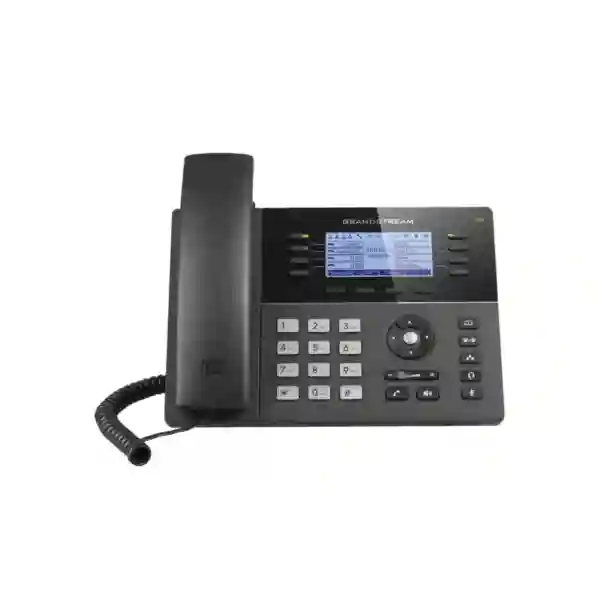
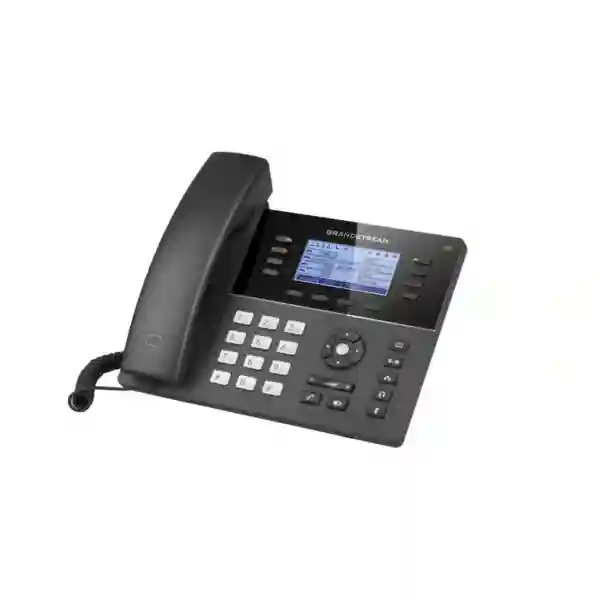
The Grandstream GXP1782 is a mid-range SIP desk phone designed for users who need more line visibility and programmable call-handling keys than an entry-level handset. It supports 8 lines, up to 4 SIP accounts, 8 dual-color line keys, 4 XML programmable context-sensitive soft keys and 32 digitally programmable BLF or fast-dial positions. The GXP1782 adds dual switched auto-sensing Gigabit Ethernet ports, integrated Power over Ethernet, HD wideband audio and 5-way audio conferencing. Grandstream currently places the GXP1780/GXP1782 in its product archive, so a practical buying process should verify current availability, firmware support, PBX interoperability and whether a newer Grandstream model would be more appropriate for a new standardization project.
Useful for business users who monitor several call appearances or require multiple SIP identities on one desk phone.
Programmable keys can support speed dialing and busy-lamp monitoring according to the capabilities of the connected PBX.
Dual 10/100/1000 Mbps Ethernet ports on the GXP1782 can keep a PC and phone on the same desk connection while PoE can simplify power delivery.
Wideband audio, full-duplex speakerphone operation and built-in conferencing support common office calling workflows.
What the Grandstream GXP1782 is designed to solve
Many desk-phone deployments fail because every user receives the same endpoint even though job roles differ. A general office user may only need one account and a few transfer keys, while a receptionist, supervisor, branch coordinator or manager may need several line appearances, frequently dialed extensions and visual presence information. The GXP1782 sits in that middle ground. Its 8 line keys and 32 programmable BLF or fast-dial positions give a user more at-a-glance call control without moving into a large touchscreen endpoint. That makes it relevant to environments where users spend substantial time routing calls, watching colleagues’ extension status or reaching recurring contacts.
The phone is also designed to coexist with an Ethernet-connected workstation. Its two switched Gigabit ports allow the network connection to pass through the phone to a desktop computer where the network design permits that topology. Integrated IEEE 802.3af PoE can reduce the need for individual power adapters when the access switch provides sufficient PoE budget. These capabilities are particularly useful in structured office deployments where voice VLANs, QoS, DHCP options, provisioning and switch-port policies are managed centrally.
For a new purchase, lifecycle matters as much as features. Grandstream lists the GXP1780/GXP1782 in its product archive. That does not make existing deployments unusable, but it changes the procurement discussion. Buyers should confirm whether they are replacing a failed unit in an established fleet, expanding an existing standard, or choosing an endpoint for a new deployment. In a new standardization project, comparison with current Grandstream GRP-series models may be sensible. In an existing GXP1782 estate, matching the installed configuration, firmware policy, SIP platform and user training may be more important than simply choosing the newest handset.
Verified Grandstream GXP1782 features
| Area | Verified capability | Practical buying relevance |
|---|---|---|
| Lines and accounts | 8 lines, up to 4 SIP accounts | Supports users handling several line appearances or SIP identities. |
| Display | 200 × 80 pixel backlit LCD | Provides status and menu visibility without a touchscreen interface. |
| Programmable keys | 32 digitally programmable BLF/fast-dial positions | Useful for extension monitoring and rapid call handling when supported by the PBX. |
| Network | Dual switched auto-sensing 10/100/1000 Mbps Ethernet ports | Helps avoid a 100 Mbps desk-side bottleneck when the phone shares a cable path with a PC. |
| Power | Integrated IEEE 802.3af PoE; universal power adapter included in the documented package | Allows centralized switch power where PoE is available while retaining adapter-based deployment. |
| Audio | HD handset and speakerphone, wideband audio, acoustic echo cancellation | Supports clearer voice conversations when the network and far-end codec path also support wideband audio. |
| Conference | 5-way audio conferencing | Enables small multi-party voice sessions directly from the phone. |
| Security | TLS, SRTP, 802.1X support and AES-encrypted XML configuration support | Can participate in more controlled enterprise voice deployments when the surrounding platform is configured accordingly. |
| Provisioning | TFTP/HTTP/HTTPS firmware methods, TR-069 and encrypted XML configuration support | Useful for consistent configuration across multiple handsets rather than manual per-phone setup. |
Compatibility and deployment planning
The GXP1782 is a SIP endpoint, but a successful deployment still depends on the PBX, SIP service, switch configuration and firewall behavior. Before ordering, confirm the intended SIP registrar or IP PBX, account count, required codecs, BLF behavior, voicemail access method, transfer workflow, caller-ID requirements and any directory integration. Grandstream documents SIP RFC3261 support together with RTP/RTCP, HTTP/HTTPS, DHCP, DNS, NTP, LLDP, LDAP, TR-069, 802.1X, TLS, SRTP and IPv6 among other protocols. Supported voice codecs include G.729A/B, G.711 µ-law and A-law, G.726, G.722, G.723 and iLBC.
Network preparation should include VLAN and QoS decisions before handsets are installed. A voice VLAN can separate telephony traffic from general data traffic, while switch QoS and upstream policy can help reduce avoidable delay or packet loss. If the phone and a workstation share the same wall port, verify the switch-port configuration, VLAN tagging method and endpoint authentication. For PoE deployments, calculate the total switch power budget rather than assuming that available Ethernet ports automatically have enough PoE capacity for every connected phone.
Organizations using Grandstream UCM systems can also consider the documented Zero Config workflow for supported devices. For non-Grandstream platforms, provisioning and feature behavior should be tested against the actual PBX. Features such as BLF, shared line appearances, call park and directory integration can depend on the server implementation. A short pilot with a representative user is a practical way to confirm behavior before a larger rollout.
Who should consider the GXP1782?
The line keys and programmable BLF positions can help staff see extension status and reach recurring destinations quickly, subject to PBX support.
Multiple call appearances, conference functions and programmable keys can fit users who regularly coordinate between departments or branches.
Replacement or expansion may prioritize configuration consistency and user familiarity, provided compatible units and suitable firmware support are available.
Gigabit Ethernet and PoE are useful where voice endpoints are integrated into managed switching, VLAN and centralized power designs.
Grandstream GXP1782 Tanzania
For organizations evaluating the Grandstream GXP1782 in Tanzania, the strongest buying case is usually an existing SIP environment that needs a capable desk endpoint with multiple line keys and programmable BLF positions. A procurement team should begin by identifying the role of each user. Reception desks, administrative coordinators, branch supervisors and staff who regularly transfer calls may gain more value from the GXP1782 than occasional phone users. The phone supports 8 lines and up to 4 SIP accounts, so the design can accommodate several identities or line appearances without forcing every user into an executive-class handset. The 32 programmable BLF or fast-dial positions can also reduce time spent navigating directories when the PBX supports presence monitoring.
Tanzania deployments should also be planned around the local network rather than treating the phone as an isolated device. If the office already uses managed PoE switches, the GXP1782 can receive power through IEEE 802.3af, reducing power adapters at desks. Where a desktop computer shares the same cabling path, the phone’s dual Gigabit interfaces are useful because they avoid limiting the workstation to Fast Ethernet through the handset. VLAN design, QoS, DHCP, DNS, NTP and firewall rules should be reviewed so voice traffic remains predictable. Where internet-based SIP trunks are used, call quality depends on both LAN conditions and the external connectivity path.
Because Grandstream now lists the GXP1780/GXP1782 in its product archive, Tanzania buyers should distinguish between replacement procurement and a new fleet standard. If a business has an installed GXP1782 base, a matching replacement can reduce training and configuration variation. If the goal is a new deployment across many desks, current Grandstream GRP endpoints may deserve comparison for longer lifecycle planning. The correct choice depends on PBX compatibility, key-count requirements, headset needs, network design, security policy and expected support period rather than model name alone.
FourTeck Tanzania’s broader technology approach can help place the phone inside a complete voice-ready infrastructure. See the FourTeck Tanzania business technology overview for the relationship between IP phones, IP PBX, PoE switching, Wi-Fi, security and structured cabling. A quotation request should include quantity, PBX platform, SIP account requirements, PoE availability, headset requirements and whether the project is an expansion or a fresh deployment. That information helps avoid ordering a phone that is technically capable but poorly matched to the actual calling workflow.
Grandstream GXP1782 Dar es Salaam
Businesses in Dar es Salaam often evaluate desk IP phones as part of a wider office, retail, hospitality, professional-services or multi-branch communications system. The GXP1782 can be relevant where users need visible call handling rather than a basic one-account endpoint. An office reception team, for example, may use programmable BLF keys to watch extensions and transfer callers quickly, while a manager may use separate SIP accounts for different departments or business functions. The phone’s 8 line keys, 4 SIP accounts and 32 programmable BLF or fast-dial positions provide room for those workflows without requiring an external expansion module.
Network readiness is especially important in busy Dar es Salaam offices where voice shares infrastructure with cloud applications, CCTV, Wi-Fi and general internet traffic. The GXP1782’s Gigabit Ethernet ports are useful at desks where a workstation is connected through the phone, but the overall experience still depends on the upstream switch, router, firewall and internet link. Managed switching can separate voice with VLANs, while QoS can prioritize real-time traffic over less time-sensitive transfers. PoE can simplify desk installation, but the project should verify the switch power budget, UPS strategy and rack power rather than focusing only on handset specifications.
For offices migrating from analog extensions, a GXP1782 purchase should be tied to the selected IP PBX and SIP trunk plan. Call-routing requirements such as IVR, queues, ring groups, voicemail, office-hour behavior and branch dialing live primarily on the PBX, while the phone becomes the user interface. Test transfer behavior, BLF subscriptions, caller ID, codec negotiation and directory access before scaling. If headsets are part of the workflow, the GXP1782 provides an RJ9 headset jack and documented EHS support for compatible Plantronics headsets, but exact headset compatibility should be confirmed for the intended accessory.
Since the GXP1782 is an archived Grandstream model, Dar es Salaam buyers should ask for current availability rather than assuming permanent stock. For replacement needs, provide the existing firmware version and PBX details. For greenfield projects, compare the GXP1782’s key layout and feature set with current models. FourTeck’s Tanzania technology services page provides context for planning supply, installation, configuration and network integration as one project rather than separate purchases.
Grandstream GXP1782 Mwanza
In Mwanza, a Grandstream GXP1782 project can make sense for organizations that need disciplined call handling across offices, service counters, administration teams or branch operations. The phone is particularly suited to desks where users need multiple visible lines and frequent access to internal extensions. Rather than relying on a printed extension sheet, programmable BLF and speed-dial positions can place important destinations on the phone, while the dual-color line keys provide direct call-state feedback. For staff who routinely transfer customers between departments, this can reduce keystrokes and make common actions more consistent.
A Mwanza deployment should be designed around available LAN and WAN conditions. SIP calls are sensitive to latency, jitter and packet loss, so local cabling and switching quality can matter as much as internet bandwidth. Where the business has structured Cat6 cabling and managed PoE access switches, the GXP1782 can be powered centrally and can pass Gigabit connectivity to a nearby computer. That creates a cleaner desk layout, but the voice VLAN and PC VLAN behavior must be configured correctly. If the site experiences short power interruptions, placing core network equipment and PoE switches on appropriately sized UPS protection can help preserve internal telephony and network access during brief outages.
Branch businesses should also document the way extensions are numbered and how calls reach other locations. A central or multi-site PBX may use site codes, direct extensions or SIP routing between branches. The GXP1782 can register to compatible SIP platforms, but the success of the system depends on how the PBX handles failover, remote registration, NAT traversal and security. Where remote extensions traverse the public internet, use secure signaling and media when supported end to end, and avoid exposing phone management interfaces unnecessarily.
For procurement, Mwanza buyers should state whether the requirement is for one replacement phone or a batch. Grandstream’s archive status makes that distinction important. A replacement may prioritize a like-for-like user experience, while a larger project may justify comparing a current-generation endpoint. Include required line count, SIP account count, BLF usage, PoE availability, headset type and PBX brand in the quotation request. This makes it easier to evaluate whether the GXP1782 remains the right endpoint for the intended operating environment.
Grandstream GXP1782 Arusha
Organizations in Arusha may consider the Grandstream GXP1782 for hotels, tour operators, professional offices, NGOs, education environments and branch operations where staff need a dependable SIP desk phone with strong call-handling visibility. The handset’s 8 lines, 4 SIP accounts and 32 programmable BLF or fast-dial positions allow an administrator to map common destinations directly to keys. In a hospitality or service environment, these could represent reception, reservations, accounts, management or operational extensions. In a professional office, they could map partners, departments or branch contacts. The exact key plan should follow real call flows rather than filling every position simply because it is available.
Arusha sites that mix telephony with guest Wi-Fi, office data and CCTV should consider traffic separation. Voice endpoints are usually more predictable when they sit on a dedicated VLAN with appropriate QoS and access rules. The GXP1782 supports LLDP and standard IP networking functions that can fit structured enterprise designs, while its Gigabit pass-through interface can keep a connected PC from being restricted to 100 Mbps at the desk. Where PoE is used, check the access switch budget and UPS runtime. A phone may consume relatively little power individually, but dozens of endpoints combined with access points and cameras can create a meaningful PoE load.
If the organization uses an IP PBX with queues or ring groups, user training should focus on the features staff actually touch: hold, transfer, conference, voicemail, call pickup and BLF states. Complex feature codes are less useful if employees cannot remember them. The GXP1782’s programmable interface can simplify common actions, but provisioning templates should be standardized so phones behave consistently across departments. For multi-site businesses, the same button layout and extension naming convention can reduce support effort.
The GXP1782’s product-archive status means a new Arusha rollout should include lifecycle review. If units are being sourced to maintain an existing installed base, compatibility and configuration continuity may justify the choice. If the project is building a new standard for several years, compare current Grandstream alternatives before committing. Ask for a quotation that identifies quantity, deployment type, existing PBX, SIP trunk, switch model, PoE availability and required accessories rather than requesting a handset price in isolation.
Grandstream GXP1782 Dodoma
For businesses and institutions in Dodoma, the Grandstream GXP1782 can support structured office telephony where users need more than basic dialing. Administrative teams often handle transfers, department calls, recurring external contacts and internal coordination. The GXP1782 offers physical line keys plus digitally programmable BLF or speed-dial positions, giving these users a quicker route to common functions. Its backlit display is functional rather than graphical or touch-oriented, which can suit deployments that value direct key-driven operation and consistent user training.
When planning a Dodoma deployment, map the phone to the PBX architecture first. A business may use an on-premises IP PBX, a hosted SIP platform or a branch connected to a central communications system. In each case, confirm SIP registration, codecs, extension numbering, transfer behavior, voicemail, time conditions and emergency-calling policy. If the phone will monitor other extensions with BLF, verify that the PBX supports the required subscriptions and permissions. A handset specification alone cannot guarantee that every server-side feature will behave identically across different platforms.
Power and network continuity also deserve attention. Integrated PoE can simplify installation in offices with managed PoE switching, but the switch and upstream router should be protected appropriately if the organization expects phones to remain available during short power interruptions. The GXP1782’s Gigabit ports can be valuable where one cable serves both the phone and a desktop, although cabling quality and switch configuration must support the intended speed. Voice traffic should be prioritized sensibly, particularly when the same WAN link carries backups, video meetings or cloud applications.
Because this model sits in Grandstream’s archive, procurement should be explicit about lifecycle. For a one-for-one replacement, provide the existing model, firmware and PBX details. For a new Dodoma office, evaluate whether a current Grandstream GRP endpoint offers a better long-term standard while meeting the same key-count and network requirements. FourTeck can use the requirement set to determine whether GXP1782 sourcing is appropriate or whether a current alternative should be quoted for comparison.
Grandstream GXP1782 UAE
The Grandstream GXP1782 is also searched for by UAE businesses that maintain older GXP fleets or need a feature-rich desk handset with multiple line keys. In branch standardization projects that span Tanzania and the UAE, keeping user experience consistent can be attractive, but model lifecycle should be reviewed carefully. The GXP1782 is an archived model on Grandstream’s current website. A business replacing a few units may value consistency with existing provisioning templates and key layouts, while a new UAE rollout may be better served by evaluating current endpoints against the same requirements.
UAE office networks frequently combine IP telephony with high-speed internet, cloud applications, Wi-Fi and collaboration systems. The GXP1782’s dual Gigabit ports are useful when a desktop computer sits behind the phone, and PoE can keep installation tidy in structured cabling environments. IT teams should still confirm switch LLDP behavior, voice VLAN assignment, QoS policy and endpoint authentication. Where secure SIP services are used, TLS and SRTP support can form part of the design, but encryption must be supported and configured by both the phone and the communications platform.
For a multi-country company, configuration governance is important. Common extension numbering, standardized BLF templates, documented firmware, known provisioning URLs and consistent security policy can make support easier across branches. If offices use different SIP providers, validate codec and registration behavior separately rather than assuming one configuration will work everywhere. Also confirm power adapter plug requirements and whether the phones will rely on PoE.
FourTeck’s regional network can support cross-market planning without implying that one stock position applies everywhere. For UAE voice and communications requirements, see FourTeck’s Grandstream UAE specialist site for related Grandstream solution context. When requesting the GXP1782, identify whether the need is legacy replacement, branch consistency or new deployment so the quotation can address model availability and current alternatives appropriately.
Grandstream GXP1782 Uganda
Uganda organizations considering the Grandstream GXP1782 may be replacing an installed handset, extending a known Grandstream system or comparing mid-range SIP endpoints for a business voice project. The phone’s principal strengths are its physical call-control layout, 8 line appearances, support for 4 SIP accounts and 32 programmable BLF or fast-dial positions. These features are useful where staff need immediate access to many extensions, not merely a phone for occasional calls. Reception, service desks and supervisors can benefit when the PBX is configured to expose the required presence and transfer functions.
A Uganda rollout should include a network readiness review. VoIP depends on stable packet delivery, so unmanaged cabling problems, saturated wireless bridges or poorly configured routers can create audio issues that are incorrectly blamed on the phone. The GXP1782 supports wired Gigabit Ethernet and PoE, making it a better fit for structured wired desks than for areas that require native Wi-Fi. If a location lacks Ethernet at the desk, a different endpoint or network extension strategy may be more practical than adapting the phone in an unsupported way.
For organizations with branches in Uganda and Tanzania, consistent provisioning can reduce support complexity. Standardize SIP account naming, extension ranges, firmware approval, VLAN IDs and key templates where practical. The GXP1782 supports automated provisioning methods, which can help administrators avoid manual configuration drift. Security policy should also cover device web access, administrator credentials, configuration backups and firmware updates rather than focusing only on SIP passwords.
Grandstream’s archive status for the GXP1780/GXP1782 should remain part of the purchase decision. Existing fleets may justify like-for-like sourcing, but new multi-year deployments should compare current Grandstream models. For Uganda-specific FourTeck context, visit FourTeck Uganda. Availability, price and delivery terms should be confirmed at quotation time instead of inferred from historic web listings.
Grandstream GXP1782 Kampala
Kampala businesses with call-intensive desks may look at the GXP1782 because it provides more direct keys than entry-level SIP phones. A front office that handles several departments can assign BLF positions to extensions and use the 8 line keys to manage concurrent call appearances. A service business can map common destinations such as sales, accounts, dispatch or technical support. The practical benefit is not simply the number of keys; it is the ability to turn a recurring call workflow into a predictable button layout that staff can learn quickly.
In a Kampala office with managed Ethernet, PoE can reduce adapter clutter and centralize power through the switch. The GXP1782’s dual Gigabit ports also allow a PC to connect through the phone when cabling is limited to one wall outlet per desk. Before deployment, confirm VLAN tagging, DHCP, DNS, NTP and QoS behavior. If the network uses 802.1X, the phone has documented support, but the authentication design should be tested in the actual environment. Firewall rules should permit the required SIP and media flows without broadly exposing management interfaces.
Hosted PBX and SIP trunk users should ask the provider for supported endpoint configuration or generic SIP parameters. Although the GXP1782 uses standards-based SIP, provider-specific requirements such as outbound proxies, registration timers, NAT keepalives or codec preferences can affect results. A pilot phone can validate voice quality, transfers, voicemail notification and caller ID before a large batch is provisioned. Where the phone will use a headset, confirm the exact headset model and cable or EHS requirement before ordering accessories.
Because the GXP1782 is archived, Kampala buyers should treat availability as a live quotation question. If an existing system depends on this model, list current firmware and PBX information with the request. If the goal is a new office standard, ask for a comparison with current Grandstream endpoints that provide a similar number of programmable keys and Gigabit connectivity. This helps balance immediate compatibility with longer-term lifecycle planning.
Grandstream GXP1782 Arua
For an Arua branch or operational site, the Grandstream GXP1782 may be considered when the business already uses SIP telephony and needs a wired desk endpoint with multiple programmable call keys. Smaller sites often benefit from simplicity: a clear extension plan, a few well-chosen BLF keys, reliable transfers and a stable network can be more valuable than advanced features that staff never use. The GXP1782 offers enough programmability to support reception or coordination roles while still using a conventional physical-key interface.
Connectivity planning is important where a branch depends on a WAN or internet connection back to a central PBX. The phone itself cannot compensate for unstable links. If calls traverse a site-to-site VPN or public internet connection, monitor latency, packet loss and jitter and apply sensible QoS where the network equipment supports it. The GXP1782’s wired Gigabit interfaces suit a fixed workstation environment. If the branch cannot provide Ethernet to the desk, select the network architecture first rather than purchasing phones before cabling is resolved.
Power planning should include the switch, router, PBX or gateway and any upstream equipment needed to keep calls working. PoE allows the phone to draw power from the access switch, which can make UPS protection easier because a single protected switch powers several endpoints. However, the UPS must be sized for the actual combined load and desired runtime. Documenting switch ports and phone MAC addresses can also simplify remote troubleshooting when support teams are not on site.
Arua procurement teams should remember that Grandstream places the GXP1782 in its archive. For an established fleet, a replacement unit can make operational sense if sourcing and firmware compatibility are confirmed. For a new branch platform, compare newer Grandstream desk phones and select a standard that can be maintained over the expected project life. A good quotation request should include quantity, user roles, PBX location, SIP provider, network topology, PoE capability and whether remote provisioning is required.
Grandstream GXP1782 Mbarara
Mbarara organizations assessing the GXP1782 should match it to users who genuinely need its call-control capacity. An employee who makes only a few calls per day may not use 32 programmable BLF positions, while a receptionist or office coordinator can turn those positions into a fast internal directory. The 8 line keys and 4 SIP accounts also allow more flexible call presentation than basic SIP handsets. Defining the user profile before purchasing prevents over-specification at some desks and under-specification at others.
For deployment, the phone works best as part of a planned Ethernet voice network. Its dual Gigabit interfaces can preserve high-speed wired access for a daisy-chained computer, while integrated PoE supports centralized powering. The network team should decide whether phones and PCs occupy separate VLANs, how DHCP supplies addressing, which QoS markings are trusted and how the firewall handles SIP traffic. If remote management is required, use controlled access rather than exposing the device web interface broadly to the internet.
The GXP1782 supports a range of standard codecs, including G.722 wideband audio. Wideband capability can improve clarity when the far end and the PBX also support it, but real call quality still depends on the complete path. For branch-to-branch calls, a central PBX may keep media local or route it through another site depending on architecture. This should be understood during design because unnecessary WAN hairpinning can consume bandwidth and add latency.
For Mbarara procurement, lifecycle should be discussed openly. The GXP1782 is no longer positioned as a current Grandstream product and appears in the vendor’s archive. A business preserving an existing environment may prefer consistency, but a new site may benefit from a current model with comparable programmable keys. Ask for availability, compatibility and an alternative where appropriate rather than basing the decision on an old price listing. Include any required headsets, wall-mount needs and power method in the request so the bill of materials is complete.
Grandstream GXP1782 Gulu
A Gulu office may consider the Grandstream GXP1782 when staff need an organized, wired SIP phone with direct extension-monitoring capability. The 32 BLF or fast-dial positions can be particularly useful in branch administration, customer service or internal coordination because they reduce reliance on memorized extension numbers. The phone also supports 5-way audio conferencing, allowing a user to bring several parties together for a quick voice discussion without requiring a separate conference device for every small meeting.
The deployment should begin with call-flow design. Decide which number reaches the branch, how calls route after hours, which users participate in ring groups and where unanswered calls go. Those rules belong to the PBX, while the GXP1782 should be programmed to make them easy for staff to use. Consistent key labels, voicemail access and transfer behavior can reduce training time. For users who work with headsets, validate the exact accessory because the phone provides an RJ9 headset interface and documented EHS compatibility with supported Plantronics solutions rather than universal support for every headset.
A reliable wired LAN improves supportability. Use tested cabling, managed switches where VLAN or PoE control is required, and clear port documentation. If the office uses one network socket per desk, the GXP1782 can pass a Gigabit connection through to the PC. If PoE is available, administrators can centralize phone power at the switch and potentially protect several phones through a single UPS-backed network cabinet. This is often easier to manage than scattered wall adapters, although the adapter remains an option where PoE is not present.
Since Grandstream now treats the GXP1782 as an archived product, Gulu buyers should confirm whether the requirement is a legacy replacement or a new rollout. A new installation should compare current endpoints for lifecycle and support considerations. A replacement should match firmware and provisioning requirements to the installed fleet. In either case, submit the PBX brand, SIP account count, quantity and network details with the request so compatibility can be assessed before purchase.
Grandstream GXP1782 Kenya
Kenya has an active market for Grandstream IP telephony, and the GXP1782 continues to appear in reseller listings. That market visibility can be useful for replacement sourcing, but it should not be confused with current vendor lifecycle status. Grandstream’s own website places the GXP1780/GXP1782 in its product archive. A Kenya buyer therefore needs to separate short-term availability from long-term standardization. For an installed fleet, replacing a failed handset with the same model may be operationally convenient. For a new multi-site rollout, current-generation endpoints should be considered alongside the GXP1782.
The GXP1782’s combination of 8 lines, 4 SIP accounts, 32 programmable keys, Gigabit Ethernet and PoE can suit reception, supervision and administrative roles. In Nairobi or branch offices where one wall port serves both phone and PC, Gigabit pass-through is useful. Managed PoE switching can also simplify cabling and centralize power. The voice design should still include VLANs, QoS and firewall policy. Large file transfers, cloud backups or video traffic should not be allowed to degrade time-sensitive voice where reasonable traffic engineering can prevent it.
Organizations linking Kenya and Tanzania branches should standardize configuration practices where possible. Consistent extension ranges, key templates, firmware policies and provisioning methods make troubleshooting more predictable. If the offices use different telecom providers, test SIP registration and codec behavior in each country because provider requirements can differ. The phone supports a broad set of SIP and network protocols, but actual service interoperability remains a deployment question.
For Kenya-related sourcing and infrastructure context, see FourTeck Kenya. When asking for the GXP1782, include the quantity, target PBX, required programmable-key behavior, PoE availability and whether the request is for a replacement or new deployment. That information supports a more useful quotation than a model number alone and makes it easier to propose a current alternative if archived-model sourcing is limited.
Grandstream GXP1782 Kuwait
Kuwait businesses may encounter the GXP1782 in existing Grandstream estates, reseller inventories or branch standardization projects. Grandstream announced a Kuwait distribution partnership for its wider portfolio in 2024, but the GXP1782 itself remains an archived model on the vendor site. That distinction matters: a country can have active Grandstream distribution while a particular handset has moved out of the current product family. Buyers should therefore verify model-specific availability and not infer it from brand-level distribution alone.
Functionally, the GXP1782 can still satisfy many conventional desk-phone requirements. Four SIP accounts and eight lines provide room for multiple identities and call appearances, while 32 programmable BLF or fast-dial positions help call-intensive users. Gigabit Ethernet is relevant in offices where high-speed PCs sit behind the phone, and PoE supports clean desk installations when the switching infrastructure is designed for it. For secure environments, TLS, SRTP and 802.1X support can be included in the architecture, subject to PBX and network compatibility.
Kuwait branch deployments should test the endpoint against the selected SIP trunk or PBX before wide rollout. Confirm registration, caller ID, transfer, hold, voicemail, DTMF, BLF subscriptions and codec selection. If a local PBX integrates analog, SIP and mobile routing, document which features are expected at the handset and which are server-side. Good testing prevents a mismatch between a feature listed in a datasheet and the way a specific service provider implements it.
For procurement, request both GXP1782 availability and a current-model alternative if the project is new. A replacement fleet may prioritize consistency, but a new deployment should consider lifecycle, support and future expansion. Include power method, headset requirements and any wall-mount needs in the bill of materials. Pricing, stock and delivery should be confirmed by quotation because archived-model conditions can change and historic listings are not a reliable basis for current procurement.
Grandstream GXP1782 Ghana
For Ghana-based offices, the GXP1782 is most compelling when the requirement calls for a traditional physical-key SIP phone with substantial BLF capacity. Receptionists, administrators and supervisors can use programmable keys to monitor colleagues, reach departments or speed-dial recurring contacts, depending on PBX support. The handset is not a wireless model, so the network plan should assume wired Ethernet at the desk. Where this is available, dual Gigabit ports and PoE fit well into structured office LAN designs.
A Ghana voice project should review the complete communications path. If extensions register to a hosted PBX over the internet, the organization should understand how the router and firewall handle SIP, whether NAT settings are stable and how QoS is applied. If an on-premises PBX is used, internal extension calls may remain local even when the internet is unavailable, while external calling depends on the SIP trunk or gateway. The preferred design should reflect business continuity needs rather than assume all IP telephony behaves the same way.
Provisioning is another consideration for multi-phone deployments. The GXP1782 supports automated configuration methods, allowing administrators to create templates rather than configure every device manually. Standardized templates can control account settings, time, directories and programmable keys and can reduce configuration drift. Security administration should include unique credentials where supported, restricted management access, approved firmware and secure configuration transport.
Grandstream’s current archive classification should shape Ghana procurement. Organizations maintaining an existing GXP1782 estate may continue to value like-for-like hardware, but businesses choosing a fresh endpoint standard should compare current Grandstream models. Ask the supplier to confirm availability at quotation time and avoid treating older online prices as current. Provide user count, PBX platform, number of required SIP accounts, PoE capability and key-programming needs so the quote can include either the GXP1782 or a suitable current alternative.
Grandstream GXP1782 Nigeria
Nigeria businesses with reception, customer-service or administrative call workflows may still encounter the Grandstream GXP1782 as a practical replacement handset. Its 8 line keys, 4 SIP accounts and 32 programmable BLF or fast-dial positions support call handling that would be cumbersome on a basic two-line phone. The physical keypad and soft-key interface also suit users who prefer direct tactile controls rather than touchscreens. The main procurement question is whether the requirement is continuity with an existing fleet or a new long-term standard.
At the network layer, the GXP1782 is designed for wired Ethernet and supports dual Gigabit ports. This can be useful where a workstation shares the phone’s connection. Integrated PoE also reduces the number of local adapters when access switches provide IEEE 802.3af power. For larger offices, calculate the PoE load across phones, access points and other powered devices. A switch that has enough physical ports may still have an insufficient total power budget. Appropriate UPS support can also protect the network components that phones depend on.
SIP interoperability should be tested with the actual PBX or hosted provider. Confirm DTMF behavior for IVR systems, voicemail notification, caller-ID presentation, transfer types, BLF status and codec negotiation. The phone documents TLS and SRTP support, but secure signaling and media require compatible server configuration and certificate handling. A controlled pilot is preferable to discovering platform-specific issues after many phones have been distributed.
For Nigeria projects, the GXP1782’s archived status makes lifecycle assessment essential. Replacement purchases may be justified where they maintain an established endpoint standard. New deployments should request a current Grandstream comparison with equivalent programmable-key and Gigabit requirements. Procurement teams should request written confirmation of model, quantity, accessories, price and availability rather than relying on cached marketplace information. The final bill of materials should also include PoE switching, headsets or cabling when those components are needed for a complete deployment.
Grandstream GXP1782 Seychelles
In Seychelles, the Grandstream GXP1782 may be relevant to hospitality, professional offices, service businesses and multi-site organizations that use SIP telephony and need a feature-rich wired desk phone. A hospitality reception desk, for example, can benefit from programmable extension keys, while an administrative office may use multiple SIP accounts for departmental identities. The phone’s 32 BLF or fast-dial positions provide considerable direct-access capacity without requiring a separate sidecar, provided the PBX supports the intended presence and dialing functions.
Island and multi-site deployments should pay close attention to the relationship between local and external connectivity. If the PBX is on site, internal calls may remain within the LAN, which can improve resilience when external connectivity is interrupted. If the PBX is hosted elsewhere, every extension may depend on the WAN path. The right architecture depends on business continuity requirements, management preference and available connectivity. The GXP1782 can operate as a standard SIP endpoint in either approach, but the surrounding network determines the real user experience.
At the desk, Gigabit Ethernet and PoE are useful for clean structured installations. Voice VLANs, QoS and controlled firewall rules can help keep call traffic predictable. If the organization uses central provisioning, maintain backups of configuration templates and document firmware versions. For geographically distributed sites, consistent configuration naming and extension plans can make remote support easier and reduce the risk of one-off settings that are difficult to reproduce.
Procurement in Seychelles should explicitly account for the model’s archived vendor status. If the goal is to replace an existing unit, confirm firmware compatibility and accessory requirements. If the goal is to build a new voice estate, compare a current Grandstream model with similar programmable-key capacity before standardizing. Request an availability and compatibility check as part of the quotation, and include quantity, PBX platform, PoE environment, headset needs and any branch-to-branch requirements. This creates a more durable buying decision than choosing from an old product listing alone.
Related infrastructure for a reliable GXP1782 deployment
An IP phone does not work independently. A dependable deployment includes an IP PBX or hosted SIP platform, suitable switching, cabling, addressing, firewall policy and power. FourTeck Tanzania’s integrated approach is relevant because it treats voice as part of the network rather than a separate appliance purchase. If the same switch powers phones, access points and cameras, the PoE budget should be calculated across all devices. If the same WAN link carries voice, cloud apps and video conferencing, QoS and capacity should be considered together.
For organizations planning a broader rollout, the FourTeck Tanzania services overview explains how assessment, supply, configuration, installation and lifecycle support can be coordinated. Cross-border operations can also use FourTeck Uganda, FourTeck Kenya and the Grandstream UAE specialist site as regional points of reference. These links are useful when one communications standard must be considered across multiple offices rather than each branch procuring endpoints independently.
Buying guidance: replacement versus new deployment
Replacing an existing GXP1782
Provide the current firmware version, PBX model or hosted provider, account configuration, PoE method, headset model and any custom BLF layout. A like-for-like replacement may reduce user retraining and provisioning work, but current availability should be confirmed.
Starting a new phone standard
Define required lines, SIP accounts, programmable keys, display type, network speed, PoE, headset needs and expected lifecycle. Since the GXP1782 is archived, compare current Grandstream models before standardizing a new fleet.
Grandstream GXP1782 quotation checklist
Frequently asked questions
Is the Grandstream GXP1782 still a current model?
Grandstream currently lists the GXP1780/GXP1782 in its product archive. Existing systems can still use the phone, but buyers should verify availability and compare current models when planning a new long-term deployment.
How many SIP accounts does the GXP1782 support?
The GXP1782 supports up to 4 SIP accounts and provides 8 line keys. Actual call presentation and feature behavior depend on the connected PBX or SIP service.
Does the GXP1782 have Gigabit Ethernet?
Yes. Grandstream documents dual switched auto-sensing 10/100/1000 Mbps Ethernet ports on the GXP1782. This is one of the key differences from the GXP1780, which uses 10/100 Mbps ports.
Does the GXP1782 support PoE?
Yes. The phone supports integrated IEEE 802.3af Power over Ethernet. The access switch must provide PoE and have sufficient power budget for the total number of powered devices.
Can the GXP1782 work with a non-Grandstream PBX?
It is a standards-based SIP phone and can work with compatible SIP platforms, but functions such as BLF, shared line appearance, provisioning and directory integration should be tested with the specific PBX or hosted provider.
How many programmable BLF keys are available?
Grandstream specifies 32 digitally programmable and customizable BLF/fast-dial positions. Their usefulness depends on how the PBX exposes presence and programmable-key functions.
Does the GXP1782 support headsets?
Yes. It has an RJ9 headset jack and documented EHS support for compatible Plantronics headsets. Confirm the exact headset and cable or EHS accessory before purchase.
Can I use the GXP1782 on Wi-Fi?
The GXP1782 is designed as a wired Ethernet desk phone and does not have the integrated Wi-Fi capability associated with models such as the GXP1760W. If Wi-Fi connectivity is a firm requirement, choose an endpoint designed for it rather than relying on an improvised adapter arrangement.
What information is needed for a Tanzania quotation?
Share the quantity, city, PBX or SIP provider, number of accounts, PoE availability, headset needs, key-programming requirements and whether the project is replacing an existing GXP1782 fleet or establishing a new standard. This supports a more accurate compatibility and availability review.
Decision recap
The Grandstream GXP1782 remains a capable SIP desk phone for established environments that need 8 lines, 4 SIP accounts, strong programmable-key capacity, Gigabit Ethernet and PoE. Its 32 BLF or fast-dial positions are particularly valuable for reception, administration and supervision roles. HD audio, 5-way conferencing, standard SIP support and centralized provisioning options further support business deployments.
The deciding factor in 2026 is lifecycle. Grandstream lists the GXP1780/GXP1782 in its product archive, so new projects should compare current models before standardizing. Existing installations may still have a strong reason to source compatible replacements. In both cases, verify the PBX, firmware, network design, headset requirement and current availability before purchase.
Request a Grandstream GXP1782 consultation
Send FourTeck the required quantity, deployment city, PBX platform, SIP provider, user roles, PoE environment and whether the request is for replacement or a new installation. The team can use that information to discuss GXP1782 availability, compatibility and an appropriate current-model alternative where relevant. For Tanzania enquiries, use the verified FourTeck Tanzania contact page.




Reviews
There are no reviews yet.