
Grandstream DP725 DECT Cordless HD Handset Tanzania
The Grandstream DP725 is a DECT cordless HD handset built for organizations that want staff to stay reachable while moving through offices, warehouses, retail environments, hospitality properties, clinics, schools, workshops and operational sites. Rather than tying every employee to a fixed desk phone, the DP725 extends SIP-based business calling into a portable handset that works with Grandstream DP750, DP752 and DP755 DECT VoIP base stations. This makes it useful for reception support, supervisors, warehouse teams, roaming technicians, shop-floor personnel and employees who frequently leave a desk but still need access to business extensions and call features.
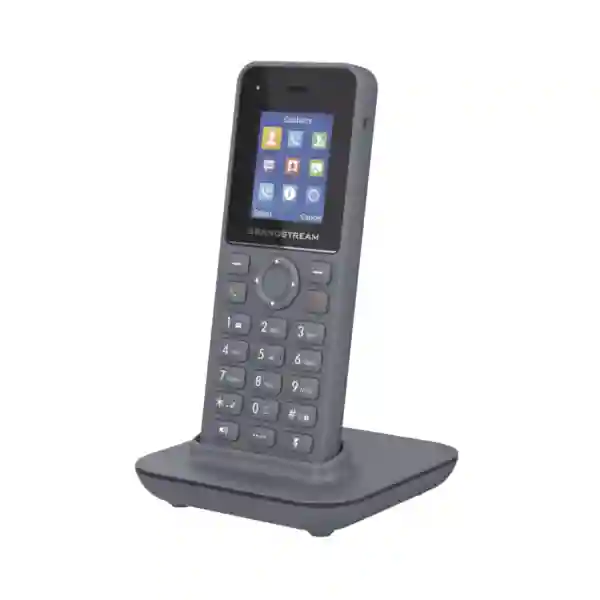
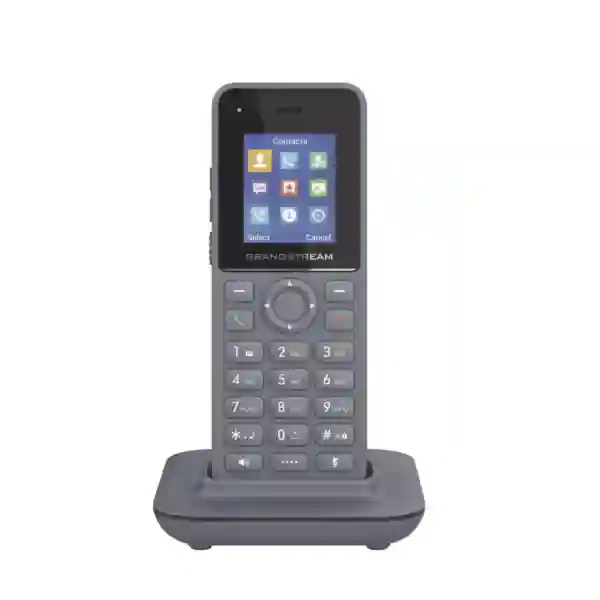
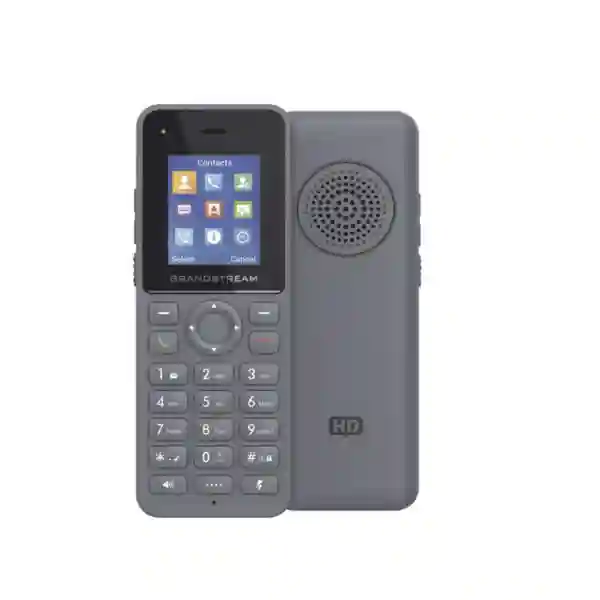
Official Grandstream specifications position the DP725 as a mid-range mobility handset with a 1.8-inch 128 × 160 color TFT display, HD audio, full-duplex speakerphone, a dedicated push-to-talk button, a 3.5 mm headset jack, DECT authentication and encryption, 3-way conferencing and automated provisioning options including TR-069 and XML configuration files. Battery performance is rated at up to 50 hours of talk time and up to 500 hours of standby time under laboratory conditions. With a DP755 base, Grandstream specifies outdoor range of up to 400 meters and indoor range of up to 50 meters, while actual coverage always depends on walls, radio interference, building materials and base-station placement.
Designed for roaming users who need business calling away from a fixed desk.
Up to 50 hours talk time and 500 hours standby time under laboratory conditions.
HD audio, full-duplex speakerphone, headset jack and advanced telephony features.
Supported by Grandstream DP750, DP752 and DP755 DECT VoIP base stations.
Grandstream DP725 Overview
A cordless business phone should be judged by more than its screen or battery. The real question is whether it fits the call workflow, user movement pattern and base-station design of the site. The DP725 is most useful when employees need a personal or shared SIP handset while walking between rooms, counters, aisles, service areas or operational zones. Because it relies on a compatible Grandstream DECT base station, the purchase decision should include the number of required handsets, expected simultaneous calls, SIP accounts, physical coverage, wall construction, available Ethernet and power at the base-station location, and whether the customer is integrating with a Grandstream UCM IP PBX or another standards-based SIP platform.
Grandstream lists support for up to 20 SIP accounts and up to 20 lines per handset when used with the DP755 environment, along with features such as call transfer, call forwarding, call waiting, do-not-disturb, message waiting indication, flexible dial plans and multilingual prompts. The handset also supports two concurrent calls, and 3-way audio conferencing allows a user to bring another party into a conversation without moving back to a desk. For operations teams, the dedicated push-to-talk key can be particularly useful where quick person-to-person coordination matters.
Verified Key Features
Display and controls
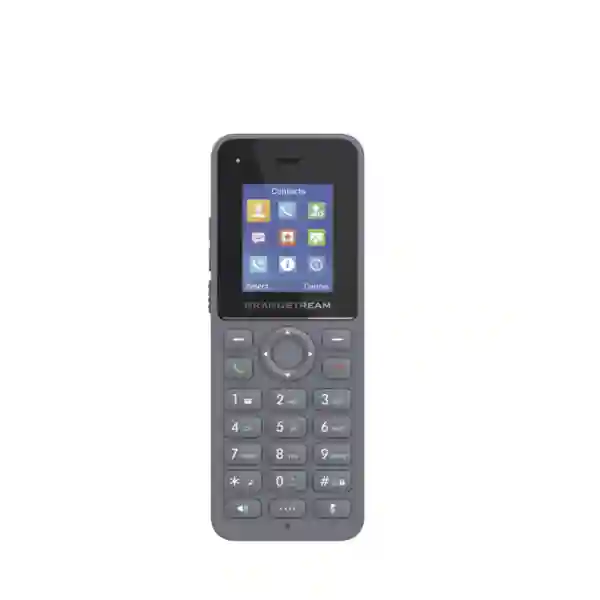
1.8-inch 128 × 160 color TFT LCD, programmable soft keys, navigation controls, dedicated telephony keys, side volume controls and a dedicated push-to-talk key support day-to-day use without relying on a desktop device.
Audio and calling
HD audio, full-duplex speakerphone, 3.5 mm headset connectivity, 3-way audio conferencing and SIP calling features suit mobile business users who handle internal and external calls throughout the day.
Provisioning and management
Automated provisioning through TR-069 and XML configuration files helps organizations standardize deployment. When paired with Grandstream UCM series IP PBXs, Zero Config can simplify compatible endpoint provisioning.
Security and DECT
DECT authentication and encryption are part of the handset’s security design. Deployment should still include strong SIP credentials, current firmware, controlled network access and sensible PBX security policies.
DP725 Technical Buying Snapshot
| Area | Verified Detail | Buyer Consideration |
|---|---|---|
| Base compatibility | DP750, DP752, DP755 | Choose the base by handset count, account needs, call capacity and coverage design. |
| Indoor range | Up to 50 m | Walls, reinforced concrete, shelving, glass and interference can reduce practical range. |
| Outdoor range | Up to 400 m with DP755 | Treat this as maximum vendor-rated range, not a guaranteed site result. |
| Battery | Up to 50 h talk / 500 h standby | Actual performance varies by usage, battery age, charging cycles and configuration. |
| Display | 1.8-inch 128 × 160 color TFT | Suitable for straightforward mobile call handling and menu navigation. |
| Headset | 3.5 mm jack | Useful for staff who need hands-free voice while moving or working. |
Where the DP725 Fits Best
The DP725 is a practical fit where mobility is important but a full rugged handset is not necessarily required. In a warehouse, a supervisor can move between receiving, storage and dispatch while remaining reachable on the same business extension. In a hotel, selected operations or service staff can carry a handset while moving between front office and support areas. In retail, a floor supervisor can answer calls without returning to a back-office desk. In a school or clinic, staff who circulate between rooms can remain connected to reception and departments. In an office, facilities, IT, administration or reception overflow users can carry a handset instead of relying on call forwarding to personal mobile numbers.
For fixed desk users who rarely move, a wired IP phone may remain the simpler choice. For harsh industrial areas, buyers should compare the DP725 with ruggedized options such as the Grandstream DP735 before finalizing a model. For larger sites, cordless planning should focus on radio coverage and base architecture rather than buying extra handsets first. FourTeck can help review the number of users, required roaming area, call concurrency, PBX platform and network layout before preparing a quotation.
Related FourTeck Communication Resources
Customers planning the DP725 can also review the broader FourTeck Tanzania business technology portfolio for integrated IP telephony, networking and infrastructure planning. Multi-country buyers can coordinate regional requirements through FourTeck Uganda and FourTeck Kenya. For broader Grandstream procurement in the Gulf, the FourTeck Grandstream UAE resource can support solution discussions, while FourTeck IP phone solutions provide context for selecting desk, cordless and SIP endpoints around the PBX design.
Grandstream DP725 Tanzania
For organizations in Tanzania, the Grandstream DP725 is most attractive when business calling must follow staff around a site rather than remain fixed at a reception desk or workstation. Companies often begin by asking for a cordless IP phone price, but a better procurement process starts with the intended movement pattern. A warehouse user may need coverage between loading areas and storage aisles. A hotel team may need portable extensions between the front desk, service spaces and administration. A school may want reception or facilities staff reachable while moving across offices. Clinics and professional facilities may have staff who alternate between rooms and need to receive internal calls without exposing personal mobile numbers.
The DP725 works as part of a Grandstream DECT system, so buyers should plan the compatible base station at the same time. The DP750, DP752 and DP755 each serve different capacity and coverage requirements. A small office with a few handsets may have very different needs from a larger property with multiple roaming users and heavier simultaneous call traffic. Before quotation, list the number of DP725 handsets, the number of SIP extensions, the PBX model, the area that requires cordless coverage, and any walls or building features likely to reduce radio reach. This gives a much clearer basis for choosing the correct DECT base than simply comparing handset prices.
Tanzanian buyers should also consider power continuity and network quality. The handset itself is cordless, but the DECT base still depends on the LAN and the PBX or SIP service. A well-planned deployment therefore includes stable switching, secure network segmentation where appropriate, UPS protection for key voice infrastructure and clear configuration records. If the business uses a Grandstream UCM PBX, Zero Config provisioning can help streamline endpoint setup. If it uses another SIP platform, compatibility and account configuration should be checked before rollout. FourTeck Tanzania can help translate these practical requirements into a bill of materials and quotation instead of treating the DP725 as an isolated device purchase.
Grandstream DP725 Dar es Salaam
Dar es Salaam businesses frequently operate across multi-room offices, retail floors, logistics facilities, hotels, clinics and busy service environments where employees are not always seated beside a desk phone. In these settings, the Grandstream DP725 can provide a portable SIP extension that remains part of the company’s managed telephone system. A warehouse supervisor in an industrial or logistics site can carry the handset between receiving and dispatch. A hospitality manager can remain reachable while moving between guest-service areas. A retail floor lead can take customer or internal calls without repeatedly returning to a back office. For professional offices, facilities and administrative users can remain connected while circulating between departments.
Coverage planning matters in Dar es Salaam because commercial buildings vary greatly. Open-plan offices behave differently from concrete structures, storage spaces with high metal shelving, multi-floor properties or sites with thick internal walls. Grandstream’s published maximum ranges are useful for initial expectations, but actual results should be validated against the building. The DP725 supports up to 50 meters indoors under vendor-rated conditions and, with the DP755, up to 400 meters outdoors. These values are not a guarantee through every wall or floor. A proper design chooses base placement around real movement zones and may use additional DECT infrastructure where the site requires it.
Procurement teams in Dar es Salaam should include base station, handset quantity, PBX details, headset needs, charging locations and power backup in the request for quotation. Businesses replacing analog cordless phones should also decide whether they want to retain existing PSTN connectivity through a PBX/gateway or move toward SIP trunks. The DP725 itself is an endpoint, not a complete telephone system. FourTeck can help align the handset with the PBX, switching and site plan so the final setup supports daily operations rather than simply adding another device to the network.
Grandstream DP725 Mwanza
In Mwanza, the Grandstream DP725 is relevant to organizations that need staff mobility across business premises while keeping calls on a controlled company extension. Commercial offices, hospitality properties, healthcare facilities, distributors, educational institutions and warehouses can all have users who spend much of the day away from a fixed desk. A cordless SIP handset gives those users a direct extension, access to common call features and the ability to communicate through the same PBX used by reception and desk-based departments.
A good Mwanza deployment begins with the work process. Identify where calls originate, who must answer them, where those users normally move and whether calls need to be transferred to desk phones, mobile staff or external numbers. This analysis helps determine whether the DP725 should be a personal handset, a shared operational handset or part of a larger cordless group. The dedicated push-to-talk function can add value for quick coordination, but it should be configured according to the organization’s workflow. HD audio and full-duplex speakerphone support help when users need clear voice while moving around the workplace.
For procurement, compare the full system rather than the handset alone. The DP725 requires a compatible Grandstream DECT base, and the selected base affects handset capacity, SIP account limits, concurrent call handling and practical coverage. The LAN supporting the base should be stable, and PBX security should include strong credentials and current firmware. Charging positions should be easy for users to access without creating a pattern where handsets are left discharged during busy periods. When requesting a FourTeck quotation, include the number of buildings or floors, approximate coverage area, required handset quantity, PBX type and any existing Grandstream equipment. Those details allow a more accurate recommendation for Mwanza operations and make future expansion easier to plan.
Grandstream DP725 Arusha
Arusha has a broad mix of hospitality, tourism-related operations, professional offices, institutions and service businesses where teams often move between customer-facing and back-office areas. The Grandstream DP725 can be a useful communication endpoint for supervisors, operations coordinators, reception support and facilities staff who need an extension while away from a desk. Instead of forwarding every call to a personal mobile phone, organizations can keep business calling within a managed SIP environment and retain familiar functions such as transfer, hold, call waiting and voicemail indication.
Hospitality buyers in particular should map the intended user roles before ordering. The DP725 may suit front-office support, engineering, housekeeping coordination, stores or duty managers, but the number of handsets and base-station design depend on how large the property is and how far users move. Multi-floor buildings, reinforced walls and separated structures can affect DECT coverage. The published indoor figure of up to 50 meters is therefore a planning reference, not a substitute for considering the physical site. Outdoor areas can provide longer reach where conditions are favorable, especially with the DP755, but actual radio performance should be judged in context.
Arusha buyers should also decide how the cordless environment connects to the broader phone platform. If the business already runs a Grandstream UCM series PBX, compatible provisioning and extension management can simplify rollout. If it uses another SIP PBX or hosted service, account compatibility, codecs, dial plans and network access should be reviewed. For properties that experience power interruptions, the base station, network switch, router and PBX should be included in backup-power planning because a charged cordless handset cannot place calls if the supporting network is unavailable. FourTeck can help prepare a quotation that considers these dependencies alongside the handset itself.
Grandstream DP725 Dodoma
Organizations in Dodoma evaluating the Grandstream DP725 are often looking for a straightforward way to give mobile employees an internal extension without relying on consumer cordless phones or personal mobile devices. Government-related offices, professional firms, education facilities, clinics, hotels and growing businesses can use DECT mobility for roles that move between offices, meeting spaces, records areas, service counters or operational rooms. The DP725 combines business telephony functions with a portable form factor and can integrate into a larger SIP call-flow design.
The handset’s 1.8-inch color display, HD audio, speakerphone, 3.5 mm headset jack and dedicated push-to-talk key provide practical controls for users who need dependable voice rather than smartphone-style applications. Up to 50 hours of talk time and up to 500 hours of standby time can reduce charging pressure, although actual battery life depends on usage and battery condition. Buyers should plan where chargers are located and whether handsets are assigned to individuals or shifts, because operational discipline can matter as much as technical specification in shared-device environments.
For Dodoma procurement, the most important compatibility question is the DECT base station. The DP725 is supported by Grandstream DP750, DP752 and DP755 bases, so the choice should reflect handset count, call capacity and coverage. If a project is part of a new office setup, include structured cabling, PoE switching where applicable, the PBX, SIP service, UPS protection and extension numbering in the same planning discussion. If it is an expansion of an existing Grandstream installation, provide the current PBX and base-station models so compatibility can be checked before quotation. FourTeck can then recommend a more complete solution rather than quoting a handset that may not match the existing system.
Grandstream DP725 UAE
UAE businesses often operate in fast-paced offices, warehouses, retail outlets, hospitality properties and service environments where employees move continuously but still need access to enterprise calling. The Grandstream DP725 supports this requirement by extending SIP voice to a cordless DECT handset. It can be useful for supervisors, stock and logistics teams, showroom staff, hotel operations, clinics and administrative users who need a portable extension without moving business conversations onto personal mobile numbers.
For UAE projects, buyers should pay particular attention to system architecture and radio planning. A single open office may be served differently from a warehouse with metal shelving, a villa-style workplace, a multi-floor hotel or a large retail environment. The DP725’s range depends on the paired base and the physical environment. Grandstream specifies up to 400 meters outdoors with the DP755 and up to 50 meters indoors, but dense construction and interference can shorten real-world reach. Where a project requires wider mobility, the DECT design should be evaluated as a system rather than assuming one base can cover the whole site.
UAE procurement teams also commonly need consistent endpoint standards across multiple branches. Automated provisioning through TR-069 or XML configuration files can support repeatability, while Grandstream UCM environments can use Zero Config for compatible provisioning. Before ordering, document handset quantities, extension numbers, call groups, PBX platform, simultaneous call requirements and branch rollout plans. If headsets are required, confirm the 3.5 mm connection meets the user requirement. FourTeck can use this information to prepare a coherent Grandstream cordless solution and avoid mismatches between handset, base station and PBX capacity.
Grandstream DP725 Uganda
Ugandan businesses considering the Grandstream DP725 typically need dependable cordless access to a SIP phone system for people who move around a workplace. Warehouses, hotels, clinics, schools, offices and retail businesses can benefit when reception, supervisors or support teams can answer and transfer calls without returning to a desk. The handset keeps these users within the organization’s extension plan and provides business-oriented features that consumer cordless devices may not integrate into a SIP PBX as cleanly.
The DP725 should be specified with its supporting DECT base. Grandstream officially supports it with the DP750, DP752 and DP755. For smaller offices, a lower-capacity base may be sufficient; for larger handset fleets or greater call demand, the DP755 can provide more capacity and supports up to ten DP725 handsets. Buyers should assess how many calls may occur at once, not only how many staff need handsets. This prevents a design where enough devices are purchased but the system becomes constrained during busy periods.
Uganda deployments should also consider network resilience and power. The cordless handset can stay charged for long periods, but the base station, PBX, router and switches remain dependent on power and network connectivity. UPS planning can therefore be important for businesses that consider voice communications operationally critical. When requesting a quote, provide the site type, approximate indoor coverage area, number of handsets, current PBX or SIP provider and whether the project is a new installation or an expansion. FourTeck Uganda and the wider FourTeck network can then align the DP725 with the correct base and surrounding IP telephony components.
Grandstream DP725 Kampala
Kampala’s mixture of office buildings, retail environments, hospitality operations, healthcare sites and distribution businesses creates many situations where a mobile business extension is more practical than a fixed desk phone. The Grandstream DP725 can support managers, supervisors, floor staff and operational users who need to remain reachable while moving between departments. It retains enterprise call features such as transfer, forwarding, waiting and message indication while providing the convenience of a cordless handset.
For a Kampala office, the buying process should start with a coverage sketch. Identify the intended base-station location, key rooms, floors and high-priority zones where the user must receive calls. Concrete partitions, elevator shafts, server rooms, dense shelving and long corridors can influence DECT performance. The vendor’s indoor maximum of up to 50 meters is useful for comparison, but it should not be interpreted as a fixed radius through every material. If mobility crosses multiple floors or separated areas, discuss the design before finalizing quantities.
Kampala businesses integrating the DP725 with an existing PBX should confirm SIP account details and firmware before deployment. Grandstream UCM customers may benefit from Zero Config provisioning, while other SIP systems can still support the handset through the compatible Grandstream DECT base when configured correctly. The DP725 also provides a dedicated push-to-talk button that may suit operational teams needing quick communication. A quotation request should include the user count, base preference if known, PBX model, extension plan, expected simultaneous calls and whether additional desk phones or network switches are required. This gives FourTeck enough context to quote an integrated solution rather than a disconnected endpoint.
Grandstream DP725 Arua
For businesses and institutions in Arua, cordless SIP telephony can be valuable where a small number of staff need to cover several rooms, service points or operational areas. The Grandstream DP725 gives those users a portable handset tied to the organization’s PBX instead of forcing them to rely on personal mobile numbers for internal coordination. It can suit administrators, reception backup, storekeepers, technical support staff, clinic personnel and supervisors who move between work areas during the day.
The handset should be seen as one component of a DECT VoIP system. Grandstream supports the DP725 with DP750, DP752 and DP755 base stations, so procurement should include the base unless a compatible unit is already installed. If an existing base is present, confirm model, firmware and current handset load. If the installation is new, select the base by required handset count, expected call concurrency and physical coverage. This avoids buying extra handsets without enough system capacity to use them effectively.
Arua sites should also evaluate practical resilience. The handset battery offers long rated talk and standby times, but voice service still depends on the base, network and PBX. Critical sites may therefore want power backup for those components. Users should be trained on charging routines, transfer functions and correct handling of shared devices. If the handset will be used in dusty, wet or rough conditions, compare its environmental suitability with more rugged Grandstream alternatives before finalizing the order. For a FourTeck quotation, include quantity, PBX details, user roles, approximate coverage area and any requirement for headsets or additional network equipment. That information allows the DP725 to be matched to the actual operational need rather than purchased solely by model number.
Grandstream DP725 Mbarara
Mbarara organizations looking for cordless business calling can use the Grandstream DP725 to keep roaming staff connected to a SIP extension while they move through offices, hospitality spaces, education facilities, healthcare environments, stores or warehouse areas. It is particularly useful when a team wants the professionalism and call control of a PBX but does not want every extension tied to a fixed desk. Incoming calls can be answered, transferred or managed using standard telephony functions while the user remains mobile.
The long battery specification is an operational advantage for shift-based users, but it should be interpreted correctly. Grandstream rates the DP725 for up to 50 hours of talk time and 500 hours of standby time under laboratory conditions. Real battery performance changes with use, age and charge cycles. For shared handsets, define a charging location and responsibility so devices are ready for the next shift. The 3.5 mm headset jack can help users who need hands-free voice, while the full-duplex speakerphone provides another option for calls when privacy is not required.
Mbarara buyers should plan radio coverage before ordering multiple units. The DP725 works with compatible Grandstream DECT bases, and building materials can affect reach. A hotel with separated wings, a warehouse with metal stock racks or a clinic with many partitioned rooms may need different base placement from a compact office. The quotation should therefore include a description of the property, desired coverage area, number of handsets and PBX environment. FourTeck can use that information to recommend a suitable base-station model, check the surrounding voice-network requirements and identify any additional components that should be included in the project.
Grandstream DP725 Gulu
In Gulu, the Grandstream DP725 can support organizations that need a manageable, business-grade cordless voice option for staff who move around a site. Schools, offices, clinics, hospitality operations, service businesses and distribution facilities may all have employees who need to answer an extension while away from a workstation. By staying connected to a SIP PBX through a Grandstream DECT base, the DP725 can provide continuity between desk-based and mobile users without requiring a separate consumer phone system.
For users who regularly coordinate tasks, the dedicated push-to-talk control can be a practical addition. The handset also supports call transfer, forwarding, waiting, do-not-disturb and message waiting indication, which keeps common PBX workflows available on a portable device. HD audio and a full-duplex speakerphone help maintain clear conversations, while the compact color display provides straightforward status and menu information. Buyers should identify whether the device will be personally assigned or shared because that affects charging discipline, extension configuration and contact management.
Gulu deployments should include the supporting infrastructure in the plan. The DP725 is compatible with DP750, DP752 and DP755 DECT bases, and the correct choice depends on scale. The base must connect to the network and SIP service, so network switching, router configuration, PBX reachability and power backup all matter. If a business is extending an existing Grandstream system, provide the current equipment list before ordering. If it is installing a new system, provide user count, call flow, office layout and expected growth. FourTeck can then help build a quotation that matches the handset to the rest of the communication platform.
Grandstream DP725 Kenya
Kenyan organizations can use the Grandstream DP725 where staff mobility is an everyday communication requirement. Offices, hotels, hospitals, schools, warehouses, retailers and logistics companies often have managers or operational employees who are rarely at a desk. A DECT cordless handset keeps these users on the corporate SIP extension plan while allowing them to move through the workplace. This can improve call handling consistency because callers reach a business extension rather than a personal number, and staff retain transfer, forwarding and voicemail-related functions.
The DP725 provides a 1.8-inch color display, HD audio, full-duplex speakerphone, push-to-talk and 3.5 mm headset connectivity. Its rated battery endurance is useful for mobile workers and longer shifts, although charging procedures should still be part of the deployment. When paired with a DP755, Grandstream specifies up to ten DP725 handsets per base and supports higher account capacity than older or smaller base options. The right choice depends on the required number of handsets and calls, not simply the maximum feature list.
Kenya buyers with multi-branch requirements should standardize the system design where possible. Common handset models, base-station versions, firmware policy, extension templates and configuration files can make support easier across locations. Automated provisioning options such as TR-069 and XML configuration can help repeatability, while Grandstream UCM customers can use compatible Zero Config provisioning. Before requesting pricing, define quantity per branch, PBX platform, coverage zones, headset requirements and whether the project also needs PoE switching, cabling or power backup. FourTeck Kenya can then support a more complete procurement plan around the DP725 rather than treating each handset as a standalone purchase.
Grandstream DP725 Kuwait
Kuwait businesses that need cordless SIP calling for offices, warehouses, retail locations, clinics and hospitality environments can consider the Grandstream DP725 as a portable extension within a managed DECT system. The handset is designed for mobility rather than smartphone-style applications, making it suitable for users who need reliable voice access, call controls and long battery endurance throughout the workday. Supervisors, stores personnel, facilities teams and service managers are typical roles where a cordless business handset can reduce missed internal calls.
Procurement should start with the base station. The DP725 works with the DP750, DP752 and DP755, and the selected base determines system capacity and coverage characteristics. Large sites should not rely on the headline outdoor range alone. Indoor coverage can be reduced by reinforced structures, equipment rooms, metal shelving and layout complexity. Map the areas that matter most and place the base where network connectivity and radio coverage can both be supported. Where mobility requirements are extensive, discuss the architecture before fixing the final quantity.
Kuwait projects may also require integration with an existing IP PBX, SIP trunk or unified communications environment. The DP725 itself does not replace those systems; it acts as a SIP endpoint through the DECT base. Configuration planning should therefore include extension numbering, call permissions, voicemail, dial plans, security policy and firmware management. Automated provisioning can simplify larger rollouts. Buyers should send handset quantity, existing Grandstream equipment, site layout and call requirements with the quotation request. This lets FourTeck assess whether the DP725 is the right endpoint and whether the base, PBX or network design needs adjustment.
Grandstream DP725 Ghana
Ghanaian businesses can use the Grandstream DP725 to provide mobile voice extensions for staff working across offices, warehouses, shops, hospitality locations, schools, clinics and operational sites. The main benefit is not simply cordless calling; it is keeping a roaming employee within the organization’s SIP-based phone system. Calls can follow established extension and transfer workflows, and the business does not have to depend on personal mobile devices for every internal communication need.
The DP725’s combination of HD audio, full-duplex speakerphone, 3.5 mm headset port and dedicated push-to-talk button makes it useful for active roles. Its battery is rated for up to 50 hours of talk time and 500 hours of standby time in laboratory conditions, giving users strong mobility between charges. The handset also supports advanced telephony features such as forwarding, waiting, do-not-disturb and message waiting indication. For organizations with formal reception or service desks, these features allow mobile staff to participate in normal call flows without losing key PBX functionality.
A Ghana deployment should include radio and network planning. The compatible DP750, DP752 or DP755 base must be positioned where both the LAN and the intended coverage zones can be served. Buildings with thick walls, multiple floors or dense shelving should be reviewed carefully. Businesses should also consider UPS protection for the PBX and network because cordless battery life does not help if the base loses connectivity. To prepare a useful quotation, provide the number of handsets, current PBX, desired coverage, approximate simultaneous calls and whether the project is new or an expansion. FourTeck can then help match the DP725 to the correct supporting equipment.
Grandstream DP725 Nigeria
For Nigerian organizations with busy operational teams, the Grandstream DP725 can provide a practical portable SIP extension for staff who need to stay reachable away from a desk. Warehousing, hospitality, healthcare, retail, education, professional services and branch offices can all have roles where fixed desk telephony is inconvenient. The DP725 allows those users to receive and manage calls within the corporate PBX environment while moving through the workplace, which can improve responsiveness without shifting business communication onto personal mobile numbers.
Battery endurance and system resilience deserve equal attention. Grandstream rates the handset for up to 50 hours of talk and 500 hours of standby time, but the supporting DECT base, switch, router and PBX still require stable power. In environments where continuity is important, include UPS design for those devices. Charging procedures should also be clear, especially for shared handsets used across shifts. The removable belt clip and headset support can make the handset easier to carry for mobile workers.
Nigeria buyers should choose the base according to project scale. The DP725 is supported by DP750, DP752 and DP755 bases, while the DP755 can support larger handset and account requirements. Site coverage is affected by building design, so large warehouses and multi-floor offices should not assume one base will reach every location simply because the maximum outdoor range is high. For a procurement request, include city or site, handset quantity, floor layout, PBX platform, existing network equipment and expected call traffic. FourTeck can use those details to prepare a more accurate solution and recommend any additional network or voice components required for deployment.
Grandstream DP725 Seychelles
Organizations in Seychelles may find the Grandstream DP725 useful in hospitality, offices, healthcare, retail and service properties where staff need to move around while remaining reachable on a business extension. Hotels and resorts, for example, often have supervisors or support employees who spend little time at a fixed desk. A cordless DECT handset can connect these users to reception and back-office calling workflows while preserving business-focused features such as transfer, forwarding, waiting and voicemail indication.
Property layout is especially important in hospitality and spread-out sites. A single indoor coverage figure cannot represent every corridor, wall, floor or separated structure. The DP725 can reach up to 50 meters indoors under Grandstream-rated conditions and up to 400 meters outdoors with a DP755, but real results depend on the environment. Buyers should identify the specific zones where calls are required and compare those with possible base-station locations. If users move between separate buildings or distant areas, the DECT architecture needs closer planning before hardware quantities are finalized.
Seychelles procurement teams should also confirm how the handset integrates with the existing PBX. Grandstream UCM systems can simplify compatible provisioning, while other SIP platforms may still work when configured correctly through the base station. Network security, firmware maintenance and power continuity remain part of the solution. If a property is ordering for a new opening or refurbishment, include the DP725 within the broader voice, switching, cabling and UPS plan. If it is an expansion, provide the currently installed base and PBX models. FourTeck can then help determine whether additional handsets alone are sufficient or whether the communication platform also needs capacity or coverage changes.
Buying and Deployment Checklist
Before requesting a quote, prepare the number of handsets, compatible base-station requirement, PBX or SIP platform, number of extensions, expected simultaneous calls, indoor and outdoor coverage areas, number of floors, construction materials, headset requirements, charging locations, network switch availability, power backup expectations and future expansion plans. If you already use Grandstream, include the exact model numbers and firmware context. This information makes it easier to determine whether the DP725 fits the project and prevents avoidable mismatches between handset capacity and the rest of the voice system.
Frequently Asked Questions
Does the Grandstream DP725 work by itself?
No. The DP725 is a DECT handset and requires a compatible Grandstream DP750, DP752 or DP755 DECT VoIP base station to connect to the SIP environment.
How far can the DP725 work from the base?
Grandstream specifies up to 50 meters indoors and up to 400 meters outdoors when used with the DP755. Actual range depends on walls, interference, shelving, floors and base placement, so the site should be considered before treating the maximum figures as achievable everywhere.
How long does the DP725 battery last?
Grandstream rates the handset for up to 50 hours of talk time and up to 500 hours of standby time under laboratory conditions. Real performance varies with battery age, usage, charge cycles and configuration.
Can the DP725 be used with a Grandstream UCM PBX?
Yes. Grandstream specifically supports use with its UCM series, including Zero Config provisioning when the deployment is correctly designed and compatible.
Is the DP725 suitable for warehouses?
It can be a strong fit for mobile warehouse users, but metal shelving, machinery and site size can influence radio coverage. Map the user movement area and choose the base station and placement accordingly.
Does the DP725 support a headset?
Yes. The handset includes a 3.5 mm headset jack for compatible wired headsets.
Decision Recap
Choose the Grandstream DP725 when you need a portable business extension with long rated battery life, HD voice, push-to-talk and compatibility with Grandstream DECT base stations. Do not select it only by handset price. Confirm the base station, PBX, radio coverage, call capacity, network and power design at the same time. This approach gives the business a cordless communication system that is easier to scale, document and support.
Talk to FourTeck About Your DP725 Requirement
Share your location, quantity, current PBX, existing DECT base if any, number of users, intended coverage area and expected call traffic. FourTeck can help check the handset-to-base fit, prepare a suitable bill of materials and provide a quotation aligned with your business communication requirement.


Reviews
There are no reviews yet.