
Grandstream GWN7670LR Tanzania
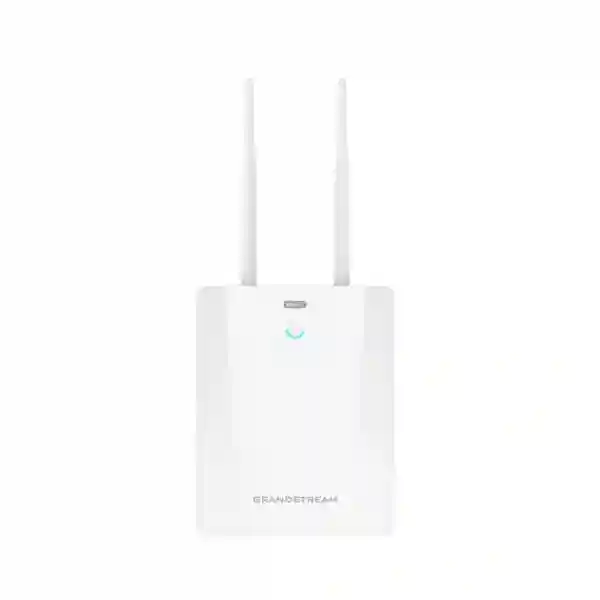
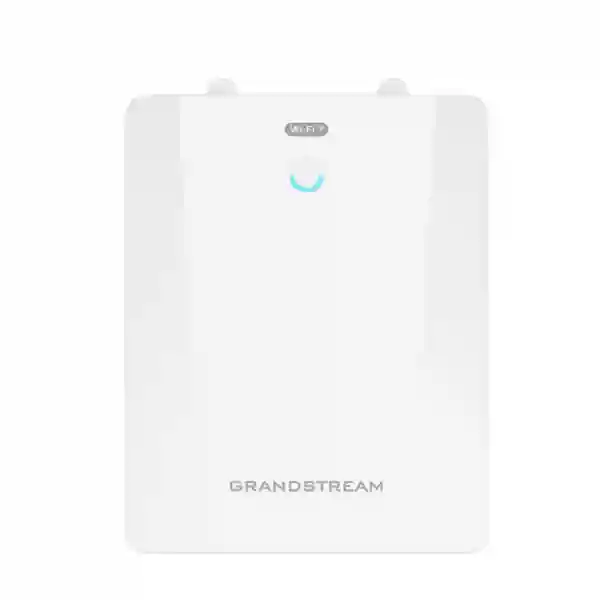
The Grandstream GWN7670LR is a long-range dual-band Wi-Fi 7 access point and bridge for organisations that need dependable outdoor wireless coverage without giving up modern throughput, security or management capabilities. Grandstream specifies up to 3.6Gbps aggregate wireless throughput, up to 350 metres of coverage depending on the environment, support for 256 concurrent Wi-Fi clients, one 2.5G Ethernet PoE+ port and one 2.5G SFP port. For Tanzanian businesses planning campus, warehouse, hospitality, education, healthcare, industrial or multi-building wireless networks, the GWN7670LR brings together Wi-Fi 7 radio features, flexible antenna choices and weather-resistant construction in one practical outdoor platform.
Wi-Fi 7 • Dual-band 2×2:2 MIMO • Up to 3.6Gbps aggregate wireless throughput • Up to 350m stated range • 256 clients • 2.5GbE PoE+ • 2.5G SFP • IP66 weather protection • Embedded, cloud or on-premises management
What the GWN7670LR is designed to solve
Outdoor wireless design becomes difficult when a project needs more than a basic weatherproof access point. Businesses may need to serve open yards, building exteriors, walkways, loading areas, schools, resorts, hospitals, compounds, industrial zones or detached offices where conventional indoor access points cannot provide the right antenna pattern or environmental protection. The GWN7670LR addresses this requirement with a purpose-built long-range design, an IP66-rated enclosure and an antenna system that supports internal directional antennas as well as external omnidirectional antennas. The internal directional antennas are especially useful when coverage must be projected toward a defined area rather than spread equally in all directions.
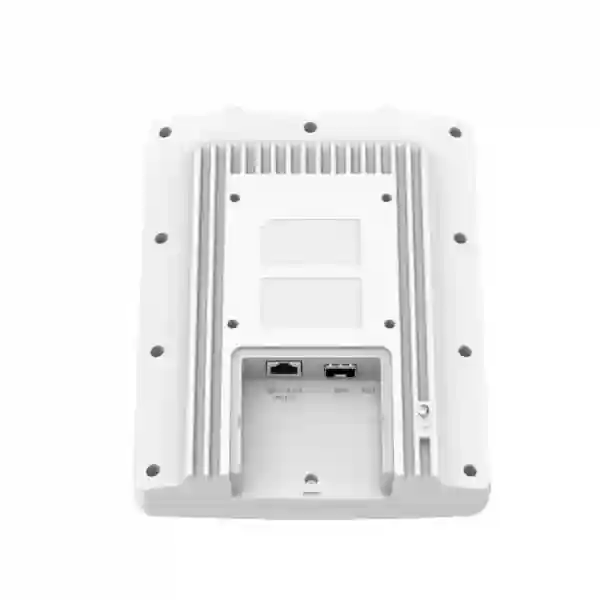
The platform also addresses backhaul flexibility. A 2.5G Ethernet WAN/LAN port can carry data and 802.3at PoE power, while the separate 2.5G SFP interface gives network designers a fibre-capable option where copper distance, electrical isolation or backbone design makes SFP connectivity attractive. The exact implementation should be engineered around cabling distances, lightning protection, switching capacity, fibre type and local radio rules. For project buyers, this means the access point can fit into a wider network plan instead of being treated as an isolated Wi-Fi device.
Wi-Fi 7 radio
IEEE 802.11be support with dual-band 2×2:2 MIMO, OFDMA, MLO, 4096-QAM, Multi-RU and preamble puncturing capabilities for modern wireless efficiency.
Long-range coverage
Grandstream states up to 350 metres of coverage, with actual results influenced by terrain, mounting height, client radios, obstacles, interference and regulatory power limits.
Multi-gigabit uplinks
One 2.5G Ethernet RJ-45 port with PoE input and one 2.5G SFP port give installers copper and fibre-oriented design choices.
Outdoor resilience
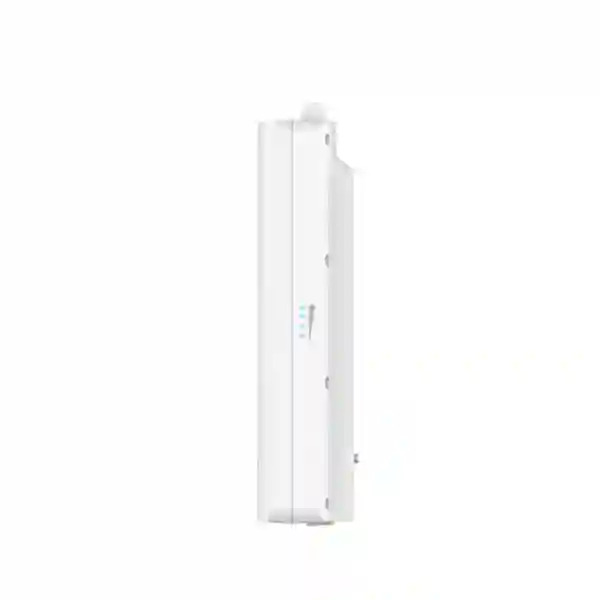
IP66-rated weather protection, wall or pole mounting and an operating temperature range specified from -30°C to 60°C support demanding outdoor deployments.
Verified technical highlights
| Wireless standard | IEEE 802.11 a/b/g/n/ac/ax/be |
|---|---|
| Aggregate wireless throughput | Up to 3.6Gbps |
| MIMO | 2.4GHz 2×2:2 and 5GHz 2×2:2 |
| Stated coverage | Up to 350 metres; actual coverage varies by environment |
| Concurrent clients | Up to 256 |
| Network interfaces | 1 × 2.5G Ethernet RJ-45 with PoE input; 1 × 2.5G SFP |
| PoE | 802.3at |
| Maximum power consumption | 15.5W |
| Wireless security | WPA/WPA2, WPA3 and platform security features including secure boot and signed control/data protection |
| Management | Embedded controller for up to 50 local GWN APs, GDMS Networking, and GWN Manager |
| Environmental protection | IP66; operating temperature -30°C to 60°C |
Deployment, management and security considerations
A strong outdoor Wi-Fi deployment begins with a site survey rather than a simple coverage-radius calculation. The GWN7670LR supports internal directional antennas rated at 8dBi on 2.4GHz and 13.5dBi on 5GHz, while external omnidirectional antenna support provides another deployment option. Antenna choice should follow the physical layout: a directional pattern can be useful along a yard, corridor, perimeter, road or building-to-area path, whereas an omnidirectional approach may better suit a central mounting position serving users around the access point. Mounting height, line of sight, foliage, walls, metal structures, neighbouring Wi-Fi networks and client-device transmit power all influence real performance.
Management can be kept local or extended across multiple locations. The built-in controller can manage up to 50 local GWN access points, while Grandstream also supports GDMS Networking for cloud-oriented administration and GWN Manager for on-premises software management. This gives buyers room to match administration to their operating model. A single-site organisation may prefer local control, while an enterprise with many sites may value central visibility and standardised configuration. Network administrators should define SSID strategy, VLAN segmentation, guest access, authentication, QoS, channel planning and firmware-management procedures before rollout.
Security should be considered at both wireless and infrastructure layers. The access point supports WPA3 and enterprise authentication capabilities, while Grandstream also highlights anti-hacking secure boot, digital signatures, unique security certificates and random default passwords. These platform protections are useful, but they do not replace sound network architecture. Businesses should still separate guest and corporate traffic, use strong authentication, control administrator access, keep firmware current, protect upstream switches and firewalls, and document ownership of cloud or controller credentials.
Related FourTeck resources
For broader procurement and design discussions, buyers can also review FourTeck Tanzania for local product and solution context, FourTeck Uganda for regional East African technology requirements, FourTeck Kenya for neighbouring-market infrastructure projects, FourTeck UAE for GCC sourcing discussions, and FourTeck Africa for multi-country solution planning. These links are useful when a project spans more than one geography or requires related switching, firewall, IP telephony, structured networking or infrastructure components.
Grandstream GWN7670LR Tanzania
For organisations evaluating the Grandstream GWN7670LR in Tanzania, the most useful starting point is to define exactly where outdoor connectivity is required and what types of clients will use it. A manufacturing compound may prioritise handheld terminals, laptops and operational devices around loading areas. A school or university may need coverage between blocks, in courtyards and around sports or common areas. A hotel, lodge or resort may want a controlled guest network across gardens, paths and outdoor hospitality spaces. A logistics operator may need connectivity around warehouses and dispatch areas. Each case changes access-point placement, antenna orientation, capacity planning and backhaul design.
The GWN7670LR is especially relevant where designers want Wi-Fi 7 capability but do not require a 6GHz radio. It uses 2.4GHz and 5GHz bands and supports modern 802.11be features such as MLO, 4096-QAM, Multi-RU and preamble puncturing. These technologies can improve efficiency and responsiveness when supported by client devices and deployed in suitable RF conditions. Procurement teams should understand that headline Wi-Fi throughput is not the same as guaranteed application throughput. Distance, interference, channel width, user density, client radio capability and upstream network capacity all affect real results.
For Tanzanian deployments, power and backhaul planning are just as important as radio performance. The 802.3at PoE input allows a single Ethernet run to carry data and power where copper is appropriate. The separate 2.5G SFP interface is useful when fibre backhaul forms part of the design. Outdoor cabling should be specified for the environment, and project engineers should consider surge protection, grounding, weatherproof transitions, protected cable routes and switch-side PoE budget. If the access point is installed on a mast or exposed building edge, lightning-risk assessment becomes particularly important.
A quotation request should therefore include site type, expected user count, approximate outdoor area, mounting points, available switch infrastructure, fibre or copper preference, existing VLANs, authentication requirements and whether central cloud or on-premises management is preferred. FourTeck can then discuss the GWN7670LR as part of a complete wireless design rather than as a standalone box. This approach helps customers avoid both under-design and unnecessary over-provisioning.
Grandstream GWN7670LR Dar es Salaam
Dar es Salaam projects often combine dense commercial environments with outdoor spaces that are difficult to cover from indoor access points. Offices with parking compounds, warehouses, schools, clinics, retail premises, hospitality properties and industrial sites may all have areas where staff or guests need reliable Wi-Fi beyond building walls. The Grandstream GWN7670LR can be considered when the requirement is for long-range outdoor Wi-Fi 7 coverage with a weather-resistant enclosure and a choice of copper or SFP backhaul.
In a busy urban RF environment, the advertised maximum range should never be used as a substitute for survey work. Nearby WLANs, reflective building surfaces, trees, vehicles and client-device power can all influence coverage. The GWN7670LR’s internal directional antenna pattern can help focus energy toward a target zone, which may be useful along a warehouse yard, perimeter, outdoor seating area or path between buildings. External omnidirectional antennas are another option when a mounting position must serve users around the device. Correct antenna selection is a design decision, not merely a product preference.
Business buyers in Dar es Salaam should also plan for segmentation. Guest traffic, employee traffic, IP phones, cameras, handheld scanners and operational devices may have different security and QoS requirements. The GWN platform supports multiple SSIDs, enterprise security and QoS features, allowing an installer to map wireless services to upstream VLAN and firewall policies. The access point’s embedded controller can be useful for local deployments, while GDMS Networking or GWN Manager may fit organisations that want broader administrative visibility.
When requesting a Dar es Salaam quotation, provide the property type, approximate distances, client count, uplink availability, switch model, PoE capability and any fibre requirement. If the site includes multiple buildings or outdoor zones, a simple plan or annotated drawing can improve access-point placement discussions. This turns the purchase into a planned wireless infrastructure project and helps identify whether one GWN7670LR, several units or a mixed indoor/outdoor Grandstream GWN design is more suitable.
Grandstream GWN7670LR Mwanza
For Mwanza organisations, long-range outdoor Wi-Fi may be required across campuses, compounds, hospitality sites, warehouses, healthcare facilities, educational institutions and commercial premises where users move between indoor and outdoor working areas. The GWN7670LR provides a business-oriented option with Wi-Fi 7 radio technology, an IP66 enclosure and multi-gigabit uplink choices. Its design is most valuable when the network is planned around real site geometry rather than assumed coverage circles.
A common planning challenge is deciding whether a long-range directional pattern or broader omnidirectional pattern is preferable. The GWN7670LR supports both approaches through its internal directional antennas and support for external omnidirectional antennas. A site with a long yard, corridor, access road or facing building may benefit from directional coverage, while a central courtyard or open service area may call for a different pattern. Engineers should account for obstructions, elevation changes and the fact that endpoint devices usually transmit at lower power than enterprise access points.
Backhaul can also shape the design. Where an outdoor access point sits close to switching infrastructure, the 2.5G Ethernet PoE+ interface may simplify installation. Where distance or electrical considerations favour fibre, the 2.5G SFP port gives another path. Any fibre deployment must still select compatible optics and fibre type, while Ethernet deployments need appropriate outdoor-rated cabling and surge protection. The access point’s maximum stated power consumption of 15.5W should be included in PoE budget calculations with sensible engineering margin.
Mwanza procurement teams comparing outdoor access points should ask about lifecycle management as well as purchase cost. Firmware updates, configuration backups, administrator access, monitoring and fault isolation are part of the operating expense of Wi-Fi. Grandstream’s embedded controller, GDMS Networking and GWN Manager options give organisations choices for day-to-day administration. A well-scoped quotation should state expected client numbers, coverage zones, security requirements, existing switching and whether remote multi-site management is desirable.
Grandstream GWN7670LR Arusha
Arusha has many business environments where outdoor wireless coverage matters: hospitality properties, schools, offices with landscaped compounds, training centres, logistics facilities and multi-building organisations. The Grandstream GWN7670LR can suit these environments when a project requires an outdoor-rated Wi-Fi 7 access point with long-range design characteristics. The IP66 enclosure is built for outdoor use, while wall and pole mounting kits provide practical placement options.
Hospitality and campus networks in particular should distinguish between coverage and capacity. A single access point may reach a large physical area, but user experience depends on how many active devices are sharing airtime, which bands clients support, the type of applications in use and the RF conditions around the site. The GWN7670LR supports up to 256 concurrent clients according to Grandstream, but engineers should still distribute users sensibly across access points rather than treating the client limit as a design target. Voice, video, conferencing and cloud applications benefit from disciplined QoS and channel planning.
For an Arusha site with detached buildings, network planners may also examine whether fibre is already present between blocks. The 2.5G SFP interface can integrate into a fibre-oriented topology, while the 2.5G PoE Ethernet interface supports conventional copper uplink and power delivery. These two interfaces give flexibility, but installation details such as optics, cable type, switch compatibility, grounding, surge protection and weather sealing must be specified separately as part of the project.
Buyers should request a solution based on site layout rather than only asking for a unit price. Useful inputs include property maps, outdoor dimensions, likely mounting points, wall materials, expected guest and staff volumes, existing SSIDs, VLAN needs, captive portal requirements and any Grandstream IP phone or networking equipment already in use. With that information, the GWN7670LR can be evaluated as part of a coherent wireless network that supports both current devices and a gradual transition toward Wi-Fi 7 clients.
Grandstream GWN7670LR Dodoma
Organisations in Dodoma considering outdoor wireless upgrades may need to connect staff, visitors and operational devices across compounds where indoor Wi-Fi does not extend reliably. Government-related offices, education sites, healthcare premises, warehouses, hospitality facilities and enterprise campuses can all benefit from a deliberate outdoor WLAN plan. The GWN7670LR combines Wi-Fi 7 features with a long-range antenna design and weatherproof enclosure, making it suitable for evaluation where resilient external coverage is part of the requirement.
The unit operates on 2.4GHz and 5GHz, supporting legacy standards through 802.11be. This broad compatibility is useful in mixed-device environments where not every endpoint is Wi-Fi 7 capable. Newer clients can benefit from modern features, while older Wi-Fi devices remain able to connect through supported previous-generation standards. Network administrators should still define minimum security levels and consider whether very old clients justify retaining older compatibility settings if those settings reduce security or efficiency.
For an outdoor installation, environmental planning includes more than choosing an IP-rated enclosure. Pole stability, mounting height, cable strain relief, water ingress at cable entries, earthing and surge protection all matter. Heat, direct sun and dusty surroundings can affect surrounding infrastructure even when the access point itself is rated for outdoor operation. The stated operating range of -30°C to 60°C offers useful headroom, but installers should ensure connected switches, PoE equipment, fibre modules and cabinets are also suitable for their actual environment.
A Dodoma quotation can be more accurate when it includes whether the project is a new build, expansion or replacement. Buyers should identify existing access points, controller method, switch ports, fibre links, expected number of users and the most important outdoor zones. That information makes it possible to discuss AP quantity, mounting strategy, management approach and related components instead of supplying an isolated access point that may not solve the broader coverage problem.
Grandstream GWN7670LR UAE
UAE projects often combine high device density, modern switching infrastructure and demanding outdoor environments. The GWN7670LR can be considered for warehouses, schools, campuses, hospitality properties, yards and commercial compounds that need an IP66 outdoor access point with Wi-Fi 7 capability. Its 2.5G Ethernet and 2.5G SFP interfaces are particularly relevant to organisations that have already moved beyond one-gigabit access-layer design or want to preserve bandwidth headroom for high-throughput wireless users.
Environmental exposure in the UAE makes installation practice important. The access point is specified for operation up to 60°C, but real deployments should also consider direct solar loading, enclosure ventilation for adjacent network equipment, dust, cable UV resistance and outdoor connector protection. Mounting hardware should be secure for the location, and external antennas, if used, must be selected and installed within local radio and regulatory requirements. Maximum transmit power and available frequency bands vary by country, so configurations should follow approved regional settings.
Multi-site organisations can choose among the embedded controller, GDMS Networking and GWN Manager depending on management preference. A branch or warehouse might use local control, whereas a group with multiple UAE locations and sites in other countries may value central monitoring. Regardless of platform, administrators should standardise SSID naming, authentication, VLAN assignment, guest policies, channel strategy and firmware processes. This reduces configuration drift as the wireless estate grows.
For UAE procurement, the product should be assessed alongside PoE switches, fibre modules, upstream firewall capacity and any indoor GWN access points required to complete the network. Buyers comparing quotations should check that proposed accessories and optics are compatible, and should separate product capability from assumptions about stock, delivery or warranty. A project-specific request to FourTeck can focus on technical fit, quantity, related network components and deployment scope.
Grandstream GWN7670LR Uganda
In Uganda, outdoor wireless projects frequently need to balance coverage, infrastructure cost and manageability across schools, offices, compounds, hospitality sites, warehouses and operational facilities. The GWN7670LR is designed for long-range outdoor Wi-Fi and can be evaluated where an organisation wants Wi-Fi 7 capability with a dual-band radio, IP66 weather resistance and flexible uplinks. The access point supports up to 256 clients and provides modern radio features without requiring every endpoint to be a Wi-Fi 7 device.
The stated 350-metre coverage figure is useful for initial product comparison but should be treated as an upper-bound vendor specification rather than a guaranteed site result. Real coverage changes with trees, walls, terrain, mounting height, interference and endpoint radio performance. A professional design maps the areas that need service and chooses antenna orientation accordingly. Directional internal antennas can concentrate coverage, while external omnidirectional antennas may fit other topologies.
The inclusion of a 2.5G SFP port is notable for sites that already use fibre between buildings or intend to. Fibre can be useful over longer backbone distances and in electrically noisy environments, while the 2.5G RJ-45 interface with PoE+ is straightforward where a suitable Ethernet run is available. The correct approach depends on existing infrastructure. Installers should check switch capacity, optics, fibre type, PoE budget, surge protection and cable routing before ordering supporting parts.
Ugandan organisations managing multiple branches can also use the management options as part of their selection criteria. The embedded controller supports local deployments, while GDMS Networking and GWN Manager can support centralised operations. When asking for a quotation, include the number of sites, expected AP count, outdoor areas, user count, security policy, fibre availability and whether the project must integrate with existing Grandstream IP telephony or networking equipment.
Grandstream GWN7670LR Kampala
Kampala businesses may encounter challenging RF conditions because commercial areas can contain many neighbouring wireless networks. For offices, hotels, hospitals, schools, warehouses and compounds requiring outdoor service, the GWN7670LR offers a Wi-Fi 7 platform with long-range antenna options and multi-gigabit uplinks. The key to success is careful channel and placement planning rather than relying on transmit power alone.
Wi-Fi 7 functions such as MLO, 4096-QAM, Multi-RU and preamble puncturing are designed to improve spectrum utilisation and performance with compatible clients. However, benefits vary with client capability and RF conditions. Many existing devices will still use Wi-Fi 5 or Wi-Fi 6 modes, so network design should serve a mixed estate. The dual-band 2.4GHz and 5GHz operation can support older and newer endpoints, while administrators retain the ability to organise SSIDs and security around business requirements.
For dense or high-value outdoor zones, it is sensible to plan several access points around capacity and roaming rather than stretching a single AP to its maximum possible distance. The GWN7670LR’s long-range capability can reduce coverage gaps, but user distribution still matters. High-bandwidth video, cloud applications and voice calls place different demands on airtime. Advanced QoS can prioritise latency-sensitive applications, but it should be paired with appropriate upstream network policy.
A Kampala project quote should therefore describe the physical site and traffic profile. State whether coverage is for staff, guests, phones, scanners, cameras or mixed devices; whether there is an existing fibre backbone; which switches provide PoE; and whether central management is required. This allows the GWN7670LR to be positioned correctly within a wider network rather than being selected solely because it carries a long-range specification.
Grandstream GWN7670LR Arua
For Arua deployments, a long-range outdoor access point can be valuable where buildings are spread across a compound and conventional indoor Wi-Fi leaves gaps between work areas. The GWN7670LR can support such designs with outdoor construction, Wi-Fi 7 capability and directional coverage options. Potential use cases include schools, healthcare facilities, warehouses, hospitality environments, offices and operational compounds where staff require secure connectivity outdoors.
Infrastructure simplicity may be a priority for smaller or distributed sites. The access point accepts 802.3at PoE, so a compatible PoE+ switch can deliver power and network connectivity over a single copper cable. Where fibre is more appropriate, the 2.5G SFP interface offers an alternative network path. Buyers should decide between these approaches based on distance, existing cabling and equipment availability rather than assuming one is universally superior.
Management can scale from a single location to a wider network. The embedded controller reduces the need for a separate hardware controller for local GWN deployments, while GDMS Networking and GWN Manager support broader administration models. This is useful for organisations that begin with one site but expect to add more access points later. Consistent templates for SSIDs, security and VLANs can make expansion easier and reduce troubleshooting complexity.
Before purchasing for Arua, organisations should document coverage priorities, available mounting structures, user numbers, application types and upstream internet or WAN constraints. A fast access point cannot compensate for an undersized internet circuit or congested firewall, so end-to-end capacity matters. A complete quotation should consider the GWN7670LR together with switches, fibre or copper components, surge protection and any indoor access points needed to provide seamless coverage across the site.
Grandstream GWN7670LR Mbarara
Mbarara organisations looking to extend Wi-Fi into outdoor working areas can evaluate the GWN7670LR for long-range coverage around campuses, hospitality sites, stores, schools, offices, warehouses and service compounds. Its value comes from combining an outdoor IP66 enclosure with modern radio capability and network interfaces that can connect into current multi-gigabit switching or fibre infrastructure.
The device supports 32 SSIDs in total, with up to 16 per radio, but good network design normally uses far fewer. Excessive SSIDs can increase management and airtime overhead, so businesses should create only the services they need. Typical separation may include corporate, guest and operational traffic, mapped to appropriate VLANs and firewall rules. Authentication choices should match security requirements, with WPA3 used where client compatibility and policy allow.
Outdoor coverage planning should also examine client direction and movement. A fixed work area may benefit from a focused directional pattern, while roaming users may need overlapping AP cells and a more distributed design. The GWN7670LR supports mesh capabilities, but wired or fibre backhaul is generally preferable where available because it preserves wireless airtime and provides predictable capacity. Mesh can still be valuable where cabling is impractical, provided the topology is engineered carefully.
A Mbarara buyer requesting pricing should include not only quantity but also the intended deployment model. Mention mounting location, approximate distances, available PoE ports, fibre availability, number and type of users, expected applications, guest access needs and management preference. These details help determine whether the GWN7670LR is the right model and what supporting equipment is needed for a stable installation.
Grandstream GWN7670LR Gulu
Gulu businesses and institutions that need outdoor Wi-Fi across open compounds or multiple buildings can consider the GWN7670LR as part of a planned wireless network. It is designed for medium-to-large organisations requiring long-range service and includes features that support both performance and administration. The combination of Wi-Fi 7, 2.5G uplinks and IP66 protection makes it relevant for new deployments where organisations want a longer technology runway.
Future-readiness should still be balanced with current requirements. Many users may connect with Wi-Fi 5 or Wi-Fi 6 devices for years, so backwards compatibility matters. The GWN7670LR supports a wide range of IEEE Wi-Fi standards, enabling mixed-client environments. At the same time, network administrators can prepare for Wi-Fi 7 endpoints without replacing the outdoor infrastructure again simply to access 802.11be features.
For schools and institutional sites, management simplicity can be as important as raw throughput. The embedded controller supports local GWN AP management, and Grandstream’s central management platforms offer alternatives for larger estates. Administrators can use central policy to reduce differences between sites, monitor device status and coordinate firmware management. The chosen management method should align with staffing, internet reliability and internal security policy.
For Gulu procurement, provide a clear scope that states whether installation is indoor-to-outdoor extension, full campus Wi-Fi, a warehouse yard project or a multi-building network. List existing switches and fibre links where possible. If coverage drawings are available, include them. This allows design discussions to focus on AP placement, backhaul, PoE and security instead of treating the access point as a generic commodity.
Grandstream GWN7670LR Kenya
Kenyan buyers comparing outdoor Wi-Fi 7 products may find the GWN7670LR attractive for its balance of long-range design, 3.6Gbps aggregate wireless throughput, 256-client support, IP66 protection and both 2.5G Ethernet and SFP interfaces. It can fit enterprise, education, hospitality, logistics and industrial environments where outdoor spaces require the same level of network planning as indoor areas.
Existing market listings often focus on price and headline specifications, but project buyers should compare the full installation requirement. An access point may need a PoE+ switch or injector, outdoor-rated cabling, SFP optics, surge protection, mounting hardware, fibre patching and configuration work. The GWN7670LR includes wall/pole mounting kits, but the supporting network components depend on the site. Comparing only device prices can therefore produce misleading project-cost conclusions.
For campuses and warehouses, the 350-metre stated coverage specification should be validated against site conditions. Metal shelving, containers, concrete walls, foliage and neighbouring networks may reduce practical range, while elevated line-of-sight positioning may improve it. The internal directional antenna can be valuable for targeted service, and external omnidirectional antennas provide another design option. A site survey remains the best way to decide AP quantity and orientation.
A Kenya quotation request should include whether the equipment is for Nairobi, Mombasa or another site, but geographic name alone is not enough. Supply the intended use, expected number of users, outdoor area, mounting positions, existing switch model, fibre availability and preferred management method. FourTeck can then align product selection with the broader networking requirement and, where appropriate, coordinate regional needs through FourTeck Kenya.
Grandstream GWN7670LR Kuwait
Kuwait deployments can place outdoor networking equipment under demanding heat, dust and exposure conditions. The GWN7670LR’s IP66 enclosure and specified -30°C to 60°C operating range make it a candidate for professionally planned external WLANs, but installation must account for the actual local environment. Direct sun, cabinet temperatures, cable quality and mounting position can all create conditions different from published ambient specifications.
The dual-band Wi-Fi 7 radio supports 2.4GHz and 5GHz operation with modern features intended to improve efficiency. For commercial sites, the real benefit is not simply a higher PHY rate but the ability to support newer client capabilities while continuing to serve established device generations. Network administrators should review which clients support 802.11be and MLO, then configure channel widths and security settings to match their environment and regulatory domain.
Fibre is common in many enterprise backbones, making the 2.5G SFP interface useful for outdoor distribution designs. The separate PoE-capable 2.5G Ethernet port provides another deployment path. Engineers should confirm how power will be delivered when SFP is used, select compatible modules and ensure outdoor fibre terminations are protected. The access point itself is only one element of a durable external network.
Kuwait buyers should request a project quote that identifies required quantities, installation locations, expected client density, switch infrastructure, management platform and any related indoor APs. This information helps avoid ordering an access point that is technically capable but poorly matched to the site’s antenna, power or backhaul requirements. Regional enquiries can also reference FourTeck Kuwait for broader project coordination.
Grandstream GWN7670LR Ghana
For Ghanaian organisations, outdoor Wi-Fi can support hospitality grounds, educational campuses, warehouses, healthcare facilities, logistics compounds and offices with separate blocks. The GWN7670LR provides a long-range Wi-Fi 7 option that supports up to 256 clients and can be mounted on a wall or pole. The best results come from planning coverage based on actual user zones and obstacles instead of treating the maximum vendor range as a guaranteed radius.
Where sites experience heavy rain, dust or humidity, weather-resistant equipment is essential, but cable and connector protection must be treated with equal care. The IP66 rating applies to the access point enclosure; installers must still use appropriate external cabling, sealed entries, grounding and surge protection. The GWN7670LR’s stated non-condensing humidity range is 10% to 90%, and the broader installation should keep associated electrical equipment within its own environmental ratings.
Management flexibility can help organisations with sites in Accra and other locations. A local deployment can use the embedded controller, while central tools can coordinate larger fleets. Standardising SSIDs, VLANs, authentication and update policy makes it easier to expand from one site to many. Businesses can also integrate wireless QoS with upstream switching and firewall policy so that important voice or business applications receive appropriate treatment.
A Ghana quotation should describe the use case, installation environment and upstream network. Include client estimates, existing fibre or Ethernet links, switch PoE capacity and whether guest access or captive portal functions are required. This allows the GWN7670LR to be evaluated as part of an end-to-end network. Multi-country buyers can additionally coordinate requirements through FourTeck Ghana where relevant.
Grandstream GWN7670LR Nigeria
Nigeria’s diverse enterprise environments create many outdoor wireless requirements, from logistics yards and school campuses to hospitality grounds, hospitals and industrial compounds. The GWN7670LR can be a strong fit when the objective is long-range outdoor Wi-Fi with modern 802.11be capability, robust management options and multi-gigabit network connectivity. Its directional antenna design is particularly useful where service must be projected toward a defined outdoor area.
Large sites should plan for capacity zones rather than merely maximum range. An AP serving a distant low-traffic area has a different requirement from one serving hundreds of active users in a busy courtyard. The GWN7670LR supports up to 256 concurrent clients, but application mix, airtime utilisation and client capability determine practical experience. Voice and video users benefit from QoS, while high-throughput users require adequate wired backhaul and upstream internet capacity.
Power stability and cabling design can also influence reliability. The access point accepts PoE+ and consumes up to 15.5W according to Grandstream. Designers should calculate switch PoE budgets with headroom, protect outdoor cable runs and ensure the access network has suitable backup-power strategy where uptime is critical. If fibre is preferred, the 2.5G SFP interface can support a fibre-oriented uplink design, subject to compatible optics and installation engineering.
Nigeria procurement teams should ask suppliers to separate verified product specifications from assumptions about local stock, delivery time or warranty. A good request for quotation states the number of locations, intended outdoor coverage, expected device count, mounting environment, network interfaces and management preference. Regional project coordination can also use FourTeck Nigeria as a relevant resource for broader infrastructure discussions.
Grandstream GWN7670LR Seychelles
Seychelles hospitality, institutional and commercial environments can include open grounds, detached buildings and outdoor guest areas where indoor Wi-Fi is insufficient. The Grandstream GWN7670LR offers a long-range Wi-Fi 7 platform with IP66 weather protection and a choice of directional or external omnidirectional antenna approaches. This makes it worth considering for resort grounds, offices, schools and service facilities that need purpose-built outdoor connectivity.
Coastal deployment demands careful attention to installation materials and maintenance. Although the access point is weatherproof, the wider installation may include poles, brackets, cable entries, cabinets and terminations that face salt, moisture and sun exposure. Buyers should specify corrosion-resistant installation hardware where appropriate and inspect outdoor connections as part of routine maintenance. Environmental durability is a system property, not only an enclosure rating.
Backhaul planning may involve Ethernet, fibre or a combination of both depending on the property. The 2.5G SFP port gives designers useful flexibility for fibre-connected outdoor zones, while the 2.5G Ethernet port supports PoE+ power and data. If the access point is installed a significant distance from the nearest network room, the topology should be reviewed by an engineer so that cable limits, power delivery and surge risks are correctly managed.
For a Seychelles quote, include a site plan where possible, identify guest and staff areas, estimate concurrent devices and list the existing switch and fibre infrastructure. Hospitality buyers should also state whether captive portal, guest isolation or central multi-property management is needed. These details help determine whether the GWN7670LR should be used alone or together with other indoor and outdoor GWN access points to provide consistent coverage across the property.
Buying and sizing guidance
Choose the GWN7670LR when the project genuinely needs outdoor weather resistance, long-range design and multi-gigabit uplink flexibility. For an indoor office, an indoor GWN model may be more appropriate. For a very high-density outdoor venue, several access points may provide a better experience than attempting to cover everything from one long-range device. For point-to-point or point-to-multipoint designs, confirm the exact feature status and current Grandstream documentation before making a final engineering commitment, because vendor documentation identifies some PtMP capability as pending.
A useful sizing exercise asks five questions: where must signal be available, how many devices are active at peak, what applications matter most, what backhaul is available, and how will the network be managed? Those answers are more valuable than simply selecting the access point with the longest range. They determine AP count, antenna orientation, switch capacity, VLAN architecture, security policy and the supporting bill of materials.
Frequently asked questions
Is the GWN7670LR an outdoor access point?
Yes. Grandstream positions the GWN7670LR as a long-range outdoor Wi-Fi 7 access point/bridge and specifies IP66-level weatherproof protection. Correct outdoor cabling, mounting, grounding and surge protection are still required.
What is the maximum stated coverage?
Grandstream states up to 350 metres. Real coverage varies according to the environment, obstacles, interference, antenna orientation, mounting height, regulatory limits and client-device radio capability.
How many clients does it support?
The official specification lists support for up to 256 concurrent Wi-Fi client devices. Practical capacity planning should still consider application mix, airtime use and desired user experience.
Does it have fibre connectivity?
It includes one 2.5G SFP port in addition to one 2.5G Ethernet RJ-45 port with PoE input. Compatible optics and fibre type must be selected for the actual design.
Does it require a separate wireless controller?
Not necessarily. The GWN7670LR includes an embedded controller that can manage up to 50 local GWN APs. Grandstream also supports GDMS Networking and GWN Manager for centralised management models.
What should I provide for a quotation?
Provide quantity, site location, outdoor area, expected client count, mounting points, existing switches, PoE capability, fibre availability, security requirements, desired management method and any related indoor access points or network components.
Quotation checklist
Decision recap
The Grandstream GWN7670LR is best suited to organisations that need a purpose-built outdoor Wi-Fi 7 access point with long-range coverage characteristics, up to 256 clients, IP66 weather protection and flexible 2.5G copper/SFP connectivity. Its value is strongest when paired with proper RF planning, suitable PoE or fibre infrastructure, secure network segmentation and a clear management strategy. If your project spans outdoor campuses, yards, hospitality grounds, schools, healthcare facilities or distributed enterprise sites, request a solution-based quotation rather than evaluating the access point only on headline range or price.
Talk to FourTeck about your GWN7670LR project
Share your site, quantity, coverage targets and existing network details so the discussion can include the right access-point count, backhaul, PoE, switching, management and related components. FourTeck can use these requirements to prepare a project-focused quotation for Tanzania or coordinate relevant regional requirements across supported FourTeck markets.




Reviews
There are no reviews yet.