
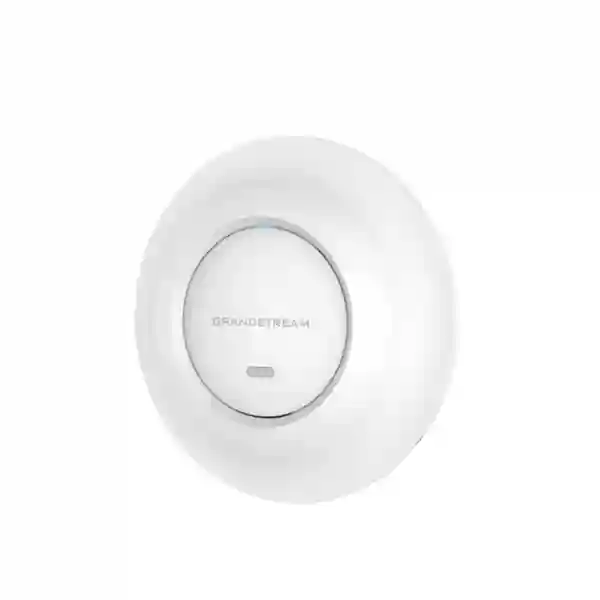
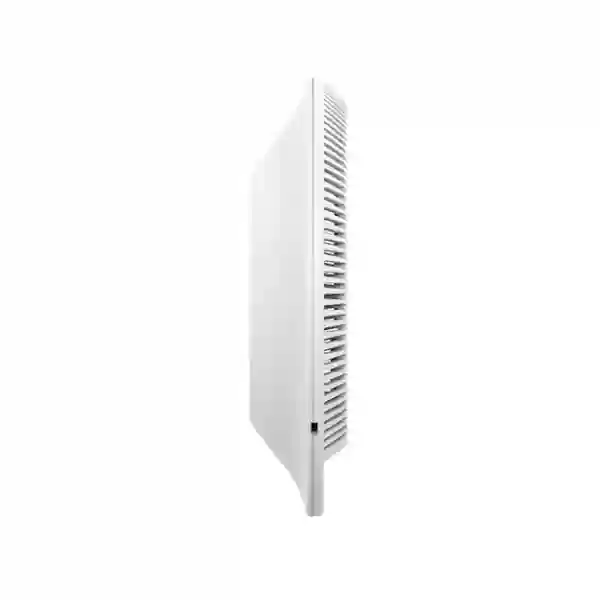
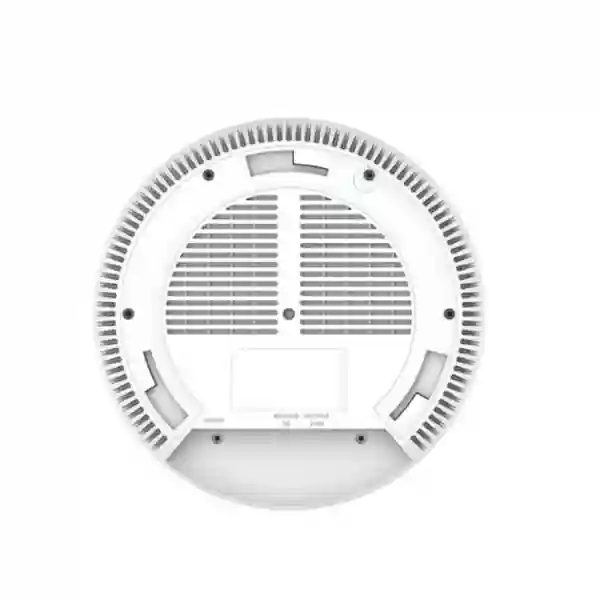
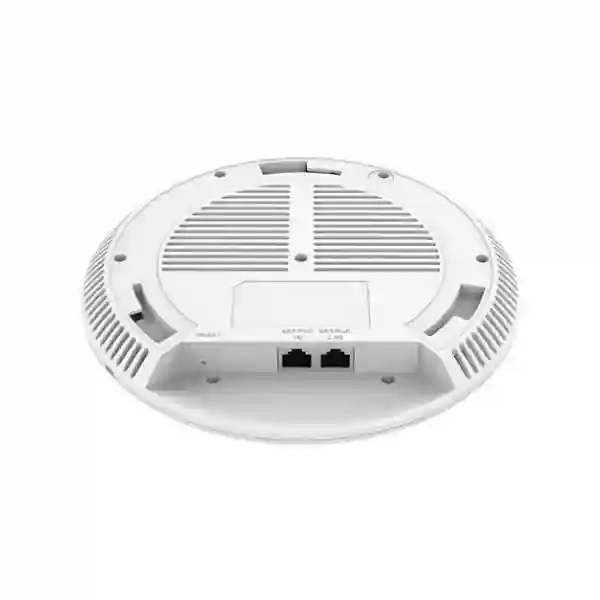
Grandstream GWN7662 Tanzania
The Grandstream GWN7662 is an indoor Wi‑Fi 6 access point built for organizations that need stronger wireless capacity, faster uplinks and more predictable performance in medium-density environments. It is designed for small and medium businesses, home offices, retail, restaurants, hospitality, education and other sites where many users and devices share the wireless network. Grandstream specifies 5.38 Gbps aggregate wireless throughput, 4×4:4 MU‑MIMO on the 5 GHz band, 2×2:2 MU‑MIMO on 2.4 GHz, DL/UL OFDMA, up to 256 concurrent clients, up to 175 metres of coverage under suitable conditions, and dual Ethernet interfaces including one 2.5 Gigabit port. The unit supports PoE and PoE+, allowing power and data to be delivered over the network cable when the connected switch or injector is suitable.
What the Grandstream GWN7662 solves
Wireless networks often become difficult not because the internet connection is slow, but because too many devices compete for airtime, access points are poorly placed, uplinks are undersized, or staff and guest traffic are not properly separated. The GWN7662 addresses this class of problem with Wi‑Fi 6 radio technology, multi-user scheduling, advanced QoS, VLAN-aware networking and several management choices. For businesses replacing older Wi‑Fi 4 or Wi‑Fi 5 access points, the model can provide a practical step toward greater client efficiency and faster network access when combined with appropriate switching, cabling, internet bandwidth and radio planning.
The access point is especially relevant where employees use laptops, smartphones, tablets, cloud applications, voice-over-Wi‑Fi, video meetings, point-of-sale systems or other always-connected devices. It is not enough to compare only the theoretical radio speed. A good deployment also considers client capability, wall materials, channel reuse, interference, PoE budget, switching speed and the expected number of active users. FourTeck can help customers assess these factors before choosing the number of GWN7662 units and their placement.
Verified GWN7662 technical highlights
| Specification | Grandstream GWN7662 |
|---|---|
| Wireless standards | IEEE 802.11 a/b/g/n/ac Wave 2/ax |
| MIMO | 2×2:2 on 2.4 GHz and 4×4:4 on 5 GHz, with MU‑MIMO |
| Channel bandwidth | 20/40 MHz on 2.4 GHz; 20/40/80/160 MHz on 5 GHz |
| Concurrent clients | Up to 256 |
| Coverage | Up to 175 metres; actual coverage varies with the environment |
| Ethernet | 1× 10/100/1000 port and 1× 10/100/1000/2500 port |
| SSIDs | 32 total, 16 per radio |
| Security | WPA/WPA2, WPA/WPA2 Enterprise, WPA3, secure boot, device certificate and protected critical data/control |
| Management | Embedded controller, GWN cloud management and GWN Manager on-premise software |
| Power | 802.3af/802.3at PoE/PoE+; maximum consumption stated at 16 W |
| Mounting | Indoor wall or ceiling mounting |
Management, security and integration
A useful strength of the GWN7662 is the choice of management architecture. The embedded controller can manage up to 50 local GWN access points, making it possible to build a coordinated deployment without a separate hardware WLAN controller for smaller installations. Grandstream also provides its cloud management platform for centralized administration and GWN Manager for larger on-premise management requirements. The right model depends on the number of sites, IT policy, administrative preferences and whether the customer wants cloud-based or local control.
Security features include WPA3 support, enterprise authentication options, VLAN capability, 802.1X, secure boot and device-level protection mechanisms described by Grandstream. Businesses can use multiple SSIDs to separate staff, guest, voice and device networks, subject to the final network design. Advanced QoS can help prioritize latency-sensitive applications such as voice and video. For organizations already using Grandstream Wi‑Fi capable IP phones, the platform is designed to support voice-over-Wi‑Fi deployments, but the LAN and RF design must still be engineered for roaming, quality and capacity.
Planning note: The advertised maximum range and throughput are laboratory or ideal-condition figures. Real performance depends on client radios, interference, building materials, channel width, channel reuse, distance, switching and internet capacity. A wireless site assessment is the right way to decide how many access points are required.
Grandstream GWN7662 Tanzania
For organizations evaluating the Grandstream GWN7662 in Tanzania, the main buying question is usually whether the model matches the building, user density and wired infrastructure rather than whether it simply offers Wi‑Fi 6. Tanzanian offices increasingly depend on cloud systems, video meetings, browser-based ERP, voice applications, mobile devices and guest connectivity at the same time. In that environment, a business access point must provide stable airtime management, appropriate security and enough wired backhaul to avoid moving the bottleneck from wireless to the switch. The GWN7662 is attractive because it combines dual-band Wi‑Fi 6, 5 GHz 4×4:4 MU‑MIMO, OFDMA, a 2.5GbE port and support for up to 256 concurrent clients in one indoor unit.
A Tanzania deployment should be planned around floor layout, wall construction, user concentration, application type and the available PoE switching. An access point mounted in a central open ceiling may cover a very different area from a unit placed behind reinforced concrete, metal shelving or dense partitions. In branches, retail spaces and education sites, client distribution may change dramatically during the day. A good design therefore considers both coverage and peak capacity. It can also separate guest users from business systems with VLANs and dedicated SSIDs, while allowing administrators to manage multiple access points through the embedded controller, Grandstream’s cloud option or GWN Manager.
FourTeck Tanzania can help buyers frame a quotation around the number of APs, PoE switch capacity, uplink speed, cabling, firewall segmentation and installation requirements. Customers planning a broader network refresh can also review FourTeck Tanzania technology solutions for related LAN, firewall, voice and infrastructure requirements. For regional procurement outside Tanzania, FourTeck network resources include FourTeck Africa. The objective is to supply a wireless platform that fits the site and can be expanded without forcing a complete redesign when user numbers grow.
Grandstream GWN7662 Dar es Salaam
Dar es Salaam businesses often operate in environments where wireless networks support a large mix of office users, visitors, IP phones, mobile devices, meeting rooms and cloud applications. The GWN7662 can be a strong fit for corporate offices, professional firms, retail sites, restaurants, training facilities and hospitality environments that require Wi‑Fi 6 and centralized management without moving immediately to a large enterprise WLAN architecture. Its 5 GHz 4×4:4 MU‑MIMO design and OFDMA capabilities are intended to improve efficiency when many compatible clients share the same radio, while the 2.5GbE interface helps provide a faster wired uplink than standard Gigabit-only access points.
In Dar es Salaam, building type matters. Multi-storey offices may need access points aligned by floor and separated by appropriate channel plans. Retail and hospitality spaces may need careful guest-network design, captive portal configuration and restrictions that prevent visitors from reaching business systems. Warehouses or buildings with heavy partitioning need more attention to attenuation and access-point placement. For voice-over-Wi‑Fi and video collaboration, administrators should also review QoS, roaming behavior and the performance of the upstream internet connection. Simply increasing transmit power is not a substitute for thoughtful RF design.
A quotation for a Dar es Salaam GWN7662 project should ideally include the expected client count, floor plan, internet speed, existing switches, PoE availability and any requirement for separate staff, guest or device SSIDs. It is also useful to confirm whether local embedded management is sufficient or whether cloud or on-premise centralized management is preferred. FourTeck can combine the AP requirement with network switching, routing, security and cabling planning through its Tanzania technology services. That approach helps ensure the access point does not become an isolated upgrade sitting on an undersized LAN.
Grandstream GWN7662 Mwanza
Organizations in Mwanza looking for a Grandstream GWN7662 usually need dependable indoor business Wi‑Fi for offices, branches, retail environments, education spaces, hospitality or customer-service locations. The model is designed for medium-density wireless networks and supports up to 256 concurrent clients per access point. That number is a platform limit rather than a guarantee that one AP should serve every user in a busy site. Real-world capacity should be estimated from active application demand, client capabilities, radio conditions and the number of simultaneous users during peak periods.
For Mwanza sites, practical planning starts with the LAN. The GWN7662 supports PoE/PoE+, so a suitable PoE switch can simplify installation by providing both power and data over the same Ethernet cable. The unit includes one Gigabit Ethernet port and one 2.5GbE port. If the business expects high wireless throughput or heavy internal traffic, the upstream switch should be selected with the 2.5GbE capability in mind. VLAN support can also help create separate logical networks for employees, guests, voice endpoints or operational devices, with the firewall controlling access between those segments.
A Mwanza deployment can use the embedded controller for smaller multi-AP installations or one of Grandstream’s centralized management options for broader administration. Buyers should define who will monitor the WLAN, how firmware and configurations will be maintained, and what level of reporting is required. For sites that expect future growth, reserving switch ports, PoE budget and cable routes is more cost-effective than redesigning later. When requesting a quote, provide the approximate coverage area, number of rooms, wall types, expected user count and existing network details so the design can be sized around the actual environment rather than only the theoretical coverage figure.
Grandstream GWN7662 Arusha
The Grandstream GWN7662 can suit Arusha businesses that need modern indoor wireless coverage across offices, hospitality environments, training centers, shops, professional services or customer-facing facilities. Wi‑Fi 6 becomes particularly useful where many newer smartphones and laptops compete for airtime, because OFDMA and multi-user technologies are designed to use radio resources more efficiently. The GWN7662 also provides a 160 MHz channel-width option on 5 GHz, although the best channel width in a real site depends on neighboring networks, available spectrum, interference and the required number of non-overlapping channels.
Arusha hospitality and guest environments often require a different WLAN policy from a normal office. Guests may need internet access without visibility of internal resources, while staff devices require controlled access to business systems. Multiple SSIDs and VLAN integration can support that separation when configured with the appropriate switch and firewall rules. In an office, the same design principles can separate corporate devices, voice endpoints and guest access. Advanced QoS can help prioritize real-time traffic, but end-to-end results also depend on the LAN and WAN path.
The unit’s ceiling or wall mounting options make it flexible for indoor placement, but access points should not be hidden in cabinets or positioned based only on cable convenience. A planned survey can reveal weak zones, interference and capacity hotspots before installation. Organizations in Arusha should also decide how wireless management will be handled: the embedded controller can coordinate up to 50 local GWN APs, while cloud or on-premise management may be better for multi-site operations. A complete quote should include the access points, compatible PoE switching, structured cabling, installation scope and configuration requirements so that the wireless layer is delivered as part of a coherent network.
Grandstream GWN7662 Dodoma
In Dodoma, the GWN7662 is relevant to offices, institutions, training centers, service organizations and branches that need secure, centrally manageable Wi‑Fi for a growing number of wireless users. Modern workplaces often combine laptops, smartphones, meeting-room systems, Wi‑Fi phones and guest devices. The challenge is not just extending signal coverage; it is maintaining capacity and policy as the device count rises. With 4×4:4 MU‑MIMO on the 5 GHz band, 2×2:2 on 2.4 GHz and OFDMA support, the GWN7662 is designed for the kind of mixed-client environment where airtime efficiency matters.
Dodoma deployments should pay close attention to power and network continuity. Because the access point is powered by PoE or PoE+, it can be connected to a PoE switch that is itself protected by a UPS when continuity during short power interruptions is important. That does not make the complete internet connection resilient by itself; upstream routers, firewalls and service-provider equipment also need appropriate power protection. For offices handling sensitive internal systems, WPA3, enterprise authentication, VLAN segmentation and controlled administrative access can be combined to strengthen the wireless design.
When planning a quotation, customers should identify the rooms and areas that require coverage, expected users per zone, high-bandwidth applications and any visitor-access requirement. A floor plan is especially useful because the advertised range of an access point cannot account for every wall, door, ceiling, corridor or neighboring radio. If multiple branches are involved, centralized management can simplify configuration and monitoring across locations. FourTeck can also align the WLAN with broader connectivity, switching and security requirements so that the access points have sufficient PoE capacity, VLAN support and uplink performance from the beginning.
Grandstream GWN7662 UAE
For UAE organizations, the Grandstream GWN7662 provides a Wi‑Fi 6 option for offices, retail spaces, restaurants, education environments and hospitality locations that need mid-density wireless access with flexible management. The model’s 2.5GbE network interface is valuable when the wired infrastructure is designed to support multi-gigabit access points, and its 5 GHz 4×4:4 MU‑MIMO radio can serve modern client fleets more efficiently than older-generation access points. Up to 32 SSIDs are supported across the two radios, although good design normally uses only the number needed for clear operational segmentation.
UAE deployments may span a single office or several branches. For a small site, the embedded controller can reduce management complexity. For distributed organizations, cloud management can provide a single administrative view, while customers with specific local-control requirements can consider GWN Manager. Selection should be driven by governance, scale and IT workflow. In dense commercial buildings, radio planning is especially important because neighboring Wi‑Fi networks can increase contention. Channel width, transmit power and access-point placement should be tuned to the local RF environment instead of relying on default maximum settings.
Businesses procuring the GWN7662 in the UAE can use the wider FourTeck regional technology network to coordinate networking and communications requirements. A quote should specify how many areas require coverage, whether PoE switching already exists, the desired uplink speed, guest or corporate SSID needs and whether installation or configuration is required. For voice-over-Wi‑Fi, conference applications and other latency-sensitive workloads, the AP should be integrated with suitable QoS policies across switching and firewall layers. Proper design provides a clearer upgrade path and more reliable performance than treating the access point as a standalone purchase.
Grandstream GWN7662 Uganda
Uganda businesses evaluating the GWN7662 can use it as part of an indoor Wi‑Fi 6 design for offices, hospitality, retail, education, professional services and branch networks. The access point supports modern wireless standards alongside older Wi‑Fi clients, allowing organizations to upgrade the infrastructure without requiring every endpoint to be replaced immediately. The greatest gains are realized when newer Wi‑Fi 6 clients can use OFDMA and efficient multi-user scheduling, while the wired network and internet service are sized to handle the extra wireless capacity.
For multi-site Uganda deployments, administration can be a major factor in product choice. The GWN7662 includes an embedded controller for local groups of access points, while Grandstream’s centralized platforms provide broader management options. IT teams should decide how configuration templates, firmware maintenance, user access, SSIDs and monitoring will be governed. Security can include WPA3, enterprise authentication and VLAN separation, but these should be connected to a wider network policy that defines which devices may reach internal resources and which should receive internet-only access.
Customers can review regional coordination through FourTeck Uganda. A useful quotation request identifies the approximate floor area, number of users, AP count if already estimated, switch models, PoE budget and cabling status. If the existing network uses only Gigabit switching, the GWN7662 can still operate, but customers wanting to exploit the 2.5GbE port should plan compatible multi-gigabit switching where appropriate. The installation should also consider ceiling height, wall materials and high-density zones so AP placement is determined by RF need rather than by the nearest convenient cable point.
Grandstream GWN7662 Kampala
Kampala offices and commercial sites often need wireless coverage that remains stable as meeting rooms fill, staff move between work areas and guest devices join the network. The GWN7662 is built for this type of medium-density use, with support for up to 256 concurrent clients and advanced Wi‑Fi 6 scheduling technologies. That platform capability is best used across several well-placed access points rather than concentrating too many active devices on one radio. Capacity planning should look at where users gather, what applications they use and how much traffic is generated during peak periods.
In a Kampala office, administrators may create separate SSIDs for staff, visitors and operational devices, then map those SSIDs to VLANs and firewall policies. Retail and hospitality sites can add guest-access workflows while keeping point-of-sale or administrative systems isolated. If real-time applications such as VoIP or video are important, end-to-end QoS and reliable internet connectivity should be reviewed alongside the Wi‑Fi design. The access point’s advanced QoS features help at the wireless edge, but they cannot compensate for congestion or packet loss elsewhere in the network.
The GWN7662 can be powered through 802.3af/802.3at PoE, simplifying ceiling installations where a local power socket would be undesirable. Before purchase, verify the available switch PoE budget and port speed. The 2.5GbE uplink becomes most useful where switching supports that rate. For multi-floor or multi-building deployments, customers should also consider uplink design and backbone capacity. A quotation should describe the expected number of APs, whether cabling and mounting are required, and the preferred management method. This gives the supplier enough context to propose a complete and supportable WLAN rather than a collection of uncoordinated devices.
Grandstream GWN7662 Arua
For organizations in Arua, the Grandstream GWN7662 can provide a modern indoor wireless platform where the goal is dependable office, institutional, retail or hospitality connectivity with room for growth. Wi‑Fi design in a smaller branch should still follow the same principles as a large site: the access point needs suitable placement, enough wired bandwidth, consistent power and clear security policy. A single AP may be adequate for a compact open area, but partitions and user concentration can quickly change the number of units required. The published maximum coverage figure should therefore be treated as a planning reference, not a guaranteed radius.
The GWN7662’s dual Ethernet interfaces include a 2.5GbE port, giving customers an upgrade path to faster wired backhaul. If the branch currently has basic switching, that infrastructure should be checked for PoE support, VLAN capability and uplink capacity before installation. Staff and guest traffic can be separated using multiple SSIDs and VLANs, while administrators can use WPA3 and enterprise authentication features where the broader network supports them. The unit can also participate in Grandstream mesh networking, although wired backhaul is generally preferable where structured cabling is available and reliable.
Arua buyers should include operational requirements in the quote rather than only asking for the AP price. Useful information includes user count, required coverage zones, existing router or firewall, switch model, cabling condition, internet service and whether centralized management is needed. If voice or video applications are important, those should be mentioned because they influence RF and QoS planning. A small amount of design work before procurement can prevent common problems such as weak coverage in meeting rooms, overloaded radios, underpowered PoE switches or guest traffic reaching internal systems.
Grandstream GWN7662 Mbarara
The Grandstream GWN7662 is a practical option for Mbarara organizations that are modernizing indoor Wi‑Fi across offices, shops, hospitality spaces, education facilities and branch environments. Its Wi‑Fi 6 radio platform is intended to handle many active users more efficiently than older generations, particularly when compatible clients can use OFDMA and modern multi-user features. The 5 GHz radio supports 4×4:4 MU‑MIMO, while the 2.4 GHz band uses 2×2:2. In a good design, newer high-performance clients can be encouraged toward 5 GHz while 2.4 GHz remains available for compatible legacy or lower-bandwidth devices.
Businesses in Mbarara should consider how wireless access connects to the rest of the network. The AP can support multiple SSIDs, VLAN tagging and enterprise authentication, but those capabilities depend on managed switching and firewall policy. If the organization has separate departments, guest Wi‑Fi or operational devices, segmentation can reduce unnecessary lateral access. PoE power simplifies installation and, when the PoE switch is backed by suitable UPS protection, can also help keep the wireless layer available during short power interruptions, subject to the rest of the network path remaining operational.
For growing sites, centralized management is useful because it allows administrators to keep SSIDs, security settings and AP configuration consistent. The embedded controller can manage up to 50 local GWN APs, while cloud or on-premise management can serve broader requirements. A Mbarara quotation should specify the building type, number of floors, active users, existing switch infrastructure and installation expectations. This makes it easier to determine whether one or several GWN7662 units are appropriate, what cabling is required and whether the customer should also budget for PoE switching, firewall updates or faster uplinks.
Grandstream GWN7662 Gulu
Gulu businesses and institutions considering the GWN7662 can use it to build a secure indoor Wi‑Fi 6 network for staff, guests and connected devices. The access point supports up to 256 simultaneous clients, but realistic design should focus on active traffic rather than headline client count. A classroom with many devices joining at once, a busy office with video meetings, or a restaurant serving guest users can create different traffic patterns even when the total number of clients is similar. Channel planning and AP distribution should reflect those patterns.
The AP’s 5.38 Gbps aggregate wireless specification provides substantial radio capacity, but end-user speed is always limited by several factors: client capabilities, signal strength, interference, channel width, switching, internet bandwidth and application servers. A good Gulu deployment therefore treats the GWN7662 as one part of a complete network. PoE switching should have adequate power budget; uplinks should be fast enough for expected traffic; VLANs should be planned for security; and the firewall should enforce policies between wireless segments and internal systems.
Organizations with limited local IT staff may prefer centralized management so configuration and monitoring can be handled consistently across several access points or branches. Others may prefer the embedded controller for a simple single-site deployment. The correct option depends on operating model rather than product capability alone. When requesting pricing, include the number of coverage areas, expected concurrent users, whether ceiling or wall mounting is required, the status of Ethernet cabling and any guest-access requirement. These details help convert a product request into a deployment that is easier to maintain and expand.
Grandstream GWN7662 Kenya
In Kenya, the GWN7662 can serve organizations looking for indoor Wi‑Fi 6 with multi-gigabit uplink capability and several management options. It is relevant to business offices, hospitality, education, restaurants, retail and other medium-density wireless environments. The unit combines Wi‑Fi 6 radios, up to 256 clients, advanced QoS and secure management features with a controller-less local architecture. That can be useful for customers wanting coordinated AP management without introducing a dedicated physical WLAN controller in a small or medium deployment.
Kenyan businesses should assess both coverage and capacity. A single AP positioned centrally might provide signal across a large open area, but users behind multiple walls or in busy meeting rooms may require additional APs. In high-density buildings, more APs at controlled power levels can perform better than a small number transmitting at maximum power. The 5 GHz band is particularly important for performance, while the 2.4 GHz band remains useful for compatibility and longer-range low-bandwidth connections. Careful channel planning reduces co-channel interference as the number of APs increases.
Regional buyers can review FourTeck Kenya for procurement coordination. A complete quote should include access-point quantity, required PoE switching, cabling, rack or UPS changes and management preferences. Customers planning multiple branches should define whether each location will be managed independently or from a central platform. Security requirements such as staff authentication, guest isolation, VLANs and firewall policies should also be captured before deployment. This produces a network design that can scale more predictably than buying APs first and resolving infrastructure limitations after installation.
Grandstream GWN7662 Kuwait
Kuwait organizations can consider the Grandstream GWN7662 for indoor Wi‑Fi 6 deployments where reliable coverage, user density and centralized administration matter. Offices, retail stores, restaurants, training spaces and hospitality sites can all benefit from the model’s combination of 4×4:4 5 GHz MU‑MIMO, OFDMA, 2.5GbE connectivity and support for up to 256 client devices. The platform also provides multiple SSIDs, VLAN support, advanced QoS and modern security options, making it suitable for environments that need more control than a consumer wireless router can provide.
RF conditions in commercial buildings can be complex because neighboring tenants and dense device populations increase interference. Using very wide 160 MHz channels everywhere may reduce the number of clean channels available, so channel width should be chosen according to the real site rather than simply set to the maximum. Access points should be placed where users are, not hidden behind building services or dense materials. For multi-floor sites, designers should also consider signal propagation between floors and avoid unnecessary overlap that can disrupt roaming decisions.
From a procurement perspective, the GWN7662 should be quoted together with appropriate PoE switching and cabling. If 2.5GbE backhaul is required, the switch ports and uplinks must support it. Management choice is also important: smaller local deployments may use the embedded controller, while larger operations can benefit from centralized cloud or on-premise management. Customers should document SSID names, VLAN assignments, authentication method, guest-access policy and administrative ownership before handover. This reduces future troubleshooting and makes it easier to add APs as the organization grows.
Grandstream GWN7662 Ghana
For Ghanaian businesses, the GWN7662 provides an indoor Wi‑Fi 6 platform aimed at small and medium organizations and medium-density deployments. It can be used in offices, retail, hospitality, education and service environments where administrators need better capacity than older wireless generations and want flexible management without a mandatory hardware controller. Its 2.5GbE uplink can also support organizations that are upgrading their switching infrastructure beyond standard Gigabit access ports.
A Ghana deployment should begin with user behavior. A site where users mainly browse web applications and email has different capacity needs from a site with frequent video conferences, large file transfers or voice-over-Wi‑Fi. Guest networks add another traffic class and usually need isolation from business systems. The GWN7662 supports VLAN-based designs and multiple SSIDs, but a managed switch and firewall are needed to apply segmentation effectively. Administrators should also review authentication, password policies and firmware maintenance as part of the WLAN security process.
The access point can be wall or ceiling mounted indoors and powered by PoE/PoE+. That allows neat installation, provided structured cabling reaches the selected radio location. Coverage estimates should account for concrete, glass, shelving and other materials that change signal behavior. In larger sites, multiple lower-powered access points can improve roaming and capacity compared with one unit attempting to cover every room. Buyers should request a quote that includes the AP count, switch compatibility, cabling scope, management preference and any configuration requirements. A complete network view helps avoid underestimating the supporting infrastructure required for dependable Wi‑Fi.
Grandstream GWN7662 Nigeria
Nigerian organizations looking for business-class Wi‑Fi 6 can use the GWN7662 across offices, retail, education, hospitality, professional services and distributed branch environments. The model is built to handle up to 256 concurrent clients, with a high-capacity 5 GHz 4×4:4 MU‑MIMO radio and Wi‑Fi 6 OFDMA. These capabilities help when many modern devices communicate at the same time, but overall service quality still depends on the wired network, internet links, radio conditions and how the APs are configured.
For offices with many users, 5 GHz should normally carry a substantial share of performance-sensitive traffic, while 2.4 GHz can remain available for compatibility and devices that do not need high throughput. Network designers should avoid assuming that the highest possible transmit power or widest channel always provides the best result. In dense environments, carefully distributed APs with planned channels and controlled power can reduce contention. The GWN7662’s 2.5GbE interface also makes it suitable for sites upgrading to multi-gigabit switching, provided the switch infrastructure supports the required port speeds and PoE.
Security and operations should be defined before rollout. Multiple SSIDs and VLANs can separate employees, guests and operational devices; WPA3 and enterprise authentication can improve access control where compatible; and centralized management can simplify standard configuration across branches. Buyers should provide expected user counts, floor plans, switch models and WAN bandwidth when requesting a quotation. For organizations expanding in phases, it is useful to plan spare PoE capacity, uplink bandwidth and management structure from the beginning so future AP additions do not require a major redesign of the network core.
Grandstream GWN7662 Seychelles
In Seychelles, the GWN7662 can be used for indoor business Wi‑Fi across offices, hospitality properties, restaurants, retail areas and service organizations. Hospitality networks in particular often need to support a high number of visitor devices while keeping administrative systems separated. The GWN7662 provides up to 32 SSIDs across both radios, VLAN functionality and management options that can support structured staff and guest networks. A well-designed deployment should use only the SSIDs needed because too many wireless networks create additional management overhead and airtime use.
For guest-heavy environments, capacity planning is more important than the maximum stated coverage range. One access point may provide a visible signal across a wide area, but performance can degrade when many users stream media, make calls or synchronize cloud data simultaneously. Multiple APs placed close to the actual user zones can improve available airtime and roaming. In hotels and larger properties, designers should consider corridors, rooms, concrete walls and vertical propagation between floors. Guest isolation, captive portal design and internet bandwidth policy should be coordinated with the firewall and switching architecture.
The GWN7662’s PoE/PoE+ support allows ceiling mounting without a separate electrical outlet, while the 2.5GbE network port offers a faster wired uplink option. Organizations should confirm that the switch can provide both the required PoE power and port speed. Centralized management may be valuable where several buildings or sites need consistent configuration. A Seychelles quotation should therefore include access-point quantity, switch compatibility, cabling, installation, SSID/VLAN requirements and management preferences. That complete specification is more useful than comparing unit price alone because wireless performance depends heavily on the surrounding network design.
How to size a GWN7662 deployment
Sizing starts with the floor plan and expected user distribution. Mark where employees, guests and operational devices will be located, then identify high-demand zones such as meeting rooms, reception areas, training rooms, restaurants or open offices. Consider wall materials, ceiling height, neighboring Wi‑Fi and any areas where low signal is unacceptable. Next, estimate active users and application demand. One access point may technically accept hundreds of clients, but the best user experience comes from spreading active traffic across enough radios and wired uplinks. Finally, review PoE switch capacity, VLAN support, uplink bandwidth and firewall policy so every access point has the infrastructure it needs.
Buying and quotation checklist
Provide floor plans, room count, floor count and any difficult coverage zones.
Estimate total and peak concurrent users, including guest and operational devices.
Confirm PoE/PoE+ budget, port speeds, VLAN support and spare switch capacity.
List staff, guest, voice or device networks and required authentication method.
Choose local embedded control, cloud administration or on-premise management.
Clarify whether cabling, mounting, configuration, testing and documentation are required.
Frequently asked questions
Is the Grandstream GWN7662 a Wi‑Fi 6 access point?
Yes. The GWN7662 supports IEEE 802.11ax Wi‑Fi 6 together with earlier Wi‑Fi standards for backward compatibility with many existing client devices.
How many clients can the GWN7662 support?
Grandstream specifies support for up to 256 concurrent clients. Actual usable capacity depends on traffic demand, RF conditions, client mix and design, so large active populations should be distributed across multiple access points.
Does the GWN7662 support 2.5GbE?
Yes. One of its Ethernet interfaces supports 10/100/1000/2500 Base‑T, and it also includes a second 10/100/1000 Base‑T port.
Can the GWN7662 be powered with PoE?
Yes. It supports 802.3af and 802.3at PoE/PoE+ with automatic power adaptation. The connected switch or injector must provide appropriate power.
Does it need a separate Wi‑Fi controller?
Not necessarily. The GWN7662 includes an embedded controller that can manage up to 50 local GWN APs. Grandstream also offers cloud and on-premise management options for broader administration.
Is the GWN7662 suitable for guest Wi‑Fi?
Yes, it supports multiple SSIDs, captive-portal functions and VLAN-based network designs. The complete guest-access policy should also be enforced through the switch and firewall.
Can I use it for voice-over-Wi‑Fi?
Grandstream positions the model for voice-over-Wi‑Fi use and provides advanced QoS. Reliable voice still depends on AP placement, roaming design, LAN QoS and internet or SIP service quality.
Decision recap
Choose the Grandstream GWN7662 when you need an indoor Wi‑Fi 6 access point for a medium-density business environment, want 5 GHz 4×4:4 MU‑MIMO, need up to 256 client support, value a 2.5GbE uplink and prefer flexible management through embedded, cloud or on-premise tools. The model is best deployed as part of a complete WLAN design that includes suitable PoE switching, cabling, firewall segmentation and RF planning. It is not an outdoor access point, and its maximum published range or throughput should not be treated as guaranteed performance in every building.
Plan your GWN7662 deployment with FourTeck
Share your floor plan, user count, existing switch details and required coverage areas. FourTeck can help structure a quotation covering access points, PoE switching, cabling, configuration and related network requirements so the wireless upgrade is sized for real business use rather than only product specifications.




Reviews
There are no reviews yet.