
Grandstream GVC3200 Video Conferencing System Tanzania
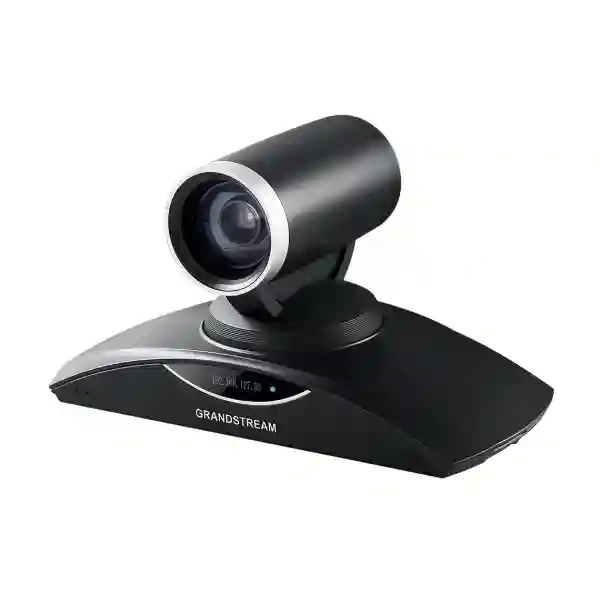
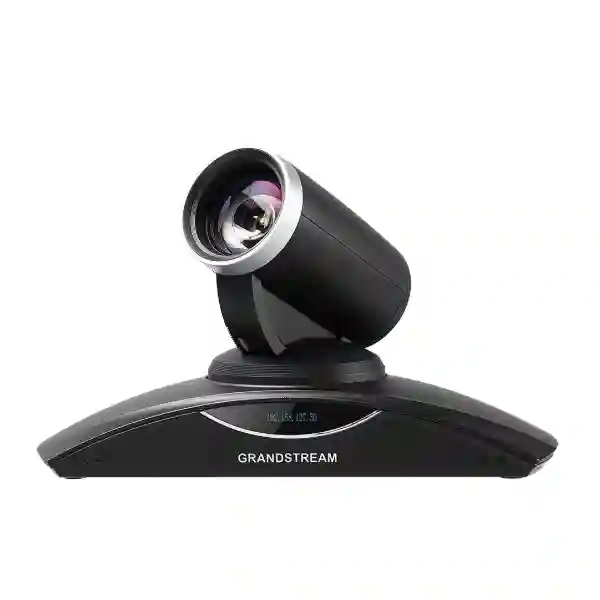
The Grandstream GVC3200 is a business video conferencing endpoint built for organizations that need standards-based room collaboration, flexible platform interoperability and local multi-party conferencing. Grandstream specifies 1080p Full-HD video, a PTZ camera with 12x optical zoom, three HDMI monitor outputs, Gigabit Ethernet, dual-band Wi-Fi, Bluetooth and an embedded MCU that can support up to nine video participants depending on the selected resolution. It works with SIP and H.323 environments and was designed to bridge traditional room conferencing with Android-based collaboration applications. For organizations in Tanzania evaluating a GVC3200 deployment, the most useful approach is to consider the complete meeting-room requirement: room size, participant seating, display layout, microphone coverage, available bandwidth, existing PBX or SIP infrastructure, remote-site standards and the collaboration platforms that external partners use.
Grandstream GVC3200 overview and buying guidance
The GVC3200 was created for meeting spaces that require more than a webcam and desktop application. Its value is the combination of a dedicated room camera, local conferencing capability, multiple display outputs and broad signaling support. Grandstream states that the unit can connect with third-party SIP and H.323 video conferencing platforms, while its Android foundation was intended to make the room endpoint more open to collaboration applications than a closed proprietary appliance. This flexibility is useful when an organization communicates with branches, suppliers, customers or project teams that may not all use the same conferencing infrastructure.
A central feature is the embedded MCU. Grandstream documents up to nine-way video conferencing, with capacity varying by resolution: up to four parties at Full HD, five at HD and nine at VGA. This distinction is important during procurement because “9-way” should not be interpreted as nine simultaneous Full-HD streams. Meeting design should therefore begin with the number of participants, desired resolution and available bandwidth. Grandstream’s published guidance indicates that HD point-to-point conferencing requires approximately 1 Mbps and Full-HD point-to-point conferencing approximately 2 Mbps, with higher bandwidth required when content sharing is active. A business planning multi-party meetings should validate both upstream and downstream capacity at the host site and at key remote sites.
Grandstream currently places the GVC3200 in its product archive. That makes lifecycle awareness an essential part of any purchasing decision. A buyer specifically requesting the GVC3200 may be replacing an existing unit, standardizing with installed rooms, seeking a compatible spare, or supporting a legacy conferencing environment. In such cases, exact model availability and condition should be confirmed before purchase. Organizations designing a new conferencing room should also compare current Grandstream conferencing products and decide whether the legacy GVC3200 remains the right fit. FourTeck Tanzania can help structure that comparison around room use, interoperability, display requirements and network readiness rather than selecting solely by model name.
Verified GVC3200 capabilities
Video and camera
The system supports video resolutions up to 1080p Full HD and uses a remotely controllable PTZ camera with 12x optical zoom. This makes it suitable for meeting rooms where the camera must frame individual speakers, groups or presentation areas rather than remain fixed on one wide scene.
Multi-party conferencing
The embedded MCU supports local multi-party video conferencing without requiring an external MCU for the supported conferencing modes. Capacity depends on resolution, reaching up to nine participants at VGA, five at HD or four at Full HD.
Display and sharing
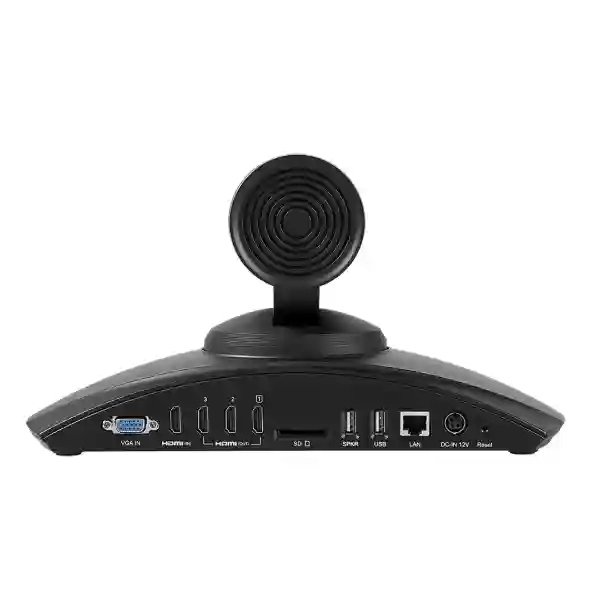
Three HDMI outputs can support multi-screen room layouts. HDMI and VGA inputs provide content-ingest options for presentations, documents and other meeting material, while dual-stream capabilities help keep people video and shared content visible in the same session.
Network and peripheral connectivity
Grandstream specifies Gigabit Ethernet, dual-band Wi-Fi and Bluetooth connectivity. In a permanent business room, wired Gigabit Ethernet is normally preferable where practical because predictable latency, packet delivery and bandwidth are more important to video quality than simple peak wireless speed.
Technical planning for a GVC3200 meeting room
A successful room-conferencing deployment depends on more than the endpoint. Begin by mapping the seating position, camera location and display placement. The 12x optical zoom is valuable when the camera must capture participants seated farther from the front of the room, but room depth and viewing angles still matter. The camera should have a clear line of sight, avoid strong backlighting where possible and be mounted or positioned so common speaker locations fall comfortably within its pan, tilt and zoom range. If multiple displays are planned, determine whether the room needs a dedicated participant view, presentation view and additional meeting information on separate screens.
Audio should be designed with equal care. Large rooms, reflective surfaces and widely spaced seats can create echo or uneven pickup even when video is excellent. The GVC3200 supports external microphone and speaker arrangements, and Grandstream documentation also references use with conference-room audio accessories. The correct arrangement depends on table shape, participant count, room acoustics and whether presenters move around. Buyers should list microphone coverage requirements during quotation rather than assuming that the camera endpoint alone solves room audio.
Networking is another key dependency. Conferencing traffic is sensitive to latency, packet loss, jitter and congestion. A business with adequate headline internet speed can still experience poor meetings if the local network is overloaded or if upstream capacity is much lower than downstream capacity. For HD operation, Grandstream’s guidance starts around 1 Mbps per point-to-point video call and increases for shared content and higher resolutions. Multi-party hosting increases aggregate demand. Businesses should therefore identify expected meeting sizes, content-sharing habits and simultaneous office traffic. Where possible, conferencing devices should use a stable wired connection, correctly configured VLANs or quality-of-service policies, and firewall rules that match the chosen SIP/H.323 or platform deployment.
Compatibility, interoperability and lifecycle considerations
The GVC3200’s appeal is its standards-oriented interoperability. Grandstream lists SIP and H.323 support, enabling connection to many standards-based conferencing environments. This can be valuable for organizations with existing IP PBX infrastructure, legacy room systems or partners that rely on traditional video-conferencing standards. However, protocol support alone does not guarantee that every advanced feature will behave identically between every vendor combination. Before deployment, confirm registration method, dialing format, firewall traversal, codecs, content-sharing behavior, encryption expectations and the features required in real meetings.
Android capability was another important part of the product’s original positioning. Because the system is based on Android 4.4, application compatibility must now be treated carefully. Modern cloud meeting applications may have changed minimum Android requirements or stopped supporting older app versions. Grandstream’s own documentation states that upgrading the Android version on the GVC3200/GVC3202 is not supported. For an existing installation, this means the SIP/H.323 role may remain valuable even where particular Android applications have moved on. For a new purchase, buyers should verify the precise collaboration workflow they expect today rather than relying on older lists of compatible applications.
Lifecycle is especially relevant because Grandstream lists the GVC3200 in its product archive. FourTeck therefore recommends treating a GVC3200 enquiry as both a model request and a compatibility requirement. If the objective is to replace an installed GVC3200, retain interoperability with a legacy environment or source matching equipment, specify that clearly. If the objective is simply to build a modern video meeting room, allow the quotation process to compare current-generation room systems as well. This reduces the risk of selecting a discontinued architecture when a newer device better matches present software, security and support expectations.
Related FourTeck resources
For a broader technology requirement, review FourTeck Tanzania business technology solutions to understand how conferencing fits with networking, IP telephony, displays, security and infrastructure. For projects extending beyond Tanzania, the FourTeck Uganda technology portfolio and FourTeck Kenya technology portfolio provide regional points of reference for neighboring East African requirements. Organizations with UAE-linked operations can also review FourTeck UAE for wider enterprise IT and telecom solution context. These links are useful when a conferencing deployment is part of a multi-country rollout rather than a single-room purchase.
Grandstream GVC3200 Tanzania
For Tanzania organizations searching for the Grandstream GVC3200, the main procurement question is whether the requirement is for a specific legacy model or for the business outcome the model was originally designed to deliver. The GVC3200 remains technically notable for its 1080p video, PTZ camera with 12x optical zoom, embedded multi-party MCU, three HDMI outputs and support for SIP and H.323. These features can fit boardrooms, management meeting rooms, training spaces and branch-collaboration environments where a dedicated room endpoint is preferable to a laptop-based webcam setup. Yet because Grandstream now lists the product in its archive, a Tanzania quotation should first confirm current availability and then review whether an existing-room compatibility need justifies using this exact model.
For new deployments across Tanzania, network readiness should be assessed early. Video quality depends not only on internet package speed but also on stable upstream bandwidth, low packet loss, reasonable latency and a local LAN that is not congested. Where a GVC3200 will host multi-party meetings, bandwidth demand scales with the number and resolution of streams. Content sharing can increase the requirement further. Organizations connecting offices over VPN should also consider encryption overhead and firewall processing. If the conferencing room shares switching infrastructure with IP phones, cameras and employee data traffic, quality-of-service and segmentation can help make performance more predictable.
The room itself also affects the result. A small management room may use one display and modest zoom, while a larger boardroom may benefit from separate displays for participants and shared content. Seating depth, lighting and microphone pickup should be documented. During a Tanzania procurement enquiry, provide the room dimensions, expected number of local participants, number of remote sites, preferred conferencing platform, existing SIP or PBX environment and whether screens or audio equipment are already installed. FourTeck can then help determine whether the GVC3200 is technically appropriate, whether accessories are required and whether a newer Grandstream option should be considered. This requirement-led approach is more reliable than ordering a conferencing endpoint without checking the surrounding network and room environment.
Grandstream GVC3200 Dar es Salaam
Dar es Salaam businesses often need meeting rooms that connect headquarters, branches, suppliers, customers and international partners without depending on every participant being in the same office. A GVC3200-based room can serve this type of collaboration when the organization already uses standards-based video systems or needs a dedicated endpoint with strong optical zoom and multi-display support. The 12x PTZ camera can be useful in deeper conference rooms where a fixed wide-angle webcam would leave distant speakers too small on screen. The three HDMI outputs allow a room designer to separate remote participants, presentations and supplementary meeting views where the workflow calls for multiple displays.
For a Dar es Salaam deployment, first check the reliability and symmetry of the available internet connection. Full-HD conferencing needs more upstream bandwidth than basic calls, and multi-party sessions add additional demand. If the office also runs cloud applications, IP telephony, surveillance uploads or large file transfers, conferencing traffic may compete for bandwidth at busy times. A network assessment can identify whether wired Gigabit connectivity, traffic prioritization, VLAN separation or firewall tuning is required. The endpoint should also be tested with the exact SIP, H.323 or external conferencing environment the business expects to use rather than assuming every platform feature will be available through every interoperability path.
Procurement teams in Dar es Salaam should also treat the GVC3200 as an archived model. This is particularly important when a project is a new installation rather than a replacement. Existing organizations may have a legitimate reason to source the same model for consistency, spare-room compatibility or established operating procedures. New projects may benefit from comparing current Grandstream conferencing systems before purchase. A quotation request should therefore include whether the model number is mandatory, whether existing GVC units are already installed, the number of rooms, the number and size of displays, room seating capacity, conferencing standards in use and any installation deadline. These details help FourTeck Tanzania frame the request accurately and avoid a simple product-only quote that misses room, network and lifecycle requirements.
Grandstream GVC3200 Mwanza
Organizations in Mwanza evaluating the Grandstream GVC3200 may be looking for a way to reduce travel between offices, coordinate operational teams or create a formal meeting room for customers and partners. The device’s dedicated PTZ camera, standards-based signaling and embedded MCU make it different from a personal video meeting device. It is intended to become part of the room infrastructure. That makes planning important: camera sight lines, microphone coverage, display visibility and network stability all contribute to the real user experience. If the room is long or seats participants at different distances, the 12x optical zoom and remote PTZ control can help the operator frame speakers more effectively than a fixed camera.
Connectivity should be checked under realistic business conditions. Grandstream publishes bandwidth guidance for HD and Full-HD calling, but practical performance also depends on jitter, packet loss, firewall behavior and other traffic on the same WAN link. A Mwanza office that connects to Dar es Salaam or another branch through VPN may need to consider the extra load created by encryption and routing. Where internet quality varies, the organization should decide whether meeting resolution, number of simultaneous participants or content-sharing expectations need adjustment. A pilot call to the most important remote locations can reveal problems before the meeting room is considered complete.
Because the GVC3200 is archived by Grandstream, buyers should specify why this exact model is being requested. For replacement of a failed unit, maintaining the same user interface and interoperability may be important. For a greenfield room, current Grandstream models may offer a better lifecycle path. FourTeck Tanzania can help interpret the requirement if the enquiry includes room dimensions, number of attendees, preferred meeting services, current PBX or SIP registrar, desired screen arrangement and whether the organization needs installation or only supply. Buyers should also state whether local recording is part of the workflow, whether meetings require content sharing, and whether remote sites use SIP, H.323 or browser/cloud platforms. A precise requirement makes it easier to prepare a technically relevant quotation rather than simply quoting the requested model in isolation.
Grandstream GVC3200 Arusha
Arusha organizations in tourism, education, project management, professional services, NGOs and multi-site operations may need structured video collaboration with partners located across Tanzania or abroad. The Grandstream GVC3200 can be relevant where a dedicated standards-based room system is required. It supports SIP and H.323, includes an embedded MCU for multi-party conferencing and provides a 1080p PTZ camera with 12x optical zoom. A room can use up to three HDMI outputs, which is useful when participants and shared content need separate visual spaces. These capabilities should be matched to the actual meeting workflow rather than treated as a checklist of features.
For Arusha conference rooms, acoustic and visual conditions deserve attention. Large windows can create backlighting, hard walls can produce echo and long boardroom tables can make microphone coverage uneven. The camera endpoint should therefore be designed together with room audio and display placement. If the space will host presentations, check how laptops or other content sources connect to the GVC3200 and whether users need to switch between multiple sources. If meetings involve external organizations, identify what standards or services those partners use. SIP and H.323 interoperability can solve many cross-platform situations, but application-specific features should be validated in advance.
Network planning is equally important. Stable wired Ethernet is preferable for a fixed room where available. The organization should confirm upstream capacity and test the path to key remote sites. If a firewall performs deep security inspection or if conferencing traverses a site-to-site VPN, technical teams should confirm that signaling and media flows are handled correctly. Since the GVC3200 is now part of Grandstream’s product archive, Arusha buyers planning a new room should compare lifecycle and platform compatibility with newer Grandstream products before finalizing. If the requirement is replacement or standardization with existing GVC3200 rooms, note that in the request. Providing room dimensions, seat count, network speed, conferencing protocol, display count and deployment objective will help FourTeck Tanzania develop a more useful recommendation and quotation.
Grandstream GVC3200 Dodoma
In Dodoma, a dedicated video conferencing room can support inter-office coordination, management meetings, training and communication with remote stakeholders. The Grandstream GVC3200 was designed for this type of room-based collaboration, combining a 1080p PTZ camera, 12x optical zoom, multi-display outputs and an embedded MCU. For users comparing it with ordinary USB cameras, the key distinction is that the GVC3200 is a standalone conferencing system with standards-based SIP and H.323 capabilities, not merely a peripheral attached to a laptop. This can be valuable in rooms where meetings need a consistent appliance-style experience and integration with a broader IP communications environment.
A Dodoma deployment should be planned around meeting patterns. If most calls are point-to-point, the embedded MCU may be less important than camera reach, interoperability and display layout. If internal meetings regularly include several branches, MCU capacity and resolution become more important because the unit supports different participant counts at different resolutions. Grandstream specifies up to four parties at Full HD, five at HD and nine at VGA. This should be considered when stakeholders ask for “nine-way conferencing,” as the maximum participant figure does not correspond to nine simultaneous Full-HD video streams.
Power stability, structured cabling and network quality should also be part of the room checklist. Conferencing failures are often caused by surrounding infrastructure rather than by the endpoint itself. Verify Ethernet cabling, switching, internet capacity, firewall traversal and display connections before commissioning. Because the GVC3200 is now archived by Grandstream, organizations in Dodoma should confirm product availability and compare current alternatives for new deployments. A useful quotation request should state whether the unit is replacing an existing GVC3200, the room size, participant count, remote sites, existing telephony system, display arrangement and collaboration platform. FourTeck Tanzania can then help determine whether the requested model remains suitable and what supporting components or network changes may be required for reliable operation.
Grandstream GVC3200 UAE
Businesses with operations between Tanzania and the UAE may encounter the GVC3200 in existing conference rooms, branch standards or legacy collaboration designs. Its SIP and H.323 support can be especially useful in cross-border environments where different offices use standards-based infrastructure and need a predictable dialing model. The three HDMI outputs can support larger boardroom configurations, while the PTZ camera and optical zoom allow the endpoint to cover a broader seating area than a basic personal camera. The embedded MCU can also host local multi-party conferences without a separate external MCU for the supported participant and resolution combinations.
For UAE-linked projects, procurement teams should focus on interoperability and lifecycle. If a Tanzania office must communicate with an installed GVC3200 estate in Dubai, Abu Dhabi or another UAE location, matching standards and dialing plans may simplify operations. However, if the UAE side has migrated to a newer cloud platform, the Android 4.4 foundation of the GVC3200 may become a limitation for current application versions. SIP or H.323 interconnection may still be viable, but it should be tested against the intended service. Grandstream’s product archive status means a new cross-border standard should normally be compared with current conferencing models rather than assuming the GVC3200 is the best platform for future expansion.
A cross-country quotation should list all participating sites, internet bandwidth, existing firewalls, VPN architecture, meeting platform, number of screens and expected simultaneous participants. Teams should also confirm whether content sharing must work across the same standards path and whether security policies require encrypted signaling and media. FourTeck’s wider regional network can support a more coordinated discussion when a project spans Tanzania and UAE operations. The objective should be consistent user experience and reliable inter-site communication, not merely sourcing identical hardware. Where an existing GVC3200 must be retained, the design can concentrate on compatibility; where the room is new, a current platform may offer a stronger long-term support position.
Grandstream GVC3200 Uganda
For Uganda-based organizations or Tanzanian companies connecting with Ugandan offices, the GVC3200 can be relevant when existing rooms depend on SIP or H.323 video standards. Its embedded MCU, 1080p video capability and 12x optical zoom support formal boardroom collaboration, while three HDMI outputs provide flexibility for multi-screen spaces. A cross-border deployment should be treated as a complete communications path: the room endpoint, LAN, firewall, internet connection and remote endpoint all influence quality. Matching hardware alone does not guarantee a good meeting if one site has insufficient upstream bandwidth or poor packet stability.
Uganda procurement should also distinguish between replacement and expansion. A branch that already has GVC3200 units may reasonably seek the same model to maintain operating consistency. A new meeting room, however, should compare the archived GVC3200 with currently supported Grandstream options. This is particularly important for organizations that expect native integration with modern cloud applications. The GVC3200’s Android version cannot be upgraded, so app compatibility should be checked instead of relying on historical application lists. Standards-based SIP and H.323 functionality may remain the more durable use case.
When preparing a Tanzania–Uganda conferencing requirement, document the number of sites, meeting frequency, participant count, desired resolution, content-sharing needs and existing PBX or SIP infrastructure. If there is a VPN between countries, include firewall and VPN details because media routing can affect latency and available throughput. Where multiple offices are involved, define which location normally hosts conferences. FourTeck Uganda can provide regional context through its broader IT and telecom portfolio, while FourTeck Tanzania can coordinate the Tanzania-side room requirement. The strongest design will be one that tests actual inter-site calls and aligns equipment with the organization’s present collaboration platform and future lifecycle expectations.
Grandstream GVC3200 Kampala
Kampala offices that coordinate with Tanzania or other regional branches may use dedicated video rooms for management, sales, support, training and project meetings. The Grandstream GVC3200 provides a standards-based option for such environments, with SIP and H.323 interoperability, a PTZ camera, 12x optical zoom and support for multiple displays. Its embedded MCU can host several participants locally, making it attractive in installations where branch calls do not need to rely entirely on an external conferencing bridge. The correct participant capacity depends on video resolution, so meeting expectations should be mapped before configuration.
In a Kampala deployment, bandwidth planning should include the real WAN path rather than only the subscribed internet speed. A business may have sufficient nominal bandwidth but still encounter jitter or packet loss during peak periods. Test conferencing at normal office load, particularly if the same connection carries cloud backups, VoIP, surveillance or large file transfers. Wired Ethernet should be favored for a permanent conference room when available. If Wi-Fi must be used, coverage, interference and capacity should be checked specifically at the endpoint location. Firewalls should also be configured for the selected SIP/H.323 or platform traffic rather than opened broadly.
Because Grandstream now lists the GVC3200 in its archive, Kampala buyers should decide whether the objective is model continuity or a new collaboration standard. For an existing estate, a like-for-like replacement may reduce retraining and interoperability risk. For a new room, a current product may better support contemporary meeting applications and security expectations. Provide room dimensions, seating count, screen count, network details, meeting platform and remote locations when requesting a quotation. If the organization operates in both Uganda and Tanzania, using a coordinated requirements document can help ensure that camera framing, display layout, dialing procedures and network policies are aligned across sites rather than designed independently.
Grandstream GVC3200 Arua
In Arua, the GVC3200 may be considered for branch communication, project coordination, training or remote consultation where a dedicated room system is preferable to individual laptops. The device’s 12x optical zoom can help in rooms where participants sit at varying distances from the camera, while its multiple HDMI outputs offer flexibility for participant and content displays. SIP and H.323 support can be useful for organizations that already operate standards-based communications systems or need to connect with external video endpoints without depending on one proprietary platform.
For an Arua deployment, network reliability should drive the design. If connectivity is constrained or variable, the organization should test the practical resolution and participant count that can be sustained consistently. Grandstream’s documentation gives baseline bandwidth guidance, but local conditions such as packet loss, congestion and routing can matter as much as raw speed. If the site connects through a central VPN or a remote firewall, verify that video media paths are not unnecessarily hairpinned through distant infrastructure. A well-designed route can reduce latency and improve meeting stability.
The GVC3200’s archive status also means procurement teams should avoid treating it as a default choice for a new room. If the exact model is required because another branch uses the same system, document that compatibility need. If the real requirement is simply reliable business video conferencing, compare currently supported Grandstream endpoints as part of the selection process. A useful quotation request from Arua should include available internet bandwidth, room capacity, expected remote sites, collaboration standards, content-sharing needs and display requirements. These details allow the solution to be sized around operations rather than around a product label. For cross-border projects, coordination with Tanzania-side networking and conferencing teams can also ensure that both ends are configured consistently before commissioning.
Grandstream GVC3200 Mbarara
Mbarara businesses considering the Grandstream GVC3200 may need a reliable room for recurring branch meetings, management sessions or partner communication. The unit’s combination of standards-based SIP/H.323 calling and dedicated room hardware can be useful where an organization values predictable appliance operation. Unlike a simple webcam solution, the GVC3200 includes a motorized PTZ camera with 12x optical zoom, an embedded MCU and several display outputs. These features are most valuable when the room design deliberately uses them, so the project should define seating, screen positions and meeting patterns before hardware is ordered.
Audio coverage deserves specific attention in larger meeting rooms. Video can remain clear while participants struggle to hear people seated farther from the microphone. Room shape, hard surfaces, air-conditioning noise and table arrangement can all affect intelligibility. If the endpoint will be used in a long or wide room, evaluate external microphone and speaker requirements alongside the camera. Content sharing should also be tested with the laptops and presentation sources users actually bring to meetings, including resolution and cabling considerations.
For connectivity, stable wired Ethernet is usually the strongest choice for a fixed room. Verify switch ports, cabling, gateway configuration, DNS, firewall traversal and required quality-of-service. If calls cross international links to Tanzania or other countries, test the expected route and measure real meeting performance. Since Grandstream lists the GVC3200 as an archived product, new Mbarara deployments should consider current alternatives. Existing-room replacements may still justify the exact model, subject to availability. When contacting FourTeck, include whether the request is replacement or new installation, how many sites participate, room dimensions, internet speed, preferred conferencing service and whether displays, microphones and mounting are already available. This allows the quotation to address the whole collaboration environment.
Grandstream GVC3200 Gulu
For organizations in Gulu, a dedicated video conferencing room can improve coordination with headquarters, regional offices, external specialists and project partners. The Grandstream GVC3200 can fit environments that use SIP or H.323 and need an optical-zoom camera rather than a fixed personal-conferencing device. Its embedded MCU can reduce dependence on a separate conferencing bridge for supported local multi-party meetings. Three HDMI outputs also give room designers the option to show remote participants and shared content on different screens when that improves the meeting workflow.
A Gulu implementation should consider resilience. If connectivity quality changes during the day, the network team should test calls during normal business hours and observe whether congestion affects media. The target resolution may need to be chosen based on consistent rather than peak available bandwidth. If the meeting is mission-critical, consider backup connectivity at the site level, but do not assume that failover will preserve an active video call without interruption. Firewall, routing and DNS settings should be documented so support teams can diagnose connection problems efficiently.
The product lifecycle also matters. Grandstream’s archive listing signals that the GVC3200 should not automatically be selected for new-room standardization without reviewing current options. An organization may still need the model to replace an existing endpoint or maintain interoperability with a known system. In that situation, specify firmware compatibility, conferencing standards and any external audio components already installed. For a new project, describe the business requirement instead of insisting on a model before comparison. Include participant count, room dimensions, display quantity, remote-site list, preferred platform, content-sharing needs and internet details. This gives FourTeck enough context to assess the GVC3200 alongside more current alternatives and recommend a path that balances compatibility, availability and longer-term maintainability.
Grandstream GVC3200 Kenya
Kenya and Tanzania offices frequently need cross-border collaboration for regional management, logistics, professional services, education and multi-site operations. The Grandstream GVC3200 can support this scenario where standards-based SIP or H.323 conferencing is part of the environment. A Tanzania office can use the endpoint as a dedicated room system while a Kenya location connects through a compatible standards-based device or conferencing infrastructure. The 1080p camera and 12x optical zoom are useful for boardroom-style spaces, and multi-screen support can create a clearer separation between people video and presentation material.
For Tanzania–Kenya use, network teams should verify routing and firewall policy on both sides. If a private VPN links the sites, check how media flows traverse that tunnel and whether internet breakout or centralized security architecture adds latency. If calls use the public internet, validate NAT traversal and security requirements. Consistent quality-of-service policy can help inside each LAN, but it cannot control every part of the public network path, so testing with real sites remains important. Meeting hosts should also understand that the GVC3200’s maximum participant count changes with resolution.
Lifecycle planning should be part of any regional standard. The GVC3200 is archived by Grandstream, so new organizations should compare it with newer Grandstream room systems. If one country already has GVC3200 rooms, a temporary mixed estate may make sense while a longer-term standard is defined. FourTeck Kenya and FourTeck Tanzania can provide regional context for IT, networking and telecom requirements. When requesting a quote, list both countries’ locations, existing endpoints, conferencing standards, display layouts and internet capacities. This enables a consistent design rather than treating each branch independently. The objective should be reliable regional collaboration, with the endpoint chosen because it fits the current environment and lifecycle plan rather than simply because the model is familiar.
Grandstream GVC3200 Kuwait
Organizations linking Tanzania with Kuwait may require video rooms that bridge geographically distant teams without forcing every user into the same desktop application ecosystem. The Grandstream GVC3200’s SIP and H.323 support can help where standards-based room interoperability remains important. Its 12x optical zoom and PTZ control can suit formal meeting spaces, while the three HDMI outputs provide flexibility for rooms that need multiple visual surfaces. Embedded multi-party conferencing can also support meetings that include several endpoints without relying on an external MCU for the supported modes.
Cross-region quality depends heavily on the network path. Long-distance connections naturally introduce more latency than local calls, so packet loss, jitter and routing inefficiency become especially noticeable. Both Tanzania and Kuwait sites should have sufficient upstream capacity, correctly configured firewalls and stable local networks. If content sharing is important, test it specifically rather than evaluating only voice and camera video. Screen-sharing behavior can add bandwidth and may use different signaling or media mechanisms depending on the conferencing environment.
Procurement should also recognize the age of the platform. The GVC3200’s Android 4.4 base and archived product status mean that native cloud application support cannot be assumed to remain current. A standards-based SIP/H.323 role may still meet a specific legacy requirement, but a new international collaboration program should compare current room systems. If the GVC3200 is required to match installed infrastructure, document the exact use case and confirm availability before committing project timelines. Include room sizes, screens, expected participants, remote-site systems and preferred call method in the quotation request. A clearly defined cross-country design makes it easier to determine whether the GVC3200 should be retained, sourced as a replacement, or replaced by a more current conferencing architecture.
Grandstream GVC3200 Ghana
For organizations connecting Tanzania and Ghana, the Grandstream GVC3200 can be relevant in existing standards-based conferencing environments. Its support for SIP and H.323 allows it to communicate with many conventional room systems, while the integrated PTZ camera provides optical reach for larger spaces. Multi-display output can improve usability in executive rooms where participants and content are easier to follow on separate screens. The embedded MCU also provides local multipoint capability, subject to the resolution-based participant limits documented by Grandstream.
Regional connectivity design should begin with the actual meeting pattern. If most sessions are one-to-one between offices, prioritize stable bandwidth, camera framing and interoperability. If meetings regularly include multiple branches, define which site hosts the conference and whether the local MCU or an external service will be used. This affects bandwidth concentration at the host site. When shared presentations are common, account for their additional traffic. Both offices should be tested under typical workday conditions so congestion from backups, cloud synchronization or other business applications does not create unexpected degradation.
The GVC3200’s archived status requires a deliberate procurement decision. An existing Ghana or Tanzania installation may have a clear need for like-for-like replacement or continued interoperability. A new multi-country project should compare current products and consider long-term software compatibility. Because the GVC3200’s Android platform is not upgradeable to newer Android versions, do not assume modern meeting apps can be installed or maintained indefinitely. A quotation request should therefore state whether SIP/H.323 compatibility is the key requirement, list existing room endpoints and describe the intended collaboration platforms. Room dimensions, participant count, screen requirements and network bandwidth should also be included. This allows the equipment recommendation to align with real cross-country operations instead of treating the endpoint as a standalone purchase.
Grandstream GVC3200 Nigeria
Tanzania–Nigeria business collaboration can involve management meetings, supplier discussions, technical support, regional sales and project coordination. Where organizations already rely on standards-based video conferencing, the GVC3200 can offer a dedicated room endpoint with SIP and H.323 support. The 1080p PTZ camera and 12x optical zoom allow a conference-room operator to frame different parts of the room, and multiple HDMI outputs can make complex meetings easier to follow by separating remote participants from shared presentations.
International conferencing quality depends on both ends. A strong Tanzania connection cannot compensate for congestion or packet loss at the Nigeria site, and vice versa. Network teams should therefore verify upstream and downstream performance, firewall traversal and routing on both sides. If the call crosses VPNs, consider how encryption and centralized security affect latency. Multi-party meetings should be planned around the GVC3200’s resolution-dependent MCU capacity rather than the headline maximum alone. For important recurring calls, test the exact participant mix and content-sharing workflow before declaring the room operational.
For procurement, the GVC3200 should be treated as a legacy model because Grandstream lists it in its product archive. This does not make it unusable; it means the purchase needs context. A replacement for an existing room may be justified, while a new long-term standard deserves comparison with current Grandstream conferencing endpoints. Application compatibility is another reason to assess current needs carefully, as the system’s Android version is fixed. A useful request for quotation should include whether the exact model is mandatory, which protocols are required, existing remote-room systems, meeting frequency, participant count, display arrangement and internet capacity. With this information, FourTeck can help buyers distinguish between a compatibility-driven GVC3200 requirement and a broader conferencing project where a newer product may be a better lifecycle fit.
Grandstream GVC3200 Seychelles
Organizations connecting Tanzania with Seychelles may value video conferencing because travel between locations can be costly and time-consuming. A dedicated room endpoint such as the GVC3200 can support recurring management, operations and partner meetings when the environment uses compatible SIP or H.323 infrastructure. The PTZ camera with 12x optical zoom is useful when the meeting room accommodates several people, and the ability to drive multiple HDMI displays can help present remote participants and shared content in a clear, room-friendly layout.
Network design is particularly important for island-to-mainland collaboration because international routing may add latency and vary by provider. Test the actual Tanzania–Seychelles path rather than relying only on local speed tests. The site hosting a multi-party meeting should have enough upstream capacity for the intended resolution and participant count, and content sharing should be included in the test. If the organization uses firewall security inspection, VPN connectivity or centralized internet breakout, make sure those elements do not create avoidable bottlenecks. Stable wired LAN connectivity inside the room remains preferable when practical.
From a purchasing perspective, buyers should remember that Grandstream archives the GVC3200. An existing organization may still need the exact model because of installed standards or operational familiarity. A new room should compare current-generation alternatives, especially if native support for modern collaboration applications is important. The GVC3200’s fixed Android version limits assumptions about future app compatibility, while its SIP/H.323 role may remain useful in legacy standards-based systems. A detailed quotation request should include the participating countries, room dimensions, number of local seats, displays, meeting platforms, remote endpoints and network capacity. This gives FourTeck a practical basis for deciding whether the GVC3200 fits the project or whether a newer system would offer a better long-term collaboration path.
Use cases for the Grandstream GVC3200
Boardroom collaboration
The optical-zoom PTZ camera and three display outputs suit formal meeting rooms where participants sit farther from the camera and presentations need dedicated screen space. A controlled room endpoint can also reduce dependence on individual laptops and personal accounts.
Branch-to-branch meetings
SIP and H.323 interoperability can fit branch networks that already operate standards-based communications. Organizations can use a consistent dialing approach and evaluate whether local MCU capability or a centralized bridge better fits recurring multi-site meetings.
Training and remote specialists
The ability to show participants and shared content on separate displays can help training, technical demonstrations and remote expert sessions. Room audio, camera framing and content-source connections should be planned for the specific training format.
GVC3200 quotation checklist
A complete quotation request should describe the environment, not only the model number. Include the information below so product selection and integration can be discussed accurately.
- Whether GVC3200 is mandatory or a current alternative can be considered.
- Number of meeting rooms and expected local participants per room.
- Room dimensions, table arrangement and camera position if known.
- Number and size of displays already available or required.
- Existing SIP registrar, IP PBX, H.323 system or conferencing platform.
- Typical remote sites and maximum simultaneous participants.
- Internet bandwidth and whether the room will use wired Ethernet or Wi-Fi.
- Content-sharing requirements and common laptop/input connections.
- Existing microphone, speaker, conference phone or other room audio equipment.
- Need for supply only, configuration, integration or a complete room solution.
Frequently asked questions
Does the Grandstream GVC3200 support 9-way video conferencing?
Yes. Grandstream documents an embedded MCU supporting up to nine-way conferencing. The participant count depends on resolution: up to four parties at Full HD, five at HD and nine at VGA. Buyers should size bandwidth and meeting expectations around the desired resolution.
Does the GVC3200 work with SIP and H.323?
Yes. Grandstream specifies both SIP and H.323 support. Exact interoperability features can vary between platforms, so registration, codecs, encryption, dialing and content-sharing should be validated with the systems you need to connect.
What video quality does the GVC3200 support?
The GVC3200 supports video resolutions up to 1080p Full HD. Actual meeting quality depends on the negotiated call settings, network bandwidth, remote endpoint capabilities and the number of participants in a local MCU session.
How much bandwidth is needed?
Grandstream’s published guidance indicates approximately 1 Mbps for HD point-to-point video and around 2 Mbps for Full-HD point-to-point video, with higher bandwidth when content sharing is active. Multi-party hosting increases aggregate bandwidth needs. Practical performance also depends on packet loss, jitter and latency.
Is the Grandstream GVC3200 still a current product?
Grandstream lists the GVC3200 in its product archive. Buyers should therefore confirm availability for each project and consider current Grandstream conferencing models for new installations. Existing installations may still require GVC3200 units for replacement or compatibility.
Can the Android version be upgraded?
Grandstream documentation states that upgrading the Android version on the GVC3200/GVC3202 is not supported. For modern cloud applications, compatibility should therefore be verified against the current application requirements before procurement.
Decision recap
Choose the GVC3200 when the project has a clear reason to use this exact standards-based Grandstream room system, such as replacement, interoperability with installed SIP/H.323 infrastructure or an existing room standard. Its verified strengths include 1080p video, a 12x optical-zoom PTZ camera, up to three HDMI outputs and embedded multipoint conferencing. For a new meeting-room project, compare the GVC3200 with current Grandstream alternatives because the product is archived and its Android platform is fixed. In every case, evaluate the endpoint together with the network, firewall, room audio, displays and collaboration platforms. A complete requirement produces a better technical decision than a model-only purchase.
Plan your conferencing requirement with FourTeck Tanzania
If you are replacing a GVC3200, building a new meeting room or comparing Grandstream conferencing options, send the room dimensions, seating count, existing displays, internet bandwidth, preferred meeting platform, remote-site details and required quantity. FourTeck Tanzania can use those details to discuss compatibility, product selection and quotation scope without assuming stock, pricing or service conditions that have not been confirmed.



Reviews
There are no reviews yet.