
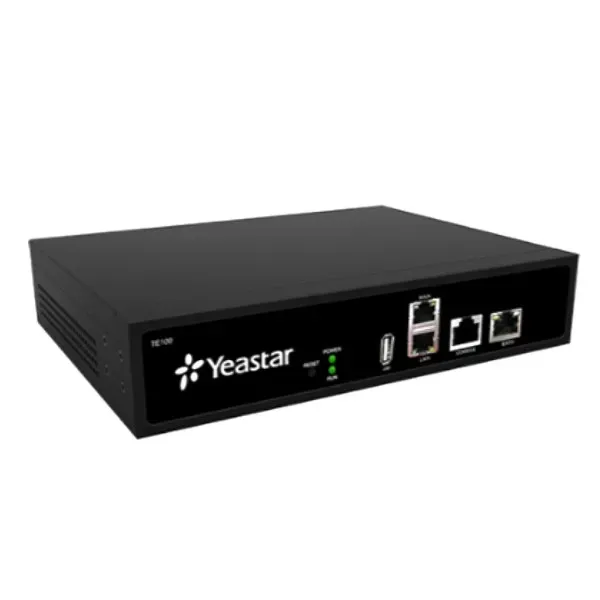
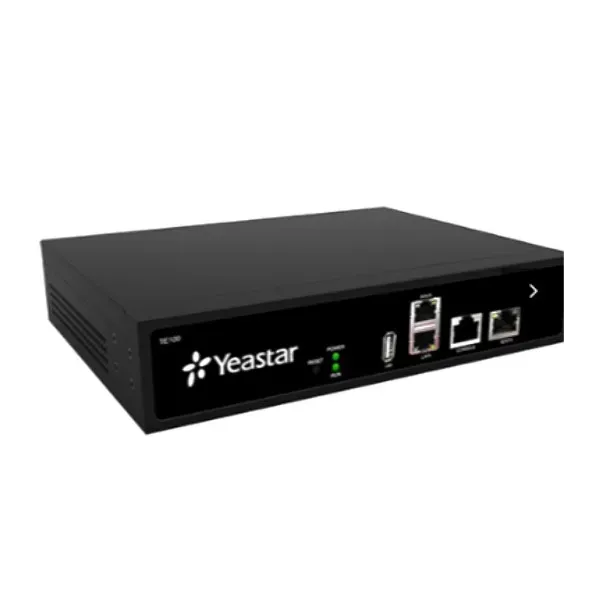
Yeastar TE100 E1 T1 PRI VoIP Gateway
The Yeastar TE100 is built for organisations that need to connect an existing E1, T1 or J1 digital telephony service with a SIP-based voice environment without replacing every legacy component at once. It provides one software-configurable E1/T1/J1 interface, supports PRI and E&M operation, uses SIP RFC3261 for IP-side signalling and is designed for up to 30 concurrent calls. For businesses in Tanzania, the practical value is controlled migration: a legacy PBX can reach SIP trunks, a modern IP-PBX can reach an existing PRI service, or a mixed estate can continue operating while telephony is modernised in phases.
What the Yeastar TE100 solves
Many organisations still operate PRI circuits, digital PBXs or established numbering arrangements that cannot be retired instantly. At the same time, SIP trunks, hosted PBX platforms and IP-based call routing can offer operational flexibility that traditional telephony alone does not provide. The TE100 sits between those two worlds. It converts voice signalling between E1/T1/J1 and SIP so that a business can preserve useful legacy infrastructure while introducing IP telephony where it makes sense.
Typical projects include connecting an IP-PBX to a carrier-provided E1 PRI, connecting an existing ISDN PBX to a SIP trunk, extending a PRI trunk into a compatible Yeastar P-Series environment, or building a controlled transition path during a broader voice-system upgrade. The correct design depends on the carrier handoff, switch type, number plan, DID routing, SIP provider requirements, codec policy, firewall behaviour and the way inbound and outbound calls should be presented. FourTeck recommends confirming those points before hardware is ordered.
Verified core specifications
One E1/T1/J1 port supporting PRI and E&M; SIP RFC3261; UDP, TCP, TLS and SRTP transport/security options; G.711 a-law/u-law, G.722, G.726, G.729A, GSM, ADPCM and Speex codecs; ITU-T G.168 echo cancellation with dynamic jitter buffer; RFC2833, SIP INFO and in-band DTMF; 10/100/1000 Mbps LAN and WAN interfaces.
Management and routing
Web-based configuration, SIP trunk support, SIP peer mode, call-routing rules, caller-ID controls, trunk groups, call detail records, backup and restore, system logs, packet capture, firmware upgrade by HTTP/TFTP, E1/T1/J1 diagnostics, static routing, QoS, PPPoE, DDNS and firewall controls.
Physical and environmental
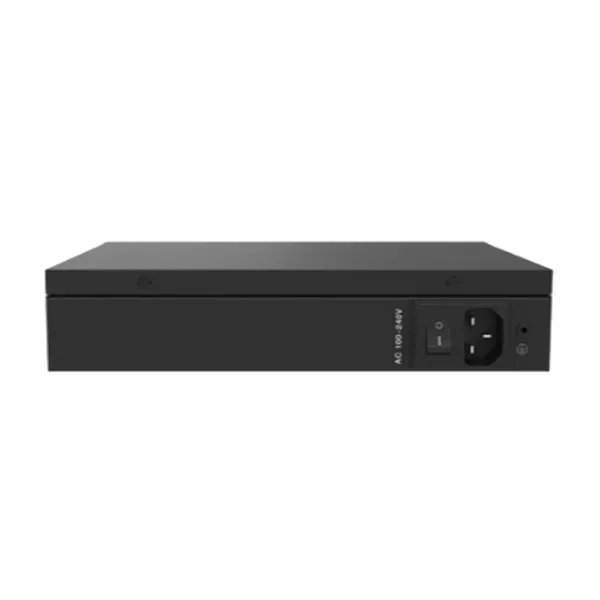
The official Yeastar specification lists a 213 × 160 × 44 mm enclosure, AC 100–240 V input via 12 V 2 A power supply, operating range of 0°C to 40°C, storage range of -20°C to 65°C and 10–90% non-condensing humidity.
Compatibility, deployment and buying guidance
The TE100 is positioned by Yeastar for interoperability with ISDN PBX systems, IP-PBX platforms and softswitches. Yeastar documentation also provides a specific TE100 integration workflow for extending one E1/T1/PRI trunk to a P-Series PBX. Compatibility should still be validated for every project because carrier signalling, PRI switch type, SIP authentication, DIDs, number presentation and dial-plan conventions can differ. A successful installation begins by identifying whether the circuit is E1, T1 or J1, confirming the physical handoff, determining the PRI switch type and checking whether the SIP side will use peer authentication or registered trunking.
For network planning, assign stable addressing, document gateway routes and firewall rules, and decide whether SIP signalling and RTP media will traverse NAT. If TLS or SRTP is required, confirm support and certificate expectations across all participating systems. Voice quality depends not only on the gateway but on latency, packet loss, jitter, QoS policy, codec selection and upstream connectivity. Where fax is required, validate T.38 handling end to end rather than assuming every carrier and PBX will negotiate it identically.
For procurement, share the existing PBX make/model, carrier circuit type, number of active PRI channels, DID range, SIP provider details if available, required call directions, fax requirements, target IP-PBX or hosted PBX, and whether the project is a migration, temporary bridge or permanent interconnect. This makes it easier to confirm whether TE100 is the correct single-port model or whether a dual-port design is more appropriate.
Related FourTeck Tanzania resources
Browse business telecom, IP PBX, networking and supporting infrastructure categories.IT and telecom services
Review design, installation, integration and support capabilities relevant to VoIP deployments.IP PBX and VoIP solutions in Tanzania
See FourTeck Tanzania’s wider business telephony, networking and infrastructure portfolio.Request a Tanzania quotation
Share PRI, SIP and PBX details for a compatibility-focused quotation.
Yeastar TE100 E1 T1 PRI VoIP Gateway Tanzania
In Tanzania, the Yeastar TE100 is most relevant to businesses, institutions and service environments that still depend on E1 PRI connectivity or established digital PBX infrastructure but want to introduce SIP-based communications. The purchasing question is rarely just whether the gateway has one E1/T1/J1 port. Buyers need to confirm what is connected on each side of that port, how numbers are presented by the carrier, how many simultaneous calls are actually required, and whether the target PBX expects a peer trunk or registration-based SIP trunk. The TE100’s 30-call ceiling aligns with a standard E1 voice scenario, but the real design should be based on the subscribed channels and expected traffic, not only theoretical capacity.
Tanzania deployments may include headquarters migrating from a traditional PBX, hotels retaining an existing telephony platform while introducing SIP routing, financial and professional-service offices linking a PRI circuit to an IP-PBX, call-handling environments modernising in phases, or organisations that need a temporary bridge during a carrier or PBX transition. Before ordering, procurement teams should record the carrier circuit details, PRI switch type, PBX model, SIP platform, DID ranges and any special dialling rules. This reduces the risk of discovering after installation that signalling expectations differ.
Network readiness matters as much as telephony compatibility. The gateway should sit on a stable LAN with documented IP addressing, secure administrative access, defined firewall rules and sensible QoS. If SIP traffic crosses the public internet or a VPN, latency, jitter and packet loss should be assessed. If TLS or SRTP is part of the security requirement, both the gateway and remote SIP platform must be configured consistently. Voice VLANs, UPS-backed switching and controlled change management can improve operational resilience.
For a Tanzania quotation, provide the number of PRI circuits, expected concurrent calls, carrier handoff information, whether fax is still required, the IP-PBX or SIP provider to be integrated, and whether configuration assistance is needed. FourTeck can then frame the TE100 as part of the wider voice environment rather than as an isolated appliance, including switching, firewall, PBX, IP phones and cabling where relevant.
Yeastar TE100 E1 T1 PRI VoIP Gateway Dar es Salaam
Dar es Salaam organisations often operate mixed communications environments because headquarters, customer-service teams, hotels, logistics companies, financial offices and multi-branch businesses may have invested in telephony at different times. The Yeastar TE100 is useful when one part of that environment is still based on E1/T1/J1 while another part has moved to SIP. Rather than replacing a working PBX solely to gain IP connectivity, a gateway can bridge the PRI side to a newer platform and allow the migration plan to be driven by business priorities.
A Dar es Salaam deployment should start with call-flow mapping. Identify inbound numbers, receptionist routes, hunt groups, departmental destinations, outbound caller ID requirements and any after-hours logic. Where a carrier PRI presents a block of DIDs, those numbers need to be matched correctly to extensions or destinations on the IP-PBX. Where the TE100 connects a legacy PBX to a SIP carrier, outbound digit manipulation may need to match the provider’s numbering format. The TE100 supports call-routing rules and caller-ID controls, but those tools work best when the dial plan is documented before configuration.
Infrastructure planning is equally important in dense office environments. The gateway’s LAN/WAN interfaces should connect to managed network infrastructure where IP addressing, QoS and access controls are explicit. SIP helper or ALG functions on firewalls can sometimes interfere with signalling, so the firewall path should be tested rather than assumed. Packet capture and system logs available on the TE100 can assist troubleshooting when calls connect only one way, media fails, or number presentation is inconsistent.
Procurement teams in Dar es Salaam should request a quote with the exact circuit and PBX details, including whether the PRI is already active, whether the project requires cutover outside business hours, and whether parallel testing is possible. A staged deployment with test DIDs and controlled outbound routes can reduce disruption compared with changing the full call path at once.
Yeastar TE100 E1 T1 PRI VoIP Gateway Mwanza
For Mwanza businesses, the Yeastar TE100 can be valuable where an established PRI-based telephone service needs to coexist with a new SIP PBX, hosted communication service or inter-branch VoIP strategy. Regional offices, healthcare facilities, hospitality operators, education organisations, manufacturers and distribution businesses may prefer a phased change because telephony is operational infrastructure: if inbound numbers, reception routing or emergency contact paths stop working, the impact can be immediate. A gateway allows the organisation to preserve the known PRI side while introducing IP functionality in a controlled way.
The technical review should confirm E1/T1/J1 mode, framing and switch expectations with the carrier or existing PBX administrator. The TE100 provides diagnostics for the digital interface, which is helpful when separating a physical PRI problem from an IP or SIP configuration problem. On the SIP side, validate IP addressing, trunk authentication, codec policy, DTMF mode and any NAT traversal requirement. If the deployment includes remote branches, routing design should distinguish local calling, inter-office calling and carrier breakout so that call behaviour remains predictable if a WAN link is unavailable.
Power and network continuity deserve attention in Mwanza installations. The gateway itself is only one part of the call path. The router, firewall, switch, PBX and internet or private WAN link may all need UPS protection if the business expects calls to continue through short power interruptions. Administrators should keep configuration backups, record firmware versions and retain a simple rollback plan before major changes. These operational practices often matter more over the product lifetime than the initial installation speed.
When requesting a Mwanza quote, state whether the need is PRI-to-SIP, SIP-to-PRI, legacy PBX preservation, IP-PBX trunk extension or a migration bridge. Include concurrent-call expectations and the desired future architecture. That context helps determine whether a single TE100 interface is sufficient and what supporting network or PBX work should be included.
Yeastar TE100 E1 T1 PRI VoIP Gateway Arusha
Arusha has a broad mix of hospitality, travel, professional services, NGOs, education, healthcare and multi-site operations, all of which can have different expectations from business telephony. The Yeastar TE100 is a practical fit when an organisation needs to retain an E1/T1/J1 connection or legacy digital PBX while adding SIP-based features elsewhere in the environment. Hotels, for example, may have established room-telephony integrations that are expensive to replace immediately; offices may want to move users to an IP-PBX while preserving a carrier PRI during the transition.
A good Arusha project separates compatibility questions into two sides. On the digital side, confirm the PRI circuit type, switch mode and number presentation. On the IP side, confirm whether the SIP platform is on-premises, cloud hosted or at another branch, then define authentication and routing. The TE100 supports SIP peer mode, trunking, caller-ID controls and routing rules, but each of those settings should match the intended call flow. Test incoming DIDs, outbound CLI, transfers, fax if used and after-hours routing before declaring the migration complete.
Where voice traffic depends on an internet circuit, the design should account for other bandwidth-heavy applications such as cloud backup, guest Wi-Fi or video conferencing. QoS can help, but it cannot compensate for severe packet loss or an undersized connection. Businesses with critical calling requirements may also consider path redundancy at the network level. The TE100 supports the gateway function; overall availability still depends on the systems and circuits around it.
For procurement in Arusha, provide the current topology and the desired end state. A useful quotation request explains which equipment must remain, which platform is being introduced, how many channels are needed and whether the cutover must happen in stages. This makes the TE100 selection more precise and helps identify cabling, rack, switch, firewall or PBX dependencies before the installation date.
Yeastar TE100 E1 T1 PRI VoIP Gateway Dodoma
Organisations in Dodoma that operate government-facing services, institutions, professional offices, education facilities, healthcare sites or growing branch networks may need to modernise telephony without changing every existing component. The Yeastar TE100 supports that incremental approach by converting between one E1/T1/J1 interface and SIP. This is useful when a PRI service remains part of the communications design but users, extensions or applications are moving to an IP-based PBX.
Procurement should begin with operational requirements rather than product specifications. Determine the busy-hour call volume, whether the PRI is inbound, outbound or both, whether direct inward dial numbers are mapped to individual users, and whether there are critical numbers that require special routing. If the organisation has a formal change-control process, document the existing dial plan before creating routes on the TE100. The gateway supports call routing and digit manipulation, making it possible to adapt number formats, but unrecorded legacy rules can create confusing behaviour during migration.
Security and administration should also be planned. Limit access to the management interface, change default credentials, maintain configuration backups and restrict signalling to trusted peers where the architecture permits. If remote administration is required, place it behind an appropriate secure access method instead of exposing the management plane unnecessarily. System logs and packet capture should be available to authorised technical staff for troubleshooting, and any configuration change should be recorded.
For Dodoma deployments, a complete quote should identify the carrier, PRI type, PBX, SIP destination, extension range and expected call capacity. If the organisation is also upgrading switches, firewalls or IP phones, those dependencies can be reviewed as one voice architecture. FourTeck Tanzania’s integration services are relevant when gateway configuration forms part of a wider telephony project.
Yeastar TE100 E1 T1 PRI VoIP Gateway UAE
In the UAE, the Yeastar TE100 is relevant to businesses retaining PRI connections, hotel and hospitality systems, contact-centre environments, multi-site enterprises and organisations migrating from conventional PBX infrastructure to SIP. The product’s core role remains the same: one E1/T1/J1 interface on the digital side and SIP on the IP side, with up to 30 concurrent calls. The decision to use it should be based on the actual carrier service and PBX architecture rather than region alone.
A UAE deployment frequently benefits from careful number-plan design because organisations may have multiple sites, reception numbers, DIDs, department queues and international-dialling policies. Before configuration, document what digits arrive from the carrier, what format the IP-PBX expects and what caller ID should be presented on outbound calls. The TE100’s routing features can bridge these differences, but the rule set should remain simple enough for future administrators to understand.
For organisations connecting to a hosted or cloud PBX, verify the provider’s SIP trunk method and network security requirements. Yeastar documentation shows TE100 being used with both peer-style and registration-based SIP scenarios in its own ecosystem. Other platforms may use different authentication, keepalive, codec or NAT requirements, so interoperability testing is important. TLS and SRTP support can be useful when both endpoints are configured for those methods.
FourTeck’s broader UAE technology resources at FourTeck UAE can support customers comparing voice, networking and integration options. When requesting a quote, include the PRI details, channel count, existing PBX and intended SIP platform so that the TE100 can be evaluated in the context of the full call path.
Yeastar TE100 E1 T1 PRI VoIP Gateway Uganda
Uganda organisations can use the Yeastar TE100 when a digital PRI service or legacy PBX must connect to SIP-based communications. The gateway is particularly relevant to phased migrations, branch consolidation projects and environments where an existing circuit still provides dependable inbound numbering but the organisation wants an IP-PBX for extension management, remote users or new call-routing features. With one E1/T1/J1 interface and support for up to 30 concurrent calls, TE100 is aimed at a single digital trunk rather than multi-PRI aggregation.
Before procurement, identify whether the current circuit is E1, T1 or J1 and confirm the carrier signalling. E1 is commonly associated with 30 bearer channels, while T1 uses 23 bearer channels; the subscribed service and active channel configuration still need to be checked. On the SIP side, confirm whether the gateway will connect to an on-premises PBX, a remote PBX over private WAN, or a cloud PBX over the internet. Each scenario has different firewall, NAT and resilience considerations.
Operationally, administrators should maintain a clean route plan for inbound DID mapping and outbound patterns. Use configuration backups before major changes, maintain firmware records and test failback if the gateway is introduced during a migration. For voice quality, monitor the underlying IP network. Jitter buffers and echo cancellation can help manage telephony conditions, but stable connectivity and appropriate QoS remain essential.
Customers coordinating projects in Uganda can also review FourTeck Uganda for regional IT, PBX and networking context. A quotation request should describe the legacy side, the target SIP side, channel count and desired cutover method so that the gateway, network and configuration scope can be considered together.
Yeastar TE100 E1 T1 PRI VoIP Gateway Kampala
Kampala businesses often manage busy reception lines, sales numbers, service desks and branch communications that cannot tolerate an improvised telephony migration. The Yeastar TE100 offers a controlled bridge between PRI and SIP, making it useful when the organisation wants to modernise its PBX platform while retaining a carrier E1/T1/J1 connection, or when a legacy PBX needs access to SIP trunking. The gateway’s value is highest when it is deployed as part of a documented voice architecture rather than inserted without a clear dial plan.
Start by identifying call direction and ownership of routing logic. Decide whether inbound DIDs will be translated on the TE100 or passed through for the PBX to interpret. Decide whether outbound digit manipulation belongs on the PBX or gateway. Avoid creating duplicate transformations in both places because troubleshooting becomes difficult when a number is modified several times before reaching the carrier. The TE100 provides caller-ID prefix controls, routing rules and trunk groups that can support structured designs.
Kampala deployments connecting to internet-based SIP services should also be assessed for bandwidth contention. Voice may share connectivity with cloud applications, video calls, backups and customer Wi-Fi. QoS policy, VLAN segmentation and an appropriate firewall configuration can improve consistency. If the PBX or SIP service is hosted elsewhere, test from the actual site rather than relying only on nominal internet speed.
For purchasing, include a diagram or simple written description of the present PBX, carrier PRI and desired new platform. State the number of concurrent calls and whether fax, direct inward dial, call recording or remote extensions are involved. This information helps determine whether a TE100 alone addresses the interconnection or whether the project also needs PBX, firewall, switching or endpoint changes.
Yeastar TE100 E1 T1 PRI VoIP Gateway Arua
For businesses and institutions in Arua, a telephony migration may involve balancing existing infrastructure with newer IP-based services. The Yeastar TE100 is designed precisely for that transition point. It can connect one E1/T1/J1 digital trunk to a SIP environment, enabling organisations to keep a legacy PBX or carrier circuit while introducing an IP-PBX, SIP trunk or remote voice platform. This can reduce the scope of an immediate replacement project when the existing equipment still serves a useful purpose.
Connectivity planning deserves particular attention when SIP services are reached over wide-area or internet links. Test latency, jitter and packet loss during the times when the site is busiest. If a private WAN is used between branches, confirm that voice traffic has appropriate priority and that routing remains stable during failover. If public internet is used, ensure the firewall is configured deliberately for SIP and RTP. Unnecessary exposure of management services should be avoided.
The PRI side should also be validated physically and logically. Confirm the cable handoff, digital trunk mode, carrier switch type and DID behaviour. The TE100 includes E1/T1/J1 diagnostics, which can assist with line troubleshooting. Once the link is established, test inbound and outbound calls across a representative set of numbers, including mobile, fixed, international where permitted, and internal destinations reached through DID mapping.
Arua procurement teams should describe the project objective clearly: preserve a current PBX, migrate to SIP, connect a cloud PBX, create a branch interconnect, or replace an older gateway. Include the existing equipment models and the required channel capacity. This keeps the quotation focused on compatibility and avoids choosing a product only because the connector type appears to match.
Yeastar TE100 E1 T1 PRI VoIP Gateway Mbarara
The Yeastar TE100 can help Mbarara organisations modernise business voice systems where PRI remains in service. A hospital, university, hotel, financial office, distributor or larger commercial site may have years of investment in extensions, cabling, reception workflows and public telephone numbers. Moving to SIP does not always require discarding that environment in one step. A PRI-to-SIP gateway provides an interworking point so that old and new systems can operate together while the migration is planned.
A reliable project begins with capacity. TE100 supports up to 30 simultaneous calls, but buyers should examine real busy-hour usage, expected growth and whether the single PRI interface creates a bottleneck or single point of failure. If a business already uses multiple PRI circuits or needs physical redundancy, the architecture should be reviewed before selecting the single-port model. Where one PRI is sufficient, TE100 provides a compact way to connect it to SIP.
Configuration planning should cover SIP transport, codec, DTMF and number routing. The official specification supports UDP, TCP, TLS and SRTP, along with several common codecs. Choose settings according to the PBX and provider rather than enabling options arbitrarily. For example, codec consistency can simplify troubleshooting, and DTMF method matters when callers interact with IVRs or voicemail systems.
When seeking a quotation in Mbarara, include call capacity, carrier details, PBX type, SIP platform and any timing constraints around cutover. If the voice system is being upgraded alongside network equipment, include switch, firewall and WAN information as well. A voice gateway performs best when the surrounding network is designed with the same level of care as the telephony interface.
Yeastar TE100 E1 T1 PRI VoIP Gateway Gulu
Gulu organisations considering SIP migration can use the Yeastar TE100 where one E1/T1/J1 trunk must continue operating. This requirement can appear in institutions with legacy PBXs, hotels, healthcare facilities, NGOs, government-related offices and commercial businesses that depend on established public numbers. Instead of forcing an immediate PBX replacement, TE100 can act as the translation layer between digital telephony and an IP-based voice platform.
The main technical risk in any gateway deployment is assuming that matching interface names guarantee interoperability. They do not. PRI has signalling parameters, framing and switch types; SIP has transport, authentication, codecs and number formats. The project should therefore include a checklist for both sides. Verify line status first, then verify SIP registration or peer reachability, then test routing. Troubleshooting in that order helps isolate faults instead of changing several settings at once.
Administrators should also decide who owns ongoing support. Keep a backup of the gateway configuration, record the IP address and management credentials securely, document route names and note any carrier-specific digit rules. If the system supports critical operations, schedule configuration changes during a controlled maintenance period and retain a rollback path. These practices can be more valuable than complex configuration because they make future support predictable.
For a Gulu quote, explain whether the TE100 will face a carrier PRI, a legacy PBX or another digital device, and identify the SIP destination. Include the number of required calls and the expected growth path. This helps determine whether the single-port TE100 fits the long-term design or whether the business should consider a different capacity model from the beginning.
Yeastar TE100 E1 T1 PRI VoIP Gateway Kenya
Kenya businesses frequently encounter mixed telephony environments during mergers, office moves, SIP-trunk adoption and PBX upgrades. The Yeastar TE100 provides a straightforward way to connect a single E1/T1/J1 trunk to a SIP system and supports up to 30 simultaneous calls. It can be considered where an organisation has a working PRI service but wants to adopt an IP-PBX, or where a traditional PBX needs to access a SIP-based carrier service without immediate replacement.
Kenya procurement teams should be careful to distinguish product capability from project compatibility. The gateway may support the required interfaces, but the deployment still depends on correct carrier signalling and PBX configuration. Confirm the PRI handoff, switch type, DIDs, caller-ID behaviour, required codecs and DTMF. If the SIP provider supplies a configuration template, compare it with TE100 options before the implementation window.
For larger organisations with multiple branches, decide whether each branch needs local carrier breakout or whether calls should be centralised through a main site. Centralisation can simplify trunk management but creates WAN dependencies. Local breakout can improve survivability but increases the number of gateways and carrier relationships. TE100 can fit either strategy when a single digital trunk is required at the relevant site.
Regional customers can review FourTeck Kenya for related PBX, networking and business-technology context. A quote request should describe the current call path and future architecture so that the gateway is selected as part of a stable migration plan rather than simply as a converter.
Yeastar TE100 E1 T1 PRI VoIP Gateway Kuwait
In Kuwait, the Yeastar TE100 is a useful option for enterprises that still depend on PRI or legacy PBX infrastructure while introducing SIP trunks or modern IP-PBX platforms. The single E1/T1/J1 interface is suitable for one digital trunk, and the gateway supports up to 30 concurrent calls. This makes it relevant to offices, hospitality environments, service businesses and organisations that want to extend the useful life of an existing telephony investment during a staged migration.
A deployment should begin by documenting what cannot change. That may be a public telephone number range, a hotel PMS integration, a call-centre workflow, a legacy PBX feature or a carrier contract. Then identify what is changing: perhaps the internal PBX, branch connectivity, SIP carrier or user endpoints. The TE100 becomes the bridge between those boundaries. This design approach is more reliable than configuring the gateway first and attempting to fit business requirements around it.
The gateway supports firewall functions, TLS/SRTP options and web-based administration, but it should still be placed within a properly secured network. Management access should be limited, strong credentials used and backup files retained securely. For cloud PBX connectivity, confirm the provider’s requirements for source IPs, NAT, registration intervals, codecs and RTP ranges. For local PBX connectivity, use clear IP addressing and routing so that signalling paths are easy to troubleshoot.
Customers can also visit FourTeck Kuwait for broader regional IT and VoIP solution information. For quotation preparation, include the PRI specification, channel requirement, PBX details and target SIP architecture, together with any installation or configuration scope that should be included.
Yeastar TE100 E1 T1 PRI VoIP Gateway Ghana
Ghana organisations modernising business communications may need to integrate an existing PRI service with a SIP-based PBX rather than replacing both at the same time. The Yeastar TE100 provides that bridge through one E1/T1/J1 port and SIP connectivity. It is suitable when the business needs up to 30 simultaneous calls and wants to preserve a carrier circuit, traditional PBX or established numbering plan while introducing IP telephony.
The buying process should focus on the environment. Determine whether the PRI is E1, T1 or J1, how many channels are enabled, whether inbound DIDs are used and what switch type the carrier expects. On the SIP side, identify the IP-PBX or service provider, transport method, codec and DTMF requirements. For call routing, define which system performs digit translation and which controls caller ID. A simple documented ownership model prevents conflicting rules.
Businesses with branches should also consider WAN resilience. If the TE100 connects a local PRI to a remote central PBX, a WAN outage can interrupt internal SIP routing even though the PRI circuit remains physically active. The architecture can be designed around that dependency, but the risk should be understood. Where local survivability is important, discuss how the PBX and gateway behave when upstream connectivity is unavailable.
For regional context, FourTeck Ghana covers wider business IT, networking and telephony requirements. A useful TE100 quotation request includes a network diagram or concise description, current PBX details, PRI information, expected call load and desired migration outcome.
Yeastar TE100 E1 T1 PRI VoIP Gateway Nigeria
Nigeria has many large and distributed business environments where voice systems evolve gradually. A company may have a legacy PRI-based PBX at headquarters, newer SIP extensions at branches and cloud communication services for remote teams. The Yeastar TE100 can serve as an interconnection point where one E1/T1/J1 trunk must communicate with a SIP system. Its up-to-30-call capacity makes it appropriate for a single digital trunk when that capacity matches the organisation’s busy-hour requirements.
Because large Nigerian sites can generate significant call traffic, capacity analysis should come before ordering. Review call records if available and determine peak simultaneous calls, not only user count. A company with hundreds of extensions may still fit one PRI if concurrency is low, while a smaller contact centre may exceed it. The TE100 is not a substitute for traffic engineering; it is the gateway component within that design.
For deployment, define network segmentation and firewall policy. SIP signalling and RTP media should be allowed only as needed, and management access should be restricted. The TE100’s packet-capture and log capabilities can support troubleshooting when paired with disciplined change records. If fax remains operationally important, test T.38 with the exact carrier and PBX combination because end-to-end behaviour depends on all components.
Customers can explore related services through FourTeck Nigeria. To prepare a quote, specify the digital trunk type, SIP destination, call concurrency, DID requirements and project objective. If the TE100 is part of a broader PBX refresh, include endpoint, switching and firewall needs so the full voice environment can be assessed.
Yeastar TE100 E1 T1 PRI VoIP Gateway Seychelles
Seychelles businesses in hospitality, government, professional services and multi-site operations may retain established telephony systems because replacing integrated hotel, reception or office workflows can be disruptive. The Yeastar TE100 provides a way to connect a single E1/T1/J1 trunk with SIP so that an organisation can modernise selectively. For example, a carrier PRI can remain in service while a new IP-PBX is introduced, or a legacy PBX can gain access to SIP trunking through the gateway.
Island and multi-site connectivity considerations make network planning important. If the SIP platform is hosted remotely, assess the quality and resilience of the WAN or internet path. Voice bandwidth is modest compared with video, but it is sensitive to packet loss and jitter. Prioritisation, stable routing and realistic failover plans are therefore more important than raw bandwidth numbers. Where the SIP platform is local, ensure the LAN and firewall are still configured for predictable voice transport.
Compatibility checks should include the exact PRI mode, switch type, DIDs, caller-ID format, SIP transport, codec and DTMF. The TE100 supports several common options, but the correct setting is the one shared by the systems on both sides. Test a representative sample of call scenarios, including inbound direct-dial calls, reception routing, outbound CLI, transfers and fax if applicable.
For a Seychelles quotation, provide the current telephony topology, carrier circuit information, required channels and desired migration outcome. If the installation is at a hotel or other business with integrated applications, mention those dependencies early. That allows the gateway plan to account for operational continuity rather than focusing only on telephony signalling.
Frequently asked questions
How many calls does the Yeastar TE100 support?
Yeastar documents the TE100 as supporting up to 30 concurrent calls. Actual usable channels depend on the configured E1/T1/J1 service and carrier or PBX setup.
Can TE100 connect a PRI line to an IP-PBX?
Yes. One of the core use cases is connecting an E1/T1/PRI service to a SIP-based IP-PBX. Yeastar provides integration documentation for extending an E1/T1/PRI trunk to its P-Series PBX.
Can TE100 connect a legacy PBX to SIP trunking?
Yes, provided the legacy system and digital trunk configuration are compatible. The gateway can bridge the traditional E1/T1/J1 side to SIP, allowing legacy equipment to participate in a VoIP environment.
Does the Yeastar TE100 support T.38 fax?
Yes, T.38 fax is listed among the TE Series features. End-to-end fax operation should still be tested with the selected carrier, PBX and remote fax endpoint.
What should I provide for a quotation?
Provide the current PBX model, carrier and PRI type, active channel count, DID range, expected concurrent calls, SIP provider or target IP-PBX, fax requirements, installation location and whether configuration or migration assistance is required.
Quotation checklist
For a faster compatibility review, include: current PBX make and model; digital circuit type; carrier; number of active channels; PRI switch type if known; DID range; inbound and outbound routing requirements; SIP platform or provider; network addressing; firewall/NAT details; codec or security requirements; fax use; rack or installation requirements; and the preferred migration window.
Decision recap
Choose the Yeastar TE100 when the requirement is to bridge one E1/T1/J1 trunk and a SIP environment with up to 30 concurrent calls. Validate signalling, numbering, capacity and network design before purchase. If the requirement involves more than one digital trunk, higher resilience or a broader PBX transformation, compare the architecture rather than assuming the single-port model is sufficient.
Plan the TE100 as part of the full voice path
FourTeck Tanzania can review the gateway requirement together with IP-PBX, SIP trunk, switching, firewall, IP phones, cabling and power dependencies. Share what you have today and the result you want to achieve, and the quotation can be aligned with compatibility and migration needs rather than based on the gateway alone.



Reviews
There are no reviews yet.