
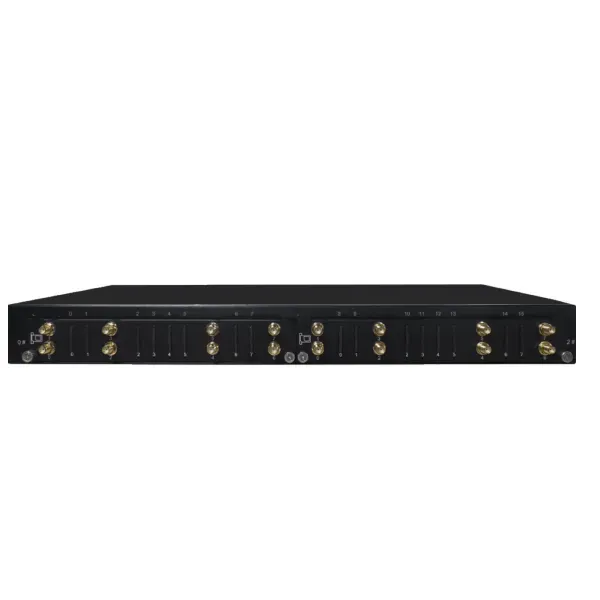
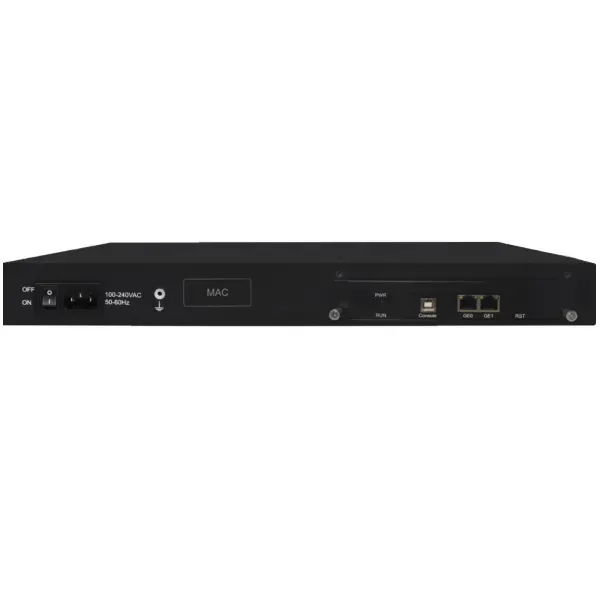
Dinstar UC2000-VF Multi-SIM VoIP Gateway
The Dinstar UC2000-VF Multi-SIM VoIP Gateway is built for organisations that need a structured bridge between mobile networks and SIP-based VoIP infrastructure. The Multi-SIM UC2000-VF platform provides 16 mobile channels with 64 SIM slots, allowing four SIM positions per channel for local SIM rotation and operational flexibility. Dinstar positions the platform for GSM, WCDMA and LTE connectivity, including Voice over LTE where supported by the network and configuration, while SIP compatibility makes the gateway suitable for integration with mainstream IP PBX, softswitch and VoIP environments.
✓ 16 mobile channels
✓ 64 SIM slots on the Multi-SIM variant
✓ GSM / WCDMA / LTE support
✓ VoLTE support
✓ SIP-based VoIP integration
✓ Voice, SMS and API-oriented workflows
What the Dinstar UC2000-VF Multi-SIM VoIP Gateway solves
A mobile VoIP gateway becomes valuable when a business needs mobile network access to operate as a controlled part of its IP telephony environment instead of relying on individual mobile handsets. The UC2000-VF can terminate calls from a SIP platform toward mobile networks and originate mobile-network calls toward a SIP system, depending on the deployment design, routing policy, mobile service and regulatory requirements. The Multi-SIM version adds multiple SIM positions per channel so administrators can organise SIM usage, rotation and operational policies without manually rebuilding the voice platform each time a SIM needs to change.
For procurement teams, the important distinction is that this is not an analog FXS or FXO gateway. It is a cellular-to-VoIP gateway intended to connect mobile radio channels with SIP-based telephony. This makes it relevant to businesses running an IP PBX, softswitch, call-management platform or multi-site telephony system that requires controlled access to mobile networks. Typical planning questions include the number of simultaneous mobile calls, which mobile networks and frequency bands will be used, whether VoLTE is required, how SIMs will be allocated, how outbound routes should be selected, whether SMS integration is needed, and how the gateway will be secured and monitored.
Mobile trunk integration
Use the gateway to connect compatible mobile services to a SIP-based PBX or softswitch so mobile routing becomes part of the central calling architecture.
Multi-SIM operation
The Multi-SIM UC2000-VF variant provides 64 SIM positions across 16 channels, supporting local SIM rotation and flexible SIM allocation strategies.
Voice and SMS workflows
Dinstar documents voice, SMS, HTTP API and SMPP-related capabilities, allowing the gateway to serve telephony as well as compatible messaging applications.
Key verified features and technical considerations
| Mobile channels | 16 channels on the UC2000-VF Multi-SIM platform. |
| SIM capacity | 64 SIM slots, four SIM slots per mobile channel. |
| Mobile networks | GSM, WCDMA and LTE variants; frequency support must be matched to the intended country and operator. |
| Voice | VoLTE support, SIP trunking, common VoIP codecs, DTMF handling, echo cancellation and programmable gain controls. |
| SMS | SMS sending and receiving with API-oriented integration options, including HTTP API and SMPP support documented by Dinstar. |
| Management | Web management, configuration backup and restore, logs, CDR, traffic and call statistics, diagnostics and provisioning functions. |
| Remote SIM option | Dinstar also supports remote SIM-management architectures with SIMBank and SIMCloud options where suitable. |
The exact radio module and supported LTE bands should always be confirmed for the destination market before ordering. Cellular gateways are not universal radio devices: a model configured for one regional frequency combination may not be appropriate for another country or network. Procurement should therefore identify the target mobile operators, intended SIM type, voice technology, data or SMS requirements, and whether the network requires VoLTE for voice service. Where VoLTE is part of the design, confirm operator compatibility and provisioning rather than assuming that LTE support alone guarantees voice service.
Compatibility, routing and deployment planning
The UC2000-VF is designed around SIP integration, so the starting point for deployment is the existing VoIP platform. Document whether the gateway will register to an IP PBX or softswitch, whether the PBX will register to the gateway, how many SIP trunks or trunk groups are required, and how inbound and outbound numbering should be manipulated. Dinstar supports flexible dial rules, number manipulation, port groups and SIP code mapping, all of which become important when several mobile channels and multiple SIMs share one corporate call plan.
Network design is equally important. Voice traffic should traverse a stable LAN with predictable latency, jitter and packet loss. Where the gateway shares infrastructure with data, Wi-Fi, CCTV or other applications, organisations should consider VLAN segmentation and QoS policies appropriate to the broader network. Firewall rules should be designed around the selected SIP and RTP architecture rather than opening broad ranges unnecessarily. Management access should be restricted, strong administrator credentials should be used and configuration backups should be maintained as part of standard change control.
For related telephony planning, buyers can review the FourTeck Tanzania business technology shop, which includes IP phones and IP PBX requirements, and the Dinstar DAG1000-1S analog telephone adapter when a project also needs a single analog endpoint bridged to SIP. For mixed analog and PSTN requirements, the Dinstar DAG1000-1S1O hybrid VoIP gateway provides a different interface class and should not be confused with a cellular gateway.
Related Dinstar and VoIP products on FourTeck Tanzania
DAG1000-2O FXO Gateway
For projects that need two analog PSTN line interfaces rather than mobile SIM channels, see the Dinstar DAG1000-2O FXO VoIP Gateway.
DAG1000-2S ATA
When two analog phones or compatible analog endpoints need SIP connectivity, compare the Dinstar DAG1000-2S Analog Telephone Adapter.
DAG1000-2S2O Hybrid Gateway
For mixed two-FXS and two-FXO requirements, review the Dinstar DAG1000-2S2O hybrid VoIP gateway.
These related products illustrate why interface selection matters. FXS connects analog endpoints, FXO connects analog lines and a mobile gateway connects cellular networks. Selecting the UC2000-VF should therefore follow confirmation that the requirement is specifically for GSM/WCDMA/LTE mobile channels rather than an analog line or extension interface.
Dinstar UC2000-VF Multi-SIM VoIP Gateway Tanzania
For organisations in Tanzania, the Dinstar UC2000-VF Multi-SIM VoIP Gateway is relevant when mobile network connectivity needs to be incorporated into an existing or planned SIP telephony system. A corporate office may want mobile routes alongside SIP trunks; a distributed business may want a centralised mobile gateway associated with an IP PBX; a contact-centre environment may need controlled outbound routing; or a service organisation may need SMS integration as part of a communications workflow. The gateway’s 16 mobile channels and 64 SIM positions provide a substantial platform, so it should be selected for a clear multi-channel requirement rather than simply because it offers more capacity than a smaller unit.
Tanzania procurement should begin with mobile-network and regulatory compatibility. Identify the intended mobile operators, confirm the applicable GSM/WCDMA/LTE frequency combinations, determine whether the service uses VoLTE, and verify that the SIM plans permit the intended business usage. Radio compatibility should be confirmed before purchase because Dinstar offers different frequency choices for different markets. In parallel, document the SIP platform, expected concurrent calls, routing policy, SMS requirement, call-record expectations, SIM rotation policy and security controls. This information allows the gateway configuration to be designed around the actual call flow instead of relying on default settings.
The wider infrastructure also matters. The device should be installed in a suitable rack environment with dependable power, structured network connectivity and appropriate antenna placement. Mobile signal quality varies by building construction and site position, so antenna planning should be assessed at the intended installation point. Network teams should consider VLANs, QoS, firewall policy and secure administration, while telephony teams should define dial plans, SIP trunks, failover behaviour and number manipulation. For multi-site organisations, configuration standards and documentation are particularly important because an undocumented gateway can become a difficult point of failure.
FourTeck Tanzania can be used as the starting point for evaluating the UC2000-VF within a broader telephony architecture. The FourTeck Tanzania technology solutions page covers IP telephony, networking, firewalls and supporting infrastructure, while the FourTeck Tanzania contact page is the correct place to send the model name, quantity, intended operator, PBX platform, destination and deployment requirement for a quotation discussion.
Dinstar UC2000-VF Multi-SIM VoIP Gateway Dar es Salaam
In Dar es Salaam, the UC2000-VF can fit headquarters, contact-centre, logistics, hospitality, professional-services and multi-branch communication environments where mobile calling must be integrated with a SIP-based phone system. A dense business environment often combines several communication technologies: SIP trunks, internet connectivity, branch VPNs, cloud applications, mobile services and traditional business telephone workflows. The gateway becomes most useful when those elements are planned as one system and the mobile channels are assigned a defined purpose, such as selected outbound call routes, inbound mobile numbers, backup voice paths or application-driven messaging.
A Dar es Salaam deployment should start with a radio survey at the exact rack location. Building materials, equipment rooms and internal placement can reduce cellular signal quality, so antenna positioning should not be an afterthought. Confirm the target operators and the specific radio bands supported by the selected gateway modules. If VoLTE is required, verify the SIM service, operator provisioning and gateway compatibility. If several SIMs from different operators will be used, define how the routing engine selects channels and how administrators will monitor failed registration, low balance, unavailable networks or SIM restrictions.
Voice engineering should then be aligned with the PBX. Determine how SIP trunks are registered, how extensions reach the mobile routes, what caller-ID policy is permitted, and how number formatting should be handled for local and international calls. Dinstar’s dial rules, port groups, number manipulation and call statistics provide useful tools, but they need a documented policy. For contact-centre use, test DTMF, queue behaviour, recording integration, codec selection and call-progress detection across a representative set of destinations.
Procurement teams in Dar es Salaam should request the exact Multi-SIM UC2000-VF configuration rather than a generic ’16-port GSM gateway’ quotation. Include quantity, mobile operators, expected concurrent call level, LTE/VoLTE requirement, SMS/API requirement, rack environment, antenna constraints and the target IP PBX or softswitch. This produces a more meaningful comparison between quotations and reduces the risk of receiving a radio variant that is unsuitable for the intended networks.
Dinstar UC2000-VF Multi-SIM VoIP Gateway Mwanza
For Mwanza businesses, the Dinstar UC2000-VF is particularly relevant to organisations with regional operations, branch networks, distribution activities, service desks or centralised telephony that must reach mobile users efficiently. A multi-channel mobile gateway can serve as a controlled communications node rather than asking staff to handle business calls through separate handsets. The 16-channel architecture can support simultaneous mobile call paths, while 64 SIM slots provide flexibility for SIM assignment and rotation. The value comes from centralised routing, monitoring and administration, not simply from the number of SIM cards installed.
Connectivity between Mwanza and a central PBX should be assessed carefully when the gateway and PBX are in different locations. SIP and RTP are sensitive to latency, packet loss and jitter. If traffic crosses site-to-site VPN, SD-WAN or shared internet links, the network team should verify capacity and prioritisation. Local deployment may be simpler when the gateway sits beside the PBX, but radio reception still requires careful placement. Businesses should test signal levels for each intended operator and document which antennas correspond to which channels.
Multi-SIM operation also needs policy. Businesses should define when a channel changes SIM, whether SIM rotation is based on time, usage, balance or administrative rules, and how those policies align with mobile-operator terms. Dinstar includes tools such as balance checking, call-minute limits, SIM allocation and abnormal-call monitoring that can support operational control. Those features should be configured to match legitimate business use and should be audited regularly so call routing remains predictable.
When requesting a Mwanza quotation, specify whether the gateway will serve a local office, several branches or a central contact operation. State the PBX or softswitch, user count, expected busy-hour call level, desired mobile networks, VoLTE requirement and whether SMS is part of the project. Also include power and rack considerations, because voice gateways should be deployed with the same resilience principles as other production network equipment. Clear project information helps determine whether 16 channels are appropriate or whether a smaller or larger UC2000 platform would be a better fit.
Dinstar UC2000-VF Multi-SIM VoIP Gateway Arusha
In Arusha, the UC2000-VF can support hotels, travel operators, educational organisations, professional offices, NGOs, regional enterprises and multi-site businesses that rely on both mobile networks and IP telephony. Hospitality and travel environments often have a high proportion of mobile-bound calls, while organisations with field staff may need dependable connectivity to mobile numbers from a central receptionist or call desk. Integrating mobile channels with an IP PBX can make these call paths easier to administer, provided the design is aligned with operator policies and the organisation’s call-routing needs.
The main sizing question is concurrency. Sixteen mobile channels do not mean every organisation needs sixteen simultaneous mobile calls. Procurement should examine call records, busy-hour demand, departmental requirements and the purpose of each channel. If only a few mobile routes are needed, a smaller gateway may be more economical and easier to manage. If the site requires sustained multi-channel operation, the UC2000-VF gives a structured 1U platform with enough SIM capacity to implement planned rotation and network selection policies.
Arusha deployment planning should also consider antenna placement and building topology. A gateway installed in a communications room may need antenna cabling or an alternative position to achieve stable cellular reception. Any external antenna or combiner option should be matched to the vendor-supported design. On the IP side, voice VLANs, QoS, firewall policy and secure management should be incorporated into the network standard. Administrators should keep a configuration backup and record the mapping between channel, SIM, operator and intended route.
For quotations, Arusha buyers should provide the exact model, required quantity, intended mobile networks, target PBX platform and whether configuration assistance is needed. If the project includes IP phones, network switches, firewalls or structured cabling, include those dependencies in the same requirement. This allows the mobile gateway to be treated as part of a complete communications system rather than as an isolated appliance.
Dinstar UC2000-VF Multi-SIM VoIP Gateway Dodoma
Dodoma organisations evaluating the Dinstar UC2000-VF are typically better served by a requirement-led approach than by buying on channel count alone. Government-related offices, institutions, service organisations, regional headquarters and expanding enterprises may operate several mobile numbers alongside an IP PBX. A cellular VoIP gateway can centralise those numbers and routes, allowing the communications team to manage mobile connectivity through SIP trunks, routing rules and common call-handling policies instead of through independent mobile devices.
The Multi-SIM architecture is useful where multiple SIMs are required per channel, but SIM capacity should be treated as an operational tool rather than a reason to over-specify. Define the purpose of SIM rotation, how balances will be monitored, what happens when a SIM fails to register, and how administrators respond to a network outage. Dinstar’s management and diagnostic functions support this process, including call statistics, CDR, logs, balance checking, call-minute limitation and traffic monitoring. Organisations should integrate these functions into routine support procedures.
For institutional environments, security and change management deserve special attention. Restrict the web-management interface to trusted administration networks, change default credentials, document firmware levels and maintain configuration backups. SIP security should be evaluated end to end; enabling an encryption feature on the gateway has limited value if the PBX or intermediary platform does not support the same method. Network teams should also protect the SIP path from unnecessary exposure to the public internet.
A Dodoma procurement request should list the exact radio requirements and operating environment. Include the mobile operators, service type, number of simultaneous calls, whether VoLTE is needed, the expected SMS workflow, and any requirement for remote SIM management. Include the PBX make or hosted platform, network topology and destination site. These details help establish whether the UC2000-VF Multi-SIM variant is the correct platform and which radio option should be ordered.
Dinstar UC2000-VF Multi-SIM VoIP Gateway UAE
For UAE deployments, the Dinstar UC2000-VF can serve enterprises, contact centres, service providers and multi-site organisations that require mobile-to-SIP or SIP-to-mobile connectivity. The commercial environment often includes advanced IP PBX platforms, cloud communications, SIP trunks and strong network-security requirements, so a cellular gateway should be integrated through a documented architecture. Businesses should confirm local telecommunications regulations and mobile-operator terms before deploying any high-capacity GSM/LTE gateway, particularly where automated calling, bulk messaging or call termination is involved.
Radio compatibility must also be confirmed for the selected UAE operator and service. LTE support is offered in multiple frequency variants, so the order should identify the required bands rather than assume that every UC2000-VF unit is identical. If VoLTE is expected, confirm SIM provisioning and network support. Where several operator SIMs are used, administrators can design route groups that select channels by network, department, destination or failover policy. Multi-SIM rotation can support operational flexibility, but it should always comply with service terms.
The gateway should be deployed inside the organisation’s normal security perimeter with management access restricted to authorised administrators. SIP and RTP traffic can be segmented, logs can be forwarded or monitored as part of operations, and configuration backups should be maintained. If the organisation uses an SBC, firewall or secure voice edge, the gateway’s SIP relationship should be designed to fit that architecture rather than bypass it.
FourTeck’s UAE IT and telecom solutions site provides a relevant regional route for broader IP PBX, VoIP and network-infrastructure discussions. A UAE quotation request should include the exact UC2000-VF variant, quantity, intended operators, target PBX or softswitch, expected concurrent calls, SMS needs and the preferred deployment model.
Dinstar UC2000-VF Multi-SIM VoIP Gateway Uganda
In Uganda, the UC2000-VF can be evaluated for businesses that operate a central IP PBX and need structured access to mobile networks across corporate, service and regional operations. Mobile calling remains an important part of business communications, and a gateway can allow selected mobile routes to be managed through the PBX rather than from individual devices. The 16-channel capacity makes the model suitable for environments with meaningful concurrent demand, while the Multi-SIM arrangement can support planned operator selection or rotation.
Ugandan deployments should begin by identifying the specific mobile networks involved and confirming the radio variant required. GSM, WCDMA and LTE availability can differ by operator and location, and VoLTE operation requires both network and SIM compatibility. The gateway’s antennas should be installed where adequate signal is available, with channel performance tested under real operating conditions. A rack room with poor radio reception can cause intermittent calling even when the SIP side of the system is perfectly configured.
Call routing should reflect the organisation’s structure. Branches may route through a central gateway over VPN, or the gateway may sit at the same site as the PBX. Either way, voice quality depends on stable IP transport. Configure QoS where appropriate, monitor RTP performance and make sure failover policies do not create routing loops. Administrators should document channel groups, SIM mappings, balance alerts and call-minute limits so support staff can diagnose issues quickly.
For wider Uganda communications planning, the FourTeck Uganda IP PBX and VoIP solutions site provides regional context. When requesting a quote, include the site location, operators, PBX platform, quantity, expected simultaneous calls, SMS use case and any requirement for remote SIM management.
Dinstar UC2000-VF Multi-SIM VoIP Gateway Kampala
Kampala organisations with higher call volumes, multiple departments or branch connectivity can use the UC2000-VF as a centrally managed interface between SIP telephony and mobile networks. A corporate headquarters may assign mobile channels to sales, service or contact-centre teams; a multi-branch business may route mobile-bound calls through a central gateway; and a technology service provider may use the device where permitted for controlled customer communication services. The platform’s combination of 16 channels, 64 SIM slots, VoLTE support and SIP integration makes it more suitable to structured deployments than ad-hoc mobile calling.
Kampala buyers should assess busy-hour call demand before choosing the gateway. Measure how many calls are likely to be active at the same time, not just the daily total. A high daily call count with low concurrency may not require 16 channels, while a contact centre with many simultaneous mobile calls may. Accurate sizing affects cost, SIM planning, antenna placement and the complexity of the route table. The PBX should be configured so channels are used predictably and failures are visible to administrators.
If SMS is required, document whether staff will send messages through the gateway manually, through a business application, or through an API workflow. Dinstar supports HTTP API and SMPP-related functions, but application integration should be tested carefully for character encoding, delivery status, throughput, authentication and error handling. Bulk messaging should comply with operator rules and applicable regulations.
A Kampala quote request should list all intended use cases, not simply ‘voice gateway’. Include voice concurrency, operator names, SIM count, messaging requirement, SIP server details, IP addressing, security expectations and rack/power considerations. This allows the gateway to be configured and tested against the actual communications workflow.
Dinstar UC2000-VF Multi-SIM VoIP Gateway Arua
For businesses and organisations in Arua, the Dinstar UC2000-VF may be useful where regional operations need mobile connectivity integrated into a centrally managed VoIP platform. Distributed enterprises, NGOs, logistics operations, healthcare networks and service organisations often need to communicate with staff or customers over mobile networks while maintaining central call control. A mobile VoIP gateway can make those routes visible to the PBX, enabling shared dial plans and centralised administration.
Arua deployments may face different connectivity and support conditions from a head office, so resilience should be designed intentionally. If the PBX is remote, test WAN latency and packet loss. Consider what happens when the VPN or internet path fails, and whether local calling must continue. The gateway’s routing capabilities can support structured call handling, but the overall continuity plan depends on the PBX design and network topology. Power protection is also important; a UPS can help avoid frequent restarts during brief power interruptions.
Cellular performance should be validated on site because radio coverage can vary significantly by exact location, building materials and antenna position. Test each intended operator, confirm the supported bands and record signal results. Where multiple SIMs are used, maintain a clear inventory that links SIM number, operator, channel, purpose and billing account. This simplifies support and prevents configuration drift.
For Arua procurement, provide the destination, quantity, intended operators, PBX platform, expected concurrency, and whether the gateway will be locally managed or administered remotely. If the site has limited technical staff, standardised remote management and documented configuration become especially valuable. The goal should be a maintainable voice service, not simply a gateway that works on installation day.
Dinstar UC2000-VF Multi-SIM VoIP Gateway Mbarara
In Mbarara, the UC2000-VF can support regional headquarters, education, healthcare, retail, distribution and service businesses that want mobile calling to form part of their IP telephony system. Instead of assigning separate mobile handsets to teams, a centrally managed gateway can make mobile routes available to authorised PBX extensions, subject to the organisation’s policies and operator terms. This can simplify call control and reporting while allowing multiple SIMs to be managed in one device.
The gateway’s 64 SIM slots should be planned carefully. Administrators should know why each SIM is present, which channel can use it, and what rotation or failover rule applies. Balance checking, call-minute limits and abnormal-call monitoring can help reduce surprises, but they should be configured as part of a documented operating procedure. Organisations should also monitor SIM expiry, replacement and billing so the technical configuration stays aligned with the commercial accounts.
For voice quality, the local LAN and WAN must be treated as part of the phone system. If calls traverse a central PBX in another city, test RTP performance during busy business hours. Apply QoS consistently across switches, routers and VPN paths where appropriate. Use supported codecs and DTMF modes that match the PBX. A configuration that works in a quiet test may behave differently under full network load, so commissioning should include realistic call testing.
A Mbarara quotation should therefore include network topology, PBX details, number of locations, operator preferences and any support expectations. If the project includes new switches, firewalls or IP phones, those elements should be assessed together. The gateway will perform best when the entire communications path—from SIM and radio signal to SIP server and user handset—is designed as one service.
Dinstar UC2000-VF Multi-SIM VoIP Gateway Gulu
Gulu organisations can consider the UC2000-VF when a central IP telephony environment needs multiple mobile-network channels and a manageable way to allocate SIM resources. Multi-site organisations, NGOs, service centres, logistics businesses and institutional users may need to communicate with large numbers of mobile users while keeping call routing under PBX control. The UC2000-VF brings those mobile channels into a standard SIP architecture and provides management tools for call routing, SIM operation and diagnostics.
Deployment planning should focus on service continuity. A gateway can become an important communications dependency, so installation should include UPS protection, configuration backup and documented recovery steps. If the gateway is administered remotely, secure the management path and restrict access to trusted networks. Keep firmware and configuration change records so support teams can determine whether a problem follows a network change, PBX update or gateway modification.
Radio performance is equally important. Confirm that the intended operators provide adequate signal at the installation site and that the selected UC2000-VF radio module supports the necessary bands. If external antennas are considered, use vendor-supported accessories and installation practices. Avoid placing antennas where racks, reinforced walls or electrical equipment create avoidable attenuation or interference.
Gulu buyers should also decide whether they need SMS functions. If yes, define the application, expected message volume, API method and compliance requirements. If no, the gateway can be configured primarily for voice and monitored through call statistics and CDR. A clear scope makes procurement and commissioning more efficient and helps prevent unnecessary features from complicating the production configuration.
Dinstar UC2000-VF Multi-SIM VoIP Gateway Kenya
Kenyan organisations evaluating the UC2000-VF may include contact centres, multi-site businesses, service providers, distribution companies and enterprises that need mobile channels integrated with an IP PBX or softswitch. The gateway’s SIP compatibility allows mobile calling to be handled within the same call-routing framework used for IP phones and other trunks. The Multi-SIM design adds four SIM slots per channel, allowing the administrator to implement structured SIM assignment rather than relying on one fixed SIM for each radio channel.
Kenya procurement should confirm local radio bands and operator requirements before hardware is ordered. Mobile networks evolve over time, and VoLTE availability or provisioning can differ by operator and service plan. Confirm the intended SIMs, expected voice technology and whether SMS will be used. When calls are routed through a central data centre or cloud PBX, also consider SBC, VPN, firewall and QoS design to keep the SIP and RTP paths stable.
A large gateway deserves formal capacity planning. Review busy-hour concurrency, call duration, route distribution and expected growth. Assign channels to logical groups and define what happens when all channels in a group are busy. If several operators are used, failover can be designed between groups where commercially and technically appropriate. Administrators should monitor ASR, ACD, PDD and abnormal-call indicators to identify routing or network problems rather than waiting for end users to report them.
For Kenya-specific IT and communications requirements, the FourTeck Kenya IT, VoIP and network-security site provides a regional entry point. A quotation request should include the UC2000-VF Multi-SIM model, quantity, destination, operators, PBX platform and expected call/SMS workload.
Dinstar UC2000-VF Multi-SIM VoIP Gateway Kuwait
In Kuwait, the Dinstar UC2000-VF can be evaluated for organisations that need controlled mobile-network connectivity within a SIP-based communications system. Enterprises with centralised call routing, customer-service operations or multiple branches may use a cellular gateway where it is permitted and commercially appropriate. The 16-channel design supports significant concurrency, so organisations should confirm that the capacity aligns with actual call demand and regulatory requirements before selecting the unit.
Radio compatibility is a key procurement item. Specify the target mobile networks and confirm the exact LTE frequency variant offered. If the project depends on VoLTE, validate operator and SIM support during planning. The gateway’s Multi-SIM capability can be useful for operational flexibility, but SIM rotation and automated calling must comply with service terms and local rules. Procurement should involve both the technical team and the account owner responsible for the mobile services.
The enterprise network should provide a secure path between the gateway and PBX. Segment voice where appropriate, restrict the management interface, and avoid exposing SIP services unnecessarily to the internet. Where an SBC or firewall protects the voice environment, document how signaling and media are handled and test representative inbound and outbound calls. Logs and CDR should be retained according to the organisation’s operational and compliance needs.
For regional sourcing and broader communications planning, see the FourTeck Kuwait IT, VoIP and network-security site. Include the expected operator mix, call concurrency, SMS requirement and PBX details when requesting a quote so the exact UC2000-VF configuration can be matched to the project.
Dinstar UC2000-VF Multi-SIM VoIP Gateway Ghana
Ghanaian organisations can use the UC2000-VF as part of a business telephony architecture where mobile networks need to be integrated with IP PBX or softswitch platforms. This can be useful for customer-service teams, regional operations, sales organisations and enterprises that route substantial call volumes to mobile numbers. The gateway consolidates mobile channels into one rack-mounted platform and provides administrators with SIP trunks, routing, SIM management, logging and SMS functions.
The correct design should begin with the intended mobile networks and service plans. Confirm GSM/WCDMA/LTE compatibility and whether VoLTE is required. Verify that the selected radio variant matches the networks used at the destination. Where several operators are used, define channel groups and SIM allocation policies that are easy to understand and support. Avoid building overly complex rules without clear operational benefit, because troubleshooting becomes harder when too many conditions influence call routing.
For organisations with multiple Ghana locations, centralisation can simplify administration but increases reliance on WAN connectivity. Test call quality across branch VPNs, use QoS where appropriate and monitor latency, jitter and packet loss. A local gateway at a branch may reduce WAN dependence but creates more devices to manage. The correct architecture depends on call volume, support capability and continuity requirements.
The FourTeck Ghana IT and business telephony site covers IP PBX, phones, networking and supporting infrastructure. Ghana buyers requesting UC2000-VF pricing should include quantity, operator names, target cities, PBX details, expected concurrency and whether SMS or remote SIM management is required.
Dinstar UC2000-VF Multi-SIM VoIP Gateway Nigeria
Nigeria’s large mobile-user base makes mobile integration a significant consideration for many business communication environments. The Dinstar UC2000-VF can serve organisations that need multiple mobile channels connected to an IP PBX or softswitch, provided the deployment complies with local regulation and operator requirements. Contact centres, service organisations, distributed enterprises and communications providers may evaluate the platform for voice and messaging workflows that benefit from centralised routing and monitoring.
Capacity planning should be based on simultaneous calls and route design. Sixteen channels may support a substantial mobile-call workload, but each channel should have a defined role. Some organisations may dedicate channel groups to specific operators, while others may use routing policies that distribute calls according to destination or availability. The Multi-SIM arrangement can support rotation and flexible allocation, but policies should be transparent to administrators and aligned with commercial agreements.
Network and security controls are critical in larger deployments. The gateway should sit on a managed network segment, with restricted administrative access and controlled SIP connectivity. Use strong passwords, configuration backups and monitoring. Where SMS APIs are exposed to internal applications, protect credentials and rate-limit or otherwise govern application behaviour so messaging cannot be abused. Review CDR and logs as part of routine operational monitoring.
For Nigeria-specific procurement and broader IT architecture, the FourTeck Nigeria IT solutions site provides a relevant regional resource. A UC2000-VF quote request should state the exact Multi-SIM model, destination, intended mobile networks, quantity, expected busy-hour calls, messaging needs, PBX platform and security requirements.
Dinstar UC2000-VF Multi-SIM VoIP Gateway Seychelles
In Seychelles, the Dinstar UC2000-VF can be considered by hospitality groups, service organisations, multi-property businesses and enterprises that need mobile connectivity to operate within an IP telephony system. Island and multi-site environments often place a premium on centralised management, because communications equipment may be distributed across properties with limited onsite technical staff. A SIP-integrated cellular gateway can help keep mobile routes under the control of the central phone system rather than relying on separate handsets.
The first design question is whether 16 channels are actually required. Hospitality groups with several properties or high call volumes may benefit from the capacity, while a smaller organisation may be better served by a lower-channel model. Evaluate peak simultaneous calls, planned mobile numbers and future growth. The 64 SIM slots provide substantial flexibility, but they also increase administrative responsibility, so maintain accurate SIM inventory and channel mapping.
Radio testing is essential. Confirm which networks and bands are available at each intended site and select the gateway variant accordingly. Signal conditions may vary between buildings or islands, so a model that works at one property should not be assumed to perform identically elsewhere. On the IP side, central PBX connectivity should be tested across inter-site links, with QoS and failover considered where voice shares constrained bandwidth.
A Seychelles quotation should therefore include the property or site count, PBX architecture, expected call concurrency, intended operators, whether VoLTE and SMS are required, and the preferred support model. For multi-property businesses, also describe whether each location needs its own gateway or whether a central gateway will serve all sites. This information helps determine the practical design before hardware is selected.
How to size the UC2000-VF before buying
Start with concurrent calls rather than total users. Count how many mobile calls are likely to be active at the busiest time and add realistic headroom. Next, identify the number of mobile networks or SIM profiles that must be represented. Decide whether four SIM slots per channel provide useful operational flexibility for the project. Then review the messaging requirement, because a voice-only deployment has different integration and monitoring needs from an application that also sends or receives SMS.
Confirm the PBX and SIP architecture, including registration direction, codecs, DTMF mode, numbering, security, failover and routing. Confirm radio bands and VoLTE. Confirm rack space, power protection and antenna placement. Finally, define how the gateway will be managed after installation. A technically correct design should include ownership of SIM accounts, configuration backups, firmware policy, call-log review and procedures for failed channels or network changes.
Provide the exact model, quantity, destination, mobile operators, required radio bands if known, expected simultaneous calls, VoLTE requirement, SIM count, SMS/API requirement, IP PBX or softswitch, network topology, antenna constraints, remote SIM-management requirement and any installation/configuration scope.
Frequently asked questions
How many channels and SIM slots does the UC2000-VF Multi-SIM support?
Dinstar documents the UC2000-VF Multi-SIM variant with 16 mobile channels and 64 SIM slots, providing four SIM positions for each channel.
Does the UC2000-VF support LTE and VoLTE?
Yes. Dinstar lists LTE support and Voice over LTE. The correct LTE frequency variant and actual operator VoLTE compatibility must be confirmed for the destination network and SIM service.
Can it connect to an IP PBX?
Yes. The gateway uses SIP and is positioned for integration with mainstream IP PBX, SIP server and softswitch environments. Configuration should be matched to the specific PBX, authentication method, codecs and dial plan.
Can the gateway send SMS?
Dinstar documents SMS sending and receiving, HTTP API functions and SMPP-related support. The exact application workflow should be tested with the intended software and operator service.
Does it support remote SIM management?
The UC2000-VF can operate as a standalone gateway, and Dinstar also offers optional remote SIM-management architectures using SIMBank and SIMCloud products.
What should I confirm before ordering?
Confirm the destination, mobile operators, supported radio bands, VoLTE needs, number of simultaneous calls, PBX platform, SMS requirements, SIM-management plan, antenna environment and any installation or support scope.
Decision recap
Choose the Dinstar UC2000-VF Multi-SIM when the project genuinely requires a 16-channel cellular-to-VoIP gateway with substantial local SIM capacity, SIP integration, GSM/WCDMA/LTE connectivity, VoLTE support and voice/SMS management functions. Before purchase, confirm radio compatibility and operator policies, then design the gateway around the PBX, network, security and operational processes. If the requirement is for analog telephones or PSTN lines rather than mobile networks, select an FXS/FXO gateway instead.
Need a configuration or quotation discussion?
Use the FourTeck Tanzania contact page and include the exact UC2000-VF Multi-SIM model, quantity, city, mobile networks, PBX platform and expected concurrent call requirement. This gives the sales and technical team enough information to discuss the correct configuration rather than a generic GSM gateway.

Reviews
There are no reviews yet.