
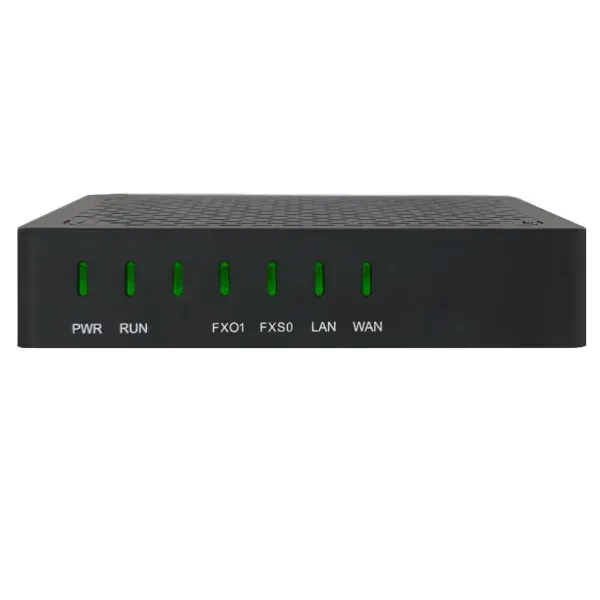
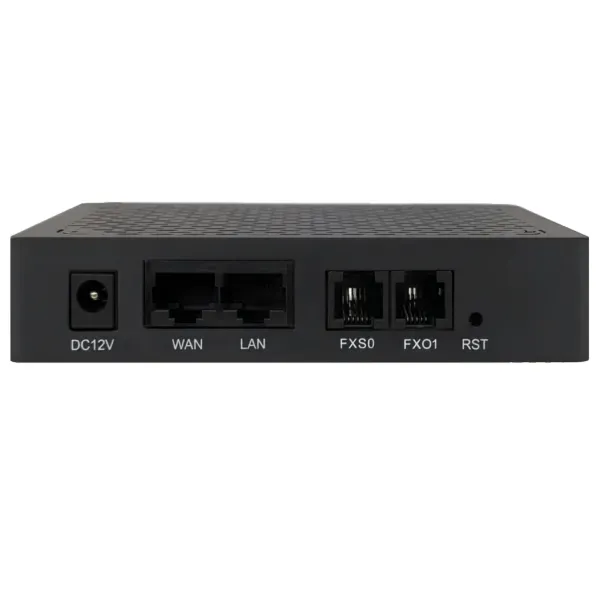
Dinstar DAG1000-1S Analog Telephone Adapter Tanzania
The Dinstar DAG1000-1S is a compact analog telephone adapter for businesses that need to keep a traditional telephone, fax endpoint or compatible analog PBX interface working while moving voice services onto a SIP-based IP network. The model belongs to Dinstar’s DAG1000-1S/2S family and provides one FXS port on the 1S version, together with WAN and LAN Ethernet connectivity, SIP and IMS support, fax over T.38 or pass-through, flexible routing, automated provisioning, management tools and security options including TLS and SRTP. For Tanzanian organisations, it is especially relevant when the requirement is not a large multi-port gateway but a controlled, single-line bridge between an established analog device and a modern IP telephony platform.
What the DAG1000-1S solves
Many organisations still have useful analog phones, fax machines, door phones, legacy extension ports or simple voice endpoints that do not justify a complete replacement project. The DAG1000-1S allows one analog endpoint to participate in an IP-based calling environment through an FXS connection. This makes it useful for phased migrations, small branches, reception-side legacy equipment, remote offices and specialist endpoints where a straightforward ATA is preferable to a larger gateway.
Why businesses consider it
The product combines analog voice access with SIP connectivity and practical management functions. Dinstar specifies support for SIP v2.0 over UDP, TCP and TLS, T.38 and fax pass-through, call waiting, transfer, forwarding, three-way conference, caller ID, voicemail indication, QoS features, automated configuration and firmware upgrade, backup and restore, SNMP and TR-069. The value is the ability to keep a simple analog endpoint while gaining integration with IP PBXs, SIP servers and softswitch environments.
Verified Dinstar DAG1000-1S features
Analog interface
The DAG1000-1S provides one FXS RJ11 interface for connection to a compatible analog telephone or other supported analog endpoint. Dinstar’s family documentation distinguishes the 1S model from the two-port 2S version.
Ethernet connectivity
The published datasheet lists one 10/100 Mbps WAN port and one 10/100 Mbps LAN port, both using RJ45 connectors. This supports deployment between the local network, SIP service and connected endpoint.
SIP and IMS
Dinstar specifies SIP v2.0 based on RFC3261, including UDP, TCP and TLS transport options, together with SIP/IMS support and interoperability positioning for common softswitch, IP PBX and SIP server environments.
Voice and fax
Supported voice functions include common codecs in the family datasheet, echo cancellation, adaptive jitter buffering and DTMF methods. Fax support includes T.38 and pass-through, useful where a compatible fax workflow must remain available on an IP network.
Calling features
Published features include call waiting, blind and attended transfer, unconditional and no-reply forwarding, speed dial, do not disturb, three-way conference, voicemail indication, caller ID, music on hold and flexible dial-plan control.
Management and security
The platform supports web-based administration, automatic firmware and configuration delivery over HTTP/HTTPS, backup and restore, logs and CDR, SNMP, TR-069, Dinstar cloud management options, and TLS/SRTP security functions.
Technical buying guide for the DAG1000-1S
Selecting an analog telephone adapter should begin with the endpoint and call-flow requirement rather than the product name alone. The DAG1000-1S is a one-FXS-port device. That makes it appropriate when one analog station must register or route through a SIP environment. It is not the right choice when a project requires several analog extensions, multiple FXO trunks, cellular channels or a digital E1/T1 interface. In those scenarios, a different Dinstar gateway class should be evaluated. The first procurement question should therefore be: what analog device is being connected, and does it need an FXS port from the gateway?
The second question is compatibility. The target IP PBX, hosted SIP platform or softswitch should support the SIP profile and authentication method planned for the deployment. Dinstar positions the DAG1000-1S/2S family for interoperability with common SIP platforms and supports primary and backup SIP server arrangements. Before rollout, the buyer should confirm SIP credentials, registration mode, outbound proxy requirements if used, VLAN and QoS policy, DTMF mode, codec policy and whether TLS/SRTP will be enabled end to end. For fax, confirm that the service provider and PBX support the intended T.38 or pass-through method, because successful faxing depends on the complete path and not only the ATA.
The third question is deployment management. A single unit can be configured through its web interface, while multiple units may benefit from standardized provisioning and centralized management. Dinstar supports automatic configuration and firmware upgrade using HTTP/HTTPS, SNMP/TR-069 management functions and its cloud management environment. For organisations with branches, kiosks or distributed service points, preparing a standard configuration template, naming convention, firmware policy and support record can reduce troubleshooting later. Buyers should also plan power stability, network addressing, switch placement and physical access to the unit. A small ATA is simple hardware, but it still becomes part of the production voice path and should be documented like any other network endpoint.
For regional procurement, request a quotation with the exact model name Dinstar DAG1000-1S, the quantity, destination, intended PBX or SIP service, analog device type, expected fax requirement if any, and preferred deployment timeline. This makes it easier to distinguish the 1S model from nearby DAG1000 variants. For wider telecom and infrastructure planning, see FourTeck Tanzania technology solutions, the broader FourTeck IT and telecom portfolio, and the Dinstar configuration service category for examples of related Dinstar configuration requirements.
Use cases for one-port analog-to-SIP migration
The strongest use case for the DAG1000-1S is a narrowly defined analog endpoint that must be retained inside a modern IP communications environment. A small office may have one trusted analog handset at reception while the rest of the team uses IP phones. A remote branch may need a basic phone connected to a hosted SIP account. A service desk may retain a fax machine for a workflow that cannot yet be replaced. A business may also use an analog device connected to a PBX environment where the ATA creates a controlled SIP bridge. In all cases, the design should be checked against the endpoint’s signaling, numbering plan, codec, DTMF and fax expectations.
The product is also useful when migration is being staged. Instead of replacing every analog device immediately, businesses can move selected voice services to an IP PBX while retaining one endpoint temporarily. This can reduce disruption during technology transition, provided the old endpoint remains operationally justified. The model’s call features, dial plan support, VLAN and QoS functions, management options and security capabilities help it fit into a managed network rather than operating as an isolated adapter. Buyers should nevertheless avoid using a one-port ATA as a substitute for proper gateway sizing when the site clearly requires several analog lines or more advanced routing.
Dinstar DAG1000-1S Tanzania
For organisations searching for the Dinstar DAG1000-1S in Tanzania, the key decision is whether a one-port FXS analog telephone adapter fits the exact telephony migration requirement. Tanzania has a wide mix of business environments: modern offices already using IP PBX systems, older premises with analog handsets, regional branches with limited onsite IT staff, hospitality and retail sites that require a simple voice endpoint, and specialist operations where one analog device still performs a useful function. The DAG1000-1S addresses this narrow but common requirement by connecting one analog telephone or compatible endpoint to a SIP-based network. Its role is not to replace the PBX; it is to bridge a traditional analog endpoint into the IP calling architecture.
A Tanzanian buyer should prepare the project information before requesting supply. Specify whether the endpoint is a normal analog telephone, fax device or another supported analog interface. Confirm the IP PBX or SIP platform, whether the ATA will register directly to that platform, the expected numbering plan, codecs, DTMF mode and network settings. If fax is required, state whether T.38 is supported end to end. If the business has VLAN segmentation for voice, confirm the switch and routing design. Dinstar publishes support for VLAN tagging, Layer 3 QoS and DiffServ, which can be useful when voice traffic shares an enterprise data network. Security-conscious deployments can also evaluate SIP over TLS and SRTP, subject to compatibility with the complete call path.
For businesses operating across multiple Tanzanian locations, standardisation matters as much as hardware selection. A repeatable configuration template can keep SIP registration, dial plans, firmware, login controls and network settings consistent. The DAG1000 family supports web-based administration, automatic provisioning, centralized management methods, backup and restore, system logs and CDR. These functions are valuable when support teams need a predictable configuration across branch units. Procurement teams should request the exact DAG1000-1S model, quantity and destination rather than simply asking for a “Dinstar gateway,” because Dinstar offers many gateway types with different port counts and interface combinations.
For a quotation in Tanzania, include the city, required quantity, intended deployment, current PBX or hosted SIP provider, whether fax is needed, and any preferred security or management method. This helps keep the recommendation aligned to the actual use case and avoids overbuying. The FourTeck Tanzania site can also be used as the starting point for related IP telephony, networking and infrastructure discussions where the ATA forms only one part of a larger communications solution.
Dinstar DAG1000-1S Dar es Salaam
In Dar es Salaam, the DAG1000-1S is particularly relevant to offices and service businesses modernising telephony without replacing every analog endpoint at once. Corporate offices, professional services firms, clinics, retail chains, hospitality properties, logistics companies and branch operations may already have IP connectivity and an IP PBX while retaining one analog handset or fax workflow. In that setting, a one-port ATA offers a precise solution: provide one FXS connection, register to the SIP system and keep the analog endpoint operational within the new communications design. This is more focused than deploying a multi-port analog gateway where only one device needs to be migrated.
Because Dar es Salaam sites often combine business internet, cloud applications, Wi-Fi, CCTV and voice on the same network, the ATA should be treated as part of the network design rather than an isolated telephone accessory. Confirm the voice VLAN if one is used, QoS policy, addressing method and firewall rules for SIP and RTP. Dinstar’s published capabilities include 802.1P/802.1Q VLAN support, Layer 3 QoS and DiffServ, SIP over UDP/TCP/TLS and SRTP. These options allow the DAG1000-1S to fit into a structured environment, but correct configuration of the surrounding switches, firewall, SIP platform and service provider remains essential.
For fax or legacy modem-style workflows, test the application rather than assuming that an analog device will behave identically after migration. Dinstar supports T.38 and pass-through, yet successful transmission depends on the PBX, SIP provider, codec path, packet loss and network stability. A practical Dar es Salaam deployment plan should therefore include a test call matrix: inbound and outbound calls, caller ID, DTMF interaction, transfer where applicable, fax tests if required, failover to the secondary SIP server if configured, and a reboot or power-cycle test to confirm the unit restores service correctly.
When requesting a Dar es Salaam quotation, share the site type, one-port requirement, current telephony platform and whether installation or configuration assistance is needed. If the business is also evaluating PBX changes, switches, firewalls or network segmentation, state that upfront so the ATA can be assessed in context. A properly scoped deployment reduces troubleshooting and gives the business a clear migration path from analog equipment to IP telephony.
Dinstar DAG1000-1S Mwanza
Businesses in Mwanza may use the Dinstar DAG1000-1S when a small branch, service point or operational site needs to connect one traditional analog endpoint to an IP telephony platform. The device is a practical fit for distributed organisations where the central PBX or hosted SIP service is managed elsewhere and a local site only needs one analog station. Examples include a reception handset, a simple administrative phone, a fax device used for a specific process, or an existing analog endpoint retained during a gradual upgrade. The one-port design keeps the deployment focused and avoids the cost and complexity of a larger gateway when additional analog channels are not required.
For Mwanza deployments, network consistency should be checked carefully, particularly when branch connectivity traverses VPN links, wireless last-mile services or shared business internet. Voice quality depends on latency, jitter, packet loss and available bandwidth across the entire path. The DAG1000-1S includes adaptive jitter buffering and QoS-related functions, but those features work best when the upstream network is also engineered for voice. If an organisation uses SD-WAN, site-to-site VPN or centralised firewall policies, the voice route and SIP registration flow should be documented. Where SIP ALG causes issues, the network team may need to review the firewall design according to the PBX provider’s guidance.
The ATA’s management functions can be valuable for a Mwanza branch without dedicated telephony staff. Dinstar supports automatic provisioning and firmware updates over HTTP/HTTPS, as well as SNMP, TR-069, logs, CDR, backup and restore. A central administrator can therefore maintain a standard build, provided the management design is securely implemented. Credentials should be changed from defaults, configuration backups protected and remote administration restricted to trusted networks. Where TLS and SRTP are used, certificates, PBX compatibility and troubleshooting procedures should be prepared in advance.
A buyer in Mwanza should request the DAG1000-1S by exact model and describe the analog endpoint and SIP environment. If several analog phones are actually required, a larger FXS gateway may be more suitable and should be evaluated before ordering multiple standalone adapters. The best procurement outcome comes from matching port count and management model to the real branch architecture rather than simply selecting the smallest available gateway.
Dinstar DAG1000-1S Arusha
In Arusha, a one-port analog telephone adapter can support businesses that need a controlled bridge between a legacy endpoint and an IP-based communications system. Hospitality operators, tour companies, administrative offices, educational organisations, healthcare sites and small professional branches may have mixed telephony estates where most extensions are IP-based but one analog device still needs to remain. The Dinstar DAG1000-1S is designed for that situation, using one FXS port to connect the analog side and SIP connectivity to integrate with the IP side.
Arusha buyers should first identify what the endpoint does operationally. A voice handset normally requires registration, dial plan, caller ID, codec, DTMF and supplementary-call settings. A fax device needs additional consideration because fax over IP is sensitive to network behavior; T.38 support is available on the Dinstar, but the service must be supported across the PBX or provider path. A device used for alarms, payment terminals or other non-voice signaling should not be assumed compatible simply because it uses an RJ11 connection. Such applications should be tested against the vendor and service requirements before procurement.
For organisations with seasonal or distributed operations, easy replacement and repeatable configuration can be important. The DAG1000 platform supports backup and restore, automatic configuration and firmware deployment, system logging and centralized management functions. Standardising SIP server addresses, dial rules, voice settings, network configuration and credentials can help an IT team redeploy a unit more predictably. Documentation should record the physical location, connected analog endpoint, MAC or asset reference, SIP extension, IP addressing method and administrator responsible for the configuration.
When sourcing the DAG1000-1S for Arusha, provide the intended quantity, branch location, PBX or hosted SIP platform, endpoint type and whether the requirement includes configuration support. If the project also involves IP phones, switching, structured cabling or security, the ATA should be included in a broader voice-network readiness check. That approach helps ensure that the product’s capabilities—SIP, TLS/SRTP, VLAN, QoS, T.38 and centralized management—are used within a stable architecture rather than treated as independent features.
Dinstar DAG1000-1S Dodoma
For Dodoma offices and institutional environments, the Dinstar DAG1000-1S can be considered when an IP telephony migration must retain one analog telephone or compatible analog service point. Government-related offices, professional organisations, branch facilities, education sites and service counters may encounter this need during phased PBX upgrades. The key benefit is controlled coexistence: modern SIP infrastructure can be adopted while a specific analog endpoint remains available through the ATA’s one FXS interface.
Procurement teams should make the analog requirement explicit. If the project needs an FXS port, the ATA supplies line-side service to an analog phone or similar terminal. If the actual requirement is to connect a traditional PSTN line into an IP PBX, that normally calls for an FXO interface instead, so the DAG1000-1S would not be the correct model. This distinction is one of the most important checks before ordering. Dinstar offers other DAG variants for different interface combinations, and the model should be selected according to the direction of the analog connection rather than only the number of ports.
In a structured Dodoma deployment, the network team should define SIP registration details, primary and secondary server behavior, codec preferences, DTMF mode, VLAN and QoS rules, addressing and remote management. The DAG1000-1S supports SIP v2.0, SIP/IMS, TLS/SRTP, IPv4/IPv6, T.38, call features, automatic provisioning and management tools. These functions can make the unit suitable for a managed enterprise environment, but security policies should govern how the web interface, provisioning endpoints and management protocols are exposed.
For quotation preparation, include the exact model, site address, quantity, connected endpoint and PBX or SIP provider. It is also useful to state whether the unit is replacing an existing ATA, part of a new SIP rollout or being used during a migration. That context helps determine whether accessories, configuration planning or a different port count should be evaluated. Businesses with national branch operations should also plan a repeatable template so devices in Dodoma and other cities can be maintained consistently.
Dinstar DAG1000-1S UAE
The Dinstar DAG1000-1S is also relevant to UAE businesses that need to integrate a single analog endpoint with an IP PBX or SIP service. Offices in Dubai, Abu Dhabi, Sharjah and other emirates often operate modern IP telephony while retaining a fax device, analog reception phone, legacy extension or specialist endpoint. A one-port FXS ATA can provide a simple migration bridge without requiring a multi-port analog gateway. The device supports SIP/IMS, T.38 fax, VLAN and QoS features, TLS/SRTP, call functions and automated provisioning, which makes it suitable for small standalone requirements as well as standardised branch deployments.
UAE projects should still be scoped around the complete telephony environment. Confirm whether the PBX is on-premises or cloud-hosted, whether the SIP service requires specific authentication or outbound proxy settings, and whether the corporate firewall permits the required signaling and RTP flows. If voice traffic is segmented, map the ATA to the correct VLAN and QoS policy. For TLS and SRTP, ensure that the PBX and service provider support the same security profile. For fax, validate T.38 across the end-to-end route, because endpoint support alone is not sufficient.
Where a business has multiple branches or a managed services team, Dinstar’s provisioning and centralized-management features can help maintain consistency. The device supports web administration, configuration backup and restore, automatic HTTP/HTTPS provisioning, SNMP/TR-069 and logging functions. A template can cover SIP credentials, server addresses, dialing rules, network settings and administrator controls. This is especially useful for retail, branch office and distributed service environments where similar small voice endpoints are repeated across locations.
For related UAE deployment and configuration services, the Dinstar configuration Dubai category provides a relevant FourTeck reference, while FourTeck UAE covers broader telecom and infrastructure requirements. When requesting a quotation, provide the exact DAG1000-1S model, location, quantity, PBX platform, analog endpoint and whether configuration support is required.
Dinstar DAG1000-1S Uganda
In Uganda, the Dinstar DAG1000-1S can support businesses that are moving from traditional telephony toward SIP-based voice while retaining a single analog device. A regional headquarters, NGO office, clinic, hotel, education site, retail branch or service desk may need one analog handset or fax endpoint to remain in service even after an IP PBX is introduced. The one-FXS-port design suits that precise requirement and keeps the project smaller than a multi-port gateway deployment.
Ugandan organisations with branches should consider the reliability of the WAN path between the ATA and the SIP platform. Voice quality can be affected by congestion, packet loss and unstable latency, so the network must be evaluated in addition to the device. Dinstar supports adaptive jitter buffering, QoS, VLAN tagging and common voice codecs, but these mechanisms cannot compensate for severe connectivity problems. Where the SIP platform is centralized in Kampala or hosted externally, branch firewall, VPN and DNS behavior should be tested under normal and degraded conditions.
The DAG1000-1S supports a primary and secondary SIP server arrangement, automatic provisioning, logging, backup and restore, SNMP and TR-069. Those capabilities can be helpful for distributed Ugandan sites where onsite technical resources are limited. A central administrator can define a standard build and use consistent troubleshooting procedures. Remote management should be secured, and access should be restricted to trusted administration paths. If TLS/SRTP is enabled, the complete ecosystem should be tested so encryption does not introduce compatibility surprises.
For wider Uganda infrastructure requirements, visit FourTeck Uganda. When requesting the DAG1000-1S, provide the city, site type, quantity, endpoint type and SIP or PBX information. If several analog endpoints are required at the same site, ask for a gateway sizing review so a higher-port Dinstar model can be compared against deploying multiple one-port adapters.
Dinstar DAG1000-1S Kampala
Kampala businesses often operate mixed communication environments where cloud PBX, on-premises SIP systems and older analog devices coexist. The Dinstar DAG1000-1S is designed for the small but important case in which one analog telephone or fax endpoint must connect to that IP environment. Rather than deploying a large gateway, the organisation can use one FXS port, configure the required SIP account and route calls through the existing PBX or service provider. This is relevant to offices, clinics, hospitality properties, shops, logistics firms, professional practices and branch operations that are modernising in stages.
A successful Kampala deployment starts with a clear call-flow design. Identify the SIP extension or trunk behavior, inbound number mapping, outbound dialing rules, caller ID requirements, DTMF method and codec policy. If the analog endpoint is a fax machine, include dedicated fax testing. Dinstar supports T.38 and pass-through, but performance depends on the rest of the VoIP path. If the unit is behind a firewall or NAT device, review SIP registration stability and RTP reachability. The DAG1000 family also supports STUN and NAT-related functions, but the preferred method should match the PBX vendor’s deployment guidance.
For office networks with managed switches, use VLAN and QoS configuration where appropriate so voice traffic is separated and prioritised consistently. The ATA supports 802.1P/802.1Q tagging and Layer 3 QoS/DiffServ. Security options include SIP over TLS and SRTP, allowing organisations to align the endpoint with a secure voice architecture when compatible with the PBX. Administrators should also use strong passwords, controlled management access and documented firmware policies.
Before procurement, compare the one-port requirement against future growth. If the site is likely to add several analog endpoints, a larger Dinstar FXS gateway may produce a cleaner design and simpler management. If one endpoint is all that is needed, the DAG1000-1S offers a focused way to keep that device working while the wider environment standardises on SIP. For local technology planning, FourTeck Uganda provides a regional reference for telecom and network requirements.
Dinstar DAG1000-1S Arua
For Arua and other branch-oriented Ugandan markets, the Dinstar DAG1000-1S can be a practical way to extend central SIP telephony to one analog endpoint. A branch may not need a full local PBX or multi-port gateway; it may simply require a reception handset, administrative phone or retained fax unit that registers to a central communications platform. The ATA’s single FXS interface fits that small footprint while preserving access to standard VoIP functions and remote management.
Connectivity planning deserves particular attention for remote branches. If the SIP service traverses long-distance internet or VPN links, test latency, jitter and packet loss during business hours. Voice should be evaluated under real network load, not only during quiet periods. Dinstar’s QoS and jitter-management functions are useful tools, but the upstream router, ISP connection and PBX infrastructure still determine overall call quality. Where the branch uses shared internet for cloud applications and video, traffic management may need to prioritize voice to avoid intermittent audio issues.
Operational simplicity can be more important than feature count in an Arua branch. A documented standard configuration should include SIP server addresses, extension details, dialing rules, codec preferences, DTMF mode, time settings, VLAN information and administrator access. The DAG1000-1S supports automatic provisioning, backup and restore, system logs and remote management methods, which can reduce the need for manual reconfiguration after replacement or reset. Administrators should keep a secure configuration backup and record the physical endpoint connected to each unit.
When buying for Arua, specify the destination and whether the requirement includes onsite installation, remote configuration or supply only. If fax is required, say so before deployment because the end-to-end SIP environment must be validated. If the organisation expects more analog endpoints later, evaluate higher-port FXS gateways before standardising on many single-port units. The best architecture balances present simplicity with expected expansion and support capacity.
Dinstar DAG1000-1S Mbarara
In Mbarara, businesses evaluating the Dinstar DAG1000-1S are typically looking for a small analog-to-SIP bridge rather than a full telephony platform. The device can connect one traditional analog handset or supported fax endpoint to a compatible SIP PBX or hosted VoIP service. This makes it useful for a clinic desk, administrative office, hospitality reception, shop, school office, warehouse or branch location where one familiar analog device must remain available during a wider migration to IP communications.
The network design should reflect the importance of the endpoint. If it supports customer calls, reservations, internal operations or a required fax workflow, the ATA should be connected through stable switching and power. Consider UPS protection for the network equipment if continuity matters, because an analog handset connected through an ATA depends on electrical power and network availability. That is different from some traditional analog line behaviors, so business-continuity expectations should be explained to users before migration.
Dinstar’s published features include primary/secondary SIP server support, flexible routing and dial plans, TLS/SRTP, T.38, VLAN tagging, QoS, call waiting, transfer, forwarding, caller ID and three-way conference. These functions provide flexibility, but the actual set used should remain simple and documented. Overcomplicated dial rules or unnecessary feature changes can make a small branch harder to support. A standard profile with tested settings is usually the better approach for distributed deployments.
For Mbarara procurement, identify whether the product is being purchased as a replacement for another ATA or as part of a new SIP rollout. Share the PBX brand or hosted voice platform, expected endpoint type and network environment. If the business has multiple Ugandan sites, align the configuration and support method across locations so the same troubleshooting steps can be used everywhere. Regional telephony and networking context is also available through FourTeck Uganda.
Dinstar DAG1000-1S Gulu
For Gulu organisations, the Dinstar DAG1000-1S provides a focused option when only one analog voice endpoint needs access to a SIP network. Branch offices, NGOs, education facilities, healthcare sites, guest properties and local service businesses can use an ATA during gradual migration from legacy telephony. The unit’s role is straightforward: present an FXS interface to the analog device and connect that endpoint to the IP voice environment through SIP. This helps preserve a familiar device while the surrounding communications system moves toward centralized or hosted IP telephony.
The branch network should be checked for stable routing to the SIP service. If calls pass through VPN tunnels or centralized security appliances, confirm that signaling, RTP and DNS behavior are reliable. Packet loss and unstable latency can affect voice quality more than raw bandwidth limitations, so testing should include busy network periods. The DAG1000-1S supports QoS, VLANs and adaptive jitter buffering, yet proper upstream traffic handling remains essential. A simple monitoring approach should also be defined so support staff can distinguish an ATA fault from an ISP, firewall or PBX problem.
Remote administration is useful when specialist support is based in another city. The device supports a web interface, provisioning over HTTP/HTTPS, SNMP/TR-069, backup and restore, logs and CDR. These features can reduce travel for configuration changes when used through secure management paths. Passwords, management IP restrictions and firmware control should follow the organisation’s security policy. For sites without dedicated IT staff, a printed or digital support record containing the extension, device location, PBX contact and escalation path can significantly shorten fault resolution.
A Gulu buyer should request the exact DAG1000-1S model and confirm the one-port requirement. If the site will soon require several analog stations, compare higher-port gateways before purchase. If one endpoint is all that is needed, the DAG1000-1S offers a compact, manageable and standards-based route into SIP telephony without forcing the organisation to replace the analog device immediately.
Dinstar DAG1000-1S Kenya
Kenyan businesses can use the Dinstar DAG1000-1S to connect one analog telephone or compatible fax endpoint to a SIP-based communications platform. The use case is common during IP PBX migrations, branch rollouts and cloud-telephony projects where most users adopt IP phones or softphones but one legacy device remains operationally useful. The one-port FXS design makes the product particularly suitable for small offices, reception points, remote branches and specialised analog endpoints that do not justify a larger gateway.
For deployments in Nairobi, Mombasa, Kisumu or other business centres, confirm whether the ATA will connect to an on-premises PBX, hosted PBX or SIP trunking platform. Dinstar supports SIP v2.0, SIP/IMS, primary and secondary SIP server behavior, TLS/SRTP, T.38, IPv4/IPv6, VLAN tagging and QoS. The design should map those features to the actual service. For example, enabling TLS is useful only if the PBX supports compatible certificates and signaling security. Using T.38 is appropriate only when the provider and remote fax path support it. VLAN configuration should match the switching design rather than being enabled as a standalone checkbox.
Kenyan organisations with many branches may benefit from standardised provisioning. The DAG1000 family supports automatic configuration and firmware upgrade over HTTP/HTTPS, plus SNMP/TR-069 and centralized management options. A standard template can reduce deployment time and support variation. The template should still allow site-specific values such as SIP credentials, extension number, network addressing and emergency routing where applicable. Configuration backups, device labels and change records improve operational continuity when hardware is replaced.
For related regional requirements, visit FourTeck Kenya. When requesting a quotation, provide the exact DAG1000-1S model, quantity, city, connected analog endpoint, PBX or SIP service and whether installation or remote configuration is required. If the site needs more than one analog extension, ask for a comparison with multi-port Dinstar FXS gateways to ensure the design remains efficient as the environment grows.
Dinstar DAG1000-1S Kuwait
In Kuwait, the Dinstar DAG1000-1S is relevant for offices and service environments where one legacy analog endpoint needs to join a SIP-based phone system. Businesses may retain a reception phone, fax machine or specialist analog device while moving the majority of extensions to IP phones or softphones. Because the 1S model supplies a single FXS port, it is a precise fit for these limited analog requirements and can avoid unnecessary investment in a higher-density gateway.
Kuwait deployments should review PBX compatibility and network security at the planning stage. The device supports SIP v2.0 over UDP, TCP and TLS, along with SRTP for media security. If the organisation uses encrypted voice, the PBX, certificates and service provider must be configured consistently. The ATA also supports IPv4 and IPv6, VLAN tagging and QoS. In a corporate network, the network team should decide whether the unit sits on a dedicated voice VLAN and how traffic is prioritised through switches, routers and firewalls.
Fax remains a frequent reason for deploying an ATA. Dinstar specifies T.38 and pass-through support, but fax reliability should be tested with the actual remote destinations and SIP service. Packet loss, codec conversion and provider handling can all influence results. Businesses that rely heavily on fax for contractual or operational processes should run repeated test transmissions and define a fallback workflow before decommissioning the original line.
For procurement, request the exact DAG1000-1S rather than a generic Dinstar ATA, because adjacent models have different port counts or hybrid FXS/FXO functions. Share the intended analog endpoint, SIP platform, quantity and deployment type. If multiple business locations are involved, a standard configuration and naming structure can make support easier. Dinstar’s automated provisioning, logs, backup/restore and management functions are particularly useful when several small units must be kept consistent across a regional estate.
Dinstar DAG1000-1S Ghana
For businesses in Ghana, the Dinstar DAG1000-1S offers a straightforward method to connect one traditional analog endpoint to an IP telephony environment. Companies in Accra, Tema, Kumasi and other centres may face mixed estates where an IP PBX has been introduced but a fax machine or analog handset remains necessary. Rather than maintaining a full analog PBX interface for one device, a one-port FXS ATA can create a controlled migration path into SIP.
The product’s SIP and management features are useful for centralised IT teams. Dinstar supports SIP/IMS, primary and backup SIP servers, flexible routing and dial plans, TLS/SRTP, web management, automatic provisioning, system logs, CDR, SNMP and TR-069. These capabilities make the ATA more manageable than a basic unmanaged converter. However, the configuration should be aligned with the actual PBX design. Confirm account registration, authentication, DTMF transport, codec preference, caller ID, time settings and any inbound dialing requirements before the device is sent to a branch.
Network conditions should also be considered. If the branch uses shared internet, prioritize voice where necessary and monitor the link during peak usage. Dinstar includes QoS and VLAN functionality, but it is the end-to-end network that determines the quality users experience. For remote sites, the ability to restore a saved configuration or provision a replacement unit can reduce downtime. It is useful to keep an inventory record containing the model, extension, connected analog device and current firmware.
When requesting a Ghana quotation, state whether the device will be used for voice, fax or another compatible analog endpoint, and identify the PBX or SIP platform. If there is a possibility of expansion beyond one analog port, evaluate the wider Dinstar FXS gateway family. Choosing the correct port density at the outset can simplify cabling and management while keeping future changes easier to support.
Dinstar DAG1000-1S Nigeria
In Nigeria, the Dinstar DAG1000-1S can serve offices, retail branches, clinics, schools, hotels, logistics operations and professional businesses that need to retain one analog endpoint inside an IP telephony architecture. The use case is especially clear when a business has already adopted a SIP PBX or hosted phone service but still relies on a traditional handset or fax machine. The single FXS port provides a focused bridge without adding unnecessary gateway capacity.
Power and connectivity resilience should be included in the design. An analog phone attached to an ATA depends on the ATA, network switch or router and SIP service being powered and reachable. For sites where voice continuity is critical, UPS coverage and redundant connectivity may be more important than the ATA itself. Dinstar supports primary and secondary SIP server behavior, but that should be combined with a realistic network failover plan. If the internet connection fails completely, the availability of the SIP service may still be affected unless the broader architecture includes redundancy.
Security is another consideration for Nigerian businesses with distributed branches. SIP credentials and device administration passwords should be protected, remote management restricted, and firmware kept under change control. The DAG1000-1S supports TLS and SRTP, which can contribute to secure signaling and media where the PBX environment supports them. Logs and CDR can assist with troubleshooting, while automated provisioning can make it easier to restore a standard configuration after replacement.
For fax, test T.38 or pass-through against the actual provider and destinations. For voice, test DTMF, caller ID, transfer and forwarding as required. For procurement, provide the exact DAG1000-1S model, location, quantity and PBX details. If a branch requires multiple analog lines or an FXO connection to PSTN lines, ask for a gateway sizing review rather than assuming the 1S model covers the requirement. Correct interface selection prevents common analog-to-VoIP deployment mistakes.
Dinstar DAG1000-1S Seychelles
For Seychelles businesses, hospitality properties, professional offices and service organisations, the Dinstar DAG1000-1S can be useful when a single analog telephone or compatible fax endpoint must operate through a SIP-based system. Island and multi-site environments often benefit from centralized communications, but legacy endpoints can remain at front desks, back offices or specialist service points. A one-port ATA allows the organisation to keep that endpoint while connecting it to an IP PBX or hosted SIP platform.
Because remote support and replacement logistics may be important, configuration discipline should be built into the deployment. Dinstar supports configuration backup and restore, automatic provisioning, web management, SNMP/TR-069, logs and centralized management options. A support team can maintain a documented template and prepare a replacement unit with the same network, SIP and dial-plan settings. This is more reliable than manually rebuilding each ATA without records, particularly when the site has limited local IT resources.
Network performance should be evaluated over the real route to the SIP server. If the platform is hosted outside Seychelles, latency and internet-path stability become part of the voice design. The ATA supports adaptive jitter buffering and QoS features, but the WAN service must still provide stable packet delivery. If encrypted SIP and media are required, TLS/SRTP compatibility should be confirmed across the PBX and provider. Fax use should be tested with T.38 or pass-through before the original analog service is retired.
When requesting a quotation for Seychelles, provide the island or site location, quantity, type of analog device and PBX or hosted voice service. If the deployment is part of a hotel, resort or multi-building project, state whether more analog ports may be required later. The one-port DAG1000-1S is ideal for a very small analog requirement; larger Dinstar FXS gateways may be more efficient if the design expands to several rooms, back-office devices or service points.
Compatibility, configuration and deployment checklist
1. Confirm interface direction
The DAG1000-1S provides an FXS port for an analog endpoint. If the need is to connect an analog PSTN line into VoIP, evaluate an FXO-capable gateway instead.
2. Confirm SIP platform
Record the PBX or hosted SIP system, registration credentials, transport method, outbound proxy if any, primary/secondary server settings and required dialing behavior.
3. Define voice policy
Agree codecs, DTMF method, caller ID behavior, call forwarding, transfer, voicemail indication and other features that the user genuinely needs.
4. Test fax separately
Where fax is required, validate T.38 or pass-through across the PBX, SIP provider and remote destination. Do not assume voice success guarantees fax success.
5. Secure administration
Use strong credentials, limit management access, document firmware and backup configuration. Enable TLS/SRTP only where the full SIP environment supports it correctly.
6. Plan support
Label the unit, record the extension and connected endpoint, keep configuration backups, and define who supports the network, PBX and SIP service if calls fail.
DAG1000-1S compared with larger analog gateway options
| Requirement | DAG1000-1S fit | When to consider another model |
|---|---|---|
| One analog phone | Strong fit: one FXS port is designed for this type of endpoint. | Consider alternatives only if future analog growth is expected. |
| Several analog extensions | Possible only by deploying multiple units, which may be inefficient. | Evaluate Dinstar multi-port FXS gateways for cleaner scaling. |
| Analog PSTN line into PBX | Not the intended interface direction because the 1S is FXS. | Evaluate an FXO or hybrid FXS/FXO gateway. |
| Fax endpoint | Supports T.38 and pass-through. | Use another solution if the provider or workflow cannot support fax over IP reliably. |
Frequently asked questions about the Dinstar DAG1000-1S
What is the Dinstar DAG1000-1S?
It is a one-port FXS analog telephone adapter in Dinstar’s DAG1000-1S/2S family. It connects a compatible analog telephone, fax device or similar endpoint to an IP telephony environment using SIP.
Does the DAG1000-1S support fax?
Yes. Dinstar specifies T.38 and fax pass-through. Fax reliability still depends on the PBX, SIP carrier, network quality and remote destination, so practical testing is recommended before retiring an existing analog fax line.
Can it connect a PSTN line to an IP PBX?
The DAG1000-1S is an FXS model intended to provide an analog station interface. If the requirement is to connect an incoming analog PSTN line to an IP PBX, an FXO-capable Dinstar gateway should be evaluated instead.
Does it support encrypted SIP?
Dinstar lists SIP over TLS and SRTP support. Whether these can be used in a specific deployment depends on the PBX, certificates, provider configuration and end-to-end security design.
Can the ATA be managed remotely?
The platform supports web management, automatic configuration and firmware upgrades over HTTP/HTTPS, SNMP, TR-069, backup/restore, system logs and Dinstar centralized or cloud-management options. Remote access should be secured according to the organisation’s network policy.
Is the DAG1000-1S suitable for a small office?
Yes, when the small office needs only one analog endpoint connected to a SIP environment. If several analog extensions are required, a multi-port FXS gateway can be easier to manage and should be compared before purchase.
What information should I provide for a quotation?
Provide the exact model name, quantity, city and destination, the analog endpoint type, PBX or SIP platform, fax requirement if any, and whether you need supply only or configuration and deployment assistance.
Quotation checklist
A useful quotation request should state the quantity of Dinstar DAG1000-1S units, delivery destination, connected analog device, PBX or hosted SIP platform, whether the site uses a dedicated voice VLAN, whether TLS/SRTP is required, whether fax is required, and whether the buyer expects configuration or installation assistance. If the unit will be deployed at several branches, include the number of sites and whether a common configuration template is desired. If the requirement is uncertain, describe the current analog connection and the desired IP telephony outcome so the interface direction can be checked before ordering.
Decision recap
Choose the Dinstar DAG1000-1S when the requirement is specifically one analog FXS endpoint that must connect to a SIP-based voice platform. Its strengths are the combination of one FXS interface, WAN/LAN Ethernet, SIP/IMS support, T.38 fax capability, common call features, VLAN and QoS functions, TLS/SRTP, automated provisioning and centralized management options. Do not select it solely because it is compact: first confirm that the project does not require FXO, multiple FXS ports, GSM/LTE channels or digital telephony interfaces. Correct interface selection is the foundation of a successful gateway deployment.
For businesses with regional operations, the same planning method applies in Tanzania, Uganda, Kenya, UAE, Kuwait, Ghana, Nigeria and Seychelles: identify the endpoint, map the SIP call flow, verify network quality, secure management, test fax if used and document the configuration. Related regional technology resources are available through FourTeck Kenya and FourTeck Uganda, while FourTeck’s main technology site covers wider IT and telecom requirements.
Consultation for Dinstar DAG1000-1S deployment
If you are unsure whether the DAG1000-1S is the correct Dinstar gateway, start with the telephony problem rather than the part number. Share the type and number of analog devices, current PBX, SIP provider, branch locations, network topology and expected growth. A one-port ATA is an excellent fit for a single analog station, but a different gateway can be more suitable when the requirement includes PSTN trunks, several extensions or mixed interface types. Clear requirements make pricing, configuration and deployment planning more accurate and reduce rework after purchase.




Reviews
There are no reviews yet.