
BUSINESS VOIP • GIGABIT • POE • HD AUDIO
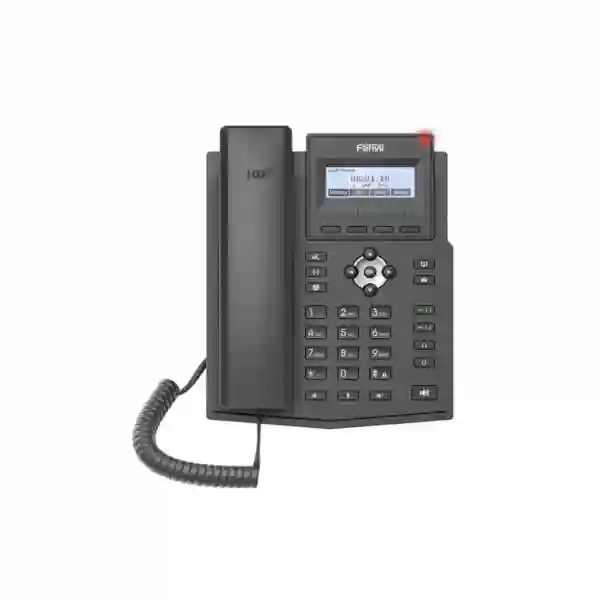
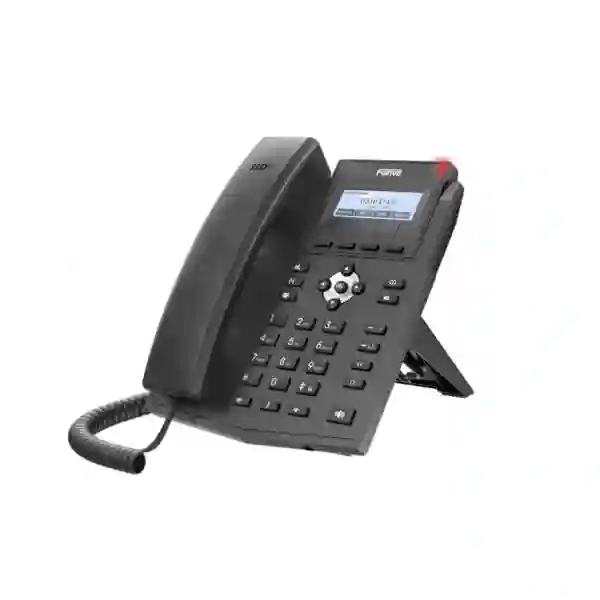
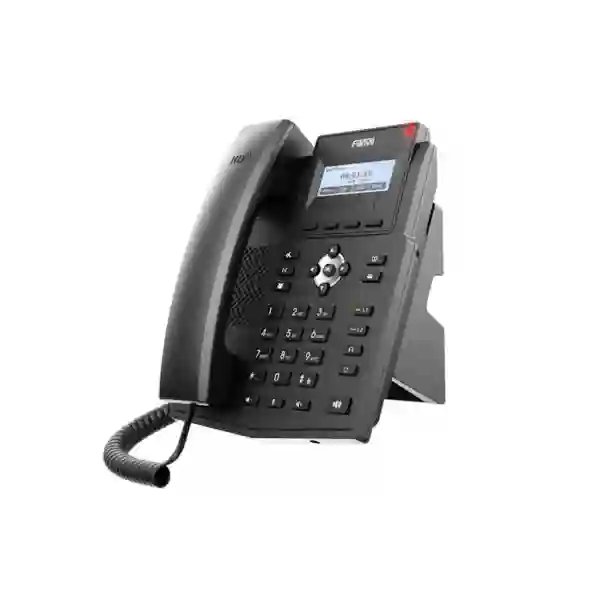
Fanvil X1SG Entry Level IP Phone
The Fanvil X1SG is an entry-level SIP desk phone designed for everyday business communication where reliable voice, straightforward operation and Gigabit network pass-through matter. It provides two SIP lines, local three-way audio conferencing, HD voice, Opus and G.722 codecs, dual 10/100/1000 Mbps Ethernet interfaces, integrated Power over Ethernet and EHS headset support.
Direct answer
Choose the X1SG when a user needs a wired SIP desk phone with two lines, HD audio, PoE and Gigabit Ethernet rather than Wi-Fi, Bluetooth, a color touchscreen or a large quantity of programmable keys. It is especially suitable for standardized office extensions, branch desks, back-office users and straightforward call-handling roles.
Fanvil X1SG overview and verified capabilities
Fanvil positions the X1SG as an entry-level IP phone. Its business value is not based on a long list of premium functions; it is based on covering the core requirements that many fixed desk users actually need. The phone supports two SIP lines, caller ID, call hold, attended and unattended transfer, call forwarding, call waiting, redial, do-not-disturb, auto answer, voicemail indication, hot line, hot desking and local three-way audio conferencing. The local phonebook supports up to 1,000 entries, while the call log supports incoming, outgoing and missed-call history. These functions make the device appropriate for normal extension use while leaving advanced call-control logic to the connected SIP platform or IP PBX.
Audio is a central strength for this class of endpoint. Fanvil specifies HD voice on the handset and speakerphone, full-duplex acoustic echo cancellation, packet-loss concealment, a dynamic adaptive jitter buffer, noise-reduction functions and both narrowband and wideband codecs. The wideband codec set includes G.722 and Opus. Opus is useful in VoIP environments because it is designed to operate across a broad range of network conditions and voice applications. Call quality still depends on the LAN, WAN, SIP service and PBX configuration, so a good phone should be supported by sensible voice VLAN, QoS and network design rather than treated as an isolated device.
The X1SG also addresses a practical office-network requirement: the phone has dual Gigabit Ethernet interfaces and integrated PoE. A workstation can therefore share the desk network path through the phone in suitable designs without reducing the link to Fast Ethernet. Power over Ethernet can also simplify desk deployment by allowing a compatible PoE switch to provide power and network connectivity over the same cable. An optional external power supply can be used where PoE is unavailable. Buyers should confirm the intended power method, switch PoE budget and included accessories before placing an order.
Voice
HD audio, G.722, Opus, full-duplex AEC, VAD, CNG, noise reduction, packet-loss concealment and adaptive jitter handling support clear day-to-day VoIP communication.
Network
Dual 10/100/1000 Mbps Ethernet ports support Gigabit desk connectivity, while integrated PoE can simplify installation on a compatible powered network.
Calling
Two SIP lines, three-way audio conferencing, transfer, hold, forwarding, voicemail indication and standard business call functions support common extension workflows.
Headsets
EHS wireless headset support is available, including documented compatibility through appropriate Poly/Plantronics and Jabra EHS cabling arrangements.
Technical specification summary
| Item | Fanvil X1SG |
|---|---|
| SIP lines | 2 |
| Display | 128×48 dot-matrix display, 2.28-inch class |
| Network | Dual 10/100/1000 Mbps Ethernet |
| Power | Integrated PoE; optional external power supply |
| Audio conference | Local 3-way audio conference |
| Wideband codecs | G.722 and Opus |
| Phonebook | Up to 1,000 local entries; remote XML/LDAP phonebook support documented |
| Call logs | Up to 600 entries across incoming, outgoing and missed calls |
| Headset | RJ9 headset mode and EHS wireless-headset support with appropriate accessories |
| Mounting | Desktop stand; wall mounting requires additional wall-hanging parts |
Specifications should be checked against the current Fanvil datasheet and the exact shipped unit before procurement because vendor firmware, packaging and accessory details can change over time.
Compatibility, provisioning and deployment planning
Fanvil documents the X1SG for SIP 2.0 environments and lists compatibility with major telephony platforms. Its current compatibility material includes platforms such as 3CX and Cisco BroadWorks, while product documentation also references common systems including Asterisk-based environments. Compatibility should never be assumed from the physical SIP connector alone. Before a rollout, the PBX firmware, provisioning method, SIP feature requirements, codec policy, directory method and any provider-specific configuration should be validated. A successful pilot with one or two handsets can reveal feature-mapping differences before a larger quantity is deployed.
For administrators, the phone supports web-based management and automated provisioning methods documented by Fanvil, including HTTP/HTTPS, FTP/TFTP, DHCP options, SIP PnP and TR-069 in applicable deployments. Centralized provisioning is particularly valuable when many endpoints share the same configuration template. It reduces manual entry, supports consistent naming and account settings, and makes it easier to replace a device or apply configuration changes. The exact provisioning workflow should match the PBX and security model used by the organization.
The network should be designed as part of the voice solution. A managed switch can separate voice traffic with a VLAN, provide PoE, and enforce Quality of Service policies. The firewall should allow only the SIP and media flows needed by the chosen architecture. NAT, SIP ALG behavior, remote extensions, VPN requirements and hosted-PBX connectivity can affect registration and media. FourTeck Tanzania’s technology services overview is relevant when the phone is part of a larger IP PBX, network or branch-communications project rather than a stand-alone replacement handset.
Who should choose the X1SG?
The X1SG makes the most sense for organizations that want a consistent wired desk phone for routine business calling. General office employees, branch staff, administrative teams, back-office users, hotel or service desks and shared work areas can often work effectively with two SIP lines and a straightforward display. The Gigabit PC pass-through is useful where a desk has a single network outlet and a workstation needs to share the wired connection through the phone. PoE can reduce adapter clutter where the switch infrastructure supports it.
It is less suitable for users whose jobs depend on many visible line appearances, large BLF fields, touch interfaces, built-in Wi-Fi, Bluetooth peripherals or video. Receptionists handling many extensions, contact-center agents requiring specialized workflows, executives wanting larger color displays, or users needing wireless connectivity may be better served by another Fanvil model. The goal is not to buy the highest specification for every desk; it is to match the endpoint to each user role and keep the estate supportable.
For procurement teams comparing alternatives, the FourTeck Tanzania business technology shop provides broader purchasing context, while the Dinstar C60SP PoE IP phone, Dinstar C62UP PoE IP phone and Dinstar C63G business IP phone are useful same-site reference points when comparing endpoint classes, PoE requirements and account capacity.
Quotation checklist
A useful Fanvil X1SG quotation request should include more than a model name. Share the quantity, intended user roles, current or planned IP PBX, SIP provider if relevant, whether the LAN switch provides PoE, whether each desk needs a PC pass-through connection, headset requirements, preferred provisioning method and any need for installation or configuration. If the phones are replacing analog extensions, include information about the existing PBX and cabling because an IP endpoint requires Ethernet connectivity and a SIP environment rather than an analog extension port.
For larger deployments, also provide branch count, VLAN design, switch model, DHCP structure, extension numbering, directory source, call-flow requirements and rollout timing. This enables a quotation to distinguish handset supply from network preparation, PBX work, licenses, SIP services, cabling, PoE switching, headset accessories and support. Clear scope prevents a low device price from hiding missing project dependencies.
Fanvil X1SG Entry Level IP Phone Tanzania
For organizations sourcing the Fanvil X1SG in Tanzania, the most useful starting point is to define whether the requirement is a small extension refresh, a new office phone system or part of a broader branch-communications standard. The handset itself provides two SIP lines, integrated PoE, dual Gigabit Ethernet and HD voice, but the surrounding environment determines how well those functions translate into daily calling. A business with managed PoE switching can power the phone from the LAN and may use the second Gigabit port for a connected PC. A site without PoE must plan for the optional external power method and sufficient electrical outlets. A hosted or on-premises IP PBX should be checked for provisioning, codecs, call features and directory integration before a bulk order.
Tanzania deployments can vary widely between corporate offices, professional services, hospitality, education, retail, logistics and distributed branch networks. For each environment, buyers should classify users by call workload rather than purchase one handset simply because it is inexpensive. The X1SG fits users who need standard transfer, hold, voicemail indication, basic conferencing and headset support without a premium color interface. Reception or supervisory roles may need a higher-tier endpoint with more programmable keys. This role-based approach keeps the standard endpoint economical while reserving advanced models for staff who can actually use them.
Network quality is particularly important for VoIP. Before deployment, verify cabling, switch capacity, PoE budget, voice VLAN configuration, DHCP, DNS, NTP and QoS. If multiple branches use the same PBX, consider how WAN reliability and failover affect phone registration. If remote SIP traffic crosses the public internet, firewall and security policy should be reviewed rather than exposing management interfaces or using weak credentials. FourTeck Tanzania’s existing guidance on IP phones and PBX projects emphasizes connecting endpoint choice to switching, PoE, call flow and lifecycle planning, which is the correct procurement context for the X1SG.
When requesting pricing in Tanzania, ask for the exact model designation, quantity, included accessories, power method, delivery scope and any configuration services required. Avoid assuming a power adapter is included because Fanvil documentation treats external power as optional for the X1SG. Also clarify warranty terms and availability in the actual quotation instead of relying on third-party listings from other markets. For related network and communications planning, FourTeck’s Tanzania site can help connect the handset requirement with PBX, switching, cabling and voice-network readiness.
Fanvil X1SG Entry Level IP Phone Dar es Salaam
Businesses evaluating the Fanvil X1SG in Dar es Salaam often have mixed endpoint needs across headquarters, branches, customer-service desks and operational teams. A practical deployment begins by identifying which users truly need advanced handsets and which need a dependable standard extension. The X1SG is well suited to the second group. Two SIP lines are enough for many staff members, and integrated PoE lets a compatible managed switch deliver both connectivity and power. The dual Gigabit interfaces are useful where a computer shares the desk outlet through the phone, particularly in offices that have limited data points per workstation.
In a multi-floor or larger office, the phone should be included in switch-port and PoE budgeting. If dozens of phones, wireless access points and cameras draw power from the same access switches, the total PoE budget matters as much as the number of ports. Voice traffic should be separated logically where appropriate and given consistent QoS treatment across the LAN. For organizations using a hosted PBX, internet resilience can also affect calling; for an on-premises PBX with SIP trunks, external call continuity still depends on provider and WAN availability. These dependencies should be mapped before procurement so the handset rollout does not expose hidden network weaknesses.
Dar es Salaam organizations with call-heavy teams should also review headset requirements. Fanvil documents EHS support with appropriate accessories, which can be useful for staff who need to answer calls away from the handset or work hands-free. The accessory selection must match the headset manufacturer and EHS cable arrangement. A simple pilot can confirm pickup, hang-up and audio behavior before headsets are purchased at scale. Users who only take occasional calls may prefer the handset or speakerphone and avoid extra accessory cost.
For a quotation, provide extension count, user categories, PBX platform, switch model, PoE status and expected rollout size. If the project includes a new PBX, document incoming numbers, reception routing, ring groups, queues, working-hours rules and voicemail needs at the same time. The X1SG then becomes one element of a complete calling design rather than a disconnected hardware purchase. FourTeck can use those details to help determine whether X1SG is appropriate for all users or should be mixed with higher-feature phones for reception, executives or supervisors.
Fanvil X1SG Entry Level IP Phone Mwanza
For Mwanza offices and branch locations, the Fanvil X1SG can provide a standardized wired endpoint where the priority is stable business calling rather than wireless features or a large color screen. Standardization is useful because it reduces the number of handset interfaces employees and IT teams must learn. A common template for SIP account settings, network configuration, time, directory and keys can be reused across many extensions. Fanvil’s automated provisioning options support this operating model when the selected PBX and management process are configured correctly.
Branch environments should pay close attention to connectivity. If a Mwanza branch registers phones to a central PBX in another city or to a cloud service, the user experience depends on the quality and stability of the WAN path. Opus can be helpful across varied network conditions, but no codec can compensate for severe packet loss, long outages or poorly configured routing. QoS, stable DNS, sensible firewall policies and documented failover are therefore part of the telephony design. A backup internet circuit may be appropriate for sites where voice continuity is operationally important, but the requirement and failover behavior should be designed explicitly.
Power planning also matters. PoE can centralize phone power at the switch, which means a UPS protecting the network rack can help keep phones and switching online during short interruptions. The actual runtime depends on switch load, UPS capacity and the rest of the equipment connected to the same power system. The X1SG’s optional external-power option is useful where PoE is absent, but individual adapters can be harder to standardize and protect. For new branch deployments, a PoE switch is often the cleaner architecture if it is sized correctly for the full device count.
Mwanza buyers should request a bill of materials that clearly separates phones, headsets, power accessories, switches, PBX components, licenses, cabling and configuration. This is especially useful when comparing quotations because two proposals may list the same handset but differ substantially in what is needed to make the phones operational. Confirm exact quantities and shipping scope at the time of purchase rather than relying on assumptions about stock or delivery.
Fanvil X1SG Entry Level IP Phone Arusha
In Arusha, the Fanvil X1SG can fit business environments that need straightforward SIP extensions across offices, hospitality administration, service teams, travel operations and branch locations. Its two SIP lines, HD audio, Gigabit Ethernet and PoE provide a strong base for fixed-desk users. The phone’s local three-way audio conference can support quick internal discussions without requiring every conversation to move to a separate meeting platform, while EHS headset support can help staff whose work involves frequent calls.
For hospitality or service-oriented businesses, call-flow design may be more important than handset specification. Decide how calls reach reception, reservations, finance, operations and management; what happens when a department is busy; and how after-hours calls are handled. Those functions normally reside in the PBX rather than the endpoint. The X1SG should be selected only after the PBX requirements are clear, because extension registration, transfer behavior, voicemail indication and directory integration depend on the complete platform. Where guest-room telephony is required, a dedicated hospitality phone may be more suitable than a standard office model, so the X1SG should be reserved for roles that match its design.
Infrastructure checks should include cable quality, rack organization, switch PoE capacity and network segmentation. If desk computers connect through the phone, the dual Gigabit ports help avoid an unnecessary 100 Mbps bottleneck. Administrators should also secure device management, change default credentials, use supported firmware and limit access to management interfaces. SIP credentials should be treated as sensitive because compromised accounts can create unauthorized calling or service disruption.
A good Arusha procurement request therefore combines quantity with environment details: number of desks, PBX platform, headset users, PoE availability, network topology and whether installation is included. This gives the supplier enough context to identify missing accessories or infrastructure before delivery. It also helps determine whether all staff can use the same X1SG template or whether reception and management users need higher-tier phones.
Fanvil X1SG Entry Level IP Phone Dodoma
Organizations looking for the Fanvil X1SG in Dodoma can use it as a standardized endpoint for administrative offices, professional teams, education environments, NGOs, branch operations and other workplaces that rely on SIP telephony. The key benefit is balance: it provides Gigabit Ethernet and PoE while keeping the user interface simple. That makes it easier to deploy to larger groups whose daily tasks require answering, transferring and placing calls rather than advanced executive-phone features.
For structured office deployments, the phone can be integrated into a voice VLAN and provisioned centrally. Central provisioning becomes increasingly important as the number of extensions grows because it reduces manual configuration and configuration drift. Standardized templates can define account details, time settings, codecs, network behavior, function keys and other parameters supported by the platform. Administrators should keep a record of MAC addresses, extension assignments and physical desk locations so replacements and troubleshooting can be handled efficiently.
Dodoma projects should also plan for physical infrastructure. A modern IP phone is only as reliable as the Ethernet path feeding it. Cabling should be tested and labeled, switch ports documented, and PoE budgets calculated. Where telephony is considered critical, the switch, PBX and supporting network equipment may need UPS protection. If external calling uses SIP trunks, the firewall configuration and service-provider settings should be validated. For cloud PBX use, WAN resilience and DNS availability become part of the voice service.
When evaluating price, compare complete deployment cost rather than handset unit price alone. Include any optional power adapters, EHS cables, wireless headsets, PBX licenses, SIP trunks, switches, patching, cabling, configuration and support. The X1SG can be cost-effective precisely because it avoids premium features that standard users may not need, but that advantage is realized only when it is matched correctly to the rest of the communication environment.
Fanvil X1SG Entry Level IP Phone UAE
For organizations operating between Tanzania and the UAE, using the same Fanvil X1SG endpoint profile across suitable user groups can simplify regional standardization. A common phone model can reduce training differences, simplify spare planning and make provisioning templates easier to maintain. The phone’s dual Gigabit interfaces are particularly relevant in modern office environments where a desktop computer may share the wired desk connection through the handset. Integrated PoE also supports cleaner deployment with centrally powered switching.
Regional standardization does not mean every branch should have an identical design. The UAE site may use a different SIP carrier, PBX topology, VLAN structure or security policy from Tanzania. Each location must still validate the phone against the local communication platform. For multi-country businesses, a central configuration standard can define naming, extensions, codecs, user roles and security settings, while local templates handle provider-specific requirements. This approach reduces support complexity without forcing incompatible network assumptions across countries.
For UAE-specific telephony and procurement context, buyers can reference the FourTeck IP phone specialist site. Organizations with firewalls, VPNs or cross-site routing should also consider how voice traffic crosses security boundaries. SIP and RTP rules should be intentional, management interfaces should not be exposed unnecessarily, and remote administration should use secure methods. If site-to-site VPN is used to connect branches, latency, routing and failover should be tested for voice impact.
A multi-region quotation should define quantities by location, desired configuration consistency, PBX platform at each site, headset requirements and whether devices are delivered preconfigured or provisioned after installation. This is more useful than comparing isolated unit prices because the operational value comes from a repeatable, documented deployment model. Availability, tax, warranty and logistics can differ by market and should be confirmed in the actual commercial proposal.
Fanvil X1SG Entry Level IP Phone Uganda
The Fanvil X1SG is a relevant option for Ugandan organizations that need a simple wired SIP phone for general staff, branch offices and standardized extension deployments. FourTeck’s Uganda site already focuses on IP PBX and VoIP communication solutions, making the endpoint a natural part of a broader voice architecture rather than a stand-alone purchase. The X1SG’s two SIP lines, HD audio, PoE and Gigabit pass-through provide a practical feature set for ordinary desks while allowing the PBX to handle advanced call routing and organization-wide features.
For cross-border companies with teams in Tanzania and Uganda, consistent extension plans and provisioning conventions can simplify administration. The same base phone can be assigned different SIP accounts by branch while retaining a familiar user interface. IT teams should document the PBX address, VLAN, DHCP behavior, time settings, directory source and key configuration. If the PBX is centralized in another country or cloud region, test voice quality under normal and peak network conditions and confirm failover procedures.
Network preparation remains essential. PoE switches should have sufficient total power capacity, and uplinks should be sized for the combined traffic of phones, PCs, wireless access points and other devices. Voice QoS can prioritize latency-sensitive traffic where congestion exists. The firewall should be configured specifically for the chosen SIP architecture rather than opening broad inbound access. If remote handsets connect over the internet, administrators should use strong credentials and supported security mechanisms.
Organizations can review FourTeck Uganda’s IP PBX and VoIP solution context when planning local deployment. A quotation request should identify whether phones are for a new system or an existing PBX, the number of endpoints, branch locations, power method, headset needs and configuration scope. These details allow a supplier to distinguish endpoint supply from the infrastructure and implementation services required to create a working voice system.
Fanvil X1SG Entry Level IP Phone Kampala
Kampala businesses selecting IP phones often need to balance endpoint cost with manageability across growing teams. The X1SG fits organizations that can standardize many users on two SIP lines and routine call functions while assigning more capable phones only to reception, supervisors and executives. This tiered approach can reduce unnecessary handset complexity and support cost. Staff who mainly answer, transfer, place and hold calls do not always benefit from large displays or extensive programmable-key fields.
A Kampala office with Gigabit switching can use the X1SG’s two Gigabit interfaces to preserve wired throughput for a PC connected behind the phone. This is relevant where one structured-cabling outlet serves each workstation. The phone’s integrated PoE also helps avoid a separate adapter at each desk, though the access switch must provide enough PoE budget for the full phone count. In mixed environments where cameras and access points share the same PoE switch, calculate total power consumption with realistic headroom.
For call quality, administrators should consider LAN congestion, internet stability, codec policy and PBX placement. Opus and G.722 provide wideband audio options, but real results depend on the end-to-end path. A voice VLAN can improve segmentation and policy consistency, while QoS can protect real-time traffic during periods of network load. Hosted PBX users should also test how local internet failover affects phone registration and active calls.
Kampala procurement teams should ask suppliers to state what is included: phone, handset, stand, Ethernet cable, power method and any optional headset accessories. If configuration services are included, request the provisioning assumptions and PBX responsibilities in writing. For larger installations, a staged rollout beginning with a small pilot group can confirm compatibility and user acceptance before the full quantity is activated.
Fanvil X1SG Entry Level IP Phone Arua
For Arua branches and distributed organizations, the Fanvil X1SG can be used as a predictable standard desk endpoint when remote manageability is as important as the handset itself. A smaller branch may not have dedicated local IT staff, so centralized provisioning and clear documentation become valuable. The phone supports web management and multiple automated provisioning methods, allowing an administrator to prepare repeatable configurations rather than enter every SIP account manually at the desk.
Connectivity should be assessed realistically. If the branch depends on a central or hosted PBX, voice continuity depends on the WAN and internet path. Organizations should decide whether telephone service is business-critical enough to justify secondary connectivity, and they should test how failover behaves. A second circuit is useful only when routing, NAT, DNS and PBX registration recover correctly. Monitoring should distinguish local LAN issues from provider or PBX issues so troubleshooting does not default to replacing phones unnecessarily.
The X1SG’s PoE capability can support a clean branch design with phones powered from the access switch. Placing the switch and network edge equipment on appropriate UPS protection can improve resilience to short power interruptions. The actual design depends on local power conditions, UPS capacity and the criticality of voice service. Cabling should be labeled and tested so remote support teams can direct on-site staff to the correct port when troubleshooting.
For Arua deployments, a clear asset record should include device model, MAC address, extension, user, desk location, switch port and provisioning profile. This makes moves and replacements easier. Procurement requests should include the branch count and whether all phones will register to the same system. If different branches use different providers, confirm the X1SG configuration with each platform rather than assuming one template will work everywhere.
Fanvil X1SG Entry Level IP Phone Mbarara
Mbarara organizations considering the Fanvil X1SG should start with the user profile. This phone is strongest where employees need reliable desk calling, two SIP lines, basic conferencing and standard transfer/hold functions without premium endpoint features. It can therefore work well for branch administration, professional offices, education support teams, retail back offices and general business users. High-volume reception or contact-center users may need a different model with more keys or a specialized interface.
The handset’s EHS support is useful where staff spend significant time on calls, but the headset ecosystem should be specified carefully. Fanvil documents support through appropriate cables for compatible wireless headsets. Before ordering a large headset quantity, validate the exact headset model, EHS cable and call-control behavior with the phone firmware in use. A pilot avoids discovering after rollout that remote answer or hang-up functions do not behave as expected.
Mbarara branches can also benefit from the phone’s Gigabit PC pass-through where structured cabling provides one outlet per desk. This design should still follow network policy: the switch may use voice and data VLANs, and the phone can participate in the intended tagging method. Documentation should record the VLAN and QoS design so future switch changes do not accidentally break voice service. If the phone is connected to an unmanaged network, it may still function, but administrators lose some of the segmentation and visibility advantages of a managed LAN.
When comparing suppliers, focus on total project scope. Confirm whether the quote includes only the handset or also PBX configuration, extension creation, switch setup, cabling, testing and user handover. Verify warranty and availability in the quotation. Avoid assuming local stock or delivery times from generic online listings because those conditions change and may not apply to the actual Mbarara order.
Fanvil X1SG Entry Level IP Phone Gulu
In Gulu, a Fanvil X1SG deployment can provide a simple voice endpoint for organizations that want consistent SIP phones across offices or branches. The device’s value comes from supporting modern wired infrastructure—Gigabit Ethernet and PoE—while retaining an uncomplicated interface. This combination can suit teams that use phones as an operational tool rather than a primary collaboration console. Training is easier when the user workflow is limited to common functions such as answer, transfer, hold, redial, voicemail and three-way conference.
Branch telephony projects should include a network readiness review. Check cable quality, switch ports, PoE capacity, internet performance and firewall policy before installing phones. If the branch shares the same internet connection with cloud backups, video meetings and general data, congestion can affect voice unless capacity and QoS are planned. Monitoring can help identify packet loss or latency trends rather than relying on subjective reports of poor audio.
If the organization operates multiple Ugandan sites, standard templates can reduce support effort. Each phone can be assigned an extension through centralized provisioning, while branch-specific settings such as VLAN or SIP proxy can be inherited from location profiles. Maintain configuration backups and a controlled firmware strategy instead of updating endpoints unpredictably. Any firmware change should be tested with the PBX and key features before broad deployment.
Gulu procurement should also account for spares and lifecycle planning. The number of spare devices depends on deployment size and operational criticality, but keeping configuration records is just as important as holding hardware. A replacement phone should be easy to assign to the same user profile without rebuilding settings manually. This is where centralized provisioning and clean asset documentation create more value than an isolated product purchase.
Fanvil X1SG Entry Level IP Phone Kenya
Kenyan organizations evaluating the Fanvil X1SG can position it as a standard wired endpoint within an IP PBX or hosted-voice deployment. FourTeck Kenya highlights VoIP business phones and IP PBX communication systems, so the same procurement logic applies: select the handset according to user role, then validate the surrounding network and call platform. The X1SG’s two SIP lines and simple display make it a sensible fit for general extensions, while receptionists or managers with more complex requirements may need a higher-tier model.
The dual Gigabit ports help where a phone and PC share the same desk connection, and integrated PoE allows a compatible switch to power the handset. In offices where many PoE devices coexist, procurement teams should calculate switch power budgets and confirm whether additional access-switch capacity is required. This is especially relevant when phones, wireless access points and cameras all draw power from the same switching layer. VLAN design can separate voice from other traffic and make security and QoS policies more consistent.
For organizations with branches in both Kenya and Tanzania, the X1SG can be part of a common endpoint standard. The FourTeck Kenya business communications site provides regional context for IP PBX and VoIP planning. A multi-country design should use common documentation but allow local SIP-trunk, numbering and connectivity differences. Central IT teams should define which settings are global and which are branch-specific.
When requesting a Kenyan quotation, include quantity, PBX, intended branch locations, PoE status and optional headset requirements. Ask the supplier to confirm what is included with each unit and whether configuration is part of the price. Prices seen on third-party sites can be useful only as general market signals; actual commercial terms, taxes, shipping, warranty and availability should be confirmed for the current order.
Fanvil X1SG Entry Level IP Phone Kuwait
For Kuwait deployments, the Fanvil X1SG can serve as a compact standard business phone for general users in offices, branches and service environments. Two SIP lines cover common extension needs, while the Gigabit interfaces allow the phone to sit inline with a desktop computer without reducing the wired link to Fast Ethernet. PoE can simplify desk power where the LAN switching platform supports it. The same role-based selection principle applies: standard users may be well served by X1SG, while advanced reception or executive users should be assessed separately.
Cross-region businesses should plan configuration governance. If Kuwait and Tanzania sites use different PBX instances or carriers, maintain separate provisioning profiles while keeping a common baseline for time, security, codecs, feature keys and firmware. This helps support teams recognize the interface and troubleshooting process across countries without forcing identical network settings. The exact SIP features required should be tested with each PBX environment.
Headset use may be important for customer service, administration and sales teams. EHS support provides a path to compatible wireless headsets, but the cable and headset model must be verified. Organizations should also decide whether users need only remote answer/hang-up or more advanced softphone and unified-communications integration, because those needs may point to a different endpoint class.
A Kuwait quotation should state quantity, delivery location, intended PBX, power method, headset accessories and configuration scope. Avoid transferring assumptions about price, stock, warranty or delivery from another FourTeck market. Commercial terms should be verified locally at the time of purchase. For multi-country procurement, a consolidated technical specification can still be valuable because it defines one approved handset configuration even when commercial fulfillment differs by region.
Fanvil X1SG Entry Level IP Phone Ghana
In Ghana, the Fanvil X1SG can support businesses that need a practical desk endpoint integrated with IP PBX, switching and structured networking. FourTeck Ghana’s technology portfolio already connects IP phones with PBX, network switches, Wi-Fi and infrastructure, which reflects the way the X1SG should be evaluated. The handset’s two SIP lines are sufficient for many users, while the dual Gigabit ports and PoE make it appropriate for modern Ethernet-based offices.
A Ghana deployment should define the call-flow requirements before endpoint configuration. Extension numbering, reception routing, queues, voicemail and after-hours rules belong to the PBX layer. The phone provides the user interface to those services. When that division is clear, organizations can standardize X1SG for general staff without expecting the endpoint itself to solve call-center or advanced UC requirements. Receptionists who need many monitored extensions may require a different model.
The FourTeck Ghana IT and business telephony site is relevant for organizations planning a local solution. Network checks should cover PoE switching, VLANs, cabling and internet quality. If the PBX is cloud-hosted, WAN resilience becomes part of voice availability. If the PBX is on-premises, SIP trunk and firewall configuration remain critical for external calling. In both cases, device management should be protected and firmware maintained systematically.
Procurement teams should request exact commercial terms rather than infer them from other countries. Confirm availability, warranty, taxes, logistics and included accessories in the Ghana quotation. For organizations with regional operations, the technical standard can remain consistent across Ghana and Tanzania even if delivery arrangements differ. This makes support, training and replacement processes easier to document.
Fanvil X1SG Entry Level IP Phone Nigeria
Nigeria-based organizations can use the Fanvil X1SG as a standard endpoint for offices and branches that need reliable SIP calling with PoE and Gigabit Ethernet. The device is particularly useful when organizations want to avoid deploying premium phones to every employee. By grouping staff into user profiles—standard office, receptionist, supervisor, executive and call-intensive roles—the X1SG can cover the standard profile while more advanced models are reserved for users who need them.
Large multi-site deployments should emphasize provisioning and network consistency. Automated configuration reduces the time required to create extensions manually, while common templates help enforce codec, directory, time and security settings. Asset records should link each phone’s MAC address to its user and extension. When employees move desks or branches, a documented provisioning process can reduce downtime and configuration errors.
For Nigerian sites, power resilience may be part of infrastructure planning. PoE allows the phone to draw power from the access switch, enabling the organization to protect a central switch with appropriately sized UPS infrastructure rather than relying on individual desk adapters. The exact benefit depends on the complete power design and should not be assumed. Network and PBX equipment must also remain available for calls to continue. Voice over IP is a chain, and every critical link needs suitable resilience.
Organizations can use the FourTeck Nigeria technology site as regional context for local requirements. A request for quotation should include phone quantity, branch distribution, PBX model or hosted service, PoE availability, headset needs, configuration responsibility and expected support scope. Local price, stock, warranty and delivery should be confirmed in the current proposal rather than inferred from online listings.
Fanvil X1SG Entry Level IP Phone Seychelles
For Seychelles organizations, particularly offices, hospitality administration, service businesses and distributed operations, the Fanvil X1SG can provide a standardized wired phone where straightforward SIP communication is the priority. Its integrated PoE and Gigabit Ethernet are useful in structured business networks, and two SIP lines cover the needs of many general users. The compact feature set can also reduce training complexity when staff need a predictable physical phone rather than a feature-heavy device.
Island and multi-site environments benefit from careful logistics and spare planning. A business should decide how quickly a failed endpoint must be replaced and whether holding a small number of configured spares is appropriate. Centralized provisioning can make those spares more useful because a replacement handset can receive the correct profile without extensive manual setup. Asset records should identify extension ownership, MAC address, switch port and location to support remote troubleshooting.
Connectivity is another important consideration. If the PBX or SIP service is hosted outside the local site, call quality and registration depend on WAN performance. Opus can help provide robust voice across varied IP conditions, but organizations should still monitor latency, jitter and packet loss. Where voice is operationally critical, connectivity resilience and firewall design should be reviewed as part of the project. Local calls, emergency-calling requirements and numbering arrangements should be confirmed with the relevant telecom provider.
A Seychelles quotation should clearly separate hardware from implementation and logistics. Ask for the exact Fanvil X1SG model, quantity, power method, optional EHS accessories, shipping terms, warranty and configuration services. For regional companies with Tanzania, UAE, Kenya or other branches, the same X1SG standard can simplify support, but each market should retain its own verified carrier and commercial details.
Frequently asked questions
Does the Fanvil X1SG support PoE?
Yes. Fanvil specifies integrated Power over Ethernet for the X1SG. This allows a compatible PoE switch to provide network connectivity and power over Ethernet. Confirm the switch PoE standard and total power budget for the complete deployment.
How many SIP lines does the X1SG support?
The X1SG supports two SIP lines. This is appropriate for many standard office users but may be limiting for users who need many simultaneous line appearances or extensive monitored extensions.
Does the Fanvil X1SG have Gigabit Ethernet?
Yes. The model provides dual 10/100/1000 Mbps Ethernet interfaces. This is useful when a PC shares the wired network path through the phone and the organization wants to preserve Gigabit desk connectivity.
Can the X1SG use a wireless headset?
Fanvil documents EHS wireless-headset support with appropriate accessories, including specific cable arrangements for compatible headset ecosystems. Verify the exact headset and EHS cable before ordering.
Does it support Opus?
Yes. Opus is listed as a supported wideband codec alongside G.722. The active codec in a real call depends on PBX, provider and endpoint configuration.
Is the power adapter included?
Fanvil documentation describes the external power supply as optional and the phone as PoE-enabled. Confirm the exact package contents with the current quotation instead of assuming an adapter is included.
What should I provide for a Fanvil X1SG quotation?
Provide quantity, site or branch locations, PBX or hosted SIP platform, PoE availability, headset requirements, need for configuration or installation, and any desired provisioning or support scope. This helps separate the phone cost from the supporting infrastructure needed for a working deployment.
Decision recap
The Fanvil X1SG is a strong fit when the requirement is a wired two-line SIP phone with HD audio, Opus, PoE, dual Gigabit Ethernet and EHS headset support. It is not intended to replace a high-end receptionist console or a wireless smart phone. Match it to standard users, validate it with the target PBX, and confirm the network, PoE and provisioning design before ordering at scale.
Consultation panel
Share your quantity, current phone system, branch locations, PoE switch details and headset requirements. FourTeck can help determine whether the X1SG matches the intended user roles and identify supporting PBX, switching, cabling or provisioning requirements before quotation.



Reviews
There are no reviews yet.