
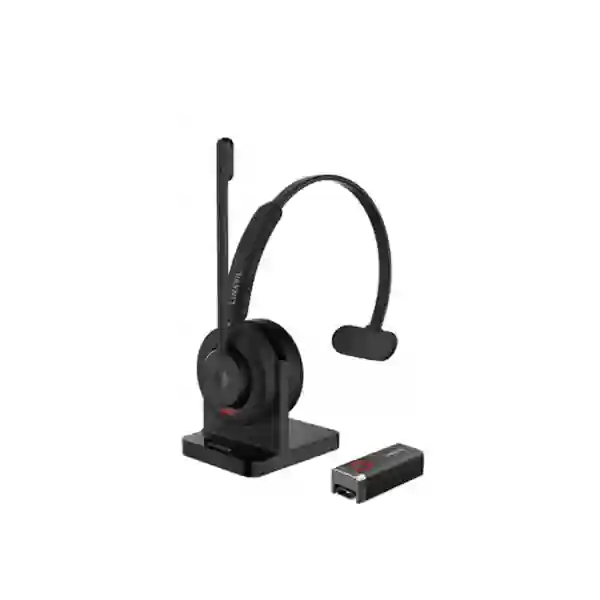
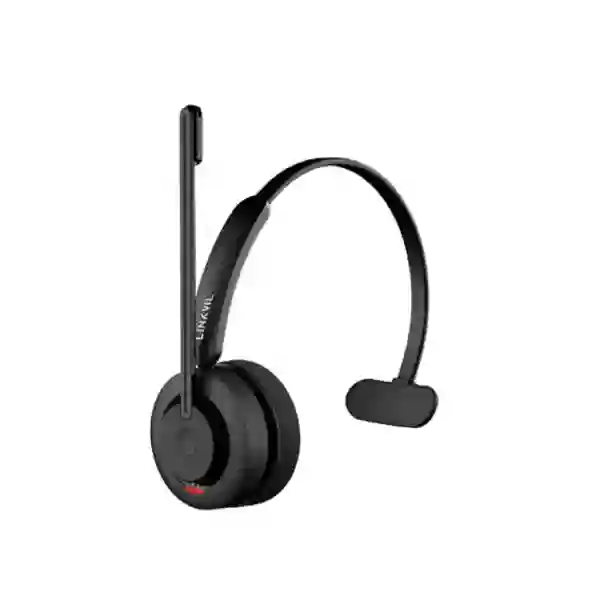
Fanvil DH301D DECT Wireless Headset
The Fanvil DH301D DECT Wireless Headset is built for professionals who need dependable voice quality, freedom to move, and a practical way to switch between modern communication devices. It combines DECT and Bluetooth 5.3 connectivity so users can work with computers, mobile devices and compatible VoIP phones while retaining the stability and extended mobility associated with DECT. For busy offices, contact-facing teams, hybrid workers and managers who spend significant time on calls, the DH301D offers a balanced mix of mobility, comfort and call-focused audio processing.
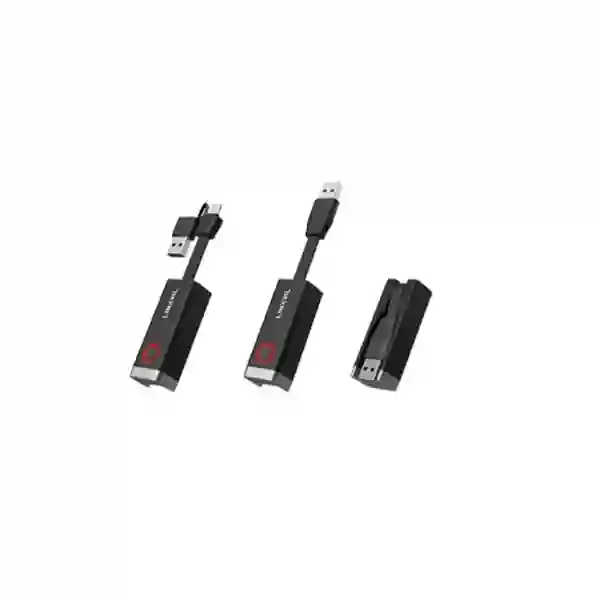
Fanvil specifies AI Environmental Noise Cancellation, voice enhancement, a 32 mm speaker, a 270-degree rotatable microphone boom and a pre-paired portable DECT dongle. The headset can charge through USB or its charging stand, and its design supports left- or right-ear microphone positioning. FourTeck Tanzania can help buyers assess compatibility with their current endpoint, softphone and IP-telephony environment before purchase.
Quick answer
Choose the DH301D when the priority is a lightweight professional headset with DECT mobility, Bluetooth flexibility, noise-reduced voice pickup and straightforward connection to PC, mobile and supported VoIP-phone workflows.
What makes the Fanvil DH301D useful for business?
The DH301D addresses a common workplace problem: people increasingly take calls from several communication platforms, yet they still need consistent audio and the freedom to move away from the desk. Bluetooth is convenient for mobile devices and laptops, while DECT is well suited to stable workplace headset connectivity and longer movement within the work area. Fanvil combines both approaches in one headset and includes a portable DECT dongle designed for plug-and-play use. This lets organisations standardise on one headset style while giving users several practical connection options.
Dual wireless modes
DECT supports stable workplace movement, while Bluetooth 5.3 supports mobile and other compatible device connections.
AI voice processing
AI Environmental Noise Cancellation and voice enhancement are designed to reduce distracting background sound and improve the clarity of speech.
Flexible wearing
A 270-degree rotatable microphone boom supports left- or right-side use, while the headset is designed for extended professional wear.
Practical charging
Users can recharge through the supplied USB connection or the desktop charging stand, helping keep the headset ready between calls.
Verified technical highlights
| Wireless modes | DECT and Bluetooth 5.3 |
| DECT range | Up to 180 m / 590 ft under vendor-stated conditions |
| Bluetooth range | Up to 10 m |
| Bluetooth profiles | HFP, HSP, A2DP, SPP and AVRCP |
| Simultaneous Bluetooth connections | 2 |
| Speaker | 32 mm; 20 Hz–20 kHz frequency range |
| Microphone | Omnidirectional analog microphone; 100 Hz–10 kHz range |
| Audio processing | AI Environmental Noise Cancellation, call noise reduction and voice enhancement |
| Battery | 400 mAh lithium-polymer; approximately 2-hour charging time at stated input |
| Vendor-stated talk time | Up to 10 h DECT mode; up to 21 h Bluetooth mode |
| Charging | USB cable or charging stand |
| Compatibility | Mainstream softphone environments and supported Fanvil V/X-series IP phones; exact phone compatibility should be checked |
Connectivity, compatibility and deployment guidance
A headset purchase is most successful when the connection method is matched to the user’s real workflow. A desk-based call handler may favour DECT through the supplied dongle because it provides the strongest mobility within the work environment. A manager who alternates between mobile and computer calls may benefit from Bluetooth. A user working with a Fanvil desk phone should confirm that the exact phone model and firmware are listed as compatible before procurement. Fanvil itself notes that VoIP-phone compatibility varies by model, so purchasing teams should avoid treating a broad product-family statement as a guarantee for every phone.
For contact centres, reception teams and shared office environments, administrators should also consider softphone call controls, endpoint policies, USB-port availability and how headsets will be assigned to individual users. DECT frequency bands can vary by regulatory region, so the supplied regional variant should be appropriate for the destination market. Organisations operating across several countries should therefore identify the intended country of use on the quotation rather than moving stock between regions without checking the correct radio version.
The broader voice environment matters as well. For IP-telephony deployments, reliable LAN connectivity, suitable voice VLAN design, QoS and stable PBX or cloud-call-platform configuration contribute to the overall user experience. The headset can improve the personal audio path, but it cannot compensate for packet loss, poorly configured call routing or an unstable internet link. FourTeck Tanzania’s business technology services can be reviewed alongside headset procurement when customers are also planning wider voice, network or endpoint changes.
Who should consider the DH301D?
The strongest fit is for users who spend meaningful time on voice calls but do not want to remain tied to a desk. Typical scenarios include customer-service staff, reception and administration teams, sales professionals, support engineers, hybrid employees, supervisors and managers. It can also fit organisations standardising headsets across mixed PC and mobile workflows. Before ordering large quantities, a pilot with representative endpoints is sensible. Check comfort, microphone positioning, call-control behaviour, charging routine and compatibility with the actual softphone or IP phone used by each user group.
Fanvil DH301D DECT Wireless Headset Tanzania
Businesses in Tanzania evaluating the Fanvil DH301D are commonly trying to improve call mobility without sacrificing the controlled, professional feel of a desk-based communications setup. The headset can be relevant to corporate offices, customer-service teams, financial organisations, education providers, healthcare administration, hospitality operations and service businesses where staff regularly handle calls from computers or IP phones. Its dual DECT and Bluetooth architecture is particularly useful when user roles are mixed. Some employees may work mainly from softphones, others may use mobile devices, and selected users may connect to supported Fanvil desk phones.
For Tanzania deployments, procurement teams should specify the required quantity, target device type, softphone platform and exact IP-phone model where applicable. This avoids treating headset procurement as an isolated accessory purchase. If an organisation is upgrading a larger voice environment, it is also worth checking LAN quality, voice VLANs, power protection and internet stability. The FourTeck Tanzania technology portfolio covers IP telephony and related infrastructure, which can help buyers coordinate the headset requirement with the systems it depends on.
Comfort and mobility should be assessed against actual working patterns. A user who remains at a fixed desk all day may not need the same range as a supervisor who walks between workstations, storage areas and nearby meeting spaces. Fanvil states a DECT range of up to 180 metres under suitable conditions, but real indoor range depends on walls, partitions, floor layout and interference. Buyers should therefore treat the headline range as a maximum rather than a guarantee for every building. A short on-site trial can be valuable where movement across multiple rooms is a core requirement.
For quotation planning in Tanzania, provide the number of users, working location, existing Fanvil or third-party phones, PC operating environment, preferred connection method and any need for spare or shared units. This gives the supplier enough information to confirm the appropriate regional model and accessory scope. Availability, pricing and delivery timing should be confirmed at the time of quotation rather than assumed from general product information.
Fanvil DH301D DECT Wireless Headset Dar es Salaam
In Dar es Salaam, the DH301D can suit organisations operating busy offices where call handlers need to move between desks, meeting points and support areas while remaining connected. Professional-services firms, logistics companies, financial teams, hospitality groups and technology businesses may all have staff who divide their day between VoIP calls, computer-based meetings and mobile communication. A dual-mode headset reduces the need to maintain separate devices for each workflow, provided the specific endpoint compatibility is confirmed before rollout.
Dense office layouts can contain Wi-Fi, Bluetooth peripherals, mobile devices and other radio equipment. DECT gives the DH301D an alternative wireless path that is purpose-built for voice mobility and has strong interference resistance according to Fanvil. The practical result can be useful for teams where reliable call continuity matters more than simply choosing a generic Bluetooth headset. The pre-paired DECT dongle also simplifies individual deployment because the user does not need a complex base-station installation for normal operation.
A Dar es Salaam deployment should still start with workflow mapping. Identify whether staff take calls through Microsoft Teams-style softphones, browser-based contact applications, SIP clients, mobile devices or Fanvil IP phones. Review USB-A/USB-C availability where the dongle will be connected, and check whether corporate endpoint-management policies restrict Bluetooth or removable USB devices. Where phone compatibility is important, verify the exact V/X-series model rather than assuming every Fanvil phone behaves identically.
When requesting a quotation, state whether the requirement is for a few executive users or a larger department. Larger deployments benefit from a small pilot batch, simple asset labelling, a charging policy and user guidance on microphone positioning and mode switching. Buyers can also browse the FourTeck Tanzania shop for related business telephony and infrastructure requirements before consolidating a procurement list.
Fanvil DH301D DECT Wireless Headset Mwanza
For businesses in Mwanza, the Fanvil DH301D can be considered where staff require wireless freedom during customer, supplier or internal calls. Offices serving trade, education, healthcare, professional services and regional operations may have teams that move between desks and nearby work zones rather than staying in one fixed position. DECT mobility can support this pattern, while Bluetooth adds flexibility for mobile-device or laptop use. The value lies in choosing the connection mode that matches the employee’s normal tasks instead of using one wireless method for every scenario.
The headset’s AI Environmental Noise Cancellation and voice-enhancement functions are relevant in shared workspaces where background conversations can affect call clarity. These technologies are designed to reduce unwanted environmental sound, but organisations should still manage the surrounding workspace. Seating layout, distance between call handlers and acoustic surfaces influence how much noise reaches the microphone. A good headset helps, yet workspace planning remains important for teams handling sensitive or high-volume conversations.
Mwanza buyers should also evaluate charging routines. The DH301D supports both USB charging and a charging stand, so users can keep a predictable desktop location for the headset while retaining the option to connect by cable. Fanvil’s published figures list up to 10 hours of talk time in DECT mode and up to 21 hours in Bluetooth mode. Actual operating time varies with use, settings and battery condition, so departments with long shifts should establish a charging habit rather than planning around the maximum number alone.
For procurement, provide the expected call platform, number of users, device types and whether the headset will be individually assigned or shared. If the requirement is part of an IP-phone project, include switch, PoE, PBX and network details in the conversation. This makes it easier to address the whole communications environment and reduces the risk that a suitable headset is paired with an incompatible or poorly configured endpoint.
Fanvil DH301D DECT Wireless Headset Arusha
Arusha organisations supporting hospitality, tourism, administration, education, logistics and professional services often need staff to communicate across a mix of desks, laptops and mobile devices. The DH301D provides a practical headset platform for these mixed workflows because the user can work through Bluetooth or DECT instead of being restricted to one connection type. For a hotel or service office, for example, selected back-office users may need mobility while coordinating reservations, suppliers or internal teams. For a business office, managers may alternate between softphone calls and mobile communication during the same day.
The 270-degree microphone boom supports left- and right-ear wearing, which is useful when headsets are deployed to users with different preferences. Fanvil also lists the headset at approximately 100 grams, supporting a lightweight design for extended use. Comfort remains personal, however, so a representative pilot is recommended before purchasing for a large group. A trial should involve realistic call durations and the actual office environment, not only a brief fit test.
Wireless planning is also relevant. Thick walls, multiple floors and building materials can reduce practical DECT coverage compared with an open-space maximum. Teams should identify where users expect to walk during calls and test those routes. Bluetooth range is much shorter than DECT, so staff requiring wider movement around the workplace will normally use the DECT path. The right operational mode depends on the device and the movement pattern.
Arusha buyers requesting a quote should include the intended platform, exact desk-phone models, quantity, user roles and destination details. Where a company has branches elsewhere in East Africa, consistent headset standards can simplify training and support, but radio-region and compatibility requirements still need to be checked per deployment. Larger regional projects can also be coordinated with the FourTeck Uganda regional technology site when Uganda locations are part of the same procurement programme.
Fanvil DH301D DECT Wireless Headset Dodoma
In Dodoma, the Fanvil DH301D can be evaluated for administrative offices, professional teams, institutions and customer-facing operations that want wireless calling without relying exclusively on Bluetooth. The DECT mode is designed for stable voice connectivity and wider movement, while Bluetooth 5.3 supports flexible links to suitable computers and mobile devices. This can make the headset relevant to managers, support teams and staff who move between a workstation and nearby collaborative spaces during calls.
For office standardisation, the strongest benefit comes from consistency. If different users buy unrelated consumer headsets, support teams may face varying drivers, charging cables, microphone behaviour and call controls. A defined business headset model can simplify documentation and spare-unit planning. Before standardisation, however, confirm the DH301D against the organisation’s actual softphone platform and phone estate. Fanvil publishes broad compatibility with mainstream softphone environments and supported V/X-series phones, but model-level verification remains important.
Dodoma deployments should also account for electrical and operational realities. The headset itself is battery powered, but the surrounding PC, phone, network and PBX infrastructure determines whether users can continue working during local power interruptions. Organisations with critical communications may therefore need UPS-backed switches, routers and endpoint power alongside the headset project. The headset solves the user’s personal audio and mobility requirement; it should be considered as one component in a resilient communications chain.
A useful quotation request identifies the number of headsets, connection type, software platform, phone models, target date and any need for related IP telephony hardware. Avoid requesting only “wireless headsets” without describing the environment. Better information lets the supplier recommend the correct variant, confirm compatibility and identify whether a test unit or staged deployment would reduce procurement risk.
Fanvil DH301D DECT Wireless Headset UAE
For UAE businesses, the DH301D fits the same core need: professional users want mobility, strong voice focus and device flexibility across office and hybrid-work applications. Organisations with contact centres, sales desks, support operations and multi-site administration may value the ability to combine DECT for workplace movement with Bluetooth for mobile and PC scenarios. The portable dongle also makes the headset easier to standardise for users who change desks or work in flexible office arrangements.
Regional procurement should always confirm the correct DECT frequency variant. Fanvil’s documentation identifies different DECT frequency bands for different regulatory markets, so cross-border purchasing requires care. Buyers should specify that the equipment is for UAE deployment rather than assuming any globally sourced unit is suitable. This is especially important for multinational companies that use central procurement but deploy equipment in several countries.
The headset can complement Fanvil IP-phone estates, but exact model compatibility should be checked. In mixed-vendor environments, the most predictable approach may be USB/DECT or Bluetooth through the computer depending on the UC platform. A pilot should verify answer/end behaviour, mute, audio-device selection and user experience with the actual application. For users who depend heavily on mobile calling, test Bluetooth switching and simultaneous connection behaviour as part of the trial.
For UAE quotations, procurement teams should provide quantity, delivery emirate, target platform and any current Fanvil phone models. Large orders are best approached as a controlled endpoint rollout with compatibility testing, user profiles and a defined support process. Pricing, warranty conditions, delivery schedule and stock should be confirmed in the quotation rather than inferred from regional marketing content.
Fanvil DH301D DECT Wireless Headset Uganda
Ugandan organisations considering the DH301D may include businesses with branch networks, customer-service teams, NGOs, professional offices, education providers and hospitality operations. The headset’s dual wireless modes let IT teams support users who work primarily from softphones as well as staff who need mobile or supported desk-phone connectivity. DECT is especially relevant where the user must stay on a call while moving around a work zone, while Bluetooth addresses shorter-range connections and mobile-device convenience.
The 32 mm speaker and call-focused audio processing are designed to provide clear speech and usable media audio. For busy workplaces, AI Environmental Noise Cancellation can improve the outgoing voice path, yet users should still position the microphone boom correctly. Training matters: a well-specified headset can perform poorly if the microphone sits too far from the mouth or the wrong system audio device is selected. Brief user onboarding can therefore deliver more value than simply distributing the hardware.
Uganda procurement teams should define whether headsets will be used in individual offices, open-plan spaces, call-handling areas or home-working environments. These contexts affect priorities such as range, battery routine, background noise and transport. The DH301D includes a charging stand, which works well for fixed desks, while USB charging offers an alternative for mobile or hybrid users. For remote or branch workers, confirm that the required accessories stay with each assigned unit.
When the headset is part of a broader phone-system rollout, include the PBX platform, SIP endpoints and network structure in the project brief. Consistent device naming and documentation can make multi-branch support easier. For regional purchasing, confirm the correct destination-country model and do not assume that a DECT variant intended for another market is automatically appropriate.
Fanvil DH301D DECT Wireless Headset Kampala
Kampala offices often combine mobile communication, cloud collaboration and IP telephony in the same working day. The DH301D is relevant to this mixed communications pattern because it supports both DECT and Bluetooth, allowing businesses to define different connection practices for different roles. A customer-service user may prioritise DECT stability through the computer, while a manager may need Bluetooth access to a mobile device as well. This flexibility can reduce the number of headset types that IT teams have to support.
For larger offices, the up-to-180-metre DECT specification is attractive, but practical range should be validated inside the actual building. Reinforced walls, elevator cores, server rooms, dense partitions and multiple floors can change coverage. A trial should include the corridors, nearby rooms and support areas where users expect to remain on a call. Teams should avoid basing a purchase entirely on an open-field distance figure.
The charging stand can support tidy desk deployment because every headset has a predictable storage point. This is useful in environments where equipment otherwise moves between workstations and becomes difficult to track. For shared-desk or hot-desking programmes, asset labels and assignment procedures may be helpful. If users carry headsets between home and office, the USB charging option adds flexibility, though organisations should decide whether the charging stand remains at the primary location.
Kampala buyers should also verify softphone and Fanvil phone compatibility at model level. A procurement request should include the target software, operating systems, IP phone types and approximate daily call duration. These details allow a more accurate recommendation and reduce the chance of discovering control or connection differences after deployment.
Fanvil DH301D DECT Wireless Headset Arua
For organisations in Arua, wireless headsets may be used in branch offices, field-support coordination, administration and service environments where staff need to step away from a workstation during calls. The DH301D’s DECT connection can support broader workplace movement than a typical Bluetooth-only headset, while Bluetooth remains useful for mobile devices and shorter-range computer work. This combination is valuable when organisations want one professional headset to cover several work styles.
A deployment should consider support practicality as well as specifications. Branch teams benefit from equipment that can be paired and charged without complicated local setup. Fanvil supplies a pre-paired portable DECT dongle and desktop charging stand, which can simplify installation. IT teams should document how to switch modes, select the correct audio device and reset or re-pair hardware if users encounter problems. Simple instructions can reduce unnecessary escalation to central support.
Battery planning matters where calls extend through much of the working day. Fanvil’s published figures indicate up to 10 hours of DECT talk time and longer Bluetooth talk time under stated conditions. Real performance varies, so charging at the end of each work period is sensible. The stand makes that routine intuitive because the headset can return to the same location when not in use.
Arua procurement requests should include the number of users, branch details, endpoint platform and preferred mode. If the site has limited local IT support, confirm the deployment process before shipment and consider testing one unit with the real call platform. This approach helps identify configuration issues early and provides a working reference for subsequent users.
Fanvil DH301D DECT Wireless Headset Mbarara
Mbarara businesses looking for professional wireless calling can consider the DH301D where mobility and voice focus are more important than consumer entertainment features. The headset is designed around work communication, with a microphone boom, AI noise cancellation, call noise reduction and a speaker tuned for both talk and media use. For managers, support teams and customer-facing personnel, this can create a more consistent communication experience than switching between phone speakers, laptop microphones and personal earbuds.
Device compatibility should be treated as part of the purchasing decision. If the user works mainly from a laptop, the DECT dongle or Bluetooth connection can be evaluated with the exact softphone. If the user works with a Fanvil V- or X-series desk phone, verify the specific phone model against the vendor compatibility information. Where a third-party VoIP phone is used, do not assume direct headset integration without a confirmed supported method.
For teams with many calls, ergonomic consistency is important. The DH301D’s rotatable boom supports either side, and the headset is relatively lightweight. Managers should still gather feedback from different users before standardisation because head shape, wearing preference and call duration vary. A short trial can uncover comfort concerns or software-specific call-control behaviour before a full order is placed.
Mbarara procurement teams can improve quotation accuracy by describing daily call duration, user roles, existing phones, number of required units and whether deployment support is needed. If a wider voice upgrade is planned, include PBX, switch and connectivity information so the headset decision is aligned with the rest of the communication system.
Fanvil DH301D DECT Wireless Headset Gulu
In Gulu, the Fanvil DH301D can serve organisations that want a business-grade wireless headset for office calling, remote collaboration and mobile communication. The DECT and Bluetooth combination is useful where an employee’s communication method changes through the day. Stable DECT movement can support longer calls around the workplace, while Bluetooth can connect to mobile devices or compatible computers for shorter-range flexibility.
Noise management can be important in shared offices or temporary workspaces. Fanvil’s AI Environmental Noise Cancellation is designed to suppress environmental sound and improve voice pickup. This feature should be viewed as an aid rather than a replacement for sensible workspace practice. Users who handle confidential discussions still need appropriate physical privacy, and very noisy environments may require separate acoustic controls or dedicated call areas.
For branch deployments, IT teams should keep a record of the headset, dongle and charging stand as a matched user kit. This reduces lost accessories and simplifies replacement. The headset can also operate in USB headset mode while charging, which provides a useful fallback when the battery is low. Training users on that option can prevent avoidable downtime during critical calls.
Gulu buyers should request confirmation of the correct regulatory model, target platform compatibility and package contents before purchase. Organisations buying for multiple branches can use one standard operating guide while still validating each site’s endpoint mix. Pricing and delivery depend on the current quotation and should be confirmed for the intended destination rather than inferred from another region.
Fanvil DH301D DECT Wireless Headset Kenya
Kenyan organisations adopting cloud communications and hybrid work can use the DH301D as part of a standard professional audio toolkit. The model is designed for users who move between PC, mobile and compatible VoIP-phone calling. DECT provides the dedicated workplace wireless path, while Bluetooth 5.3 supports flexible connections and up to two simultaneous Bluetooth connections according to Fanvil’s published specification. That combination can be useful for sales, service and management roles that frequently change devices.
For Nairobi and other business centres, high-density offices may contain many wireless endpoints. DECT’s strong interference resistance is a useful design characteristic, but IT teams should still test performance in the target environment. The goal is not simply to achieve maximum distance; it is to maintain clear, dependable calls across the movement area users actually need. A realistic pilot should include normal network load and user traffic.
Kenya procurement teams should separate three questions: does the headset physically suit the user, does the connection method work with the platform, and does the call-control experience meet expectations? These are related but not identical. A headset can sound good yet lack the exact button behaviour a user expects in a particular application. Testing the actual software client, phone model and operating system is the safest method.
For multi-country organisations, maintain a procurement sheet that lists destination, regulatory variant, phone platform and assigned user group. This prevents a shipment intended for one market from being redeployed elsewhere without technical checks. Quantities, availability, warranty and commercial terms should be confirmed in the formal quotation for the Kenyan destination.
Fanvil DH301D DECT Wireless Headset Kuwait
For Kuwait offices, the DH301D can support professional calling in corporate, service, retail-administration and support environments where users require wireless movement and multiple device options. DECT is useful for stable workplace communication, while Bluetooth 5.3 broadens device flexibility. The headset’s professional microphone design, AI environmental noise cancellation and voice enhancement make it suitable for roles where clear speech is more important than entertainment-oriented features.
Cross-region purchasing deserves special attention because DECT frequency allocations vary. Procurement teams should identify Kuwait as the deployment country and ask for the appropriate regional version. Importing units selected for a different market can create regulatory or compatibility problems even when the product name appears identical. The same principle applies to multinational organisations using central stock: country assignment should be tracked alongside serial or asset information.
The charging stand supports a clean fixed-desk workflow, while USB charging provides a useful alternative. In offices with shared desks, assign each headset to a user or create a documented sanitisation and charging process if equipment is shared. User training should cover microphone boom position, mute behaviour, mode selection and how to choose the headset in the operating system or softphone.
Before a Kuwait order is finalised, confirm the exact call platform, device mix, quantity and user roles. If the headset will connect directly to Fanvil V/X-series phones, verify those phone models. If users will work mainly from a computer, test with the actual softphone and security policies. Commercial details such as price, current stock, warranty and delivery should be confirmed in the quotation.
Fanvil DH301D DECT Wireless Headset Ghana
Ghanaian businesses can consider the DH301D for contact-facing and hybrid teams that require a professional wireless headset capable of working across modern communication endpoints. The dual-mode design is particularly useful where employees use both computer applications and mobile devices. For office workers who need to move through nearby spaces while staying connected, DECT offers a wider operating concept than typical Bluetooth-only designs.
The headset’s AI noise cancellation and voice enhancement can support clearer outgoing speech in shared environments. A practical deployment should combine this with basic workspace discipline: keep microphone booms correctly positioned, avoid placing call handlers directly beside loud equipment, and configure system microphone levels consistently. IT teams should also standardise the selected audio device within the softphone to avoid calls accidentally routing through laptop speakers.
For Accra offices and distributed branches, consider how the charging stand and dongle will be managed. A complete user kit should remain together so that accessories are not separated during desk moves. Where employees travel or work remotely, document the USB charging option and provide a transport routine that protects the microphone boom and dongle. These operational details often determine whether a technically good headset remains reliable over its service life.
Ghana procurement teams should ask for the correct regional version and confirm platform compatibility before ordering at scale. Include user quantity, phone models, computer platform and preferred call application in the request. If the order is part of a wider IP-telephony refresh, a small pilot helps validate the full workflow before a broad rollout.
Fanvil DH301D DECT Wireless Headset Nigeria
Nigeria’s large and diverse business environments create many potential use cases for professional wireless headsets, from customer support and financial services to logistics, technology, education and distributed branch operations. The DH301D is most relevant where users need call mobility, voice-focused audio processing and flexibility across computer, mobile and compatible IP-phone workflows. Its DECT mode is designed for longer workplace range, while Bluetooth 5.3 adds shorter-range versatility.
For high-call-volume departments, standardising on a defined headset can reduce support complexity. IT teams can maintain one user guide, one charging process and one compatibility matrix instead of supporting many consumer models. The DH301D’s 270-degree boom and left/right wearing flexibility help accommodate different users, but comfort still needs validation. A pilot group should include frequent callers because they are most likely to detect fit or workflow issues.
Where power continuity is a concern, remember that the headset’s own battery is only part of the communications chain. The PC, phone, LAN switches, internet gateway and PBX or cloud service must also remain available. Organisations that treat voice as business-critical should consider UPS coverage and link resilience as part of the same communication strategy. A wireless headset improves mobility but does not replace resilient network planning.
Nigeria procurement requests should identify the destination, quantity, software platform, IP-phone models and expected usage pattern. For multi-site companies, build a standard compatibility record before shipping to branches. Confirm availability, price, warranty terms and delivery scope in the formal quotation, because these commercial factors can change independently of the published product specifications.
Fanvil DH301D DECT Wireless Headset Seychelles
In Seychelles, the DH301D can fit hospitality administration, professional offices, service companies and other organisations where staff depend on clear voice communication but need to move beyond a fixed desk. Tourism and hospitality operations in particular can involve back-office teams coordinating reservations, suppliers, guest requests and internal operations across several communication channels. A dual-mode headset lets those users combine a stable DECT work connection with Bluetooth flexibility when appropriate.
Smaller island markets can place a premium on procurement planning because replacement units and accessories may not always be immediately available. Organisations should therefore confirm the complete package, keep dongles and charging stands assigned to users, and consider one or more spare units where communications are operationally important. This is a planning choice rather than a claim about local stock; actual availability should always be checked during quotation.
The headset’s charging stand supports a tidy office setup, while USB charging gives users another way to keep the device powered. For hybrid staff who travel between office and home, define which accessories move with the user. Keeping the DECT dongle with the headset is especially important because losing a small accessory can disrupt an otherwise functional unit.
Seychelles buyers should verify the required regional radio version, softphone compatibility and any direct Fanvil phone integration before placing a volume order. A test unit can validate audio quality, movement range and call controls in the real environment. When requesting a quote, provide the number of users, preferred platform, endpoint models and delivery destination so the proposal can address the actual operating context.
Selection checklist before ordering
Identify the softphone, operating system, mobile device or exact Fanvil IP phone used by each user group.
Decide whether users need desk-range Bluetooth or broader DECT movement through rooms and work areas.
Estimate daily call load and create a charging routine appropriate to the selected wireless mode.
Confirm that the DECT model supplied is appropriate for the destination country’s radio regulations.
Test representative users, endpoints and call-control functions before a large rollout.
Confirm current price, availability, delivery, warranty and package contents in the formal quotation.
Related FourTeck resources
For organisations building or upgrading a voice environment, the headset is only one endpoint in the system. The FourTeck Tanzania product shop helps buyers review complementary business technology categories, while FourTeck Tanzania services provides context for broader deployment and integration requirements. Businesses planning multi-market operations can also review FourTeck Uganda for Uganda-focused requirements. For the Tanzania project itself, the FourTeck Tanzania home page summarises the wider portfolio across telephony, networking, security and collaboration.
Fanvil DH301D FAQs
Is the Fanvil DH301D a Bluetooth-only headset?
No. The DH301D supports both DECT and Bluetooth 5.3. DECT is intended for stable workplace mobility through the supplied dongle, while Bluetooth provides flexible connections to compatible devices.
What is the stated DECT range?
Fanvil states a DECT range of up to 180 metres or 590 feet. Actual indoor range depends on walls, building materials, radio conditions and the route the user takes through the workspace.
Does the DH301D work with Fanvil IP phones?
Fanvil lists compatibility with supported V- and X-series IP phones, but compatibility varies by phone model. The exact phone should be checked before purchase.
Does it include noise cancellation?
Yes. Fanvil specifies AI Environmental Noise Cancellation, voice enhancement and call noise reduction. These functions are designed to improve voice clarity in busy environments.
How is the headset charged?
The DH301D supports charging through the desktop charging stand or by USB cable. It can also operate as a USB headset while charging.
How long does the battery last?
Fanvil’s published figures list up to 10 hours of DECT talk time and up to 21 hours of Bluetooth talk time. Real battery life varies with use, settings, environment and battery age.
Can it connect to two Bluetooth devices?
Fanvil lists support for two simultaneous Bluetooth connections. The exact user experience can still depend on the connected devices and applications.
What should I provide when asking for a quote?
Provide the quantity, destination, user roles, softphone or UC platform, computer environment, exact IP-phone models if direct phone use is planned, and any target deployment date. This helps confirm compatibility and commercial scope.
Decision recap
The Fanvil DH301D is best suited to business users who want the mobility of DECT, the flexibility of Bluetooth 5.3 and call-focused audio processing in one lightweight professional headset. Its portable DECT dongle, charging stand, AI environmental noise cancellation, 32 mm speaker and flexible microphone boom make it practical for day-to-day office and hybrid communication.
The most important buying step is compatibility validation. Confirm the exact softphone, operating system and IP-phone model, then test representative users if the deployment is large. For cross-border orders, confirm the correct DECT radio variant for the destination country. Commercial factors such as stock, price, warranty and delivery should be confirmed in the quotation.
Prepare a useful quotation request
Include the following information: number of headsets, country and city of deployment, user roles, preferred connection mode, softphone/UC application, computer operating system, exact Fanvil or other IP-phone models, expected daily call duration and whether the order is part of a larger telephony project. Better input allows compatibility to be checked before the order is finalised.
For Tanzania enquiries, use the verified FourTeck Tanzania contact page to request current pricing, availability and solution guidance.



Reviews
There are no reviews yet.