
LINKVIL W620D DECT Phone Tanzania
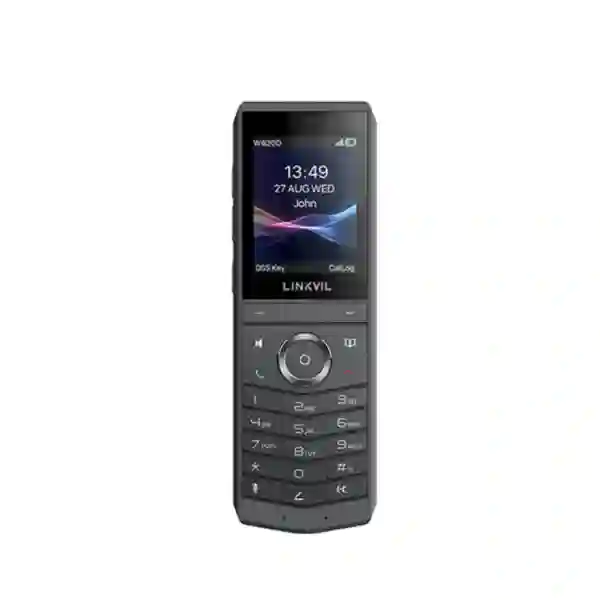
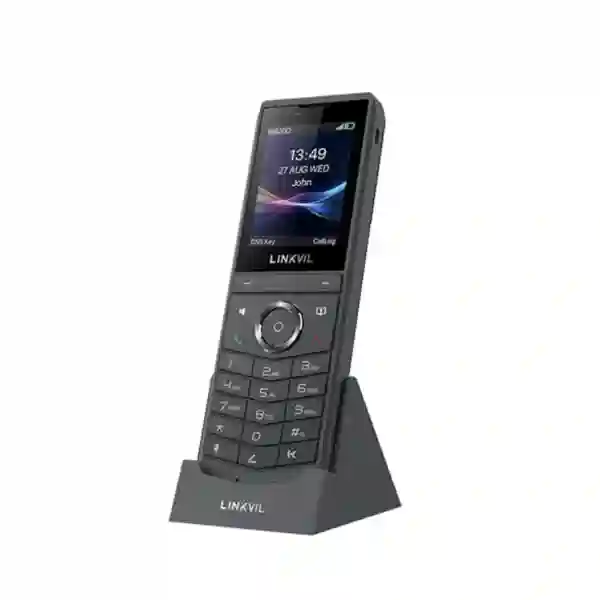
The LINKVIL W620D is a portable DECT business phone designed for users who need to move freely while remaining reachable on an IP telephony system. It pairs with the LINKVIL W710D DECT IP Base Station and gives staff a compact handset with a 2.4-inch 240 × 320 color display, HD audio, intelligent noise reduction, Bluetooth 5.0, USB Type-C connectivity, Push-to-Talk and a practical set of programmable calling controls. For Tanzanian businesses evaluating cordless voice for reception overflow, warehouses, retail floors, hospitality teams, clinics, offices and back-of-house operations, the W620D provides a purpose-built alternative to carrying a desk phone function on a personal mobile device.
FourTeck can help buyers evaluate the W620D as part of a complete voice deployment rather than as an isolated handset. That means checking the W710D base requirement, SIP and PBX compatibility, expected handset count, call concurrency, coverage conditions, charging workflow, headset preference and the network design behind the base station. For broader business technology planning in Tanzania, review FourTeck Tanzania’s integrated IT and telecom solutions, which connect IP telephony with networking, security and infrastructure decisions.
What is the LINKVIL W620D?
The LINKVIL W620D is a cordless DECT handset in Fanvil’s LINKVIL wireless communications range. Its role is straightforward: give a user business-telephone functions while allowing them to move around the workplace. Unlike a desk IP phone, the handset is not tied to a fixed Ethernet position. Unlike a standard mobile phone, it is designed to work within a managed DECT voice environment connected through the compatible W710D base station. This distinction matters for organizations that want internal extension dialing, SIP-connected calling and centrally managed business voice while keeping users mobile.
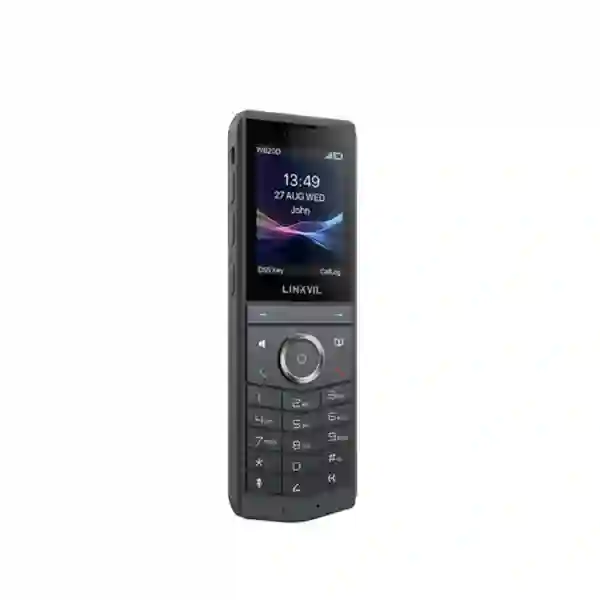
The handset includes a three-core CPU architecture, a color user interface, HD voice features and intelligent noise reduction. Fanvil specifies a 3000 mAh battery with up to 13 hours of talk time and up to 240 hours of standby under ideal conditions. The W620D also supports Bluetooth 5.0 for wireless headset use and a USB Type-C port that can support a compatible wired headset. Physical usability has been considered for mobile staff: the phone supports incoming-call vibration, a Push-to-Talk key, programmable controls and up to 1.8-meter drop resistance.
The W620D should be evaluated together with the W710D base because the base provides the IP-network and SIP-facing functions of the DECT system. Fanvil states that the W710D can support up to 10 handsets, up to 10 simultaneous calls, up to 20 SIP accounts and up to 10 internal extensions, with stated wireless coverage of up to 50 metres indoors and 300 metres outdoors in suitable conditions. Real-world range is affected by walls, construction materials, interference, floor layout and base placement, so coverage should be planned rather than assumed.
Clearer mobile calling
HD voice and intelligent noise reduction are useful for staff who take calls while moving through offices, retail areas, hotels or operational spaces where background sound can interfere with speech.
Long-shift readiness
The 3000 mAh battery and manufacturer-rated endurance can reduce mid-shift charging pressure. Actual runtime depends on usage, signal conditions, Bluetooth use, call volume and device settings.
Fast team actions
DSS keys, a physical programmable key and PTT can simplify frequently used calling actions. These controls are especially relevant where staff need fast access to colleagues or common call functions.
Headset flexibility
Bluetooth 5.0 provides a wireless headset path, while the USB Type-C interface supports wired headset use. This allows buyers to select an accessory approach that fits the user role and workplace.
Verified LINKVIL W620D specifications
| Area | Manufacturer-published detail |
|---|---|
| Display | 2.4-inch 240 × 320 TFT color screen |
| Bluetooth | Bluetooth 5.0 |
| Battery | 3000 mAh rechargeable battery |
| Battery endurance | Up to 13 hours talk time and up to 240 hours standby in ideal laboratory conditions |
| Audio | HD voice, intelligent noise reduction, acoustic shield functions and 2 W hands-free speaker |
| Keys | Full keypad, navigation keys, function keys, 16 DSS keys, programmable key and PTT key |
| Conferencing | Local 6-way audio conference |
| Contacts and logs | 1000 local contacts, XML/LDAP remote phonebook support and 600 call logs |
| Connectivity | DECT, Bluetooth 5.0, USB 2.0 through Type-C port |
| Durability | Incoming vibration alert and up to 1.8-metre drop resistance |
| Size / weight | 160 × 53 × 16 mm; product weight 256 g |
| Operating range | -10°C to 45°C; 5% to 95% non-condensing humidity |
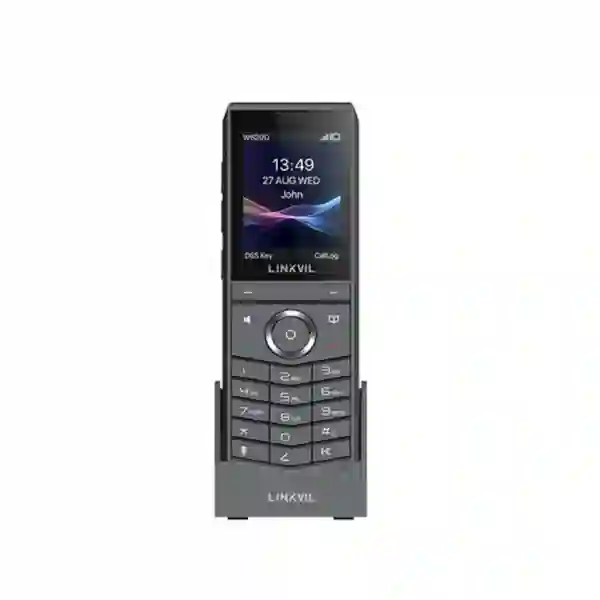
| Package | W620D handset, 5V/2A adapter, charging base, belt clip, rechargeable battery and quick installation guide |
Deployment and integration guidance
A W620D purchase should begin with the voice-system architecture. Because the handset is intended to operate with the W710D base station, buyers should confirm whether they already have a compatible base, how many handsets will be registered, how many simultaneous calls are expected and which SIP accounts or PBX extensions will be assigned. This is where handset procurement becomes a systems question. A small office may need only a few mobile extensions, while a warehouse, hotel or multi-department business may need multiple handsets, clear extension naming and documented call flows.
The network path to the W710D base also deserves attention. Voice quality depends on more than the handset. Switching, VLAN design, Quality of Service, gateway behavior, firewall rules, SIP trunk configuration and internet stability can all influence the calling experience. FourTeck’s Tanzania technology services overview is relevant for businesses that want telephony considered together with installation, configuration and broader infrastructure requirements rather than purchasing endpoints without a deployment plan.
Coverage testing is equally important. Fanvil publishes a W710D range figure of up to 50 metres indoors and 300 metres outdoors, but these are not guarantees for every building. Concrete walls, metal shelving, lifts, machinery, multiple floors and high-interference environments can reduce usable range. A sensible project identifies the areas where staff must remain reachable, locates the base to support those areas, and tests actual performance before standardizing the rollout.
Who should consider the W620D?
The W620D is particularly relevant to roles where a fixed desk phone creates friction. In hospitality, supervisors and front-of-house support staff may need to move between guest areas while staying connected to the business voice platform. In retail, floor managers may need to answer internal or external calls without returning to a desk. In warehousing and light industrial settings, operational staff can benefit from a cordless handset with vibration, PTT and drop resistance. In clinics and service organizations, mobile staff may need a dedicated business extension that is separate from personal mobile numbers.
It is less about replacing every desk phone and more about matching the endpoint to the job. Reception, finance and administrative teams may still prefer full desk phones with larger displays and more direct keys. Mobile operational roles may benefit more from DECT. Buyers who are comparing endpoint classes can also review FourTeck’s broader regional telecom portfolio through FourTeck Uganda and FourTeck Kenya when coordinating projects across East Africa.
Buying checklist before requesting a quotation
For a more accurate quotation, identify the number of W620D handsets required, whether W710D base stations are already installed, the total user and extension count, simultaneous-call expectations, the current IP PBX or hosted SIP platform, headset preference, departments requiring PTT or programmable keys, expected coverage areas, charging locations and any branch sites that need similar standardization.
If the requirement is part of a wider technology refresh, the FourTeck Tanzania shop provides another route for exploring related business technology, while a project discussion can ensure the cordless phones are aligned with switches, VLANs, internet connectivity and the PBX environment.
LINKVIL W620D DECT Phone Tanzania
For organizations in Tanzania, the LINKVIL W620D is best viewed as a mobile endpoint for structured business telephony. Companies often need staff to remain contactable without tying every employee to a desk. Warehouses, retail environments, hotels, education facilities, healthcare operations, service centers and office campuses can all include roles where people move between rooms, floors or work zones while still needing a business extension. The W620D addresses that requirement through DECT connectivity to the W710D base, allowing an organization to keep voice traffic integrated with its SIP or IP PBX platform rather than relying solely on personal mobile phones.
Procurement planning should start with user roles. A manager who takes occasional calls may value Bluetooth headset support and the color display. A warehouse supervisor may care more about Push-to-Talk, vibration alert and drop resistance. A hospitality user may focus on long battery endurance and simple access to frequently used extensions. By matching the handset’s functions to real workflows, Tanzanian buyers can avoid over-specifying some users while under-equipping mobile staff who need fast communication.
The base-station environment is equally important. Fanvil specifies the W710D for up to 10 handsets, 10 simultaneous calls, 20 SIP accounts and 10 internal extensions. Those numbers help with initial sizing, but a deployment should also consider building layout, wall materials, call volume, extension strategy, network resilience and future growth. The stated range of up to 50 metres indoors and 300 metres outdoors should be treated as a planning reference, not a promise for every Tanzanian site. Actual coverage can differ sharply between an open office, a concrete multi-storey building and a warehouse filled with metal shelving.
For Tanzania-wide purchasing, the most useful quotation is one that separates hardware quantity from integration needs. Businesses should state whether they require handsets only, handsets plus W710D bases, provisioning, PBX configuration, SIP integration, user setup, headset accessories or on-site testing. This makes it easier to compare the complete deployment cost instead of comparing only the handset price. FourTeck can structure the discussion around the operating environment and intended use, helping buyers determine whether the W620D is the appropriate cordless endpoint for their voice platform.
LINKVIL W620D DECT Phone Dar es Salaam
Dar es Salaam businesses often combine office, retail, logistics, hospitality and service operations within busy facilities where staff do not remain at one desk. In that context, the W620D can be considered for employees who need an internal extension while moving around a defined workplace. Its DECT architecture is relevant for organizations that want cordless mobility without depending on the corporate Wi-Fi network for the handset’s voice radio. The W710D base connects the DECT side to the business IP voice environment, so network and PBX planning remain part of the solution.
For an office building in Dar es Salaam, base placement should be tested against walls, stairwells, lifts and floor transitions. For a warehouse or distribution site, metal racks and large open spaces can influence coverage in different ways. For a hotel, staff circulation patterns may span guest areas, back-of-house corridors and service floors. Each use case should therefore begin with a coverage map and user-movement profile rather than assuming the manufacturer’s maximum range will apply uniformly.
The handset’s practical features can support different roles. Bluetooth 5.0 is useful for users who need hands-free calling. USB Type-C provides a wired headset option. Vibration can help in noisy or quiet zones where a ringing handset is easy to miss or undesirable. The programmable and DSS keys can be assigned to frequently used functions, while PTT can support fast team communication workflows where the configured telephony environment permits it. Long battery endurance is valuable for shift-based operations, although real performance should be assessed under the actual calling pattern and signal conditions.
Dar es Salaam buyers should include the existing PBX or hosted voice platform in the quotation request. Also identify SIP trunk requirements, extension count, expected concurrent calls, handset quantities and whether the existing LAN provides a stable path for the W710D. If network improvements are required, it is more efficient to plan them alongside telephony. A well-scoped deployment prevents a cordless handset purchase from becoming a troubleshooting exercise later, and it provides a clearer basis for scaling additional W620D devices as teams grow.
LINKVIL W620D DECT Phone Mwanza
In Mwanza, the W620D can fit businesses that need mobile voice across offices, shops, hospitality properties, workshops, warehouses or mixed-use commercial sites. A cordless business handset is especially useful when employees are responsible for physical operations as well as incoming calls. Instead of leaving callers unanswered while a user is away from a fixed desk, a DECT handset can extend the business extension to where that employee is working within the coverage area.
The key buying decision is not simply whether the handset has enough features. It is whether the complete DECT and IP telephony design matches the premises. A small office may be served by a straightforward W710D installation with a few W620D handsets. A larger property may need closer examination of coverage boundaries, concurrent calling and departmental extension design. Walls, structural materials and operational equipment can influence radio performance, so businesses should plan a site test when continuous coverage is important.
For mobile staff, the W620D’s 2.4-inch color screen and physical keypad provide familiar phone interaction, while the 16 DSS keys and programmable controls offer shortcuts to common functions. The 3000 mAh battery is designed for extended use, and the manufacturer publishes up to 13 hours talk time and 240 hours standby under ideal conditions. A charging routine should still be part of operational planning, particularly where handsets are shared between shifts. Assigning each handset to a user, department or charging point can simplify accountability and support.
Mwanza procurement teams should also confirm whether they need a complete W620P-style system bundle or individual W620D handsets to add to an existing compatible W710D environment. This distinction affects both hardware and configuration. Include the PBX model, SIP provider, current extension plan and intended number of mobile users in the enquiry. With these details, the supplier can focus the recommendation on compatibility and capacity instead of guessing from the handset count alone.
LINKVIL W620D DECT Phone Arusha
Arusha organizations in hospitality, tourism support, professional services, education and general commerce may need a phone system that keeps mobile staff connected without giving every task a personal cellular workflow. The LINKVIL W620D can be deployed as a cordless business extension through the W710D base, allowing team members to remain part of the organization’s SIP telephony while moving around the premises. This can make internal dialing, customer-call handling and department coordination more consistent.
Hospitality-oriented deployments are a good example of why endpoint selection should follow workflow. A front desk may use fixed IP phones, while supervisors, maintenance coordinators or service teams can benefit from cordless handsets. In such environments, battery endurance, vibration alerts, PTT access and drop resistance may be more valuable than a large desktop display. Bluetooth support can also help users who need both hands free while handling operational tasks, provided an appropriate compatible headset is selected.
Coverage design should account for the property rather than using a simple distance calculation. Guest-room corridors, service areas, stairwells, outdoor transitions and building materials can all affect radio conditions. Fanvil’s published W710D figures provide an upper planning reference, but on-site verification is the reliable way to establish where a handset remains usable. Businesses with multiple separated buildings should also identify whether a single-base architecture is sufficient or whether another DECT approach is needed for the scale and roaming requirement.
When requesting an Arusha quotation, provide the number of staff, number of concurrent calls expected, current PBX or hosted voice service, required coverage areas, working shifts and whether headsets are needed. It is also useful to identify backup-power arrangements for the network and base station, because a cordless handset depends on the upstream voice infrastructure. A clear scope helps ensure the W620D is purchased as part of a dependable communication workflow rather than simply as a feature-rich handset.
LINKVIL W620D DECT Phone Dodoma
For businesses and institutions in Dodoma, cordless telephony can be useful where employees divide their time between offices, reception points, stores, meeting areas and operational spaces. The W620D allows an extension to travel with the user within the W710D DECT coverage zone. That can reduce missed calls and make internal coordination easier without requiring each employee to use a personal mobile number for business communication.
The handset combines familiar phone controls with features designed for business mobility. Its color display supports day-to-day navigation, the DSS and programmable keys help users reach common functions faster, and PTT can be valuable for rapid team coordination where configured appropriately. Incoming-call vibration supports environments where audible ringing may not be ideal. The drop-resistance specification also adds practical reassurance for staff who carry the handset throughout the working day, though it should not be treated as a guarantee against all physical damage.
Dodoma buyers should pay particular attention to system sizing. One W710D can support a defined number of handsets and simultaneous calls, so growth plans matter. A deployment for three users today may expand to eight or ten users later. Extension numbering, SIP account allocation and charging arrangements should be designed with that expansion in mind. If departments have different call permissions or routing rules, those requirements should be documented before provisioning begins.
The network behind the base station is another critical layer. Stable Ethernet, suitable switching, correct VLAN and QoS configuration, firewall handling and dependable SIP connectivity all contribute to call quality. Businesses should include these infrastructure details in their quotation request. That gives the solution provider enough context to identify whether the requirement is a simple handset addition or a broader voice-system deployment that also needs network preparation, configuration and testing.
LINKVIL W620D DECT Phone UAE
Organizations coordinating procurement between Tanzania and the UAE may want a common cordless telephony standard for selected mobile roles. The W620D can be considered where a business already uses or plans to use the compatible W710D base. Standardizing a handset model across branches can simplify user familiarization, accessory planning and configuration documentation, but local regulatory frequency variants and deployment conditions should always be confirmed before purchase.
In UAE offices, warehouses, hospitality properties and service facilities, the underlying use case is similar: staff need to answer business calls while moving around the site. The W620D’s Bluetooth 5.0 and USB Type-C headset options can support users who need hands-free communication, while vibration alerts and the PTT key suit operational roles. Battery endurance can support long working periods, but charging stations should be positioned where users naturally return or hand off devices.
Cross-region projects should avoid assuming that a configuration proven in one country can be copied without review. DECT frequency requirements, SIP providers, PBX integrations, network policies and building layouts can differ. The handset’s published specifications remain the same product reference, but the implementation must be checked against local conditions. For multi-site procurement, it is useful to document firmware versions, extension templates, user labels, phonebook sources and headset standards so support teams can maintain a consistent baseline.
A quotation for a Tanzania-UAE deployment should therefore identify the site locations, handset count per site, W710D base count, current PBX platforms and whether central management or common dialing rules are required. The goal is not only to source W620D units but to ensure that each branch receives a compatible configuration. FourTeck’s wider regional network can support conversations that involve multiple markets, while final product availability, commercial terms and implementation scope should be confirmed for each location.
LINKVIL W620D DECT Phone Uganda
Ugandan businesses looking for cordless IP telephony can evaluate the LINKVIL W620D for teams that need a mobile extension inside the workplace. The handset’s design is appropriate for offices, hospitality, retail, logistics and other environments where staff frequently leave a desk. Because it works with the W710D base, procurement should include both endpoint requirements and the wider SIP/PBX environment.
A useful planning method is to separate user mobility from call capacity. First determine where staff need coverage and how they move through the site. Then determine how many calls may occur at the same time. The W710D supports up to 10 handsets and up to 10 simultaneous calls, but actual design decisions should include extension assignment, SIP account mapping and future growth. This helps avoid a situation where the handset count fits but the operational call flow has not been considered.
The W620D’s noise-reduction features can be relevant for users near customer areas or operational activity. Bluetooth headset support can help users remain hands-free. The local phonebook capacity and remote XML/LDAP support can also be useful where an organization maintains structured contact directories. For shared devices, administrators should define naming and charging procedures so that handsets are easy to identify and return to the right location.
For procurement across Uganda and Tanzania, maintain a common bill of materials where possible but verify local deployment needs. Base placement, power resilience, network segmentation, SIP services and branch dialing plans should be reviewed for each site. Buyers can use the regional FourTeck network to coordinate consistent requirements, while avoiding assumptions about stock or service coverage until the quotation confirms them. This produces a more reliable project than ordering handsets alone and resolving system compatibility afterward.
LINKVIL W620D DECT Phone Kampala
In Kampala, businesses with busy office, retail, hospitality and service environments may use cordless extensions to keep supervisors and mobile staff reachable. The W620D offers a dedicated business handset that can carry PBX-connected calling through the W710D DECT base. This can be preferable to routing operational calls through personal mobile phones when an organization wants clearer separation between business and personal communication.
Before ordering, map the areas where the user must remain connected. A handset used only on one office floor has a different coverage requirement from one expected to move between a reception area, warehouse and outdoor loading zone. Although the W710D carries published range figures, physical conditions determine real performance. A coverage check can also reveal whether the base should be located centrally, closer to high-use zones or protected by backup power and network equipment.
Kampala buyers should also consider how users will operate the device. The W620D offers vibration, programmable keys, DSS functions, PTT, Bluetooth 5.0 and a Type-C interface. Those features have the greatest value when configuration follows the role. A facilities coordinator may need PTT and speed access to internal teams. A manager may prioritize a Bluetooth headset. A front-of-house mobile user may value a clear screen and simple contact access.
The quotation should specify whether the organization is adding handsets to an existing W710D or building a new system. Include the PBX platform, number of SIP accounts, call-flow requirements and user count. If the company operates branches in both Uganda and Tanzania, standard configuration templates can reduce support complexity. However, each location should still receive its own radio coverage and network assessment so the standard remains practical in the real building.
LINKVIL W620D DECT Phone Arua
Arua businesses considering the LINKVIL W620D may be looking for a dependable way to extend office telephony to mobile staff without installing a fixed phone at every point where work happens. A DECT handset can be useful for stores, service desks, clinics, workshops, hospitality areas and small warehouses where one user may move between multiple locations during the day.
The W620D’s design supports practical daily use. The color display and keypad provide a familiar interaction model, while the belt clip included in the package can help staff carry the handset. Incoming vibration and drop resistance suit active environments, and Bluetooth or Type-C headset support can provide hands-free options. Battery endurance is designed for long use, but a workplace should still define where devices are charged and who is responsible for them at shift changes.
For smaller deployments, one of the most important questions is whether the existing voice service is SIP-based and compatible with the W710D system. A buyer may need a handset, a base, SIP accounts, PBX extensions and configuration rather than only one product. Clarifying that complete requirement prevents confusion when comparing offers. Businesses should also state whether they expect internal calls only, external inbound and outbound calls, call transfer, conferencing or directory access.
Arua sites with unreliable utility power should consider the resilience of the complete voice path. The handset itself is battery powered, but the W710D base, network switch, router, firewall and internet or SIP service still need power to sustain connected calling. UPS planning can therefore be as important as handset battery life. By considering the full chain, the W620D can be evaluated on the basis of communication continuity rather than on endpoint specifications alone.
LINKVIL W620D DECT Phone Mbarara
In Mbarara, the LINKVIL W620D may suit businesses that combine customer-facing work with back-office or operational movement. Managers, store coordinators, hospitality staff and facility teams can use a cordless extension to remain reachable while moving through the premises. This keeps communication inside the organization’s business telephony framework and can make call transfer and extension dialing more consistent.
The handset’s PTT and programmable controls are particularly useful when teams have repeat communication patterns. Instead of navigating menus for every task, administrators can align keys with common actions where supported by the configured system. The 6-way local conference capability can also support quick voice coordination, although organizations should define when local handset conferencing is appropriate versus PBX-hosted conference features.
The W620D works within a DECT architecture, so businesses should assess radio coverage separately from Wi-Fi coverage. A site may have excellent Wi-Fi and still require careful DECT base placement, or vice versa. Building materials, floors and operational equipment affect the radio environment. If mobility is business critical, test calls should be made along the user’s real walking route, including staircases, storage areas and exterior transition points.
When requesting pricing in Mbarara, list the number of handsets, expected simultaneous calls, current PBX, whether W710D bases are already available and whether the solution will be used at one or several sites. Headsets, spare charging arrangements and configuration services should also be identified if required. A detailed request allows the supplier to confirm product compatibility and quote the whole solution rather than responding with a handset price that leaves important deployment components unspecified.
LINKVIL W620D DECT Phone Gulu
Gulu organizations may consider the W620D when staff need a business phone that follows them around the workplace. The handset is designed for mobile voice use with the W710D base and provides a stronger fit for managed business telephony than using personal cellular devices for every internal workflow. Teams can keep extension-based calling, directory functions and configured call features while moving within the DECT service area.
The W620D can support varied environments because it combines office-style calling features with portable hardware. The 2.4-inch display, DSS controls and local phonebook are useful for business calling, while vibration, PTT, Bluetooth and drop resistance support mobile operational use. The long manufacturer-rated battery life can reduce charging interruptions, but organizations with back-to-back shifts should still determine whether each user receives a dedicated device or whether handsets are shared and recharged between shifts.
For a new deployment, define the call flow before configuring handsets. Decide which extension each W620D will use, whether users need external dialing, which incoming numbers or queues should ring them, how missed calls are handled and whether voicemail is required. This planning ensures that the handset functions as part of a coherent communication system rather than as a standalone device with default settings.
Gulu buyers should also account for the network and power chain. The handset communicates by DECT to the base, but the base depends on the IP network and PBX path. Network stability, switch configuration, internet quality and backup power can therefore determine overall reliability. A quotation request that includes these conditions gives the supplier enough information to identify configuration needs, highlight dependencies and recommend an appropriate deployment scope.
LINKVIL W620D DECT Phone Kenya
Kenyan organizations looking to standardize cordless IP telephony across offices or operational sites can evaluate the W620D as part of the LINKVIL W710D DECT environment. The handset fits users who are mobile within a property but still need business-call functions. This can include hospitality staff, warehouse teams, retail supervisors, facilities personnel and managers who spend limited time at a fixed desk.
For multi-branch businesses, one advantage of standardization is easier support. A common handset model can mean consistent charging accessories, headset guidance, key layouts, provisioning templates and user training. The organization can document how extensions are assigned, how contact directories are sourced and how devices are labeled. That reduces the number of variations the IT team needs to support, particularly when operations span Kenya and Tanzania.
Standardization should not eliminate site-specific planning. Nairobi offices, industrial facilities, hotels and smaller regional sites can have very different coverage characteristics and call loads. A W710D base should be positioned according to the real environment, and the published maximum range should be validated on site. Businesses should also confirm the SIP service, firewall behavior, VLAN settings and PBX compatibility before deploying a large quantity of handsets.
For Kenya procurement, provide a site-by-site quantity, expected concurrency, current voice platform and any requirement for Bluetooth headsets or PTT-oriented workflows. If Tanzania is the primary procurement hub, document which configuration elements should remain common between countries and which need local adjustment. This approach makes the W620D part of a maintainable regional voice standard instead of treating every branch as a separate one-off installation.
LINKVIL W620D DECT Phone Kuwait
Kuwait-based operations considering the W620D should begin by validating the correct regional DECT requirements and the intended W710D base deployment. The handset itself offers the same business-focused feature set, but wireless frequency variants and local compliance requirements should be confirmed for the destination market. This is especially important when equipment is being sourced through a regional procurement program rather than purchased independently in each country.
Operationally, the W620D is suitable for roles that combine mobility with structured calling. Warehouses, hospitality teams, retail operations and service organizations may benefit from the combination of a portable handset, vibration alert, Bluetooth headset capability and fast programmable functions. The 1.8-metre drop-resistance rating can be useful for mobile staff, while the 3000 mAh battery supports extended shifts under suitable conditions.
Site conditions still determine whether a single-base design is appropriate. Building layout, walls, shelving and movement paths should be assessed. A regional IT team may be tempted to duplicate a configuration from another country, but coverage and SIP services can differ. A disciplined rollout uses a common configuration template while allowing local adjustments for numbering, trunks, QoS and radio placement.
Kuwait procurement teams coordinating with Tanzania should specify whether the goal is one common model for all sites, how many W620D handsets each location requires and whether bases are already present. Include the PBX platform, SIP account needs and support expectations in the quotation. This creates a clear basis for compatibility checking and avoids assuming that a handset-only purchase will deliver a complete functioning DECT voice system.
LINKVIL W620D DECT Phone Ghana
For Ghanaian businesses, the LINKVIL W620D can be evaluated for mobile employees who need access to an organization’s IP voice system while moving around a site. A DECT approach can be attractive when the business wants a dedicated cordless voice layer rather than placing every handheld voice workload on Wi-Fi. The W620D still depends on the W710D base and upstream IP network, so the complete system architecture remains important.
Use cases can include hospitality properties where supervisors move between guest and service areas, retail sites where floor managers need to remain reachable, and warehouses where staff may be distant from desks. The W620D’s intelligent noise reduction and vibration alert are useful in environments where background sound is present. Bluetooth support and the Type-C port give buyers flexibility when headsets are required.
A Ghana deployment should be sized according to handset count, simultaneous calls and coverage. If multiple teams share a base, administrators should also decide how extensions are labeled and whether directory access is centralized. The device supports local contacts as well as remote XML/LDAP phonebook functions, which can help organizations maintain common directories where the overall telephony platform supports that design.
When buying across Ghana and Tanzania, maintain clear documentation of regional variants, firmware, base settings, SIP credentials and user assignments. Avoid assuming stock, delivery timing or service coverage until the supplier confirms them in the quotation. A procurement request that includes deployment details makes it easier to identify all required components and ensures that the price comparison reflects a usable phone solution rather than only the handheld unit.
LINKVIL W620D DECT Phone Nigeria
Nigeria’s large and varied business environments create many situations where mobile internal communication is valuable. The W620D can be considered for offices, hotels, retail facilities, warehouses and service organizations that want cordless extensions tied into a managed SIP telephony environment. It provides a dedicated business device for voice rather than relying exclusively on personal smartphones, which can help organizations maintain clearer call routing and extension identity.
The handset’s feature set supports both office and operational users. The screen and phonebook support normal business dialing, while vibration, PTT and drop resistance fit more active roles. Bluetooth 5.0 allows wireless headset use for staff who need hands-free calls, and Type-C adds another headset connection option. The battery specification supports long periods away from the charger, although demanding call usage and radio conditions can reduce real endurance.
Network resilience is a major planning point for any IP telephony project. The W620D itself communicates over DECT, but the W710D requires network and power connectivity to reach the PBX and SIP services. Businesses should therefore consider the reliability of switching, firewall paths, internet links and backup power. A handset with a charged battery cannot maintain external VoIP calls if the upstream voice infrastructure is unavailable.
For regional procurement involving Nigeria and Tanzania, request a clear bill of materials by site. Include handset quantities, base stations, headsets, extension counts, SIP accounts, call concurrency and configuration services. Regional standardization can simplify maintenance, but local building conditions and telecom integration still need validation. This combination of common product standards and site-specific engineering provides a more sustainable deployment than simply ordering equal quantities for every branch.
LINKVIL W620D DECT Phone Seychelles
Seychelles businesses in hospitality, tourism, professional services and property operations may have a strong need for staff mobility within resorts, offices and service areas. The LINKVIL W620D can give selected users a business extension that travels with them across a defined DECT coverage area. This is especially useful where a staff member may be away from a desk for much of the shift but still needs to receive internal or external calls through the organization’s voice platform.
Hospitality layouts require careful radio planning because guest rooms, service corridors, outdoor spaces and separate buildings can create complex coverage patterns. The W710D’s published range figures are helpful for initial sizing but should not replace a site check. Construction materials, distance and obstacles can reduce usable range, and a multi-building property may need a different DECT architecture if continuous roaming across the whole site is essential.
The W620D’s vibration alert can support quiet guest-facing environments, while Bluetooth headsets may help staff communicate discreetly and hands-free. PTT can be useful for operational coordination, and the belt clip makes the handset practical to carry. Battery life is also important for hotel and service shifts, so charging locations should be located where devices are naturally returned at breaks or shift handover.
For Seychelles procurement, identify whether the requirement is a small office deployment or a larger hospitality communication project. Provide floor plans or area descriptions when coverage is important, plus the PBX platform, handset count and concurrent call needs. A well-defined scope can reveal whether a single W710D with W620D handsets is appropriate or whether a more scalable cordless architecture should be considered. This protects the buyer from choosing a solution solely on handset features without validating the site requirement.
Frequently asked questions about the LINKVIL W620D
Does the W620D work by itself?
The W620D is designed as a DECT handset used with the LINKVIL W710D DECT IP Base Station. Buyers should therefore check whether they already have a compatible W710D base or require one as part of the project.
How many W620D handsets can a W710D support?
Fanvil publishes support for up to 10 handsets on the W710D, along with up to 10 simultaneous calls, up to 20 SIP accounts and up to 10 internal extensions. The final configuration should be checked against the specific PBX and call-flow requirements.
Does the W620D support Bluetooth headsets?
Yes. The handset includes Bluetooth 5.0. It also has a USB Type-C port that can be used for a compatible wired headset. Confirm headset compatibility before standardizing accessories.
What battery life does the W620D provide?
Fanvil states up to 13 hours of talk time and up to 240 hours of standby time under ideal laboratory conditions. Real runtime varies with call volume, radio conditions, Bluetooth use, settings and battery condition.
Is the W620D suitable for warehouses?
It can be suitable for many warehouse roles because it provides cordless mobility, vibration, PTT, noise-reduction functions and up to 1.8-metre drop resistance. However, metal racking and building layout can affect DECT coverage, so a coverage assessment is important.
Can the W620D be used with a SIP PBX?
The W620D operates through the W710D base, which provides SIP-oriented IP telephony connectivity. Exact PBX interoperability, provisioning behavior and feature support should be confirmed for the customer’s selected platform before deployment.
What should I include in a quote request?
Include handset quantity, W710D base requirements, PBX or hosted voice platform, SIP details, concurrent call expectations, coverage areas, headset needs, user roles, charging requirements and any installation or configuration work. This enables a more accurate project quotation.
Decision recap
Choose the LINKVIL W620D when users need a portable business extension, the W710D architecture fits the required scale, Bluetooth or Type-C headset support is useful, and the organization values features such as PTT, programmable keys, vibration and long battery endurance. Validate DECT coverage, SIP/PBX compatibility and call capacity before placing a volume order.
Consultation panel
A useful consultation should confirm whether you need the W620D handset only or a complete W710D-based DECT system, how many users and concurrent calls are expected, what PBX is in use, where users need coverage and whether installation, provisioning or network preparation is required. This keeps the quotation tied to the working solution rather than the handset alone.
Why source the LINKVIL W620D through FourTeck?
FourTeck approaches IP telephony as part of the business network. For a W620D project, that means the discussion can include the handset, W710D base capacity, SIP/PBX integration, switching, VLANs, internet and firewall dependencies, power resilience and user configuration. This systems approach is useful because many apparent “phone problems” originate elsewhere in the voice path.
FourTeck does not need to assume stock, delivery timing or a one-size-fits-all configuration in the product copy. Instead, the quotation process can confirm current commercial availability and the exact deployment requirement. For customers comparing broader regional supply options, FourTeck’s main regional technology site provides additional context on the wider solution portfolio.




Reviews
There are no reviews yet.