
Up to 80 Tbps
10 line-card slots
Cisco IOS XR
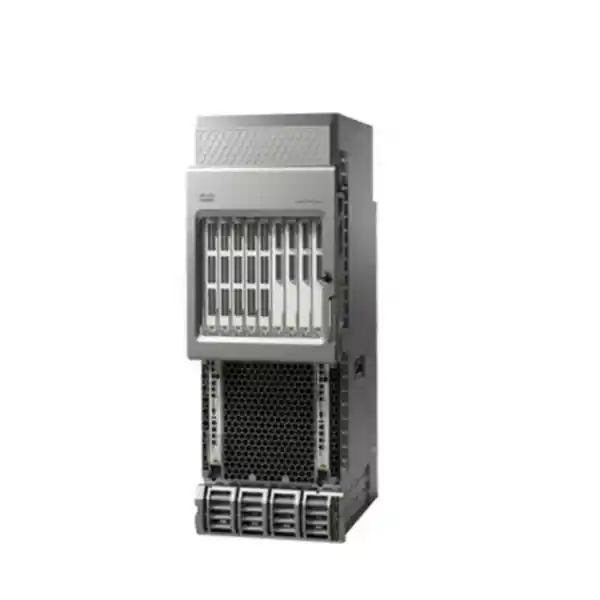
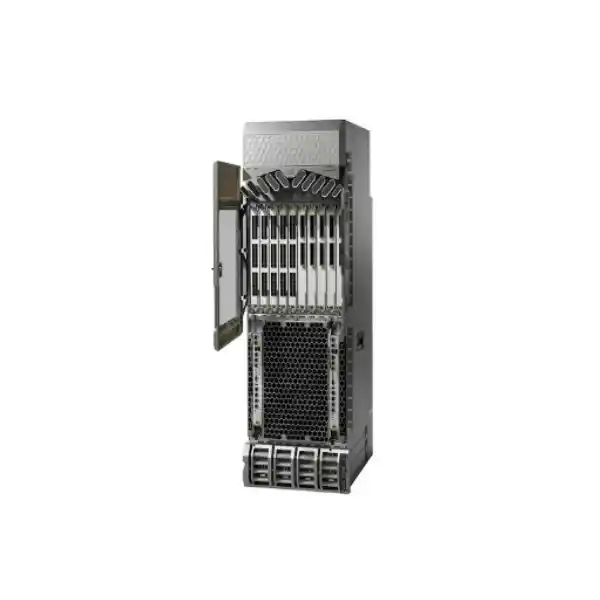
Cisco ASR 9912 Aggregation Services Router
The Cisco ASR 9912 is designed for networks that need very high routing capacity, modular growth, hardware redundancy, and long-term flexibility at the service-provider edge, aggregation layer, peering edge, or core. Cisco currently lists the platform as a 30-RU chassis with up to 80 Tbps of system capacity, ten line-card slots, two route processors, and seven fabric-card slots. That makes it a strong candidate when a smaller chassis is approaching slot or bandwidth limits but a full 44-RU, 20-slot platform would be larger than the planned deployment requires.
For buyers in Tanzania, selecting an ASR 9912 should begin with the network design rather than the chassis name alone. Interface speed, route scale, service mix, resiliency target, power architecture, cooling, rack space, optics, software release, licensing, and migration method all influence the correct bill of materials. FourTeck Tanzania can use those requirements to structure a configuration review before quotation, helping reduce the risk of choosing incompatible or unnecessary components.
What the Cisco ASR 9912 is built to solve
Large routing platforms are purchased because a network has reached a practical limit: interface density is increasing, traffic is growing faster than existing hardware can absorb, several services need to be consolidated, or operators want a more resilient and programmable foundation for future growth. The ASR 9912 addresses that class of requirement with a modular architecture that separates route processing, switching fabric, and line-card capacity. It is intended for environments where service continuity, scaling headroom, and the ability to evolve interface types matter more than the simplicity of a fixed-port appliance.
Cisco positions the ASR 9000 family for demanding edge and core networks and documents support across interface speeds from 1 Gigabit Ethernet through 400 Gigabit Ethernet, depending on the selected line card and optics. The ASR 9912 sits near the upper end of that family, below the larger ASR 9922 and above platforms such as the ASR 9910 and ASR 9906 in chassis size and total capacity. This positioning is useful for operators that need substantial scale but still want a chassis that can fit into a 30-RU footprint.
A purchase decision should therefore answer two questions. First, does the ASR 9912 provide the right capacity and slot headroom for the expected growth horizon? Second, can the exact combination of route processor, fabric cards, line cards, optics, software, and licenses deliver the required services at the required scale? Cisco documentation repeatedly notes that individual feature and scale support can be hardware- and software-dependent, so a validated configuration is more important than selecting the chassis in isolation.
Capacity and slot architecture
Cisco’s current ASR 9000 model comparison lists the ASR 9912 with up to 80 Tbps maximum capacity and 4 Tbps of bandwidth per slot. The chassis provides ten line-card slots, allowing operators to build a high-density system while preserving room for phased expansion. In practical network planning, slot count is valuable because growth does not happen only through faster interfaces. Operators may need to separate transport and service-edge functions, add diverse optic types, reserve slots for future cards, or maintain operational consistency across multiple sites.
The ASR 9912 uses separate route processors and fabric cards rather than integrating all fabric functions into the route processor. Cisco specifies two route-processor slots and seven fabric-card slots, with a 6+1 fabric redundancy design. The platform’s fabric cards operate in an active/active, nonblocking arrangement according to Cisco’s chassis data sheet. This architecture is intended to support resiliency and predictable forwarding as the chassis scales, but exact available forwarding capacity depends on the installed fabric generation and line-card combination.
For a new design, it is useful to model the system at several future traffic points rather than sizing only for day-one load. A three- to five-year forecast can include peak-hour traffic, route growth, subscriber growth if the router will support broadband services, interconnect expansion, DDoS headroom, maintenance scenarios, and the capacity that must remain available when a component or path is out of service. This approach can show whether the ASR 9912 provides enough spare slots and fabric headroom or whether a smaller or larger ASR 9000 chassis would be more economical.
High-speed Ethernet and line-card flexibility
The ASR 9000 portfolio supports multiple generations of Ethernet line cards, and current Cisco material describes platform support from 1G up to 400G. For the ASR 9912, Cisco documents compatibility with fifth-generation high-density and 400G-class line cards, including options that can provide multi-rate QSFP28 and QSFP-DD interfaces. Some fifth-generation cards are available in service-edge-optimized and packet-transport-optimized variants, allowing the design to prioritize enhanced quality-of-service capability or a transport-oriented feature profile.
This flexibility matters when a network is transitioning between interface generations. A service provider may still have many 10G or 100G links while introducing 400G connections on high-traffic backbone or peering paths. A modular chassis can allow those generations to coexist while migration is staged. However, not every card, port mode, optic, or feature is supported in every combination. Some newer line cards require a minimum Cisco IOS XR release and may also require newer fabric, route-processor, cooling, or power components.
Before ordering, map every planned port to a physical line card and optic, then check the required software release and hardware dependencies. That exercise should include breakout requirements, wavelength and reach, fiber type, patching, spare optics, port oversubscription where applicable, line-rate expectations, and maintenance procedures. It is also important to distinguish between a chassis capability and a fully populated design; the ASR 9912 can support very high aggregate throughput, but the actual system capacity is the result of the installed components and configuration.
Cisco IOS XR for service-provider operations
The ASR 9912 is part of the Cisco ASR 9000 platform family that runs Cisco IOS XR. Cisco’s IOS XR 64-bit documentation for the ASR 9000 family emphasizes a modular network operating system, resilience, automated installation options, and programmability. For operations teams, the significance is not simply the command-line interface; it is the ability to build operational processes around consistent routing policy, telemetry, software lifecycle management, and automation across a large network.
Current Cisco documentation for the ASR 9000 family includes model-driven telemetry that can stream structured operational data to external collectors. This can be useful for capacity monitoring, CPU and memory visibility, interface utilization analysis, fault correlation, and more proactive troubleshooting. Telemetry should still be designed carefully: the team should decide which sensor paths matter, collection cadence, retention, security, analytics platform, and how alerts map to operational procedures.
Software selection should be treated as part of the hardware design. A production deployment needs a release that supports the installed route processors, fabric cards, line cards, optics, and required services. It should also fit the operator’s software qualification policy. Newer is not automatically better for every network; the preferred release is typically one that has the required features and hardware support while meeting the organization’s stability, maintenance, and support requirements.
Routing, MPLS, Segment Routing, EVPN, and service roles
Cisco publishes extensive service-provider routing documentation for the ASR 9000 family. Depending on the selected hardware, software release, and license, the platform family can participate in IP routing, MPLS service architectures, Segment Routing, Layer 2 and Layer 3 VPNs, EVPN, traffic-engineering designs, and broadband-network-gateway deployments. These are not reasons to assume that every ASR 9912 build automatically supports every feature at the same scale; they are reasons to define the service role before the bill of materials is finalized.
For a peering or internet-edge role, designers may focus on BGP scale, convergence targets, DDoS handling architecture, large interface capacity, route-policy design, and redundant upstream or exchange connections. For an MPLS or Segment Routing provider edge, the emphasis may move to VPN services, label scale, fast reroute, timing, quality of service, and service assurance. For aggregation, port density and predictable forwarding during maintenance can be more important. For broadband, subscriber scale, service policies, accounting, redundancy, and supported BNG hardware combinations become central.
The ASR 9912 can therefore be a versatile platform, but the right question is not “what features does the chassis have?” The better question is “what exact services must this node deliver, at what scale, with what failure behavior?” Once those requirements are clear, the software and hardware compatibility matrix can be checked against the intended design. This is especially important for advanced functions whose availability can vary by line-card generation, route-processor type, software train, or licensing tier.
Resiliency and high-availability planning
Route processing
The chassis provides two route-processor slots. A redundant design should consider route-processor compatibility, software behavior during failover, maintenance procedures, and how control-plane convergence aligns with service-level objectives.
Switching fabric
Cisco documents seven fabric-card slots and 6+1 fabric redundancy for the ASR 9912. A design review should verify the required fabric generation for the chosen line cards and intended capacity.
Power and feeds
Cisco supports modular AC or DC power approaches and documents feed and power-module redundancy. Facility A/B feed design, breaker sizing, grounding, UPS or generator strategy, and maintenance isolation remain site-specific.
Cooling
The ASR 9912 uses front-to-back airflow and two fan trays in Cisco’s chassis data. Rack layout, cold-aisle/hot-aisle practice, room cooling, filters, and clearance should be confirmed before installation.
High availability is not achieved by installing duplicate modules alone. It depends on removing shared failure points across power feeds, upstream circuits, fiber paths, rack distribution, software changes, management access, and operational processes. During design review, test the failure cases that matter: a route processor restart, a fabric-card failure, a line-card replacement, loss of one power feed, loss of one upstream path, planned software maintenance, and a facility cooling event. The intended customer outcome should be defined for each scenario so the physical build and routing design support the same availability objective.
Power, rack, cooling, and facility requirements
A 30-RU chassis requires infrastructure planning before delivery. Cisco lists the ASR 9912 at 52.5 inches high and 17.60 inches wide, with a depth that varies depending on the door configuration. The chassis supports 19-inch rack mounting, with adapters available for 21- and 23-inch racks. It is not a wall-mount platform. These details should be compared with the actual cabinet dimensions, rail support, cable-management space, access clearance, floor loading, and the remaining rack units required for optical distribution or adjacent network equipment.
Cisco documents worldwide-ranging AC input of 200-240V at 50-60 Hz and DC input from -40 to -72V for the ASR 9912 platform, with modular power options and redundant feed architectures. The exact electrical requirement depends on the populated system, so power should be calculated from the final configuration rather than from a generic chassis number. Facility teams should verify breaker capacity, connector and PDU design, grounding, cable routing, feed diversity, UPS runtime, generator behavior, and safe maintenance isolation.
Cooling deserves equal attention. The router uses front-to-back airflow, and Cisco’s hardware documentation specifies environmental operating ranges for the platform. In Tanzania, site conditions can vary significantly between controlled data centers, telecom facilities, and remote technical rooms. The correct approach is to validate actual room temperature, humidity control, dust management, filter maintenance, heat rejection, and power continuity rather than assuming that a high-capacity router can be installed wherever rack space is physically available.
For an existing facility, request a pre-installation survey that includes rack space, lifting and handling plan, cable path, optical distribution, power-feed assignment, grounding, airflow direction, hot-aisle capacity, access for field replacement units, and the method used to stage the system before production cutover. A careful facility review can prevent avoidable delays when the chassis and modules arrive.
Where the ASR 9912 can fit in a Tanzania network
The ASR 9912 is most relevant when the network requirement is already at carrier or very large enterprise scale. Potential Tanzanian use cases can include national or regional IP backbone nodes, service-provider aggregation, internet or peering edge, high-capacity data-center interconnect, wholesale transport, MPLS or Segment Routing provider edge, and large broadband service nodes. These are design scenarios, not claims about a specific operator or deployment.
Local planning should account for the fiber topology available at the target site, the diversity of upstream and downstream paths, whether long-reach or coherent optics are required, the reliability of primary and backup power, and how quickly field teams can access spare modules. If the site is outside a major data-center environment, facility resilience may become as important as router resilience. A dual-route-processor, redundant-fabric design cannot protect against a single building power path or a single fiber entrance.
Commercial planning should also separate the chassis purchase from the full solution. The complete project can include route processors, fabric cards, line cards, optics, software entitlements, support, rack hardware, cabling, power distribution, staging, migration engineering, and spares. FourTeck Tanzania should quote only after confirming which of these elements are required. This prevents a low headline chassis price from being mistaken for a complete production-ready configuration.
ASR 9912 compared with nearby ASR 9000 models
The ASR 9912 is not automatically the best choice simply because it offers high capacity. Cisco’s current ASR 9000 model lineup gives buyers several chassis sizes. Comparing the models by slot count, rack space, and maximum platform capacity is a practical first filter before a detailed bill of materials is built.
| Model | Rack size | Cisco-listed max capacity | Line-card slots | Typical selection logic |
|---|---|---|---|---|
| ASR 9906 | 14 RU | Up to 32 Tbps | 4 | When rack efficiency and four modular slots are sufficient. |
| ASR 9910 | 21 RU | Up to 64 Tbps | 8 | When eight slots and a smaller footprint meet the growth plan. |
| ASR 9912 | 30 RU | Up to 80 Tbps | 10 | When ten slots and separate redundant fabric provide the desired scale without moving to the largest chassis. |
| ASR 9922 | 44 RU | Up to 160 Tbps | 20 | When maximum slot density and system capacity justify a full-rack-class platform. |
This comparison is only the starting point. A smaller chassis with faster line cards can be preferable to a larger chassis with unused slots, while a larger chassis may reduce the need for a disruptive platform expansion later. Power, optics, software licensing, rack availability, operational standardization, and sparing strategy can all change the commercial result. The correct model is the one that meets the full design requirement with appropriate growth headroom, not simply the one with the highest published capacity.
When to choose service-edge or packet-transport line cards
Cisco offers several ASR 9000 line-card families in service-edge-optimized and packet-transport-optimized variants. The distinction matters because not all networks need the same packet-processing and quality-of-service behavior. A service-edge role may require richer queueing, classification, subscriber or VPN services, or more complex policy treatment. A packet-transport role may prioritize high-capacity forwarding with a simpler quality-of-service requirement. Cisco’s documentation for individual line cards should be used to confirm the exact capabilities and scale.
During design, create a service matrix for each planned interface group. Record which interfaces carry internet transit, peering, wholesale Ethernet, MPLS VPN, broadband subscriber traffic, data-center interconnect, management, or transport. Then map required features such as shaping, hierarchical QoS, access control, accounting, telemetry, timing, or encryption to the card options. This reduces the chance of buying a high-density card that meets the port requirement but not the service requirement.
The same method helps with migration. Existing interfaces can be grouped by service type and moved in stages, with maintenance windows aligned to redundancy. Operators can reserve capacity for temporary overlap between old and new systems so that cutover does not consume all available ports. Where high-speed interfaces are being introduced, the migration plan should also cover optic interoperability, fiber quality, peer readiness, and rollback.
Automation, telemetry, and operational visibility
A chassis of this scale should be integrated into an operational model that reduces manual work. Cisco IOS XR supports programmable and model-driven approaches, and current ASR 9000 documentation describes streaming telemetry using structured data models. For a large network, telemetry can be more useful than periodic polling because it can provide regular, structured updates about selected operational state to external collectors.
The most useful telemetry design begins with operational questions. Which interfaces are approaching sustained utilization thresholds? Are packet drops occurring in a queue that affects customer traffic? Are CPU or memory trends changing before a maintenance event? Is routing convergence behaving within the expected time? Are optic levels drifting? The monitoring system should collect the data that answers these questions and present it in a form that the NOC can act on.
Automation should be introduced with the same discipline. Configuration templates, validation, version control, staged rollout, and rollback procedures are more important than automating every command. Where APIs, NETCONF, YANG models, or other programmatic mechanisms are used, confirm support in the chosen IOS XR release and define access controls carefully. The goal is repeatable change with evidence, not automation for its own sake.
For organizations moving from a smaller platform or a mixed-vendor environment, it can be useful to keep the first phase operationally simple: standardized base configuration, routing policy, management access, telemetry, time synchronization, logging, AAA, and backup. Advanced service automation can then be introduced after the new platform is stable and the team has clear rollback procedures.
Pre-purchase design checklist
- Traffic and growth: current peak throughput, forecast growth, failure-state traffic, oversubscription policy, and required headroom.
- Services: internet edge, peering, MPLS, Segment Routing, EVPN, L2/L3 VPN, broadband, transport, timing, or other required functions.
- Interfaces: quantity and speed of 1G, 10G, 25G, 40G, 100G, 200G, or 400G connections, plus expected future migration.
- Optics: fiber type, reach, wavelength plan, breakout needs, coherent requirements, peer compatibility, spares, and cleaning/testing process.
- Scale: IPv4/IPv6 routes, labels, MAC addresses, VPNs, peers, policies, subscribers, queues, telemetry subscriptions, and other service-specific scale.
- Hardware: route processors, fabric generation, line cards, fan trays, PEMs, power modules, and supported combinations.
- Software: preferred IOS XR release, required feature support, licensing, maintenance policy, and upgrade method.
- Facility: rack units, depth and access, floor loading, airflow, cooling, grounding, A/B power feeds, breaker capacity, UPS, and generator support.
- Resilience: component redundancy, diverse circuits, diverse fiber paths, management access, failure testing, and spare strategy.
- Migration: staging, configuration conversion, peer coordination, test plan, maintenance window, rollback, and post-cutover validation.
- Support: entitlement requirements, software access, escalation process, local operational ownership, and any required professional services.
Migration and deployment approach
A high-capacity router migration is safer when treated as a sequence of verifiable stages. Start by documenting the existing node: physical interfaces, optics, routing adjacencies, policies, VPNs, quality-of-service configuration, management systems, monitoring, timing, and dependencies. Remove obsolete configuration from the migration scope instead of copying it automatically. This is also the time to identify any unsupported legacy optics or protocols that should be retired.
Next, build and validate the target ASR 9912 configuration in a staging environment where possible. Verify route processor and fabric health, line cards, software version, licensing, management access, NTP or PTP requirements, AAA, logging, telemetry, interface behavior, and routing policy. Baseline the new system before customer traffic is moved. If the migration changes interface speeds, make sure peer devices and optical paths are ready and tested.
During cutover, move services in logical groups rather than all at once when topology permits. Monitor routing convergence, packet loss, latency, interface errors, optics, queue behavior, and control-plane health after each group. Keep rollback criteria objective: for example, adjacency instability, unexpected route loss, sustained errors, or service tests outside the agreed threshold. A written rollback plan should identify exactly what must be restored and in what order.
After cutover, validate not only reachability but also redundancy. Test alternate paths, verify telemetry and alarms, confirm configuration backups, document serial and module inventory, and update diagrams. The post-migration record should reflect the actual production state so future maintenance does not depend on assumptions made during project planning.
Important compatibility and lifecycle considerations
Cisco currently lists the ASR 9912 as available to order, but buyers should still verify the lifecycle status of every component in the proposed bill of materials. A chassis can remain orderable while individual older line cards, route processors, optics, or software releases have separate lifecycle dates. Building a new system around components approaching end of sale can create avoidable support and spares challenges.
Compatibility also changes across hardware generations. Cisco documentation for newer ASR 9000 line cards notes that some chassis may require hardware updates for fabric cards, route processors, and cooling systems. Therefore, an expansion of an existing ASR 9912 needs more validation than a new chassis build. Record the current route processor, fabric-card generation, line-card types, fan and power modules, and IOS XR release before adding new cards.
For a quotation, request a configuration-specific lifecycle check rather than a generic statement that the ASR 9912 is supported. The result should identify any component with an announced end-of-sale or end-of-support milestone, along with the recommended current alternative where relevant. This helps protect the investment and makes future expansion planning more predictable.
What to provide when requesting an ASR 9912 quote
A useful request for quotation does not need to begin with exact Cisco part numbers. In many cases, it is better to provide the network requirement and let the component mapping be validated. State the intended router role, current and projected throughput, number and speed of interfaces, optical reach, redundancy target, service features, software preference if any, power type, and rack constraints. Include whether the project is a new installation, replacement, or expansion of an existing ASR 9912.
For an expansion, provide the existing hardware inventory and IOS XR version. For a migration, include the current router model, major interface types, routing protocols, approximate route or subscriber scale, and any advanced services that must be preserved. Sensitive production configuration does not need to be posted publicly; it can be reviewed through an appropriate project or quotation channel.
The final bill of materials should make clear which items are included: chassis, route processors, fabric cards, line cards, power modules, fan components, optics, licenses, support, accessories, and any engineering services. Price, stock, delivery time, warranty, and support entitlement should be confirmed on the quotation for the exact configuration rather than assumed from a generic product page.
Frequently asked questions
How much capacity does the Cisco ASR 9912 support?
Cisco’s current ASR 9000 model page lists the ASR 9912 at up to 80 Tbps maximum capacity. The actual capacity available in a deployed system depends on the installed fabric generation, route processors, line cards, port modes, and software support. For an expansion, verify the existing hardware generation before assuming the chassis can reach the current published maximum.
How many line-card slots are available?
The ASR 9912 provides ten line-card slots. Cisco also documents two route-processor slots and seven fabric-card slots. The ten line-card slots can be used with supported ASR 9000 line-card families, subject to hardware-generation and software compatibility.
Does the ASR 9912 support 400 Gigabit Ethernet?
Yes, Cisco documents ASR 9912 compatibility with multiple 400G-capable line-card options. Exact port density, optic type, feature support, required IOS XR release, and any route-processor, fabric, cooling, or power prerequisites must be checked for the selected card.
What operating system does it use?
The ASR 9000 family runs Cisco IOS XR, including IOS XR 64-bit support on the ASR 9912. The production release should be chosen according to hardware support, feature requirements, operator qualification policy, and Cisco lifecycle guidance.
Can the ASR 9912 be used for MPLS, Segment Routing, or EVPN?
Cisco documents MPLS services, Segment Routing, EVPN, and related Layer 2 and Layer 3 VPN functions across the ASR 9000 software family. Support and scale depend on the exact hardware, IOS XR release, and licenses, so the intended service design should be validated before ordering.
Can it be used as a broadband network gateway?
Cisco publishes BNG documentation for the ASR 9000 family and identifies supported route processors and line cards for specific releases. A BNG design should be validated for subscriber scale, policy, accounting, redundancy, and the exact supported hardware combination rather than treating BNG as a generic chassis feature.
Does it support redundant power?
Cisco documents redundant AC and DC power architectures for the ASR 9912, including A/B feed and power-module redundancy. AC and DC power modules are not mixed. The actual power-module count and feed design should be calculated for the installed configuration and facility.
Is the ASR 9912 still orderable?
Cisco’s current support page lists the ASR 9912 router status as available to order. Individual modules and accessories can have their own lifecycle status, so every quoted component should be checked separately.
What is the difference between ASR 9912 and ASR 9922?
Cisco currently lists the ASR 9912 as a 30-RU, ten-line-card platform with up to 80 Tbps capacity, while the ASR 9922 is a 44-RU, twenty-line-card platform with up to 160 Tbps. The ASR 9922 is suited to designs requiring substantially more slots or system capacity; the ASR 9912 can be more space-efficient when ten slots provide enough growth headroom.
What information is needed for a Tanzania deployment quote?
Provide the intended network role, throughput target, interface speeds and quantities, optic reaches, services, routing or subscriber scale, redundancy requirement, preferred power type, rack constraints, and whether the project is new, expansion, or migration. For an existing ASR 9912, include the installed route processors, fabric cards, line cards, and IOS XR version so compatibility can be checked.
Request a Cisco ASR 9912 configuration review in Tanzania
For a production-ready ASR 9912 proposal, start with the network requirement rather than a generic chassis-only quote. Share the intended role, capacity target, interface plan, optic distances, service features, redundancy objective, power preference, rack constraints, and expansion horizon. FourTeck Tanzania can use those details to prepare a configuration for review with the required chassis components, line cards, optics, software and licensing considerations clearly separated.
Pricing, stock, delivery, warranty, support entitlement, and implementation scope should be confirmed for the exact bill of materials at quotation stage. This approach keeps the technical design aligned with the commercial offer and avoids assuming that a chassis part number alone represents a complete deployed router.




Reviews
There are no reviews yet.