
CISCO INDUSTRIAL SECURITY · TANZANIA
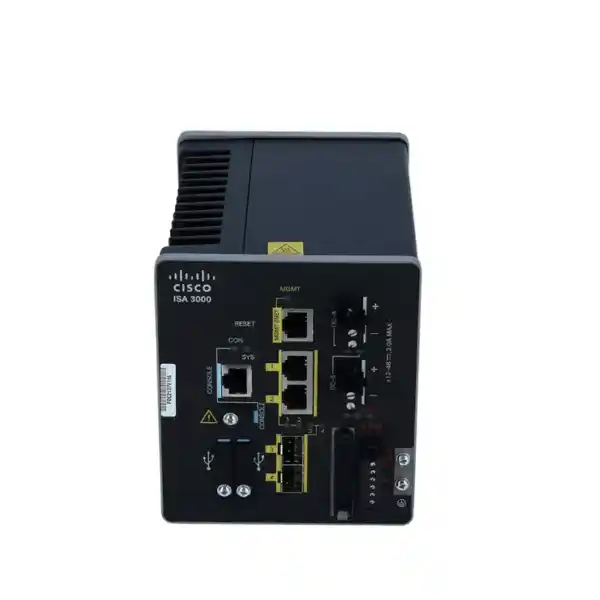
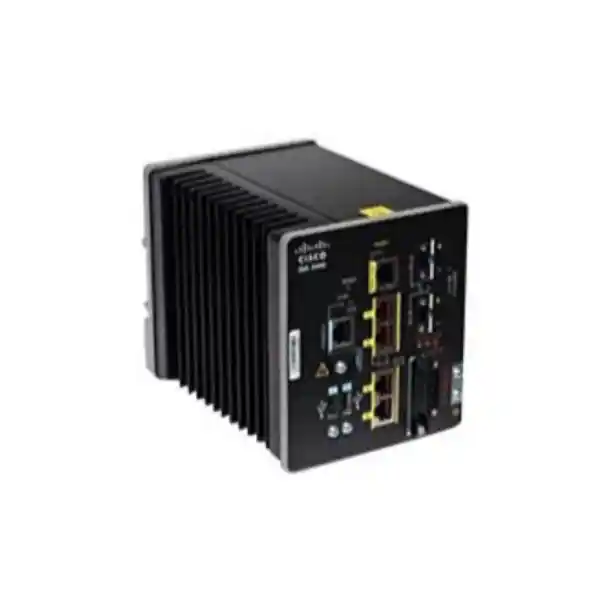
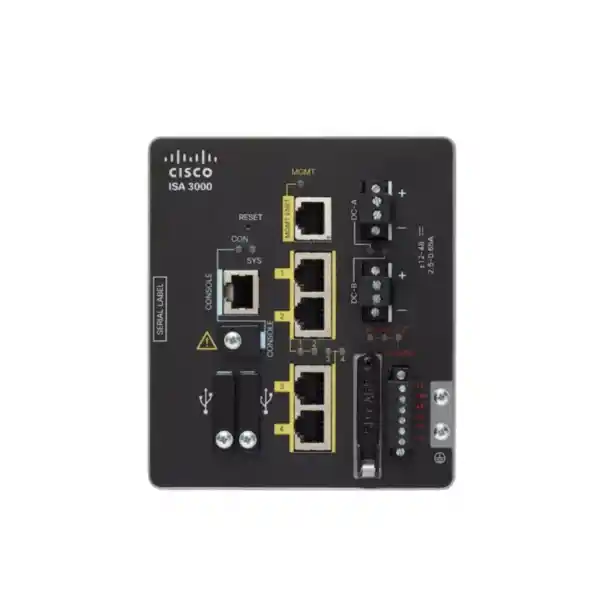
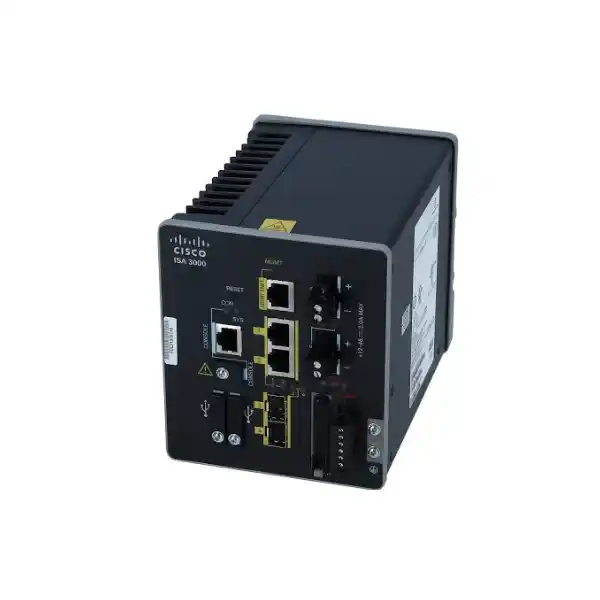
Cisco ISA-3000-2C2F Industrial Firewall
For industrial teams that need a controlled boundary between operational equipment and a wider network, this Cisco appliance is a candidate for an OT security design involving copper and fibre links. The right purchase depends on the exact software, inspection requirements and installation conditions.
Request a configuration review from FourTeck Tanzania with your network diagram, intended traffic flows and installation requirements. Ask for the complete manufacturer part number, entitlements and accessories to be identified in the quotation before approving the order.
Choose the boundary before choosing the appliance
Start with the connection you want to control. A production cell reaching an engineering workstation presents a different requirement from a remote station reporting to a central control room. Identify both ends of the connection, the person responsible for each system, and the consequence of a failed or unauthorised exchange. This turns a firewall enquiry into a practical design discussion.
For a Tanzania project, useful starting information includes the type of operation, the location of the equipment within the site, the existing network diagram, and the reason for adding security at this point. Describe whether the project is a new installation, an expansion, a replacement, or a response to a specific access problem. Each situation changes the preparation needed before equipment is connected.
Write a short outcome statement such as: “Only the approved supervisory server should read data from this process network; engineering access must require separate approval.” That statement is more useful for evaluating a proposal than a request for a rugged firewall alone. It gives the buyer and technical team a shared basis for checking whether the proposed configuration actually meets the operational need.
Verified platform facts at a glance
| Area | Published specification |
|---|---|
| Copper data connectivity | Two 10/100/1000 ports |
| Fibre data connectivity | Two SFP ports; verify supported optical modules |
| ASA order code | ISA-3000-2C2F-K9 |
| Threat Defense order code | ISA-3000-2C2F-FTD |
| Management and console | Dedicated management connection; RJ-45 and mini-USB console access |
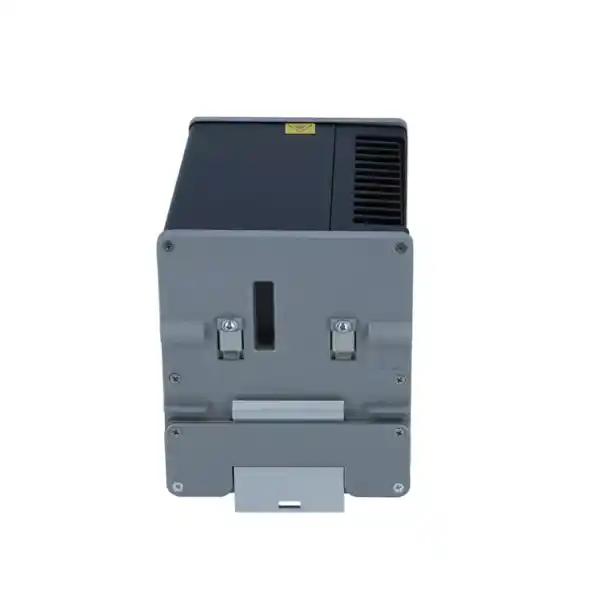
| Installation format | DIN rail; fanless chassis |
| DC power | Redundant inputs; 9.6–60 VDC maximum operating range; 24 W consumption |
| Enclosure | IP30; use a suitably protected installation |
For sizing context, Cisco’s FTD data sheet reports 375 Mbps for firewall plus application visibility and control, 350 Mbps with IPS added, and 50 Mbps IPsec VPN throughput. The listed tests use 1024-byte traffic; the VPN figure specifies TCP with Fastpath. These are test figures, not guaranteed production results. Ask for sizing against the proposed software, inspection policy and actual traffic mix.
ASA or Threat Defense: specify the intended software
Do not leave the software choice implicit in a purchase request. Ask the proposal to identify the complete manufacturer part number, installed image, proposed release, management method and required entitlements. Have the team responsible for operating the equipment review that information before ordering. The platform name alone does not establish which features will be ready to use.
An existing ASA environment may have operational reasons to retain a familiar policy and management approach. A project requesting application-aware inspection should instead document the exact controls it expects and ask for verification on the proposed Threat Defense configuration. Evaluate the required result rather than assuming that every capability mentioned in family literature belongs to every software option.
If a change of software is being considered for an existing unit, include configuration conversion, reimaging, downtime and recovery work in the project assessment. Do not assume that changing images preserves the existing policy. Require a written migration approach and a test plan. Also verify current platform support for the chosen release; the newest release documented for another Cisco firewall is not evidence of support for this appliance.
Plan copper and fibre connections as separate requirements
Prepare a port schedule showing the device connected to each interface, its role, cable type and destination. Separate production traffic from administration in that schedule. Include the adjacent switch or other network device so the design can be checked end to end. This avoids discovering during commissioning that a port was reserved for two different purposes.
For each optical link, record the installed fibre type, approximate path length, connectors, patch panels and the transceiver at the far end. Ask the supplier to verify a supported optic for the exact appliance, software and link requirement. An SFP socket does not establish that the proposed module is suitable, that two modules interoperate, or that optical accessories are included in the commercial offer.
Where fibre is already installed, request its test records if available. Where cabling is new, include termination, labelling and link testing in the appropriate contractor’s scope. Keep a record of which team owns faults in the cable plant. A firewall project is easier to accept when network security, optical compatibility and physical link quality each have a clear verification step.
Develop an access matrix that operations can approve
Create one row for each required communication path. Record the source asset, destination asset, service, direction, purpose and owner. Add whether the connection is continuous, scheduled, initiated during maintenance or needed only in an emergency. Where a service uses dynamic ports or a vendor-specific discovery mechanism, obtain the equipment vendor’s documentation before writing a restrictive policy.
For example, a historian collecting production data, an operator viewing a process display and an engineer downloading a configuration may involve different privileges even when they reach related equipment. Review these activities separately. Avoid making a broad access rule merely because several users belong to the same department or use the same application name.
Ask an operations representative to confirm the matrix in ordinary language before engineers translate it into configuration. Make exceptions visible and give temporary permissions a review date. During acceptance, test at least one permitted transaction and one prohibited transaction for each important boundary. That produces clearer evidence than showing only that devices can respond to a basic connectivity test.
Check industrial inspection against real application traffic
Cisco’s industrial protocol document distinguishes application detection from command and payload inspection. It lists Firepower support involving protocols such as Modbus, DNP3, CIP, IEC 60870-5-104 and IEC 61850 MMS. Detection depth varies by protocol and feature, so recognition of an application should not be treated as proof that every command can be controlled.
For a proposed deployment, provide controller and supervisory-system details, application versions, relevant protocol variants and representative transaction types. Ask which detector or rule will implement each requested restriction on the selected software. If the requirement is to permit reading while restricting a particular change operation, that exact behaviour should be demonstrated using an approved test arrangement.
Plan how encrypted or proprietary traffic will be assessed. Do not assume that useful payload detail will always be visible to the firewall. Where inspection cannot establish the required distinction, consider whether endpoint permissions, a controlled engineering workstation or a different access workflow is needed. Agree those decisions with the system owner before treating the design as complete.
Size for the inspection policy and busy maintenance periods
Build a traffic profile for the boundary rather than using internet circuit speed as the only sizing input. Capture normal utilisation, short peaks, connection counts, session duration and the largest expected transfers. Include unusual but legitimate activity such as engineering downloads, report exports, software distribution and recovery after a communications interruption.
Describe the security functions that must operate at the same time. A proposal should explain the assumptions behind its capacity recommendation, including encrypted traffic, tunnel use, logging and inspection. Keep enough detail to reproduce those assumptions during evaluation. A single headline throughput number is difficult to use when several processing functions will be enabled together.
Ask operations to define acceptable application behaviour under load. For telemetry, that could include a tolerable delay in receiving an update; for an engineering task, it may involve a maximum acceptable transfer duration. Use the application owner’s criteria rather than inventing a universal latency target. If the consequences of undersizing are material, include a representative pilot or supervised load test before final acceptance.
Decide what should happen when the firewall loses power
Cisco documents hardware bypass for the copper interface pair on this fibre model. When bypass is active, traffic crossing that pair is no longer receiving firewall enforcement. The fibre connections do not provide the same hardware bypass capability. Switching into or out of bypass can also interrupt sessions; it is not a promise of uninterrupted application operation.
Treat the failure policy as a joint decision between security and operations. Ask whether a temporary loss of enforcement or a loss of that communications path is the more acceptable condition for this particular boundary. Record the answer, the person approving it and the procedure for restoring normal protection.
Test the agreed behaviour with the relevant application owners during an approved maintenance window. Include the physical interfaces actually used in the design rather than relying on a generic diagram. Check what the operator sees, what the monitoring system reports and what an engineer must do next. A failure mode is only useful operationally when the team can recognise it and respond consistently.
Review DC supply, cabinet conditions and installation scope
Ask the site electrical team to verify the power arrangement before installation is scheduled. The equipment supply, protection, earthing, wiring and cabinet work should have clearly assigned responsibilities. Include the proposed source arrangement in the design pack so the network engineer is not expected to make electrical decisions during commissioning.
Assess conditions inside the cabinet while nearby equipment is operating. Record temperature, ventilation, dust exposure, moisture risk, vibration and available working space. Check the exact installation limits and airflow requirements in the manufacturer documentation. Fanless construction does not remove the need for appropriate heat management, and an industrial product still needs an enclosure suited to its environment.
When continuity matters, identify common dependencies between the two planned supply paths. Ask what happens during upstream maintenance and how the team will detect a missing feed. Specify whether power components, cabinet modifications and electrical certification are included in a separate project scope. That prevents a hardware quotation from being mistaken for a complete installed solution.
Make management access independent and accountable
Decide who will administer the appliance and how they will reach it during normal operation and a network fault. Document the permitted administration hosts, access path, authentication process and escalation procedure. Keep this distinct from the list of production communications so an operational shortcut does not quietly become a permanent administrative route.
Agree how administrator access is approved, reviewed and removed when staff or contractors change roles. Where the proposed management platform supports the required authentication and audit controls, verify them during commissioning. Include a recovery method that the customer’s authorised team can use if the usual management route is unavailable.
For remote sites, determine what a local technician must be able to do without making policy changes. A labelled cable plan, clear status instructions and an escalation contact can reduce avoidable downtime. Keep credentials and sensitive configuration material in the organisation’s approved secure system. The handover should tell the team where controlled records are held, rather than embedding secrets in an ordinary equipment list.
Separate remote engineering access from routine monitoring
A remote maintenance request should describe the work to be performed, the target assets and the people allowed to perform it. Define whether access is required continuously or only during an approved session. Ask the system owner to identify any actions that need additional supervision, such as uploading logic, changing parameters or restarting equipment.
Where a VPN is part of the proposed solution, verify the selected software’s compatibility, licensing and peer requirements. Also examine the route after the tunnel terminates. A protected transport connection does not by itself establish which internal assets the remote user should reach. Include identity checks, destination restrictions and a clear process for ending the session.
For Tanzania sites using a provider-managed WAN or another upstream service, confirm addressing, routing, reachability and any relevant provider restrictions before acceptance. Avoid assuming that a successful test on a temporary internet connection represents the production circuit. Keep an alternative communication method available to coordinate recovery if an access change disconnects the engineer during scheduled work.
Procure licences, subscriptions and management deliberately
Ask for a line-by-line entitlement schedule covering the requested security functions, management components and support arrangements. Each item should identify its duration, renewal responsibility and relationship to the hardware offer. Features shown in technical literature should not be interpreted as a commitment that every subscription or management component is bundled.
Cisco’s Threat Defense getting-started documentation describes Smart Licensing and separate optional capabilities including IPS, malware defence, URL filtering and remote-access VPN. For the proposed configuration, confirm the current purchasing and registration requirements rather than relying on historical licence names or an evaluation state observed during setup.
Document who controls the customer’s licensing account and who is authorised to make changes. Ask how registration and updates will work if the operational network has restricted outbound access. Include the process for renewal notices and the consequences of an expired entitlement in the handover. These checks help the buyer compare complete offers and reduce surprises after the installation team has left the site.
Check unit history, field notices and software lifecycle
Before accepting a unit, request its full product identifier, serial number, hardware version and proposed software build. For an existing installation, record relevant upgrade history as well. This evidence helps the technical team assess notices that depend on a particular hardware revision or component rather than on the general product name.
Cisco field notice FN64250 identifies potentially affected early hardware versions of the K9 model and lists V04 as the fixed version for that issue. Field notice FN72080 addresses an SSD firmware condition associated with accumulated operating time and provides a software-based remediation path. Applicability should be checked for the actual unit; neither notice should be interpreted as a statement that every supplied appliance is affected.
Review lifecycle information for hardware, operating software, management software and subscriptions separately. An end-of-life announcement for an older software release does not establish the lifecycle of every product in the family. Require the proposed release and support position to be confirmed when the order is assessed, and retain that information with the asset record.
Compare the right alternatives for the actual requirement
Compare options against the boundary design rather than compiling a long list of unrelated firewall features. Useful criteria include physical installation, link media, required inspection, capacity, management skills, lifecycle expectations and the total commercial scope. Identify the criteria that are mandatory before scoring optional conveniences.
If all planned data connections are copper, ask whether the four-copper member of the family is more appropriate. If the project needs higher inspected capacity, additional interfaces or a different support horizon, request an assessment of another platform. If installation will be in a conditioned equipment room, review whether industrial packaging remains necessary for that particular location.
Keep comparisons consistent: include the same subscription duration, management requirements, accessories and implementation responsibilities in each offer. Ask the operating team which platform it can maintain effectively. A lower equipment price can be difficult to interpret if the proposal assumes a management system, migration effort or technical skill that the customer does not already have. Request an explicit explanation of those dependencies.
Example requirement: a production-cell boundary
Consider a proposed installation between a production cell and the wider site network. The cell includes controllers, an operator station and an engineering workstation. The buyer’s first task is to identify which communications must stay within the cell and which need to cross the new boundary. The firewall location should follow that decision.
Prepare separate requirements for production reporting, central monitoring and engineering maintenance. Ask whether a reporting interruption can be tolerated while the local process continues, and identify any dependencies that would prevent that outcome. Have the automation vendor review traffic that is time sensitive or needed during startup.
For evaluation, use a planned sequence covering normal production, a maintenance task, a communications interruption and restoration. Record application behaviour as well as network events. This example is a planning scenario, not a validated design for a particular controller or plant. The final policy and topology should be reviewed against the customer’s own equipment, process dependencies and permitted maintenance procedures.
Example requirement: a remote telemetry location
A remote station may need to send measurements to a control centre while accepting only occasional maintenance access. In this situation, describe the reporting interval, acceptable outage duration, local data handling and the procedure for recovering missed information. Also identify whether the station must continue local operation if the WAN is unavailable.
Ask the communications team to document the production circuit, addressing, upstream gateway and monitoring path. If an additional WAN or cellular device is being proposed, assess it as a separate component with its own compatibility and service requirements. Do not assume that the security appliance itself provides the upstream communications service required by the site.
Include the practical cost of visiting the location in the support discussion. Clarify what a local contact can inspect, how a replacement would be configured and what records must be available before a visit. Test loss of the WAN separately from loss of local power so the team can distinguish those conditions. The acceptance criteria should reflect the operational reporting requirement rather than connectivity alone.
Prepare a controlled replacement or insertion plan
For an existing network, document the current physical connections and active policy before making changes. Identify undocumented routes, address translations, temporary access rules and dependencies on adjacent equipment. Ask the responsible teams to confirm which details are current, because an old drawing may describe the intended network rather than the one in use.
Create a staged plan covering preparation, configuration review, supervised testing, production cutover and recovery. Define a clear decision point for returning to the previous arrangement if agreed acceptance criteria are not met. Reserve enough time to restore service and verify application behaviour before the maintenance window ends.
For a replacement, determine which settings can be transferred and which must be redesigned for the chosen software and topology. Keep an approved record of the previous working arrangement until the new configuration is accepted. The project should assign one person to authorise the cutover and one to coordinate operational checks, with escalation contacts available throughout the scheduled work.
Use an acceptance plan with observable results
Agree the acceptance criteria while reviewing the proposal, so the customer knows what evidence will be produced. The plan should cover required applications, prohibited access, management access, event visibility and the agreed failure behaviour. Give each test an expected result and identify who is qualified to confirm it.
Include representative operating conditions rather than testing only during a quiet period. Where practical, observe shift changes, scheduled data collection or an approved engineering task. If a particular test cannot safely be performed in production, document the limitation and agree an alternative assessment with the asset owner.
Keep a compact results record showing the test, date, configuration version, outcome and any outstanding action. A failed test should lead to a specific correction or an explicitly accepted limitation. Separate completion of the physical installation from acceptance of the security policy. That distinction helps the customer avoid signing off a project merely because the appliance has power, links are active and the management screen is reachable.
Plan event handling, backups and ongoing ownership
Decide which events need an immediate response, which should be reviewed routinely and which are useful only for troubleshooting. Assign an owner for each important alert category. A monitoring arrangement is incomplete if the system sends messages but nobody knows whether they indicate a process interruption, attempted unauthorised access or a routine maintenance action.
Agree a backup and recovery process appropriate to the chosen software and management platform. Record where approved configuration copies are held, who can retrieve them and how recovery will be tested. Include any external dependencies such as licences, certificates, management services and documented interface assignments in that assessment.
Review policy ownership when applications or contractors change. Ask operations to report new devices and new communication requirements through a defined process. Set a practical review interval for exceptions and administrative access. These are operating responsibilities to agree during procurement; they should not depend on an assumption that the installer will continue monitoring or maintaining the equipment after the contracted work is complete.
Build a complete Tanzania quotation request
For a useful quotation, provide the requested model, quantity, project type and installation environment. Add a simple network diagram, port schedule, traffic profile, software preference and required security controls. State whether the enquiry concerns new equipment, an existing unit, a replacement or a broader network change.
Ask the commercial response to identify the hardware condition, full part number, included accessories, verified compatible optics, power components, licences, subscription duration and management requirements. Request explicit scope and terms for any design, preconfiguration, installation, commissioning or ongoing support work. Availability, TZS pricing, delivery arrangements, warranty terms and service coverage should be confirmed in the actual quotation.
Where the project is still being defined, describe the operational problem and the evidence already available. Mark open decisions such as the failure policy, remote-maintenance method or management platform. This allows the enquiry to focus on resolving a real buying requirement. It also gives procurement a clearer basis for comparing proposals and checking that all necessary components and responsibilities have been addressed.
Buyer questions
Is this the same as a general office firewall?
The relevant question is whether the product fits the installation and operational requirement. For an industrial boundary, assess the cabinet environment, link media, application behaviour, required controls and maintenance arrangements. Compare those needs with the proposed configuration. Industrial packaging alone does not establish the correct security policy or prove compatibility with the customer’s automation equipment.
Does the product name confirm the complete order code?
No. The shortened model name identifies the requested platform, but the quotation should state the full manufacturer part number and software option. Check that the order, configuration plan and licensing schedule all describe the same intended system. Do not treat a manufacturer identifier as proof of a seller’s listing SKU.
Are optical modules and power accessories included?
Inclusion must be confirmed in the quotation. Provide the fibre and power requirements and ask for an itemised accessory schedule. Check quantities at both ends of an optical link and clarify responsibility for patch leads, cabinet work and electrical installation. Do not assume that an accessory is bundled because it appears in a family compatibility list.
Can it inspect every command used by my control system?
That should be verified against the particular protocol, transaction, software and enabled inspection policy. Submit the actual control requirement and request evidence using representative traffic. Application identification and command inspection are different capabilities. Proprietary or encrypted exchanges may require another control approach, depending on what the selected configuration can observe and enforce.
Will a power failure leave every connection working?
Do not make that assumption. Review the documented bypass behaviour and the physical interface pair used by the design, then test the agreed response. Include what happens to application sessions and what the operator must do during restoration. The correct failure policy depends on the customer’s process requirements and security approval.
Can an existing configuration be moved directly to a replacement?
Transferability should be assessed before the maintenance window. Supply the existing image, configuration, interface assignments and required behaviour for review. Differences in software, topology or entitlements may require policy changes. Request a tested migration plan, a controlled cutover and a usable recovery arrangement rather than relying on a simple configuration-copy assumption.
What must be confirmed about support and product history?
Request evidence for the actual unit’s identity, condition and software state. Review applicable field notices, current release support and any required remediation. Confirm the support scope and commercial terms separately in the offer. Historical warranty language in a manufacturer document does not establish the entitlement or coverage supplied with a particular transaction.
How do I request Tanzania pricing and a suitable configuration?
Send FourTeck Tanzania the quantity, project objective, network diagram, application requirements, cabinet conditions and desired service scope. Ask for a written configuration and quotation covering the complete system. Price, stock, delivery and service arrangements depend on the actual offer and should be verified before purchase. Include unresolved technical decisions so they can be addressed during review.
Request a Cisco industrial firewall configuration review
Bring the boundary requirement, not just the model name. Provide your diagram, connected equipment, link details, operational constraints and expected security controls to FourTeck Tanzania. Request a written proposal identifying the complete appliance configuration, accessories, licensing and any agreed implementation work.
Before placing an order, confirm the supplied unit, commercial terms and acceptance criteria with the responsible teams. A clear proposal should explain what is included, what the customer must prepare and how the completed installation will be assessed.



Reviews
There are no reviews yet.