
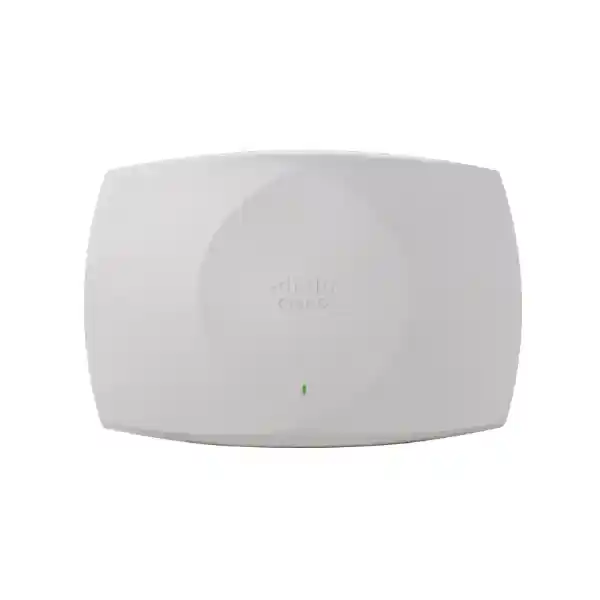
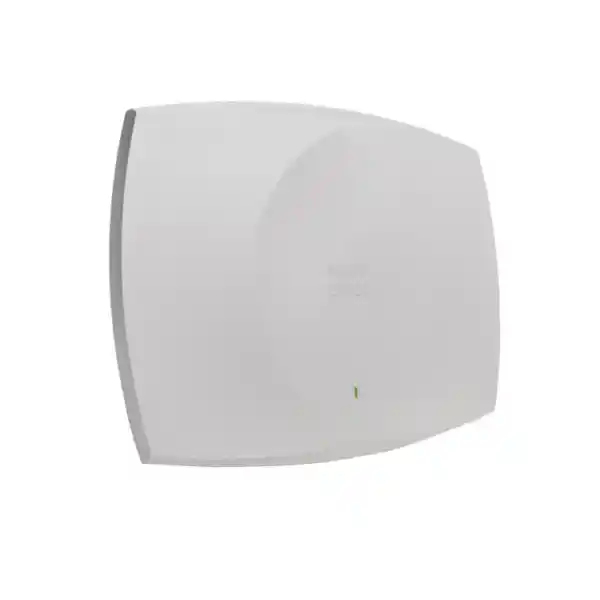
Cisco Meraki CW9179F Tanzania
The Cisco Meraki CW9179F is built for wireless environments where ordinary office access points are not the right design choice. Cisco positions the CW9179F as an enterprise-grade Wi-Fi 7 access point for large public venues, with four client-serving radios, software-selectable antenna coverage patterns, dual 10G multigigabit Ethernet, integrated GNSS/GPS and support for either Cisco Catalyst or Meraki management. For stadiums, arenas, event facilities, transport hubs, auditoriums and other dense spaces, the value is not simply higher theoretical throughput; it is the ability to shape coverage, increase radio capacity and build a resilient wired-and-wireless architecture around demanding user populations.
Ask for CW9179F when the project specifically requires high-density Wi-Fi 7 with directional coverage control. Include venue drawings, expected client density, management preference, switching and PoE details, indoor or outdoor installation needs and the countries where the equipment will operate.
Supports 802.11be capabilities across 2.4 GHz, 5 GHz and 6 GHz with 4×4 radios and advanced features such as multilink operation, OFDMA and WPA3 support.
The platform can operate with 2.4 GHz, dual 5 GHz and 6 GHz client-serving radios, giving designers more options for dense venue capacity planning.
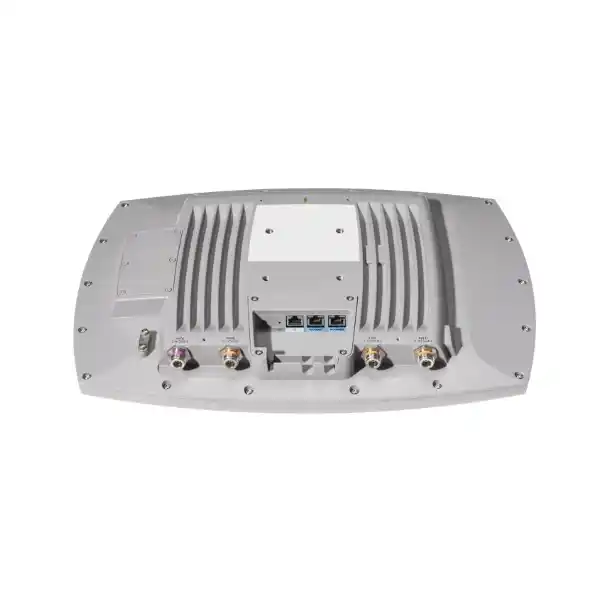
Two copper multigigabit ports support speeds up to 10 Gbps and are designed to support link and power resiliency when the surrounding network architecture is built appropriately.
Wide, narrow boresight and front-and-back coverage choices give wireless designers useful control over where RF energy is concentrated in complex venues.
What the Cisco Meraki CW9179F is designed to solve
High-density wireless is fundamentally different from ordinary office Wi-Fi. In a standard workplace, the design may primarily focus on dependable room-to-room coverage, roaming and reasonable capacity. A stadium bowl, event arena, airport waiting area, exhibition hall or large auditorium can place hundreds or thousands of active devices into a relatively small visual area. Many clients may attempt to associate, authenticate, browse, upload media or use real-time applications simultaneously. The RF plan therefore has to manage both coverage and contention. The CW9179F addresses this kind of environment by combining multiple high-capacity radios with directional antenna behavior that can be changed in software rather than requiring a completely different AP for every coverage pattern.
Cisco describes the unit as suitable for large public venues and provides three principal selectable beam patterns: wide, narrow or boresight, and front-and-back. That distinction matters because a large venue rarely benefits from broadcasting equally in every direction. Seating sections, concourses, gate areas, floor zones and audience blocks often need deliberately contained cells. Better-defined RF cells can help engineers reuse channels more effectively, reduce unwanted overlap and place capacity closer to users. The result still depends on survey data, mounting height, physical obstructions, channel plans, transmit power, cabling, switching and client capabilities; the AP does not remove the need for wireless engineering.
For buyers in Tanzania, the practical question is whether the project genuinely has a large-public-venue density problem. The CW9179F is not simply a premium replacement for an ordinary ceiling access point. Its value is strongest when there is a clear requirement for high client density, directional coverage control, fast wired uplinks and either cloud or on-premises enterprise management. FourTeck can help structure the bill of materials around those requirements, including the access point, switching, cabling, environmental accessories, licensing, mounting and the wider network path that carries wireless traffic into the core.
Verified CW9179F technical highlights
| Wireless generation | Wi-Fi 7 / IEEE 802.11be, with backward support for earlier Wi-Fi generations documented by Cisco. |
| Client-serving radio design | 4×4 radio architecture supporting 2.4 GHz, dual 5 GHz and 6 GHz operation, with up to 16 spatial streams depending on operating configuration. |
| Ethernet interfaces | Two RJ-45 multigigabit Ethernet ports supporting 100M, 1G, 2.5G, 5G and 10G speeds. |
| Beam options | Software-selectable wide, narrow boresight and front-and-back coverage behavior. Front-and-back mode requires external antennas for redirected bands as documented by Cisco. |
| Management | Cisco documents support for Catalyst-based management as well as the Meraki cloud-based stack, enabling management-model flexibility with unified hardware. |
| Location and IoT | Integrated GNSS/GPS plus dedicated scanning and IoT capabilities are part of the platform design. |
| Outdoor conversion | Outdoor deployment requires the CW-ACC-9179-B-00 environment pack. Outdoor 6 GHz use also remains subject to applicable country regulations and frequency coordination requirements. |
Design note: headline PHY rates are not the same as application throughput. Real performance depends on channel width, spectrum availability, client mix, interference, backhaul, switching and WAN capacity.
Meraki cloud or Cisco Catalyst management
One of the important characteristics of the current Cisco wireless portfolio is that the hardware can support different operating models rather than forcing buyers to choose permanently between a cloud-only AP and a controller-oriented AP at purchase time. Cisco documentation for the CW9179F describes support for both Catalyst and Meraki management. This can be useful for organizations standardizing on Meraki Dashboard, enterprises retaining Cisco Catalyst 9800 wireless controller architecture, and groups that want greater flexibility as their operational model evolves.
For a Meraki-oriented project, the cloud dashboard can centralize configuration, monitoring, policy and troubleshooting. Procurement teams should still validate the Cisco Networking Subscription or Meraki licensing model that applies to the intended management mode, term and feature set at the time of purchase. License bundles and subscription policies change over product generations, so the quotation should show hardware and recurring software entitlement separately rather than treating management as an unspecified inclusion.
For Catalyst-managed environments, compatibility with the intended controller software release, switching architecture and enterprise operational processes should be confirmed. Cisco lists IOS XE 17.18.1 or later for the platform in its data sheet. Large venue networks frequently involve additional design concerns such as RF profiles, high availability, segmentation, identity services, QoS, multicast behavior, telemetry and change-control practices. Those items should be part of the design conversation before deciding whether the Meraki or Catalyst operational model better fits the team that will run the network.
Planning the wired network behind a CW9179F deployment
A high-capacity access point is only as useful as the network behind it. The CW9179F includes dual multigigabit Ethernet with support up to 10 Gbps per port, which means switch selection, cable quality and uplink design deserve the same attention as radio specifications. Cisco notes that Cat 6 or Cat 6A cabling is required for 10 Gbps port speeds, while Cat 5e can support lower multigigabit rates up to 5 Gbps under the documented conditions. In a new deployment, structured cabling should be validated for the target speed rather than assuming every existing cable run can deliver 10G reliably.
Power is equally important. Redundant power and link behavior can improve resilience, but the design must provide compatible switching and adequate power budget. Venue Wi-Fi often shares switch infrastructure with cameras, phones, digital signage or other PoE devices, so total switch power capacity matters. The aggregation layer must also carry concentrated wireless traffic from multiple APs without becoming a bottleneck. When dozens of high-density APs feed the same distribution block, uplink oversubscription, switch backplane capacity and redundancy become core design decisions.
For complementary network planning, review FourTeck Tanzania’s broader IT, networking and Wi-Fi solution overview. The page explains how wireless, switching, firewall, cabling and other infrastructure components should be planned as a connected system rather than as unrelated boxes.
Indoor, outdoor and 6 GHz deployment considerations
The CW9179F is convertible for indoor or outdoor deployment, but outdoor use is not achieved by simply mounting the indoor configuration outside. Cisco identifies the CW-ACC-9179-B-00 environment pack as the required accessory for outdoor deployment. The physical installation must follow Cisco’s hardware and weatherization guidance, including mounting, sealing and orientation requirements. Buyers should therefore specify whether each AP will be indoors, under cover, exposed to weather or installed in a mixed indoor-outdoor venue before the bill of materials is finalized.
The 6 GHz band introduces additional regulatory considerations. Spectrum availability, power rules and outdoor 6 GHz authorization are country specific. Cisco’s documentation notes that outdoor 6 GHz operation may require Automated Frequency Coordination where applicable. A quotation can therefore identify hardware capability, but the deployment design must also validate what bands and channel widths are legally usable at the actual installation location. This is particularly important for multi-country organizations because a model that is globally orderable still operates under the local regulatory framework.
The practical approach is to begin with the physical venue and desired coverage pattern, then map radio requirements to legal spectrum availability. Where 6 GHz cannot be used in the same way outdoors, the network can still be designed using supported 2.4 GHz and 5 GHz options while complying with local rules. The RF engineer should also account for nearby networks, event-specific interference, temporary structures, large crowds and seasonal changes to venue usage.
Who should shortlist the CW9179F?
Useful where seating sections and event floors create dense populations that benefit from directional RF cells and substantial backhaul capacity.
Appropriate for carefully engineered waiting, gate and public circulation zones where many transient clients share the same wireless infrastructure.
Supports designs where changing event layouts, temporary booths and concentrated user areas require flexible coverage planning.
Can fit spaces where ordinary omnidirectional coverage creates too much overlap or insufficient capacity for the expected audience size.
Cisco Meraki CW9179F Tanzania
Organizations evaluating Cisco Meraki CW9179F in Tanzania are usually solving a venue-scale wireless problem rather than a routine office coverage problem. The strongest fit is a location with concentrated crowds, multiple high-demand applications and a requirement for deliberate RF cell design. Stadiums, sports grounds, conference facilities, transport terminals, university event spaces and large public venues can all create this pattern. A Tanzania quotation should therefore start with the expected users and physical layout, not with the number of access points alone. Seating geometry, mounting opportunities, ceiling or stand heights, concourses, walls, metal structures and the location of network rooms all affect the final quantity and beam pattern.
The wired environment should be assessed at the same time. CW9179F can use multigigabit Ethernet up to 10 Gbps, so a project that intends to exploit high radio capacity should provide suitable switches, uplinks and cabling. Existing Cat 5e runs may not be the right choice for a design targeting 10G to each AP. Power availability and redundancy also need attention, particularly where access switches power several high-demand PoE devices. In large venues, aggregation switch capacity and resilient fiber paths can matter more than individual AP headline specifications because all wireless traffic eventually converges on the wired network.
Licensing and management should be selected according to the operating team. A business already using Meraki Dashboard may prefer cloud operations and consistent policy management across sites. An enterprise running Catalyst 9800 controllers may prioritize alignment with existing controller processes. The unified hardware approach gives organizations more flexibility, but the final subscription and software requirements should be documented in the quote. For outdoor sections, the CW-ACC-9179-B-00 environment pack and Tanzania-specific 6 GHz regulatory conditions must be confirmed before installation.
A productive request for quotation should include venue drawings, estimated peak concurrent clients, important applications, current switch models, available fiber or copper cabling, preferred management architecture, indoor/outdoor mounting locations and any resilience targets. These inputs allow a supplier to distinguish a simple hardware request from a complete high-density wireless design and reduce the risk of under-specifying supporting infrastructure.
Cisco Meraki CW9179F Dar es Salaam
Dar es Salaam projects can combine corporate campuses, hospitality, transport, event and public-facing environments where wireless demand changes dramatically throughout the day. For a large venue considering the Cisco Meraki CW9179F in Dar es Salaam, capacity planning should begin with peak occupancy rather than average occupancy. A location that feels lightly loaded during normal business hours can become an extreme-density environment during conferences, match days, ceremonies or major public events. The CW9179F is relevant when that density justifies four client-serving radios and directional cell design rather than conventional omnidirectional office coverage.
Coastal climate and outdoor exposure also make installation planning important. If an AP is to be deployed outdoors, the Cisco environment pack is part of the required design. Mounting hardware, weather sealing, cable entry, lightning and surge planning, grounding practices and access for maintenance should be considered with the site contractor. A wireless design should also account for heat, moisture and salt-laden air where relevant to the physical location. These are infrastructure considerations rather than reasons to change Cisco’s published specifications, and each project should follow the manufacturer’s installation guidance.
Dense Dar es Salaam venues may also have varied internet connectivity. High-performance Wi-Fi cannot compensate for an undersized WAN connection. If guests are expected to stream, upload video, use cloud applications or interact with event platforms, internet capacity, firewall throughput and traffic policy need to be sized with the same peak load assumptions used for the radio plan. Staff, operational devices and guest traffic should be segmented so public usage does not reduce access to business-critical systems.
When requesting a CW9179F quotation for Dar es Salaam, include whether the site is a stadium, auditorium, hotel event center, campus, terminal or mixed-use facility; expected concurrent users; existing switch and firewall models; available cable pathways; target management platform; and any phased rollout plan. This creates a much clearer basis for pricing than asking for an access-point unit cost without the infrastructure context.
Cisco Meraki CW9179F Mwanza
For Mwanza, the CW9179F is most relevant to organizations planning wireless for high-occupancy venues, major educational gathering spaces, event environments, transport locations or large public areas where directional coverage can reduce interference and place capacity more precisely. The first design question is not how many square meters one AP covers. In dense Wi-Fi, client quantity, traffic demand and RF reuse are more important than simple distance. A venue can have excellent signal strength and still provide poor user experience if too many clients contend for the same airtime.
The CW9179F’s configurable antenna behavior is useful when seating zones or audience blocks can be treated as defined cells. Narrow boresight can focus energy into a smaller target area, while wide mode can serve a broader sector. Front-and-back operation can support specific architectural scenarios but requires the external antenna arrangement described by Cisco. A site survey and predictive design should determine which option is appropriate for each location. Using the same beam setting everywhere would miss much of the reason this model exists.
Mwanza procurement should also factor the network path from AP to internet or application servers. Where existing switching is limited to 1 Gbps ports, installing a 10G-capable access point may still improve wireless features, but the wired link can become the limiting factor. Organizations planning a premium Wi-Fi 7 rollout should review multigigabit switch ports, PoE budget, fiber aggregation and firewall capacity. If the project includes video surveillance, IP telephony or other PoE devices on the same access switches, total power and uplink utilization need a combined calculation.
For a quotation, specify whether the project is new-build or retrofit, the current cabling category, network room locations, available switch capacity and expected growth. That information helps determine whether the CW9179F can be integrated into existing infrastructure or whether switching and cabling upgrades should be included in the same project phase.
Cisco Meraki CW9179F Arusha
Arusha has business, hospitality, conference and tourism-oriented environments where event density can be very different from day-to-day office occupancy. The Cisco Meraki CW9179F can fit projects where conference halls, convention venues, large hospitality spaces or public gathering areas must maintain service during peak events. Before specifying this model, buyers should establish the expected number of simultaneously active devices, the application mix and whether multiple high-density zones need independent RF cells. A venue with modest room-by-room usage may be better served by a different AP class, while a hall with concentrated attendees can justify CW9179F’s purpose-built design.
Guest Wi-Fi policy is another major design factor. High-density venues often require captive portal workflows, user isolation, bandwidth controls and separate staff or operations networks. Meraki management can be attractive to teams that value centralized cloud visibility, while Catalyst management can align with enterprises that already run controller-based Cisco wireless. The correct choice should follow operational ownership: who monitors the network, who changes SSIDs and policy, and how multiple sites are administered.
If Arusha installations include outdoor terraces, event grounds or covered external areas, the design must incorporate the Cisco environment pack where the CW9179F is placed outdoors. The 6 GHz plan should also be validated against local regulatory rules rather than assuming every Wi-Fi 7 channel is available. Where spectrum constraints exist, capacity can still be engineered using supported 5 GHz resources, dual 5 GHz radio capability and careful channel reuse.
A strong procurement brief should include floor plans, temporary event layout possibilities, maximum attendee counts, expected guest onboarding method, WAN bandwidth, switch locations and cable pathways. For hospitality and conference properties, it is also useful to state whether the network must integrate with existing identity, firewall or property systems so that compatibility can be considered before hardware is ordered.
Cisco Meraki CW9179F Dodoma
Dodoma organizations evaluating the Cisco Meraki CW9179F may include public institutions, conference facilities, education environments and large organizational campuses. These projects often require predictable operation, clear documentation and structured procurement. The CW9179F should be positioned as part of an engineered wireless system rather than as a standalone appliance. Radio planning, segmentation, switching, licensing and maintenance access all belong in the technical scope.
For institutional procurement, specifications should separate mandatory functional requirements from brand-specific wording where appropriate. If the requirement is genuinely for the CW9179F, the document can identify the model while also describing why it is needed: Wi-Fi 7, four client-serving radios, dual 10G multigigabit uplinks, configurable directional beam patterns, GNSS/GPS and selected management architecture. Stating the business reason for these features helps reviewers distinguish necessary capabilities from optional extras.
Resilience planning is especially important for public or mission-critical venues. Dual Ethernet ports can contribute to link and power resilience, but the surrounding topology must avoid single points of failure. Separate access switches, redundant upstream paths and protected power may be necessary depending on availability targets. Network management should also include configuration backup, monitoring, alerting and controlled software updates. A high-end AP does not itself guarantee service continuity if the switch, WAN circuit or power source has no redundancy.
For quotations in Dodoma, organizations should state whether procurement covers hardware only, installation, RF design, switch upgrades, cabling, licensing and ongoing support. A complete scope should also list indoor versus outdoor AP positions and any approval process required for mounting or network changes. This allows the final proposal to match the operational and administrative requirements of the site, not only the wireless specification.
Cisco Meraki CW9179F UAE
UAE deployments of the Cisco Meraki CW9179F can span stadiums, airports, exhibition venues, entertainment destinations and major hospitality or commercial developments. Such sites often combine very high user density with strict expectations for uptime and digital experience. The CW9179F’s large-public-venue positioning makes it particularly relevant where RF cells must be shaped to seating blocks, halls, gates or event areas and where high-capacity switching is already part of the project architecture.
Outdoor deployment in the UAE requires attention to environmental exposure and Cisco’s environment pack. Heat, dust, direct sun and mounting conditions should be evaluated at the infrastructure level, while installation must follow Cisco’s published requirements. Outdoor 6 GHz operation should be planned only after confirming current UAE spectrum rules and any frequency-coordination obligations. Regulatory compliance is part of deployment engineering, not an assumption based on the AP’s global hardware designation.
For multi-site organizations, the management model can be as important as radio hardware. Meraki cloud management may simplify visibility across multiple venues and branches, while Catalyst-based management may align with existing enterprise architecture. The unified Cisco hardware strategy gives buyers options, but subscription terms and software entitlements should be reviewed at quotation time. For broader UAE infrastructure sourcing and integration context, organizations can also review FourTeck UAE technology solutions, especially when a project combines wireless with switching, firewall, structured cabling or other enterprise systems.
A UAE RF design should be based on venue-specific surveys and usage patterns. Exhibition halls can be reconfigured for each event, stadium occupancy changes by fixture, and transport venues have continual client movement. Those operational patterns should influence AP placement, beam selection, channel planning and monitoring policies so the wireless platform is designed for real usage rather than an empty-building survey alone.
Cisco Meraki CW9179F Uganda
Uganda buyers considering the Cisco Meraki CW9179F should start by identifying whether the target environment is truly high density. A large geographic footprint by itself does not justify a large-public-venue AP. The strongest candidates are audience areas, terminals, stadium sections, public event zones and institutional halls where many users connect within a constrained RF space. Where the requirement is broad outdoor coverage with relatively few users, a different directional or outdoor AP may be more appropriate.
For qualifying high-density projects, switch and uplink readiness deserve early attention. CW9179F can connect at multigigabit speeds up to 10 Gbps, so organizations should review existing access switches, PoE capacity and backbone bandwidth. If current switches offer only 1G access and modest uplinks, the wireless layer may exceed what the LAN can efficiently carry. Phased upgrades can still be planned, but the performance expectations should match the wired reality.
Management should also match local operational capability. Cloud management can reduce the need for a controller appliance at each site and can centralize monitoring across multiple locations, provided internet and subscription requirements are understood. Catalyst controller management may be preferred where a larger enterprise already operates that architecture. FourTeck’s Uganda technology solutions site provides additional regional context for organizations coordinating Wi-Fi with networking, communication and infrastructure services.
For outdoor Uganda deployments, specify exact AP mounting locations and exposure. The environment pack is required for outdoor CW9179F installation, and 6 GHz operation remains subject to local rules. Include building plans, expected peak clients, management preference, switch models and WAN bandwidth in the quotation request so the project can be scoped beyond hardware quantity.
Cisco Meraki CW9179F Kampala
Kampala has hotels, conference venues, transport environments, education campuses and event facilities that may create large temporary concentrations of wireless users. In these cases, the Cisco Meraki CW9179F can be considered for zones where client density rather than simple coverage is the dominant problem. A predictive RF plan should estimate concurrent device counts and application demand for each zone. Video uploads, live event applications, guest portals and business collaboration can produce very different traffic patterns from basic web browsing.
The AP’s multiple radios can increase design flexibility, but the spectrum plan must avoid creating excess self-interference. Engineers should choose channel widths and transmit power according to the venue rather than automatically selecting the widest available channel. In very dense networks, narrower channels may create more reusable cells and better aggregate capacity. Wi-Fi 7 features are powerful, but channel planning remains a fundamental RF discipline.
Kampala projects should also define traffic segmentation. Guest users should generally be separated from staff, payment, operations or IoT networks. Firewalls, VLANs and identity policy determine what each wireless role can reach. The CW9179F contributes radio access, while the rest of the architecture protects applications and maintains service priorities. For event sites, operational devices may need guaranteed bandwidth even when thousands of guests are online.
A complete Kampala RFQ should therefore include more than AP count. Share the venue type, client-density targets, expected event peaks, switch and firewall environment, WAN bandwidth, indoor/outdoor split and management preference. This gives the supplier enough information to identify whether additional switches, cabling, optics, licenses or environmental accessories need to be part of the same quotation.
Cisco Meraki CW9179F Arua
Arua deployments are likely to be more selective than major metropolitan large-venue projects, so procurement teams should carefully validate whether the CW9179F’s high-density capability is required. The model makes sense where a campus event space, public facility, transport environment or large gathering area needs substantial capacity and directional control. If the problem is simply extending coverage across a broad low-density area, a different outdoor AP architecture may deliver a better cost-to-requirement fit.
Where the CW9179F is justified, infrastructure readiness should be checked before ordering. The model’s dual 10G multigigabit Ethernet design means premium performance depends on suitable wired switching and cabling. Remote or distributed sites should also consider spare strategy and physical access for maintenance. High mounting positions can improve RF geometry but make future servicing more difficult, so installation should balance coverage with safe technician access.
Power stability is another practical issue. A resilient wireless design may include UPS-backed switching, redundant power paths and protected upstream connectivity. The AP can support redundant link and power concepts, but the surrounding network must provide them. Where a site uses generator or solar-backed infrastructure, switch and UPS capacity should be checked against the full PoE load, not only the access points.
For Arua quotation requests, provide photos, basic site drawings, expected user count, current network hardware and the reason a high-density AP is being considered. Clear usage information helps avoid over-specification and allows a proposal to focus on the correct combination of wireless hardware, management, cabling and support.
Cisco Meraki CW9179F Mbarara
Mbarara organizations evaluating high-density Wi-Fi may include education institutions, public event spaces, hospitality sites and larger commercial facilities. The Cisco Meraki CW9179F is best considered when there are defined crowd zones that need their own RF capacity. A large campus should not automatically use this model everywhere; a mixed design may place CW9179F units in auditoriums or event zones while other access-point models cover ordinary offices, classrooms and corridors.
This mixed-model approach can improve cost efficiency and RF suitability. High-density directional APs are valuable where client concentration is extreme, while omnidirectional APs can be simpler for general-purpose indoor spaces. The management platform should support a consistent operational view across the chosen portfolio. Cisco’s current unified strategy can support Meraki or Catalyst management, allowing organizations to standardize operations while selecting hardware by physical requirement.
For halls and event areas, the wireless designer should model seating orientation, stage layout and typical audience behavior. People themselves attenuate RF, so an empty-room test is not a complete representation of a full venue. Mounting below seating or directing coverage into sections may be appropriate in some venue designs, but all placement must follow Cisco’s installation guidance and a qualified site assessment.
Mbarara procurement teams should include expected deployment phases, user-density estimates, applications, switch capabilities and support expectations. If the organization plans to expand later, reserving switch ports, fiber capacity and addressing space can make future additions easier. A scalable design is not simply buying the largest AP; it is building repeatable network blocks that can be extended without redesigning the entire venue.
Cisco Meraki CW9179F Gulu
Gulu buyers should approach the Cisco Meraki CW9179F as specialized high-density infrastructure. It is not a generic Wi-Fi extender and should not be selected purely because Wi-Fi 7 is the newest standard. The model becomes compelling when the site needs multiple high-capacity radios, sector-style coverage control and strong wired backhaul in a venue where user density can overwhelm ordinary AP designs.
A good design process begins with a usage map. Mark high-demand seating or gathering areas, quieter administrative zones, entrances, outdoor spaces and locations where staff devices must remain reliable. This map can guide which areas need CW9179F and which can use standard enterprise APs. It also helps identify cable routes and switch placement. If every AP requires long copper runs to one distant room, cable distance and pathway constraints may force a different switching topology.
Cloud management can be useful for distributed operations because network administrators can review status remotely, but remote visibility does not replace local physical support. A plan should include how failed hardware is accessed, who can inspect cabling and how replacement units are staged. For mission-critical events, spares and documented configurations may reduce recovery time. Licensing terms and support entitlements should be clearly recorded with the procurement documents.
Gulu RFQs should state whether the organization wants hardware supply only or a full design-and-deployment scope. Full projects may include predictive RF planning, on-site validation, switch upgrades, VLAN and SSID configuration, guest access design, documentation and post-installation optimization. Defining the desired scope upfront makes technical and commercial comparisons more meaningful.
Cisco Meraki CW9179F Kenya
Kenya has a broad range of environments where the CW9179F’s large-public-venue design can be relevant, including sports facilities, airports, conference centers, university venues and high-capacity hospitality or entertainment spaces. A Kenya deployment should match AP placement to the physical crowd pattern. Stadium seating, terminal gates and exhibition halls each need different coverage geometry even when the user count is similar. Configurable beam patterns allow the same platform to serve different RF roles, but those roles should be chosen through planning rather than convenience.
The four client-serving radios give designers useful capacity options, including dual 5 GHz. Dense networks can benefit from distributing clients across more radio resources, but the channel plan must align with the spectrum available in the country and the venue. 6 GHz support is an important Wi-Fi 7 feature, yet actual channel availability and outdoor rules must be verified under Kenya’s current regulatory framework before deployment.
Organizations with operations in Tanzania and Kenya may also want consistent management, SSIDs and security policy across borders. Cisco’s flexible management options can support that operational goal, while the physical RF design remains site-specific. FourTeck’s Kenya IT solutions site can provide additional regional context when procurement spans networking, communications, firewall or supporting infrastructure.
A Kenya project brief should include the venue type, number of AP zones, expected concurrent users, uplink design, cable standards and management model. If the site will host events with temporary infrastructure, describe whether floor layouts or partitions change. Flexible venues may need RF profiles that can be adjusted for different event modes, and operational teams should understand how to make those changes without disrupting the underlying network.
Cisco Meraki CW9179F Kuwait
Kuwait projects may place high-density wireless in stadiums, event halls, malls, transport environments and large institutional facilities. The CW9179F can fit these scenarios where the design requires focused RF cells and robust backhaul. As with every region, outdoor deployment must be treated as a specific configuration requiring the Cisco environment pack and adherence to local spectrum rules. High temperatures and exposed mounting locations also make physical installation planning particularly important.
For indoor public venues, the biggest challenge is often interference management rather than raw signal strength. Reflective surfaces, dense crowds, adjacent tenant networks and temporary event technology can all change RF behavior. Software-selectable beam patterns give designers more control, but professional survey and tuning remain necessary. Monitoring after the venue opens is also useful because live occupancy conditions may reveal issues not visible during commissioning.
Kuwait enterprises with centralized IT operations should decide early whether Meraki cloud management or Catalyst controller management best matches governance standards. Security teams may require integration with existing identity, firewall, logging and monitoring systems. Procurement should therefore involve both network engineering and security stakeholders, especially where guest access and operational networks coexist in the same venue.
A quotation request should identify the number of venue zones, indoor/outdoor split, existing switches, preferred subscription term and installation scope. Where 10G Ethernet is a target, cable certification and switch port capability should be included in the acceptance criteria so the completed deployment is verified end to end rather than only confirming that each AP powers on.
Cisco Meraki CW9179F Ghana
Ghana deployments that merit the CW9179F are likely to include large event, education, transport or public facilities where many devices connect at the same time. The design objective should be consistent user experience at peak occupancy. This means measuring success through authentication success, airtime utilization, application performance and client distribution rather than simply checking that users can see the SSID.
For public Wi-Fi, the upstream internet and firewall architecture often sets the real limit. A venue can deploy multiple high-capacity APs but still feel slow when guest traffic shares a constrained internet link. Ghana projects should therefore model WAN demand, firewall performance and any captive portal or identity system along with the wireless layer. Local breakout, content optimization or application policy may be useful depending on the use case, but these should be designed around the venue’s business requirements.
The CW9179F’s dual 10G multigigabit ports create a path for high-capacity wired connectivity and resiliency. To benefit, the network should provide compatible switching, sufficient PoE and fast aggregation. Copper cable category, distance and termination quality become especially important at higher link rates. Existing cable should be tested before being assumed suitable for a 10G target.
A Ghana procurement package should state whether the project includes wireless design, installation, switching, cabling, subscription licensing and support. It should also list expected venue growth. If additional seating, halls or outdoor zones are planned, the core and distribution network can be sized with spare capacity so expansion does not immediately require replacement of upstream infrastructure.
Cisco Meraki CW9179F Nigeria
Nigeria contains many venue types where high-density Wi-Fi can be a strategic service: stadiums, entertainment centers, airports, universities, conference facilities and large corporate event spaces. The CW9179F can be evaluated for zones where crowd density and application demand justify a specialized Wi-Fi 7 large-public-venue platform. Design teams should define expected concurrent devices by section because aggregate building occupancy alone does not reveal where capacity is needed.
Power and resilience planning can be particularly important in large facilities. The wireless network may depend on UPS systems, generator-backed circuits and redundant switching. Dual Ethernet connections can contribute to a resilient AP design, but only if the switching architecture supports separate failure domains and sufficient power. Critical network rooms should also have environmental monitoring, organized cabling and documented port assignments to simplify troubleshooting during events.
For large Nigerian venues, operational monitoring should be part of the implementation plan. Administrators need visibility into client counts, channel utilization, uplink health and application behavior. Meraki Dashboard may appeal to teams seeking cloud-based oversight, while Catalyst management can integrate with established Cisco controller environments. The correct model depends on the organization’s operations, subscription preferences and security standards.
Before purchasing, confirm the local 6 GHz regulatory position and any outdoor conditions, then map those rules into the channel plan. Provide venue drawings, peak usage data, current LAN topology, WAN capacity and installation responsibilities when requesting a quote. This allows the bill of materials to include the correct AP accessories and infrastructure rather than treating the CW9179F as a standalone line item.
Cisco Meraki CW9179F Seychelles
Seychelles projects are likely to emphasize hospitality, resorts, event facilities, transport gateways and public spaces. The CW9179F can be relevant where those venues create unusually dense client populations, but coastal and outdoor conditions make the installation method especially important. Any outdoor unit requires the Cisco environment pack and should be mounted, weatherized and maintained according to Cisco guidance. Salt exposure, wind and access for maintenance are practical site considerations that the installer should assess.
Resort and hospitality networks often combine guest traffic with property operations, payment systems, voice, cameras and IoT devices. These services should not be placed into one undifferentiated wireless network. VLANs, firewall policy and role-based access can separate guest usage from operational systems. The CW9179F delivers high-capacity access, while the switching and security architecture determines how safely each class of device reaches its required services.
Because island connectivity can be a limited or expensive resource, WAN planning also deserves attention. The wireless LAN may be capable of very high local throughput even when internet bandwidth is lower. Application-aware policy, guest rate limits or traffic prioritization can protect essential services during busy periods. A high-density AP therefore should be deployed as part of an end-to-end experience plan rather than judged only by its radio data rate.
For Seychelles quotations, state the exact property or venue type, indoor/outdoor locations, expected peak guests, WAN bandwidth, existing switch infrastructure and management preference. If outdoor 6 GHz is being considered, confirm applicable regulatory conditions before finalizing the RF design. Where multiple buildings are involved, fiber links and network-room placement should be included in the project scope.
Regional design consistency without copy-and-paste deployment
Organizations operating across Tanzania, Uganda, Kenya and other African markets often want a common wireless standard. Standardization has real benefits: familiar dashboards, consistent SSID naming, repeatable VLAN policy, common support workflows and simplified procurement. However, RF design should not be standardized by blindly repeating AP quantities. Every building, venue and country has different geometry, spectrum rules, client density and internet capacity.
For broader regional project coordination, the FourTeck Africa technology solutions portal can provide additional context for multi-country networking and infrastructure requirements. The goal should be a standardized architecture with site-specific engineering: common management and security principles, but RF plans tailored to each venue.
Licensing and subscription guidance
Cisco’s current wireless strategy uses unified hardware and Cisco Networking Subscription concepts to give customers flexibility across management models. When procuring the CW9179F, buyers should not assume that the hardware price alone represents the complete operational cost. The quotation should clearly state the software or subscription entitlement, term, service level and intended management mode. If an organization uses Meraki Dashboard, confirm that the selected licensing provides the required cloud-management features. If it uses Catalyst, verify software compatibility and controller requirements.
Subscription terms can affect budgeting more than the initial hardware purchase, particularly in large venues with many APs. Procurement teams may prefer aligned renewal dates so wireless licenses renew with other Cisco infrastructure. Organizations should also document who owns subscription administration and which email or organization account is used. This prevents future confusion when staff change or when multiple sites are added.
For tender or purchase-order work, request a line-item breakdown for access points, environment packs where required, mounting or antenna accessories, subscriptions, switching, optics, cabling and professional services. A transparent bill of materials makes it easier to compare proposals and to distinguish recurring costs from one-time installation costs.
CW9179F buying checklist
Common Cisco Meraki CW9179F questions
Is the CW9179F a Wi-Fi 7 access point?
Yes. Cisco documents the CW9179F as an enterprise-grade Wi-Fi 7 / 802.11be access point designed for high-density large public venues. It also supports earlier Wi-Fi client generations according to Cisco’s published specifications.
Can the CW9179F be managed in Meraki Dashboard?
Cisco documents support for the Meraki cloud-based stack as well as Catalyst management. The exact licensing and onboarding approach should be confirmed for the selected subscription and software release at the time of purchase.
Does the CW9179F support outdoor deployment?
Yes, but outdoor deployment requires the Cisco CW-ACC-9179-B-00 environment pack and installation according to Cisco’s outdoor guidance. Outdoor 6 GHz operation also depends on local regulatory rules and may require frequency coordination where applicable.
How fast are the Ethernet ports?
The CW9179F has two RJ-45 multigigabit Ethernet ports supporting 100 Mbps, 1 Gbps, 2.5 Gbps, 5 Gbps and 10 Gbps. Cisco notes Cat 6 or Cat 6A cabling for 10 Gbps speeds, while Cat 5e can support up to 5 Gbps under the documented conditions.
What beam patterns are available?
Cisco’s deployment guidance identifies wide, narrow or boresight, and front-and-back patterns. The correct option depends on the physical venue and RF cell design. Front-and-back operation uses external antennas for redirected bands as described in Cisco documentation.
Is CW9179F suitable for a normal office?
It can technically provide Wi-Fi, but it is designed for high-density large public venues. Standard enterprise offices usually have more appropriate access-point models with omnidirectional coverage and lower cost. Selection should be based on density, geometry and management requirements.
What information should I send for a Tanzania quotation?
Provide the model and quantity if already known, venue type, floor or seating plans, expected peak clients, indoor/outdoor mounting positions, existing switch and firewall models, WAN bandwidth, management preference, subscription term and installation scope. This helps create a complete bill of materials instead of a hardware-only price.
Decision recap
Choose Cisco Meraki CW9179F when the venue needs high-density Wi-Fi 7, directional coverage control, multiple client-serving radios and multigigabit wired capacity. Do not choose it simply because it is the newest model. A successful deployment requires RF engineering, suitable switch power and uplinks, correct cabling, the right Cisco management and subscription model, and explicit planning for outdoor environmental requirements where applicable.
For Tanzania projects, the most useful next step is to prepare a short technical brief with venue drawings, user density, applications, network topology and management preference. FourTeck can then help translate that information into a practical quotation and identify whether switching, cabling, environmental accessories or other network components should be included alongside the CW9179F.
Consultation panel: what to send before requesting a quote
A useful inquiry can be concise. State the project location, venue type, estimated peak users, number of proposed wireless zones, indoor or outdoor installation, current switching platform and desired management model. If you have floor plans or seating plans, include them. If the venue already has Wi-Fi, describe the current problem: congestion, poor coverage, roaming failures, limited event capacity or an upcoming Wi-Fi 7 upgrade.
For multi-country projects, identify each deployment country separately because 6 GHz rules, outdoor conditions and implementation logistics differ. A common Cisco architecture can still be used, but the radio plan should be validated site by site.




Reviews
There are no reviews yet.