
Cisco Meraki cloud-managed switching • Tanzania procurement guidance
Cisco Meraki MS130-12X Tanzania
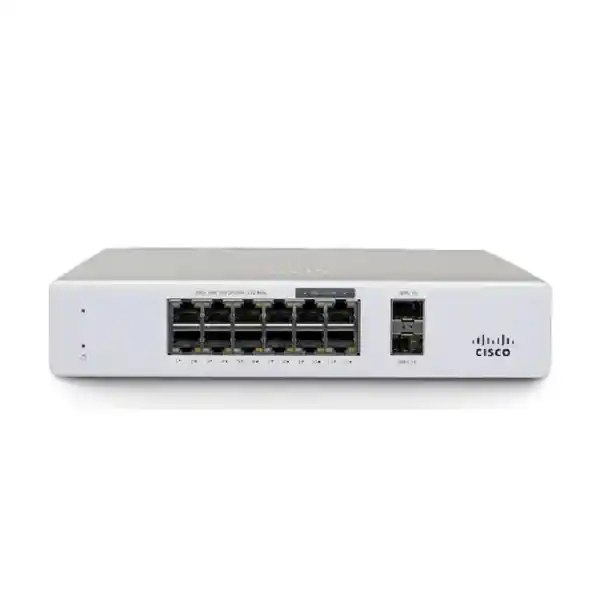
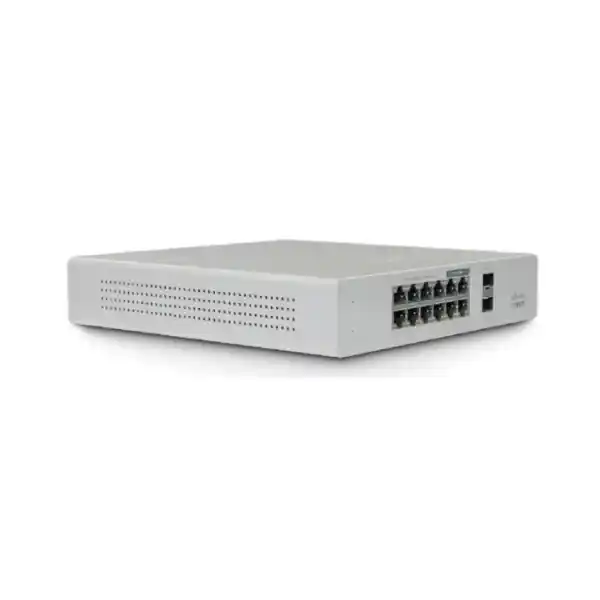
Cisco Meraki MS130-12X is a compact cloud-managed Layer 2 access switch designed for branch and campus deployments that need a mix of standard Gigabit Ethernet, multigigabit access and high-speed fiber uplinks. Cisco specifies eight 1GbE RJ45 ports, four 100M/1G/2.5G mGig RJ45 ports, two 10GbE SFP+ uplinks, a 240W PoE switch budget and 76Gbps switching capacity. The model is managed from the Cisco Meraki Dashboard, supporting centralized configuration, visibility, firmware management and remote troubleshooting for distributed business networks.
What is the Cisco Meraki MS130-12X?
The MS130-12X sits in Cisco Meraki’s compact MS130 switching family and is aimed at access-layer deployments where a business needs more than basic Gigabit Ethernet but does not require a large 24- or 48-port chassis. Its combination of eight 1GbE access ports and four 2.5GbE multigigabit ports makes it especially relevant for modern wireless access points, cameras, phones and other PoE-powered devices that may outgrow a conventional 1GbE edge. Two fixed 10GbE SFP+ uplinks provide an appropriate path toward a distribution switch, core switch or fiber backbone when the surrounding design supports those speeds.
Cisco positions the MS130 family for Layer 2 access switching in branch and campus environments. Key platform features include Meraki Dashboard management, remote packet capture, automatic firmware upgrades, SNMP and Syslog integration, IPv4/IPv6 access control lists, 802.1Q VLAN tagging, DHCP snooping and 802.1X authentication. The MS130-12X is therefore best evaluated as part of a managed network architecture rather than as a stand-alone unmanaged switch. Cloud administration can reduce operational friction across multiple sites, but correct VLAN design, uplink sizing, PoE calculation, cabling and licensing remain essential.
Multigigabit edge
Four 2.5GbE ports can support devices such as Wi-Fi 6/6E access points that benefit from more than 1Gbps wired backhaul.
Fast uplinks
Two 10GbE SFP+ uplinks help avoid forcing higher-capacity edge traffic through a single Gigabit uplink.
Cloud operations
The Meraki Dashboard centralizes configuration, monitoring, firmware updates and remote troubleshooting across sites.
PoE capacity
A 240W switch PoE budget supports a practical mix of powered access points, phones, cameras and other compatible endpoints.
Verified Cisco Meraki MS130-12X specifications
| Access ports | 8 × 10/100/1000Mbps RJ45 |
| Multigigabit ports | 4 × 100M/1G/2.5G mGig RJ45 |
| Uplinks | 2 × 10GbE SFP+ |
| PoE budget | 240W switch budget, up to 30W per supported port |
| Switching capacity | 76Gbps |
| Management | Cisco Meraki Dashboard |
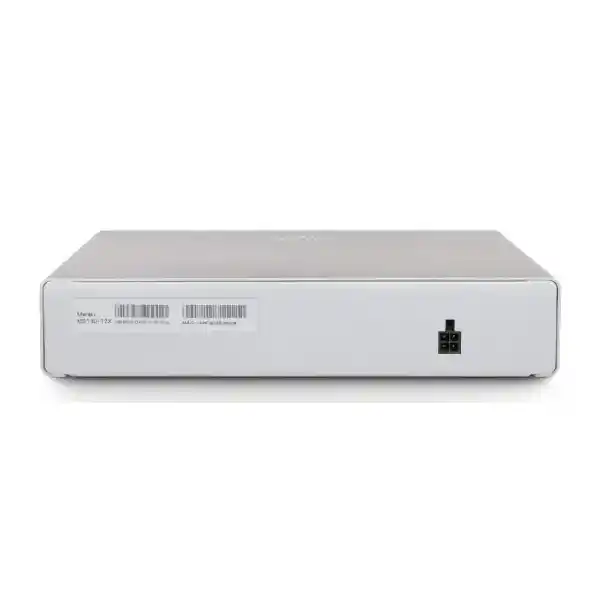
| Power input | 54VDC, 5.56A external power supply |
| Power load | 19W idle / 260W maximum |
| Operating temperature | 0°C to 45°C |
| Humidity | 5% to 95% |
| Mounting | Desktop / integrated wall mount |
| Dimensions | 1.75 × 9 × 8.58in (4.4 × 23 × 23cm) |
| Weight | 2.34lb (1.06kg) |
| Fan operation | Fixed internal fan |
| Supported compact license family | Enterprise or Advanced MS130 compact licensing, subject to the selected Meraki licensing model and term |
Cisco documentation notes that Enterprise and Advanced licensing rules differ by licensing model, and organizations should confirm tier consistency before procurement. Hardware, license duration, Dashboard organization ownership and renewal responsibility should therefore be included in the bill of materials rather than handled after installation.
Where the MS130-12X fits in a business network
The strongest use case for the MS130-12X is a compact access layer that needs several high-bandwidth PoE endpoints without moving to a larger switch purely to obtain faster ports. A branch can use the 1GbE ports for desk phones, printers, workstations and cameras while reserving the 2.5GbE ports for access points or devices that can benefit from multigigabit Ethernet. The 10GbE SFP+ uplinks can then carry aggregate traffic toward the network core or distribution layer. This arrangement is attractive when rack space, port density and operational simplicity all matter.
Before ordering, map every endpoint to a port, speed and power requirement. A 240W total PoE budget does not mean every connected device can draw its maximum simultaneously without calculation. Add the expected power demand for access points, cameras, phones and other powered devices, reserve headroom for realistic growth, and confirm any device-specific PoE requirements. The same discipline applies to bandwidth: a 2.5GbE edge port provides value only when cabling, the endpoint NIC, switch uplinks and upstream network can carry the traffic.
Organizations considering Wi-Fi 6E can review the Cisco Meraki CW9162I-MR Tanzania page for a general-purpose Meraki-managed access point with a 2.5G wired uplink. Higher-capacity indoor wireless can be compared with the Cisco Meraki CW9164I-MR Tanzania, while directional deployment needs can be explored through the Cisco Meraki CW9166D1-MR Tanzania. For organizations planning newer wireless generations, the Cisco Meraki CW9171I Tanzania page provides adjacent Wi-Fi 7 context. These related pages are useful because access-point selection determines both PoE demand and the value of the MS130-12X multigigabit ports.
For broader procurement, use the FourTeck Tanzania business technology shop to review supporting hardware categories, and the FourTeck Tanzania services page for network design, installation, configuration and lifecycle planning. The FourTeck Tanzania technology solutions overview connects switching with Wi-Fi, firewalls, structured cabling, racks, UPS and other dependencies that can influence the final network design.
Licensing and lifecycle planning
Meraki switching is designed around cloud management, so licensing belongs in the original procurement discussion. Cisco lists Enterprise and Advanced tiers for the MS130 family, with compact-switch license families covering models including the MS130-12X. Available terms vary by tier and licensing model. In co-term organizations, license-tier consistency can affect what can be added to the organization; per-device licensing has different rules. Subscription licensing also maps the MS130-12X to the MS100 Small class. Buyers should therefore provide the current Meraki organization licensing model, existing switch tiers, preferred term and renewal policy when requesting a quotation.
Licensing is not the only lifecycle detail. Confirm the correct power cord for the deployment country because Cisco notes that region-specific cords are not universally included. If fiber uplinks will be used, select supported SFP/SFP+ modules and match optic type to fiber type and distance. Document Dashboard administrators, device naming, VLAN standards, firmware policy and support ownership before deployment. This turns the MS130-12X from a hardware purchase into a maintainable operational asset.
Cisco Meraki MS130-12X Tanzania
Organizations evaluating Cisco Meraki MS130-12X in Tanzania are usually trying to solve a practical access-network problem: how to connect and power a mixture of users, Wi-Fi access points, cameras, phones and other IP devices while keeping the network manageable from a central location. The MS130-12X is well suited to compact sites that need higher bandwidth on selected edge ports without adopting a much larger chassis. Its eight 1GbE ports cover conventional endpoints, the four 2.5GbE ports create room for modern wireless or other multigigabit devices, and the two 10GbE SFP+ uplinks can connect the access layer to higher-capacity switching where the design justifies it. Tanzania buyers should start by documenting endpoint count, device speeds, PoE demand, VLANs and uplink destinations rather than choosing the model only from port count.
Power and environment deserve particular attention in Tanzania projects. Cisco specifies a 0°C to 45°C operating range for the MS130-12X and uses an external power supply. A properly ventilated network space, stable power feed and appropriately sized UPS can reduce avoidable outages, especially where the switch is powering access points, IP phones or cameras that are operationally important. If the switch will be mounted in a communications cabinet, check cabinet depth, airflow, cable management and access to the external power adapter. The product supports desktop and integrated wall mounting, which can be useful in smaller branches, but installation should still protect cables and maintain airflow.
Cloud management can be valuable for organizations with sites across Tanzania because a central IT team can monitor configuration and status without maintaining a local controller at each branch. That benefit is strongest when the network follows standards for VLAN IDs, port profiles, naming, administrator permissions, alerting and change control. When requesting a Tanzania quotation, provide the exact switch quantity, desired licensing term, existing Meraki organization details, expected PoE load, SFP+ optic requirements, power-cord requirement and any installation or configuration scope. For a broader project, FourTeck Tanzania can align the switch with wireless, firewall, structured cabling, rack and UPS requirements instead of quoting the switch in isolation.
Cisco Meraki MS130-12X Dar es Salaam
For Dar es Salaam offices, branches, hotels, professional firms, retail operations and commercial buildings, the MS130-12X can provide a compact managed access layer where several devices require PoE and a smaller number require multigigabit throughput. A typical business floor might use 1GbE ports for IP phones, printers, cameras or wired workstations while reserving the 2.5GbE ports for Wi-Fi 6/6E access points. The design should account for peak rather than average traffic. Video meetings, cloud backups, SaaS applications and high-density wireless usage can coincide during the working day, so the 10GbE SFP+ uplinks are most useful when upstream switching and fiber infrastructure are also designed to avoid bottlenecks.
Dar es Salaam projects often involve existing buildings where cabling history is not always fully documented. Before assuming every multigigabit port will deliver 2.5Gbps to the endpoint, inspect cable category, termination quality, run length and patching. If the switch is replacing an older unmanaged or 1GbE-only access switch, document current VLANs, IP addressing, uplink paths and device dependencies before migration. Meraki Dashboard management can simplify ongoing operations, but a clean migration plan still matters because phones, access points, cameras and user devices may rely on different VLANs, DHCP scopes or security policies.
Procurement teams in Dar es Salaam should also confirm licensing and accessories at quotation stage. The switch hardware, Meraki license, supported SFP/SFP+ modules, region-appropriate power cord and any mounting or UPS requirements should appear on the same bill of materials. If a headquarters location manages other Tanzanian branches, define who owns the Dashboard organization and which administrators can make changes. A good quotation request includes the number of powered devices, their estimated wattage, required uplink medium, existing core-switch model, current Meraki license tier and whether FourTeck should include configuration, testing and documentation. That information makes the proposal more useful than a simple hardware-only price request.
Cisco Meraki MS130-12X Mwanza
Mwanza businesses considering the Cisco Meraki MS130-12X may be planning a branch refresh, a new office, a hospitality network, a school or training environment, or an operational site where IT needs centralized visibility. The compact form factor is useful when the site does not need dozens of access ports but still has modern bandwidth requirements. Four 2.5GbE ports allow selected access points or other high-throughput endpoints to operate above Gigabit speed, while standard 1GbE ports remain available for the majority of wired business devices. The decision should be based on a port map that identifies each device, its speed, whether it needs PoE and the VLAN it will use.
For branch environments, cloud management can reduce dependence on specialist staff being physically present at the Mwanza site. A central administrator can use the Meraki Dashboard for configuration, monitoring and remote troubleshooting, but the branch still depends on correctly designed local switching, gateway services and power. If the switch powers the wireless network and phones, a power interruption affects several services at once. An appropriately sized UPS, clean rack or wall-mount location, secure cabling and good ventilation should therefore be part of the infrastructure plan. The MS130-12X operating environment is specified up to 45°C, so enclosed cabinets with poor airflow should be avoided.
Uplink planning is another key point. Two 10GbE SFP+ interfaces create flexibility for fiber or high-speed connections, but optic selection must match the installed fiber and link distance. Avoid ordering transceivers only by connector appearance. For a Mwanza quotation, include fiber type, approximate distance, endpoint count, PoE load, current core switch, license term and whether the new switch will join an existing Meraki organization. If the site is part of a national network, consistent VLAN and naming standards can make Mwanza easier to support alongside Dar es Salaam, Arusha and Dodoma branches while still allowing local differences in user count and applications.
Cisco Meraki MS130-12X Arusha
Arusha deployments can combine offices, tourism and hospitality operations, training facilities, professional services and customer-facing environments. In these settings, access switching often supports several traffic types at the same time: staff data, guest Wi-Fi, IP telephony, surveillance and cloud applications. The MS130-12X can serve as a compact managed edge when twelve copper access ports are sufficient and selected devices need 2.5GbE. Its 240W PoE budget can help consolidate power for compatible endpoints, but the budget must be calculated against real devices rather than assuming every PoE endpoint draws the same amount.
A hospitality or guest-focused site should pay particular attention to segmentation. Guest traffic should not be treated like internal staff traffic simply because both traverse the same physical switch. VLANs, access-control policies and firewall rules can separate user groups, while Meraki Dashboard management provides operational visibility. If high-density wireless is part of the design, use the mGig ports for access points whose wired interfaces can exceed 1Gbps and verify that the upstream 10GbE path is available where aggregate traffic demands it. Cabling quality is important because multigigabit Ethernet places more emphasis on the condition of existing copper runs than a basic 100Mbps legacy network.
Arusha procurement should also consider serviceability. Record switch serial information, Dashboard network assignment, port descriptions, connected-device names, PoE allocations and uplink optics during handover. If the site has seasonal occupancy or event-driven peaks, size wireless and internet capacity for those periods rather than quiet-day averages. When requesting a quotation, provide floor or rack information, proposed powered devices, number of access points, existing firewall and switch models, required license term and whether configuration needs to be standardized with other locations. These details help determine whether the MS130-12X is the right compact platform or whether a larger MS130 model would provide better expansion capacity.
Cisco Meraki MS130-12X Dodoma
Dodoma organizations, institutions, offices and distributed operations may value the MS130-12X when they need a centrally managed switch with enough PoE and multigigabit capacity for a modern branch. A small administrative site can use standard Gigabit ports for user devices, printers, phones and cameras while dedicating 2.5GbE ports to access points. This approach provides a measured upgrade path: the business does not need to replace every wired endpoint with multigigabit hardware, yet it can still avoid constraining wireless devices that are capable of more than 1Gbps aggregate traffic.
For Dodoma deployments, document resilience requirements before procurement. If one compact switch powers every access point and phone in the office, it becomes an important infrastructure dependency. UPS runtime, spare power options, cooling, cabling and remote-management access should be considered alongside the switch price. Meraki Dashboard can simplify remote diagnosis, but physical faults such as a damaged power adapter, disconnected uplink or poor fiber termination still need a local response process. Clear labeling and documentation reduce the time needed for branch staff or technicians to identify the affected component.
Licensing should be planned with the organization structure. If the Dodoma switch will be added to an existing Meraki organization, confirm the current licensing model and tier before ordering. Cisco documents different rules for co-term, per-device and subscription licensing, so procurement should avoid buying an incompatible tier based only on a generic product listing. A useful Dodoma RFQ specifies switch quantity, license term and tier, Meraki organization status, required SFP+ optics, PoE endpoint list, cable category, rack or wall-mount preference and implementation scope. If the organization has branches elsewhere in Tanzania, a shared configuration template for VLANs, port profiles and monitoring can deliver more operational value than treating each branch as a separate one-off network.
Cisco Meraki MS130-12X UAE
Organizations operating between Tanzania and the UAE may use the MS130-12X as part of a standardized Meraki access architecture, especially for branch sites that need a compact PoE switch with multigigabit wireless backhaul. Standardization can simplify device naming, VLAN structure, firmware policy, monitoring and support, but each site should still be sized independently. A UAE office with dense collaboration traffic and fast internet may create different aggregate loads from a smaller Tanzanian branch, even when both use the same switch model. The 2.5GbE edge ports and 10GbE uplinks are therefore most valuable when matched to actual endpoint capability and upstream capacity.
Cross-border procurement should keep hardware, licensing and accessories clearly separated. Confirm the correct power cord for the UAE deployment, select supported optics for the installed fiber, and ensure the license term matches the organization’s current Meraki licensing model. If equipment is being standardized globally, maintain asset records that identify the device’s final deployment site, Dashboard organization, network, license and support owner. That prevents hardware from being moved between projects without the operational information needed to manage it correctly.
For UAE-side IT infrastructure context, organizations can review FourTeck UAE technology solutions. A regional quotation should specify whether the MS130-12X is supporting Wi-Fi access points, cameras, phones or mixed endpoints; how many devices need PoE; what uplink speed and medium are required; and whether configuration must mirror another country. This is particularly important for companies seeking consistent branch standards across multiple markets. A common template can simplify monitoring and troubleshooting, while local changes can still account for building layout, internet design, power protection, cabling and regulatory requirements.
Cisco Meraki MS130-12X Uganda
Uganda organizations can consider the MS130-12X for branch offices, hospitality sites, education environments, professional workplaces and distributed operations that need a compact cloud-managed switch. The model’s mix of Gigabit and 2.5GbE ports is useful where most wired endpoints remain at 1Gbps but the wireless layer is moving to faster access points. Two 10GbE SFP+ uplinks provide additional headroom toward the core, though the design should verify that fiber type, optics and upstream switch interfaces are compatible before those uplinks are included in the final bill of materials.
Cloud management can be attractive for organizations with several Ugandan locations because a central team can maintain policy and visibility without a controller appliance at every branch. This does not remove the need for local resilience. If the MS130-12X powers access points and phones, stable power and UPS planning become part of business continuity. Likewise, WAN reliability matters because cloud applications, remote administration and inter-branch services all depend on the wider network path. A site should have clear documentation for uplinks, VLANs, DHCP, gateway addresses and port assignments so that remote troubleshooting is supported by accurate local information.
For regional network planning, buyers can review FourTeck Uganda IT and networking solutions. An Uganda quotation request should include device count, required PoE, expected license term, current Meraki organization details, desired uplink optics, cabling information and whether implementation will be coordinated with Wi-Fi or security projects. If the switch is one of several across Tanzania and Uganda, standardize the naming and monitoring approach but avoid copying port configurations blindly. Branches with different cameras, phones, APs or internet services may require different port profiles even when the hardware is identical.
Cisco Meraki MS130-12X Kampala
Kampala often serves as a head-office or regional hub location, so the access switch may need to support a more varied endpoint mix than a small satellite branch. The MS130-12X can be a good fit for an executive office, compact floor, network room or department where twelve copper ports are sufficient but higher-speed Wi-Fi uplinks are required. Use the 1GbE ports for conventional endpoints and reserve the 2.5GbE ports for access points or other devices that genuinely benefit from multigigabit connectivity. If the site will grow beyond twelve edge devices, compare the MS130-12X with larger MS130 models before buying rather than planning to add an unmanaged switch later.
A Kampala deployment should also consider how traffic leaves the access switch. If several 2.5GbE access points are busy simultaneously, a 1Gbps upstream link can become the hidden bottleneck. The two 10GbE SFP+ interfaces allow higher-capacity uplinks, but the distribution layer and optic choice must support them. For fiber links between floors or buildings, confirm whether the installed medium is multimode or single-mode and choose supported transceivers accordingly. Document both uplinks and spanning-tree or aggregation design so redundancy decisions are deliberate rather than improvised.
Centralized Meraki operations are most effective when change control is structured. Define who can administer the Dashboard, which alerts matter, how firmware windows are handled and how port changes are documented. For procurement, specify whether the Kampala switch will join an existing organization, the required license tier and term, PoE devices, cable type, SFP+ requirements and implementation scope. If the head office manages other branches, create reusable switch profiles where appropriate, but review every branch’s device and power requirements before applying them. A standardized configuration is useful only when it reflects the actual site.
Cisco Meraki MS130-12X Arua
Arua organizations may prioritize reliable remote administration because specialist network staff may be centralized elsewhere. The MS130-12X supports that operating model through the Meraki Dashboard while providing enough port variety for a compact branch. A typical deployment can connect office endpoints, cameras and phones on 1GbE while using 2.5GbE ports for newer wireless access points. The switch’s value in a remote branch comes not only from port speed but from visibility: administrators can apply documented configurations, monitor status and use remote troubleshooting capabilities without maintaining a dedicated local controller.
Remote administration should be paired with strong physical and power planning. Place the switch in a secure, ventilated location with labeled patching and an appropriate UPS. If the site loses power, powered endpoints such as access points and IP phones will also drop, so UPS runtime should reflect the services that need to remain available. If the branch uses a single WAN connection, identify how remote support will work during ISP outages. Meraki cloud tools are valuable when connectivity exists, but local documentation and simple recovery procedures remain important.
For an Arua quotation, list all devices expected on the switch and mark which ones need PoE, which need 2.5GbE and which VLAN each belongs to. Add projected growth rather than filling every port on day one. Specify whether fiber uplinks are needed and provide link distance and fiber type. Confirm the Meraki licensing model and desired term before ordering so the hardware and management entitlement arrive as a coordinated purchase. If the Arua site is managed from Kampala or another regional office, use consistent naming, IP planning and alerting. This helps central staff understand the site quickly and avoids branch-specific configurations that only one technician recognizes.
Cisco Meraki MS130-12X Mbarara
Mbarara branches and business sites can use the MS130-12X where compact size, cloud management and PoE are more important than very high copper port density. Retail administration, professional offices, education spaces and operational facilities often have a predictable set of wired devices but increasingly capable wireless endpoints. In that environment, the switch’s four 2.5GbE ports can be allocated to access points while standard Gigabit ports serve lower-bandwidth endpoints. This selective use of multigigabit capacity can be more cost-efficient than specifying faster ports for devices that cannot use them.
PoE planning should use actual endpoint requirements. Build a simple table showing every powered device, its expected maximum wattage and the switch port assigned to it. The MS130-12X has a 240W total PoE budget, but operational headroom is still good practice. If cameras, access points and phones are all powered from the switch, future expansion can consume available budget faster than port count suggests. When adding an AP later, verify both a free port and available power. The same forward planning applies to uplinks: if wireless capacity grows, consider whether the current upstream path can absorb the additional traffic.
Mbarara procurement should also define support responsibility. Who can access the Meraki Dashboard? Who renews licensing? Who replaces a failed cable or power adapter? Who records configuration changes? These questions matter more in distributed networks than the initial installation alone. A complete RFQ should state quantity, license term, endpoint list, SFP+ needs, local cabling, UPS requirement and whether configuration or documentation services are required. If the organization has several Ugandan sites, repeatable templates can reduce operational overhead while local port assignments and capacity remain tailored to each branch.
Cisco Meraki MS130-12X Gulu
For Gulu offices and distributed business locations, the MS130-12X can provide a manageable access layer without the footprint of a larger 24- or 48-port switch. The choice makes sense when device count is modest but traffic demands are modern: perhaps several staff workstations, IP phones and cameras plus Wi-Fi access points that benefit from 2.5GbE. The switch’s 10GbE SFP+ uplinks allow the site to connect into faster upstream infrastructure, but only where the distribution switch, fiber and optics are designed accordingly. Avoid paying for a fast uplink that terminates into a slower or incompatible path.
A Gulu branch should be documented as if it will be supported remotely. Label every patch-panel and switch port, record VLAN membership, identify PoE devices and note the physical location of the UPS and power adapter. Centralized Meraki management can show switch health and configuration, but accurate physical records shorten troubleshooting when someone onsite must trace a cable or power-cycle equipment. If the branch supports business-critical cloud applications, coordinate switching with the firewall and WAN design so local LAN improvements are not undermined by an undersized or unreliable upstream connection.
Licensing should be included in the initial purchase. Confirm the organization’s Meraki licensing model and whether Enterprise or Advanced tier is appropriate for the wider environment. Cisco’s licensing rules can affect how switch tiers coexist, especially in co-term organizations, so do not select a license purely from price. A Gulu quotation should include the required term, switch quantity, power-cord requirement, SFP+ modules, estimated PoE draw, cabling and any desired configuration service. For multi-site organizations, a standard port-profile library and naming convention can make Gulu easier to support alongside Kampala, Arua and Mbarara without turning every location into a unique configuration project.
Cisco Meraki MS130-12X Kenya
Kenya buyers evaluating the MS130-12X may be supporting Nairobi offices, branch networks, hospitality environments, education sites or regional operations that share infrastructure standards with Tanzania and Uganda. The switch is particularly useful where wireless modernization is occurring faster than wired endpoint replacement. Most desktops, phones and cameras may remain comfortable on 1GbE, while Wi-Fi 6/6E access points can use the four 2.5GbE ports. This mixed-speed design helps allocate higher-cost multigigabit capability only where it creates a practical benefit.
For regional groups, a common Meraki Dashboard architecture can simplify operations across borders. Standard SSIDs, VLAN numbering, switch naming, firmware policies and administrator roles can reduce variation, but each Kenyan site should still have its own capacity and PoE calculation. A busy office floor with several access points may require different uplink planning from a small branch using the same model. Two 10GbE SFP+ uplinks create room for higher aggregate capacity, while supported optics should be selected based on fiber type and distance rather than a generic preference.
Kenya-side procurement context is available through FourTeck Kenya IT and network solutions. When requesting a quotation, provide the final deployment city, current core or distribution switch, endpoint list, total PoE need, uplink medium, desired Meraki license term and whether the device will join an existing Dashboard organization. If the switch is part of a rollout spanning Kenya and Tanzania, maintain one regional design document with local appendices for power, cabling, ISP and device-count differences. That approach preserves standardization without forcing every branch into an identical hardware or port layout.
Cisco Meraki MS130-12X Kuwait
Kuwait organizations can consider the MS130-12X for compact corporate, retail, hospitality and branch networks where cloud management and multigigabit access are useful. The model’s four 2.5GbE ports are a practical match for newer wireless access points, while the eight Gigabit ports can continue supporting phones, user devices, cameras and printers. In offices with high-speed internet and heavy cloud usage, the 10GbE SFP+ uplinks can prevent the access switch from being constrained by a low-speed upstream connection, provided the core switch and fiber path are equally capable.
Environmental and rack planning remain important even in a small installation. Cisco specifies an operating range up to 45°C, so network cabinets should be ventilated and kept within supported conditions. Because the MS130-12X uses an external power supply, make sure the cabinet or mounting location has secure placement for the adapter and sufficient UPS outlets. Region-appropriate power cords should be confirmed during ordering. For sites with multiple powered endpoints, document the 240W PoE budget and leave room for future additions instead of planning the switch at its absolute limit on day one.
Regional buyers can review FourTeck Kuwait technology and networking solutions for market-specific infrastructure planning. A Kuwait RFQ should specify required licensing, switch quantity, uplink optics, PoE devices, cable category and any configuration or installation scope. Organizations operating between Kuwait, the UAE and East Africa can benefit from a consistent Meraki operational framework, but should still document local power, fiber, cabling and WAN differences. Standardization works best at the policy and management level; individual branches still need to be engineered for their actual users and applications.
Cisco Meraki MS130-12X Ghana
Ghana businesses planning a compact cloud-managed access layer can use the MS130-12X where the network needs a balanced mix of conventional Gigabit endpoints and a smaller number of multigigabit devices. This is increasingly relevant as wireless access points become capable of more than 1Gbps aggregate traffic while printers, phones, cameras and many desktop systems remain adequately served by Gigabit Ethernet. The switch provides a structured way to combine both classes of endpoint and send aggregate traffic upstream through 10GbE SFP+ links when required.
A Ghana deployment should begin with an inventory. Count existing and planned devices, classify each by port speed and PoE need, and identify how many ports should remain free for growth. If more than twelve copper devices are likely within the useful life of the switch, compare a larger MS130 model rather than planning a chain of small switches without a clear topology. For powered devices, total expected wattage should fit comfortably within the 240W budget. The switch’s cloud-managed feature set is valuable, but it should be supported by good network fundamentals such as VLAN design, correct DHCP, secure 802.1X where appropriate, documented uplinks and stable power.
Procurement teams should treat licensing as part of the asset. Confirm the Meraki licensing model, term and tier before ordering, and record who is responsible for renewal. If fiber uplinks are included, document fiber mode, connector type and distance so supported SFP+ modules can be selected correctly. A complete Ghana quotation can also include UPS, rack, cabling and implementation requirements where needed. The aim is to avoid a hardware-only purchase that arrives without the license, optic, power accessory or configuration information required to become operational.
Cisco Meraki MS130-12X Nigeria
Nigeria organizations with branch offices, professional workplaces, hospitality sites, education facilities and multi-site operations can consider the MS130-12X for compact cloud-managed switching. The model is especially relevant when a site needs strong PoE capacity and faster wireless backhaul but does not need a high-density 24- or 48-port access switch. Its four 2.5GbE ports can support modern APs while eight 1GbE ports accommodate conventional business endpoints. Two 10GbE SFP+ uplinks can then connect to an aggregation or core layer without forcing all access traffic through a single Gigabit connection.
Power resilience deserves attention in any branch where the switch supplies PoE to several critical devices. An appropriately sized UPS can support the switch, its external adapter and upstream network equipment during short interruptions, but the required runtime depends on the complete load. If the firewall or ISP termination is not protected, keeping the switch powered alone may not preserve internet service. Network resilience should therefore be planned as an end-to-end path. Likewise, good ventilation, secure mounting and labeled cabling reduce avoidable operational problems.
For market-specific planning, buyers can review FourTeck Nigeria IT services and network solutions. A Nigeria quotation should identify switch quantity, required license tier and term, existing Meraki organization status, powered-device list, uplink optics and whether configuration or documentation is included. Multi-site businesses should standardize Dashboard organization ownership, naming, VLAN policy and administrator access. However, each branch should still have a local port map and capacity plan. A template is a starting point, not a substitute for verifying the real device and power requirements of each Nigerian site.
Cisco Meraki MS130-12X Seychelles
Seychelles deployments can include hospitality properties, offices, service businesses and distributed operational sites where reliable wireless and remote management are important. In these environments, the MS130-12X can act as a compact PoE access switch supporting access points, phones, cameras and local data devices. The combination of 1GbE and 2.5GbE ports is useful because not every endpoint needs multigigabit speed, yet newer wireless infrastructure may benefit from it. Two 10GbE SFP+ uplinks can support higher-capacity backhaul where the site’s fiber and core design make that necessary.
Hospitality networks should pay particular attention to segmentation and peak occupancy. Guest wireless traffic, staff devices, cameras, phones and operational systems should not be treated as one flat LAN simply because they share the same physical switch. VLANs and upstream security policies can separate traffic classes, while Meraki Dashboard provides centralized visibility. During periods of high guest occupancy, wireless and internet loads can rise sharply, so access-switch uplinks should be designed for peak demand rather than average off-season use. The 2.5GbE ports are most useful when paired with capable APs and correctly terminated cabling.
Remote-support considerations are also important for island environments. Maintain accurate records of switch configuration, power adapter, SFP+ optics, fiber type, cable paths and Dashboard ownership. Keep procurement specifications precise so replacement or expansion parts match the installed design. When requesting a Seychelles quotation, include endpoint counts, PoE requirements, license term, uplink media, rack or wall-mount preference and whether installation documentation is required. If the organization operates other regional properties, a shared Meraki management model can improve consistency, while each site retains its own capacity, power and cabling plan based on local conditions.
Selection, deployment and buying guidance
Choose it when
You need a compact Layer 2 switch with several PoE endpoints, selected 2.5GbE devices, 10GbE uplinks and centralized Meraki management.
Compare alternatives when
You expect more than twelve copper endpoints, need higher PoE capacity, require a different routing feature set or want a different physical form factor.
Verify before ordering
License tier and term, PoE load, power cord, SFP+ optics, fiber type, cable category, Dashboard organization and final deployment scope.
Quotation checklist for Cisco Meraki MS130-12X
Frequently asked questions
How many Ethernet ports does the Cisco Meraki MS130-12X have?
It has eight 1GbE RJ45 ports plus four multigigabit RJ45 ports supporting up to 2.5GbE. It also provides two 10GbE SFP+ uplink interfaces.
What is the PoE budget of the MS130-12X?
Cisco specifies a 240W switch PoE budget, with up to 30W per supported port. Always calculate the combined requirement of all connected powered devices.
Does the MS130-12X require Meraki licensing?
The Meraki operating model includes licensing for cloud management and support. The MS130 family offers Enterprise and Advanced options and is also mapped within subscription licensing. Confirm your organization’s licensing model and tier before ordering.
Is the MS130-12X suitable for Wi-Fi 6 or Wi-Fi 6E access points?
Yes, it is designed for branch and campus access deployments and includes four 2.5GbE mGig ports plus PoE, making it relevant for modern access points. Verify the AP’s power requirement, cabling and upstream capacity for your specific deployment.
Can the MS130-12X be wall mounted?
Cisco lists desktop and integrated wall mounting for the MS130-12X. The installation location should still provide secure cable routing, ventilation and suitable access to its external power supply.
What should I provide to get an accurate quotation?
Provide quantity, deployment city or country, endpoint list, PoE requirements, desired license term, existing Meraki organization details, uplink fiber type and distance, power-cord requirement and whether installation or configuration is needed.
Decision recap
Choose the Cisco Meraki MS130-12X when you need a compact cloud-managed Layer 2 switch with a deliberate mix of eight 1GbE ports, four 2.5GbE mGig ports, two 10GbE SFP+ uplinks and a 240W PoE budget. Its strongest fit is a branch or compact campus access layer where modern wireless or other high-bandwidth PoE devices coexist with standard Gigabit endpoints.
Before purchase, verify port growth, PoE headroom, cable quality, uplink optics, licensing and operational ownership. Those checks determine whether the switch will fit cleanly into the environment and remain easy to manage after installation.
Consult FourTeck Tanzania before finalizing the bill of materials
For a useful Cisco Meraki MS130-12X quotation, include your switch quantity, access-point or PoE device list, existing network topology, required license term, fiber details and deployment locations. FourTeck can then frame the switch together with its licensing, uplinks, wireless, cabling, UPS and configuration dependencies rather than treating it as an isolated product.


Reviews
There are no reviews yet.