
Cisco Meraki MX105 Tanzania
The Cisco Meraki MX105 combines cloud-managed network security, SD-WAN, VPN, traffic visibility and multi-gigabit interfaces in a 1U rack appliance for large branch environments. Cisco positions the MX105 for deployments with up to 750 users. It delivers 5 Gbps NGFW throughput, 2.5 Gbps advanced security services throughput and up to 3.5 Gbps site-to-site VPN throughput, making it suitable for organizations that need a centrally administered edge with strong performance headroom and flexible WAN design.
Cisco Meraki MX105 overview
The MX105 belongs to Cisco Meraki’s cloud-managed MX security and SD-WAN family. Its role is to sit at the network edge, connect branch users and services to one or more WAN circuits, enforce security policy, form VPN connections and provide administrators with centralized visibility through the Meraki cloud management model. For a Tanzanian enterprise evaluating a new firewall or branch-edge platform, the important question is not simply whether the appliance has enough raw throughput. The design should also consider internet circuit speeds, encrypted traffic, remote sites, application mix, future growth, security-services usage, high-availability strategy and the licensing model that will govern feature access and support.
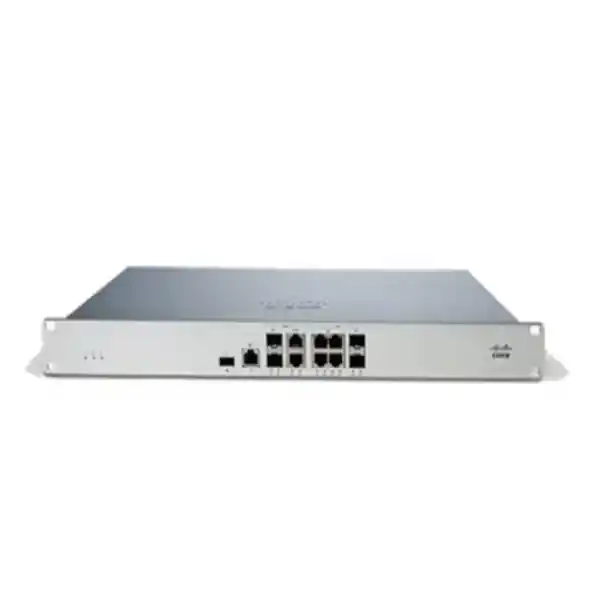
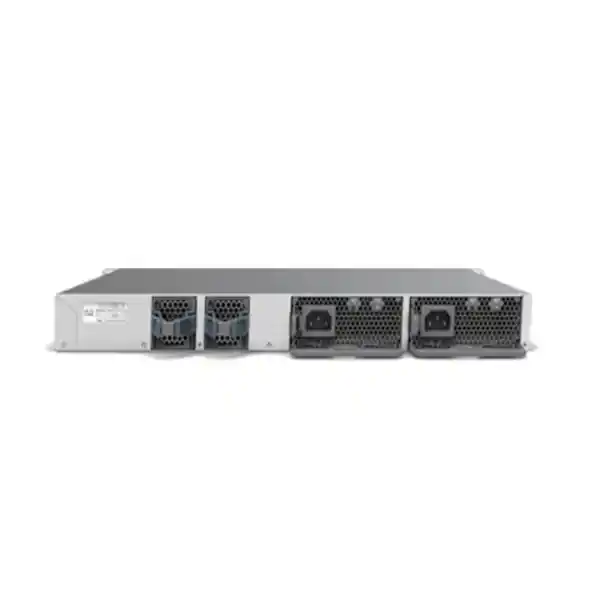
Cisco’s current MX family datasheet lists the MX105 with two 10GbE SFP+ dedicated WAN interfaces, two 2.5GbE RJ45 dedicated WAN interfaces and one PoE+ interface, while fixed LAN connectivity includes four Gigabit Ethernet RJ45 ports and two 10GbE SFP+ ports. This interface mix makes the appliance relevant to organizations moving beyond 1 Gbps internet access, connecting to fiber handoffs, separating multiple providers or building a high-capacity uplink toward a core switch. The appliance supports a modular power design with two 150 W power-supply positions and is specified for 0°C to 40°C operating temperature, so rack ventilation and power planning should be included in deployment design rather than treated as an afterthought.
Cloud management
Centralized administration can reduce the operational friction of managing multiple branches, especially when policies, VPN connectivity and troubleshooting must be coordinated across locations.
SD-WAN-ready edge
The MX platform is designed for WAN policy and site-to-site connectivity. Organizations can plan primary and secondary circuits around application priority, resilience and business continuity goals.
Large-branch capacity
Cisco positions the MX105 for a large branch with up to 750 users. Real sizing should still include traffic behavior, security features, VPN demand and expected growth.
Multi-gigabit interfaces
10GbE SFP+ and 2.5GbE WAN options help accommodate modern ISP handoffs and faster branch-core connectivity without forcing every deployment into a single interface type.
Technical planning points for the MX105
| Recommended use case | Large branch, up to 750 users |
| NGFW throughput | 5 Gbps |
| Advanced security services throughput | 2.5 Gbps |
| Maximum site-to-site VPN throughput | 3.5 Gbps |
| Maximum site-to-site VPN tunnels | 1,000 in Cisco lab testing; production sizing should follow Cisco guidance |
| Dedicated WAN | 2 × 10GbE SFP+, 2 × 2.5GbE RJ45, 1 × PoE+ |
| Fixed LAN | 4 × GbE RJ45, 2 × 10GbE SFP+ |
| Mounting | 1U rack |
| Power | Modular, 2 × 150 W PSU positions; 53 W idle / 123 W maximum load listed by Cisco |
Performance figures are vendor-published values and should be interpreted alongside the intended security features, traffic profile, VPN architecture and Cisco’s current sizing guidance.
Licensing, security and lifecycle planning
The MX105 is not best evaluated as hardware alone. Cisco publishes Enterprise, Advanced Security and Secure SD-WAN Plus licensing options for the MX105 in multiple terms. The right selection depends on which security and SD-WAN capabilities the organization needs, how it standardizes subscriptions across existing Meraki devices and how renewal dates should be managed. Procurement teams should therefore request a quotation that clearly separates appliance hardware, the intended license tier, term length and any deployment or support work. That approach makes comparisons more meaningful and avoids buying a powerful appliance with a license plan that does not match the intended operating model.
Security design should begin with traffic flows and risk priorities. A branch serving cloud applications, VPN-connected workloads, guest access, IP telephony, finance systems and remote administration may require different policy segmentation from a simple internet gateway. Administrators should identify which traffic requires inspection, which applications need priority, which networks should remain isolated, how remote access will be handled and where logs and alerts will be monitored. If the MX105 is joining an existing Meraki estate, dashboard organization, templates, VLAN conventions, Auto VPN design and change-control procedures should be reviewed before cutover.
Related FourTeck network resources
Use the Tanzania site to review related enterprise networking, security and infrastructure options that can complement an MX105 deployment.
FourTeck UgandaUseful for organizations planning cross-border network standardization or branch procurement involving Uganda.
FourTeck KenyaA relevant regional resource for East African network projects spanning Kenya and Tanzania.
FourTeck UAESupports procurement conversations for organizations coordinating network standards between East Africa and the UAE.
FourTeck AfricaRelevant for multi-country African deployments that need a consistent edge, VPN and security architecture.
Cisco Meraki MX105 Tanzania
Organizations searching for Cisco Meraki MX105 Tanzania are usually balancing three questions: whether the platform has enough capacity for their users and internet links, whether cloud-managed operations fit the organization’s IT model, and how the appliance should be licensed and integrated with the rest of the network. The MX105 is a particularly relevant candidate for larger offices, institutional campuses with a centralized edge, hospitality or service environments, distributed enterprises and growing businesses that need more than a basic firewall. Cisco’s positioning of up to 750 users provides a useful starting point, but the best design also considers application density, video and voice traffic, VPN encryption, cloud access, guest networks and future bandwidth growth.
For Tanzanian deployments, procurement planning should document the current WAN circuits and their handoff types. If an ISP provides fiber through an optical transceiver or Ethernet presentation, the available 10GbE SFP+ and 2.5GbE RJ45 WAN options can influence how cleanly the MX105 fits the design. A second circuit may be considered for resilience, but the value of redundancy depends on provider diversity, physical path diversity and how failover policies are configured. Businesses should also decide whether the MX105 will connect directly to access switching or uplink to a distribution/core layer. The two fixed 10GbE SFP+ LAN interfaces can be particularly useful when the firewall must pass multi-gigabit traffic toward switching infrastructure.
A quotation request should include approximate user count, number of sites, ISP speeds, public IP requirements, VPN topology, expected license tier and term, and whether configuration or migration help is needed. Where an existing firewall is being replaced, documenting VLANs, static routes, NAT rules, VPN peers, remote-access requirements and business-critical applications before migration can shorten the cutover process. FourTeck can use that information to structure an MX105 proposal around the hardware, licensing and related infrastructure instead of treating the appliance as an isolated purchase.
Cisco Meraki MX105 Dar es Salaam
Cisco Meraki MX105 Dar es Salaam searches often come from headquarters, large branches, professional firms, hospitality operators, education organizations and service providers that need a centrally visible edge for a busy urban network. Dar es Salaam offices may have multiple internet choices, cloud-heavy applications, remote users and links to other Tanzanian or international locations. In such environments, the MX105 can be evaluated as the policy and WAN control point that joins users, servers, SaaS platforms and remote sites while giving the IT team one cloud-managed operational view.
The first design step is capacity validation. A 5 Gbps NGFW figure does not mean every network will experience that exact application performance; actual demand depends on enabled services, traffic mix and architecture. Organizations with multiple gigabit circuits should review how much traffic is expected to traverse security inspection and VPN at peak periods. If site-to-site encryption is central to the design, Cisco’s published 3.5 Gbps maximum site-to-site VPN throughput is a more relevant planning metric than raw interface speed. For businesses connecting branches, warehouses or remote offices back to Dar es Salaam, tunnel count, cloud applications and failure scenarios should be mapped before selecting the final license and configuration.
Rack readiness also matters. The MX105 is a 1U appliance and Cisco lists a maximum power load of 123 W. Good practice is to confirm rack depth, ventilation, UPS capacity, power feed availability and cable management before deployment. Where the branch depends heavily on internet access, the design may include dual providers, but each link should be tested for public addressing, DNS behavior, modem or ONT handoff and failover expectations. For a cleaner quotation, provide the WAN speeds, branch-user count, switching uplinks, current firewall model, required VPN destinations and desired subscription term. This allows the project to be scoped around the real Dar es Salaam network instead of a generic hardware list.
Cisco Meraki MX105 Mwanza
For Cisco Meraki MX105 Mwanza requirements, the value of the platform is often tied to centralized control and predictable branch standards. A Mwanza operation may need secure connectivity to a Dar es Salaam headquarters, a cloud environment, another regional branch or a corporate network outside Tanzania. Rather than building each connection as an isolated point solution, the MX platform can be considered as part of a broader Meraki-managed WAN architecture in which policies, VPN relationships and branch visibility are administered consistently.
Sizing should be based on the branch’s busiest operating period, not an average day. User count alone can be misleading if the site runs backup traffic, surveillance uploads, cloud ERP, video collaboration or large file transfers. The MX105’s 5 Gbps NGFW and 2.5 Gbps advanced-security services figures provide useful boundaries for planning, while its 10GbE and 2.5GbE WAN options offer flexibility for faster circuits. If current connectivity is below those levels, the additional interface and processing headroom can still be valuable when the organization expects bandwidth growth or wants to standardize on a common model across larger sites.
A Mwanza deployment plan should also define what happens when the primary ISP fails. A backup link is only effective when failover, DNS resolution, inbound dependencies and critical applications are understood. Some applications may tolerate a path change easily; others may rely on public IP allowlists or long-lived sessions. During procurement, organizations should therefore combine hardware selection with a simple resilience worksheet that lists critical services, expected recovery behavior and test procedures. FourTeck can use this context when preparing a proposal for the MX105, licensing, optics or cabling, and related switching requirements.
Cisco Meraki MX105 Arusha
Cisco Meraki MX105 Arusha projects can involve hotels, tourism businesses, NGOs, educational institutions, professional organizations and multi-site enterprises that need secure, manageable branch connectivity. These environments may have a mixture of employee, guest, voice, IoT and administrative traffic, which makes policy separation and network visibility important. The MX105 offers a platform capable of anchoring those segments at the WAN edge while the Meraki cloud model provides centralized administration for teams that may manage more than one physical location.
Before purchase, planners should identify which network segments will traverse the appliance and how those segments should communicate. Guest users may require internet-only access, business systems may need restricted reachability, and management networks should generally be treated differently from everyday user traffic. The firewall policy should follow that segmentation model. If the organization already uses Cisco Meraki switching or wireless, the operational benefit may come from managing multiple network functions under a common cloud-administered environment rather than from firewall throughput alone.
The MX105’s two 10GbE SFP+ LAN ports are useful where the security appliance connects upstream to a faster distribution layer. Buyers should verify the compatible optics and fiber type required for their specific switch and cable plant instead of assuming every SFP+ module is interchangeable. The same principle applies on the WAN side: confirm whether the provider delivers copper Ethernet, optical Ethernet or another managed handoff. For an Arusha quotation, provide current circuit speeds, expected second-link requirements, approximate users and devices, VLAN count, VPN destinations and any existing Meraki organization details. That information helps determine whether the MX105 is the appropriate fit and what deployment work should accompany it.
Cisco Meraki MX105 Dodoma
Organizations considering Cisco Meraki MX105 Dodoma may prioritize reliable branch connectivity, policy consistency and straightforward remote administration. Government-adjacent organizations, institutions, enterprises and service businesses often operate networks where internet access is business critical but the IT team may not sit beside every device. A cloud-managed security appliance can help centralize visibility, configuration and troubleshooting, provided the deployment is designed around connectivity, change management and the organization’s security requirements.
For Dodoma projects, it is useful to separate capacity planning from resilience planning. Capacity asks whether the appliance and circuits can handle peak business traffic with the intended security services. Resilience asks how the site behaves when a circuit, power source or upstream service is unavailable. The MX105 provides multiple dedicated WAN interface options and modular power-supply positions, but redundancy still requires a complete design. A second WAN provider should ideally avoid the same single points of failure where practical, and power protection should account for the firewall, ISP equipment, switching and any supporting systems.
Migration preparation can be just as important as hardware selection. Teams replacing another firewall should inventory NAT rules, VLAN gateways, DHCP responsibilities, static routes, DNS settings, VPN peers, remote-user access and application exceptions. Old configurations often contain years of unused rules, so the project is also an opportunity to validate which policies are still needed. When requesting an MX105 quotation for Dodoma, include the existing network diagram if available, subscription preference and intended cutover approach. A proposal can then address the appliance as part of a functioning network edge rather than a standalone box.
Cisco Meraki MX105 UAE
Cisco Meraki MX105 UAE requirements commonly arise in regional organizations that want the same branch architecture across Gulf and African operations. A business with offices in the UAE and Tanzania may benefit from standardizing the security edge, licensing policy, monitoring workflow and VPN design, because consistent architecture can make troubleshooting and change control easier. The MX105’s large-branch positioning is relevant where a UAE site supports substantial user numbers, high-speed internet access, cloud workloads and encrypted connectivity to other countries.
The design conversation should consider the WAN services available to the UAE branch and how they align with the MX105’s dedicated 10GbE SFP+ and 2.5GbE RJ45 WAN options. Multi-gigabit circuits are increasingly practical in enterprise environments, so it is important to avoid bottlenecking a premium link with an edge device selected only for current average usage. At the same time, procurement should not select hardware based only on interface speed: advanced security throughput, VPN demand, traffic exclusions, user growth and license tier remain central to sizing.
Cross-border deployments should document how sites communicate. If Tanzania, UAE, Kenya or Uganda branches use site-to-site VPN, planners should identify which applications are centralized, what latency they can tolerate and which routes must remain local. Cloud SaaS traffic may be better sent directly to the internet, while private applications may follow encrypted site-to-site paths. A common Meraki architecture can support centralized policy while still allowing regional routing choices. Organizations coordinating procurement from the Gulf can also review FourTeck UAE alongside the Tanzania team when the project spans both markets.
Cisco Meraki MX105 Uganda
Cisco Meraki MX105 Uganda searches often relate to enterprises that need a larger branch firewall and SD-WAN edge while maintaining centralized visibility across several sites. For an organization operating in both Uganda and Tanzania, a consistent Meraki design can simplify policy templates, device administration and VPN connectivity. The MX105 is suitable for evaluation where the branch needs higher throughput than smaller MX appliances and where 10GbE or 2.5GbE interfaces provide meaningful expansion room.
Ugandan procurement teams should start by defining the role of the branch. A headquarters-like office with servers, multiple departments and several remote links places different demands on the security appliance than a simple sales branch. Determine the current and planned internet capacity, number of users, cloud applications, number of site-to-site peers and whether advanced security services are expected to inspect most traffic. Cisco’s published 2.5 Gbps advanced-security services throughput is particularly important when those functions form part of the operating policy.
The network should also be assessed for upstream and downstream dependencies. A 10GbE firewall uplink provides little benefit if the switch path is constrained to 1 Gbps, and redundant WAN does not guarantee resilience if both circuits depend on the same physical route. Good branch planning therefore covers switching, optics, power, rack conditions and ISP topology in addition to the firewall itself. For organizations coordinating Uganda and Tanzania deployments, FourTeck Uganda can be used as a regional resource while the Tanzania site supports the local project context.
Cisco Meraki MX105 Kampala
For Cisco Meraki MX105 Kampala deployments, organizations often need a branch edge that can support substantial internet traffic while remaining manageable by a central IT team. Kampala head offices and larger branches may connect cloud productivity tools, line-of-business systems, remote offices, voice platforms and guest networks through the same internet edge. The MX105 can provide the security and SD-WAN foundation for such an environment, but the design should map each service to its required bandwidth, availability and security policy.
A practical planning exercise is to list critical applications and decide whether they should break out locally to the internet or traverse VPN to another site. This distinction affects the expected encrypted throughput, WAN utilization and failover behavior. Cisco publishes up to 3.5 Gbps site-to-site VPN throughput for the MX105, giving organizations considerable headroom for encrypted branch connectivity, but production design should follow Cisco’s sizing guidance rather than relying on a single maximum figure.
Kampala organizations should also decide how licensing will be governed. The MX105 is available with Enterprise, Advanced Security and Secure SD-WAN Plus license options in multiple terms. The purchase should therefore specify both hardware and the appropriate subscription, with renewal ownership clearly documented. Where an existing Meraki organization already exists, co-termination or per-device licensing considerations should be reviewed according to the organization’s current model. A complete quotation request should include user estimates, internet speeds, number of VPN sites, desired security capabilities, current switching uplinks and whether migration assistance is required.
Cisco Meraki MX105 Arua
Cisco Meraki MX105 Arua projects may be driven less by raw local traffic volume and more by the need to standardize a branch platform across a distributed organization. Enterprises, NGOs and institutions with several locations can benefit when each larger branch follows a repeatable security and WAN pattern. The MX105 provides enough interface diversity and processing capacity to act as a substantial branch edge while still fitting within the Meraki cloud-managed operating model.
Connectivity planning in a distributed environment should focus on what the branch must continue doing during degraded conditions. If a primary link fails, can critical cloud tools use the backup circuit? If a VPN path changes, do internal applications reconnect automatically? Are DNS and authentication services available locally or dependent on a remote site? These questions guide SD-WAN policy and influence whether a second provider, cellular backup or other resilience option is appropriate. The firewall alone cannot eliminate upstream dependencies, so the project should document them explicitly.
Arua buyers should also examine power and rack conditions. Cisco specifies the MX105 for 0°C to 40°C operating temperature and lists two modular 150 W power-supply positions. Keeping the rack within supported environmental conditions and protecting the entire network stack with appropriate power infrastructure is essential to dependable operation. When requesting a quote, include the expected number of users, current and future WAN bandwidth, whether fiber or copper handoffs are used, required VPN peers and preferred license duration. This creates a clearer basis for selecting hardware, transceivers, cabling and deployment services.
Cisco Meraki MX105 Mbarara
For Cisco Meraki MX105 Mbarara requirements, the appliance can be considered where a branch needs stronger capacity than an entry-level firewall and where the organization values centralized visibility. Businesses with cloud applications, inter-branch VPNs and multiple user groups may benefit from a platform that combines routing, security policy and SD-WAN management. The MX105’s 5 Gbps NGFW figure and multi-gigabit WAN interfaces make it suitable for evaluation when the organization wants room for bandwidth expansion.
The implementation should begin with a network inventory. Document ISP devices, public IP addresses, VLANs, DHCP scopes, routing, DNS, VPN peers and any services published through the existing firewall. This prevents a common migration problem in which hidden dependencies appear only during cutover. The new policy set should also be reviewed for least-privilege access rather than copying every old rule without validation. Where the network includes guest or IoT traffic, those segments should be treated separately from business systems.
Mbarara sites that connect to Kampala or another head office should assess how much application traffic will traverse the VPN. If users rely heavily on centralized servers, encryption demand may become a major sizing factor. If most services are SaaS-based, local internet breakout may dominate. The MX105 can support either pattern, but the WAN policy should follow the application architecture. Procurement teams should include a diagram or simple branch summary with the quotation request so the hardware and license recommendation reflects the real traffic flows and expected growth.
Cisco Meraki MX105 Gulu
Cisco Meraki MX105 Gulu deployments are relevant for organizations that want enterprise-grade branch security with cloud-based administration and enough performance for a growing site. A larger branch may support employee internet access, collaboration, guest Wi-Fi, business applications and private connectivity back to another location. Consolidating these edge functions on a managed platform can make operations more consistent, but good results depend on correct sizing and policy design.
Because the MX105 supports several high-speed WAN interface types, organizations should verify exactly how the ISP service is presented. A 10GbE SFP+ interface is useful only when the circuit handoff and optic are compatible. The 2.5GbE copper interfaces can suit multi-gigabit Ethernet handoffs, while standard LAN connectivity can serve direct attachments or a switch uplink depending on topology. Cabling and transceiver decisions should be included in the bill of materials rather than added after delivery.
Gulu network teams should plan monitoring and administration responsibilities before go-live. Decide who owns dashboard access, who receives alerts, how configuration changes are approved and how incident escalation works. Cloud management improves visibility, but governance determines whether that visibility turns into faster resolution. Subscription renewal should also be assigned to a responsible team or procurement owner. A complete MX105 request should therefore state not only the appliance model but the expected license tier and term, deployment scope and any required remote or on-site configuration support.
Cisco Meraki MX105 Kenya
Cisco Meraki MX105 Kenya projects are often part of wider East African network standardization. An organization with offices in Nairobi, Dar es Salaam, Kampala or other regional cities may want a common branch edge that simplifies VPN connectivity, security policy and operational monitoring. The MX105 is positioned for large branches and offers performance and interface capacity that can support substantial user populations and faster internet links.
Regional architecture should avoid treating every site as identical. A Nairobi or Kenyan head office may host centralized services that Tanzania branches access, while another company may use cloud-first applications and need only selected private routes. The right SD-WAN policy depends on that application flow. Sites that exchange large volumes of private traffic should pay close attention to the published 3.5 Gbps maximum site-to-site VPN throughput, whereas internet-heavy branches should consider NGFW and advanced security service performance. In both cases, peak traffic and future growth are more useful for sizing than average utilization.
Procurement teams should coordinate appliance licensing, subscription terms and standard configuration templates across the region. Consistent naming, VLAN conventions, alerting and change control can make a multi-country deployment easier to manage. Organizations working across the border can review FourTeck Kenya together with the Tanzania site for regional planning. When requesting MX105 pricing, include quantities by country, desired license terms, WAN speeds and expected deployment schedule so the proposal can distinguish hardware, licenses and any implementation services.
Cisco Meraki MX105 Kuwait
Cisco Meraki MX105 Kuwait requirements may come from enterprises connecting Gulf operations with African branches or from organizations seeking a cloud-managed security edge for a larger local site. The appliance’s multi-gigabit WAN options make it relevant where internet services exceed traditional 1 Gbps speeds, while its 10GbE LAN interfaces can connect toward higher-capacity switching. The cloud-managed model can also reduce the need to administer each branch through separate device-specific workflows.
For a Kuwait deployment, high-speed access should be paired with a realistic inspection policy. Cisco’s 5 Gbps NGFW and 2.5 Gbps advanced security services figures illustrate why the enabled feature set matters. If an organization intends to inspect nearly all traffic with advanced security functions, that second figure becomes important to capacity planning. VPN demand should be considered separately if the Kuwait office exchanges significant traffic with Tanzania, UAE or other regional sites.
The procurement request should identify whether the MX105 will be deployed as a standalone edge or integrated into an existing Meraki organization. It should also state the intended license tier and subscription term, because those choices are part of the operating model. Physical deployment requires standard rack planning, compatible WAN handoffs and suitable power protection. Multi-country organizations should also establish who owns configuration governance, monitoring and renewal management. This prevents each branch from drifting into a different operating standard even when the same hardware model is deployed.
Cisco Meraki MX105 Ghana
Cisco Meraki MX105 Ghana buyers may be evaluating a larger branch firewall for cloud-managed security, private connectivity and internet resilience. Organizations with distributed offices can use the MX platform as a repeatable branch-edge approach, particularly when they want central visibility across countries. The MX105 offers substantial processing capacity and a range of multi-gigabit interfaces, but selection should still be driven by actual traffic, application criticality and security requirements.
A Ghana deployment that links to Tanzania or another regional hub should map which applications are private and which are accessed directly from the internet. That decision shapes VPN utilization, path selection and the effect of WAN failure. If a second provider is planned, organizations should test failover with business applications rather than validating only basic internet access. Services tied to a fixed public IP, external allowlists or inbound publishing may need additional design work to remain available during path changes.
The MX105’s published performance provides a sound baseline for a large branch, yet licensing remains a separate decision. Enterprise, Advanced Security and Secure SD-WAN Plus options should be compared against the organization’s required capabilities and existing Meraki standards. Procurement teams should request a clear bill of materials covering hardware, license term, any transceivers and deployment work. This makes it easier to compare proposals and reduces ambiguity about what is included. Organizations coordinating several African countries can use FourTeck Africa as an additional cross-regional resource.
Cisco Meraki MX105 Nigeria
Cisco Meraki MX105 Nigeria projects can suit large branches that need centralized security and SD-WAN operations across a demanding network environment. Enterprises with multiple carriers, private applications, cloud workloads and branch VPNs often need more than basic firewall capacity. The MX105’s 5 Gbps NGFW throughput, multi-gigabit WAN options and 3.5 Gbps maximum site-to-site VPN throughput make it a strong model to evaluate for such sites, subject to detailed sizing.
The most important design question is how the branch uses connectivity. A network dominated by Microsoft 365, cloud CRM and SaaS may send most traffic directly to the internet, while an organization with centralized data-center applications could place much heavier demand on encrypted private paths. Security inspection can also change throughput expectations. Teams should therefore capture peak traffic, not just subscribed bandwidth, and identify whether backups, replication or video create periodic spikes.
For resilience, avoid assuming that two WAN links automatically produce high availability. Carrier path diversity, power continuity, DNS behavior, public addressing and application dependencies all matter. The MX105 provides the physical connectivity for multiple WAN links, but operational resilience comes from the entire design and regular testing. A Nigeria quotation should include intended circuits, handoff types, VPN destinations, approximate user count, license tier and term, and any requirement for configuration or migration. This helps ensure the final bill of materials reflects the branch rather than a generic appliance purchase.
Cisco Meraki MX105 Seychelles
Cisco Meraki MX105 Seychelles deployments may appeal to hospitality groups, service businesses, institutions and distributed organizations that need a remotely manageable security edge. Island operations can place a premium on remote visibility and predictable administration because specialist IT resources may support several locations. A cloud-managed appliance can help central teams review health, policy and connectivity without relying solely on device-by-device local access.
Bandwidth planning should consider both internet access and inter-site traffic. If a Seychelles branch depends on cloud services, ISP capacity and reliability may dominate user experience. If the site connects to private applications in another country, VPN throughput and latency become equally important. The MX105’s performance gives substantial headroom for a large branch, but the best results come from matching the security and routing policy to application behavior. Critical services should be identified so failover testing can confirm that users can still work during a primary-link outage.
Physical planning is also important in warm environments. Cisco specifies the MX105 for operation up to 40°C, so the rack should provide suitable ventilation and environmental control. Power protection should include the firewall, ISP termination devices and switching because keeping only the MX105 online does not preserve connectivity. For procurement, document the WAN handoff, required optics, switching uplinks, license choice, renewal term and whether configuration assistance is needed. This gives the supplier a complete view of the deployment and reduces the chance of missing accessories or subscription components.
MX105 deployment and migration checklist
Record peak WAN utilization, projected growth, VPN demand, security inspection requirements and large scheduled flows such as backup or replication.
Confirm provider speed, medium, addressing, modem or ONT details, public IP requirements and whether a secondary circuit is planned.
Document VLANs, switch uplinks, optics, DHCP, static routes and any downstream routing before finalizing the firewall configuration.
List all remote sites, third-party peers, private subnets and remote-user requirements so migration does not omit a hidden dependency.
Choose the feature tier and term deliberately, align it with the current Meraki organization where applicable, and assign renewal ownership.
Prepare rollback steps, business validation tests and an agreed change window. Confirm internet, VPN, published services and critical applications after migration.
Cisco Meraki MX105 FAQ
How many users is the Cisco Meraki MX105 designed for?
Cisco lists the MX105 recommended use case as a large branch with up to 750 users. User count is only one sizing input; traffic volume, enabled security services, VPN demand and future growth should also be considered.
What is the MX105 firewall throughput?
Cisco publishes 5 Gbps NGFW throughput and 2.5 Gbps advanced security services throughput for the MX105. Production planning should consider the exact services enabled and traffic pattern.
Does the MX105 support multi-gigabit WAN connectivity?
Yes. Cisco lists two 10GbE SFP+ and two 2.5GbE RJ45 dedicated WAN interfaces for the MX105, plus one PoE+ interface. Confirm the provider handoff and optic compatibility before ordering accessories.
What licensing is available for the MX105?
Cisco publishes Enterprise, Advanced Security and Secure SD-WAN Plus licensing options for the MX105 in several term lengths. Choose the tier based on required features and the organization’s Meraki licensing model.
Can the MX105 be used for site-to-site VPN?
Yes. Cisco publishes up to 3.5 Gbps maximum site-to-site VPN throughput and a laboratory maximum of 1,000 site-to-site VPN tunnels. Real-world tunnel sizing should follow Cisco guidance and the expected traffic load.
What information should I send for an MX105 quotation?
Provide country and site location, user count, WAN speeds, handoff types, number of branches, VPN requirements, desired license tier and term, current firewall model, switching uplinks and whether installation or migration assistance is needed.
Quotation checklist
For a useful Cisco Meraki MX105 quote, include the number of appliances required, target country and city, internet circuit speeds, ISP handoff type, estimated users and devices, expected VPN sites, required security features, license preference and term, switch uplink requirements, optics if needed, and whether configuration, migration or testing support is required. If the deployment is replacing an existing firewall, add the model and a simple topology summary.
Decision recap
The Cisco Meraki MX105 is a strong large-branch candidate when an organization needs cloud-managed security, SD-WAN, multi-gigabit WAN options and substantial VPN capability in a 1U platform. Its published performance supports demanding branch environments, while its interface mix provides flexibility for faster circuits and core-switch uplinks. The buying decision should include licensing, traffic inspection, VPN architecture, optics, redundancy, power and migration planning rather than focusing only on the appliance model.
For Tanzania, the MX105 can be evaluated for headquarters, larger offices and important branches in Dar es Salaam, Mwanza, Arusha, Dodoma and other locations. Multi-country organizations can standardize the same design principles across Uganda, Kenya, UAE, Kuwait, Ghana, Nigeria and Seychelles while adapting WAN and application policy to each site. A detailed requirement summary allows FourTeck to prepare a cleaner proposal and helps avoid under-sizing, missing licenses or overlooking deployment dependencies.
Plan your Cisco Meraki MX105 deployment with FourTeck
Share your current internet links, branch count, user estimate, VPN requirements and preferred licensing term. FourTeck can help structure the quotation around the MX105 hardware and the network components needed for a complete deployment. No stock, delivery-time, warranty or authorization claim is implied on this page; availability and commercial terms should be confirmed at quotation stage.




Reviews
There are no reviews yet.