
CISCO MERAKI · CLOUD-MANAGED SECURITY · SD-WAN
Cisco Meraki MX95 Tanzania
Cisco Meraki MX95 is a rack-mountable cloud-managed security and SD-WAN appliance for medium-to-large branch networks. Cisco positions the MX95 for environments of up to 500 users, with multi-gigabit WAN connectivity, 10 GbE SFP+ options, centralized Meraki Dashboard administration, Auto VPN and a security stack that can be expanded through the appropriate Meraki license tier. For organizations in Tanzania, the practical buying question is not simply whether the MX95 is powerful enough; it is whether its throughput, ports, VPN design, licensing and WAN architecture match the branch workload, internet services and growth plan.
A strong candidate for larger branches, headquarters-edge deployments and distributed organizations that value cloud management and SD-WAN.
What is Cisco Meraki MX95?
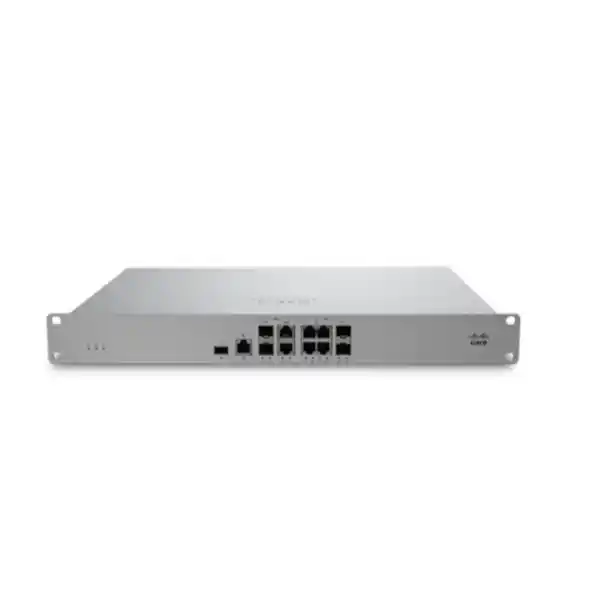
Cisco Meraki MX95 is part of the Meraki MX family of cloud-managed security and SD-WAN appliances. The platform combines branch routing, application-aware firewall controls, secure site-to-site connectivity, WAN path management and centralized visibility in the Meraki cloud dashboard. Cisco’s current MX family data sheet positions the MX95 for medium-to-large branches and lists two 10 GbE SFP+ and two 2.5 GbE RJ45 dedicated WAN interfaces, plus four 1 GbE RJ45 and two 10 GbE SFP+ fixed LAN interfaces. This combination makes the appliance particularly relevant when a branch is moving beyond basic gigabit-edge requirements or needs flexible copper and fiber uplink choices.
The value of the MX95 is not limited to raw firewall throughput. A distributed company can use the Meraki Dashboard to apply repeatable policies, monitor uplinks, build Auto VPN connectivity, investigate application performance and manage firmware without placing a separate hardware controller at every site. This operating model can be useful when a business has branches with limited local IT presence, because configuration and monitoring are handled centrally. Zero-touch provisioning can also support staged branch rollouts when device claiming, licensing, templates and WAN prerequisites are prepared before deployment.
Licensing is an essential part of the design. Cisco lists Enterprise, Advanced Security and Secure SD-WAN Plus license options for the MX95 in multiple terms. The right tier depends on whether the organization needs the core networking and SD-WAN feature set alone or additional threat-protection and cloud-security capabilities. Hardware, license term, support requirements, optics, cabling and any high-availability design should therefore be considered together when preparing an MX95 quotation.
Cloud management
Centralized policy, monitoring, alerts, reporting and firmware management through the Meraki Dashboard.
Secure SD-WAN
Auto VPN, policy-based routing and dynamic path selection can simplify resilient branch connectivity.
Multi-gigabit edge
2.5 GbE copper WAN and 10 GbE SFP+ WAN/LAN interfaces support higher-capacity handoffs and uplinks.
Branch security
Layer 7 controls, content filtering, IDS/IPS and malware protection are available according to selected licensing.
Verified Cisco Meraki MX95 technical profile
| Item | MX95 planning reference |
|---|---|
| Recommended deployment | Medium-to-large branch, up to 500 users |
| Dedicated WAN | 2 × 10 GbE SFP+ and 2 × 2.5 GbE RJ45, with one PoE-capable WAN port |
| Fixed LAN | 4 × 1 GbE RJ45 and 2 × 10 GbE SFP+ |
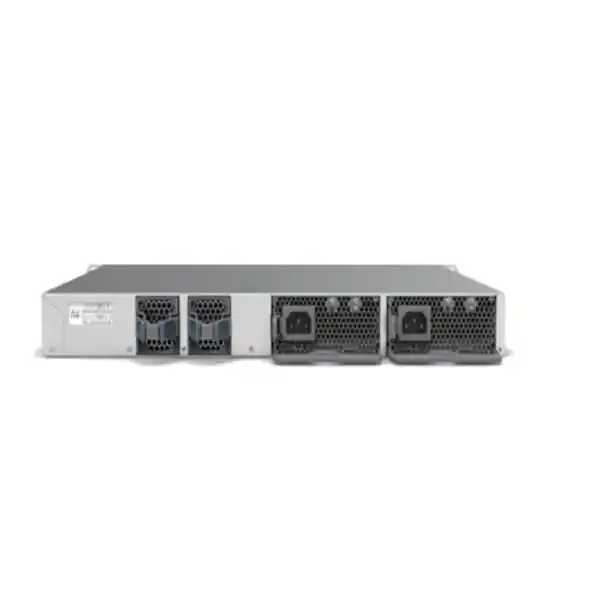
| Form factor | 1RU rack mount |
| Maximum site-to-site VPN tunnels | 500 in Cisco lab-based maximum-tunnel testing |
| Management model | Cisco Meraki cloud-managed dashboard and APIs |
| License families | Enterprise, Advanced Security and Secure SD-WAN Plus options, with term choices subject to current Cisco ordering rules |
Performance figures can change as Cisco updates software, test methodology and product documentation. For procurement, use the current Cisco data sheet and sizing guidance tied to the intended firmware and enabled services rather than relying on an old reseller specification table.
Sizing the MX95 correctly
User count is useful, but it is only the beginning. A branch with 300 light office users can behave very differently from a 150-user site that runs constant cloud backup, video collaboration, large design files, SaaS applications, guest Wi-Fi and several encrypted site-to-site tunnels. Before selecting the MX95, record the internet circuit speeds, expected growth, VPN destinations, security services, number of VLANs, public services, remote-access requirements and the amount of traffic that must be inspected. Consider whether dual WAN is required, whether the ISP handoff is copper or fiber, and whether 10 GbE LAN uplinks will connect to an aggregation switch.
For broader network planning, FourTeck Tanzania’s firewall, VPN and network-security guidance explains why inspection services, segmentation and future bandwidth should be included in firewall sizing. The same page also covers switching, Wi-Fi, racks and UPS considerations that directly affect a successful MX deployment.
Licensing, security and operational planning
Cisco Meraki hardware is designed to operate within the Meraki licensing model, so the license should be specified at the same time as the appliance. Enterprise licensing is generally oriented around the core MX networking feature set, while Advanced Security adds capabilities used for a stronger branch-security posture. Secure SD-WAN Plus adds further advanced networking and security capabilities for organizations building a more comprehensive secure SD-WAN architecture. Exact feature entitlement should be checked against Cisco’s current licensing documentation before ordering because product packaging and feature availability evolve.
Security design should start with policy rather than with a checkbox list. Identify which networks are trusted, which services need to cross VLAN boundaries, how guests reach the internet, which users need remote access, and whether branch applications depend on specific ports or cloud services. Then map those requirements into Layer 3 and Layer 7 firewall policy, content and threat controls, VPN design, logging and change management. A clean policy structure is easier to audit and troubleshoot than a long list of ad-hoc exceptions.
Operationally, the Meraki Dashboard can make multi-site administration simpler, but good governance still matters. Use named administrator accounts, least-privilege roles, strong authentication, documented change procedures and configuration standards. Maintain a record of WAN circuits, public IP addressing, VLANs, DHCP scopes, DNS, VPN peers and escalation contacts. This documentation becomes especially valuable when several branches are managed by one IT team.
Cisco Meraki MX95 Tanzania
For organizations evaluating Cisco Meraki MX95 in Tanzania, the strongest use case is typically a business that needs centrally managed branch security with enough interface flexibility for modern internet and LAN speeds. Corporate offices, financial and professional-services branches, hospitality groups, education networks, health organizations, logistics operations and multi-site retailers can all have different traffic profiles, but they share a common need: the WAN edge must stay manageable as cloud applications, video meetings, remote access and branch-to-branch traffic grow. The MX95 fits this type of requirement when the design calls for a rack-mounted Meraki appliance above entry-level branch models and when the projected user and traffic load aligns with Cisco sizing guidance.
Tanzania deployments should be planned around the actual ISP handoff, available backup connectivity and the physical network room. If the primary connection is delivered over fiber, the MX95’s 10 GbE SFP+ WAN options can be valuable, but the correct transceiver and handoff specification must be confirmed with the service provider. If the circuit is copper, the 2.5 GbE RJ45 WAN interfaces provide another path. Dual-WAN architecture can reduce dependence on a single service, but resilience only works when the secondary circuit follows a genuinely useful failure path and the policies are tested. Where cellular resilience is needed, Cisco Meraki cellular gateway options can be considered as part of the wider design.
Procurement should include the appliance, selected license tier and term, optics where required, patching, rack space, suitable UPS capacity and any professional configuration needed for migration. Existing firewall rules, static routes, VPNs and public NAT requirements should be documented before cutover. For an organization replacing another firewall, plan a rollback path and maintenance window rather than treating the change as a simple box swap. FourTeck Tanzania can help scope the connected environment through its IT integration and lifecycle services, including design, configuration, documentation and support planning.
A quotation request is more useful when it states the current and expected internet speeds, approximate user/device count, number of sites, VPN requirements, required security services, rack availability and target license term. Those details allow the MX95 to be evaluated as part of a complete branch architecture rather than as an isolated product.
Cisco Meraki MX95 Dar es Salaam
Businesses searching for Cisco Meraki MX95 in Dar es Salaam often operate in environments where internet connectivity, cloud applications and centralized IT administration are business-critical. Headquarters, regional offices, hotels, logistics companies, financial-services branches and professional organizations may need to connect staff, Wi-Fi, voice, servers and cloud applications through one controlled WAN edge. In this setting, the MX95 can serve as the security and SD-WAN gateway while the Meraki Dashboard provides centralized monitoring and policy management. Its multi-gigabit interface options are particularly relevant when a site is upgrading from basic gigabit services or expects higher-speed ISP handoffs in the future.
A Dar es Salaam design should begin with the actual circuits available at the building. Ask each provider for the handoff type, public-IP arrangement, committed bandwidth and support process. If two ISPs are used, confirm whether the access paths are genuinely diverse. Dual WAN is valuable only when one incident is unlikely to affect both links. Decide which business applications need preferred routing, what should happen when a link degrades, and which traffic can tolerate a secondary path. Meraki SD-WAN policies can then be aligned to application importance rather than configured as a generic active/backup rule.
The internal network should be assessed at the same time. A high-capacity firewall connected to an undersized switch uplink still creates a bottleneck. If the site has dense Wi-Fi, video surveillance, servers or large east-west traffic flows, confirm switch uplink capacity, VLAN design and fiber needs. FourTeck Tanzania’s business technology shop provides a route for reviewing related categories, while the broader Tanzania solution portfolio covers switching, wireless, cabling, racks and UPS planning.
For quotation preparation in Dar es Salaam, include the current firewall model, internet links, VLAN count, VPN peers, remote-access users, security requirements and desired license term. If migration downtime is sensitive, request a staged plan that covers pre-configuration, testing, cutover, validation and rollback. This turns the MX95 purchase into a controlled infrastructure change rather than an improvised replacement.
Cisco Meraki MX95 Mwanza
Cisco Meraki MX95 can be considered for Mwanza businesses that need a centrally managed security gateway for a larger office, branch, hotel, education environment, healthcare facility, retail operation or regional hub. The cloud-managed model is useful where a central IT team wants visibility into WAN health, VPN status and application usage without maintaining a separate management server at the branch. For organizations with several Tanzanian locations, the ability to use consistent Meraki configuration patterns can reduce differences between sites and make troubleshooting more predictable.
Mwanza network planning should be based on practical connectivity and continuity requirements. A branch may have adequate primary broadband but still face operational risk if that circuit is the only path to SaaS, ERP, voice, payment, booking or head-office systems. When dual WAN is justified, the secondary link should be sized for the applications that must remain available during an outage. It may not need to carry every noncritical workload at full speed. SD-WAN policy can prioritize business traffic and control what is permitted to use the backup connection. For a branch with VPN dependence, failover testing should include tunnel recovery and application sessions, not only a ping test.
Physical installation also matters. The MX95 is a 1RU rack device, so confirm rack depth, ventilation, power and UPS capacity before delivery. Network rooms that run warm or experience uncontrolled power interruption deserve extra attention because firewall availability depends on the surrounding infrastructure. Label both WAN feeds, LAN uplinks and fiber connections clearly. If SFP+ optics are required, order compatible modules and patch leads as part of the same bill of materials rather than treating them as last-minute accessories.
When requesting an MX95 quotation for Mwanza, provide an expected device count, internet speeds, branch applications, VPN topology, security features and a target support/licensing term. That information helps determine whether MX95 is the right model or whether a different Meraki MX platform would be a better fit. The purpose of sizing is to preserve headroom without buying capacity that the branch will never use.
Cisco Meraki MX95 Arusha
Organizations seeking Cisco Meraki MX95 in Arusha may include hospitality groups, tour and travel companies, education providers, NGOs, professional offices and regional corporate branches. These environments often rely heavily on internet services for reservations, collaboration, cloud applications, payment workflows, guest access and communication with other locations. A cloud-managed SD-WAN firewall can be attractive because the branch edge becomes visible from a central dashboard, allowing IT teams to review uplink performance, security events and VPN status without depending entirely on on-site administration.
Hospitality and guest-facing networks deserve careful segmentation. Staff systems, guest Wi-Fi, payment devices, cameras, building systems and management platforms should not automatically share unrestricted access. The MX95 can be part of a segmented architecture in which VLANs and firewall policies define which networks may communicate. However, the firewall is only one component: managed switching and correctly designed wireless access are necessary to carry those segments throughout the property. For this reason, a Meraki MX project should be coordinated with switch port profiles, SSIDs, DHCP design and any captive-portal or guest-isolation requirements.
Arusha deployments with cloud-dependent business operations should also assess WAN resilience. If a secondary provider is available, decide which applications receive priority during failover and whether guest traffic should be reduced or blocked when capacity is constrained. Voice and video collaboration can be sensitive to latency and packet loss, so SD-WAN decisions should consider quality, not only whether a link is technically up. The Meraki platform’s application visibility and path-selection capabilities can support this approach when configured against measured business requirements.
A good request for quotation should describe the property or office layout, number of users and devices, internet circuits, VPN needs, expected guest traffic and security priorities. Include whether the project requires migration from an existing firewall, new switching, Wi-Fi integration or rack and UPS work. FourTeck Tanzania can use those details to frame the MX95 as part of a complete network design rather than a standalone appliance.
Cisco Meraki MX95 Dodoma
Cisco Meraki MX95 is relevant to Dodoma organizations that need a secure, centrally managed branch or headquarters edge with capacity for growing cloud and inter-site traffic. Government-related suppliers, education institutions, professional organizations, health facilities, enterprises and NGOs may operate distributed environments in which local offices depend on shared applications or centralized resources. The MX95’s cloud-managed architecture can help a central IT team standardize firewall, SD-WAN and VPN policy across these locations while retaining branch-level visibility.
When planning in Dodoma, classify traffic by business importance. Core applications, authentication, voice, collaboration and ERP traffic may need predictable treatment, while software updates, backups or guest browsing can use lower-priority paths. This classification helps determine the value of SD-WAN and whether multiple WAN circuits are justified. If sites connect to a central data center or cloud environment, map the VPN topology before deployment. Meraki Auto VPN can simplify tunnel creation between Meraki sites, but address planning remains important: overlapping subnets, undocumented routes and inconsistent VLAN schemes can complicate a multi-branch network regardless of the firewall platform.
Security services should be selected according to risk and compliance needs. Some organizations primarily need routing, VPN and core branch controls, while others require intrusion prevention, malware defense, content filtering and more advanced security functions. License tier and term must therefore be part of the technical design and the commercial comparison. Avoid comparing appliance-only prices when one quote includes multi-year security licensing and another does not. The two offers are not equivalent.
For Dodoma procurement, provide the number of branches, users, current WAN bandwidth, expected future bandwidth, VPN design, public services, remote-access requirements and migration constraints. Confirm rack, UPS and cooling conditions, especially if the MX95 will become the single security gateway for critical services. A well-prepared bill of materials should include the appliance, license, optics, patching and any supporting network changes required to make the deployment operational.
Cisco Meraki MX95 UAE
Companies comparing Cisco Meraki MX95 for UAE operations often need a branch platform that can be standardized across several regional sites. The MX95’s centralized cloud management, Auto VPN and SD-WAN capabilities are suited to organizations that want common policy across offices without deploying a separate management appliance at each location. For a Tanzania-based company with a UAE branch—or a UAE organization expanding into East Africa—the same Meraki architecture can simplify operational consistency when addressing, VLANs, security policy and licensing are planned centrally.
The UAE market commonly offers high-speed business connectivity, so the MX95’s 10 GbE SFP+ and 2.5 GbE copper WAN interfaces can be important during sizing. The firewall should not be selected only for today’s circuit if an upgrade is expected during the license term. Confirm whether the provider delivers copper or fiber, whether a customer-supplied optic is required, and how public IP addressing is presented. For dual-WAN design, determine whether both links enter through independent provider infrastructure and whether active/active use or standby failover better suits the applications.
Regional organizations should also decide how sites connect to cloud resources. If workloads are hosted in public cloud, the Meraki portfolio includes virtual MX options that can participate in the broader Auto VPN and SD-WAN design. That can provide a cleaner pattern than building separate third-party tunnels for every branch, depending on the architecture. Where a UAE deployment is part of a wider FourTeck engagement, FourTeck UAE is the appropriate regional reference for local technology requirements and related infrastructure planning.
A commercial comparison should include hardware, license tier, license duration, optics, implementation, migration effort and any warm-spare/high-availability design. The MX95 is most valuable when the organization uses its centralized operating model rather than treating it as a conventional standalone firewall with cloud administration added afterward.
Cisco Meraki MX95 Uganda
Cisco Meraki MX95 can support Uganda deployments where a medium-to-large branch needs centralized security, VPN and SD-WAN management. Organizations with sites in both Uganda and Tanzania can gain additional value from standardization: common VLAN structures, naming conventions, firewall rules, VPN design and monitoring practices make cross-border support more consistent. The MX95 should be evaluated where branch scale, internet bandwidth and application demand exceed smaller-edge requirements but still fit the MX95’s intended use case.
Connectivity should be evaluated site by site. A capital-city office, regional branch, warehouse or field-support location may have very different ISP choices and backup options. For a site that depends on head-office or cloud applications, identify the minimum bandwidth required during a primary-link failure. This number can guide the secondary circuit and SD-WAN policy. If the backup link is much smaller than the primary, policies can prioritize transactional systems and collaboration while limiting lower-priority downloads or guest traffic.
Multi-country VPN architecture also requires clean IP planning. Overlapping subnets are common when branches have been built independently over time. Before connecting sites through Auto VPN, inventory each local network and resolve conflicts where practical. Create a repeatable approach to user, voice, wireless, server, CCTV and management VLANs. Security rules can then be written around function rather than a collection of arbitrary subnets.
For organizations seeking regional support context, FourTeck Uganda provides the matching country presence within the FourTeck network. A useful MX95 quotation request should state the branch location, internet services, device count, VPN topology, security license requirements, rack conditions and any desired migration or configuration assistance. This information allows the final bill of materials to reflect actual deployment conditions.
Cisco Meraki MX95 Kampala
Kampala businesses considering Cisco Meraki MX95 are often looking for a branch-security platform that can support substantial user counts, cloud applications and multiple WAN options while remaining manageable by a central IT team. The MX95 can be appropriate for corporate offices, financial and professional services, healthcare, education, hospitality and distributed enterprises where a simple entry-level firewall no longer provides enough interface flexibility or operational visibility. Its value grows when the wider network also uses managed switching and business Wi-Fi with clear segmentation.
A Kampala deployment should map all upstream and downstream dependencies. Upstream, document the ISP circuit, backup path, addressing and provider handoff. Downstream, document core or access switches, routed VLANs, wireless networks, server subnets, voice systems and any public-facing services. This map reveals whether the firewall will be the default gateway for many networks or whether Layer 3 switching will handle internal routing. The answer influences policy placement, troubleshooting and the amount of traffic that actually traverses the MX95.
If SD-WAN is part of the project, define the business outcome before building rules. Some organizations want faster failover; others want both circuits actively used; others need application-specific routing to protect voice or ERP traffic. Meraki features are most effective when policies correspond to these operational goals. During acceptance testing, simulate failure and degradation rather than verifying only normal-state connectivity. Confirm that VPNs, DNS, authentication and critical applications recover as expected.
Licensing should be compared on equal terms. An appliance with Enterprise licensing does not represent the same security feature set as an appliance quoted with Advanced Security or Secure SD-WAN Plus. Ask for the exact license tier and duration in the quotation and note the renewal date in operational documentation. This keeps the technical and commercial lifecycle visible to the IT and procurement teams.
Cisco Meraki MX95 Arua
For an organization evaluating Cisco Meraki MX95 in Arua, remote manageability may be as important as throughput. A branch that is distant from the central IT team benefits when administrators can view uplink status, event information, connected networks and policy from the Meraki Dashboard. That does not remove the need for local physical access when cabling or power issues occur, but it can reduce the number of problems that require an engineer to be present simply to inspect configuration or status.
Arua deployments should place extra emphasis on resilience and recoverability. Start by identifying which business functions must continue if the primary internet circuit fails. If a practical secondary connection is available, decide whether it will carry full branch traffic or only priority applications. Document how the site reaches central systems, whether through Auto VPN or another IPsec design, and whether local services can continue during WAN interruption. A clear continuity plan is more useful than adding a backup link without deciding how it will be used.
Power and environmental preparation are equally important. A rack-mounted security appliance should be installed in a controlled, ventilated location with reliable power and appropriately sized UPS protection. The switch, firewall and ISP termination equipment should ideally share a coordinated backup-power plan; keeping the firewall powered provides little benefit if the upstream modem or core switch shuts down immediately. Label cables and maintain a simple site diagram so local staff can assist with physical checks under remote guidance.
When requesting an MX95 quote for Arua, include site connectivity, expected users and devices, VPN needs, security tier, rack availability and desired support model. If the branch is one of many locations, include the broader topology so the appliance can be configured as part of a repeatable standard. This is one of the strongest advantages of a cloud-managed branch platform: the architecture can be designed centrally and applied consistently while still accounting for local connectivity differences.
Cisco Meraki MX95 Mbarara
Cisco Meraki MX95 may suit Mbarara businesses that need a larger branch appliance for secure internet access, VPN connectivity and cloud-managed operations. A growing branch often reaches a point where basic firewall sizing based only on user count becomes inadequate. More devices, higher-speed internet, cloud backups, video calls, SaaS tools, guest networks and security inspection can increase demand even when headcount remains stable. The MX95 should therefore be evaluated against traffic patterns and enabled services rather than selected from a single headline number.
For organizations with remote or branch offices, configuration consistency is valuable. A standard template can define VLANs, traffic policies and monitoring across sites while local parameters—such as WAN addressing or branch-specific subnets—remain distinct. Before standardizing, however, remove legacy inconsistencies. If two branches use the same subnet or have undocumented static routes, those issues can create problems when VPN connectivity is introduced. A short discovery exercise can save substantial troubleshooting during rollout.
Security requirements should be translated into the correct license choice. If the MX95 is expected to deliver intrusion prevention, malware protection, advanced content controls or other enhanced security functions, confirm the required tier and verify that the quoted term matches procurement expectations. License planning should also include the renewal process and ownership of the Meraki organization so the customer’s operational team understands who controls the environment.
A Mbarara deployment plan should cover the complete edge: ISP handoff, MX95, LAN uplink, switch capacity, Wi-Fi segmentation, rack, UPS and documentation. If 10 GbE SFP+ connectivity is intended, confirm fiber type, optic compatibility and the peer switch interface. These details are often inexpensive compared with the appliance, yet missing optics or incorrect fiber can delay a cutover. A complete quotation should therefore describe the end-to-end connection, not only the MX95 hardware line item.
Cisco Meraki MX95 Gulu
Gulu organizations considering Cisco Meraki MX95 can use the platform as a secure branch edge where centralized visibility and repeatable policy are important. This is especially relevant for organizations with a small local technical team but central IT administration elsewhere. From the Meraki Dashboard, authorized administrators can monitor WAN status, review clients, manage policy and troubleshoot many network conditions remotely. This operating model can reduce dependence on branch-by-branch manual configuration and provide a consistent view across a distributed network.
The network should still be designed for local realities. If the branch uses a primary fiber service and a lower-capacity backup, define how the MX95 should behave during failure. Business-critical traffic can be prioritized while bulk transfers or guest access are constrained. If both links are stable and appropriate for production traffic, active use may be considered. The best policy depends on the application mix, contract terms and the quality of each connection. Measure latency and loss as well as bandwidth because real-time applications are often affected by link quality long before a circuit is completely unavailable.
Remote-access requirements should also be scoped. Determine who needs access, what resources they are allowed to reach and which authentication method will be used. Avoid giving remote users broad access simply because it is easier to configure. Separate administrative access, user VPN access and site-to-site connectivity conceptually so policies are easier to understand and audit. Where Cisco AnyConnect is part of the design, validate the applicable entitlement and current product requirements during licensing.
For procurement in Gulu, include appliance and licensing, optics, rack installation, UPS, configuration, migration and documentation in the project scope where required. A branch-edge upgrade is successful when users experience stable access and the IT team gains a manageable, documented platform—not merely when the new hardware powers on.
Cisco Meraki MX95 Kenya
Cisco Meraki MX95 is a useful option for Kenyan businesses and regional groups that need a larger cloud-managed branch firewall with SD-WAN capabilities. Nairobi headquarters, distribution operations, hospitality groups, financial organizations, education providers and multi-branch companies may value the ability to manage security and WAN policy centrally. For companies operating in both Kenya and Tanzania, a consistent Meraki branch standard can simplify inter-site VPN, change management and troubleshooting, provided each site is sized for its actual workload.
Kenyan deployments with fast fiber connectivity should look closely at interface design. The MX95 provides 10 GbE SFP+ WAN and LAN options in addition to multi-gigabit copper WAN, so the appliance can connect to higher-speed provider and switching infrastructure without forcing every handoff through 1 GbE. Confirm optics and peer-device capabilities before ordering. If the internal network core remains 1 GbE, a 10 GbE firewall port alone will not improve LAN performance. The end-to-end path must be designed as a system.
Regional VPN planning should include latency, application location and failover behavior. If users in Kenya access services in Tanzania, UAE or public cloud, identify where traffic should exit to the internet and whether centralized backhaul is necessary. SD-WAN gives design flexibility, but unnecessary backhaul can add delay and consume WAN capacity. Security architecture should balance centralized control with efficient application paths.
For country-specific FourTeck context, FourTeck Kenya is the relevant regional site. When preparing an MX95 request, include user/device count, WAN speeds, site list, VPN topology, license tier, expected security services and rollout schedule. Multi-site buyers should also request a naming, addressing and template standard so later branches can be added consistently rather than redesigned from scratch.
Cisco Meraki MX95 Kuwait
Organizations evaluating Cisco Meraki MX95 in Kuwait often require a dependable branch or corporate-edge appliance with cloud administration, secure VPN and multi-WAN capability. The model is particularly relevant where the business expects multi-gigabit connectivity, wants centralized management across several sites or needs a consistent Meraki operating model across countries. Its 1RU format fits standard network racks, while 10 GbE SFP+ and 2.5 GbE WAN choices provide flexibility for service-provider handoffs.
High-speed internet should not be confused with application resilience. Even with excellent primary bandwidth, a branch can face disruption if every cloud and VPN service depends on one circuit. A dual-WAN design can improve continuity, but the second service should be validated for provider diversity, addressing, failover and business capacity. Define how applications behave under constrained conditions. A backup link does not always need to carry noncritical traffic such as large updates, media or guest browsing while the primary circuit is unavailable.
Security licensing must be incorporated into the commercial model from the beginning. Compare quotes using the same license tier and duration and include any professional services for migration, policy design and testing. If the existing firewall has complex NAT, site-to-site tunnels, remote-access rules or application exceptions, migration effort may be a significant part of the project. Inventory those items before scheduling cutover.
For local regional context, FourTeck Kuwait can be used for Kuwait-focused requirements. For a cross-border organization, the goal should be a repeatable design: common device naming, administrator policy, VLAN structure and monitoring, with local WAN details handled separately. That approach makes the MX95 more than a security appliance; it becomes part of a manageable regional network standard.
Cisco Meraki MX95 Ghana
Cisco Meraki MX95 can fit Ghanaian organizations that need secure branch networking with centralized cloud control. Enterprises with distributed offices can use a common Meraki architecture to simplify VPN connectivity, policy and monitoring across locations. The model should be considered when the branch needs more capacity and interface flexibility than smaller MX appliances, particularly if multi-gigabit internet or 10 GbE uplinks are part of the design.
For Ghana deployments, define the business role of each WAN circuit. The primary connection may support everyday cloud applications and large transfers, while a second connection protects transactional systems, voice or remote access. SD-WAN policy should reflect these priorities. A simple automatic failover is often sufficient, but organizations with multiple critical applications may benefit from more deliberate path selection. Test not only total outages but also degraded conditions such as packet loss and high latency where supported by the chosen policy model.
Network segmentation is another key planning area. Separate corporate users, servers, guest Wi-Fi, CCTV, voice and infrastructure management where the risk profile justifies it. The MX95 can enforce policies between these zones when traffic passes through it, while managed switches and wireless infrastructure carry the VLANs across the site. Document which device performs inter-VLAN routing so security policy is applied in the intended location.
For regional FourTeck context, FourTeck Ghana supports Ghana-focused technology requirements. An MX95 quotation should identify the circuit speeds, user and device population, number of sites, VPN needs, security license tier, optics and any implementation services. A multi-year license should be evaluated alongside expected business growth so the appliance remains appropriately sized during the intended lifecycle.
Cisco Meraki MX95 Nigeria
Nigeria organizations considering Cisco Meraki MX95 may be managing large offices, regional branches, retail networks, financial operations, hospitality sites or distributed business environments where WAN resilience and remote management are priorities. The MX95 combines cloud-based administration with security and SD-WAN functions, making it attractive for IT teams that want a consistent operational model across many locations. The recommended branch scale should still be validated using current Cisco sizing guidance and actual traffic requirements.
Resilient connectivity is especially important for sites that depend heavily on SaaS, cloud voice, online payments or centralized applications. A second WAN provider or cellular architecture can reduce single-link risk, but the failover path must be designed around critical workload. If backup bandwidth is smaller, define traffic shaping and application priority in advance. Consider whether cloud-bound traffic should exit locally while private applications use VPN, rather than backhauling every session through a central site.
Power design is part of availability. Firewall, switches, ISP equipment and any fiber termination device should be covered by a coordinated UPS plan. A correctly sized appliance cannot protect a branch if the surrounding network shuts down during a short interruption. Rack ventilation, cable organization and labeled power feeds also reduce troubleshooting time. These physical elements should be included in branch standards alongside IP addressing and security configuration.
When procuring the MX95 in Nigeria, compare the exact hardware SKU, license tier, license duration, optics, implementation and support scope. Avoid unsupported assumptions about stock or delivery; those should be confirmed at quotation time. For multi-country businesses, use one architecture document that identifies common policy and country-specific connectivity. This allows the same Meraki operating principles to be used without pretending every location has identical infrastructure or service-provider conditions.
Cisco Meraki MX95 Seychelles
Cisco Meraki MX95 can be relevant to Seychelles organizations such as hospitality groups, corporate offices, professional services and multi-site businesses that need centralized network-security management. In island environments, the operational value of remote visibility can be significant: a central IT team can inspect many configuration and connectivity issues through the cloud dashboard before deciding whether physical intervention is required. For hospitality in particular, the branch edge may carry business systems, guest networks, voice, cameras and cloud applications, so segmentation and bandwidth policy should be planned carefully.
WAN design should account for the cost and characteristics of available connectivity. If two independent connections are practical, decide how the site will use them and which traffic receives priority during failover. Guest internet can consume substantial capacity, so backup-mode rules may need to protect reservation, payment, staff and voice applications first. If VPN connectivity links the property or office to a central environment, test the recovery of those tunnels during circuit changes.
The MX95’s 10 GbE SFP+ LAN interfaces can also be useful when the branch core uses high-speed fiber uplinks, but the architecture should be justified by actual traffic. A hotel with many access points, surveillance systems and servers may have significant internal load even if internet bandwidth is lower. Decide whether inter-VLAN traffic is routed at the firewall or switching core and ensure that security policy remains clear. A well-designed network separates management, staff, guests, cameras and building systems according to risk and operational requirements.
Procurement should include licensing, optics, rack infrastructure, UPS and documentation, with stock and lead time confirmed during quotation rather than assumed. For organizations that operate Seychelles together with Tanzania or other markets, central Meraki templates can help maintain consistent policy while allowing local WAN and addressing details to vary. The result should be a branch architecture that is secure, understandable and practical to support remotely.
Integration with switching, Wi-Fi and cloud resources
The MX95 works best when its role in the LAN is explicit. In a straightforward branch, the MX can terminate WAN services, provide DHCP and route between VLANs. In a larger environment, a Layer 3 switching core may handle internal routing while the MX controls internet and selected security boundaries. Neither approach is universally correct. The decision depends on internal traffic volume, segmentation policy, redundancy and the operational skills of the IT team.
Meraki switching and wireless platforms can be managed from the same cloud environment, which helps administrators correlate client, switch, AP and WAN information. Mixed-vendor networks are also possible, but VLAN tagging, spanning-tree behavior, link aggregation and routing should be documented carefully. The most important goal is a clean handoff between security, switching and wireless layers.
For hybrid-cloud deployments, virtual MX appliances can extend Meraki Auto VPN into supported public cloud environments. This can be considered when branch users need controlled access to cloud-hosted workloads. Architecture should be designed around application location, routing and security rather than assuming all cloud traffic should pass through a central data center.
MX95 migration and deployment checklist
Export or document WAN addressing, routes, VLANs, DHCP, NAT, firewall rules, VPN peers and remote-access configuration.
Choose the license tier and term based on required security and SD-WAN features, then verify current Cisco ordering information.
Confirm ISP and switch handoffs, copper/fiber type, optics, patch leads and port speeds before the cutover date.
Create networks, VLANs, routes, firewall controls and VPN configuration in a controlled sequence with documented ownership.
For production migrations, retain a tested method to restore the prior edge if a critical dependency is discovered during cutover.
Record administrators, WAN services, networks, license dates, support contacts and operating procedures for future maintenance.
Cisco Meraki MX95 FAQs
Is the Cisco Meraki MX95 suitable for a 500-user branch?
Cisco positions the MX95 for medium-to-large branches with up to 500 users. Final sizing should also consider traffic levels, WAN speed, VPN load and enabled security services.
Does MX95 support 10 Gigabit Ethernet?
Yes. Cisco lists two 10 GbE SFP+ dedicated WAN interfaces and two 10 GbE SFP+ fixed LAN interfaces on the MX95.
Does Cisco Meraki MX95 require a license?
Meraki MX is designed around Cisco Meraki licensing. MX95 license options include Enterprise, Advanced Security and Secure SD-WAN Plus tiers, with available terms determined by current Cisco ordering policy.
Can MX95 use dual internet connections?
Yes. The MX95 has multiple dedicated WAN interfaces and supports SD-WAN and failover designs. The best configuration depends on provider handoffs, bandwidth, application priority and resilience requirements.
Can MX95 connect branches through VPN?
Yes. Meraki Auto VPN supports site-to-site connectivity within the Meraki architecture, and the platform also supports standard IPsec-based use cases. Address planning and topology should be designed before deployment.
What should I include in an MX95 quotation request?
Include site location, user/device count, current and planned internet speeds, number of WAN links, VPN sites, required security features, desired license term, rack/UPS details and any installation or migration requirement.
Quotation checklist for Cisco Meraki MX95
For an accurate Tanzania quotation, prepare the following information: number of sites; estimated users and connected devices; primary and backup internet speeds; ISP handoff types; VLANs and internal networks; site-to-site VPN peers; remote-access users; security services required; desired license tier and duration; rack and UPS availability; preferred migration window; existing firewall model; and whether optics, switching or Wi-Fi changes are required.
This avoids under-scoping a project around the appliance alone and makes it easier to compare technically equivalent offers.
Decision recap
Choose Cisco Meraki MX95 when the branch profile aligns with Cisco’s intended medium-to-large-site positioning, cloud management is operationally attractive, multi-gigabit WAN/LAN interfaces are useful, and SD-WAN or Auto VPN can simplify connectivity. Do not choose it solely because 500 users sounds sufficient. Validate the real throughput requirement, license tier, security services, VPN load, port types and future bandwidth.
For Tanzania buyers, the best next step is a scope-based quotation. FourTeck can review the existing network and help frame the MX95 together with licensing, WAN links, switching, optics, rack requirements and migration. This creates a deployable bill of materials rather than an incomplete hardware purchase.
Plan your Cisco Meraki MX95 deployment with FourTeck Tanzania
Share your branch size, WAN speeds, VPN topology, security requirements and target license term. FourTeck Tanzania can use those inputs to structure a quotation and identify any supporting switching, optics, Wi-Fi or rack changes that should be included before rollout.


Reviews
There are no reviews yet.