
COMPACT BRANCH SECURITY • TANZANIA
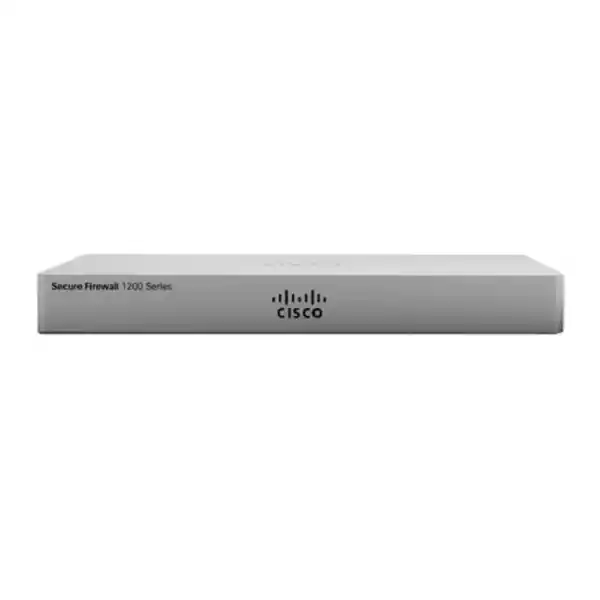
Cisco Secure Firewall 1210CE
The Cisco Secure Firewall 1210CE is a compact desktop security appliance for organisations that need a defined security boundary at a branch or smaller business site. For Tanzania buyers, the practical starting point is the network requirement: which internet circuits, internal networks, applications and remote connections must pass through the appliance? Its copper Ethernet layout suits sites where the handoff from the internet equipment and the connections to the local switching infrastructure are Gigabit Ethernet. Request a configuration review before selecting the software, subscriptions and deployment scope.
Quick selection guide
| Requirement | Selection guidance |
|---|---|
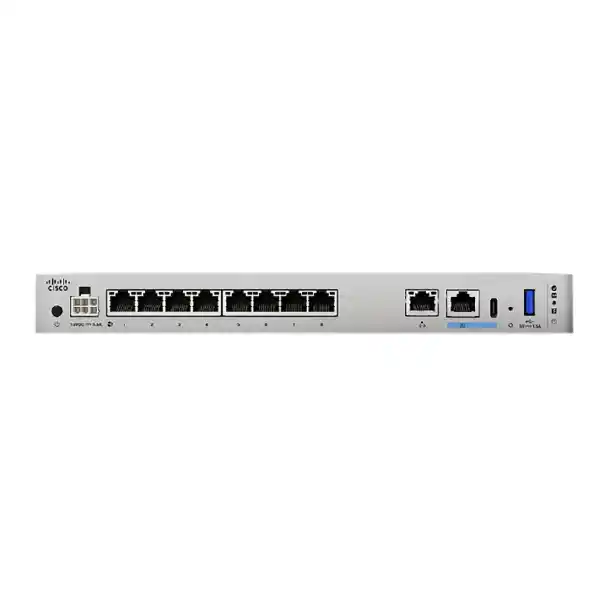
| Copper branch connections | 1210CE: eight 10/100/1000BASE-T data ports |
| Power for attached endpoints | 1210CE has no PoE; assess 1210CP or suitable PoE switching |
| Native optical uplinks | 1210CE has no SFP slots; assess 1220CX or another suitable model |
| Security software | Confirm ASA or Threat Defense and the required entitlements |
Choose a compact branch firewall around the traffic it must protect
Buying the correct chassis is only one part of that decision. The operating software determines the security workflow, and the subscription and support selections determine what is included in the commercial offer. This page covers the 1210CE hardware platform rather than claiming that every available security service is bundled with it. A quotation should identify the exact Cisco product identifier, software choice, licence terms, management arrangement and installation responsibilities so that procurement and the technical team are approving the same solution.
Treat this model as a candidate for a measured branch requirement rather than assigning it a fixed number of employees. A small office running intensive cloud transfers and encrypted inspection can place different demands on a firewall from a larger office using lighter applications. Include peak activity, expected growth and the business impact of an outage in the assessment. Share those requirements with FourTeck Tanzania to request an appropriately scoped product quotation.
Verified hardware at a glance
The 1210CE provides eight 10/100/1000BASE-T data interfaces. It has neither PoE output nor SFP or SFP+ transceiver slots. Cisco lists ASA and Threat Defense appliance variants: CSF1210CE-ASA-K9 and CSF1210CE-TD-K9 respectively. These are manufacturer product identifiers; they should not be confused with a retailer’s inventory SKU. Specify the required variant in the quotation and confirm the associated entitlements separately.
Cisco’s model summary lists 6.5 Gbps firewall throughput, while its Threat Defense performance table lists 6.0 Gbps for firewall with application visibility and control plus IPS, using 1024-byte test traffic. TLS decryption is listed at 1.0 Gbps under Cisco’s stated test conditions. These are different measurements rather than interchangeable promises. Enabled functions, packet sizes, traffic mix and software release affect actual performance, and an individual copper data port remains a Gigabit Ethernet interface.
The hardware installation guide identifies dedicated management connectivity and RJ-45 and USB Type-C console connections. It also identifies internal storage and active cooling. Plan installation access for administration as well as the data cables. Do not describe this appliance as fanless, assume that the management connector is an additional ordinary data port, or select it for direct optical connectivity without changing the surrounding network design.
Where the 1210CE fits and where another model deserves consideration
A suitable evaluation scenario is a branch with copper internet handoffs, a managed LAN switch and a need to enforce approved traffic between the site and external networks. The appliance can be considered within a wider design that includes business users, guest access and connections to central resources. The final configuration should follow the selected software’s supported capabilities. Separating these requirements early makes it easier to compare a simple internet perimeter with a more demanding inspection or inter-site design.
An organisation that needs to power access points, phones or other devices directly from the firewall should evaluate the 1210CP rather than assume the CE model supplies power. A site that requires native SFP+ connectivity should assess the 1220CX or another appropriate platform. Cisco distinguishes these models by their physical interfaces as well as performance. Keep the required media and link speeds in the purchasing brief; a higher headline throughput number cannot add a missing physical connector.
Consider a larger platform when the design depends on faster individual interfaces, more inspection headroom or a different hardware arrangement. That decision should be based on measured flows and supported architecture, not on a general label such as enterprise grade. Ask what constraint is actually driving the upgrade: WAN bandwidth, internal traffic, encrypted sessions, connection creation, availability or physical installation. A clear constraint produces a more defensible model comparison.
ASA or Threat Defense: make the software decision before ordering
Cisco offers the hardware with ASA or Secure Firewall Threat Defense software. The two choices have different feature sets and administration workflows, so the suffix on the appliance identifier matters. A team continuing an ASA environment should validate its required functions against the proposed ASA release. A team seeking a Threat Defense deployment should check the intended inspection services, management method and subscriptions against the supported release. Neither choice should be described as including all features associated with the other.
Build the decision around what administrators need to operate every week. Who approves changes, reviews security events, maintains object definitions and responds to application problems? An appliance that fits the traffic requirement still needs an operating model the team can maintain. Document any existing Cisco management environment, the versions already in use and the expected relationship between this branch and central administration. Verify compatibility rather than assuming that a newer appliance can simply join every older management deployment.
If the project replaces an existing firewall, assess the policy and feature dependencies before choosing a software image. A configuration export is useful evidence, but it does not establish that every rule or behaviour can be reproduced unchanged. Record NAT dependencies, published services, routing requirements and VPN settings as business requirements. Then verify their implementation in the target software. This avoids buying around a familiar brand name while overlooking a function that matters to the production network.
Licensing, subscriptions and the scope of the quotation
Ask for separate identification of the appliance, security subscriptions, management components and support coverage. The base hardware name alone does not establish the duration or inclusion of intrusion prevention, URL filtering, malware-related services or remote-access entitlements. Applicable functions and commercial packaging must be verified against Cisco’s current ordering guidance for the chosen software. Where a feature is essential, include it explicitly in the requirements rather than treating it as an implied part of a next-generation firewall description.
Compare quotations over the intended ownership period. Record the subscription start and end dates, renewal assumptions, support term and any separately priced management requirement. A lower initial amount may cover a different software or subscription combination from another offer. Request a bill of materials that lets the technical team compare those differences directly. Price, local stock, delivery, warranty and service arrangements should be confirmed in the specific FourTeck Tanzania offer rather than inferred from this product overview.
Account ownership also needs a clear handover. Decide which organisation controls the relevant vendor account, which administrator handles entitlement registration and who receives expiry notices. Store commercial records alongside the approved deployment documentation, with credentials kept in a secure system. This is procurement planning rather than a claim that a particular licence or management service is supplied with every appliance. The objective is to make future renewal and support decisions understandable to the people responsible for the installation.
Size the security workload rather than the internet speed alone
Start with measured busy-period traffic and identify what crosses the proposed firewall. Internet downloads are only part of the picture if internal networks, VPN traffic or application publishing also use the same enforcement point. Record traffic in both directions and note whether peaks are short bursts or sustained activity. A backup transfer that overlaps with video meetings may expose a constraint that does not appear in a daily average. Use the actual operating pattern when requesting sizing advice.
Encrypted inspection deserves a separate conversation. Decide which traffic is eligible for decryption, which applications require exceptions and which users or devices can receive the necessary trust configuration. Consider application compatibility, organisational privacy requirements and the capacity available for the intended policy. The published TLS figure is not a promise that every combination of encrypted applications will achieve that rate. A proof of concept should represent the proposed inspection rules rather than an unrestricted traffic test.
Leave room for growth and operational changes. Moving applications to the cloud, adding another branch or increasing inspection coverage can change the load even when the employee count stays similar. Document the assumptions used to select the appliance and agree what evidence would trigger a future review. This gives the business a practical capacity plan without inventing a universal user limit or presenting a laboratory throughput value as a guaranteed outcome for every Tanzania network.
Plan the eight copper interfaces deliberately
Create a port schedule before the appliance arrives. Identify the connections intended for internet equipment, internal switching, a separate server segment or other approved purposes. Record the cable destination, speed expectation and administrative owner for each connection. The schedule should distinguish data interfaces from management and console access. A simple labelled diagram is valuable during installation because it reduces dependence on memory and makes it easier to confirm that the physical cabling matches the intended security boundaries.
Where VLANs are part of the design, verify the supported software configuration and the adjacent switch settings together. A VLAN label on a drawing does not establish that traffic actually passes through the intended enforcement point. Check default gateways, trunk permissions and return paths so that traffic cannot bypass the policy unexpectedly. If internal routing remains on another device, document which flows the firewall will inspect and which flows stay outside its path.
The lack of optical slots matters when the incoming service or switch connection is fibre. Confirm how the provider or switching equipment presents the handoff before ordering. Do not include an SFP transceiver for this model on the assumption that every appliance in the 1200 family accepts one. If the requirement is direct fibre or a faster native uplink, review a model with the appropriate interfaces rather than designing around an unverified accessory.
Branch connectivity, VPN and remote-access requirements
For a branch that must reach central applications, list the remote networks and the specific services users need. Include addressing, routing ownership and information about the peer equipment. Overlapping private subnets can make an otherwise straightforward inter-site project difficult, so compare address plans early. Verify VPN support, cryptographic settings and interoperability for the selected operating software and peer release. A shared vendor name is not sufficient evidence that two existing configurations will work together without adjustment.
Separate site-to-site connectivity from individual remote access. They serve different users and may carry different licensing, authentication and support requirements. For remote users, identify the supported endpoint types, access scope and identity controls required by the organisation. Confirm the relevant Cisco client and entitlement details in the proposed offer. Avoid buying remote access solely from a published maximum peer figure; the complete service depends on policy, software, licensing and the intended user experience.
Define useful acceptance tests for each connection. A tunnel showing an established state does not prove that name resolution, application authentication and permitted data flows are working. Ask application owners to test representative tasks from the correct networks. Record expected behaviour when a remote peer is unavailable and how administrators will investigate a fault. These practical checks help the project deliver usable connectivity without implying that the appliance alone guarantees internet quality or application performance.
Separate business, guest and device traffic with a clear purpose
A branch may contain staff computers, guest wireless, cameras, printers and business systems that do not require the same access. Begin with a small access matrix describing which groups need to communicate and why. For example, guest users may need internet access while business systems require carefully defined access to central applications. These are design examples, not preconfigured policies included with the appliance. The implementation must reflect the organisation’s actual services and approved risk decisions.
Do not equate separate physical cables or VLANs with complete isolation. The routing and policy relationships determine what traffic is permitted between networks. Verify that the intended boundaries remain effective across switches, wireless infrastructure and alternative routes. Use explicit application requirements to justify exceptions. When a temporary rule is necessary during migration, assign an owner and review date so that troubleshooting access does not silently become a permanent broad permission.
Keep the design understandable for future administrators. Meaningful zone names, clear address objects and concise rule descriptions reduce the effort needed to investigate changes. Record why a service is allowed rather than documenting only the port number. This makes subsequent reviews more useful because the team can distinguish an active business dependency from a historical exception. The 1210CE should be assessed as an enforcement component within that design, with feature support checked for the chosen software.
Management, monitoring and day-to-day ownership
Choose the management arrangement before deployment and verify that it supports the appliance and software release. A single branch and a group of centrally governed sites may need different operational approaches. Define who can make changes, how those changes are approved and where configuration records are retained. The decision should include management connectivity and access restrictions, not only the appearance of the administration interface. Ask for any required management licensing or infrastructure to be identified separately.
Decide what information the operations team needs to see. Useful questions include which events require investigation, how long records must be available and who reviews alerts outside normal working hours. Logging volume and retention should match the organisation’s needs and any external collection design. Do not assume that internal appliance storage is an unlimited historical archive. Confirm the event-handling workflow and any external system integration for the selected release before making it a project commitment.
Plan recovery from an administrative mistake as well as a hardware problem. Maintain protected backups, document the approved software baseline and keep an accessible record of management addressing. Sensitive passwords, keys and tokens belong in a secure credential store rather than a widely circulated network diagram. A clear responsibility matrix should identify the customer administrator, implementation contact and support route agreed in the quotation. The product name itself does not define a managed security service.
Availability and continuity: decide what an outage means
Determine the business effect of losing this firewall before choosing the final architecture. A site with occasional internet use may tolerate a different recovery window from a branch whose core transactions depend on external applications. Identify whether the priority is avoiding outages, restoring service quickly or keeping a limited set of critical functions available. Those objectives influence the need for additional equipment, connectivity and support arrangements. They should be included in the design brief rather than discovered after installation.
Cisco’s series documentation identifies active/standby high availability support, subject to the chosen software and implementation requirements. An availability design requires more than purchasing a second box. Verify supported pairing, software alignment, licensing, interface allocation and the upstream and downstream network arrangement. State explicitly whether a quotation covers one appliance or a designed pair. Do not assume that this model provides active/active operation or that every link remains available under every failure condition.
Test the complete dependency chain. A spare firewall will not maintain connectivity if the only upstream circuit or essential switch has failed. Likewise, a second internet circuit needs an appropriate routing and failover design rather than simply another cable. Define expected interruption and application recovery behaviour for planned tests. A realistic continuity plan combines the security appliance with power, network paths, monitoring and agreed operational response; it does not promise uninterrupted service from a single product specification.
Physical installation and power planning
Cisco documents an external AC power supply for the compact appliance. The hardware guide lists typical system consumption of 32 W and maximum system consumption of 40 W for the 1210CE. These figures describe the appliance load and should not be confused with the rating of its external adapter. For a UPS assessment, include the internet equipment, essential switches and other devices that must remain powered for the branch connection to be useful.
The published operating range is 0 to 40 degrees Celsius, with altitude-related derating described in the installation guidance. Choose a suitable indoor location with appropriate airflow, access and environmental conditions. Do not treat a compact desktop enclosure as evidence of outdoor suitability or silent operation. Avoid placing paperwork over ventilation areas or installing the device where routine cleaning or accidental cable movement can interrupt critical connections. Verify the current installation instructions for the intended mounting arrangement.
Ask the supplier to specify the required power cord and any mounting accessories in the bill of materials. The hardware guide lists separate rack and wall mounting options; their existence does not mean each option is included in every purchase. Check cable reach, equipment access and the available installation space before cutover. Record the location of the adapter and its power connection so that future maintenance can identify the correct supply without disturbing unrelated equipment.
Migration from an existing firewall
A replacement project should begin with a record of the current environment and the business services it supports. Collect the existing model, software version, interfaces, address objects, routing, NAT, published services and remote connections. Identify obsolete rules separately from requirements that remain valid. Copying every historical permission may reproduce unnecessary exposure, while removing undocumented entries without investigation can interrupt a business process. Agree the intended policy outcome before translating configuration details.
Prepare the new configuration in a controlled environment where practical. Validate supported functions and management registration before the production window. Confirm how addressing, public services and remote peers will be changed, including tasks owned by an internet provider or another organisation. Keep a protected copy of the existing configuration and document the physical return path. A migration plan should explain how service can be restored if the new configuration does not pass the agreed checks.
During cutover, test meaningful transactions in a sensible order. Confirm basic forwarding and name resolution, then the required applications, incoming services and remote connections. Include checks that prohibited traffic remains blocked. Record results and assign outstanding issues rather than declaring success from an interface status alone. After the change, reconcile temporary rules and documentation with the final running configuration so that the ongoing support team inherits an accurate baseline.
Practical deployment scenarios
A professional-services branch might evaluate the CE model for staff cloud access, a defined guest network and controlled access to central resources. Its quotation brief should describe the number and speed of internet circuits, current switching, encrypted application mix and management preference. The assessment should also identify business applications that behave differently under inspection. This example illustrates the information needed for sizing; it does not establish a guaranteed employee capacity or a universal recommended configuration.
A small operational site may need access to an inventory system while keeping cameras or other devices separate from business users. In that case, the review should focus on traffic paths, authorised management access and how remote support reaches the site. Confirm that local devices receive power from suitable equipment because the CE model does not provide PoE. The firewall selection should sit alongside the switching and connectivity design rather than replacing those requirements.
A multi-site organisation may want consistent naming, change control and policy ownership across branches. The local appliance still needs a site-specific address plan and interface schedule. Central standards should make the deployment easier to understand while allowing justified differences in applications and internet handoffs. Verify the selected management architecture and software compatibility for the complete environment. Standardising on a hardware family should not lead to assuming that every location has identical capacity or licensing needs.
Build a complete Tanzania procurement brief
To request a useful offer, provide the intended site environment, current firewall details, internet speeds, required interfaces and relevant application requirements. Add VPN peers, remote-user expectations, proposed inspection services and any existing Cisco management environment. Describe expected growth and the business impact of downtime. A concise diagram and a list of critical applications often provide more useful context than a general request for a powerful firewall. Do not include passwords or private keys in an initial enquiry.
Ask the quotation to distinguish hardware supply from configuration, migration, testing, documentation and ongoing assistance. State whether the project requires a new installation or a replacement and whether work must take place within a defined maintenance window. Any delivery destination, local scheduling requirement or on-site work should be confirmed directly for that project. This page does not assert local stock, city-specific coverage, an installation date or a response commitment.
Request the final price and applicable commercial terms from FourTeck Tanzania for the verified configuration. The offer should identify what is included, what remains optional and which customer dependencies must be ready before deployment. If there is an existing support or subscription agreement, provide the appropriate non-sensitive reference for review through the agreed channel. A detailed request helps avoid a technically incomplete comparison between offers that happen to use the same hardware model name.
Acceptance and handover checklist
Before the installation is accepted, agree who will sign off the technical results and who will own the configuration afterwards. Keep a brief record of the approved test cases, the networks used for testing and any known exceptions. Where performance testing is required, define a representative workload and the enabled security policy in advance. A speed test taken without the intended inspection rules does not validate the final production design. Repeat only the checks needed to resolve a failed result or confirm a material change.
The handover should include an accurate interface map, management access procedure, configuration backup location and summary of the software and commercial terms purchased. Keep sensitive material separate from ordinary project documents. Ask the operations team to demonstrate that it can locate relevant events and follow the agreed fault-reporting process. This helps reveal gaps while the implementation details are still fresh rather than leaving them for the first production incident.
Schedule a customer-owned review after the site has experienced its normal workload. Compare observed activity with the assumptions used during selection, investigate unexpected application exceptions and remove temporary permissions that are no longer required. Record any capacity or operational concerns for a future design discussion. This review is a recommended ownership practice, not a monitoring subscription or recurring service automatically included with the appliance. Any ongoing assistance should have its own agreed scope, responsibilities and commercial terms.
Buyer questions about the 1210CE
Does the CE model power access points or IP phones? No. Select suitable PoE switching or assess the 1210CP if power delivery from the firewall is part of the requirement. Include the number and power needs of attached devices in the wider network design. Do not assume that changing a software licence adds PoE capability to the CE hardware.
Can it connect directly to a fibre transceiver? The 1210CE has copper data interfaces and no SFP slots. Confirm the handoff from the provider or switch, and assess a different model when direct optical connectivity is required. Adding a transceiver to the purchase list does not create a compatible slot on this appliance.
Is the advertised throughput available on each port? No. Appliance throughput measurements describe specified test workloads and should be read together with the physical interface speeds. Assess the paths used by actual applications and the inspection functions that will be enabled. Capacity planning should not treat a combined platform measurement as a faster individual copper connection.
Are all advanced security functions included? The hardware name does not establish the software, subscriptions or entitlement duration in an offer. Verify the required capabilities against the exact bill of materials. Ask for the appliance variant, management approach, security-service terms and support scope to be stated clearly before comparing prices.
Can it replace an existing ASA without review? A replacement requires validation of the current functions, policy and target software. Check VPN, NAT, routing, management and application requirements before ordering. Plan acceptance tests and a rollback path. An appliance being from Cisco does not make every historical configuration automatically transferable.
How many users can it support? There is no useful universal answer based on this page. Size the proposed deployment using concurrent activity, application mix, inspection workload, remote connections and growth. A measured workload and a representative validation plan provide a stronger basis for selection than employee count alone.
Request a configuration-specific quotation
Send FourTeck Tanzania a short requirement brief for the Cisco Secure Firewall 1210CE, including your preferred software if already decided, WAN handoffs, network diagram and required security functions. Ask the offer to confirm the exact appliance identifier, subscriptions, management requirements, support term, accessories and deployment scope. Where the choice between CE, CP and CX models is still open, describe the required power delivery and interface media so the comparison addresses the real requirement.
For deployment planning, review the related Cisco firewall installation and configuration service information below. Hardware availability, pricing, delivery and any implementation commitments need confirmation in your specific quotation. The next step is a verified bill of materials and an agreed technical scope that your procurement and network teams can approve together.


Reviews
There are no reviews yet.