
BRANCH SECURITY • TANZANIA
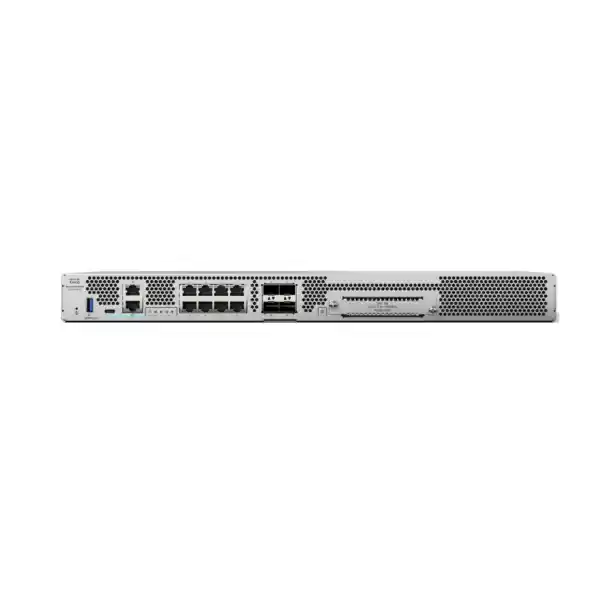
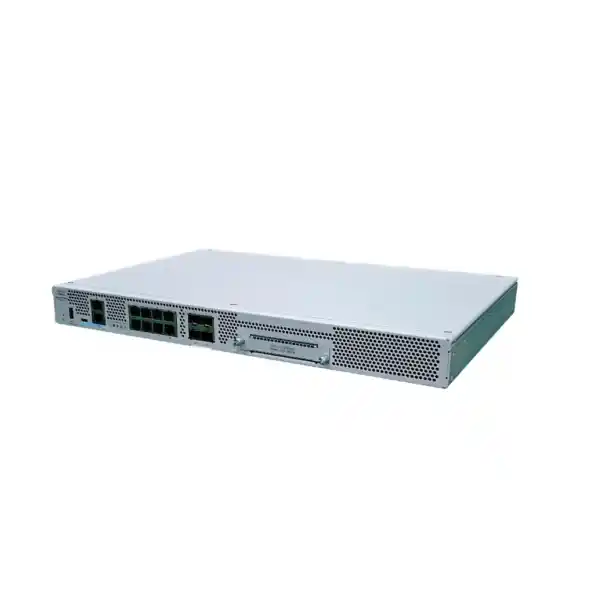
Cisco Secure Firewall 1250
Specify a branch firewall around the applications, connections and security policy your business needs. This Cisco rack appliance offers separate ASA and Threat Defense options, so the right purchase starts with a clear software, licensing and deployment brief. For organisations in Tanzania evaluating a new security gateway or replacing an existing firewall, request a configuration-specific quotation from FourTeck Tanzania.
Start with your bandwidth, inspection needs and network diagram. Confirm the complete bundle, accessories and commercial terms before ordering.
Is this the right firewall for your site?
For a Tanzanian organisation evaluating a branch security upgrade, start with the network boundary you need to protect. A site hosting local applications, several business departments, remote connections and substantial internet traffic has different requirements from a small office that only needs a basic internet gateway. The 1250 deserves consideration when the project calls for a rack appliance and a combination of copper connections and faster switch uplinks. Its suitability still depends on the actual traffic and inspection policy.
Treat the buying decision as a design exercise. List the applications that must remain available, the networks that should be separated and the people who will maintain the rules. Decide whether the appliance will secure one location or participate in a wider centrally administered estate. These answers make a quotation more useful because they connect the hardware choice to the operating model. If your requirement is still developing, begin with a requirements review before selecting subscriptions or committing to an installation date.
Verified specifications at a glance
The following values distinguish hardware characteristics from software-specific laboratory measurements. Performance figures are manufacturer benchmarks, not a commitment for a particular deployment. Use them to shortlist a platform and then validate the planned policy with representative traffic.
| Specification or test | Cisco published value |
|---|---|
| Format and data interfaces | 1U; eight 2.5GBASE-T ports; four 1/10Gbps SFP+ slots |
| Threat Defense: firewall + AVC | 24 Gbps, 1024-byte test traffic |
| Threat Defense: firewall + AVC + IPS | 18 Gbps, 1024-byte test traffic |
| Threat Defense: NGIPS | 22 Gbps, 1024-byte test traffic |
| Threat Defense: IPsec | 22 Gbps, 1024-byte TCP with Fastpath |
| Threat Defense: TLS decryption | 4.1 Gbps; Cisco test uses 50% TLS 1.2 traffic, AES256-SHA and RSA 2048-bit keys |
| ASA: stateful firewall | 20 Gbps; ideal 1500-byte UDP test |
| ASA: IPsec | 24 Gbps; 450-byte UDP LAN-to-LAN test |
| Storage and power architecture | 960 GB field-replaceable SSD; single integrated power supply |
| PoE | Not provided on this model |
Read the throughput figures against your security policy
A firewall comparison becomes misleading when one product is measured with inspection enabled and another is measured mainly as a traffic forwarding device. For your evaluation, write down which security functions must operate at the same time. Include application identification, intrusion inspection, encrypted traffic handling and VPN processing where relevant. Ask for a sizing recommendation based on that combined requirement rather than selecting the largest number on a product sheet.
Build the traffic profile from business activity. Large file transfers, short web sessions, software updates, interactive applications and remote access can produce very different workloads. Record normal demand and busy periods, including events such as scheduled backups or a large meeting. Keep a separate allowance for expected growth and exceptional peaks. That approach makes headroom explicit and helps you discuss the tradeoff between purchase cost and future capacity without assuming that every available interface can run at full speed through every inspection function.
Choose the software image before choosing the bundle
Cisco identifies CSF1250-TD-K9 as the Threat Defense appliance and CSF1250-ASA-K9 as the ASA appliance. These are manufacturer product identifiers for two software variants. They should be stated clearly in a quotation so procurement, network engineering and the support team understand which environment is being supplied. A general model name alone is insufficient to define the final configuration.
For a project focused on application-aware inspection and threat prevention, evaluate the Threat Defense design and its required subscriptions. For a project extending an established ASA environment, evaluate the ASA design against the existing configuration and team skills. Do not assume that a policy, management workflow or feature entitlement transfers unchanged between images. If a later change of software is contemplated, plan it as a separate migration with compatibility, configuration conversion and downtime reviewed in advance.
Define the subscription and account requirements
Cisco’s model-specific licensing guidance lists a required standard entitlement and separate IPS, Malware Defense, URL Filtering and Cisco Secure Client options. It also identifies a combined IPS, malware and URL subscription with term choices. The quotation should specify the exact entitlements and duration being offered; buying the appliance by itself does not establish that every optional security service is included.
Ask who owns the organisation’s Cisco Smart Account, who can approve licensing changes and which administrative account should receive the entitlements. Keep that ownership with the customer organisation and record the renewal responsibility alongside the commercial documents. Separate the appliance, security subscriptions, management, support and any implementation work in the proposal. This makes it easier to compare quotations and avoids a situation in which the project is technically ready but a required account or entitlement remains unresolved at the cutover.
Select a management approach your team can operate
Cisco documents local Firewall Device Manager, on-premises Firewall Management Center and cloud-delivered Firewall Management Center deployment paths for this hardware family. Management selection depends on the software release, required capabilities and the way the security team works. Check the supported combination before ordering a manager or assuming that an existing management platform can accept the new device.
A locally administered site needs an owner who can review changes, protect administrative access and investigate alerts. A centrally operated estate needs consistent object naming, delegated responsibilities and a method for handling emergency local incidents. For a cloud-delivered approach, review connectivity requirements and the organisation’s policy on externally hosted administration. Include event retention and access to historical records in the discussion. Choose a management arrangement that the team can maintain during ordinary working hours and during an outage, rather than choosing only from the appearance of the interface.
Plan the copper and fibre connections
Prepare a port schedule before installation. Identify the provider handoff, internal switching, any separate application segment and the management connection. For each link, record the required speed, connector, cable type and the equipment at the far end. This is especially useful where an existing switch or provider device would become the limiting link even after the firewall is upgraded.
For optical links, check the selected transceiver against Cisco’s hardware documentation and the compatibility information for the intended software. Match the fibre type, distance, connector and remote optic; a physical SFP+ slot alone does not establish that an arbitrary module is suitable. Confirm which optics, direct attach cables and patch leads are included in the quotation. Label both ends of each cable and retain the final port map with the network diagram. This preparation reduces troubleshooting during a change window and makes future fault isolation easier for a different engineer.
Create security zones around business access
Start segmentation by identifying which groups should communicate and why. An office may need separate access rules for staff devices, application servers, guests and externally reachable services. These are proposed design examples, not a statement that every organisation needs the same layout. Write the permitted business flows first and then decide how the firewall and switching design will enforce them.
Give each allowed flow an owner, a purpose and a clear destination. A finance application should not require broad access to every server simply because that was convenient in an older rule set. Review shared infrastructure such as DNS, time synchronisation and directory services so that essential dependencies are not missed. Decide where traffic actually passes through inspection; two networks that communicate entirely inside a switch may bypass the intended firewall boundary. The design review should therefore include routing and switching as well as the access policy.
Make internet and WAN requirements explicit
For a Tanzania deployment, obtain the actual service details from the chosen connectivity provider. Record whether the handoff uses static addressing, another addressing method or provider equipment that performs translation. Confirm the address allocation, gateway, physical link and any restrictions on inbound services. This page does not assume compatibility with a named provider or availability of a particular local service.
If you need more than one WAN connection, define the desired behaviour during a provider failure and verify the routing and failover design for the chosen software. Test the loss of connectivity beyond the immediate Ethernet handoff, because a link can remain physically connected while the upstream service is unavailable. Include voice, hosted applications and VPN endpoints in that test plan. A second circuit is useful only when the network design, application behaviour and operational procedures support the intended continuity.
Scope site-to-site and remote access separately
Site-to-site VPN and individual remote access solve different problems. For a branch tunnel, collect the peer device details, protected networks, authentication method and the required encryption parameters. Check for overlapping address ranges before implementation. Agree which team controls each endpoint and how changes will be coordinated. A tunnel that establishes successfully still needs application testing across the actual protected routes.
For individual users, document who needs access, from which devices and to which systems. Review endpoint software, identity integration and the required Cisco Secure Client licensing separately from the appliance purchase. Cisco’s ASA licensing guidance makes clear that Secure Client rights require the appropriate optional licence; a platform peer maximum is not a purchased user entitlement. Plan onboarding and removal of access, recovery for lost devices and a test with representative users. Keep credentials, private keys and account tokens out of public product enquiries.
Budget encrypted traffic inspection carefully
Encrypted traffic handling deserves its own sizing and policy review. Identify which applications are candidates for inspection, which must be excluded and what approvals are needed within the organisation. Review certificate deployment to managed endpoints before enabling a broad policy. Some applications may behave differently when an intermediary inspects their encrypted sessions, so include application owners in the pilot.
Do not treat a successful browser test as proof that every service is ready. Test software updates, authentication, collaboration tools, line-of-business applications and devices that cannot receive your organisation’s certificates. Define an exception process with a business owner and a review date. Document how the team will distinguish a certificate problem from a routing or policy problem. These are planning recommendations; the final supported features, encryption behaviour and performance must be checked for the exact software release and configuration being proposed.
Specify resilience across the whole path
Threat Defense documentation lists active/standby high availability for the series. If continuity is a requirement, request a design for a matched pair and verify the software, licensing, interfaces and adjacent network arrangements. A single appliance is not the same purchase as a tested resilient deployment, and the quote should make the intended quantity and implementation scope explicit.
Review the failure domains around the firewalls. Two units connected to the same unprotected power source or a single upstream switch can still share a common outage risk. Define how monitoring will identify an unavailable peer and who will respond when the system is running with reduced redundancy. During acceptance, agree a controlled failure test and measure what users experience. Record any application reconnection requirements. Failover should be demonstrated against your service objectives rather than treated as a guarantee that every session will continue without interruption.
Prepare the rack, power and environment
The 1250 is a rack appliance with an integrated AC supply. Cisco’s hardware documentation specifies a 0–40°C operating range, 5–85% noncondensing operating humidity and maximum consumption of 88 W. It provides a separate management connection, serial console options and replaceable storage. Review the installation guide for mounting, grounding, clearance and environmental restrictions before positioning the unit.
Check the actual rack and room conditions during busy operating periods, not only when the equipment is first delivered. Allow access for cable work and servicing, keep the intended ventilation path clear and assess whether the acoustic environment suits the location. Size a UPS against the complete connected load and the required runtime, including switching and provider equipment. Confirm the ordered power cord and mounting accessories in the final bill of materials. The presence of a power supply does not establish that every site-specific accessory or power continuity component is included.
Build a migration plan around application continuity
For a replacement project, export and review the existing configuration before the maintenance window. Inventory network objects, translations, access rules, routes, VPNs, certificates and administrative dependencies. Identify obsolete rules and unexplained exceptions so that they can be reviewed with the business owner. Keep a protected copy of the original configuration and document the steps required to restore the previous service.
Use an application test matrix that names a tester and expected result for each critical workflow. Include inbound published services and connections initiated from less visible systems such as monitoring, backup or vendor support platforms. Define a rollback decision time early enough to restore service within the agreed window. A migration should also address password ownership, naming conventions and documentation. If implementation assistance is requested, confirm the exact tasks and responsibilities in the quotation instead of assuming that purchasing hardware includes a full configuration transfer.
Roll out the inspection policy in controlled stages
A new firewall policy benefits from a measured rollout. Start by establishing the required connectivity and verifying the intended traffic paths. Then apply the agreed inspection functions with a pilot group or a defined service scope where the selected software supports that approach. Keep business representatives available to validate application behaviour and report unexpected effects promptly.
Choose policy changes that can be assessed clearly. Combining a new addressing plan, a different internet provider, a VPN migration and broad inspection changes in one step makes diagnosis difficult. Where practical, separate these activities or document a detailed dependency order. Record each approved change, its expected effect and the evidence used to accept it. If an exception is needed to restore a business process, give it an owner and an expiry review. A temporary broad rule should not become permanent simply because the initial deployment was busy.
Decide what to log and who will act
Security events are useful when someone has a clear process for reviewing them. Define which events need immediate attention, which belong in a daily review and which support later investigation. Agree the destination and retention requirement for relevant records, then confirm the selected management and logging options can meet it. Keep that requirement separate from assumptions about storage capacity inside the appliance.
Give the operations team practical examples: an unusual outbound destination, repeated access denials to a business server or an unexpected VPN connection. State who investigates, what evidence is collected and when an incident is escalated. Synchronise time across the relevant systems so that events can be compared accurately. Limit access to logs because they can reveal users, addresses and application activity. If reporting or security monitoring services are part of a proposal, request the scope, frequency and response responsibilities in writing rather than inferring an ongoing service from a product description.
Set software maintenance and recovery expectations
Before deployment, check Cisco’s current compatibility guidance and release notes for the target image and manager. A version supported on another appliance in the family should not be assumed suitable for this exact combination. Review the recommended release, known issues and upgrade path against the features your organisation needs. Include management platform dependencies in that assessment.
Set a maintenance owner and a repeatable approval process for updates. Keep protected configuration backups, document recovery access and verify who can retrieve the relevant software and support resources. Review security advisories as part of normal operations and schedule changes according to the impact on your environment. Procurement should also identify the contracted support terms and the process for hardware faults. Avoid relying on an assumed replacement timescale; the applicable service coverage and location-specific conditions need to be confirmed in the actual offer.
Compare alternatives using the same requirement
If you are comparing the 1250 with another model, use a common worksheet. Specify the required traffic mix, inspection functions, port types, management approach, resilience, subscriptions and support period for every option. That prevents an apparently cheaper quotation from omitting a service or accessory that another proposal includes. It also helps distinguish essential requirements from preferences.
Consider a smaller model when the measured requirement and growth plan support it, and evaluate a different platform when your design needs capabilities beyond this appliance’s verified scope. For example, a requirement for a different power architecture or a particular virtualisation feature should be checked explicitly rather than inferred from brand familiarity. Ask the proposer to explain why the chosen model fits and what condition would cause the recommendation to change. The useful comparison is the complete deployed design and operating cost over the chosen period, including administration and renewal ownership.
Common project scenarios
The following scenarios are examples to help frame an enquiry. They are not claims about an existing installation, service contract or guaranteed outcome. Use the closest example as a starting point and replace its assumptions with your actual network information.
Branch replacing an older firewall
Start with a review of the existing rules, translations and VPNs. Identify which requirements should stay and which should change. Make software selection part of the replacement design, and include a tested rollback plan. Where the old configuration contains undocumented exceptions, involve the application owner before removing or recreating them.
Office with several internal trust zones
Map the required flows between staff, servers and other device groups. Check that the intended inspection point sits on the real routing path. Plan compatible uplinks and a clear port schedule. Use an application matrix to verify both permitted access and the boundaries that should remain closed after the change.
Organisation operating multiple sites
Decide how consistent policies, local exceptions and remote administration will be handled. Confirm manager compatibility before incorporating the appliance into an existing estate. Document what the local team can do if central management becomes unreachable, and keep the support and change approval responsibilities clear across the different locations.
Site with demanding availability requirements
Begin with a service continuity objective and map the equipment needed to support it. Review a matched firewall pair, switching dependencies, provider connectivity and power protection together. Request an agreed failure test and clear handover evidence. The project should explain remaining shared failure points so that stakeholders can assess them.
What a complete quotation should identify
A useful proposal connects technical requirements with commercial line items. It should name the software variant, appliance quantity, required security subscriptions and subscription duration. It should identify management and logging choices, optional support, compatible optics and cables, installation accessories and any configuration or migration services. Ask for exclusions to be stated clearly so that responsibilities are understood before ordering.
Commercial details for Tanzania must be confirmed for the actual offer. Request the quoted currency, tax treatment, current availability, delivery terms, payment conditions and applicable warranty or support coverage. No price, stock quantity, delivery date or regulatory approval is established by this page. If the project has a tender specification, attach the relevant requirements and ask for an item-by-item response. Where an exact match cannot be confirmed, the proposal should describe the difference and its operational implication rather than replacing the requested item silently.
Prepare a useful enquiry without sharing secrets
Send a concise network summary with current internet speeds, expected growth, site count and the applications that matter most. State whether the requirement is a new installation, a replacement or an addition to an existing Cisco estate. Include the preferred software approach if it has already been decided, the desired management method and whether a resilient pair is being considered.
A simple diagram can show the provider handoff, internal switches, protected networks, VPN peers and proposed firewall location. Remove passwords, private keys, licence tokens and confidential addressing details that are unnecessary for initial sizing. Describe remote access demand as a requirement rather than sending user credentials. If a detailed configuration review becomes necessary, agree an appropriate protected exchange method first. This gives the proposer enough information to prepare a meaningful next step while keeping sensitive operational material under the customer’s control.
Agree an acceptance checklist before installation
Define success in terms of the applications and security boundaries the business needs. Confirm that authorised users can reach their required services, unauthorised paths are blocked, address translation behaves as expected and remote connections reach only the intended destinations. Verify that management access is restricted and that the operations team can see the events needed to support the service.
Include performance checks during representative load and confirm the physical link speeds and error counters. If a resilient design or more than one WAN service is in scope, test the agreed failure scenarios in a controlled window. Record the software versions, licence status, final diagram, backup location and administrative ownership at handover. Ask the responsible business owner to sign off the test evidence. Acceptance based on a working internet browser alone leaves important requirements untested and makes later disagreements about the project scope harder to resolve.
Buyer questions answered
What is the Cisco Secure Firewall 1250 intended for?
It is a hardware security appliance in Cisco’s 1200 Series, a family aimed at branch and distributed enterprise sites. For a buyer, the important next step is to establish whether its verified interfaces, software options and capacity match the intended traffic. A site assessment should consider inspection policy, application dependencies, operational ownership and growth rather than treating the model designation as a universal sizing recommendation.
Does the model name tell me which software is included?
No. Cisco offers separate ASA and Threat Defense orderable variants. Ask for the complete manufacturer product identifier and the proposed software release on the quote. Also identify the management method and security entitlements. This prevents a procurement description from being interpreted differently by the purchasing team, the implementation engineer and the people who will administer the device after handover.
Can I use the headline firewall speed as my inspected traffic target?
Use a measurement that matches the functions you intend to enable and validate it against your traffic mix. Firewall forwarding, intrusion inspection, encrypted traffic handling and VPN tests describe different workloads. For a business deployment, specify the simultaneous functions and expected peaks, then request sizing with suitable headroom. A manufacturer laboratory figure alone does not establish an end-to-end service level for your applications.
Are intrusion prevention, malware protection and URL filtering automatically included?
The final entitlement depends on the ordered package. Cisco’s licensing guidance treats the relevant services as defined licence options and lists a combined subscription for the model family. Request a written schedule of the services, quantities and term. Confirm who manages the customer account and renewal dates, and distinguish these subscriptions from any hardware support, management or implementation items on the quotation.
Can the firewall power access points or IP phones?
Do not plan this model as a PoE source. If connected access points, phones or other devices need power over Ethernet, include suitable separate switching or power equipment in the design. Check the complete power budget and cabling arrangement for those devices independently. Choosing a firewall with copper Ethernet connections does not establish that those interfaces supply electrical power to connected equipment.
Can it connect to my existing switches and optical links?
That depends on the remote equipment, required link speed, cabling and selected transceivers. Prepare a connection schedule and verify each optic or direct attach cable against the hardware and software compatibility information. Confirm both ends of a fibre connection and include required accessories in the quote. An existing module should be checked before reuse, even if its connector physically fits the firewall.
Does a VPN peer limit include licences for all remote users?
No. A hardware or software maximum describes a platform limit, while a purchased entitlement establishes the permitted use. Cisco’s ASA guidance treats Secure Client licensing separately and describes different licensing arrangements. State the intended user population and endpoint requirements when requesting a remote access design. Ask for the exact licence basis and quantities rather than equating a published peer figure with an included user subscription.
Can it be administered locally or through a central manager?
Cisco provides documented deployment paths for local and central management of the Threat Defense platform. The supported combination depends on the manager, firewall software release and required features. If your organisation already runs a manager, verify compatibility before adding the device. Also decide who approves policy changes, which team reviews events and what administrative access remains available during a connectivity incident.
Do I need one appliance or a resilient pair?
That depends on the business continuity requirement. A pair requires a deliberate design covering compatible devices, software, links, licensing and surrounding infrastructure. Include the intended failure behaviour and acceptance test in the proposal. Consider shared dependencies such as a single switch, provider handoff or power source. Buying additional hardware without addressing those dependencies does not by itself establish the continuity the business expects.
Is configuration migration part of the appliance purchase?
The scope must be stated in the commercial offer. A hardware quotation should not be interpreted as including policy review, VPN conversion, certificate handling, cutover support or staff training unless those tasks are listed. For a replacement, ask for a migration plan, responsibilities, test matrix and rollback procedure. This makes the expected result reviewable and clarifies which work your internal team must complete.
What should I check for installation in Tanzania?
Review the actual rack, environmental conditions, power protection and provider handoff at the intended site. Confirm the quoted accessories and any proposed implementation scope. Ask for current commercial terms, availability, applicable support and any compliance documentation required by your organisation. This page does not establish local stock, a service coverage area, a delivery commitment or approval by a Tanzanian regulator.
What information will help me request an accurate quote?
Provide the site count, current and planned bandwidth, key applications, expected remote access demand and a simple network diagram. State whether you prefer ASA or Threat Defense, whether central management is required and whether resilience is in scope. Include any tender requirements and the desired subscription period. Keep credentials and private configuration material out of the initial enquiry; arrange a protected review channel if deeper assessment is necessary.
Request a configuration-specific quotation
Ask FourTeck Tanzania for a proposal for the Secure Firewall 1250 based on your planned software, site traffic and security functions. Include the intended management method, appliance quantity, subscription period and any migration or resilience requirements. Request an itemised response covering hardware, entitlements, accessories and any agreed services.
Before approving an order, check that the named software variant matches your design and that the quote states current availability, commercial terms and applicable support. Agree the implementation and acceptance responsibilities so that the project has a clear handover point. A well-scoped enquiry is the starting point for a firewall purchase that your network team can evaluate and operate.




Reviews
There are no reviews yet.