
CISCO NETWORK SECURITY · TANZANIA
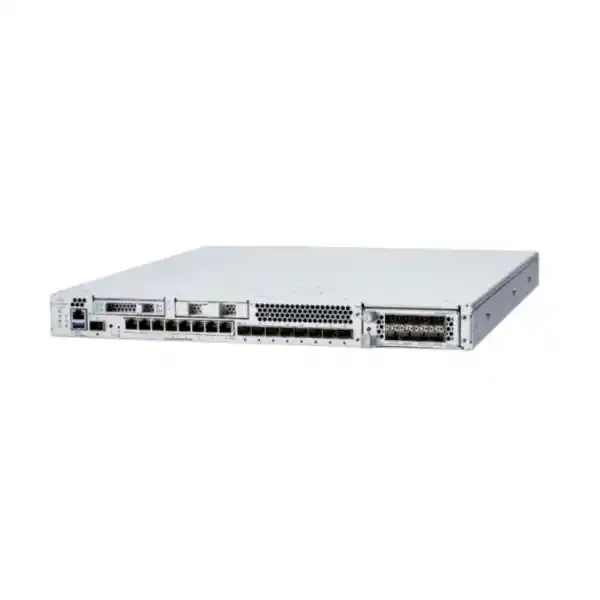
Cisco Secure Firewall 3105
Protect business connectivity with a firewall selected around your applications, traffic and operating requirements. The Cisco Secure Firewall 3105 is a rack-mounted appliance to evaluate for enterprise branch security, with Threat Defense or ASA software options. For Tanzania buyers, the useful next step is a configuration-specific quotation covering the appliance, required subscriptions, connectivity and deployment scope.
Share your internet capacity, inspection requirements and network layout with FourTeck Tanzania to request a suitably scoped proposal. Confirm licensing, accessories and commercial terms before placing an order.
Where the 3105 fits in your network
Consider this appliance when a business site needs a dedicated security boundary between internet access, internal networks and selected business services. The buying decision should start with the traffic that crosses that boundary. An office using hosted applications has a different inspection profile from a site publishing servers or carrying traffic between departments. Describe those flows before deciding whether the appliance is appropriately sized.
A practical shortlist should include expected internet capacity, encrypted traffic, concurrent sessions, branch tunnels and required inspection policies. User count alone cannot capture these requirements. A relatively small team moving large design files can generate a different load from a larger office using lightweight transactions. Include peak periods, backup windows and the planned expansion horizon in the sizing discussion.
The 3105 is worth evaluating for an enterprise branch or business network that needs copper connections alongside optical uplinks. Its suitability remains a design conclusion, rather than a promise based on the model name. Ask for a proposed interface plan and a traffic-based capacity assessment before accepting a bill of materials. If the requirement includes capabilities excluded on this model, select a different platform at the planning stage.
Three practical project starting points
Choose the starting point closest to your project, then adapt the requirements to your own applications. These scenarios are planning examples; each still needs a configuration and sizing review.
Replacing an older perimeter firewall
Use this scenario when the immediate need is to move an existing security boundary onto a new appliance. Begin with a list of public services, branch links and application dependencies. Separate essential rules from obsolete exceptions before estimating the work. Make the acceptance plan specific: which applications must work, from which networks, and who will sign off each result. The 3105 should enter this project only after its software, capacity and connectivity have been matched to that inventory.
Opening a business branch
Use this scenario when the site design is still flexible. Decide where local internet access, hosted applications and connections to other offices will meet. Reserve the interfaces and switch connections needed by the proposed topology. Include a plan for administrative access before users arrive. Procurement can then evaluate the appliance together with optics, subscriptions and implementation, while the building or site team addresses rack position, cabling and power readiness.
Introducing an internal security boundary
Use this scenario when the priority is controlling access between business systems. Identify the routing changes needed to bring the intended traffic through the appliance. Work with application owners to define permitted flows, including supporting services such as name resolution and authentication. Start with a representative group of systems and validate both permitted and blocked traffic. This approach helps the buyer assess the 3105 against a defined policy requirement instead of relying on a broad ambition to improve segmentation.
Verified technical snapshot
| Item | 3105 specification or qualification |
|---|---|
| Form factor | 1 rack unit (1RU) |
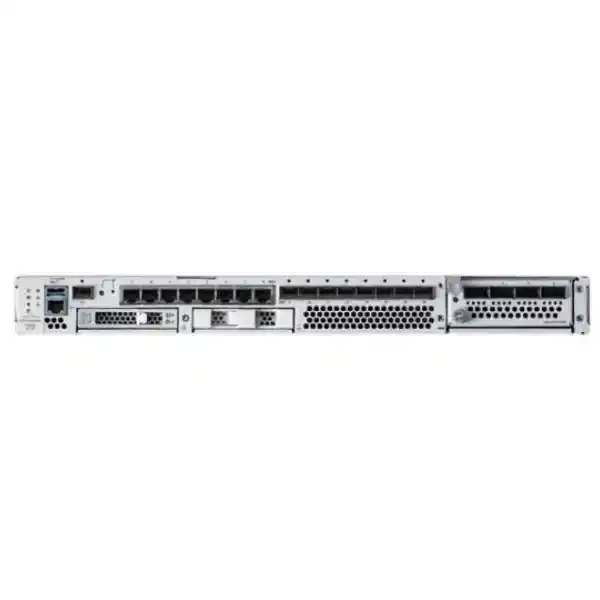
| Fixed data connections | 8 × 10/100/1000BASE-T RJ-45; 8 × 1/10 Gigabit SFP interfaces |
| FTD firewall + application control + IPS | 10 Gbps with Cisco’s 1024-byte test profile |
| TLS throughput | 3.2 Gbps; Cisco test uses 50% TLS 1.2 traffic with AES256-SHA |
| FTD IPsec VPN throughput | 5.5 Gbps, 1024-byte TCP with Fastpath |
| Software choice | Firewall Threat Defense or ASA; select the intended configuration |
| Expansion | One network module slot; verify exact module compatibility |
| Scaling exclusions | No clustering on the 3105; FTD multi-instance mode is not supported |
Performance figures describe different workloads and must not be added together. Actual results depend on enabled services, software, traffic mix and packet sizes. Interface speed also does not establish the inspected throughput available to every connection. Use the relevant workload measurement when comparing quotations.
Read performance figures against your actual workload
Start with a simple traffic inventory: normal load, busy-hour load, large transfers and expected growth. Separate traffic that merely passes through policy from traffic requiring intrusion inspection, encrypted inspection or VPN processing. This avoids choosing a device against an easy benchmark while expecting it to handle a more demanding combination of services in production.
For example, a business that plans to inspect a large proportion of encrypted web sessions should evaluate decryption capacity early. It should also identify the applications that cannot be decrypted and the policy applied to them. A firewall throughput headline is insufficient for that design. Request a sizing discussion using your intended policy, rather than treating every published throughput figure as interchangeable.
Measure both traffic volume and how the business uses the network. Numerous short connections can stress a design differently from a few persistent transfers. Busy periods may coincide with security scans, software distribution or overnight replication. Give the evaluator representative observations and explain which events must run together.
Leave operational headroom for growth and unexpected peaks, but avoid selecting a universal margin without evidence. The appropriate allowance depends on the cost of a future change, the certainty of your forecasts and the service interruptions your business can accept. Record those assumptions so that later expansion can be assessed against the original design.
Choose Threat Defense or ASA before ordering
Cisco lists separate ordering options for this model: FPR3105-NGFW-K9 for the appliance with Threat Defense software and FPR3105-ASA-K9 for the ASA appliance. These are manufacturer part identifiers, not a verified FourTeck listing SKU. Specify the intended software in the quotation so procurement, licensing and implementation all refer to the same design.
Threat Defense is the path to evaluate when the project needs an integrated next-generation security policy. ASA should be assessed against a requirement for ASA operation and an existing ASA architecture. The appropriate choice depends on the required functions, management approach and migration plan. Do not assume that feature behaviour, licensing or configuration transfers unchanged between the two.
Before replacing an existing firewall, identify which settings express the business requirement and which settings are historical workarounds. This helps avoid reproducing unnecessary exceptions on the new appliance. Have application owners confirm the traffic they actually need, including scheduled processes that may not appear during an ordinary working day.
The software choice should be settled before the installation window. Treat any later software conversion as a separately planned change with its own compatibility review, backup and recovery procedure. A purchase description that states only the chassis model leaves too much room for misunderstanding about what the business expects to operate.
Plan the interface layout and optical accessories
Build a port schedule before ordering optics or connecting the appliance. For each connection, record the upstream or downstream device, intended speed, cable medium, security purpose and whether it belongs to a redundant path. This turns a list of interfaces into an installation plan and exposes missing switch connections while changes are still inexpensive.
An SFP interface is not a guarantee that a particular transceiver, direct-attach cable or fibre run will work. Check the exact supported accessory, software release, optical reach and connector requirements. Confirm both ends of the link. A compatible firewall optic alone cannot correct a mismatch in the attached switch or the installed fibre.
The optional eight-port 1/10-Gbps network module is a relevant expansion option to assess. Cisco specifically excludes the eight-port 1/10/25-Gbps module from software support on the 3105. A module that physically fits should therefore never be treated as sufficient evidence of compatibility. Keep expansion choices specific to this model.
Distinguish data ports, management connections and any links reserved by the availability design. Label cables and patch-panel positions with names that match the documentation. Ask the quotation to state which optics, cables, modules and mounting accessories are included, rather than assuming that every item required for the finished installation comes with the chassis.
Separate business networks with a clear traffic policy
A useful segmentation plan describes which groups should communicate and why. Typical planning categories might include staff devices, business servers, guest access, infrastructure management and third-party equipment. These are design examples, not a predefined configuration supplied with the appliance. Choose boundaries that reflect the organisation’s systems and responsibilities.
Create a traffic matrix with a source, destination, service, owner and business justification for each required flow. Where practical, identify the application instead of accepting an unrestricted rule simply because a connection works. Keep temporary access time-limited and assign an owner who can approve its removal.
Confirm that traffic actually crosses the firewall boundary being designed. If two internal networks communicate through another routing device, placing their names in a firewall policy does not bring that traffic under inspection. Review gateways and return paths with the switching and routing team before making security claims about the result.
Guest connectivity deserves its own acceptance test: users should reach the services they are allowed to use without gaining unintended access to business systems. Management access deserves a separate test focused on authorised administrators. A documented negative test, showing that an unwanted connection is blocked, can be as useful as showing that an approved application opens successfully.
Match security subscriptions to the required outcomes
The appliance and the desired inspection services should be itemised separately in the commercial proposal. Cisco’s ordering material includes model-specific threat, malware and URL filtering subscription options. Confirm the current entitlement names, bundle contents and subscription terms for the chosen software. A product family description does not establish which services are included in a particular quote.
Write each required outcome in plain language. Examples include inspecting permitted traffic for intrusion attempts, applying acceptable-use categories to web access, or checking supported file transfers for malicious content. Ask the supplier to map each outcome to the proposed entitlement and policy. This is easier to evaluate than a quotation consisting only of abbreviations.
Include account ownership and renewal administration in the purchase decision. Identify who will control the relevant licensing account, receive expiry notices and approve future renewals. Have the buyer retain an understandable record of subscription start dates, end dates and the equipment to which they relate.
Support coverage is another commercial item to verify independently. Ask for the proposed service description, eligibility requirements and contractual terms. Do not infer a replacement time, local stock position or warranty extension from the appliance name. A complete comparison uses the same subscription duration and support scope across competing proposals.
Decide how administrators will manage the firewall
Cisco supports local device management and central management options for Threat Defense, with the exact choice subject to software and feature compatibility. Evaluate the management approach alongside the security policy. The right interface is the one your team can operate reliably through routine changes, incidents and staff transitions.
For a single appliance, ask who will approve policy changes, maintain backups and review health alerts. For a wider estate, ask how common rules and exceptions will be governed across sites. A consistent naming convention and clear ownership often matter as much as the initial configuration screens.
If a management platform is required, include its deployment, licensing, capacity and connectivity in the project scope. Check the supported relationship between the manager release and the device release. Do not assume that purchasing the firewall also supplies a central management environment or that every management method exposes identical features.
Protect administrative access through an agreed management network and access policy. Decide how administrators will regain access if normal connectivity fails, and store recovery information appropriately. Handover should identify where the configuration is maintained and how changes reach the appliance. Without that clarity, even a technically successful installation can become difficult to operate.
Make encrypted inspection an explicit design decision
Encrypted inspection needs an application and certificate plan as well as sufficient processing capacity. Identify the traffic you want to inspect, the endpoints you administer and the exceptions the business requires. The policy should describe what happens to sessions that cannot be decrypted, rather than leaving their treatment to an assumption.
Certificate pinning can prevent an application from accepting interception. Cisco documents decryption exceptions for pinned applications and certificates. Test important applications with the intended policy, including sign-in flows, updates and background connections. A successful browser test alone does not establish that every application used by the business will behave correctly.
Where an outbound decryption design requires an inspection certificate, plan how managed endpoints will trust it and how its lifecycle will be controlled. Discuss the treatment of devices outside your administration. The proposed approach should also be reviewed against the organisation’s policies for sensitive information and permitted inspection.
Roll out inspection in a controlled sequence. Establish an initial baseline, introduce the intended policy to a representative group and examine errors and application behaviour before expanding it. Maintain a clear route for reporting problems. Exceptions should have an owner and a reason so that an urgent workaround does not become an unexplained permanent gap.
Design VPN access around the applications people need
Begin a branch VPN requirement with an address plan and a list of the systems that must communicate. Check for overlapping internal subnets before implementation. Identify who controls each endpoint, how routing will work and which traffic is allowed through the tunnel. This preparation avoids treating tunnel establishment as the only measure of success.
For remote access, distinguish the number of potential users from the number expected to connect at the busiest time. Then describe their applications and traffic patterns. A user accessing a small transaction system presents a different demand from one transferring large files. Published peer limits are not a substitute for licensing and workload assessment.
Confirm remote-access client compatibility, authentication integration and the required entitlements for the exact software design. Include identity-system availability and the recovery process when a user cannot authenticate. Have the quotation state whether remote-access setup and user rollout are part of the agreed scope.
Acceptance testing should follow a real task from the user’s device to the destination application. Check name resolution, permissions, return routing and the experience of reconnecting after a brief interruption. Keep the test criteria tied to the business requirement; a tunnel that appears connected may still leave the required service unusable.
Plan availability without assuming clustering
The 3105 does not support clustering. If the project needs a clustered firewall architecture, select a platform that meets that requirement. For a Threat Defense availability design on this appliance, evaluate a supported active/standby pair and verify the release-specific prerequisites.
Cisco requires matching hardware models for a Threat Defense high-availability pair, along with compatible interfaces and software. Both devices also need the appropriate licensing. Ask for the entire pair to appear in the bill of materials, including the connections and supporting infrastructure needed to make the design useful.
A second appliance cannot resolve every shared failure. Examine switches, power feeds, internet handoffs and management dependencies to identify components that could still interrupt both units. This wider review helps establish what the proposed resilience actually protects and where the remaining limitations sit.
Define the failover test before commissioning. Include a controlled device failure, recovery of the failed unit and verification of representative applications after the transition. Some applications may react differently to an interruption, so agree acceptable behaviour with their owners. Document what was tested and the observations rather than promising uninterrupted service in every condition.
Check rack space, power and operating conditions
Reserve an appropriate equipment-rack position and enough working space for cabling and maintenance. The 3105 uses a rack appliance format; plan for the complete installation rather than the chassis height alone. Check rack depth, mounting arrangements and the physical access needed to replace serviceable components.
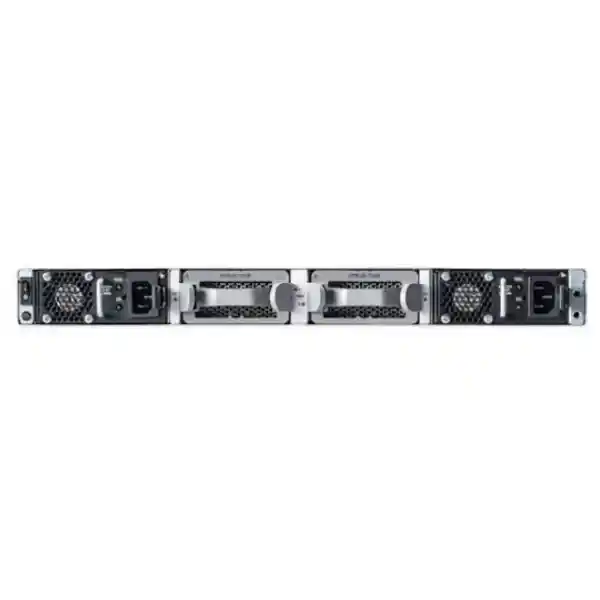
Review the proposed power configuration against the site’s available supply and continuity arrangements. Cisco documents redundant power-supply operation for the series, but the actual supplied configuration must be confirmed in the quote. If resilience is required, identify the independent power paths and the equipment that remains dependent on a single source.
Assess ventilation, ambient conditions and the effects of neighbouring equipment. Use the manufacturer’s installation requirements for the actual configuration and location. Avoid placing the firewall where obstructed airflow or inaccessible cabling makes routine support difficult. Keep a record of the installed modules and the power arrangements.
For Tanzania deployments, include local site readiness in the project plan: the buyer’s rack, available power, upstream service handoff and access arrangements for installation. These checks apply to the specific premises. They do not establish a local office, delivery commitment or service coverage without a confirmed commercial agreement.
Prepare a migration that application owners can verify
Start migration planning with a current configuration backup and an inventory of the applications that depend on the existing firewall. Record public addresses, published services, address translation rules, site-to-site connections and administrative access requirements. Include infrequent activities such as month-end jobs or supplier maintenance connections.
Review old rules before carrying them forward. An unexplained broad permission should be investigated rather than automatically reproduced. Ask an accountable business or technical owner to confirm each important dependency. Preserve a record of decisions so that a later support engineer can distinguish intentional access from a temporary migration allowance.
Build a cutover checklist with an agreed sequence, named responsibilities and a rollback decision point. Determine which changes involve an internet provider, another network team or an external application owner. Their availability may be essential even when the appliance configuration itself is ready.
Test the new design against a written application list. Include inbound and outbound services, scheduled transfers and user access from the networks that matter. Keep the old recovery path available for the agreed window. Complete the handover only after the buyer has an understandable record of successful tests, remaining exceptions and responsibility for follow-up.
Define logging and day-to-day operating responsibilities
A firewall becomes more useful when the team knows which events to review and what action to take. Decide what needs to be logged, where records will be retained and who owns investigation. Consider both security events and device health, because an operational fault can affect the business even without a confirmed attack.
Choose logging detail according to the question you need to answer. Excessive records without a review process can make troubleshooting harder, while insufficient records can conceal the reason an important connection failed. Agree practical retention and access arrangements with the team responsible for the destination system.
Include time synchronisation and clear object names in the operating plan. When an application owner reports a problem, administrators should be able to correlate the event with the relevant policy and device. Record the context of approved changes so that troubleshooting does not depend on one person’s memory.
Schedule review of temporary rules, subscription dates, software maintenance and backup recovery. Assign an owner for each recurring activity. A useful handover package contains configuration records, diagrams, access ownership, test results and an escalation path. It should help a competent replacement administrator understand the system without having to reconstruct the installation.
Use software compatibility and lifecycle checks before deployment
Select a software release through a compatibility and support review for the exact 3105 configuration. Check the proposed device software, management platform, accessories and required features together. The existence of a newer release does not by itself establish that it is the right production choice for your environment.
Review current Cisco security advisories and applicable field notices as part of the deployment decision. Record how the selected release addresses relevant issues and whether any configuration actions remain necessary. This is an implementation check; a product description cannot establish that every installed unit is running an appropriate image.
The 3105 also has model-specific feature boundaries. Cisco excludes it from Threat Defense multi-instance mode, so it should not be ordered for a design that requires independent FTD container instances on one chassis. Do not infer support from documentation that covers other members of the 3100 family.
Keep a maintenance plan after installation. It should identify who evaluates updates, how configuration is backed up, which services are tested afterwards and how a failed change is recovered. Include the management platform in that plan where applicable. Compatibility is an ongoing operating responsibility, especially when different parts of the environment are upgraded at different times.
Build a complete Tanzania quotation request
Send a short requirements brief with the appliance enquiry. Include the site’s internet capacity, expected growth, required traffic inspection, branch connectivity and preferred software. Add a simple network sketch showing the internet handoff, core switching, internal networks and any published services. A clear starting point makes it easier to identify missing components before a price is agreed.
Ask the proposal to distinguish hardware, subscriptions, support, optics, modules, management and implementation. Where an item is optional, describe the business requirement that would make it necessary. This lets the buyer compare scope instead of treating the lowest chassis line as the total project cost.
Request commercial confirmation of price, taxes where applicable, availability, fulfilment arrangements and the exact support terms. No current Tanzania price or stock commitment is stated here. The final quote should identify the configuration and commercial conditions that actually apply to the order.
If installation is part of the project, define the deliverables and site prerequisites in writing. FourTeck’s published Cisco firewall installation and configuration information provides related service context. Confirm the scope for your own premises, including testing, documentation and handover, when requesting the proposal.
Questions to resolve before approval
| Decision | Evidence to request |
|---|---|
| Capacity fit | Observed busy-hour traffic and a sizing assessment for the intended inspection policy |
| Software | Explicit Threat Defense or ASA configuration and a compatible management approach |
| Complete connectivity | Port schedule, supported optics, cables and any required network module |
| Subscription scope | Entitlements, duration, account ownership and renewal responsibility |
| Resilience | Single device or matched pair, power and network dependencies, agreed failover tests |
| Handover | Application acceptance results, diagrams, backups and operating ownership |
Use this checklist in the procurement review with both the technical team and the budget owner. Each decision should have a clear answer before the order is placed. Where a requirement remains uncertain, ask for the assumption to be written into the proposal so that all parties understand the basis of the design.
Buyer questions
Is the 3105 suitable for our business internet connection?
Assess it against the combined traffic and security workload rather than connection speed alone. Provide observed peaks, encrypted traffic requirements, VPN use and expected growth. Ask for a capacity assessment that reflects the services you intend to enable. A successful match also depends on the interface layout and the way traffic reaches the appliance.
Does every security feature come with the appliance?
The exact quote determines the included software, entitlements and subscription term. Request an itemised mapping from required security outcomes to the proposed licences. Also confirm support and management costs. Do not interpret a feature described as available for the platform as proof that it is enabled or included in your purchase.
Can we keep using an existing management platform?
Check the device model, manager type, software versions and required features against Cisco’s current compatibility guidance. Include platform capacity and the process of adding the new device. Existing administrative access or a familiar interface does not establish compatibility with the proposed software configuration.
Are transceivers included?
Inclusion must be confirmed in the commercial proposal. Supply the required link speeds, distances, fibre types and attached equipment so the correct supported accessories can be selected. Ask for a line-by-line connection schedule if the installation includes several optical links or a redundant arrangement.
Can we purchase one appliance now and plan resilience later?
A phased approach needs an explicit future design. Reserve the necessary rack positions, interfaces and supporting connections, and evaluate how a later change would affect the business. Future equipment availability, licensing and matching prerequisites must be rechecked when that phase is ordered.
What should we provide when asking FourTeck for a quote?
Provide the software preference, traffic profile, interface needs, subscription requirements and whether the project needs a single device or an availability pair. Include migration and installation requirements. With those details, the enquiry can address the complete deployment instead of leaving essential accessories and services unresolved.
Request a Cisco 3105 configuration and quote
Ask FourTeck Tanzania for a proposal based on your actual network. Include your current firewall, internet capacity, software preference, expected inspection load, interface requirements and migration objectives. State whether you need a single appliance or an availability pair, and request confirmation of all subscriptions, accessories, support and implementation deliverables.
The aim is a complete, reviewable configuration with clear commercial terms and a practical acceptance plan. Review that proposal with the people responsible for applications, network operations and procurement before authorising the purchase.




Reviews
There are no reviews yet.