
FOURTECK TANZANIA · ENTERPRISE NETWORK SECURITY
Cisco Secure Firewall 4215
Plan an enterprise firewall configuration around inspected traffic, connectivity, licensing and resilience. Request a quotation that identifies the components and services your deployment actually requires.
Choose the appliance around your inspection requirement
An enterprise firewall purchase starts with the traffic that must be protected. The Cisco Secure Firewall 4215 is a rack-mounted security appliance for organisations evaluating a substantial internet edge, a data-centre security boundary, or a central inspection point. For buyers in Tanzania, the practical question is whether its processing capacity, connection scale, interfaces, management approach and licensed security functions match the proposed network. Ask FourTeck Tanzania for a configuration-based quotation that identifies the appliance, software, subscriptions, connectivity components and deployment scope.
The platform can run Cisco Secure Firewall Threat Defense or Cisco Secure ASA software. That choice changes the security workflow and the meaning of the performance figures you compare. Establish the intended operating software before selecting a bundle or comparing competing quotations. A proposal intended for application-aware threat inspection should be assessed against the corresponding inspection benchmark, rather than against a firewall-only headline. The sections below separate product specifications from recommended project checks so that procurement and technical teams can agree on the same requirement.
Published performance: compare like with like
| Specification | Cisco-published 4215 figure |
|---|---|
| Threat Defense: firewall + application visibility and control, 1024-byte traffic | 65 Gbps |
| Threat Defense: firewall + application control + IPS, 1024-byte traffic | 65 Gbps |
| Threat Defense: concurrent sessions with application control | 15 million |
| Threat Defense: new connections with application control | 350,000 per second |
| TLS hardware decryption benchmark | 20 Gbps |
| Threat Defense IPsec, 1024-byte TCP with Fastpath | 45 Gbps |
| ASA stateful firewall, ideal 1500-byte UDP test | 90 Gbps |
These are separate laboratory measurements, not capacities to add together. Cisco’s TLS test uses a mix containing 50 percent TLS 1.2 traffic, AES256-SHA and RSA 2048-bit keys. Feature selection, packet sizes, protocol mix and software release affect performance. Treat the table as a starting point for sizing and request validation against your expected inspection policy.
Record peak demand and an agreed growth allowance before comparing models. A large port speed does not establish the amount of traffic that can be inspected under every configuration. Likewise, a high connection limit does not mean every application behaves identically at that scale. Where business continuity depends on the result, include a representative proof of concept or acceptance measurement in the project scope.
Where this model belongs in a network design
Consider this appliance when several security requirements meet at the same boundary: substantial traffic volumes, application inspection, encrypted connections, demanding connection patterns and the need for a managed security policy. Possible evaluation scenarios include a headquarters perimeter, a protected server environment or a central gateway serving multiple locations. These examples describe design possibilities; they do not establish that every organisation in a particular sector needs this model.
Positioning matters as much as capacity. Draw the path between users, application servers, internet services, partner networks and administration systems. Identify which flows will cross the firewall and which will stay on other routing devices. A firewall cannot inspect a connection that bypasses its enforcement point. Review the return path as well as the outward route, and agree where policy enforcement should occur before allocating physical interfaces. For a broader architecture discussion, see the Tanzania site’s data-centre firewall guidance.
Fixed interfaces and optional connectivity
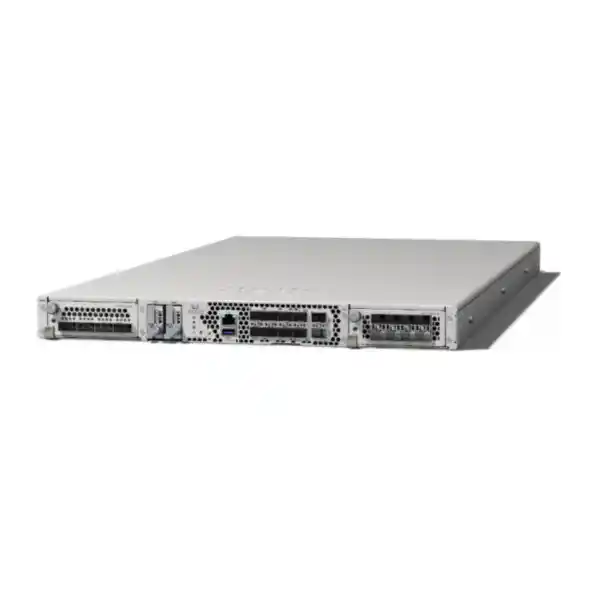
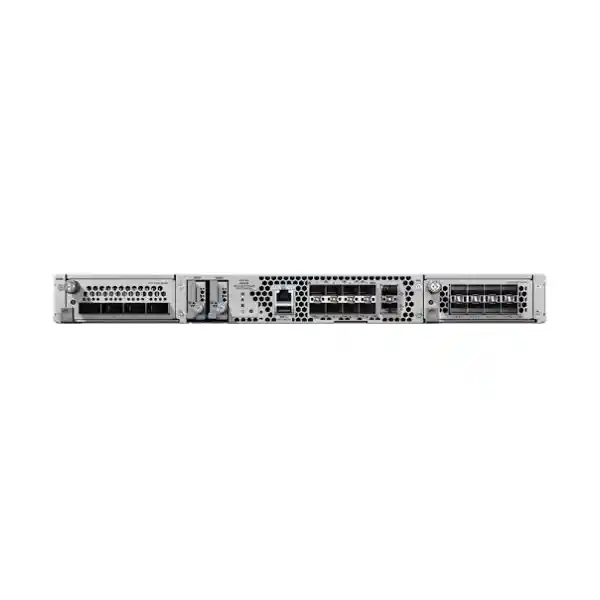
Cisco’s hardware guide specifies eight fixed 1/10/25-Gbps SFP28 network ports, two 1/10/25-Gbps SFP28 management ports and two network-module slots. The chassis occupies one rack unit and uses front-to-rear airflow. Those details make interface planning an important part of the purchase: identify the purpose, speed, media and neighbouring device for each proposed connection.
Do not treat a populated port drawing as a complete optical bill of materials. List the compatible transceiver or cable assembly, fibre type, connector and distance for both ends of each link. Ask the quotation to distinguish the fixed chassis interfaces from additional network modules and their optics. If a design needs copper connectivity, bypass functionality or higher-speed uplinks, have the exact module and software support checked against current Cisco documentation. Optional module capabilities do not mean those modules are supplied with the base appliance.
Power redundancy needs an explicit order decision
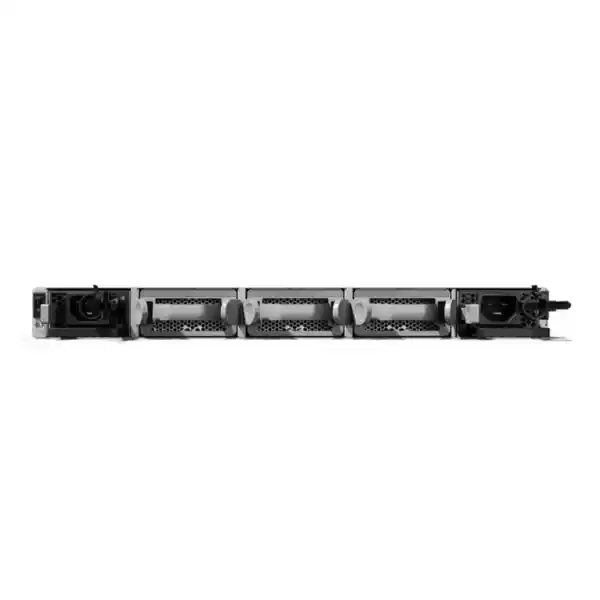
The 4215 has two power-supply bays, but Cisco’s ordering and hardware documentation specify one AC power supply in the default configuration. A second supply is optional and must be ordered when redundant power is required. This distinction should appear clearly in the quotation, particularly when comparing a base unit with a resilience-focused configuration.
Plan the surrounding electrical design with the same care. Ask the facilities team to confirm available feeds, compatible power cords, PDU connections, UPS capacity and the equipment that shares each supply path. Two installed supplies connected to the same vulnerable source do not create independent power paths. Include the upstream and downstream switches in the continuity discussion, since a running firewall is only one part of an available network. The supply rating should also be distinguished from expected operating consumption when the rack’s electrical and cooling requirements are assessed.
Threat Defense or ASA: settle the software direction early
Choose the software around the required operating model. A team seeking centrally administered threat-defense policies should evaluate the relevant Threat Defense architecture and security subscriptions. A project retaining ASA workflows should define the required ASA features, management method and migration boundaries. Support for both software families does not mean their configuration files, inspection capabilities or benchmark results are interchangeable.
Ask the proposal to name the installed software and intended production release. If reimaging is required, include that task, configuration preparation and recovery planning in the implementation scope. Existing administrators should review how routine changes, troubleshooting and upgrades will work after deployment. For a migration, list the functions being retained, redesigned or retired. This avoids buying hardware on one assumption while the implementation team plans a different software environment. The final choice should follow the actual feature requirements and operational skills of the team.
Management architecture and administrative access
Cisco documents 4200 Threat Defense deployment with an on-premises Firewall Management Center and with Cloud-Delivered Firewall Management Center in Security Cloud Control. Assess the selected option against your administration model, connectivity dependencies and management entitlements. Confirm the exact manager-to-device compatibility before installation rather than assuming that an existing manager can administer every new release.
Define who owns policy, who can deploy changes, who reviews events and who maintains backups. Keep the management network visible in the topology and identify its address plan, routing, name resolution and time sources. Restricted administrative access and a tested recovery path should be part of the design review. For cloud-delivered management, assess the required external connectivity and the organisation’s approval process for that management model. For an on-premises manager, identify the hosting, maintenance and recovery responsibilities. The preferred option is the one your team can operate reliably.
Licensing: make the security scope visible
Hardware capacity and security entitlement are different purchasing decisions. Cisco’s licensing guidance separates functions and subscription combinations for IPS, Malware Defense and URL Filtering. The required licence set depends on the deployment and enabled features. Ask for a written mapping between the protection you expect and the entitlements included in the quote, with subscription duration and renewal responsibilities shown.
Procurement should also establish ownership of the appropriate Cisco Smart Account and Virtual Account, who can administer licences and how renewals will be tracked. Include management and remote-access entitlements where those are required, and verify the treatment of every appliance in a resilient design. A generic statement such as ‘security included’ leaves too much ambiguity for approval. Request a line-item explanation that a technical reviewer can reconcile with the intended policy. Any evaluation arrangement should be distinguished from the production licensing plan before the system becomes a dependency.
Sizing from actual traffic
Build a sizing worksheet from observations rather than from the internet circuit label alone. Useful inputs include current and planned bandwidth, the busy-hour traffic mix, concurrent connections, connection creation rate, application types and the proportion of traffic that needs deeper inspection. Record how measurements were collected and over what period. A quiet afternoon snapshot may not capture month-end processing, backup activity, registration periods or other predictable peaks.
Add internal inspection traffic when the appliance will sit between server or user zones. Those flows may be much larger than the internet traffic even though they never leave the building. Separate a measured baseline from a forecast, and explain the assumptions behind growth. Identify the point at which the proposed design would need review. This gives both the buyer and the engineer a defensible reason for the selected model, and makes future capacity discussions more useful than comparing a single headline throughput number.
Encrypted traffic: capacity is only part of the decision
Encrypted inspection requires a policy decision as well as processing resources. Establish which traffic may be decrypted, which applications need exceptions and how managed endpoints will trust the relevant inspection certificates. Cisco’s decryption documentation describes different actions and limitations, including certificate-pinning cases where re-signing cannot be used to decrypt a connection. The intended software release must be checked against the applications and encryption behaviour involved.
Recommended evaluation work includes a pilot with representative browsers, business applications and device types. Give each exception an owner and a documented reason, and decide how undecryptable traffic should be handled. Include certificate lifecycle and troubleshooting procedures in the handover. Avoid an acceptance criterion that merely says ‘decryption enabled’; the useful test is whether the agreed traffic is handled correctly while essential applications remain usable. Plan the pilot before final sizing so that the expected inspection scope and the capacity assessment describe the same workload.
Segmentation that follows business access requirements
A segmentation project should begin with business relationships between systems. Separate staff devices, application servers, guest access, administration and other network groups according to their access needs. For each proposed connection, record the source, destination, application purpose and owner. This creates a reviewable access matrix before the firewall policy is built and helps expose dependencies that are otherwise discovered during cutover.
Keep the network design and rule design aligned. VLAN names alone do not establish a security boundary if traffic can route around the inspection point. Review switch gateways, alternate links and return paths, then document where the firewall will enforce access. Begin with a manageable set of zones that the operations team can understand. More zones are useful only when they represent meaningful policy differences. A well-maintained access matrix also provides a basis for later change requests, making it easier to evaluate whether a new connection is justified.
Application policy, intrusion prevention and tuning
Cisco’s access-control documentation describes policies that combine rules with inspection controls. For the buyer, the design task is to establish what should be allowed, inspected or blocked for each business purpose. Ask the implementation team to explain which security controls apply to which traffic, and how the selected subscriptions support them. Do not assume that purchasing an inspection-capable platform means every useful policy is already configured.
Plan a controlled tuning period with named application owners. Review significant alerts and application failures against the agreed access requirements, then record why a rule or inspection setting was changed. Avoid turning temporary troubleshooting exceptions into permanent broad permissions. Define how urgent incidents will be escalated and how the baseline will be reviewed after the initial deployment. This approach gives the organisation a maintainable security policy and a clear operating responsibility, rather than a collection of settings whose purpose becomes difficult to explain.
Routing, NAT and public-facing applications
Treat routing, address translation and access policy as related but separate design decisions. The implementation plan should identify default gateways, internal routes, public addresses and the applications that must be reachable from outside. Cisco’s 4200 getting-started workflow includes interfaces, a default route, NAT and access control, but a production network needs its own addressing and application requirements.
Prepare a service inventory before replacing an existing gateway. For each published application, record the public endpoint, internal destination, required ports, name-resolution dependencies and application owner. Include outbound dependencies that can be easy to overlook, such as software updates, identity services and scheduled transfers. Test from the networks that real users occupy, including external clients where appropriate. A successful ping or an open TCP port alone does not establish that a complete business transaction works. Agree on the transaction-level checks and keep their results with the final deployment record.
Site-to-site VPN and remote access
For inter-site connectivity, collect the peer platform, public addressing, protected networks, authentication approach and required traffic paths. Cisco’s site-to-site VPN guidance covers the configuration of IPsec connections, while remote-access designs have their own client, identity and entitlement considerations. Confirm the intended use case before assuming that a quoted VPN capability covers every user and every endpoint.
Coordinate both ends of a tunnel change. Record which team controls the peer and how they will participate in testing or rollback. Check for overlapping internal address spaces, application-specific dependencies and the actual routes used after a connection is established. For remote users, identify device types, authentication expectations and the systems they need to reach. Include appropriate access restrictions in the requirement rather than treating all remote connections as equivalent. A tunnel showing as connected should be followed by a real application test, with successful and intentionally denied access both represented.
High availability and maintenance continuity
Threat Defense documentation describes active/standby high availability, which should be assessed separately from power-supply redundancy. A second power supply addresses a component-level requirement inside one chassis; a second appliance supports a different resilience objective. Ask the design to identify the failure scenarios being addressed and the remaining dependencies, including switches, links, circuits and the management environment.
For a proposed pair, verify the supported hardware, software, licensing, interface arrangement and failover connectivity. Define how a maintenance event will be handled, and agree on the observations needed to show that a planned failover behaved as expected. Include representative applications and VPN services in that test plan. Avoid an unqualified promise of uninterrupted service: the impact depends on the design, traffic and specific event. Procurement should receive a topology and a clear component list so that the resilience objective is reflected in the actual equipment being ordered.
Rack readiness and installation environment
Allocate space using the complete chassis and cabling arrangement, not only its one-unit height. The hardware guide lists a chassis depth of 32 inches, approximately 81 centimetres. Review rack depth, mounting provisions, front and rear service access, optical cable bend requirements and the path from the receiving area to the equipment position. Leave room to manage connectors without straining the attached fibres.
Confirm airflow alignment with the room’s cooling layout and assess environmental limits against the current installation guide for the selected configuration. This appliance belongs in a planned equipment environment; avoid assuming that any office cabinet is suitable because it has a spare rack position. Installation preparation should identify who provides rails, patching, labelling, power connections and disposal of packaging. Photograph or record the final cable assignments for handover. These practical steps reduce uncertainty during installation and make later maintenance easier for teams that were not present during the original project.
Monitoring, event handling and useful logs
Logging should support a defined operational question. Cisco provides connection-logging controls associated with access rules and other policy handling. Decide which events your team needs for troubleshooting, security review and incident response, then assess the storage and review process. A requirement to log everything indefinitely is not a substitute for an event-management design.
Name the people who will review important alerts, the time expectations for doing so and the escalation route when an event needs investigation. Keep time synchronisation consistent across the firewall, management system and related infrastructure so that event sequences can be understood. If events will be sent to another platform, include integration and access testing in the scope and establish who maintains that destination. Handover should demonstrate how to trace a sample connection, locate the matching rule and interpret the relevant outcome. Useful visibility depends on a working review process as well as event generation.
Migration from an existing firewall
Start with an inventory of the current system: software, interfaces, address objects, policies, NAT, routing, VPNs, certificates, management dependencies and business-critical applications. Ask which rules are still needed and who owns them. A hardware replacement is a useful opportunity to remove obsolete permissions, but policy cleanup should be controlled so that a legitimate dependency is not lost without review.
Build the new design from that inventory and identify features that require translation or redesign. Keep the old configuration securely available for comparison and rollback. Before cutover, agree on a change window, responsibility for each task and the point at which the team will revert if essential checks fail. Include affected application owners in validation and document any temporary workaround. Where migration tooling is proposed, request a review of its output against the final requirement. Automated conversion can assist preparation, but the business still needs evidence that the intended access works after the change.
Acceptance tests that procurement can review
Define acceptance before installation begins. A useful test plan combines normal access, prohibited access, management access, event visibility and any resilience behaviour included in the design. Give every check a named owner, an expected result and a place to record evidence. This makes sign-off more concrete than a general statement that the firewall has been installed.
Examples include completing a business transaction from an authorised user network, confirming that a guest network cannot reach a protected server, checking a published service from outside and verifying the planned inter-site application flow. Add performance checks under an agreed representative policy when capacity is an important purchase condition. For a resilient deployment, include the approved failover scenario and record the application impact. Keep exceptions visible, with an owner and an agreed resolution. The final acceptance record should show what was demonstrated, what remains open and which configuration was in place during testing.
Preparing a quotation request in Tanzania
Send FourTeck Tanzania a concise requirement that includes the planned deployment role, current firewall model, intended software direction, traffic measurements, inspection expectations and interface needs. State whether the project is for one appliance, an appliance pair or another reviewed architecture. Add the installation location, rack readiness and desired project window so that the requested scope can be assessed.
Ask the commercial response to separate appliance hardware, optional modules, optical components, additional power supplies, subscriptions, management, support and professional services. Request confirmation of the applicable currency, taxes, delivery arrangements and commercial terms in the quotation. These items are specific to an actual offer and should not be inferred from the model name. If a phased purchase is being considered, explain what must work at the first stage and what will be added later. Clear scope makes competing quotations easier to compare and reduces the risk of discovering missing dependencies after an order has been approved.
Compare configurations before comparing totals
Two proposals for the same firewall model can contain materially different solutions. One may cover the base chassis while another includes resilience components, optics, security subscriptions and implementation. Build a simple comparison sheet with one row for each requirement and ask each supplier to identify the corresponding line item. A lower total is useful only when the included configuration meets the agreed requirement.
Review subscription length and management ownership alongside the initial equipment cost. Ask how renewals will be identified, who will administer them and what support scope is being purchased. Establish whether commissioning, policy migration, application testing, documentation and administrator handover are included or separately priced. These are commercial questions for the offer under review; no stock position, price or service entitlement follows automatically from this product page. Procurement should approve the configuration and scope together so that the purchase can be checked against a clear, shared description.
When to assess another platform or design
Reconsider the model if the requirement is a modest branch gateway, if the physical environment cannot accommodate a deep rack-mounted appliance, or if the team needs a different operating model. A larger firewall is not automatically the best fit for every site. Likewise, a demanding inspection workload may require evaluation of a higher-capacity model or a different architecture, even when the proposed link speeds look suitable.
Discuss alternatives using the same workload and policy assumptions. Compare inspected throughput, connection behaviour, interfaces, management, resilience and the ongoing operating commitment. For the 4200 family, Cisco publishes different capacity figures for the 4215, 4225 and 4245; use the relevant measurement rather than treating the series name as a single specification. If growth is uncertain, identify practical review milestones and the consequences of exceeding the initial design. The objective is to select a configuration that suits the required service, with evidence for both present needs and the forecast.
Documentation and administrator handover
Request a handover pack that includes the approved topology, interface assignments, address plan, routing summary, policy intent, NAT relationships and VPN dependencies. Record the installed software, management arrangement and licence ownership separately from confidential credentials. Keep sensitive configuration backups in the organisation’s approved secure location and identify the people authorised to recover them.
Administrators should be able to find the rule associated with a connection, check device health, review important events and understand the change process. Demonstrate a routine policy change using the agreed approval and deployment workflow, then establish the recovery process for an unsuccessful change. Record renewal dates and support contacts from the actual contracts. A clear handover helps a later engineer understand why the configuration exists, rather than merely seeing its current settings. It also creates a baseline for scheduled policy reviews and future capacity planning.
Frequently asked buying questions
Is this a hardware appliance or a software subscription?
It is a physical Cisco firewall platform. The final solution also needs the chosen operating software, management arrangement and any required security entitlements. Ask for a complete configuration rather than assuming that the chassis price covers every inspection feature or operating requirement.
Does the base 4215 include redundant AC power?
Cisco specifies a single AC supply by default for this model, with a second supply optional. Ask the quotation to identify the second supply explicitly when redundant power is part of the requirement. Confirm the matching cords and supply paths during installation planning.
Can it be centrally managed?
Cisco documents both on-premises and cloud-delivered Management Center deployment paths for 4200 Threat Defense. Select the approach against your operational requirements and verify device, manager, release and entitlement compatibility before ordering. Existing management infrastructure should be checked rather than presumed compatible.
How should I evaluate its performance?
Use the measurement that reflects your intended software and inspection controls. Collect representative workload information and compare the same traffic profile across candidates. Published test results help shortlist a platform, while a reviewed sizing exercise establishes whether the proposed configuration is appropriate for your network.
Are transceivers and additional network modules automatically included?
The final bill of materials must establish what is supplied. Identify every required link and have the compatible module, transceiver or cable assembly confirmed. Do not infer the included optical components or optional modules from the maximum connectivity supported by the platform.
Can it replace our current firewall without redesign?
That depends on the current functions, software and network relationships. Review policies, NAT, routing, VPNs, certificates and application dependencies before deciding the migration approach. Include a rollback plan and acceptance checks rather than assuming that an existing configuration can be moved unchanged.
Is there a published Tanzania price or guaranteed delivery time here?
No verified price or delivery commitment is stated on this page. Request a current quotation for the exact configuration, subscription term and project scope. Ask the offer to confirm commercial terms, availability and delivery arrangements before a purchasing decision is made.
What should we provide for an initial assessment?
Provide a topology, current equipment and software details, measured traffic, connection requirements, inspection expectations, interface specifications and the intended resilience objective. Include the deployment location and desired project window. These inputs help turn a model enquiry into a configuration that can be reviewed technically and commercially.
Request a configuration-based quotation
Ask FourTeck Tanzania to assess the Cisco Secure Firewall 4215 against your network role, inspection policy and operational requirements. Include the existing firewall details, current traffic measurements, required interfaces, management preference and whether appliance or power redundancy is needed. Request a bill of materials with the relevant software, entitlements, optical components and services identified.
For implementation planning, review the published Cisco firewall installation and configuration service information on the Tanzania site. Agree the project scope, application tests, migration responsibilities and handover requirements as part of the quotation. The next step is a documented configuration and commercial offer that your technical and procurement teams can evaluate together.


Reviews
There are no reviews yet.