
SIP intercom • access communication • Tanzania
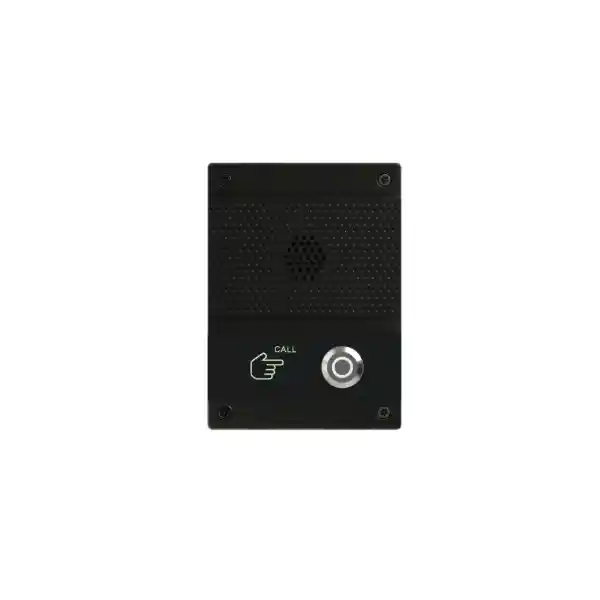
Dinstar DP91-S SIP Audio Intercom
The Dinstar DP91-S is a compact, single-button SIP audio intercom built for projects that need a simple call point, clear two-way voice, IP-based management and the option to trigger a compatible electronic door lock remotely using DTMF. It is designed for environments such as entrances, campuses, stations, institutions, technology parks, parking barriers and controlled-access locations where a visitor, user or staff member needs a straightforward one-touch way to reach a predefined SIP destination. For Tanzania projects, the practical value of the DP91-S is not just the call button itself; it is the ability to place the intercom inside a wider IP telephony, PoE, access-control and security architecture.
Choose the DP91-S when the requirement is a compact audio-only SIP intercom with one physical call button and network-based integration rather than a video door station.
Plan it as a SIP endpoint: confirm PBX registration, IP addressing, PoE budget, VLAN and QoS policy, security settings and the call destination before installation.
The unit supports DTMF-based remote door opening when a compatible electronic locking arrangement is part of the project. Lock, power and safety design must be assessed separately.
For a useful quotation, provide quantity, site type, existing PBX, required call flow, switch/PoE details, door hardware, cabling status and whether the unit will be surface or embedded mounted.
What the Dinstar DP91-S solves
Many entrance and assistance points do not need a camera, keypad or large screen. They need a reliable button that places an IP call to reception, security, control room staff, a service desk or another configured SIP endpoint. The DP91-S addresses that narrower requirement with a compact audio terminal. A visitor can initiate the call with one button, while the receiving party can communicate over two-way audio and, where the rest of the access system supports it, use DTMF signalling to trigger a door-opening action. This makes the device relevant to controlled entrances, gates, parking barriers, institutional call points and other locations where simplicity matters.
The device also fits projects that want to standardize on SIP rather than maintain a completely separate proprietary intercom communications layer. SIP-based architecture can allow intercom calls to become part of the same logical communications environment as an IP PBX, SIP extensions and operator endpoints. That does not mean every SIP platform will behave identically, so compatibility and feature testing remain important. FourTeck can help define the call path, network prerequisites and connected access-control components before deployment rather than treating the intercom as an isolated purchase.
Verified Dinstar DP91-S features
HD voice and echo cancellation
The DP91-S is positioned as an HD-audio SIP intercom and includes echo-cancellation functions. This is important for entrance communication because the loudspeaker and microphone operate in the same compact enclosure and must support intelligible two-way conversation.
SIP and secure signalling options
Dinstar documents SIP v1 and SIP v2 support together with SIP over TLS and SRTP. Exact security configuration depends on the SIP platform, certificates, network policy and firmware in use, so these options should be validated during commissioning.
PoE deployment
PoE support allows the network cable to participate in both connectivity and power delivery, simplifying many installations. The switch port, PoE capacity, cabling distance, cable quality and rack-side power resilience still need to be planned as part of the project.
DTMF door access
The DP91-S supports DTMF modes including in-band, RFC2833 and SIP INFO, enabling remote door-control workflows when integrated with suitable electronic locking equipment. The correct DTMF method must match the receiving system and configuration.
Management and provisioning
Dinstar lists HTTP/HTTPS web management, configuration backup and restore, syslog, SNMP/TR069 and auto provisioning using FTP, TFTP, HTTP, HTTPS and PnP. These functions can support repeatable rollout and troubleshooting for multi-unit deployments.
Physical protection
The current DP91-S datasheet states IP54 environmental protection and IK09 impact compliance with EN 62262, with an aluminium-alloy construction and support for embedded or wall-mounted installation. Site exposure still needs to be assessed before positioning.
Technical planning summary
| Product type | Single-button SIP audio intercom |
| Audio | HD voice, two-way audio, echo cancellation; G.722 wideband plus documented narrowband codecs |
| SIP | SIP v1 / v2; SIP over TLS and SRTP documented |
| Networking | TCP/IPv4/UDP, DHCP/static/PPPoE, STUN, DNS functions, NTP and related IP services documented |
| DTMF | In-band, RFC2833 and SIP INFO |
| Management | HTTP/HTTPS web management, auto provisioning, syslog, SNMP/TR069, configuration backup/restore |
| Power | PoE supported |
| Protection | IP54; IK09 compliance stated in current DP91-S datasheet |
| Mounting | Wall and embedded mounting supported |
Planning note: environmental rating, impact rating and supported protocols describe the device, not the suitability of a complete door-security installation. Lock type, emergency egress, power supply, cable protection, surge protection, weather exposure, fire-safety rules and local compliance obligations must be assessed for the actual site.
Integration with IP PBX, PoE switching and access control
A successful DP91-S deployment starts with the communications path. The intercom needs an IP address, network reachability and a SIP destination or registration method that fits the chosen PBX or SIP platform. The receiving endpoint may be a desk phone, softphone, operator station, indoor panel or another supported SIP client. The call-flow design should define who answers during business hours, what happens if the first destination is unavailable, whether calls should ring a group and whether after-hours traffic requires a different route. For organizations already operating an IP PBX, the DP91-S can be evaluated as another SIP endpoint rather than a separate communications island.
PoE planning matters because the intercom is often installed far from the equipment rack, at a doorway, gate, barrier or public call point. The selected switch should provide a compatible PoE port with sufficient power budget and stable network service. The cable path should be protected, labelled and tested. Where the intercom sits on a shared LAN, VLAN segmentation and access rules can reduce unnecessary exposure. Voice traffic may also benefit from appropriate QoS policy where the network carries heavy data, surveillance or Wi-Fi traffic.
Door unlocking adds another layer. DTMF signalling is only one part of the workflow; the project still needs a compatible lock or access-control interface, safe power arrangements and a clear decision about what should happen during power loss, emergency release or network failure. The intercom should therefore be specified together with the physical door and access-control design, not in isolation. Customers can review FourTeck Tanzania’s integrated IT, telecom and security solutions for the broader architecture, deployment and support services for implementation planning, and the Tanzania contact page to prepare a project-specific quotation.
Who should consider the DP91-S?
Business and office entrances
A receptionless or controlled entrance can use one-button calling to reach reception or security. This works best when the organization already has a SIP communications platform and wants the entrance device to fit the same call-routing logic.
Parking and barrier points
The compact form and documented barrier-integration use case make the DP91-S relevant where drivers need assistance at an entry or exit point. Site design should address cable protection, weather exposure and the control interface separately.
Campuses and institutions
Schools, hospitals, industrial sites, technology parks and other institutions can use SIP call points for controlled communication. The single-button interface can be useful where the caller should not need to navigate menus or know an extension.
Emergency or assistance calling
Dinstar documents one-touch emergency calling. In a real project, the configured destination, monitoring procedure, network resilience and escalation process are just as important as the button, particularly where the function is operationally critical.
Buying and sizing guidance
The DP91-S should be selected for a requirement that is deliberately audio-only. If the project requires a built-in camera, multiple call buttons, integrated RFID reading or cellular connectivity, another model in the Dinstar intercom range may be more appropriate. The fastest way to avoid purchasing the wrong variant is to define the user journey first: who approaches the point, what they press, who receives the call, whether they need visual verification, whether the door must be released remotely and what should happen when the primary receiver does not answer. Model selection should follow that workflow.
For multi-unit deployments, count locations rather than simply counting doors. A site may need separate intercom points at pedestrian entrances, vehicle gates, loading areas and internal secure zones. Each point needs a network port, addressing plan, SIP configuration, receiving destination and mounting method. The switch design should include enough PoE capacity and spare ports for future growth. If voice shares the network with CCTV, user data and Wi-Fi, segmenting traffic and documenting ports will make support easier.
A quotation request is stronger when it includes the existing PBX brand/model, number of DP91-S units, current PoE switch details, cable distances, mounting conditions, lock type, DTMF workflow, required receiving endpoints and whether remote management or auto provisioning will be used. FourTeck can then assess the intercom in the context of the network and security environment rather than quoting a device without the infrastructure required to make it work.
Related FourTeck regional resources
Projects that span more than one country can use the wider FourTeck network for regional research and coordination. These links are included as contextual resources rather than as claims about local inventory or authorization.
Dinstar DP91-S SIP Audio Intercom Tanzania
Organizations searching for the Dinstar DP91-S SIP Audio Intercom in Tanzania are usually trying to solve a practical entrance, assistance or communication requirement rather than simply add another telephone endpoint. The first planning question should be where the intercom will sit within the building or site workflow. At a controlled office entrance, the call may route to reception or security. At a parking gate, it may need to reach a control room or facilities team. On a campus or industrial site, it may act as an assistance point that lets a user contact a predefined destination with one button. The DP91-S suits these use cases because its role is intentionally simple: initiate a SIP audio call, support clear two-way speech and participate in a door-control workflow where compatible equipment is present.
For Tanzania deployments, network readiness should be assessed early. A PoE-capable switch can simplify field installation, but the switch must have available capacity, the cable run must be suitable, and the network should provide reliable IP reachability to the SIP platform. If the site already uses an IP PBX, the intercom can be evaluated for registration and call routing alongside existing SIP extensions. The exact configuration should be tested with the selected PBX, especially where secure SIP, SRTP, DTMF door release, NAT or remote connectivity is involved. Organizations with multiple branches should also decide whether intercom calls remain local to each site or traverse a WAN or VPN to a centralized reception or security team.
Environmental placement matters just as much as network design. Dinstar states IP54 protection and IK09 compliance for the current DP91-S datasheet, but those ratings do not eliminate the need for suitable mounting, cable protection, drainage awareness and assessment of direct exposure. A gate installation can face different conditions from a sheltered lobby. A wall-mounted office entry can use a different cable route from an embedded barrier installation. For critical sites, the broader power design should include the switch, access-control panel and locking system so a short interruption does not produce an unexpected security condition.
Tanzanian buyers should therefore request the intercom as part of a defined system bill of materials. Include the DP91-S quantity, PBX details, switch/PoE requirements, cable and mounting needs, receiving extensions, access-control interface and commissioning scope. This produces a more useful comparison than asking only for a unit price, because two quotations can look similar while excluding very different amounts of integration work. FourTeck Tanzania can use those project inputs to help assess compatibility and prepare a solution-oriented quotation without assuming stock, lead time or site conditions before they are confirmed.
Dinstar DP91-S SIP Audio Intercom Dar es Salaam
In Dar es Salaam, the DP91-S can be considered for commercial offices, apartment common entrances, logistics facilities, warehouses, clinics, schools, hospitality back-of-house areas, parking barriers and other managed access points where audio communication must reach a receptionist, guard desk or operations team. Dense business environments often already have Ethernet switching, IP telephony and CCTV, which makes it important to decide whether the new intercom should share existing network infrastructure or receive a dedicated security or voice VLAN. The device supports PoE, so a suitable managed switch can reduce field power complexity, but the installation still requires a tested cable route and protected network point.
A busy entrance also benefits from carefully designed call handling. One button does not mean one person has to answer. Depending on the SIP platform, the call can be directed to a reception extension, ring group, security desk or operator workflow. The organization should define business-hours routing, after-hours behaviour and fallback destinations. If the user is expected to receive door-release authorization, DTMF behaviour needs to be tested end to end so the receiving endpoint, PBX and DP91-S use a compatible DTMF method. This is especially relevant when calls traverse SIP trunks, SBCs, VPNs or cloud platforms that may handle DTMF differently.
Dar es Salaam projects may also involve mixed indoor and semi-exposed locations. A sheltered lobby, loading bay and vehicle barrier have different mechanical requirements even when the same model is used. The installer should consider sunlight, rain direction, impact risk, cable entry, nearby electrical equipment and physical access to the mounting surface. Where the unit controls access to a door, the lock and exit hardware must be designed according to the building’s safety requirements rather than treated as accessories to the intercom.
For procurement, businesses in Dar es Salaam can make the quotation process faster by sharing site photographs, network diagrams, PBX model, PoE-switch details, approximate cable distances, intended mounting style and a description of the door or barrier to be controlled. That information allows the intercom, network and access-control tasks to be separated clearly. It also reduces the risk of buying a call terminal that works on a desk test but cannot be deployed cleanly at the actual entrance.
Dinstar DP91-S SIP Audio Intercom Mwanza
For Mwanza sites, the Dinstar DP91-S can support projects where organizations want a straightforward IP intercom point without the complexity of a video door station. Potential settings include offices, education sites, health facilities, warehouses, hotels, gated service areas and operational compounds. The most important design choice is the call destination. A one-button intercom is effective when the caller always needs the same response path, such as security, reception, facilities or a central operations desk. If different departments require different buttons or visual verification, a different intercom model may be a better fit.
Network availability at the field location should be confirmed before the device is ordered. The DP91-S supports Ethernet/IP networking and PoE, but the project still needs a continuous copper path within applicable distance limits or another network design that terminates appropriately near the intercom. Managed switching is useful where voice, CCTV and business traffic share infrastructure because VLANs can separate the device logically and make troubleshooting easier. If the receiving PBX is at another site, the WAN path should be evaluated for latency, packet loss, firewall traversal and security. A SIP call point can only be as dependable as the network carrying its traffic.
For outdoor-adjacent deployments, assess enclosure position rather than relying on the product rating alone. The documented IP54 rating provides a useful baseline, while IK09 indicates stated impact resistance under the applicable standard. However, direct driving rain, standing water, unprotected cable joints and exposed field wiring can compromise a project even when the terminal itself is suitably rated. Thoughtful mounting, sealed cable routing and correct grounding or surge considerations for the wider network are therefore important.
Mwanza buyers comparing suppliers should ask what is included beyond the intercom. Useful quotation lines can include mounting, structured cabling, PoE switch ports, PBX programming, SIP registration, call routing, DTMF testing, lock interface, labelling, documentation and handover. This makes commercial comparison more accurate and gives the project team a clear list of responsibilities. FourTeck can assess these requirements when the site details are provided, while final availability, delivery and implementation scope should be confirmed during quotation.
Dinstar DP91-S SIP Audio Intercom Arusha
Arusha organizations looking at the DP91-S may include hotels, tour operators, schools, offices, gated compounds, healthcare facilities, warehouses and administrative sites that want an IP-based call point at an entrance or restricted area. Hospitality and visitor-facing environments particularly benefit from designing the experience around clarity: the user should immediately understand that pressing the button connects them to help. The DP91-S offers a single-button interface, so signage, call routing and the receiving team’s procedures should reinforce that simplicity rather than create uncertainty after the call is placed.
For a hotel or lodge environment, for example, an intercom at a service gate might ring security, while a back entrance could ring reception or facilities. On a school campus, the endpoint could connect a visitor entrance to administration. In a warehouse, it might link a gate to operations. These examples use the same product but require different PBX destinations, operating hours and escalation rules. The technical design should therefore begin with a short call-flow map before configuration starts. If the receiver must open an electronic lock remotely, test DTMF from the actual phone or client that will answer the call.
Arusha sites can also have distributed buildings or campus layouts. A PoE intercom at the edge of a property depends on cable distance and the location of network cabinets. Long runs between buildings may require fiber uplinks and a closer PoE access switch rather than a direct copper cable back to a distant core. That design decision can influence the project cost more than the intercom itself. Network documentation should identify the switch port, VLAN, IP address, SIP identity and destination so support teams can trace the device later without guesswork.
When requesting a quotation in Arusha, indicate whether the project is a new build, an addition to an existing PBX or a replacement for another intercom. Existing systems should be audited for SIP compatibility, available PoE, door hardware and cable reuse. New builds can plan conduits, network cabinets and access-control wiring before finishes are complete. Taking those steps early helps the DP91-S operate as a clean part of the site infrastructure rather than as a late retrofit with visible cables and avoidable network compromises.
Dinstar DP91-S SIP Audio Intercom Dodoma
In Dodoma, the DP91-S can fit government, education, office, institutional and commercial projects that need controlled communication at a doorway, perimeter gate or assistance point. The product’s single-button design is useful where the caller should reach a predefined destination without selecting from a directory. This can reduce complexity at public-facing entrances, but it also makes backend routing important. The receiving team must be available, and a missed-call strategy should be defined so the device does not simply ring an unattended extension.
Organizations with formal IT policies should treat the intercom as a managed network endpoint. The DP91-S supports secure SIP options, HTTPS management and several provisioning and management protocols, but those features should be configured according to the organization’s security policy rather than left at defaults. Administrative access can be limited to management networks, passwords should be controlled, unnecessary services should be disabled where the platform permits it, and configuration backups should be stored with other infrastructure documentation. If the intercom is part of a sensitive site, network segmentation can reduce exposure from user or guest networks.
Door-control planning should involve both IT and facilities or security teams. IT may own the SIP and network configuration, while facilities manages locks, power supplies, exit devices and physical mounting. A simple responsibility matrix prevents gaps such as a configured DTMF command with no compatible relay path, or a functioning lock with no network route to the receiving extension. Commissioning should therefore test the full sequence: press call, establish two-way audio, verify identity or purpose according to site procedure, send DTMF, confirm door action and record the final settings.
For Dodoma procurement, a structured bill of materials and scope is especially valuable when purchases go through formal approval. The request can list the intercom, switching, cabling, mounting, PBX programming, access-control interface, testing and documentation as separate components. This creates clarity for technical reviewers and makes it easier to distinguish equipment cost from installation and integration effort.
Dinstar DP91-S SIP Audio Intercom UAE
UAE buyers considering the DP91-S often operate mature IP networks, centralized security systems and structured facilities-management processes. In this environment, the value of a compact SIP intercom is its ability to become a clearly defined endpoint within a larger solution. An office tower service entrance, warehouse gate, staff-only doorway or parking barrier can use the one-button call flow while reception or security handles the response through a SIP phone or compatible application. The design should confirm whether the intercom registers locally to an IP PBX, reaches a cloud platform or communicates across a secured enterprise WAN.
High-density sites may place several intercoms on the same network. Auto provisioning can be useful in this scenario because configuration can be standardized, but every endpoint still needs a unique identity, destination and documented location. A naming convention such as building-floor-door or site-gate-lane can make monitoring and support more efficient than generic device names. Managed PoE switches should be sized for the total connected endpoint load, with UPS protection considered where entrance communication and access workflows need continuity during short power interruptions.
The UAE market also includes projects with strict physical-security and authority requirements. The DP91-S datasheet features should not be interpreted as approval for a particular regulated application. The complete access-control, life-safety and door-release architecture must comply with project specifications and applicable local requirements. Consultants and integrators should verify lock behaviour, emergency egress, power supplies and any interfaces to building-management or security platforms. SIP security settings should likewise match enterprise policy, particularly if signalling traverses multiple network zones.
Regional teams can use FourTeck UAE as a related technology resource. For cross-border projects that also include Tanzania, it is useful to standardize configuration templates while still checking each site’s network, door hardware and regulatory context. Procurement should confirm model, quantity, mounting and integration scope for every location instead of assuming a single generic intercom package will suit all buildings.
Dinstar DP91-S SIP Audio Intercom Uganda
For Uganda projects, the DP91-S can support businesses and institutions that want to connect controlled entrances, gates or service points to an existing IP telephony environment. A common procurement mistake is to focus on the intercom model before checking the site network. The device needs IP connectivity and should be placed on a network path that reliably reaches the SIP platform. If the receiving extension is in another building or city, WAN connectivity, routing and firewall policy become part of the user experience because voice quality and call setup depend on them.
A single-button intercom is especially effective where the response role is stable. At a school or healthcare site, the destination may be an administrative or security desk. At a warehouse, it may be a gate office. At a commercial building, it may be reception. The PBX can be configured so the call reaches more than one endpoint or follows a fallback path, subject to platform capabilities. This gives the simple field device a flexible backend without requiring a complex interface at the entrance.
Where the intercom participates in door release, the project should test the actual answering devices. DTMF can be carried in different ways, and the DP91-S supports in-band, RFC2833 and SIP INFO. Matching the method across the endpoint, PBX and intercom reduces failed unlock commands. The electronic lock, relay arrangement, power supply and exit hardware also need separate assessment. A secure communication path does not automatically make the complete door compliant or resilient.
Organizations procuring across Uganda can review FourTeck Uganda as a regional resource while using the Tanzania page for Tanzania-specific project planning. For a useful quote, state the number of sites, number of call points per site, PBX platform, receiving extensions, PoE availability and whether cabling and access-control work are required.
Dinstar DP91-S SIP Audio Intercom Kampala
Kampala deployments can range from office entrances and apartment service points to warehouses, schools and commercial compounds. In each case, the DP91-S works best when the call path is designed around the people actually available to answer. A reception desk may be staffed during office hours but not at night; a security desk may operate continuously; a facilities team may need escalation if the first extension is busy. SIP routing can support these operational patterns, but the configuration needs to be defined during design rather than after the unit is mounted.
Dense sites may already use PoE for cameras, wireless access points and phones. Adding intercoms means recalculating switch-port and power budgets rather than assuming spare physical ports automatically have spare PoE capacity. Voice traffic is typically modest, yet call quality can still suffer on a congested or poorly segmented network. Managed switching, appropriate QoS and good cabling practice help the endpoint behave consistently. If the site uses a centralized PBX elsewhere, secure WAN connectivity and firewall rules should be planned before commissioning.
Physical installation around Kampala should consider whether the unit is indoors, sheltered outdoors or exposed to a more demanding position. The IP54 and IK09 statements provide product-level protection information, while the installer remains responsible for a suitable installation method. Avoiding vulnerable cable joints, protecting the rear of the device and selecting an appropriate mounting height can improve serviceability and user experience. If the call point is used by drivers at a barrier, placement should allow the button and speaker to be reached comfortably without creating vehicle-flow hazards.
Commercial buyers can compare proposals by separating hardware, configuration and installation. Ask whether the quote includes SIP registration, call routing, DTMF testing, cabling, PoE switching, mounting, access-control wiring and documentation. This avoids choosing a lower apparent price that excludes the technical work required to make the intercom functional.
Dinstar DP91-S SIP Audio Intercom Arua
Arua organizations considering the DP91-S may be planning a smaller office, institutional campus, healthcare facility, warehouse or secure compound where an audio call point is preferred over a video terminal. The device’s compact single-button approach can be a good fit when the user needs immediate contact with a fixed role. The project team should decide whether that role is reception, security, administration or a remote support point and then configure the SIP call flow around real operating hours.
Connectivity planning can be particularly important for distributed sites. If the local facility has its own IP PBX, registration can remain on site. If calls must reach a centralized system elsewhere, the intercom depends on the WAN path. The design should account for outages and decide what behaviour is acceptable when remote connectivity is unavailable. Network engineers should also reserve suitable addressing, apply device-level security policy and document configuration so that future troubleshooting does not require rediscovering how the call point was set up.
PoE can reduce the need for a local electrical outlet at the intercom position, but the switch and UPS strategy still determines resilience. Where an intercom and electric lock share a security workflow, do not assume they share the same power characteristics or failure mode. Access-control power supplies, lock current and emergency operation must be designed independently. The DTMF command simply provides a signalling mechanism for the compatible integration.
For procurement in Arua, include as much field information as possible. A photograph of the entrance, mounting-surface details, approximate cable distance, network-cabinet location and lock information can identify installation requirements before equipment is dispatched. That preparation is especially useful for projects where return visits are costly. A documented commissioning checklist should confirm button operation, audio quality, SIP registration, fallback routing, DTMF behaviour and final configuration backup.
Dinstar DP91-S SIP Audio Intercom Mbarara
In Mbarara, the DP91-S can be evaluated for campuses, hotels, healthcare environments, offices, distribution sites and controlled compounds where a visitor or staff member needs to reach a known contact point. The device is not a substitute for a complete access-control system; instead, it adds voice communication and a SIP-connected user interface at the entrance. This distinction matters when designing the bill of materials because the electronic lock, door contact, request-to-exit device and controller may still be separate components.
The intercom’s management features can be useful for organizations with several units. HTTP/HTTPS web management provides a configuration interface, while Dinstar also lists auto-provisioning options and management protocols. A multi-unit rollout should still use controlled templates and unique endpoint credentials. Configuration backups, device names and a simple inventory showing each unit’s physical location can reduce support time later. Firmware and management access should be handled according to the organization’s normal network-security process.
Call quality depends on both endpoint audio processing and the network path. Echo cancellation and HD voice help at the device level, while packet loss, congestion or poor WAN quality can still degrade conversation. If intercom calls leave the local LAN, test them under normal business load. Where a site carries CCTV and other high-volume traffic on the same uplinks, bandwidth planning and VLAN separation can preserve predictable performance.
Mbarara buyers should decide whether they need supply only or a complete installation scope. Supply-only projects require internal teams to handle SIP programming, cabling, PoE, mounting and access-control integration. A deployment scope can instead specify these tasks explicitly and include testing and handover. Comparing those scopes on equal terms gives procurement teams a clearer view of total project cost and reduces ambiguity after the hardware arrives.
Dinstar DP91-S SIP Audio Intercom Gulu
Gulu projects can use the DP91-S where simple voice communication at a controlled point is more important than visual identification on the device itself. Schools, clinics, offices, logistics locations and secure compounds can configure the one-button call to reach a designated response team. The most useful design exercise is to simulate the caller’s experience: press the button, wait for answer, explain the purpose of the visit, receive instructions and, if permitted, have the door released. Every step should have an owner and a fallback.
For sites with limited local technical staff, remote management features can support ongoing administration, but they should be exposed only through secure network paths. HTTPS management and SIP security options are valuable when configured correctly; they should not be interpreted as permission to place the device directly on an untrusted network. Firewall rules, VLAN placement and administrative credentials should follow the same discipline applied to other managed infrastructure.
Installation teams should also inspect the physical route from the network cabinet to the intercom. The presence of PoE does not eliminate cable-length limits or environmental risks. Outdoor cable segments, building-to-building links and exposed pathways may require different infrastructure choices. If the entrance is far from the main building, a closer field cabinet or fiber-fed access switch may be preferable to an overly long copper run. These network choices should be resolved before finalizing the intercom quantity and installation cost.
For quotations in Gulu, ask suppliers to state assumptions. Clarify whether existing cabling is reused, who configures the PBX, whether switch ports are available, whether the lock interface is included and who provides final user training. The DP91-S is straightforward as a device, but the total project succeeds when every surrounding responsibility is assigned and tested.
Dinstar DP91-S SIP Audio Intercom Kenya
Kenyan businesses and institutions can consider the DP91-S for entrances, parking facilities, campuses, warehouses and service points that already use or plan to use SIP-based communications. The device can be particularly efficient in a standardized IP environment because the same network-management principles used for phones and other endpoints can be extended to the intercom. That means defined IP addressing, VLAN placement, PoE switching, monitoring, configuration backup and controlled administrative access.
For multi-branch organizations, a centralized PBX can potentially receive intercom calls from several locations, subject to platform and network design. This can help create a shared reception or security function, but the WAN becomes part of the access workflow. The business should decide whether a local fallback is needed when connectivity fails. It should also confirm that DTMF used for door release remains reliable across the chosen SIP path. Testing with the actual PBX, SBC and endpoint is better than assuming protocol support alone guarantees identical behaviour.
The DP91-S is audio-only, which is an advantage when the requirement is intentionally simple and a limitation where visual verification is mandatory. Buyers should not pay for features they do not need, but they should also avoid selecting the audio model solely on price when a camera or card reader is part of the security workflow. Define those requirements before comparing models. The same applies to mounting and environmental conditions: confirm whether wall or embedded installation is appropriate for each location.
Organizations with Kenya projects can review FourTeck Kenya for regional technology coverage. For cross-border East African deployments, keep a common configuration standard while documenting site-specific PBX addresses, network ranges, door hardware and support contacts. That balance allows procurement to standardize equipment without pretending that every building has identical infrastructure.
Dinstar DP91-S SIP Audio Intercom Kuwait
Kuwait projects often involve commercial buildings, warehouses, compounds and structured facilities where entrance communication is one component of a broader security system. The DP91-S can serve as a compact SIP audio call point when video is handled elsewhere or is not required. Because the terminal supports PoE and centralized network management, it can fit well into buildings that already use managed switching and IP telephony. The correct architecture should still isolate security-related endpoints according to organizational policy.
Heat and site exposure require thoughtful placement. Dinstar publishes a broad operating-temperature range for the DP91 family, but the complete installation must consider direct sun, enclosure temperature, cable quality and any additional environmental stress at the actual location. A sheltered mounting position may improve service life and usability even where the product’s published environmental specifications appear adequate. Consultants should design to project conditions rather than relying on a single headline rating.
A professional commissioning process should test secure SIP settings where used, audio clarity at realistic noise levels, DTMF door-control behaviour and management reachability. If the intercom rings a group, verify that every intended phone or client can answer and that unauthorized endpoints cannot trigger door release. User roles, PBX permissions and physical access policy should complement the device configuration.
Procurement teams should request a complete scope showing the DP91-S, mounting materials, PoE port provision, cabling, PBX programming, access-control interface and commissioning. Where the project spans several countries, hardware can be standardized while regulatory, environmental and support assumptions remain site-specific. The FourTeck regional network can support that coordination without implying that stock or service terms are identical in every market.
Dinstar DP91-S SIP Audio Intercom Ghana
For Ghana projects, the DP91-S can be used where a simple SIP voice call needs to connect an entrance or assistance point to a staffed endpoint. Commercial offices, educational facilities, logistics sites, healthcare environments and residential common areas may all have suitable use cases. The model choice is strongest when the project does not require a built-in camera or card reader and when one button is enough for the intended call flow.
The supporting IP network should be designed with the same care as the physical mounting. Managed PoE switching can provide power and connectivity, while VLAN segmentation can separate the intercom from user devices. The SIP platform must be reachable and configured for the chosen codec, signalling and DTMF behaviour. If calls are centralized across locations, WAN quality should be monitored because the endpoint’s HD-audio capabilities cannot compensate for severe packet loss or unstable connectivity.
Access-control integration should be documented as a sequence rather than a vague requirement. State which electronic lock is used, what controller or relay action is expected, which answering users are authorized to send DTMF and what should happen during network or power failure. This turns “remote unlock” from a marketing phrase into a testable engineering requirement. It also helps security teams review the design and decide whether additional identity checks are needed before releasing the door.
Ghana buyers can review FourTeck Ghana as a related regional resource. For quotation preparation, include model and quantity, site count, PBX platform, PoE infrastructure, door hardware, mounting environment and installation scope. Those details allow suppliers and integrators to quote on the same basis and make technical evaluation more meaningful.
Dinstar DP91-S SIP Audio Intercom Nigeria
Nigeria deployments can involve large offices, campuses, industrial sites, residential developments, hotels and logistics facilities with multiple controlled access points. The DP91-S can be a practical endpoint where users need one-button audio contact rather than a full door-station interface. On larger sites, multiple units can be mapped to different gates or buildings while still routing calls to a shared security or reception team through the SIP platform. Clear naming and endpoint documentation are essential when the number of intercoms grows.
Network resilience should be discussed during design. An intercom connected through PoE depends on the access switch and upstream network, so critical sites may choose UPS-backed switching and redundant network paths where justified. This does not make the endpoint itself redundant; it simply removes common infrastructure weaknesses. Where a central PBX or cloud service is used, the internet or private WAN path becomes another dependency that should be reflected in the operational plan.
Security teams should define who is allowed to unlock doors and how the action is triggered. DTMF is convenient, but authorization remains an organizational function. A receptionist’s phone, security console and mobile softphone may have different risk profiles. PBX routing and extension permissions can be designed so only intended users participate in the workflow. The physical access-control layer should separately enforce safe door operation and emergency requirements.
Nigerian organizations can review FourTeck Nigeria for regional technology context. A good commercial request should list each site, number of units, network-cabinet location, PBX topology, PoE capacity, expected mounting, lock integration and commissioning needs. This supports accurate project costing and avoids treating every entrance as identical.
Dinstar DP91-S SIP Audio Intercom Seychelles
Seychelles projects can include hospitality properties, offices, service facilities and controlled compounds where a compact SIP call point is useful. In hospitality environments, a one-button endpoint might connect a service gate or staff entrance to security or front desk operations. The user experience should be immediate and simple, but the infrastructure behind it may span multiple buildings, network switches and PBX components. The call path should therefore be tested from each actual location rather than only from the equipment room.
Coastal environments make physical installation particularly important. Product-level IP and impact ratings are useful references, while installers should also consider salt-laden air, sheltered positioning, suitable fixings, cable entry and maintenance access. A protected mounting location can reduce exposure and make servicing easier. Structured cabling should be routed and terminated correctly, and outdoor network segments may require additional protection according to the site design.
For resorts or multi-building sites, the network may use fiber between buildings with local PoE switches close to endpoints. This can be preferable to long copper runs and allows the intercom to join the same managed access layer as nearby phones or cameras. VLAN design can keep the endpoint within a controlled segment, while SIP configuration can route calls to a central operator. If remote door release is required, test DTMF through the entire call path and confirm that only authorized staff can issue the command.
Procurement in Seychelles should include mounting and environmental assumptions in the request. State whether the device is sheltered, whether the project is near the coast, what network infrastructure already exists and how the door or barrier is controlled. That information lets the technical team distinguish a simple indoor wall installation from a more demanding outdoor-adjacent project and quote materials and labour accordingly.
Frequently asked questions
Is the Dinstar DP91-S a video intercom?
No. The DP91-S is an audio SIP intercom. Dinstar’s DP9-series documentation identifies the DP91-S as a single-button model without an HD camera. If visual identification is required at the same endpoint, compare a suitable Dinstar video-intercom model instead of assuming the DP91-S includes a camera.
Can the DP91-S open an electronic door remotely?
Dinstar documents DTMF-based door access for the DP91-S. The complete door-opening workflow requires compatible electronic locking or access-control equipment and correct DTMF configuration across the intercom, SIP platform and receiving endpoint. The physical lock, power and safety design should be specified separately.
Does the Dinstar DP91-S support PoE?
Yes. PoE is documented for the DP91-S. The project should still confirm compatible switch power, available PoE budget, cable distance and cable quality. For important access points, consider whether the switch and upstream network need UPS protection.
Which SIP security features are available?
Dinstar lists SIP over TLS and SRTP support, together with HTTPS web management. Actual use depends on the SIP platform, certificates, firmware and security policy. Compatibility should be tested as part of commissioning rather than inferred from protocol names alone.
Can the DP91-S register to an IP PBX?
The DP91-S is a SIP intercom and is designed for SIP-based communication. Registration and feature behaviour should be validated with the specific IP PBX or SIP platform in the project. Confirm authentication, codec support, DTMF method, call routing, TLS/SRTP requirements and NAT or firewall conditions where relevant.
What is the environmental protection rating?
The current Dinstar DP91-S datasheet states IP54 protection and IK09 compliance with EN 62262. Installation suitability still depends on the actual exposure, mounting, cable entries and surrounding infrastructure. A sheltered position may be advisable for demanding environments.
Does the DP91-S support automatic provisioning?
Yes. Dinstar lists auto provisioning through FTP, TFTP, HTTP, HTTPS and PnP, together with configuration backup/restore and management options. For multi-unit projects, use controlled templates and unique endpoint identities rather than copying credentials blindly between devices.
What information is needed for a Tanzania quotation?
Provide quantity, site location, PBX platform, receiving extensions, PoE switch details, cable distance, mounting method, access-control or lock information, required call routing and whether installation, configuration and testing are needed. Site photos or a simple floor plan can also help identify practical installation requirements.
Quotation checklist
✓ Number of DP91-S units and entrance locations
✓ Existing IP PBX or SIP platform and firmware context
✓ Destination extensions, ring groups and fallback routing
✓ PoE switch make/model, free ports and power budget
✓ Approximate cable distance and cable route
✓ Wall or embedded mounting preference
✓ Electronic lock/access-control interface requirements
✓ DTMF workflow and authorized answering endpoints
✓ VLAN, IP addressing and security requirements
✓ Installation, commissioning and documentation scope
Decision recap
The Dinstar DP91-S is best understood as a compact audio-only SIP intercom for one-button communication. It is a strong candidate when the project requires HD voice, echo cancellation, PoE, network management, automatic provisioning and the ability to participate in a DTMF-based door-release workflow. It is less suitable when the entrance needs integrated video, multiple call buttons, built-in RFID or a cellular connection, in which case another intercom variant should be compared.
For Tanzania buyers, the correct purchase decision depends on system context. Confirm the PBX, network, PoE, call flow, door hardware, mounting and environmental conditions before placing the order. This turns the product from a standalone device into a properly planned communications and access endpoint. FourTeck can help review those dependencies and prepare a project-specific quotation based on the actual deployment rather than assumptions.
Talk to FourTeck about your DP91-S deployment
Share your site type, quantity, PBX platform, PoE switch, door or barrier details and expected call route. FourTeck can use that information to assess the Dinstar DP91-S in the context of your wider IP telephony, network and access-control requirements. Pricing, availability, delivery and project scope should be confirmed in the formal quotation.



Reviews
There are no reviews yet.